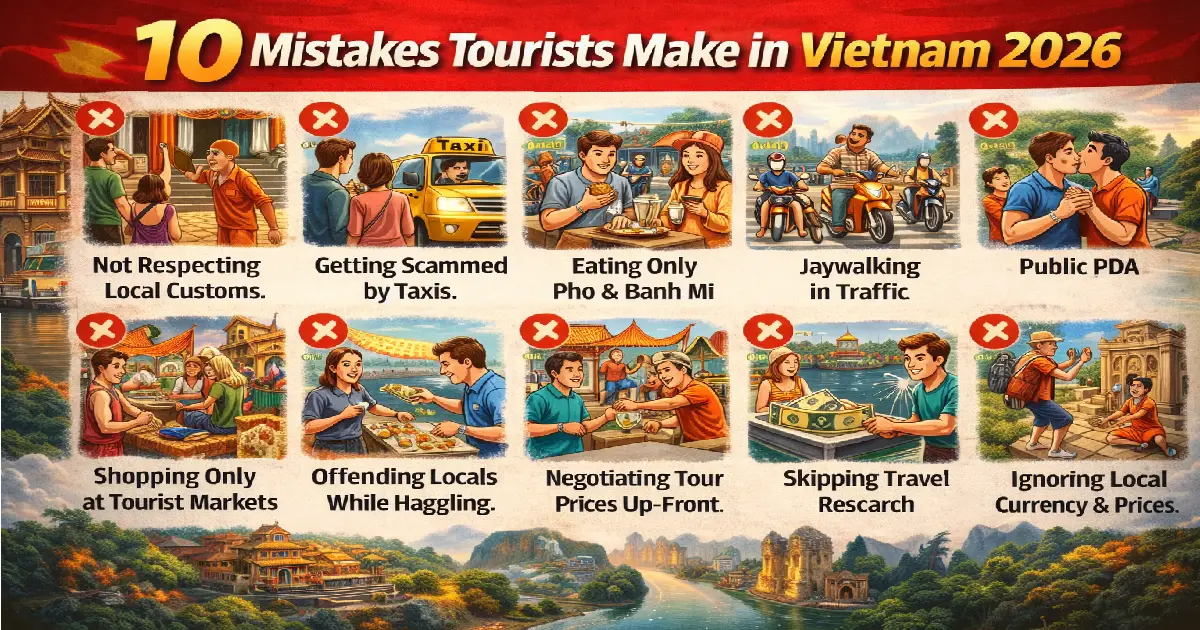
After multiple trips to Vietnam and countless conversations with fellow travelers, I’ve witnessed the same mistakes being made over and over again. Some of these errors cost money, others waste precious time, and a few can even ruin your entire Vietnamese adventure. Having made several of these mistakes myself during my early visits, I’m sharing this hard-earned wisdom to help you navigate Vietnam like a pro from day one.
Vietnam is an incredible destination, but it’s also a country where preparation and awareness can make the difference between an amazing trip and a frustrating experience. Let me walk you through the most common tourist mistakes and, more importantly, how to avoid them.
This is perhaps the biggest mistake I see first-time visitors make. In reality, Vietnam is comparable in size to Japan or Italy, and traveling between major cities can take an entire day. I learned this the hard way during my first visit when I tried to squeeze Hanoi, Halong Bay, Hoi An, Ho Chi Minh City, and the Mekong Delta into just 10 days.
The Solution: Focus on one or two regions maximum. North Vietnam (Hanoi, Halong Bay, Sapa) offers mountains and culture. Central Vietnam (Hoi An, Hue, Da Nang) provides ancient history and beaches. South Vietnam (Ho Chi Minh City, Mekong Delta) showcases modern energy and river life. Choose based on your interests and allow time to truly experience each place.
Motorbike scams in Vietnam are perhaps the most common Vietnam travel scams. I’ve seen countless tourists get caught in various motorbike-related schemes, from fake damage claims to outright theft of rented bikes.
Common Motorbike Scams:
The Solution: Always take photos/videos of the bike before riding. Inspect every scratch, dent, and mechanical issue. Choose reputable rental shops with good reviews, and never leave your passport as collateral – offer a cash deposit instead.
Vietnamese Dong (VND) can be confusing with its many zeros and similar-looking denominations. Money switching is when a higher denomination note is switched with a similar-looking lower denomination note. This scam is common among motorbike rentals or taxi drivers.
The Solution: Familiarize yourself with Vietnamese currency before arriving. Always count your change carefully and be sure to always count your change. The money is similar looking here. Use ATMs from reputable banks and avoid street money changers.
Vietnamese traffic can be overwhelming, especially in cities like Ho Chi Minh City and Hanoi. Many tourists either freeze in fear or act recklessly, both of which can be dangerous.
The Solution: When crossing streets, walk slowly and predictably – don’t suddenly stop or run. Traffic flows around pedestrians like water. If riding a motorbike, wear a helmet (it’s required by law), drive defensively, and avoid riding at night or in heavy rain.
Some of my worst meals in Vietnam were at restaurants with English menus in tourist areas, charging triple the price for inferior food.
The Solution: Follow the locals! Look for busy street stalls and restaurants filled with Vietnamese customers. If there’s no English menu and you need help ordering, use translation apps or point at what others are eating. The best pho I’ve ever had cost 30,000 VND ($1.20) at a plastic stool establishment.
Many tourists pack heavy winter clothes for Northern Vietnam or forget rain gear for the monsoon season, leading to uncomfortable travel or expensive shopping for basics.
The Solution: Research the weather for your specific travel dates and regions. Northern Vietnam can be surprisingly cold in winter (December-February), while the south stays warm year-round. Pack layers and a good rain jacket, especially during monsoon season (May-October).
Vietnam has a culture of negotiation, especially in markets, with taxi drivers, and for tours. Tourists who don’t negotiate often pay 2-3 times the fair price.
The Solution: Learn basic negotiation skills. Start at 30-50% of the asking price for souvenirs and non-food items. Always agree on taxi prices before getting in, or better yet, use Grab (Vietnam’s Uber equivalent). However, don’t negotiate at street food stalls or established restaurants – prices are usually fixed and fair.
Always be skeptical of anyone claiming to be a monk asking for money, as this is a common scam targeting unsuspecting tourists. I’ve seen tourists hand over significant amounts to fake monks or supposed charity representatives.
The Solution: Real Buddhist monks rarely solicit money directly from tourists. Avoid unless you can verify the organization. If you want to donate to legitimate causes, do so through established temples, recognized NGOs, or your hotel concierge.
Hotel tour desks and tourist street operators often charge premium prices for standard tours, sometimes 2-3 times what you’d pay elsewhere.
The Solution: Book tours directly with operators, through reputable online platforms, or get recommendations from other travelers. Compare prices from multiple sources. Many of the best tour operators have offices away from tourist centers with much better prices.
This mistake can offend locals and close doors to authentic cultural experiences. I’ve seen tourists enter temples inappropriately dressed, refuse offered drinks rudely, or photograph people without permission.
The Solution: Learn basic Vietnamese etiquette:
| Mistake Category | Red Flags | Prevention Strategy |
|---|---|---|
| Motorbike Rentals | No damage documentation, passport as collateral | Photo/video everything, cash deposit only |
| Currency Scams | Quick money exchanges, similar-looking notes | Count carefully, use bank ATMs |
| Overpriced Tours | Hotel booking desks, tourist street hawkers | Compare prices, book direct with operators |
| Fake Monks/Charity | Aggressive solicitation, no official documentation | Donate through verified organizations only |
| Transportation | No meter taxis, “broken” Grab app claims | Use Grab app, agree on prices beforehand |
| Food Safety | Empty restaurants in tourist areas, no local customers | Follow locals, busy = fresh |
| Accommodation | Too-good-to-be-true deals, taxi driver recommendations | Book verified hotels, ignore taxi suggestions |
Street Scams: Bag slashing is common in tourist areas, at markets, on crowded trains and buses, and at supermarkets. Keep valuables secure and be especially careful in crowded areas.
Staged Accidents: In this scam, a motorbike rider may stage a minor accident with you, claiming you are at fault. If involved in any accident, remain calm, don’t admit fault, and call your travel insurance company.
Hotel/Hostel Switch Scams: A taxi driver claims your booked accommodation is full/closed and suggests an alternative. Always call your hotel directly to confirm, and never let taxi drivers choose your accommodation.
During my first Vietnam trip, I made at least six of these mistakes. I overpaid for a terrible motorbike tour, got caught in the currency exchange scam (losing about $20), and spent two days trying to cover too much ground, arriving exhausted at each destination. These experiences taught me valuable lessons that transformed my subsequent visits into incredible adventures.
The key is to approach Vietnam with respectful curiosity rather than tourist entitlement. Vietnamese people are incredibly welcoming when they see you making an effort to understand their culture and customs.
Vietnam is generally a very safe country for tourists. As a tourist, you should be most wary of scammers, pickpockets and reckless drivers. Stay alert and keep track of all your belongings. The goal isn’t to avoid all risks but to travel smart and prepared.
Most Vietnamese people are honest, helpful, and genuinely excited to share their beautiful country with visitors. By avoiding these common mistakes, you’ll not only save money and time but also open yourself up to more authentic, meaningful experiences.
Remember, every traveler makes mistakes – it’s part of the learning process. The difference between a good trip and a great trip is often just being prepared and staying aware of your surroundings. Vietnam has so much incredible beauty, culture, and warmth to offer that a little preparation will pay dividends in unforgettable memories. For More Information visit Vietnam Govt Website https://vietnam.gov.vn/

As an upcoming travel agent I got much support from travel tourister. We are getting very good leads from travel tourister and they mend our website which is also very commendable.... Excellent work Hope to do more business forward.... Thanks and regards CEO,Andaman Unlocked
Rating:
10/20/2018
As an upcoming travel agent I got much support from travel tourister. We are getting very good leads from travel tourister and they mend our website which is also very commendable.... Excellent work Hope to do more business forward.... Thanks and regards CEO,Andaman Unlocked
Rating:
10/20/2018
2nd Floor, 39, Above Kirti Club, DLF Industrial Area, Kirti Nagar, New Delhi, Delhi 110015



Travel Tourister is a leading Travel portal where we introduce travellers to trusted travel agents to make their journey hasselfree, memorable And happy. Travel Tourister is a platform where travellers get Tour packages ,Hotel packages deals through trusted travel companies And hoteliers who are working with us across the world. We always try to find new and more travel agents and hoteliers from every nook and corners across the world so that you could compare the deals with different travel agents and hoteliers and book your tour or hotel with the one you have chosen according to your taste and budget.
Copyright © Travel Tourister, India. All Rights Reserved




 Call
Call Enquiry