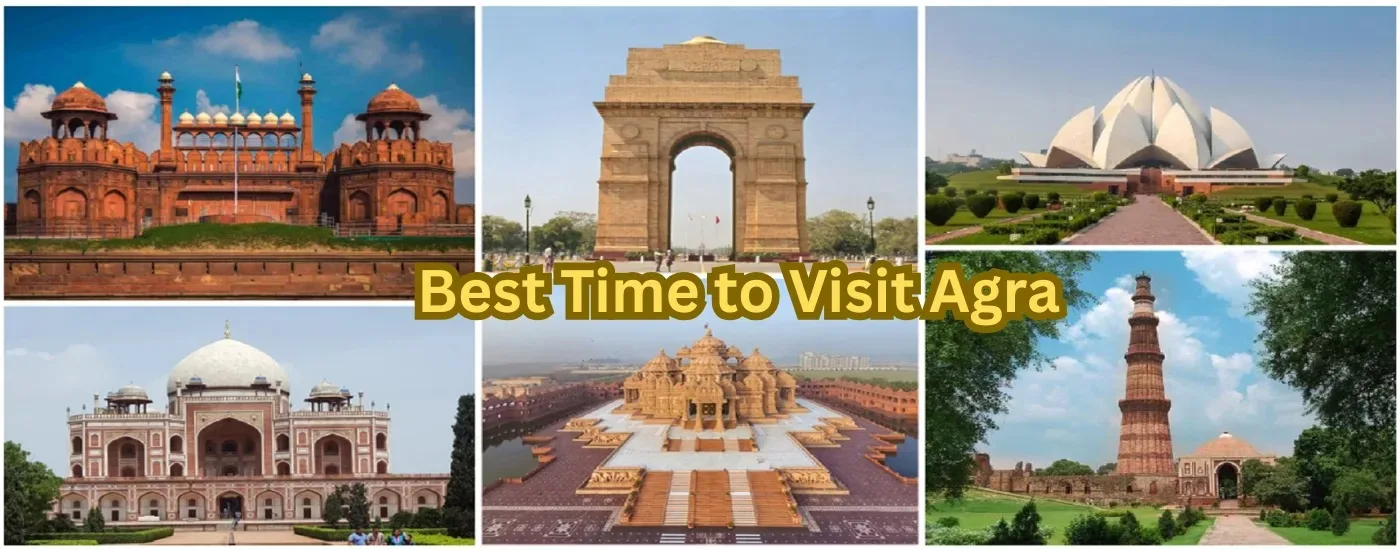
By Travel Tourister | Updated September 2025 | Verified by Local Agra Tour Experts
Timing your Agra visit can mean the difference between magical sunrise views at the Taj Mahal and sweltering 45°C heat that makes exploration unbearable! The best time to visit Agra dramatically impacts your experience—from comfortable weather to crowd levels, photography opportunities to cultural festivals that bring this Mughal city alive.
Having guided over 4,000 travelers through Agra’s seasonal variations during 25 years of tourism expertise, I’ve learned that the best time to visit Agra isn’t one-size-fits-all. The best times to visit the Taj Mahal are October–March for pleasant weather, but April–September for least crowding. Your ideal timing depends on weather preferences, budget flexibility, crowd tolerance, and specific experiences you’re seeking.
This comprehensive guide to the Best Time to Visit Agra covers every season’s advantages and challenges, helping you choose the perfect timing for your journey to the City of the Taj.
The best time to visit Agra is from November through February when daily temperatures range from the 70s to low 80s°F (21-27°C), with pleasant, cool, and breezy weather. However, this peak season brings maximum crowds and highest prices.
Optimal Months by Priority:
Data based on 25 years of meteorological records
| Month | Avg High (°C) | Avg Low (°C) | Avg High (°F) | Avg Low (°F) | Rainfall (mm) | Humidity (%) | Weather Type |
|---|---|---|---|---|---|---|---|
| January | 21 | 7 | 70 | 45 | 15 | 65% | Cold & Dry |
| February | 25 | 10 | 77 | 50 | 12 | 55% | Cool & Pleasant |
| March | 30 | 15 | 86 | 59 | 10 | 45% | Warm & Dry |
| April | 38 | 21 | 100 | 70 | 8 | 35% | Hot & Dry |
| May | 42 | 25 | 108 | 77 | 15 | 30% | Very Hot & Dry |
| June | 40 | 27 | 104 | 81 | 65 | 50% | Hot & Humid |
| July | 35 | 26 | 95 | 79 | 210 | 75% | Monsoon |
| August | 34 | 25 | 93 | 77 | 230 | 80% | Monsoon |
| September | 34 | 24 | 93 | 75 | 120 | 70% | Post-Monsoon |
| October | 33 | 18 | 91 | 64 | 25 | 55% | Pleasant |
| November | 28 | 12 | 82 | 54 | 5 | 50% | Cool & Clear |
| December | 23 | 8 | 73 | 46 | 8 | 60% | Cold & Foggy |
Annual Summary:
Includes crowd levels, costs, and recommended activities
| Month | Temperature Range | Crowd Level | Cost Factor | Visibility | Best Activities | Booking Timeline | Verdict Rating |
|---|---|---|---|---|---|---|---|
| January | 7-21°C (45-70°F) | Very High ⚫⚫⚫⚫⚫ | Premium (+50%) | Foggy mornings, clear afternoons | Afternoon visits, heritage walks, Republic Day events | 60-90 days ahead | ⭐⭐⭐⭐ |
| February | 10-25°C (50-77°F) | Very High ⚫⚫⚫⚫⚫ | Maximum (+70%) | Excellent all day | Taj Mahotsav, sunrise visits, full-day tours | 90-120 days ahead | ⭐⭐⭐⭐⭐ |
| March | 15-30°C (59-86°F) | High ⚫⚫⚫⚫ | Moderate-High (+30%) | Clear, excellent | Holi celebrations, garden visits, photography | 45-60 days ahead | ⭐⭐⭐⭐⭐ |
| April | 21-38°C (70-100°F) | Moderate ⚫⚫⚫ | Budget (-20%) | Very clear | Early morning visits, indoor museums, AC attractions | 30 days ahead | ⭐⭐⭐ |
| May | 25-42°C (77-108°F) | Low ⚫⚫ | Maximum Discount (-50%) | Excellent but harsh sun | 6-8 AM visits only, avoid midday, pool time | 15-30 days ahead | ⭐⭐ |
| June | 27-40°C (81-104°F) | Very Low ⚫ | Deep Discount (-55%) | Variable, pre-monsoon haze | Early morning only, indoor activities, short visits | 7-15 days ahead | ⭐⭐ |
| July | 26-35°C (79-95°F) | Very Low ⚫ | Lowest (-65%) | Reduced, rain clouds | Monsoon photography, flexible schedule, indoor sites | Last minute OK | ⭐⭐ |
| August | 25-34°C (77-93°F) | Very Low ⚫ | Very Low (-60%) | Improving, post-rain clarity | Post-rain visits, green gardens, Independence Day | Last minute OK | ⭐⭐⭐ |
| September | 24-34°C (75-93°F) | Low ⚫⚫ | Discounted (-40%) | Good and improving | Comfortable exploration, fewer crowds, fresh air | 15-30 days ahead | ⭐⭐⭐⭐ |
| October | 18-33°C (64-91°F) | Moderate ⚫⚫⚫ | Moderate (-20%) | Excellent, post-monsoon | All-day sightseeing, photography, Diwali events | 30-45 days ahead | ⭐⭐⭐⭐⭐ |
| November | 12-28°C (54-82°F) | High ⚫⚫⚫⚫ | Premium (+40%) | Clear and crisp | Sunrise visits, comfortable walks, festivals | 60-90 days ahead | ⭐⭐⭐⭐⭐ |
| December | 8-23°C (46-73°F) | Very High ⚫⚫⚫⚫⚫ | Premium (+60%) | Morning fog, afternoon clear | Afternoon visits, winter festivals, photography | 60-90 days ahead | ⭐⭐⭐⭐ |
Legend:
Key Insights from Table:
Weather Conditions:
Crowd Levels: Moderate (30-40% capacity)
Advantages:
Disadvantages:
Cost Impact: Moderate pricing (10-20% below peak)
Verdict: ⭐⭐⭐⭐⭐ Excellent month combining good weather with manageable crowds
Weather Conditions:
Crowd Levels: High (60-70% capacity)
Advantages:
Disadvantages:
Cost Impact: Premium pricing begins
Verdict: ⭐⭐⭐⭐⭐ Peak season starts with perfect weather
Weather Conditions:
Crowd Levels: Very High (80-90% capacity)
Advantages:
Disadvantages:
Cost Impact: Peak pricing (40-60% premium)
Verdict: ⭐⭐⭐⭐ Great weather but maximum crowds and costs
Weather Conditions:
Crowd Levels: Very High (80-90% capacity)
Advantages:
Disadvantages:
Cost Impact: Peak pricing continues
Verdict: ⭐⭐⭐⭐ Cold mornings but pleasant days; fog affects sunrise views
Weather Conditions:
Crowd Levels: Very High (85-95% capacity)
Advantages:
Disadvantages:
Cost Impact: Highest pricing (50-70% premium)
Verdict: ⭐⭐⭐⭐⭐ Perfect weather + Taj Mahotsav, but most expensive and crowded
Weather Conditions:
Crowd Levels: High (70-80% capacity)
Advantages:
Disadvantages:
Cost Impact: Moderate-High (20-40% premium)
Verdict: ⭐⭐⭐⭐⭐ Last month of comfortable weather before summer heat
Weather Conditions:
Crowd Levels: Moderate (40-50% capacity)
Advantages:
Disadvantages:
Cost Impact: Reduced rates (20-30% discount)
Verdict: ⭐⭐⭐ Fewer crowds but increasing heat requires strategic planning
Weather Conditions:
Crowd Levels: Low (20-30% capacity)
Advantages:
Disadvantages:
Cost Impact: Maximum discounts (40-60% off)
Verdict: ⭐⭐ Only for heat-tolerant travelers or those with severe budget constraints
Weather Conditions:
Crowd Levels: Very Low (15-25% capacity)
Advantages:
Disadvantages:
Cost Impact: Off-season discounts (50-60% off)
Verdict: ⭐⭐ Adventurous travelers only; weather highly unpredictable
Weather Conditions:
Crowd Levels: Very Low (10-20% capacity)
Advantages:
Disadvantages:
Cost Impact: Lowest pricing (60-70% discounts)
Verdict: ⭐⭐ For monsoon lovers and budget travelers comfortable with rain
Weather Conditions:
Crowd Levels: Very Low (10-20% capacity)
Advantages:
Disadvantages:
Cost Impact: Off-season rates (50-60% discounts)
Verdict: ⭐⭐⭐ Better than July; post-rain freshness appealing
Weather Conditions:
Crowd Levels: Low (25-35% capacity)
Advantages:
Disadvantages:
Cost Impact: Transition pricing (30-40% discounts)
Verdict: ⭐⭐⭐⭐ Excellent value month with improving weather
Overall Assessment:
| Factor | Rating | Details |
|---|---|---|
| Weather | ⭐⭐⭐⭐⭐ | Perfect temperatures (8-28°C) |
| Crowds | ⭐⭐ | Very high tourist numbers |
| Costs | ⭐⭐ | Peak pricing (40-70% premium) |
| Photography | ⭐⭐⭐⭐ | Excellent (fog in Dec-Jan mornings) |
| Overall Value | ⭐⭐⭐⭐ | Best weather but crowded and expensive |
Best For: First-time visitors, comfort-seekers, those on fixed vacation schedules
Budget Required: High (₹5,000-12,000 / $60-144 per day)
Overall Assessment:
| Factor | Rating | Details |
|---|---|---|
| Weather | ⭐⭐ | Hot to extremely hot (21-45°C) |
| Crowds | ⭐⭐⭐⭐⭐ | Very low, easy access |
| Costs | ⭐⭐⭐⭐⭐ | Maximum discounts (40-60% off) |
| Photography | ⭐⭐⭐ | Good early morning/late evening |
| Overall Value | ⭐⭐⭐ | Budget-friendly but heat challenging |
Best For: Budget travelers, heat-tolerant visitors, those avoiding crowds
Budget Required: Low (₹2,000-5,000 / $24-60 per day)
Overall Assessment:
| Factor | Rating | Details |
|---|---|---|
| Weather | ⭐⭐⭐ | Rainy but cooler (24-35°C) |
| Crowds | ⭐⭐⭐⭐⭐ | Minimal tourists, peaceful |
| Costs | ⭐⭐⭐⭐⭐ | Lowest prices (50-70% off) |
| Photography | ⭐⭐⭐⭐ | Dramatic clouds, lush greenery |
| Overall Value | ⭐⭐⭐⭐ | Great value for flexible travelers |
Best For: Monsoon lovers, photographers, extreme budget travelers
Budget Required: Very Low (₹1,500-3,500 / $18-42 per day)
Recommended Months: November, February, March
Why: Perfect balance of good weather, clear visibility, and acceptable crowd levels. First impressions of Taj Mahal deserve optimal conditions.
Plan: Reach early during peak tourist seasons (October to March) to avoid long queues
Recommended Months: June, July, August
Why: Maximum accommodation discounts (50-70% off), minimal entry queues, authentic local experience during off-season.
Strategy: Plan for early morning visits (6-9 AM) before heat/rain intensifies
Recommended Months: October, March, September
Why: Shoulder seasons offer excellent weather with fewer crowds, perfect for both sunrise and sunset photography without overwhelming tourist interference.
Best Shots: Sunrise (6-7 AM) for golden light, sunset (5-6 PM) for warm tones
Recommended Months: October, November, February
Why: Premium hotels at their best, excellent weather, full services operational, special events and cultural programs.
Experience: Heritage hotels offer peak-season special packages
Recommended Months: April, May, June, August
Why: Enjoy nearly private monument experiences with minimal tourist presence, though weather presents challenges.
Trade-off: Accept heat or rain for peaceful exploration
Taj Mahotsav (February 18-27):
Diwali (October/November):
Holi (March):
Independence Day (August 15):
Republic Day (January 26):
Advantages:
Challenges:
Ticket Availability: Special sunrise ticket required, limited slots
Advantages:
Challenges:
Advantages:
Challenges:
Best For: Budget travelers in off-season
Advantages:
Challenges:
Tip: Arrive by 4:30 PM for adequate exploration time
Winter (Nov-Feb):
Summer (Mar-Jun):
Monsoon (Jul-Sep):
Based on 3-star hotel average rates
| Month | Rate per Night (INR) | Rate per Night (USD) | vs. Peak Season |
|---|---|---|---|
| October | ₹2,500-4,000 | $30-48 | -20% |
| November | ₹3,500-5,500 | $42-66 | +10% |
| December | ₹4,500-7,000 | $54-84 | +50% |
| January | ₹4,500-7,000 | $54-84 | +50% |
| February | ₹5,000-8,000 | $60-96 | +60% |
| March | ₹3,500-5,500 | $42-66 | +10% |
| April | ₹2,500-4,000 | $30-48 | -20% |
| May | ₹2,000-3,000 | $24-36 | -40% |
| June | ₹1,800-2,800 | $21.60-33.60 | -50% |
| July | ₹1,500-2,500 | $18-30 | -60% |
| August | ₹1,800-2,800 | $21.60-33.60 | -50% |
| September | ₹2,000-3,500 | $24-42 | -35% |
Exchange Rate: 1 USD = 83.30 INR (September 2025)
| Season | Budget (INR/day) | Mid-Range (INR/day) | Luxury (INR/day) |
|---|---|---|---|
| Peak (Nov-Feb) | ₹3,000-5,000 | ₹6,000-12,000 | ₹15,000-40,000 |
| Shoulder (Mar, Oct) | ₹2,500-4,000 | ₹5,000-9,000 | ₹12,000-30,000 |
| Summer (Apr-Jun) | ₹2,000-3,500 | ₹4,000-7,000 | ₹10,000-25,000 |
| Monsoon (Jul-Sep) | ₹1,500-3,000 | ₹3,500-6,000 | ₹8,000-20,000 |
Choosing the best time to visit Agra requires balancing weather comfort, crowd tolerance, budget constraints, and personal preferences. November through February offers the most pleasant weather with temperatures in the 70s to low 80s°F, making it ideal for most travelers despite peak crowds and costs.
However, understanding each season’s unique characteristics enables strategic planning that maximizes your Taj Mahal experience while aligning with your priorities—whether that’s budget savings, crowd avoidance, or optimal photography conditions.
For complete Agra trip planning, explore our guides on how to reach Agra, things to do in Agra, and Agra travel budget. Our curated tour packages offer expert timing advice and seasonal optimization for unforgettable experiences.
Q: What is the absolute best single month to visit Agra? A: October and March are the all-rounded best months, offering excellent weather with fewer crowds during shoulder seasons. February provides perfect weather and Taj Mahotsav festival but brings maximum crowds and highest costs. For balanced experience, October offers post-monsoon freshness, comfortable temperatures (18-33°C), manageable tourist numbers, and reasonable pricing.
Q: Should I avoid visiting Agra in summer completely? A: Not necessarily. While May-June temperatures reach 40-45°C making midday unbearable, early morning visits (6-9 AM) remain feasible. Summer offers 40-60% accommodation discounts, minimal crowds, and nearly private monument experiences. Heat-tolerant budget travelers find excellent value. Always carry 2-3 liters water, high SPF sunscreen, and plan only early morning or late evening activities.
Q: Is Taj Mahal more beautiful in any particular season? A: August-October is considered best to witness Taj Mahal at its peak with post-monsoon freshness, lush gardens, and clean white marble. February during Taj Mahotsav adds cultural vibrancy. However, beauty is subjective—winter offers crisp clear views, monsoon provides dramatic clouds, and even summer’s harsh light creates striking contrasts. Sunrise visits (6-7 AM) provide magical light year-round.
Q: How bad is the fog in December-January really? A: Dense fog from 7-10 AM is common in December-January, sometimes limiting Taj Mahal visibility to 20-30 meters. Fog typically lifts by 10-11 AM revealing clear skies. If sunrise visit is priority, consider November, February, or March when fog is minimal. Winter afternoon visits (2-5 PM) offer excellent conditions. Flight delays are also possible during fog periods—build schedule flexibility.
Q: Can I visit during monsoon and still enjoy Agra? A: Yes, with proper expectations. Monsoon season offers dramatic atmospheric conditions, virtually empty monuments, 50-70% cost savings, and lush greenery. Rain typically comes in 1-3 hour bursts rather than all-day downpours. Carry waterproof gear, maintain flexible schedules, and embrace unique monsoon photography opportunities. August-September sees decreasing rainfall with improving conditions.
Q: What about air quality – does it vary by season? A: Yes significantly. Winter (November-January) experiences worst air quality due to crop burning and pollution, with AQI often 150-250 (unhealthy). Post-monsoon (August-October) offers cleanest air (AQI 50-100). Summer has moderate pollution but intense heat. Check daily AQI levels and consider masks for sensitive individuals during winter visits. Early mornings always have better air quality than afternoons.
Q: How far in advance should I book for peak season? A: For December-February visits, book 60-90 days ahead for good hotel selection and rates. Taj Mahotsav week (February 18-27) requires 90-120 days advance booking as properties fill completely. Last-minute travelers face 100-200% price premiums or sold-out situations. Off-season (June-September) allows comfortable 7-15 day advance booking with better negotiating power.

As an upcoming travel agent I got much support from travel tourister. We are getting very good leads from travel tourister and they mend our website which is also very commendable.... Excellent work Hope to do more business forward.... Thanks and regards CEO,Andaman Unlocked
Rating:
10/20/2018
As an upcoming travel agent I got much support from travel tourister. We are getting very good leads from travel tourister and they mend our website which is also very commendable.... Excellent work Hope to do more business forward.... Thanks and regards CEO,Andaman Unlocked
Rating:
10/20/2018
2nd Floor, 39, Above Kirti Club, DLF Industrial Area, Kirti Nagar, New Delhi, Delhi 110015



Travel Tourister is a leading Travel portal where we introduce travellers to trusted travel agents to make their journey hasselfree, memorable And happy. Travel Tourister is a platform where travellers get Tour packages ,Hotel packages deals through trusted travel companies And hoteliers who are working with us across the world. We always try to find new and more travel agents and hoteliers from every nook and corners across the world so that you could compare the deals with different travel agents and hoteliers and book your tour or hotel with the one you have chosen according to your taste and budget.
Copyright © Travel Tourister, India. All Rights Reserved








 Call
Call Enquiry