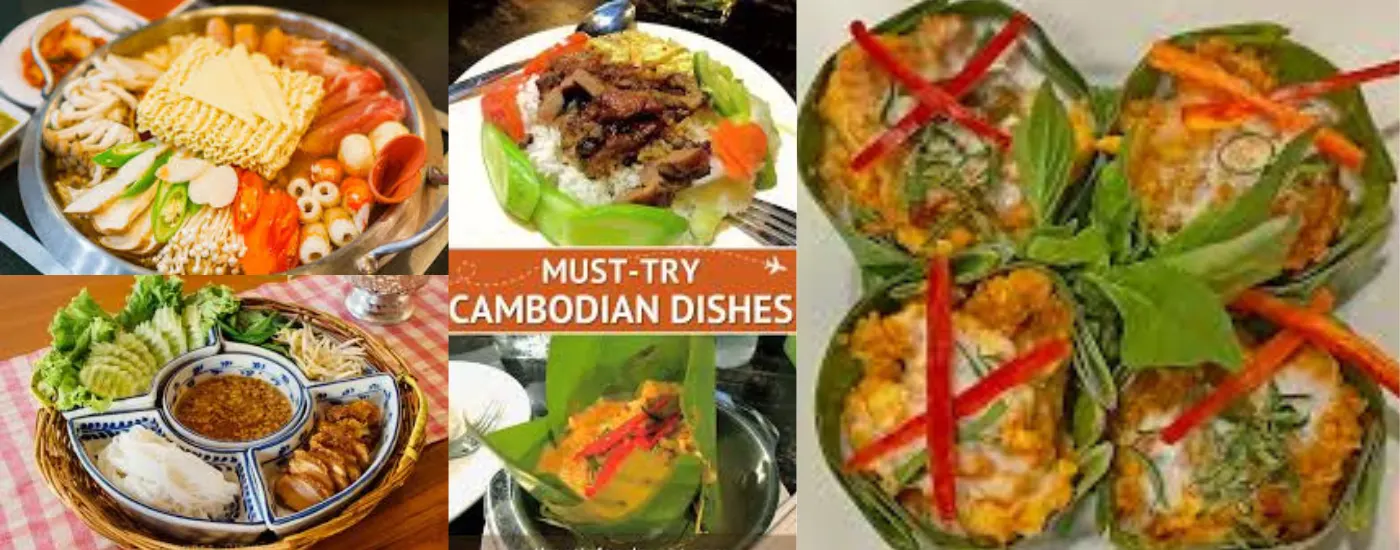
Over 2,000 years of history simmer in every bowl, steam from every street cart, and burst from every market stall across Cambodia. Cambodian Cuisine stands as one of Southeast Asia’s most underrated culinary treasures—a harmonious blend of delicate flavors, ancient techniques, and cultural resilience that survived even the darkest chapters of the nation’s past.
I’ve wandered through Phnom Penh’s bustling markets at dawn, watched grandmothers stir massive pots of prahok, and tasted dishes that tell stories of Khmer royalty and rural villages alike. This isn’t just food. It’s edible history.
Cambodian Cuisine operates on a principle of balance. Not the aggressive heat of Thai food or the herbaceous brightness of Vietnamese dishes, but something subtler—a middle ground that respects each ingredient’s voice.
The secret? Fermentation.
Prahok (fermented fish paste) forms the umami backbone of countless dishes. It’s pungent, yes. Some find it overwhelming at first. But this ancient preservation method creates depth that no amount of fish sauce can replicate.
Cambodian cooking relies on several core elements:
The Khmer Empire’s influence stretched across Southeast Asia from the 9th to 15th centuries, and Cambodian Cuisine absorbed techniques from India, China, and neighboring kingdoms while maintaining distinct characteristics. Unlike Thai food, Cambodian dishes rarely overwhelm with chili heat. The approach is gentler, more nuanced.
When exploring Cambodian Food: 10 Traditional Dishes You Should Eat, prepare your palate for surprises. These aren’t menu items designed for tourist comfort—they’re authentic representations of Cambodian culinary identity.
Cambodia’s national dish deserves its reputation!
This steamed fish curry arrives in a banana leaf cup, its custard-like texture achieved through careful steaming. Freshwater fish (often snakehead or catfish) is mixed with coconut cream and kroeung paste, then steamed until it achieves a mousse-like consistency. The result? Rich, aromatic, and surprisingly light despite the coconut base.
Where to find it: Any restaurant in Siem Reap or Phnom Penh, though village versions often taste more authentic.
The breakfast of champions across Cambodia.
Thinly sliced pork marinates overnight in coconut milk, garlic, and soy sauce before hitting the charcoal grill at dawn. Served over broken rice with pickled vegetables and a side of chicken broth, this dish fuels motorbike drivers, students, and travelers alike. It’s simple. It’s perfect. And it costs less than $2 at street stalls.
Rice noodles meet fish-based curry in this breakfast staple.
Fresh rice noodles—hand-pressed through woven mats—get topped with green fish curry gravy made from lemongrass, turmeric root, and kaffir lime. A mountain of fresh herbs, bean sprouts, cucumber, and green beans accompanies every bowl. You mix everything together and experience texture, temperature, and flavor contrasts in each bite.
Locals call it “Khmer noodles,” and it appears at weddings, festivals, and morning markets throughout the country.
Cambodia’s answer to pho, but with distinct personality.
This clear pork or beef broth soup features rice noodles, bean sprouts, and your choice of protein. The broth simmers for hours with bones, dried squid, and radish, creating remarkable depth without heaviness. I’ve watched vendors start their broth at 3 AM to serve customers by 6.
The toppings matter: fried garlic, lime juice, chili paste, and fresh herbs sit on every table. Customize to taste.
French colonial influence meets Khmer technique.
Cubed beef marinates in oyster sauce and soy before quick stir-frying, then gets plated over fresh lettuce, tomatoes, and onions. The accompanying sauce—lime juice, black pepper, and salt—provides sharp contrast to the rich meat. Some versions include a fried egg on top.
This dish emerged during the French Protectorate period and became thoroughly Cambodianized over decades.
A vegetable soup that tells agricultural stories.
This “stirring soup” name comes from the constant stirring required during cooking. Roasted rice powder thickens the prahok-based broth, while seasonal vegetables, fish, and kroeung paste add layers of flavor. Every family has their version. No two bowls taste identical.
The dish represents Cambodia’s agrarian roots—using whatever vegetables the season provides.
Raw meets cooked in this refreshing preparation.
Thinly sliced beef gets quickly seared, then tossed with lime juice, fish sauce, lemongrass, shallots, mint, and basil. The acid “cooks” the beef further while herbs provide aromatic punch. Crushed peanuts add crunch. It’s Cambodia’s answer to ceviche, basically.
Best consumed with cold beer on hot afternoons!
A wobbly, sweet conclusion to any meal.
This dessert features layered jellies made from seaweed extract, coconut milk, and pandan flavoring. The green jelly layer provides subtle sweetness while crushed ice and coconut cream create textural interest. Street vendors serve it in plastic bags with straws—portable refreshment on sweltering days.
The ultimate test of culinary adventurousness.
Prahok (that fermented fish paste again) gets cooked with minced pork, coconut cream, and chili, then served as a dip for fresh vegetables and rice. The fermented funk mellows during cooking, transforming into complex umami that pairs surprisingly well with crisp cucumber and cabbage.
Cambodians consider this soul food. Foreigners either love it or run away.
A snack wrapped in banana leaves and grilled over charcoal.
Sticky rice mixed with grated coconut and palm sugar gets wrapped in banana leaves, then grilled until the leaves char and the rice achieves chewy perfection. The banana leaves impart subtle flavor while keeping everything moist. I’ve bought these from bicycle vendors for 1,000 riel (about $0.25) and considered them highway robbery—in my favor.
Understanding Cambodian Cuisine requires familiarity with ingredients that might seem exotic initially but become second nature after a few meals:
Cambodians eat what rivers, forests, and farms provide. Freshwater fish dominates. Pork appears frequently. Chicken, duck, and beef play supporting roles. Insects, frogs, and snakes make appearances in rural areas and adventurous urban restaurants.
Many travelers lump Southeast Asian cuisines together. That’s like calling Italian and Spanish food identical because both use olive oil!
| Aspect | Cambodian Cuisine | Thai Cuisine | Vietnamese Cuisine |
|---|---|---|---|
| Heat Level | Mild to medium; chili as optional condiment | Often very spicy; chili integrated into dishes | Mild; fresh chili served separately |
| Dominant Flavors | Earthy, fermented, balanced | Spicy, sweet, sour, complex | Fresh, herbaceous, bright |
| Souring Agents | Tamarind, lime, fermented ingredients | Tamarind, lime | Lime, vinegar |
| Herbs Usage | Moderate; served as accompaniments | Heavy; integrated into cooking | Very heavy; piles of fresh herbs |
| Curry Style | Mild, coconut-based, not overly spicy | Varied; red, green, yellow curries with heat | Rare; curries influenced by French-Indian fusion |
| Noodle Dishes | Rice noodles with clear broths or curry gravies | Varied noodle types; often spicy | Rice noodles with clear, delicate broths |
| Fermentation | Heavy use of prahok and fermented pastes | Fish sauce dominant; some fermented items | Fish sauce dominant; minimal fermentation |
| Colonial Influence | French influence in certain dishes | Minimal Western influence | Strong French influence (banh mi, coffee) |
| Typical Meal Structure | Family-style sharing; soup always present | Family-style; balance of flavors across dishes | Individual servings common; pho-centric |
Cambodian Cuisine occupies a fascinating middle ground. It’s less aggressive than Thai food yet more complex than stereotypical perceptions suggest. The French colonial period left lighter marks compared to Vietnam, while the Khmer Empire’s historical reach means Cambodia influenced neighbors as much as being influenced.
When you’re planning your Cambodia adventure, understanding these culinary distinctions enhances appreciation. Check out our guides on places to visit in Cambodia and things to do in Cambodia to map out your food exploration alongside temple visits and natural wonders.
The soul of Cambodian Cuisine lives in markets and street stalls.
Phnom Penh’s Central Market (Psar Thmei): Art Deco architecture houses hundreds of food vendors. Go early for bai sach chrouk. Return at lunch for kuy teav. The building itself is stunning, but the food justifies the visit.
Siem Reap’s Old Market (Psar Chas): Tourist-adjacent but still authentic. Vendors here serve visitors and locals simultaneously, maintaining quality while explaining dishes to confused foreigners. I appreciate their patience!
Battambang’s Night Market: Fewer tourists mean more authentic experiences. This provincial capital offers some of Cambodia’s best street food without the markup or modifications for Western palates.
Nothing beats learning to make Cambodian Cuisine yourself.
Multiple organizations in Siem Reap and Phnom Penh offer half-day cooking classes. You’ll visit markets with instructors, learn about ingredients, then prepare 3-4 dishes. The hands-on experience demystifies techniques while providing recipes to recreate at home.
I particularly enjoyed classes that included market tours—watching instructors haggle in Khmer while explaining ingredient selection taught me more than any cookbook could.
Cambodia’s restaurant scene has exploded in recent years.
Phnom Penh now boasts restaurants where traditional Cambodian Cuisine meets modern technique. These establishments preserve authentic flavors while presenting them in refined contexts. Prices increase but remain reasonable by Western standards.
Siem Reap offers similar options, often with traditional dance performances alongside dinner. Touristy? Perhaps. But the food quality doesn’t suffer, and supporting cultural preservation matters.
Want the most authentic experience? Eat in someone’s home.
Community-based tourism initiatives connect travelers with rural families. You’ll eat whatever the family eats—no menu, no substitutions, complete authenticity. These experiences provide cultural exchange alongside incredible food.
When considering how to reach Cambodia for your culinary adventure, factor in time for both urban food scenes and rural experiences. The best time to visit Cambodia runs from November to March, when dry weather makes market exploration and countryside visits most pleasant.
Cambodian Cuisine remains remarkably affordable.
Street food meals cost $1-3. Mid-range restaurants charge $5-15 per person. Fine dining rarely exceeds $30-40 per person with drinks. Your Cambodia trip cost should allocate roughly $15-30 daily for food, depending on your comfort level and adventurousness.
Yes, you can eat street food safely! Follow basic principles:
I’ve eaten countless street meals across Cambodia without issues. The occasional digestive discomfort is possible anywhere, but proper vendor selection minimizes risk dramatically.
Vegetarians face challenges with Cambodian Cuisine since prahok and fish sauce appear in most dishes. However, Buddhist influences mean vegetarian options exist, especially near temples. Communicate clearly (“ahtt sach, ahtt trei” means “no meat, no fish”) and many vendors will accommodate.
Vegans should learn ingredient names and be prepared to eat lots of stir-fried vegetables with rice. Temple restaurants (run by devout Buddhists observing vegetarian practices) become your best friends.
Gluten-free diets work well—rice dominates Cambodian carbohydrate consumption. Soy sauce appears occasionally but isn’t ubiquitous like in some Asian cuisines.
Amok trey (fish amok) holds the title of Cambodia’s national dish and appears on nearly every restaurant menu. However, among locals, bai sach chrouk (grilled pork with rice) and kuy teav (noodle soup) compete for daily favorite status. The “most popular” depends on whether you’re asking tourists or Cambodians!
No, Cambodian Cuisine is not inherently spicy. Chili typically appears as a condiment rather than an integrated ingredient. You control the heat level by adding or avoiding chili pastes and fresh chilies served alongside dishes. This makes Cambodian food accessible to spice-sensitive eaters while allowing heat lovers to customize.
Prahok is fermented fish paste made from small fish, salt, and time—lots of time. It provides umami depth that defines Cambodian flavor profiles, similar to how fish sauce functions in Vietnamese cooking or soy sauce in Chinese cuisine. Yes, it smells intense! But cooked into dishes, prahok creates complexity impossible to achieve otherwise. It’s edible history—an ancient preservation method still central to modern cooking.
While both cuisines share some ingredients (lemongrass, galangal, coconut milk), Cambodian Cuisine is milder, less sweet, and relies more heavily on fermented ingredients. Thai food tends toward bolder, spicier profiles with distinct sweet-sour-salty-spicy balance. Cambodian dishes are more subtle, with earthy, fermented notes taking center stage. Think of it as different dialects of the same language family—related but distinct.
Cambodian restaurants exist in cities with significant Cambodian diaspora populations—Los Angeles, Paris, Lowell (Massachusetts), and Sydney have notable concentrations. However, the experience differs from eating in Cambodia itself. Ingredient availability, adaptation to local tastes, and the absence of street food culture mean restaurant meals abroad offer introduction rather than immersion. Nothing beats eating in Cambodia!
Start with amok trey—it’s accessible, flavorful, and representative without being challenging. Follow with bai sach chrouk at breakfast, then kuy teav for lunch. These three dishes provide a foundation for understanding Cambodian Cuisine before progressing to more adventurous items like prahok ktis or fermented preparations.
Generally yes, with sensible precautions. Choose busy vendors with high turnover, observe cleanliness, eat hot food fresh off the grill or out of the pot, and trust your instincts. Street food represents the heart of Cambodian eating culture—avoiding it means missing authentic experiences. I’ve eaten hundreds of street meals across Cambodia with minimal issues.
Iced tea (sweet or unsweetened), fresh coconut juice, sugar cane juice, and fruit shakes complement Cambodian Cuisine beautifully. Beer is popular—Angkor and Cambodia brand dominate. Rice wine appears in rural areas. Coffee (iced with condensed milk) provides a French colonial legacy that persists strongly in Cambodian culture.
Cambodian Cuisine carries stories in every dish. Stories of ancient empires, colonial occupation, devastating genocide, and remarkable resilience. When you eat amok, you’re tasting techniques passed through generations despite attempts to erase Khmer culture entirely.
The food survived because people survived. Grandmothers taught granddaughters in refugee camps. Street vendors rebuilt their carts after losing everything. Chefs returned from exile carrying recipes in their memories.
This isn’t just about eating. It’s about connection, understanding, and respect for a culture that refuses to disappear.
So when you visit Cambodia—and you should—eat everything. The familiar and the strange. The refined and the rustic. Let Cambodian Cuisine teach you what history books cannot.
Your taste buds will thank you. Your travel memories will be richer. And you’ll understand why food matters beyond sustenance.
For comprehensive trip planning beyond the culinary aspects, explore our resources on tourist attractions in Cambodia to round out your adventure in this remarkable kingdom.
Bon appétit, or as they say in Khmer: ញាំឲ្យឆ្ងាញ់ណា! (Nyam aoy ch’ngañ na!)—Eat deliciously!

As an upcoming travel agent I got much support from travel tourister. We are getting very good leads from travel tourister and they mend our website which is also very commendable.... Excellent work Hope to do more business forward.... Thanks and regards CEO,Andaman Unlocked
Rating:
10/20/2018
As an upcoming travel agent I got much support from travel tourister. We are getting very good leads from travel tourister and they mend our website which is also very commendable.... Excellent work Hope to do more business forward.... Thanks and regards CEO,Andaman Unlocked
Rating:
10/20/2018
2nd Floor, 39, Above Kirti Club, DLF Industrial Area, Kirti Nagar, New Delhi, Delhi 110015



Travel Tourister is a leading Travel portal where we introduce travellers to trusted travel agents to make their journey hasselfree, memorable And happy. Travel Tourister is a platform where travellers get Tour packages ,Hotel packages deals through trusted travel companies And hoteliers who are working with us across the world. We always try to find new and more travel agents and hoteliers from every nook and corners across the world so that you could compare the deals with different travel agents and hoteliers and book your tour or hotel with the one you have chosen according to your taste and budget.
Copyright © Travel Tourister, India. All Rights Reserved






 Call
Call Enquiry