Forest Museum Port Blair: Complete Visitor Guide 2025-2026
About Forest Museum Port Blair
The Forest Museum in Port Blair stands as a fascinating testament to the Andaman Islands’ rich ecological heritage and skilled woodcraft traditions. Located within the historic Chatham Saw Mill complex, this modern museum was established in September 2006 by the Department of Environment & Forests to showcase the archipelago’s diverse forest resources, sustainable forestry practices, and extraordinary wooden craftsmanship that has defined the islands’ economic and cultural identity for over a century.
Unlike typical museums filled with dusty artifacts behind glass, the Forest Museum offers an immersive experience that combines education with artistic appreciation. The museum houses an impressive collection of wooden handicrafts, rare timber samples, historical photographs documenting the evolution of forestry in the Andamans, and exhibits explaining the unique flora and fauna found across the islands. What makes the Forest Museum particularly special is its dual nature—it’s both a celebration of natural biodiversity and a showcase of human ingenuity in transforming raw timber into exquisite art.
The Forest Museum occupies a strategic position within the Chatham Saw Mill complex, allowing visitors to witness the complete journey of wood—from massive logs at the operational sawmill to finished masterpieces displayed in the museum. This connection between raw material and refined product provides visitors with a rare appreciation for the craftsmanship, skill, and time invested in creating beautiful wooden artifacts. The museum’s collection includes items made from prized Andaman timber varieties such as Padauk (known for its deep crimson color), Marble wood, Gurjan (Satin wood), and Peauma—all native species that reflect the islands’ extraordinary biodiversity.
For anyone planning an Andaman tour, the Forest Museum offers a meaningful cultural stop that adds depth beyond the typical beach-and-water-sports itinerary. It provides insight into how colonial-era industrial development, environmental conservation, and traditional craftsmanship intersect—creating a unique narrative that’s often overlooked in mainstream tourism but essential to understanding the Andaman Islands’ complete story.
Where Is Forest Museum Located & How to Reach
Location Details
The Forest Museum is situated inside the Chatham Saw Mill complex on Chatham Island in the Haddo region, approximately 11 kilometers from Port Blair city center. The museum shares its premises with Asia’s oldest and largest operational sawmill, creating a unique destination that combines industrial heritage with cultural education.
Complete Address: Forest Museum, Chatham Saw Mill Complex, Haddo, Chatham Island, Port Blair, Andaman and Nicobar Islands, 744102, India
GPS Coordinates: 11.6678° N, 92.7428° E
How to Reach Forest Museum
Transport Mode
Distance
Cost Range
Travel Time
From Airport
7 km
₹200-350 (taxi/auto)
20-25 minutes
From City Center
11 km
₹150-250 (taxi), ₹100-200 (auto)
25-30 minutes
From STS Bus Stand
6 km
₹80-150 (auto), ₹10-20 (bus)
20-30 minutes
From Cellular Jail
10 km
₹200-300 (taxi), ₹150-200 (auto)
25-30 minutes
By Taxi/Cab:
The most convenient option for tourists, taxis provide comfortable, direct transportation to the Forest Museum. Most drivers in Port Blair are familiar with Chatham Saw Mill and can easily navigate to the location. You can hire:
Hotel taxis (arranged through your accommodation)
Prepaid taxis from the airport
Private taxi services through tour operators
App-based cabs (limited but available)
By Auto-Rickshaw:
Budget-friendly and widely available throughout Port Blair, auto-rickshaws offer an economical way to reach the Forest Museum. Negotiate fares before starting or insist on meter usage. Autos comfortably seat 3 adults plus a child.
By Local Bus:
The most economical option, regular bus services operate from STS Bus Stand/Aberdeen Bazaar to Chatham. Buses run frequently during daytime hours but require a short walk from the main road to the museum entrance. Service frequency decreases after 2:00 PM.
By Rented Two-Wheeler:
Popular among independent travelers, renting scooters or motorcycles (₹300-500 per day) provides flexibility to explore at your own pace. The route to Chatham is well-paved and scenic, passing through coastal areas with ocean views.
Navigation Tips:
Ask for “Chatham Saw Mill” or “Forest Museum”—both names are recognized
The museum is located within the sawmill complex; enter through the main gate
Free parking available near the entrance for private vehicles
The distinctive bridge connecting Chatham Island to Port Blair is a clear landmark
Google Maps navigation works reliably in this area
From Other Islands:
If staying in Havelock Island or Neil Island, take a ferry to Port Blair’s Aberdeen Jetty first. From the jetty, the Forest Museum is approximately 10-11 km away, reachable by taxi or auto-rickshaw in 25-30 minutes.
Forest Museum: Exhibits & Collections
Wooden Artifacts & Handicrafts
The Forest Museum’s crown jewel is its extensive collection of wooden artifacts that demonstrate the remarkable skill of Andaman’s artisans. These pieces aren’t mass-produced souvenirs but carefully crafted works of art that showcase traditional techniques passed down through generations.
Key Exhibits:
Padauk Wood Masterpieces: Native only to the Andaman Islands, Padauk wood is famous for its distinctive blood-red to crimson color. The museum displays intricately carved furniture, decorative panels, and sculptures made from this prized timber. Historical accounts suggest that Buckingham Palace’s crimson wall paneling was crafted from Andaman Padauk processed at Chatham Saw Mill—a connection that highlights the international significance of this unique wood.
Complete Wooden Chain: One of the museum’s most fascinating exhibits is a complete chain carved from a single piece of wood. This masterpiece amazes visitors who initially assume it’s multiple pieces linked together, only to discover that skilled artisans created the entire chain—including individual links—from one continuous block of wood without any joints or connections.
Ganesha Idols: Beautifully carved Ganesha statues made from various Andaman timbers display different styles and techniques, demonstrating how wood grain and color influence artistic expression.
Balancing Dolls: Traditional balancing toys carved from wood showcase the playful side of Andaman craftsmanship, combining functionality with artistic design.
Miniature Vehicles: Intricately detailed wooden jeeps, cars, and boats carved with remarkable precision show the versatility of local artisans in creating both decorative and representational pieces.
Wooden Utensils: Traditional cooking and serving utensils carved from durable hardwoods reflect the practical applications of woodcraft in daily Andaman life.
Furniture Collection: Display of stools, chairs, and tables made from Padauk wood with immaculate polishing, intricate carving, and skilled workmanship that elevates functional furniture to art.
Timber Sample Collection
The museum houses an educational collection of cross-sections and polished samples from various timber species native to the Andaman Islands:
Timber Type
Characteristics
Uses
Padauk
Crimson to blood-red color, extremely durable
High-end furniture, decorative panels, flooring
Marble Wood
Unique marbled grain pattern, hard and heavy
Decorative items, specialty furniture, carving
Gurjan (Satin Wood)
Golden-yellow color, lustrous finish
Furniture, construction, boat building
Peauma
Reddish-brown, strong and resilient
Construction timber, furniture, tools
Oak
Light to medium brown, traditional wood
General carpentry, furniture making
Century-Old Timber Samples:
Among the museum’s most impressive exhibits are polished cross-sections from trees over 100 years old. These displays showcase the natural grain patterns, growth rings, and inherent beauty of aged Andaman timber—each piece telling a story of decades of growth in the tropical rainforest environment.
Historical Photographs & Documentation
The Forest Museum preserves visual history through carefully curated photograph collections:
Colonial Era Documentation: Black-and-white photographs showing early forestry operations under British administration, including logging methods, transportation of timber, and the sawmill’s establishment in 1883.
Evolution of Chatham Saw Mill: Images documenting different phases of the mill’s development—from its colonial origins through World War II damage and post-independence revival to modern operations.
World War II Period: Photographs showing the 1942 British bombing that devastated the mill during Japanese occupation, subsequent Japanese bunker construction, and the three-year recovery period needed to restore operations.
Forest Department Operations: Wall-mounted illustrations and photographs explaining the work of the Andaman Forest Department, including sustainable harvesting practices, replantation programs, and conservation efforts.
Wildlife and Flora: Exhibits featuring the diverse flora and fauna of Andaman’s forests, highlighting endemic and endangered species that make the islands a biodiversity hotspot.
Mini Zoo & Zoological Garden
The Forest Museum complex includes a Mini Zoo and Zoological Garden that house small animals, birds, and plant species found exclusively in Andaman forests:
Animal Exhibits: Small mammals, reptiles, and bird species native to the islands, many of which are rarely seen in the wild due to dense forest coverage. The exhibits help visitors understand the wildlife that shares the forest ecosystem with valuable timber trees.
Botanical Garden: Live specimens of endemic and endangered plant species, including rare orchids, medicinal plants, and native shrubs that are part of Andaman’s unique flora. The garden serves both educational and conservation purposes, maintaining genetic diversity of threatened species.
Educational Value: Information boards explain the ecological relationships between forest animals, plants, and trees—helping visitors appreciate the complex ecosystem that supports timber production while requiring conservation.
Research & Conservation Displays
The museum showcases ongoing research activities conducted by the Forest Department:
Sustainable Forestry Practices: Exhibits explaining how the department balances timber production with forest conservation, including selective harvesting, replantation programs, and protected forest zones.
Biodiversity Studies: Research findings on endemic species, population studies, and conservation status of threatened flora and fauna.
Climate and Ecology: Information about Andaman’s tropical rainforest climate, monsoon patterns, and how environmental conditions influence forest growth and timber quality.
Visitor Information & Practical Details
Timings & Entry Fees
Forest Museum Opening Hours:
Session
Timing
Morning Session
8:00 AM – 12:00 PM
Lunch Break
12:00 PM – 2:30 PM
Afternoon Session
2:30 PM – 5:00 PM
Weekly Closed
Sundays
Also Closed
Public holidays
Chatham Saw Mill Operating Hours:
Monday to Saturday: 8:00 AM – 2:30 PM
Closed: Sundays and public holidays
Entry Fees:
Forest Museum Entry: ₹10-20 per person (separate from sawmill entry)
Chatham Saw Mill Entry: ₹10 per person
Combined Visit: Most visitors purchase single ₹10 entry for the entire complex
Photography: Generally allowed (confirm at entrance)
Guided Tours: ₹50-200 additional (optional)
Important Notes:
Last entry typically 30 minutes before closing
The museum closes during lunch break (12:00-2:30 PM)
Plan your visit to coincide with museum hours, not just sawmill hours
Entry fees subject to change—verify current rates on arrival
Best Time to Visit
By Season:
Season
Months
Weather
Advantages
Winter
October-March
20-28°C, pleasant
Best weather, comfortable touring
Summer
April-May
28-35°C, hot
Fewer crowds, manageable if visiting morning
Monsoon
June-September
25-30°C, rainy
Lush greenery, fewer tourists, budget deals
Best Time of Day:
Morning (8:00-11:00 AM): Cooler temperatures, better lighting for photography, less crowded
Early Afternoon (2:30-4:00 PM): After reopening, good time to explore before closing
Avoid: Midday (12:00-2:30 PM) when museum is closed for lunch
Duration of Visit:
Forest Museum only: 30-45 minutes
Combined with Sawmill tour: 1.5-2 hours
With guided tour: 2-2.5 hours
Including nearby attractions: Half day
Most visitors combine the Forest Museum with exploring the operational Chatham Saw Mill, viewing the bomb pit from World War II, visiting the Japanese bunker, and shopping at the souvenir store.
What to Bring
Essential Items:
Comfortable walking shoes (you’ll tour both museum and sawmill)
Camera/smartphone (check photography policies at entrance)
Water bottle (limited facilities on-site)
Sunscreen and hat (for outdoor areas of sawmill complex)
Sufficient cash (limited card payment options)
Optional But Recommended:
Notebook for taking notes about timber types and craftsmanship
Small flashlight (some areas may have dim lighting)
Shopping bag for purchases from souvenir shop
Hand sanitizer and tissues
Facilities Available
On-Site:
Basic restroom facilities
Small souvenir shop selling wooden handicrafts
Information boards in English and Hindi
Staff assistance available
Benches for resting
Nearby (Within Complex):
Chatham Saw Mill operational facility
Bomb pit with canopy walkway
Japanese bunker
Parking area
Dining Options: A small staff canteen at the sawmill offers basic snacks and affordable meals. For more dining choices, return to Port Blair where numerous restaurants serve Indian, Chinese, and seafood cuisines.
Photography Guidelines
Photography is generally permitted at the Forest Museum, but follow these guidelines:
Allowed:
Wooden artifacts and handicrafts
Timber sample collections
Historical photographs (photographs of photographs)
Zoo and botanical garden specimens
Exterior shots of museum building
Restrictions:
Flash photography may be restricted for certain exhibits
Some areas might prohibit photography—respect all posted signs
Commercial photography requires special permission
Don’t use flash when photographing live animals in the zoo
Tips for Best Photos:
Natural lighting in the museum is best for wooden artifacts
Arrive Early: Visit during the morning session (8:00-11:00 AM) to avoid afternoon heat and have better interaction with any available guides or staff.
Combine Attractions: Don’t visit the Forest Museum in isolation—allocate time for the entire Chatham Saw Mill complex including the operational mill, bomb pit, and Japanese bunker for a complete experience.
Hire a Guide: For ₹50-200, local guides provide detailed explanations about timber types, craftsmanship techniques, and historical context that significantly enhance your visit.
Shop for Souvenirs: The souvenir shop sells authentic Andaman wooden handicrafts at reasonable prices. Items include Padauk wood off-cuts, carved figurines, decorative pieces, and traditional utensils—perfect gifts or personal mementos.
Ask Questions: Museum staff and sawmill workers are generally happy to answer questions about forestry practices, timber processing, and local craftsmanship. Don’t hesitate to engage them.
Respect Operating Hours: The museum closes during lunch (12:00-2:30 PM) and is closed Sundays. Plan accordingly to avoid disappointment.
Appreciate Craftsmanship: Take time to examine the intricate details in carved pieces—the skill involved in creating these artifacts from raw logs is extraordinary.
Photography Balance: While taking photos, also spend time simply observing and appreciating the exhibits. Photography shouldn’t distract from actually experiencing the museum.
Learn About Conservation: Pay attention to exhibits about sustainable forestry and conservation—they provide important context about how Andaman balances economic needs with environmental protection.
Combine with History: Visit the Cellular Jail on the same day to understand different aspects of Andaman’s past—industrial development at Chatham and the independence struggle at Cellular Jail create a comprehensive historical narrative.
Interesting Facts About Forest Museum
September 2006 Establishment: The Forest Museum is relatively new, established in September 2006 by the Department of Environment & Forests to preserve and showcase Andaman’s forestry heritage for future generations.
Living Museum Connection: Unlike most museums displaying only historical artifacts, the Forest Museum sits within an active sawmill that still processes timber—visitors see both finished products and ongoing production.
Padauk’s Royal Connection: The museum’s Padauk wood collection connects to Buckingham Palace, where crimson wall paneling is believed to have been crafted from Andaman Padauk processed at Chatham Saw Mill during colonial times.
Single-Piece Wooden Chain: The complete chain carved from one piece of wood remains one of the museum’s most photographed exhibits, with visitors marveling at the technical skill required to create interlocking links from a solid block.
Century-Old Timber: Some cross-section displays feature trees over 100 years old, allowing visitors to count growth rings and visualize a century of gradual development in Andaman’s tropical forests.
Endemic Species Focus: Many exhibited timber types—particularly Padauk and certain Marble wood varieties—are found only in the Andaman and Nicobar Islands, making them globally unique forest resources.
Educational Conservation Role: Beyond tourism, the museum serves educational purposes for local schools and institutions, teaching sustainable forestry practices and environmental stewardship to future generations.
Colonial Documentation: Historical photographs show the stark contrast between colonial-era exploitation (exporting vast quantities of timber) and modern sustainable practices (all production consumed locally).
World War II Integration: The museum’s exhibits incorporate World War II history, documenting the 1942 bombing that devastated the sawmill and required three years of recovery—connecting forestry with global conflict history.
Affordable Authenticity: Unlike commercialized souvenir shops in tourist areas, the on-site store sells genuine handcrafted items at reasonable prices, directly supporting local artisans and forestry workers.
Frequently Asked Questions (FAQs)
Q: What is Forest Museum in Port Blair? A: Forest Museum is an educational museum located within the Chatham Saw Mill complex in Port Blair, showcasing the Andaman Islands’ forest resources, biodiversity, and wooden craftsmanship. Established in 2006 by the Department of Environment & Forests, it features wooden artifacts, rare timber samples, historical photographs, and exhibits about sustainable forestry practices.
Q: Where is Forest Museum located? A: Forest Museum is located inside the Chatham Saw Mill complex on Chatham Island in the Haddo region, approximately 11 km from Port Blair city center. It shares its premises with Asia’s oldest operational sawmill.
Q: What are the Forest Museum timings? A: The Forest Museum is open Monday to Saturday with two sessions: 8:00 AM to 12:00 PM and 2:30 PM to 5:00 PM. It’s closed during lunch (12:00-2:30 PM) and all day on Sundays and public holidays.
Q: What is the entry fee for Forest Museum? A: Entry to the Forest Museum costs ₹10-20 per person. The Chatham Saw Mill complex entry is ₹10 per person. Most visitors can explore both with a single ₹10 entry fee. Guided tours cost an additional ₹50-200.
Q: What can I see at Forest Museum? A: The Forest Museum displays wooden handicrafts (carved furniture, Ganesha idols, balancing dolls, miniature vehicles), rare timber samples (Padauk, Marble wood, Gurjan, Peauma), historical photographs documenting forestry evolution, a complete wooden chain carved from one piece, century-old timber cross-sections, and a mini zoo with native animals and botanical garden.
Q: How much time should I spend at Forest Museum? A: Allocate 30-45 minutes for the museum alone, or 1.5-2 hours if combining with the Chatham Saw Mill tour, bomb pit, and Japanese bunker. With a guided tour, plan for 2-2.5 hours total.
Q: Is photography allowed in Forest Museum? A: Yes, photography is generally permitted in the Forest Museum. However, flash photography may be restricted for certain exhibits, and some areas might have “No Photography” signs. Always check with staff and respect posted guidelines.
Q: Can I buy wooden souvenirs at Forest Museum? A: Yes, the souvenir shop within the Chatham Saw Mill complex sells authentic Andaman wooden handicrafts including Padauk wood items, carved figurines, decorative pieces, traditional utensils, and furniture—all at reasonable prices supporting local artisans.
Q: What is special about Padauk wood at the museum? A: Padauk wood is native only to the Andaman Islands and famous for its distinctive blood-red to crimson color. The museum showcases intricate Padauk carvings, and historical accounts suggest that Buckingham Palace’s crimson wall paneling was crafted from Andaman Padauk processed at Chatham Saw Mill.
Q: Is Forest Museum suitable for children? A: Yes, the Forest Museum is family-friendly and educational for children. The mini zoo with native animals, botanical garden with endemic plants, and fascinating wooden artifacts (especially the single-piece wooden chain) capture children’s interest while teaching them about nature and craftsmanship.
Q: How do I reach Forest Museum from Port Blair? A: Forest Museum is 11 km from Port Blair city center, reachable in 25-30 minutes by taxi (₹150-250), auto-rickshaw (₹100-200), or local bus (₹10-20) from STS Bus Stand/Aberdeen Bazaar. Ask for “Chatham Saw Mill” or “Forest Museum”—both names are recognized.
Q: Can I visit Forest Museum during Andaman honeymoon packages? A: Yes, many couples include the Forest Museum in their itinerary for its cultural and educational value. While not traditionally romantic, it offers excellent photo opportunities and complements beach activities with meaningful sightseeing. The wooden handicraft shop is great for finding unique gifts.
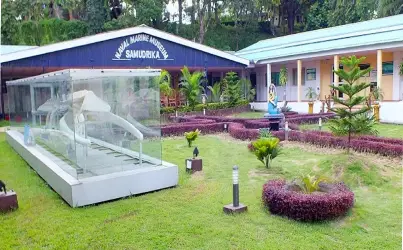
Q: What other attractions are near Forest Museum? A: Within the same complex: Chatham Saw Mill (operational tour), World War II bomb pit, Japanese bunker. Nearby attractions include Cellular Jail (10 km), Anthropological Museum (5 km), Samudrika Museum (8 km), and Corbyn’s Cove Beach (4 km).
Q: Is there a guided tour available? A: Yes, local guides are available at the entrance for ₹50-200, providing 45-60 minute tours explaining timber types, craftsmanship techniques, historical context, and conservation practices. Guides significantly enhance the visiting experience with detailed information.
Q: What is the best time to visit Forest Museum? A: The best time is October to March (winter) when weather is pleasant (20-28°C). Visit during the morning session (8:00-11:00 AM) for cooler temperatures and better lighting. Avoid the lunch break closure (12:00-2:30 PM) and Sundays when the museum is closed.
Q: Are there food facilities at Forest Museum? A: A small staff canteen at the Chatham Saw Mill complex offers basic snacks and affordable meals. For more dining options, restaurants are available in Port Blair (11 km away) serving Indian, Chinese, and seafood cuisines.
Conclusion: The Forest Museum in Port Blair offers a unique window into the Andaman Islands’ ecological wealth and artistic traditions. While beaches and water sports dominate most Andaman itineraries, the Forest Museum provides essential context about the islands’ terrestrial heritage—the forests that shaped economic development, the timber that attracted colonial powers, and the craftsmanship that transforms raw materials into beauty. Combined with touring the operational Chatham Saw Mill and exploring World War II remnants, a visit to the Forest Museum creates a comprehensive understanding of how nature, industry, history, and artistry intersect in this remarkable archipelago. Don’t miss this meaningful cultural stop on your Andaman journey.
Travel Tourister is a leading Travel portal where we introduce travellers to trusted travel agents to make their journey hasselfree, memorable And happy. Travel Tourister is a platform where travellers get Tour packages ,Hotel packages deals through trusted travel companies And hoteliers who are working with us across the world. We always try to find new and more travel agents and hoteliers from every nook and corners across the world so that you could compare the deals with different travel agents and hoteliers and book your tour or hotel with the one you have chosen according to your taste and budget.




















 Call
Call Enquiry