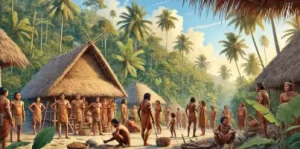
The History of Andaman Islands begins with its indigenous tribes, who have called these islands home for over 60,000 years. The Great Andamanese, Onge, Jarawa, and Sentinelese tribes represent some of the world’s oldest surviving populations, maintaining their unique cultures and traditions despite centuries of external influences. Learn more about these fascinating communities in our detailed guide on Tribes of Andaman.
These indigenous peoples developed sophisticated survival techniques, living harmoniously with nature through hunting, gathering, and fishing. Archaeological evidence suggests these communities migrated from Africa during prehistoric times, establishing a deep connection with the islands’ dense forests and pristine waters. Their isolation preserved distinct languages, customs, and social structures that continue to fascinate anthropologists and historians studying the History of Andaman Islands today.
The documented History of Andaman Islands gained momentum during the medieval period when Arab and Malay traders navigated these waters. Ancient texts reference these islands as “Angademan,” meaning “Island of Hanuman,” reflecting Hindu mythological connections. Marco Polo’s 13th-century writings mentioned these islands as inhabited by cannibals, though historical accuracy of such accounts remains debatable.
European interest intensified during the Age of Exploration. Danish explorers attempted unsuccessful colonization in the 1750s, marking the beginning of foreign intervention in the History of Andaman Islands. The British East India Company soon recognized the strategic importance of these islands for controlling maritime routes between India and Southeast Asia.
| Year/Period | Event | Significance |
|---|---|---|
| 60,000 BCE | First tribal settlements | Indigenous tribes establish communities |
| 9th Century CE | Arab traders arrive | Islands enter documented history |
| 1789 | Lt. Archibald Blair surveys islands | British exploration begins |
| 1858 | Penal colony established | Post-mutiny British settlement |
| 1896-1906 | Cellular Jail construction | Colonial prison built |
| 1942-1945 | Japanese occupation | WWII period under Azad Hind |
| 1947 | Indian independence | Islands become Union Territory |
| 1979 | Tourism development begins | Modern era commences |
The most transformative chapter in the History of Andaman Islands unfolded under British colonial rule. Following the 1857 Sepoy Mutiny, the British established a penal colony in 1858, forever changing the archipelago’s destiny. Port Blair became the administrative center, named after Lieutenant Archibald Blair who surveyed the islands in 1789.
The construction of the infamous Cellular Jail between 1896 and 1906 represents the darkest period in the History of Andaman Islands. This colonial prison, designed to isolate Indian political prisoners, earned the chilling nickname “Kala Pani” (Black Water). The jail’s architecture featured seven wings radiating from a central tower, containing 698 individual cells where freedom fighters endured brutal conditions.
Notable revolutionaries including Veer Savarkar, Batukeshwar Dutt, and Yogendra Shukla suffered incarceration here. Their stories of resistance and sacrifice transformed the Cellular Jail into a symbol of India’s independence struggle, making it an integral part of the History of Andaman Islands narrative. Today, visitors can experience this history through various things to do in Andaman, including the moving Light and Sound Show at the Cellular Jail.
World War II introduced another dramatic turn in the History of Andaman Islands. Japanese forces occupied the islands from 1942 to 1945, renaming them “Shaheed” (Martyr) and “Swaraj” (Self-rule) under the provisional government of Azad Hind, led by Netaji Subhas Chandra Bose. This brief period saw the islands functioning under Indian administration for the first time, albeit under Japanese military oversight.
The occupation period witnessed significant hardships for local residents, including food shortages and forced labor. British forces reclaimed the islands in 1945, though the Japanese occupation remains a significant milestone in the History of Andaman Islands, highlighting their strategic importance during global conflicts.
The History of Andaman Islands entered a new era following India’s independence in 1947. The islands became a Union Territory, directly administered by the central government. Rehabilitation programs relocated mainland Indian settlers, particularly refugees from East Pakistan (now Bangladesh), transforming the demographic landscape while raising concerns about indigenous communities’ welfare.
Development initiatives focused on infrastructure, education, and healthcare while attempting to balance modernization with environmental conservation. The establishment of tribal reserves aimed to protect indigenous populations from external interference, though debates about their rights and autonomy continue influencing contemporary discussions about the History of Andaman Islands.
| Landmark | Location | Historical Importance | Entry Fee |
|---|---|---|---|
| Cellular Jail | Port Blair | Freedom struggle memorial | ₹30 (Indians), ₹100 (Foreigners) |
| Ross Island | Port Blair | British administrative headquarters | ₹30 (Indians), ₹500 (Foreigners) |
| Viper Island | Port Blair | First British penal settlement | ₹200 (including ferry) |
| Anthropological Museum | Port Blair | Indigenous tribal heritage | ₹20 (Indians), ₹50 (Foreigners) |
| Samudrika Naval Museum | Port Blair | Maritime and naval history | ₹10 (Indians), ₹50 (Foreigners) |
Explore these historical sites through our comprehensive Andaman tourism guide which helps you plan visits to all major attractions.
Recent decades have witnessed the transformation of these historical islands into premier tourist destinations. The Cellular Jail National Memorial attracts thousands of visitors annually, offering light-and-sound shows that bring the History of Andaman Islands alive through powerful narratives of sacrifice and resilience.
UNESCO recognition of various historical sites has elevated global awareness about the archipelago’s significance. Museums, heritage walks, and guided tours now educate visitors about multiple dimensions of the History of Andaman Islands, from indigenous cultures to colonial exploitation and freedom struggles. Visitors can discover more through tourist attractions in Andaman that showcase both natural beauty and historical significance.
Conservation efforts play a crucial role in maintaining the authenticity of historical sites throughout the islands. The Anthropological Museum in Port Blair houses extensive collections documenting indigenous tribes’ lifestyles, while the Samudrika Naval Marine Museum showcases maritime history and ecology.
Government initiatives emphasize sustainable tourism that respects both historical significance and environmental fragility. Archaeological surveys continue uncovering new insights into the History of Andaman Islands, revealing settlement patterns, trade connections, and cultural exchanges that shaped these islands over millennia.
The Island Tourism Festival celebrates this rich heritage annually, featuring cultural performances, exhibitions, and activities that highlight the islands’ historical journey from ancient settlements to modern tourist paradise.
| Month Range | Weather Conditions | Ideal For |
|---|---|---|
| October – February | Pleasant, 20-30°C | All historical tours |
| March – May | Warm, 24-37°C | Indoor museum visits |
| June – September | Monsoon, occasional rain | Light and Sound shows |
For detailed monthly weather information, check our guides on Andaman weather throughout the year.
Visitors interested in the History of Andaman Islands should allocate at least 2-3 days for historical exploration within their Andaman trip. Consider our Andaman budget tour packages which include visits to all major historical landmarks while keeping costs affordable.
A typical historical tour might include:
The History of Andaman Islands represents a powerful testament to human resilience, cultural diversity, and the enduring struggle for freedom. From ancient indigenous societies to colonial prisons and modern tourist paradise, these islands have witnessed extraordinary transformations while retaining their mystical allure. Understanding this rich heritage enhances appreciation for the Andaman and Nicobar Islands not merely as vacation destinations but as living monuments to India’s complex and inspiring historical journey.
Visitors exploring these islands today walk through layers of history, where pristine beaches meet profound historical significance, creating an unparalleled experience that honors both natural beauty and human courage embedded in the remarkable History of Andaman Islands. Whether you’re planning an Andaman honeymoon tour or a family vacation through Andaman packages from Chennai, incorporating these historical sites enriches your journey with deeper meaning and cultural understanding.
2nd Floor, 39, Above Kirti Club, DLF Industrial Area, Kirti Nagar, New Delhi, Delhi 110015



Travel Tourister is a leading Travel portal where we introduce travellers to trusted travel agents to make their journey hasselfree, memorable And happy. Travel Tourister is a platform where travellers get Tour packages ,Hotel packages deals through trusted travel companies And hoteliers who are working with us across the world. We always try to find new and more travel agents and hoteliers from every nook and corners across the world so that you could compare the deals with different travel agents and hoteliers and book your tour or hotel with the one you have chosen according to your taste and budget.
Copyright © Travel Tourister, India. All Rights Reserved























 Call
Call Enquiry