Bangkok Itinerary: 3-5 Days in Thailand’s Capital – Beyond the Obvious
Published on : 27 Jan 2026
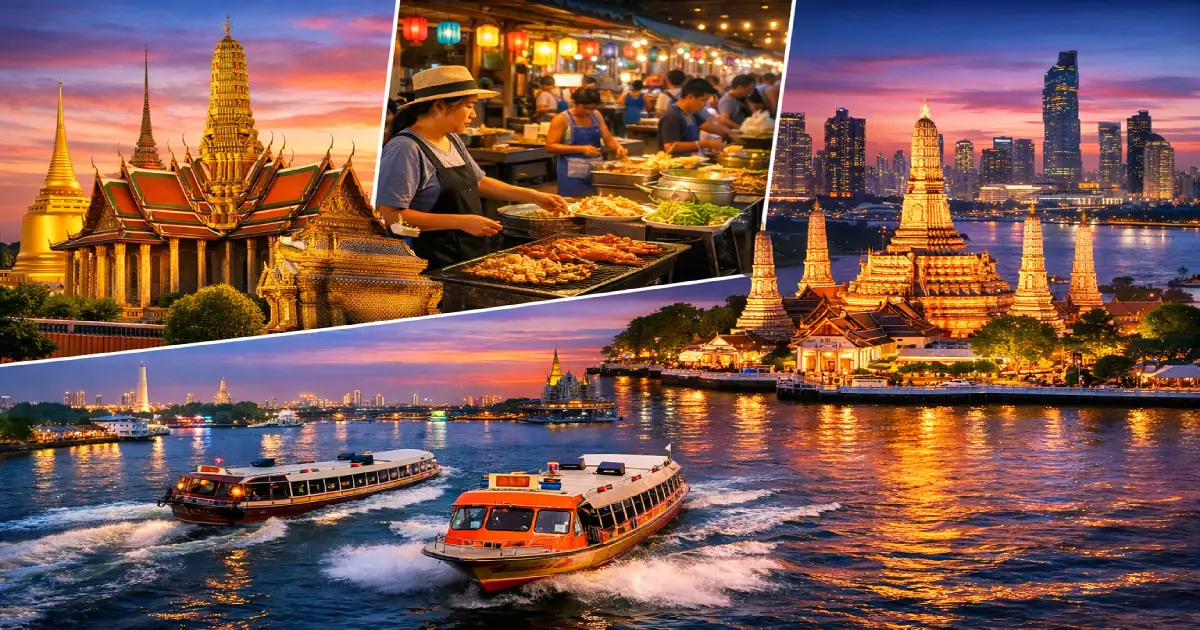
Standing in front of the Grand Palace last December, I watched an American couple practically sprint through the complex, snapping photos without stopping. Twenty minutes later, they were done, checking their phones for the next attraction.
“Grand Palace, check!” the woman announced. “What’s next on the list?”
I cringed. They’d just rushed through one of Southeast Asia’s most stunning architectural marvels like it was a museum exit gift shop.
After visiting Bangkok twelve times over eight years—spending anywhere from rushed 48-hour layovers to month-long deep dives—I’ve learned this: Bangkok itinerary success isn’t about hitting every attraction in your guidebook. It’s about understanding the city’s rhythm and choosing experiences that match your interests.
Bangkok overwhelms first-timers. The heat hits you like a wall. The traffic makes LA look efficient. The streets assault every sense—diesel fumes mixing with incense, honking horns competing with temple chants, street food sizzling next to designer boutiques.
But beneath the chaos lies incredible depth. Temples that genuinely inspire awe. Food that ruins you for Thai restaurants back home. Neighborhoods where you forget you’re in a megacity of 11 million people.
This isn’t another generic “Day 1: Grand Palace, Day 2: Floating Markets” itinerary. This is a framework for three different Bangkok visits—3 days for first-timers hitting essentials, 4 days for balanced exploration, and 5 days for deeper neighborhood immersion—all based on real experience navigating Bangkok’s strengths and avoiding its tourist traps.
I’ll show you how to visit temples without melting in midday heat, where to eat like locals instead of tourists, which neighborhoods deserve your limited time, and—critically—what you can skip without feeling like you missed Bangkok.
Whether you have a weekend layover or a full week, you’ll know exactly how to spend your time.
Quick Summary: How to Structure Your Bangkok Days
Let’s start with the framework everyone needs:
Duration
What You Can Realistically Do
Best For
3 Days
Grand Palace/Wat Pho, Chinatown, one neighborhood deep-dive, rooftop bar, floating/train market day trip
First-timers, limited time, hitting essentials
4 Days
Above + Chatuchak Market, Bangkok street food tour, additional temple (Wat Arun), second neighborhood, massage/spa
Balanced exploration, mix of sights and experiences
5 Days
Above + Ayutthaya day trip, cooking class, hidden gems tour, time to just wander, shopping if desired
Weather: 32-40°C (90-104°F), oppressive Best for: Indoor activities, malls, quick temple visits Crowds: Moderate (except Songkran in April) Prices: Medium Strategy: Temples before 9 AM, malls midday, rooftop bars at sunset
Songkran (mid-April):
Massive water fights citywide
Fun but chaotic
Book 2-3 months ahead
Protect electronics
Expect everything closed April 13-15
Rainy Season (June-October)
Weather: 26-32°C (79-90°F), afternoon rain Best for: Budget travelers, foodies, museum/mall days Crowds: Lowest Prices: Lowest (40-60% below peak) Reality: Rain usually 1-2 hours, not all-day. Mornings often sunny.
Sample Budgets: 4-Day Bangkok Trip
Budget Traveler (฿12,000 / $333 total)
Accommodation: Hostel dorm, ฿500/night x 4 = ฿2,000
Food: Street food + food courts, ฿600/day x 4 = ฿2,400
Transport: BTS/MRT/boat, ฿300/day x 4 = ฿1,200
Activities:
Grand Palace + Wat Pho + Wat Arun: ฿800
Chatuchak Market: ฿200 (food/drinks)
One rooftop bar: ฿400
DIY food tour: ฿800
Massage: ฿500
Total activities: ฿2,700
Miscellaneous: ฿700
Total: ฿9,000 + ฿3,000 buffer = ฿12,000 ($333)
Mid-Range Traveler (฿35,000 / $972 total)
Accommodation: 3-star hotel, ฿2,500/night x 4 = ฿10,000
Food: Mix of street food and restaurants, ฿1,200/day x 4 = ฿4,800
Transport: Mix BTS and Grab, ฿600/day x 4 = ฿2,400
Activities:
Temples: ฿800
Mahanakhon SkyWalk: ฿880
Cooking class: ฿1,500
Ayutthaya tour: ฿1,800
Rooftop bar night: ฿1,200
Massage + spa: ฿1,500
Shopping: ฿3,000
Total activities: ฿10,680
Miscellaneous: ฿2,000
Total: ฿29,880 + ฿5,120 buffer = ฿35,000 ($972)
Luxury Traveler (฿80,000+ / $2,222+ total)
Accommodation: 5-star hotel, ฿8,000/night x 4 = ฿32,000
Food: Fine dining + rooftop bars, ฿3,500/day x 4 = ฿14,000
Transport: Private car service, ฿2,000/day x 4 = ฿8,000
Activities:
Temples with private guide: ฿3,500
Mahanakhon: ฿880
Private cooking class: ฿3,500
Luxury spa: ฿5,000
Michelin dinner: ฿6,000
Rooftop bars (2 nights): ฿3,000
Shopping: ฿10,000+
Total activities: ฿31,880
Miscellaneous: ฿5,000
Total: ฿90,880+ ($2,524+)
Frequently Asked Questions
How many days do I need in Bangkok?
3-4 days is ideal for first-time visitors to see major temples, experience different neighborhoods, enjoy the food scene, and get a feel for the city without feeling rushed. 5 days allows for day trips. 2 days is doable but rushed.
What is the best area to stay in Bangkok for first-time visitors?
Sukhumvit (between Nana and Asok BTS stations) or Riverside. Sukhumvit offers BTS access, international dining, and safety. Riverside provides scenic views, ferry access to temples, and more atmosphere. Both are excellent for first-timers.
Is Bangkok safe for tourists?
Yes, Bangkok is very safe for tourists compared to many major cities. Violent crime against tourists is rare. Main concerns are petty theft (watch belongings on crowded BTS) and scams (tuk-tuk drivers, fake gems). Use common sense and you’ll be fine.
Can I drink tap water in Bangkok?
No, don’t drink tap water. Stick to bottled water (฿7-15 at 7-Eleven). Hotels provide free bottled water. Restaurants serve filtered water. Ice in restaurants is generally safe (made from filtered water).
What should I wear to temples in Bangkok?
Cover shoulders and knees—no exceptions. No see-through clothing, no ripped jeans, no sleeveless tops. Bring a sarong or scarf to wrap around if needed. Many temples rent cover-ups for ฿100-200 if you arrive improperly dressed. Shoes must be removed before entering temple buildings.
Is street food safe to eat in Bangkok?
Generally yes, if you follow basic rules: eat where you see locals eating, choose busy stalls (high turnover = fresh food), watch food being cooked, avoid pre-cut fruit, stick to bottled water. Millions eat street food daily without issues. Start slowly if you have sensitive stomach.
How do I get from Bangkok airport to the city?
Suvarnabhumi Airport:
Airport Rail Link: ฿45, 30 minutes to city center, connects to BTS
Taxi: ฿250-400 plus ฿50 airport toll, 45-90 minutes depending on traffic
Grab: ฿300-500, similar time to taxi
Don Mueang Airport:
Bus A1: ฿30 to BTS Mo Chit, then BTS into city
Taxi: ฿200-350, 45-90 minutes depending on traffic
Train: ฿5-20 to Bang Sue, slow but very cheap
What’s the best way to get around Bangkok?
BTS Skytrain and MRT Metro for anywhere they reach (fast, air-conditioned, reliable). Chao Phraya Express Boat for riverside destinations and temples. Grab for door-to-door convenience. Walking where possible. Avoid taxis during rush hour (traffic brutal).
When should I avoid visiting Bangkok?
March-April is hottest (35-40°C/95-104°F) and includes burning season air pollution. September is wettest month. December 20-January 5 is most crowded and expensive (peak tourist season). Otherwise, Bangkok is year-round destination.
Final Thoughts: Making Bangkok Work for You
After twelve visits spanning rushed layovers to month-long stays, I’ve learned that Bangkok reveals itself slowly. That American couple sprinting through the Grand Palace missed the point entirely.
Here’s what I want you to understand:
Bangkok rewards slowness. Spending 2 hours at Wat Pho, wandering the complex, getting a massage, watching monks, absorbs you in ways that a 20-minute photo stop never will.
The best Bangkok isn’t always in guidebooks. Some of my favorite memories: stumbling into a neighborhood festival in Ari, eating boat noodles at a random Victory Monument shop recommended by a taxi driver, watching sunset from a non-famous rooftop bar with locals.
Heat management determines success. Trying to cram five activities into a 40°C afternoon leads to heat exhaustion and misery. Instead: temples early, malls/museums midday, neighborhoods/bars evening. Work with Bangkok’s climate, not against it.
Food is the real attraction. The Grand Palace is spectacular, but you’ll remember Thip Samai’s pad thai and Som Tam Nua’s papaya salad long after temple details fade. Allocate time and budget for eating well.
Traffic is genuinely brutal. That 3km journey can take 90 minutes at rush hour. Use BTS/MRT religiously. Schedule loosely. Don’t pack your days so tight that one traffic jam ruins everything.
Different neighborhoods reveal different Bangkoks. Tourist Bangkok (Rattanakosin), Modern Bangkok (Sukhumvit), Hip Bangkok (Thonglor/Ari), Traditional Bangkok (Thonburi across river)—they barely resemble each other. Explore multiple areas.
Start with this itinerary, then customize based on what excites YOU:
Temple-obsessed? Add Wat Saket, Wat Benchamabophit, Marble Temple
Foodie? Do multiple food tours, cooking classes, market visits
Shopper? Add full days for Chatuchak, Platinum, Pratunam
Culture seeker? Include Jim Thompson House, National Museum, traditional performances
The three-day framework gives you Bangkok’s essentials. The fourth and fifth days let you specialize based on your interests.
Book accommodation near BTS. Start temple visits before 9 AM. Try street food from busy stalls. Get at least one massage. Skip the ping pong shows and gem store scams.
Bangkok is chaotic, overwhelming, and occasionally frustrating. It’s also magical, delicious, and endlessly fascinating.
Your Bangkok adventure awaits. Now you know exactly how to spend your days.
About Travel Tourister: Our team has collectively spent months exploring Bangkok across multiple visits and seasons. This guide draws from extensive on-the-ground experience, testing itineraries with different time constraints, and helping thousands of readers maximize their Bangkok visits. We update recommendations based on new openings, closures, and evolving neighborhood dynamics.
As a lead contributor for Travel Tourister, Vinay is dedicated to serving our Tier 1 audience (US, UK, Canada, Australia). His mission is to deliver precise, fact-checked news and actionable, data-driven articles that empower readers to make informed decisions, minimize travel risks, and maximize their adventure without compromising safety or budget.
Travel Tourister is a leading Travel portal where we introduce travellers to trusted travel agents to make their journey hasselfree, memorable And happy. Travel Tourister is a platform where travellers get Tour packages ,Hotel packages deals through trusted travel companies And hoteliers who are working with us across the world. We always try to find new and more travel agents and hoteliers from every nook and corners across the world so that you could compare the deals with different travel agents and hoteliers and book your tour or hotel with the one you have chosen according to your taste and budget.




 Call
Call Enquiry