When to complete: Up to 7 days before arrival (recommended: 48-72 hours before)
Cost: FREE
What’s required:
- Passport details
- Flight information
- Accommodation address in Thailand (first night minimum)
- Contact information
- Travel itinerary overview
- No health declarations required (COVID measures removed)
How to complete:
- Visit official Thailand TDAC website: thaiarrivals.go.th (avoid third-party scam sites)
- Fill online form (15-20 minutes)
- Receive QR code via email
- Save QR code to phone (screenshot or PDF)
- Present at immigration upon arrival
Important: Immigration officers WILL check for TDAC QR code. Missing it causes delays and potential entry denial. Airlines increasingly check before boarding.
Visa Exemption (Tourist Entry)
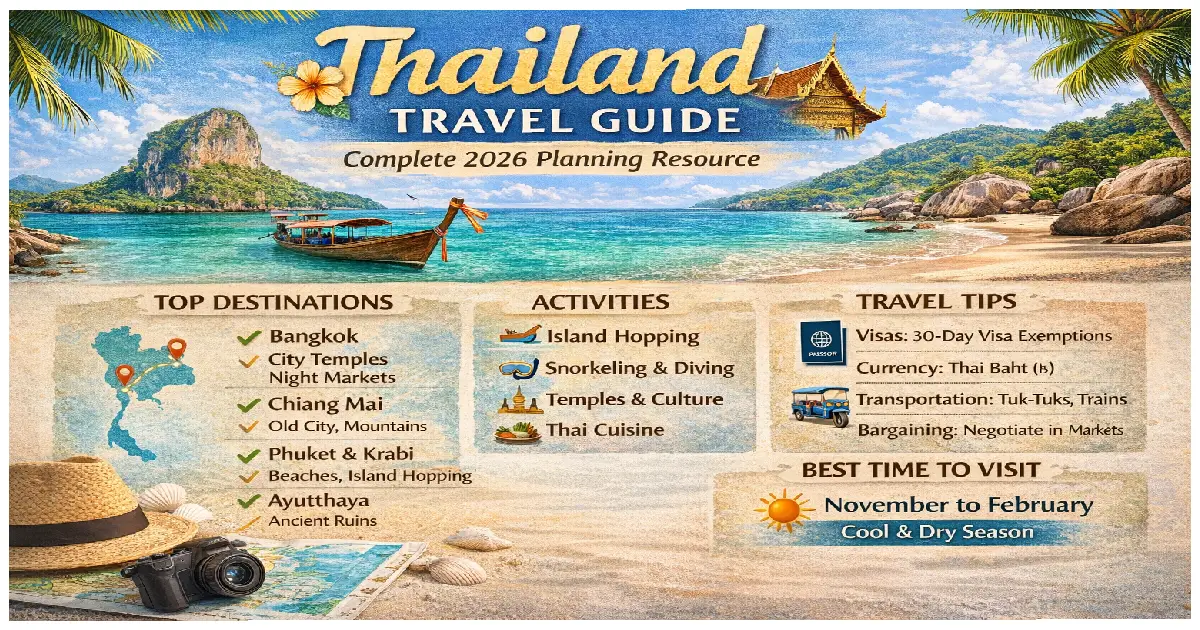
Duration: 60 days (doubled from 30 days in 2024)
Cost: FREE
Eligible countries: 93 nations including USA, UK, Canada, Australia, EU countries, Japan, South Korea, and more
Extension: Additional 30 days possible at immigration offices (1,900 THB / ~$55 USD)
Total possible stay: 90 days on visa exemption + extension
Requirements:
- Passport valid 6+ months from entry date
- Proof of onward travel within 60 days (increasingly checked)
- Proof of accommodation (first night booking)
- Proof of funds (20,000 THB per person, rarely checked but technically required)
Border runs:
- Land border entries limited to 2 per calendar year
- Unlimited air entries (though excessive entries raise scrutiny)
- Myanmar, Laos, Cambodia, Malaysia borders all viable
Visa on Arrival (VOA)
Duration: 15 days (NOT extendable)
Cost: 2,000 THB (~$58 USD)
Eligible countries: 20+ countries including China, India, Saudi Arabia, and others NOT on visa exemption list
Requirements:
- Same as visa exemption plus:
- Recent passport photo
- Completed arrival card
- Cash payment at airport
Not recommended if eligible for visa exemption due to shorter stay and cost.
Tourist Visa (Apply Before Travel)
Duration: 60 days (extendable 30 days = 90 total)
Cost: $40-80 USD depending on embassy/consulate
Apply at: Thai embassy/consulate in home country or neighboring countries
Best for:
- Travelers wanting 90+ days (can get multiple entries)
- Those planning extensive travel
- Digital nomads needing longer stays
Multiple Entry Tourist Visa (METV)
Duration: 6 months validity with 60-day stays per entry
Cost: ~$200 USD
Requirements:
- Proof of funds ($7,000+ in bank account)
- Employment letter or business registration
- Travel itinerary
- Accommodation bookings
Best for: Frequent visitors, digital nomads basing in Thailand with regional travel
Special Entry Schemes
Thailand Elite Visa:
- 5-20 year renewable visa
- Cost: $16,000-$64,000 depending on tier
- VIP immigration services, airport lounge access, golf privileges
- Best for: Long-term residents, retirees, wealthy travelers
Long-Term Resident (LTR) Visa:
- 10-year visa (new 2022 program)
- Categories: Wealthy global citizens, wealthy pensioners, work-from-Thailand professionals, highly-skilled professionals
- Requires significant income/assets
- Tax benefits included
2026 Tourism Fee Update
Status: Proposed but NOT YET implemented
Proposed amount: 300 THB (~$9 USD) per person
Purpose: Tourism infrastructure, environmental conservation, accident insurance
When: Government continues discussing but no confirmed launch date
Current reality: As of January 2026, NO tourism fee charged. Ignore websites claiming otherwise—they’re scams.
Getting to Thailand
Major International Airports
Suvarnabhumi Airport (BKK) – Bangkok:
- Thailand’s primary international gateway
- Modern, efficient, well-connected
- 30km east of Bangkok city center
- Airport Rail Link connects to city (45 minutes, 45 THB)
- Taxis available (metered, 300-400 THB to center + 50 THB airport surcharge + tolls)
- Grab/Bolt ride-hailing works but must use designated pickup areas
Don Mueang Airport (DMK) – Bangkok:
- Secondary Bangkok airport (older)
- Budget airline hub (AirAsia, Nok Air, etc.)
- 24km north of city center
- Train and bus connections available
- Cheaper taxi fares than Suvarnabhumi (250-350 THB)
- Less crowded, quicker immigration
Phuket International Airport (HKT):
- Southern Thailand’s main hub
- Direct international flights from Asia, Middle East, Europe
- 32km from Patong Beach
- Airport bus available (100-200 THB)
- Taxis expensive (600-1,000 THB depending on destination)
- Grab available outside airport grounds
Chiang Mai International Airport (CNX):
- Northern Thailand gateway
- Growing international connections (mostly regional)
- 4km from old city
- Songthaew and taxi readily available (150-200 THB)
- Very manageable small airport
Other airports with international service:
- Krabi (KBV): Andaman coast beaches
- Hat Yai (HDY): Southern Thailand, Malaysia border
- U-Tapao (UTP): Eastern seaboard, Pattaya area
- Koh Samui (USM): Direct island access (expensive Bangkok Airways monopoly)
Budget Airlines Within Asia
From Southeast Asia:
- AirAsia (extensive network, budget leader)
- Scoot (Singapore)
- Jetstar Asia
- VietJet (Vietnam)
From China:
- Multiple Chinese carriers with competitive pricing
- Thai Lion Air, Thai AirAsia connections
From India:
- IndiGo, AirAsia India
- Thai carriers on major routes
Booking tips:
- Book 2-3 months ahead for best prices
- Tuesday-Thursday departures often cheaper
- Avoid school holidays and peak seasons
- Check baggage policies (budget airlines charge for everything)
Overland Entry Points
Myanmar borders:
- Currently unstable due to internal conflict
- Mae Sot, Ranong, Three Pagodas Pass
- Not recommended 2026 due to safety concerns
Laos borders:
- Chiang Khong-Huay Xai (popular, easy)
- Nong Khai-Vientiane (friendship bridge, busy)
- Mukdahan-Savannakhet
- Multiple other crossings
- Generally smooth, recommended
Cambodia borders:
- Aranyaprathet-Poipet (most popular, can be chaotic)
- Trat-Koh Kong (island access)
- Hat Lek-Cham Yeam
- Tensions in 2025 but tourist routes remain open
Malaysia borders:
- Padang Besar, Sadao (south Thailand)
- Multiple crossings in southern provinces
- Well-established, easy
Visa on arrival available at most land borders for eligible nationalities, though visa exemption more common.
When to Visit Thailand
Cool/Dry Season (November-February)
Best overall for most travelers
Weather:
- Comfortable temperatures (25-30°C / 77-86°F)
- Minimal rainfall across most regions
- Pleasant humidity levels
- Clear skies ideal for photography
Advantages:
- Perfect beach weather
- Comfortable temple exploration
- Outdoor activities enjoyable
- Festivals: Loy Krathong (November), New Year celebrations
Disadvantages:
- Peak tourist season = highest prices
- Crowded beaches and attractions
- Advance booking essential
- Accommodation prices spike 30-50%
Best for: First-time visitors, families, beach holidays, comfortable exploration
Hot Season (March-May)
Brutal heat tests endurance
Weather:
- Very hot (35-40°C / 95-104°F common)
- Dry until April
- Northern Thailand burning season (March-April) creates severe air pollution
- April particularly uncomfortable everywhere
Advantages:
- Lower prices (shoulder season)
- Fewer tourists
- Songkran festival (mid-April water festival)
- Good diving conditions southern islands
Disadvantages:
- Extreme heat limits outdoor activities
- Chiang Mai air quality dangerous (PM2.5 levels hazardous)
- Afternoon activities challenging
- Beach islands increasingly crowded by May
Best for: Budget travelers, those avoiding crowds, Songkran enthusiasts
Rainy Season (June-October)
Underrated and misunderstood
Weather:
- Afternoon/evening rain showers (not all-day downpours typically)
- September-October wettest months
- Cooler than hot season
- Regional variations significant
Advantages:
- Lowest prices of year (50-70% cheaper accommodation)
- Fewest tourists
- Lush green landscapes
- Some areas (Koh Samui) experience less rain
Disadvantages:
- Some islands/dive shops close
- Boat services reduced/canceled in rough weather
- Flooding possible (though rarely affects tourists)
- Outdoor plans require flexibility
Regional variations:
- Bangkok: Short afternoon showers, generally manageable
- Andaman coast (Phuket/Krabi): Heavy rain May-October
- Gulf islands (Koh Samui): Opposite pattern, rain November-December
- Northern Thailand: Rain but still explorable
Best for: Budget travelers, those seeking authenticity over perfect weather, flexible schedules
Regional Climate Differences
Bangkok & Central:
- Hot year-round
- Cool season pleasant
- Rainy season manageable
Northern Thailand:
- Cooler in cool season (can reach 10°C / 50°F at night in mountains)
- Burning season (March-April) creates air quality crisis
- Rain season green and beautiful
Southern Islands:
- Andaman coast: Dry November-April, rainy May-October
- Gulf coast: Dry January-August, rainy September-December
- Always warm/hot
- Year-round swimming possible (with weather awareness)
Northeast (Isaan):
- Hotter and drier than rest of country
- Extreme temperatures (can exceed 40°C / 104°F)
- Less touristy, more authentic
Transportation Within Thailand
Domestic Flights
Budget airlines dominate:
- Thai AirAsia: Largest network, most flights
- Nok Air: Extensive domestic routes
- Thai Lion Air: Competitive pricing
- Thai Smile/Thai Airways: More expensive, better service
Typical costs:
- Bangkok-Chiang Mai: $30-80
- Bangkok-Phuket: $35-90
- Bangkok-Koh Samui: $60-120 (Bangkok Airways near-monopoly)
Booking tips:
- Book 2-3 weeks ahead for best prices
- Early morning flights most reliable
- Check baggage allowances (budget carriers charge for everything)
- Don Mueang usually cheaper than Suvarnabhumi for domestic
Trains
State Railway of Thailand operates nationwide network
Classes:
- Third class: Fan-only, hard wooden seats, local experience ($2-10)
- Second class: Fan or A/C, padded seats, comfortable ($10-30)
- First class: A/C sleeper cabins, private compartments ($30-60)
Popular routes:
- Bangkok-Chiang Mai: Overnight sleeper (12-14 hours), scenic, comfortable
- Bangkok-Surat Thani (for islands): Overnight option
- Bangkok-Ayutthaya: Day trip (90 minutes)
- Eastern Line: To Cambodia border
Booking:
- Book sleeper berths 2-4 weeks ahead
- Online: thai-rail-tickets.com or 12go.asia
- At stations: Hua Lamphong (Bangkok main station)
Advantages:
- Scenic routes
- Comfortable overnight travel
- Meet locals
- Affordable
Disadvantages:
- Slow (trains often delayed)
- Limited routes
- Sleeper availability limited
Buses
Extensive network reaching everywhere
Types:
- Local buses: Cheapest, slowest, no A/C usually
- Government buses: BKS operated, reliable, affordable
- Private VIP buses: Nicer seats, A/C, sometimes sketchy operators
- Tourist minivans: Connect tourist destinations, cramped
Booking:
- Major routes: Book at bus terminals or online (12go.asia)
- Tourist routes: Hotels/tour agencies
- Always check reviews of private operators
Typical costs:
- Bangkok-Chiang Mai: $15-30 (VIP overnight)
- Bangkok-Phuket: $20-35 (12+ hours)
- Regional routes: $5-15
Tips:
- VIP buses more comfortable for long journeys
- Overnight buses save accommodation cost
- Temperature often FREEZING (bring layers)
- Watch belongings on overnight trips
Local Transportation
Bangkok:
- BTS Skytrain: Modern, efficient, covers key areas (40-60 THB)
- MRT Subway: Underground system (20-40 THB)
- Airport Rail Link: Connects Suvarnabhumi to city (45 THB)
- Buses: Cheap but complex routes (8-20 THB)
- Taxis: Metered (start 35 THB), insist on meter
- Tuk-tuks: Negotiate price firmly before (100-200 THB short trips)
- Grab/Bolt: Ride-hailing apps widely available
Chiang Mai:
- Songthaews: Red pickup trucks, shared (20-40 THB shared, 100+ THB private)
- Tuk-tuks: Everywhere, negotiate (100-200 THB within city)
- Grab: Available and popular
- Bicycles: Many guesthouses offer free bikes
- Scooters: Rental everywhere (200-300 THB/day)
Islands:
- Scooters: Dominant transport (150-300 THB/day)
- Songthaews: Pickup truck taxis
- Long-tail boats: Island hopping, beaches
- Taxis: Limited, expensive on islands
Scooter safety warning: Thailand has extremely high road accident rates. Wear helmets (legally required), drive defensively, get proper insurance, and assess your skill level honestly before renting.
Ferries & Boats
Island connections essential:
- Lomprayah: Fast catamarans, reliable, pricier
- Seatran: Budget ferries
- Raja Ferry: Connects Surat Thani to Koh Samui/Phangan/Tao
Costs:
- Mainland to Koh Samui: 400-600 THB
- Koh Samui to Koh Phangan: 250-400 THB
- Koh Phangan to Koh Tao: 300-500 THB
Weather considerations: Monsoon season (May-October Andaman, November-December Gulf) can cancel services. Always have backup plans.
Where to Go in Thailand
Bangkok: The Essential Megacity
Days needed: 2-4 days
Thailand’s capital deserves more than the typical overnight transit most travelers give it. Yes, it’s chaotic, hot, and overwhelming—but that’s precisely what makes it fascinating.
Must-experience:
Grand Palace & Wat Phra Kaew:
- Thailand’s most sacred Buddhist temple
- Stunning architecture and craftsmanship
- Crowds overwhelming 9 AM-4 PM (arrive at 8:30 AM opening)
- Dress code strict: shoulders and knees covered
- Entry: 500 THB
Wat Pho (Reclining Buddha):
- Massive 46-meter gold Buddha
- Traditional Thai massage school
- Less crowded than Grand Palace
- Entry: 200 THB
Wat Arun (Temple of Dawn):
- Iconic Khmer-style temple on riverside
- Best viewed at sunset from opposite bank
- Climb steep stairs for city views
- Entry: 100 THB
Chatuchak Weekend Market:
- Massive market (15,000+ stalls)
- Open Saturday-Sunday only
- Everything imaginable for sale
- Arrive early (9-10 AM) before heat intensifies
- Free entry, bring cash
Khao San Road:
- Legendary backpacker street
- Love it or hate it (no middle ground)
- Cheap accommodation, street food, nightlife
- Touristy but part of Thailand experience
Chinatown (Yaowarat):
- Best street food in Bangkok
- Night market atmosphere
- Gold shops, temples, chaos
- Evening visit essential (6-10 PM)
Hidden Bangkok:
- Talat Rot Fai (Train Night Market): Vintage market, hipster vibe
- Pak Khlong Talat (Flower Market): 24-hour flower wholesale
- Airplane Graveyard: Abandoned planes in field
- Erawan Museum: Three-headed elephant building
Bangkok survival tips:
- Stay near BTS/MRT for easy navigation
- Avoid tuk-tuks for transport (overpriced tourist traps)
- Street food generally safe and delicious
- Drink bottled water only
- Malls offer A/C refuge from heat
Learn more about maximizing Bangkok in our detailed Thailand Travel Planning Guide
Chiang Mai: Northern Cultural Heart
Days needed: 3-5 days
Thailand’s northern capital offers everything Bangkok lacks: manageable size, mountain air, traditional culture, and authentic local life.
What to do:
Old City temples:
- Wat Phra Singh: Classic Lanna architecture
- Wat Chedi Luang: Ancient partially-ruined temple
- Wat Phan Tao: Wooden temple, atmospheric
- Free or minimal fees (20-40 THB)
Doi Suthep:
- Mountain temple overlooking city
- 309-step naga staircase (or take funicular)
- Stunning sunset views
- Songthaew from city (40-60 THB round trip)
- Entry: 30 THB
Night markets:
- Sunday Walking Street: Best, entire old city closed
- Saturday Walking Street: South gate area
- Night Bazaar: Daily, touristy but extensive
Cooking classes:
- Dozens of options ($20-40)
- Learn 5-7 Thai dishes
- Market tour included usually
- Highly recommended experience
Elephant sanctuaries:
- Ethical sanctuaries only: No riding, bathing with elephants
- Elephant Nature Park: Most famous, 2,500 THB/day
- Kindred Spirit: Smaller, more intimate
- Book ahead, very popular
Day trips:
- Doi Inthanon: Highest peak in Thailand
- Sticky Waterfalls: Climb limestone falls
- Hill tribe villages: Hmong, Karen communities
- Chiang Rai (3 hours): White Temple, Golden Triangle
Best time: November-February (avoid March-April burning season air pollution)
Southern Islands: Beach Paradise Decision
Choosing your island matters. Each has distinct personality:
Phuket:
- Vibe: Developed, touristy, diverse
- Best for: First-timers, families, variety
- Beaches: Patong (party), Kata/Karon (families), Surin/Bang Tao (upscale)
- Days: 3-5
- Budget: Mid-high (more expensive than other islands)
Koh Samui:
- Vibe: Developed but less chaotic than Phuket
- Best for: Couples, beach relaxation, resorts
- Beaches: Chaweng (busy), Lamai (moderate), Bophut (boutique)
- Days: 3-5
- Budget: Mid-high
Koh Phangan:
- Vibe: Split personality (Full Moon party vs quiet beaches)
- Best for: Backpackers, party seekers, yoga retreats
- Beaches: Haad Rin (party), Thong Nai Pan (quiet), Bottle Beach (remote)
- Days: 3-7
- Budget: Low-mid
Koh Tao:
- Vibe: Diving mecca, backpacker-friendly
- Best for: Divers, budget travelers, beach relaxation
- Activities: Diving certification (cheapest in Thailand), snorkeling
- Days: 3-7
- Budget: Low-mid
Krabi/Railay:
- Vibe: Dramatic limestone cliffs, natural beauty
- Best for: Rock climbers, nature lovers, romantic getaways
- Beaches: Railay (stunning, boat-access only), Ao Nang (tourist base)
- Days: 3-5
- Budget: Mid
Koh Lanta:
- Vibe: Laid-back, less developed
- Best for: Families, those avoiding party scenes, relaxation
- Beaches: Long beaches, quieter atmosphere
- Days: 4-7
- Budget: Low-mid
Koh Lipe:
- Vibe: Maldives of Thailand
- Best for: Snorkeling/diving, pristine beaches, getting away
- Remote: Further south, requires more travel time
- Days: 4-7
- Budget: Mid-high
Island hopping itinerary example (10-14 days):
- Bangkok → Koh Tao (3 days diving) → Koh Phangan (3 days beaches) → Koh Samui (2 days) → Krabi (3 days) → Bangkok
Ayutthaya: Ancient Capital
Days needed: 1 day (day trip from Bangkok) or 2 days
UNESCO World Heritage ancient ruins of Thailand’s former capital (1351-1767).
What to see:
- Wat Mahathat: Famous Buddha head in tree roots
- Wat Phra Si Sanphet: Former royal temple
- Wat Chaiwatthanaram: Khmer-style architecture
- Multiple other temple ruins
How to explore:
- Bicycle rental (50-100 THB/day) – best option
- Tuk-tuk tour (negotiate, 400-600 THB for 3-4 hours)
- Walking (hot and spread out)
Getting there:
- Train from Bangkok (20-100 THB, 90 minutes)
- Minivan (60-80 THB, 1.5 hours)
- Day tour package from Bangkok (800-1,500 THB)
Sukhothai: Earlier Ancient Capital
Days needed: 2 days
Less crowded than Ayutthaya, more serene atmosphere, beautiful park setting.
Historical Park features:
- Central Zone: Main temples, largest Buddha images
- Northern/Southern Zones: Quieter, more ruins
- Bicycle essential for exploration
Getting there:
- Bus from Bangkok (300-400 THB, 6-7 hours)
- Bus from Chiang Mai (250-350 THB, 5-6 hours)
- Positioned well between Bangkok and Chiang Mai
Isaan (Northeast Thailand): Off-the-Beaten-Path
Days needed: 5-14 days (rarely visited by Western tourists)
Thailand’s least touristed region offers authentic culture and unique experiences.
Why visit:
- Authentic Thai life: Minimal Western tourism
- Unique cuisine: Sticky rice, som tam, grilled meats
- Khmer ruins: Phimai, Phanom Rung (rivals Angkor Wat scale)
- Festivals: Rocket festival, silk weaving traditions
- Budget-friendly: Cheapest region in Thailand
Main cities:
- Nakhon Ratchasima (Korat): Gateway, Phimai ruins nearby
- Ubon Ratchathani: Candle festival, Mekong River
- Udon Thani: Red Lotus Sea (December-February)
- Nong Khai: Mekong River town, relaxed vibe
Challenges:
- Limited English
- Less tourist infrastructure
- Hot (especially March-May)
- Requires more independent travel skills
Best for: Adventurous travelers, those seeking authentic experiences, avoiding tourist crowds
Compare Thailand with other Southeast Asian destinations in our Bali vs Thailand 2026 guide
Thailand Budget Breakdown
Daily Costs by Travel Style
Budget Backpacker ($20-30/day):
- Hostel dorm: $5-12
- Street food (3 meals): $6-10
- Local transport: $2-5
- One activity/attraction: $3-8
- Beer/drinks: $2-5
Mid-Range Traveler ($40-70/day):
- Guesthouse/budget hotel: $15-30
- Mix of street food and restaurants: $12-20
- Transport (mix of options): $5-15
- Multiple activities: $10-20
- Drinks/nightlife: $8-15
Comfortable Traveler ($80-150/day):
- Nice hotel/boutique accommodation: $40-80
- Restaurant meals, some splurges: $25-40
- Taxis/private transport: $15-30
- Tours and activities: $20-40
- Comfort and convenience: $10-20
Luxury Traveler ($200+/day):
- Upscale resorts: $100-300+
- Fine dining: $50-100+
- Private drivers/tours: $50-100+
- Premium experiences: $50+
- No budget constraints
Specific Costs (2026 Prices)
Accommodation:
- Hostel dorm bed: 150-400 THB ($4-11)
- Budget guesthouse: 300-600 THB ($8-17)
- Mid-range hotel: 800-1,500 THB ($23-43)
- Boutique hotel: 1,500-3,000 THB ($43-85)
- Beach resort: 2,000-8,000+ THB ($57-230+)
Food:
- Street food meal: 40-80 THB ($1-2.50)
- Local restaurant: 80-150 THB ($2.50-4.50)
- Western breakfast: 150-250 THB ($4-7)
- Mid-range restaurant: 200-400 THB ($6-12)
- Upscale dining: 500-1,500+ THB ($14-43+)
- Beer (local): 50-120 THB ($1.50-3.50)
- Cocktail: 150-300 THB ($4-9)
Activities:
- Temple entrance: 20-100 THB ($0.50-3)
- Cooking class: 800-1,500 THB ($23-43)
- Scuba diving (2 dives): 2,000-3,000 THB ($57-85)
- Snorkeling tour: 800-1,500 THB ($23-43)
- Thai massage (1 hour): 200-500 THB ($6-14)
- Elephant sanctuary: 2,000-3,500 THB ($57-100)
- Island day tour: 1,000-2,500 THB ($29-71)
Transportation:
- Local bus: 8-20 THB ($0.25-0.60)
- BTS/MRT (Bangkok): 20-60 THB ($0.60-1.70)
- Taxi (short trip): 50-150 THB ($1.50-4.30)
- Scooter rental (daily): 150-300 THB ($4-9)
- Domestic flight: 1,000-3,000 THB ($29-85)
- Overnight bus/train: 500-1,200 THB ($14-34)
Money-Saving Tips
Eat like locals:
- Street food vendors and local markets offer best value
- Avoid Western restaurants (3-5x more expensive)
- Food courts in malls provide A/C comfort at local prices
Transportation hacks:
- Walk when possible (Bangkok neighborhoods, Chiang Mai old city)
- Use public transport over taxis
- Overnight buses/trains save accommodation cost
- Book domestic flights 2-3 weeks ahead
Accommodation strategies:
- Book directly with guesthouses (avoid booking fees)
- Stay outside prime tourist zones
- Monthly rates if staying 30+ days (30-50% discount)
- Hostels for solo travelers (meet people + cheap)
Activity savings:
- Many temples free or under 100 THB
- Beaches are free (bring own snorkel gear)
- Hiking and nature exploration costs nothing
- Markets and street wandering = free entertainment
Timing:
- Visit rainy season (May-October) for 50-70% accommodation savings
- Avoid peak (December-February, July-August)
- Book tours directly vs through hotels (markup 20-40%)
Thai Food: What to Eat
Essential Dishes
Pad Thai:
- Stir-fried noodles with egg, tofu/shrimp, peanuts
- Tourist-friendly, found everywhere
- 40-80 THB street vendors, 100-200 THB restaurants
Tom Yum:
- Spicy/sour soup with lemongrass, galangal, lime
- Tom Yum Goong (with shrimp) most famous
- Complex flavors epitomizing Thai cuisine
- 60-150 THB
Green/Red/Massaman Curry:
- Coconut milk-based curries
- Green (spiciest), Red (medium), Massaman (mild, Muslim-influenced)
- With chicken, beef, or vegetables
- 80-180 THB
Som Tam (Papaya Salad):
- Spicy green papaya salad from Isaan region
- Pounded with mortar and pestle
- Can be VERY spicy (specify “mai pet” for mild)
- 40-80 THB
Khao Soi:
- Northern Thai coconut curry noodles
- Crispy noodles on top
- Chiang Mai specialty
- 50-100 THB
Pad Krapow (Basil Stir-fry):
- Minced meat with holy basil, chili, fried egg on rice
- Thai comfort food
- “Krapow moo sap” (with pork) most common
- 50-80 THB
Mango Sticky Rice:
- Sweet coconut sticky rice with ripe mango
- Seasonal (mango season March-June best)
- Perfect dessert
- 60-100 THB
Regional Specialties
Bangkok/Central:
- Boat noodles (kuaytiaw rua)
- Crab fried rice
- Street food variety
Northern:
- Khao Soi
- Sai ua (northern sausage)
- Nam prik (chili dips)
Isaan (Northeast):
- Som tam
- Laab (minced meat salad)
- Sticky rice (khao niao)
- Grilled chicken (gai yang)
Southern:
- Gaeng tai pla (southern curry)
- Fresh seafood
- Muslim-influenced curries
- Spicier than other regions
Where to Eat
Street food stalls:
- Cheapest and often best food
- Look for stalls with locals queuing
- Generally safe if food is cooked fresh
- Peak times (lunch/dinner) = best freshness
Food courts:
- In malls and markets
- Hygienic, A/C, affordable
- Buy coupon card, exchange for food
- Great for trying multiple dishes
Local restaurants:
- Small family-run places
- English menus rare but pointing works
- 80-200 THB per dish typically
- More variety than street stalls
Night markets:
- Social dining atmosphere
- Mix of food and shopping
- Slightly more expensive than day stalls
- Fun experience worth trying
Dietary Considerations
Vegetarian/Vegan:
- Say “jay” for strict vegan/vegetarian
- Many dishes contain fish sauce (ask for “mai sai nam pla”)
- Bangkok/Chiang Mai have dedicated veg restaurants
- Islands more challenging
Spice levels:
- Thai spicy is VERY spicy
- “Mai pet” = not spicy
- “Pet nit noi” = little spicy
- Locals often ask foreigners automatically
Food safety:
- Ice in tourist areas generally safe (made from purified water)
- Avoid tap water
- Street food cooked fresh usually fine
- Watch vendor hygiene practices
- Safety & Practical Information




 Call
Call Enquiry