Things to Do in Miami — Cuban Culture, Street Art, Museums & Everglades Adventures
By Travel Tourister | Updated February 2026
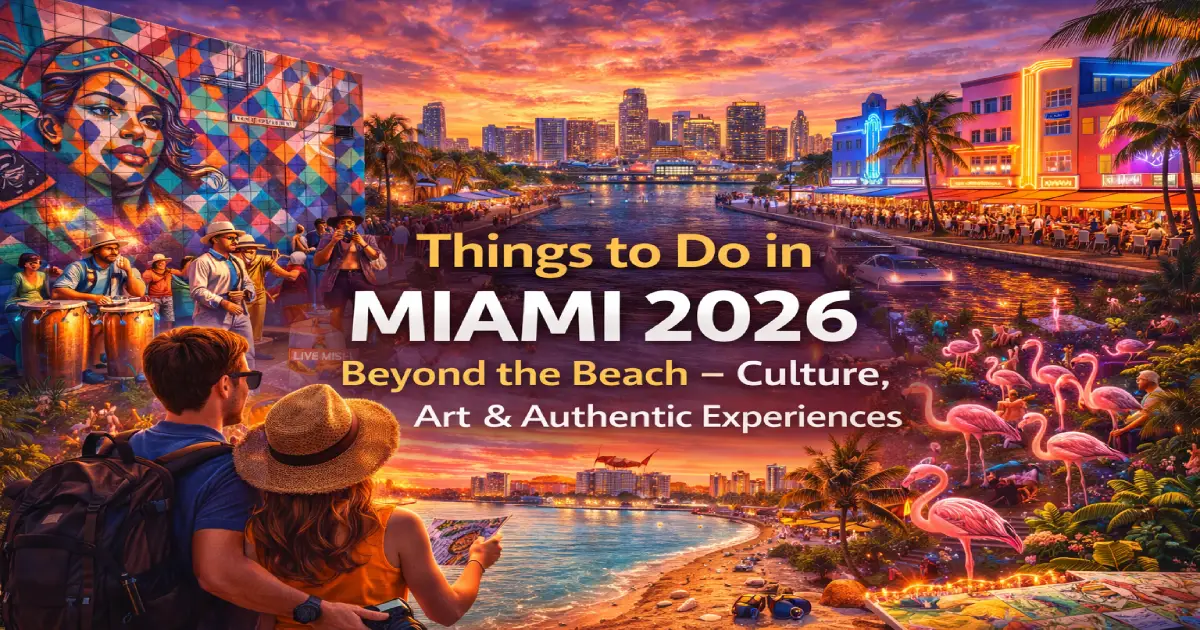
Miami offers far more than South Beach’s Art Deco facades and turquoise waters—it’s America’s most Latin American city, where Cuban coffee culture meets contemporary art, where Haitian rhythms blend with Colombian salsa, where subtropical wilderness begins just 30 miles from downtown skyscrapers, and where neighborhoods retain distinct identities shaped by waves of Caribbean and Latin American immigration.
I’ve explored Miami 15 times over the past decade, progressively moving beyond beach-and-party tourism to discover the mainland’s cultural depth. Early visits focused predictably on South Beach nightlife and oceanfront lounging. Later trips revealed Little Havana’s authentic Cuban character (Calle Ocho domino parks, ventanita coffee culture, Ball & Chain salsa nights), Wynwood’s transformation from warehouse district to outdoor art museum, Design District’s luxury-art hybrid, Vizcaya’s Gilded Age opulence, and Everglades’ airboat adventures through sawgrass marshes teeming with alligators just 45 minutes from urban intensity.
This comprehensive 2026 guide breaks down Miami’s best non-beach activities using verified data from
Greater Miami Convention & Visitors Bureau, neighborhood expertise from years of exploration, and honest assessments of what delivers authentic experiences versus tourist traps. We’ll explore Little Havana’s Cuban soul, decode Wynwood’s street art scene, reveal mainland Miami’s diverse neighborhoods, navigate museum options, detail Everglades excursions, and provide practical advice on experiencing Miami’s multicultural character beyond superficial tourism.
Whether spending a day exploring mainland from Miami Beach base or dedicating entire trip to cultural immersion, understanding Miami’s non-beach attractions transforms superficial sun-and-sand visits into meaningful engagement with America’s gateway to Latin America and the Caribbean.
Understanding Mainland Miami vs Miami Beach
Geography & Transportation
Miami Beach (Barrier Island):
- 7-mile island, Atlantic Ocean beaches
- Art Deco, South Beach, resort focus
- Walkable, compact, tourist-centric
- This article’s focus: Minimal (covered in Miami Beach guide)
Mainland Miami (This Guide’s Focus):
- Sprawling city, 36 square miles
- Diverse neighborhoods, cultural attractions, authentic character
- Car or Uber necessary (not walkable city-wide)
- Where locals live, work, and maintain cultural traditions
Getting Between Them:
- 5 causeways connect Miami Beach to mainland
- Uber/Lyft: $18-30 (15-30 minutes depending on traffic)
- Rental car enables mainland exploration flexibility
- Public transit exists but inadequate for tourism
Little Havana: Miami’s Cuban Heart
Calle Ocho (8th Street): The Main Artery
Overview: Little Havana isn’t theme park Cuba—it’s authentic neighborhood where Cuban exiles settled post-1959 revolution, maintaining language, culture, and political identity for 65+ years. Calle Ocho (Southwest 8th Street) forms the commercial heart spanning roughly 12th to 27th Avenues.
What Makes It Special:
- Spanish dominates (many elderly residents speak minimal English)
- Active political discourse (anti-Castro sentiment strong)
- Multigenerational Cuban-American community
- Authentic rather than tourist-fabricated
- Still evolving (gentrification pressures increasing)
Essential Little Havana Experiences
Café Cubano at Ventanitas (MUST DO):
- Walk-up window coffee counters (literal “little windows”)
- Order: “Café Cubano” or “Cafecito” (sweet espresso shot)
- Cost: $1.50-2.50
- Stand at counter, sip with locals discussing politics
- Best spots: Versailles (36th Ave), any ventanita with locals present
- Cultural note: This is social ritual, not Starbucks to-go
Domino Park (Máximo Gómez Park):
- SW 8th Street & 15th Avenue
- Elderly Cuban men play dominos under shade
- Spanish conversations, political debates, cultural hub
- Observe respectfully (not entertainment, actual community space)
- Free, authentic, photogenic but ask before photographing people
- Best time: Weekday mornings/afternoons when most active
Versailles Restaurant (MUST VISIT):
- 3555 SW 8th Street (36th Avenue)
- Cuban food institution since 1971
- Political gathering spot (presidents visit, campaigns announced here)
- Huge portions, authentic recipes, old-school Cuban-American vibe
- Open 24 hours (morning breakfast crowds best atmosphere)
- Expect: $12-20 plates, strong Cuban coffee, mirrors everywhere (name explained)
- Order: Ropa vieja, lechon asado, Cuban sandwich, café con leche
Ball & Chain:
- 1513 SW 8th Street
- Historic venue (1935 original, reopened 2014)
- Live salsa, son, and Latin jazz nightly
- Outdoor courtyard, mojito bar, dancing
- Cover: Free-$10 depending on night/performer
- Drinks: $12-18 cocktails
- Best nights: Friday-Saturday (live bands), Wednesday salsa lessons
- Vibe: Tourists + locals, authentic music, social dancing
Cigar Shops & Rolling:
- Multiple shops along Calle Ocho offer hand-rolled cigars
- Watch tabaqueros (cigar rollers) work
- Prices: $5-25 per cigar (cheaper than tourist areas)
- Los Pinarenos Fruteria (1334 SW 8th): Tobacco shop + fruit stand combo
- Cuba Tobacco Cigar Co: Educational tours available
Viernes Culturales (Cultural Fridays):
- Last Friday of every month, 7-11 PM
- SW 8th Street between 14th-17th Avenues closes to traffic
- Street vendors, live music, art displays, dancing
- Free, family-friendly, authentic community celebration
- Crowded but excellent cultural immersion
Little Havana Food Guide
Essential Cuban Dishes (Beyond Basics):
- Vaca Frita: Crispy shredded beef, onions, citrus marinade ($14-18)
- Masitas de Puerco: Fried pork chunks, garlic-citrus ($12-16)
- Picadillo: Ground beef, olives, raisins, over rice ($10-14)
- Tostones: Fried green plantains, garlic sauce ($4-6 side)
- Flan: Caramel custard dessert ($4-6)
- Batidos: Tropical fruit milkshakes (mamey, guanabana) ($5-7)
Budget Eating:
- Cafeteria-style restaurants: $8-14 full meals
- Cuban bread sandwiches: $6-10
- Croquetas from ventanitas: $3-5 for 3-4 pieces
- Pastelitos (pastries): $1.50-3 each
Recommended Restaurants:
- El Exquisito: Locals’ favorite, no-frills, huge portions ($10-16)
- Doce Provisions: Modern Cuban, brunch popular ($14-24)
- El Rey de las Fritas: Cuban burgers (fritas), cheap, authentic ($6-10)
- Azucar Ice Cream Company: Cuban flavors (guava, mamey, café con leche) ($5-8)
Little Havana Practical Tips
How to Visit:
- Time needed: 3-4 hours minimum, half day ideal
- Transportation: Uber from Miami Beach ($18-28), 20-30 minutes
- Parking: Street parking available but read signs carefully
- Best time: Weekday mornings/afternoons (authentic activity), Friday evening (Viernes Culturales monthly)
- Language: Spanish helpful but not essential, many younger staff bilingual
What to Skip:
- Tourist trap restaurants on main intersections (overpriced, mediocre)
- Excessive souvenir shops (buy cigars, skip mass-produced Cuba kitsch)
Wynwood: Street Art & Creative District
Wynwood Walls: Outdoor Street Art Museum
Overview: Wynwood transformed from neglected warehouse district to outdoor art gallery starting 2009 when developer Tony Goldman invited street artists to paint building exteriors. Now 80+ murals by internationally renowned artists create Instagram-famous neighborhood.
The Walls Experience:
- Admission: Technically free (outdoor public art), but main Wynwood Walls complex charges $15-20 for enclosed courtyard access
- What you see: Massive murals, constantly rotating (new art every 6-12 months)
- Artists: Shepard Fairey, Os Gemeos, Retna, Kenny Scharf, hundreds more
- Size: Entire neighborhood (50+ blocks) features murals, not just Walls complex
- Photography: Encouraged, Instagrammable everywhere
Beyond the Walls:
- Walk surrounding streets—free murals cover warehouse buildings
- NW 2nd Avenue particularly dense with art
- Wynwood Marketplace: Food hall, vendors, more murals
- Art galleries (30+) open Saturday afternoons during Art Walks
Wynwood Breweries & Food Scene
Craft Breweries (Major Draw):
- Wynwood Brewing Company: Pioneer (2013), extensive tap list, spacious beer garden
- J. Wakefield Brewing: Sours and barrel-aged beers, small batches, cult following
- Veza Sur Brewing: Latin-inspired beers, excellent food menu
- Boxelder Craft Beer Market: 24 taps rotating selection, bottle shop
- Most offer flights ($12-18), food trucks often on-site
- Brewery hopping popular weekend activity
Dining Options:
- Coyo Taco: Authentic Mexican tacos, mezcal bar ($12-18 meals)
- KYU: Asian-inspired, wood-fired, trendy ($18-38 mains)
- Kush: Burgers, craft beer, local favorite ($14-22)
- 1-800-Lucky: Asian fusion food hall, multiple vendors ($14-26)
- Zak the Baker: Artisan bakery, excellent breakfast/lunch ($10-16)
Visiting Wynwood Strategically
Best Times:
- Second Saturday Art Walk: Monthly event, galleries open 7-10 PM, live music, food trucks, free, crowded but vibrant
- Weekday afternoons: Less crowded for photography, breweries quieter
- Avoid: Midday heat (no shade, asphalt absorbs sun), late night safety concerns
Getting There:
- Uber from Miami Beach: $16-25, 20 minutes
- Uber from Downtown Miami: $10-16, 10 minutes
- Parking: Street parking challenging, paid lots $10-15
Time Needed:
- Quick visit: 1-2 hours (Walls + brewery)
- Thorough exploration: 3-4 hours (multiple galleries, breweries, lunch)
- Art Walk night: Full evening (4-5 hours)
Safety Notes:
- Generally safe during day, especially NW 2nd Avenue corridor
- Evening requires awareness (gentrified but surrounded by rough areas)
- Stay in well-lit main streets after dark
- Uber rather than walking to/from at night
Design District: Luxury Shopping Meets Contemporary Art
Character: Upscale neighborhood combining luxury fashion (Dior, Hermès, Louis Vuitton) with contemporary art galleries and designer furniture showrooms. Gentrified warehouse district turned pedestrian-friendly outdoor mall with artistic flair.
Main Attractions:
- Luxury Shopping: 130+ brands, flagship stores, high-end fashion
- Public Art: Outdoor installations (flying cars, mirrored buildings, sculptures)
- de la Cruz Collection: Free contemporary art museum (reservation required, Tuesday-Saturday)
- Institute of Contemporary Art (ICA Miami): Free admission, rotating exhibitions
- Dining: Michael’s Genuine, Mandolin Aegean, OTL (upscale $28-55 mains)
Visiting Strategy:
- Combine with Wynwood (adjacent, 10-minute walk)
- Window shopping free (actual purchases require serious budget)
- Architecture and public art worth experiencing even if not shopping
- 2-3 hours sufficient unless serious shopping planned
Museums & Cultural Institutions
Pérez Art Museum Miami (PAMM):
- 1103 Biscayne Boulevard (Downtown)
- Contemporary and modern art, international focus
- Admission: $16 adults, FREE first Thursday 4-9 PM + second Saturday 10 AM-noon
- Architecture: Herzog & de Meuron design, stunning waterfront location
- Hanging gardens, bay views, excellent café
- Time needed: 2-3 hours
- Worth it? Yes, especially on free days
Vizcaya Museum & Gardens:
- 3251 S Miami Avenue (Coconut Grove)
- Italian Renaissance-style villa (1916), James Deering estate
- Admission: $25 adults
- 10 acres of formal gardens, bayfront setting, ornate interiors
- Gilded Age opulence, historic preservation
- Time needed: 2-3 hours (gardens + villa)
- Popular wedding venue (check ahead for closures)
- Worth it? Yes for history/architecture enthusiasts, beautiful photography
Phillip and Patricia Frost Museum of Science:
- 1101 Biscayne Boulevard (Museum Park)
- Admission: $30 adults
- Aquarium, planetarium, exhibitions, interactive displays
- Best for: Families with children, science enthusiasts
- Time needed: 3-4 hours
- Worth it? If traveling with kids or love aquariums, yes. Otherwise pricey.
History Miami Museum:
- 101 W Flagler Street (Downtown)
- Admission: $15 adults
- South Florida history, Cuban immigration, hurricanes, development
- Small but informative, 1-2 hours
- Worth it? For history buffs wanting local context
The Bass (Miami Beach):
- 2100 Collins Avenue (Miami Beach)
- Admission: $15 adults, FREE first Wednesday 5-9 PM
- Contemporary art, changing exhibitions
- Small but quality, 1-2 hours
Nature & Outdoor Activities (Beyond Beach)

Everglades National Park
Overview: Vast subtropical wilderness (1.5 million acres) beginning just 30-45 minutes from downtown Miami. “River of grass” ecosystem, alligators, wading birds, mangrove forests—completely different environment from urban Miami.
Airboat Tours (Most Popular Option):
- Multiple operators: Gator Park, Everglades Safari Park, Sawgrass Recreation Park
- Cost: $25-45 per person, 30-60 minutes
- Experience: Flat-bottom boat with aircraft propeller, skim over sawgrass, see alligators (guaranteed), mangroves, birds
- Loud: Ear protection provided (propeller deafening)
- Best for: Families, tourists wanting quick Everglades experience
- Location: Most operators on Tamiami Trail (US-41), 30-45 minutes from Miami
National Park Entry (Self-Guided):
- Entrance fee: $30 per vehicle (7 days)
- Ernest Coe Visitor Center (main entrance): 40 minutes from Miami
- Anhinga Trail: Boardwalk (0.8 miles), excellent wildlife viewing, alligators close-up
- Shark Valley: Tram tours ($30) or bike rental ($9/hour), 15-mile loop
- Flamingo Visitor Center: End of main park road (38 miles), boat tours available
- Best for: Nature enthusiasts wanting deeper experience, photographers
What You’ll See:
- American alligators (abundant, especially dry season December-April)
- Wading birds: Herons, egrets, roseate spoonbills, wood storks
- Turtles, snakes, occasional crocodiles
- Mangrove forests, sawgrass prairies, coastal wetlands
- Mosquitoes (bring repellent, serious issue wet season)
Best Time to Visit:
- Dry season (December-April): Best wildlife viewing, lower water concentrates animals, fewer mosquitoes
- Wet season (May-November): Mosquitoes intolerable, wildlife dispersed, hot/humid, afternoon thunderstorms
- Time needed: Half day airboat tour, full day national park exploration
Biscayne National Park
Overview: 95% underwater park protecting coral reefs, mangrove forests, and maritime heritage. Mainland access limited—park experienced primarily by boat.
Activities:
- Glass-bottom boat tours: $45 adults, 3 hours, view coral without getting wet
- Snorkeling tours: $60-85, equipment included, reef exploration
- Kayaking through mangroves: Rentals available, self-guided
- Boca Chita Key: Historic island, lighthouse, camping, boat access only
Best for: Divers, snorkelers, boaters seeking underwater experiences closer than Keys
Location: Homestead (45 minutes south of Miami)
Fairchild Tropical Botanic Garden
- 10901 Old Cutler Road (Coral Gables)
- Admission: $25 adults
- 83 acres of tropical plants, palm collections, butterfly conservatory
- Peaceful, beautiful, air-conditioned tram tours available
- Time needed: 2-3 hours
- Best for: Plant enthusiasts, photography, peaceful escape from city
Oleta River State Park
- 3400 NE 163rd Street (North Miami Beach)
- Admission: $6 per vehicle
- Kayaking, paddleboarding, mountain biking trails
- Mangrove tunnels, shallow bays, bike rentals available
- Best for: Active outdoor enthusiasts, kayakers
Neighborhoods Worth Exploring
Coconut Grove:
- Oldest continuously inhabited neighborhood (1873)
- Bohemian past, now upscale and gentrified
- CocoWalk: Outdoor mall, dining, entertainment
- Peacock Park: Waterfront, weekend markets
- Vizcaya Museum nearby
- Vibe: Laid-back, local, family-friendly
Coral Gables:
- Planned community (1920s), Mediterranean Revival architecture
- Tree-lined streets, upscale, beautiful residential
- Miracle Mile: Shopping, dining street
- Venetian Pool: Historic public pool ($15), unique architecture
- Biltmore Hotel: Historic luxury, golf, worth seeing even if not staying
- Vibe: Sophisticated, wealthy, manicured
Brickell:
- Financial district, “Manhattan of the South”
- High-rise condos, rooftop bars, upscale dining
- Mary Brickell Village: Outdoor mall, nightlife
- Brickell City Centre: Shopping, architecture
- Vibe: Young professionals, international, modern
Downtown Miami:
- Business district during day, developing residential/cultural
- Bayside Marketplace: Touristy waterfront mall (skip unless killing time)
- Adrienne Arsht Center: Performing arts, opera, ballet
- Museums concentrated here (PAMM, Frost Science)
- Vibe: Urban, mixed, works in progress
Food Experiences Beyond Cuban
Haitian Cuisine (Little Haiti):
- Chef Creole: Griot (fried pork), tassot (fried goat), rice and beans ($12-18)
- Tap Tap Restaurant: Haitian art-decorated, traditional dishes ($14-24)
- Little Haiti Cultural Complex: Art, performances, community events
Peruvian:
- CVI.CHE 105: Ceviche specialist, Brickell location ($18-32)
- La Mar: Upscale, waterfront Brickell, Gaston Acurio ($28-48)
Colombian:
- Bogota Latin Bistro: Arepas, bandeja paisa, empanadas ($12-22)
- Multiple locations around Miami
Argentine Steakhouses:
- Los Fuegos by Francis Mallmann: Faena Hotel, wood-fired, excellent ($45-80 steaks)
- Baires Grill: More affordable Argentine, multiple locations ($22-40)
Food Halls:
- Time Out Market: South Beach, multiple vendors ($12-24)
- 1-800-Lucky: Wynwood, Asian fusion ($14-26)
- Lincoln Eatery: Miami Beach, food court variety ($10-18)
Nightlife & Entertainment (Mainland)
Live Music:
- Ball & Chain (Little Havana): Salsa, son, Latin jazz (see Little Havana section)
- Lagniappe: Coral Gables, wine bar, live music nightly, no cover, excellent atmosphere
- The Anderson: Wynwood, indie/alternative music, dive bar vibe
Performing Arts:
- Adrienne Arsht Center: Opera, ballet, Broadway tours, symphony
- Olympia Theater: Historic venue, concerts, comedy, various performances
Sports:
- Miami Heat: NBA basketball, FTX Arena (Downtown), October-April season
- Miami Dolphins: NFL football, Hard Rock Stadium (Miami Gardens), September-January
- Inter Miami CF: MLS soccer, DRV PNK Stadium (Fort Lauderdale), March-October
- Miami Marlins: MLB baseball, loanDepot park (Little Havana), April-September
Day Trips from Miami
Florida Keys:
- Key Largo: 1 hour, snorkeling, diving
- Islamorada: 1.5 hours, fishing, tarpon feeding
- Key West: 3.5 hours, full day trip or overnight
Fort Lauderdale:
- 30 minutes north, beaches, Las Olas Boulevard, water taxis
- More laid-back than Miami Beach
Boca Raton:
- 45 minutes north, upscale, beautiful beaches, Mizner Park
Practical Miami Tips
Transportation Reality:
- Miami NOT walkable city-wide (except South Beach)
- Rental car ideal for mainland exploration
- Uber/Lyft works but costs add up ($15-30 per trip)
- Metrorail/Metromover limited coverage (inadequate for tourists)
- Traffic significant during rush hours (7-9 AM, 4-7 PM)
Safety by Neighborhood:
- Generally safe: Coral Gables, Coconut Grove, Brickell, Design District, Wynwood (day)
- Caution advised: Liberty City, Overtown, parts of Little Haiti
- Evening awareness: Wynwood after dark, Downtown Miami certain areas
- Tourist areas: Safe but watch for scams, pickpockets
When to Visit:
- Best weather: November-April (75-85°F, low humidity, no hurricanes)
- Best value: May, September-October (40-60% cheaper, but hurricane season)
- Avoid: September peak hurricane month, March spring break, Art Basel week (December)
Budget Expectations:
- Miami expensive (30-50% above US average)
- Daily budget: $100-180 (budget), $250-400 (mid-range), $500+ (luxury)
- Sales tax: 7%, restaurant auto-gratuity 18-20% groups
- Tipping: 18-20% restaurants, $1-2 per drink bars
Sample Miami Itineraries (Beyond Beach)
One Day: Cultural Highlights
Morning: Little Havana walking tour (3 hours)
- Café Cubano at ventanita
- Domino Park observation
- Versailles breakfast
- Cigar shop visit
Afternoon: Wynwood & Design District (3 hours)
- Wynwood Walls murals
- Brewery hopping
- Design District public art
- Lunch at Wynwood eatery
Evening: Ball & Chain salsa
Two Days: Culture + Nature
Day 1: Cultural Immersion
- Morning: Vizcaya Museum (2-3 hours)
- Afternoon: Little Havana (3 hours)
- Evening: Wynwood Art Walk (if Second Saturday) or Brickell rooftop bar
Day 2: Nature & Neighborhoods
- Morning: Everglades airboat tour (half day)
- Afternoon: Coral Gables architecture, Venetian Pool
- Evening: Coconut Grove dining, waterfront walk
Three Days: Complete Miami Experience
Adds to two-day itinerary:
- Pérez Art Museum Miami (PAMM)
- Fairchild Tropical Botanic Garden
- Additional neighborhood exploration (Coconut Grove, Coral Gables)
- Sports event or performing arts show
- More leisurely pacing, less rushing
Frequently Asked Questions
What is there to do in Miami besides the beach?
Miami offers extensive non-beach activities: Little Havana’s authentic Cuban culture (Calle Ocho, Versailles, domino parks, salsa dancing), Wynwood Walls street art and brewery district, Everglades National Park airboat tours and wildlife, Vizcaya Museum’s Gilded Age opulence, Pérez Art Museum contemporary art, Design District luxury shopping, diverse neighborhood exploration (Coral Gables, Coconut Grove), multicultural dining (Cuban, Haitian, Peruvian, Colombian), and performing arts. Miami’s cultural depth—especially Latin American and Caribbean influences—creates experiences unavailable elsewhere in US. Beach-free Miami visits absolutely viable for culture/art/nature enthusiasts.
How many days do you need in Miami?
Depends on focus. Beach-only Miami Beach: 2-3 days sufficient. Cultural Miami (Little Havana, Wynwood, museums, neighborhoods): 3-4 days. Comprehensive experience combining beach, culture, nature (Everglades), and neighborhoods: 5-7 days ideal. Weekend warriors should choose either beach focus (stay Miami Beach) or culture focus (prioritize mainland), not both. Week-long visitors can properly experience diverse offerings without rushing. Miami rewards longer stays—it’s more complex than beach-party stereotype suggests, with layered neighborhoods, cultures, and ecosystems requiring time to appreciate properly.
Is Little Havana worth visiting?
Absolutely yes for cultural authenticity seekers. Little Havana delivers genuine Cuban-American experience—not theme park fabrication—where Spanish dominates, elderly exiles discuss Castro-era politics, ventanitas serve café cubano to locals, and domino parks function as actual community gathering spaces. Versailles Restaurant represents authentic Cuban food institution (not tourist trap), Ball & Chain provides legitimate salsa scene, and Calle Ocho atmosphere feels transported from Havana circa 1960s. NOT worth it if expecting polished tourist district—it’s working neighborhood with rough edges, gentrification pressures, and real community character. Best Little Havana experiences require cultural curiosity and willingness to engage beyond superficial tourism.
Can you do Miami without a car?
Possible but limiting. Miami Beach walkable without car (South Beach especially). Mainland Miami requires car or constant Uber/Lyft—neighborhoods spread across 36 square miles with inadequate public transit. Metrorail/Metromover cover limited areas. Strategy: Stay Miami Beach car-free, Uber to mainland attractions ($18-30 each way adds up quickly). Or rent car for mainland exploration days. Full Miami experience (Little Havana, Wynwood, Everglades, Coral Gables, multiple neighborhoods) essentially requires vehicle. Budget $40-80 daily Uber costs without car, or $50-80 daily rental with parking. Only skip car if exclusively staying Miami Beach or accepting very limited mainland access.
What is Wynwood known for?
Wynwood transformed from neglected warehouse district to international street art destination starting 2009. Known for: Wynwood Walls outdoor museum (80+ massive murals by renowned artists like Shepard Fairey, Os Gemeos), Instagram-famous colorful building facades, craft brewery concentration (Wynwood Brewing, J. Wakefield, Veza Sur), trendy restaurants and food halls (Coyo Taco, KYU, 1-800-Lucky), art galleries (30+), and gentrification exemplar (contested by some as displacing working-class residents). Second Saturday Art Walk monthly event draws thousands. Urban renewal success story or gentrification cautionary tale depending on perspective. Undeniably photogenic and culturally significant in Miami’s evolution from beach city to art destination.
Is Everglades worth visiting from Miami?
Yes, for unique subtropical wilderness experience just 30-45 minutes from urban Miami. Everglades delivers completely different ecosystem—sawgrass prairies, mangrove forests, guaranteed alligator sightings, wading birds, and “River of Grass” landscape found nowhere else. Airboat tours ($25-45, 30-60 minutes) provide quick, thrilling introduction perfect for families and time-limited visitors. National Park self-guided exploration (Anhinga Trail, Shark Valley) offers deeper immersion for nature enthusiasts. Best dry season (December-April) when wildlife concentrates, mosquitoes manageable. Skip wet season (May-November)—mosquitoes intolerable, wildlife dispersed, hot/humid. Half-day minimum, full day ideal for comprehensive experience. Worth it if appreciating biodiversity, wildlife photography, or wanting contrast from urban Miami intensity.
What neighborhoods should I explore in Miami?
Beyond South Beach, explore: Little Havana (Cuban culture, authentic, Calle Ocho), Wynwood (street art, breweries, trendy), Design District (luxury shopping, contemporary art), Coral Gables (Mediterranean Revival architecture, upscale, Venetian Pool), Coconut Grove (bohemian-turned-upscale, oldest neighborhood, waterfront), Brickell (financial district, rooftop bars, young professionals), Little Haiti (Haitian culture, art, less touristy), and Coconut Grove (laid-back, local, family-friendly). Each maintains distinct character shaped by different immigrant waves, development eras, and socioeconomic factors. Miami’s neighborhood diversity—not homogeneous city—creates richness requiring multiple days to appreciate. Choose based on interests: culture (Little Havana, Little Haiti), art (Wynwood), architecture (Coral Gables), local life (Coconut Grove).
Is Miami safe for tourists?
Generally yes in tourist areas, with normal urban precautions. Safe neighborhoods: Coral Gables, Coconut Grove, Brickell, South Beach (tourist zones), Wynwood during day, Design District. Exercise caution: Liberty City, Overtown, parts of Little Haiti, Wynwood after dark (stay main streets). Tourist-area risks: pickpockets (especially crowded South Beach), rental car break-ins (don’t leave valuables visible), club promoter scams, aggressive panhandlers. Violent crime against tourists rare but petty theft common. Evening safety improves in well-lit, populated areas; avoid deserted streets. Uber safer than walking late night. Ocean rip currents pose real danger—obey lifeguard warnings. Overall safer than reputation suggests but not risk-free. Standard urban awareness prevents most issues.
What is the best month to visit Miami?
November and April offer best balance: excellent weather (75-85°F, low humidity, minimal rain), zero hurricane risk (outside June 1-November 30 season), moderate crowds (post-summer, pre-winter peak), and reasonable prices (30-40% below December-February). December-March deliver perfect weather but peak prices (+50-100%) and crowds. May provides good value before hurricane season starts June 1. September-October cheapest (40-60% off) but peak hurricane danger—only book with insurance and flexibility. Avoid March (spring break chaos), Art Basel week (early December, +100-200% hotels), and September (hurricane peak). First-timers should target November or April for optimal conditions without extreme costs.
Is one day enough for Miami?
One day allows sampling but not thorough exploration. With limited time: Morning in Little Havana (3 hours: ventanita coffee, Versailles breakfast, domino park, cigar shop), afternoon Wynwood (2-3 hours: Walls murals, brewery, lunch), evening South Beach (Art Deco walk, Ocean Drive drinks). This touches cultural highlights but misses beaches, Everglades, museums, neighborhoods, and proper cultural immersion. Better: Allocate 3-4 days for balanced Miami experience combining beach, culture, nature. If truly only one day, choose focus: beach-party (South Beach), culture (Little Havana + Wynwood), or nature (Everglades). Trying everything in 24 hours creates exhausting superficiality missing Miami’s depth.
Final Thoughts: Discovering Miami’s Mainland Soul
After 15 Miami visits progressively exploring beyond South Beach’s gravitational pull, three insights emerge about experiencing authentic Miami:
1. Miami’s cultural richness exists almost entirely on mainland—beach tourism misses the city’s essence. South Beach delivers Instagram aesthetics and party atmosphere, but Miami’s identity lives in Little Havana’s café cubano culture, Wynwood’s artistic transformation, multicultural neighborhoods shaped by Caribbean and Latin American immigration, and Everglades’ subtropical wilderness. Visitors who never cross causeways from Miami Beach experience beautiful resort island but miss America’s most Latin American city—where Spanish equals English, where Cuban exile politics still resonate, where Haitian art thrives, where Colombian and Peruvian restaurants outnumber American chains. The mainland requires more effort (car, navigation, language) but rewards cultural curiosity exponentially.
2. Miami operates as gateway to Latin America and Caribbean culturally—embrace this international character. This isn’t generic American city with ethnic restaurants—it’s place where 70% of population speaks Spanish at home, where ventanitas serve coffee to Spanish-speaking locals who’ve never learned English, where political rallies about Cuba and Venezuela draw thousands, where neighborhoods function as cultural preserves for displaced populations. Visitors seeking familiar American comfort (English everywhere, chain restaurants, predictable experiences) will be disappointed. Those embracing bilingual chaos, trying unfamiliar cuisines, engaging with immigrant communities, and accepting that Miami plays by different rules discover city unlike anywhere else in US.
3. Strategic neighborhood selection matters more in sprawling Miami than compact destinations. Unlike walkable cities where staying anywhere works, Miami’s 36-square-mile spread means location decisions impact entire trip. Staying exclusively South Beach limits mainland access (each Uber trip $18-30 each way adds up). Basing downtown enables cultural exploration but lacks beach proximity. Ideal approach: Either stay Miami Beach and take deliberate mainland day trips (Everglades morning, Little Havana afternoon, Wynwood evening), or embrace mainland base with beach as day trip. Half-hearted approach (staying South Beach, occasional rushed mainland visit) delivers worst of both worlds—expensive tourist island with guilt about missing “real Miami.”
Miami contains multitudes: Gilded Age mansions (Vizcaya) and Caribbean street food, subtropical wilderness (Everglades) and gleaming skyscrapers (Brickell), preserved immigrant communities (Little Havana) and aggressive gentrification (Wynwood), Latin American soul and international resort superficiality. These contradictions create tension that makes Miami compelling beyond simple sun-and-sand formula.
The city rewards active exploration over passive beach lounging, cultural curiosity over comfort-seeking, Spanish phrases over English-only mindset, and mainland adventures over barrier island isolation. Miami Beach introduces you to postcard-beautiful Florida. Mainland Miami reveals complex, multicultural, sometimes chaotic reality that makes the metro area genuinely distinctive.
Your South Beach photos will get Instagram likes. Your Little Havana café cubano conversation with Cuban exile, your Wynwood brewery afternoon with local artists, your Everglades airboat encounter with wild alligators, and your salsa dancing at Ball & Chain will create actual memories. That’s the difference between visiting Miami Beach and experiencing Miami—one looks perfect in photos, the other changes how you understand American diversity, immigration, and cultural preservation.
Both valid. Just know which you’re choosing.
For official Miami information and current events, consult
Greater Miami Convention & Visitors Bureau,
Everglades National Park, and
Miami Arts & Culture for cultural events and exhibitions.
—
Related Articles
—
About Travel Tourister
Travel Tourister’s Miami specialists provide honest, mainland-focused guidance based on extensive personal experience beyond beach tourism. We understand that authentic Miami exists largely on mainland—in Cuban cafés, street art warehouses, subtropical wilderness, and immigrant neighborhoods—requiring deliberate exploration beyond South Beach’s gravitational pull.
Need help planning your Miami cultural exploration? Contact our specialists who can recommend authentic neighborhoods, hidden cultural gems, and strategic approaches for experiencing Miami beyond beach-party superficiality. We help travelers discover the complex, multicultural city beneath the resort surface.
As a lead contributor for Travel Tourister, Vinay is dedicated to serving our Tier 1 audience (US, UK, Canada, Australia). His mission is to deliver precise, fact-checked news and actionable, data-driven articles that empower readers to make informed decisions, minimize travel risks, and maximize their adventure without compromising safety or budget.





 Call
Call Enquiry