Published on : 24 Dec 2025
BREAKING TRAVEL NEWS
Published: December 24, 2025 | Updated: December 24, 2025 | Reading Time: 12 minutes
By: Travel Tourister News Desk
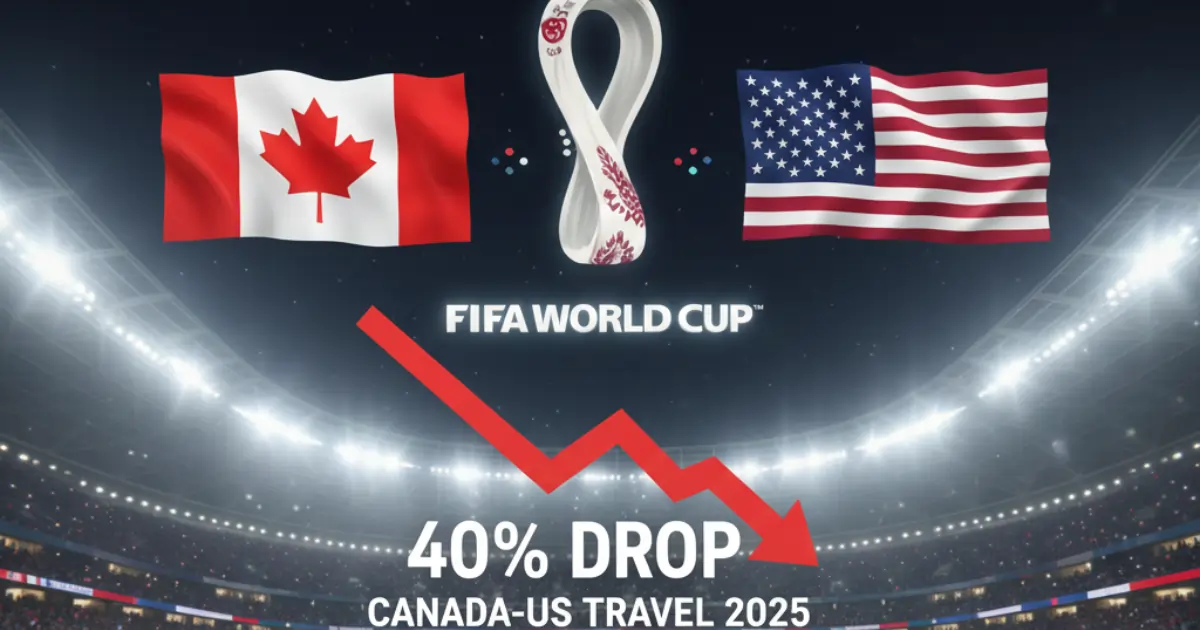
TORONTO/WASHINGTON — In an unprecedented shift that’s reshaping North American tourism, Canadian travel to the United States has collapsed by up to 40% throughout 2025, with 1.74 million fewer overnight visits in the first half of the year alone. However, the upcoming FIFA World Cup 2026—co-hosted by Canada, the US, and Mexico from June 11-July 19—presents a historic opportunity for recovery as millions prepare to cross borders for the world’s biggest sporting event.
Pro Tip: If you’re planning World Cup travel, book NOW. Accommodation prices in host cities have already surged 15-30% compared to typical summer rates, and availability is vanishing fast.
The United States lost 1.74 million overnight Canadian visits through June 2025 compared to the same period in 2024—a decline not seen since the 2008 financial crisis. The breakdown reveals the severity across all travel modes.
| Month | Canadian Returns from US | US Residents to Canada | Canadian Overseas Travel |
|---|---|---|---|
| February 2025 | -11.2% | -5.3% | +3.2% (air) |
| May 2025 | -31.9% | -5.6% | +8.9% |
| August 2025 | -29.0% | -14.9% | Data pending |
| October 2025 | -26.3% | +3.0% | +9.1% |
Meanwhile, Canadian travel to overseas destinations continued climbing, with the proportion of trips to non-US international locations rising from 26.9% in April 2024 to 36.1% in 2025.
Pro Tip: The silver lining? This decline means less crowded US attractions and competitive pricing. Americans and Canadians willing to travel now can find exceptional deals as tourism operators scramble to fill capacity.
Multiple factors converged to create this perfect storm:
| Mode | Decline from 2024 | Primary Impact Area |
|---|---|---|
| Land/Automobile | -24.8% | Day trips, short visits |
| Air Travel | -11.2% | Longer vacations, resort travel |
| Overall Visits | -17.7% | 1.74M fewer visits |
Pro Tip: Border communities should pivot marketing toward domestic Canadian travelers. Develop “staycation” packages and promote regional attractions to capture redirected tourism dollars.
The first World Cup hosted by three nations simultaneously represents the most significant opportunity for North American tourism recovery in decades. However, it also introduces unprecedented challenges.
| Country | Matches | Host Cities | Key Details |
|---|---|---|---|
| United States | 78 | Atlanta, Boston, Dallas, Houston, Kansas City, Los Angeles, Miami, New York/New Jersey, Philadelphia, San Francisco Bay Area, Seattle | Includes both semifinals & final (MetLife Stadium, NJ) |
| Canada | 13 | Toronto, Vancouver | Tournament opens June 11 |
| Mexico | 13 | Guadalajara, Mexico City, Monterrey | Mexico City hosts opening match |
New Border Security Measures:
Travel Ban Impact: The Trump administration’s expanded travel ban affects 39 countries, including four World Cup qualifiers: Haiti, Iran, Senegal, and Cote d’Ivoire. Fans from these nations cannot attend the 78 US-hosted matches unless they obtained visas before June 9, 2025.
Pro Tip: Canada issued a Level 1 health advisory for World Cup attendees, warning that large crowds increase risk of illness and injury. Purchase comprehensive travel insurance covering medical emergencies up to $250,000, trip cancellations, and crowd incidents.
The shift away from US destinations accelerated throughout 2025, with Canadians discovering alternatives offering better value and more welcoming environments.
| Destination | Interest Growth 2026 | Avg. Airfare | Why It’s Hot |
|---|---|---|---|
| Berlin, Germany | +47% | $892 CAD | Culture, expanded routes |
| Milan, Italy | +39% | $981 CAD | Fashion capital appeal |
| Tokyo, Japan | +23% | 10% price drop | Pop culture, value |
| Bangkok, Thailand | +18% | 10% price drop | Best overall value |
| Lisbon, Portugal | Sustained high | $847 CAD | Safety, gastronomy |
| Destination | Round-Trip Airfare | Travel Time | Best Season |
|---|---|---|---|
| George Town, Cayman Islands | $674 CAD | 4-5 hours | Dec-April |
| Nassau, Bahamas | $721 CAD | 3-4 hours | Year-round |
| Cancún, Mexico | $724 CAD | 4-5 hours | Nov-April |
| Montego Bay, Jamaica | $756 CAD | 4-5 hours | Dec-March |
Asia offers the biggest savings in 2026 with an overall 10% drop in airfare. Thailand, China, and Japan lead value destinations.
Pro Tip: Book Asian destinations early for maximum savings. Bangkok offers the best overall value, while Tokyo combines affordability with strengthening tourism infrastructure post-pandemic.
More Canadians chose to travel within their borders in 2025, and this trend accelerates in 2026. Domestic flight interest from Canada is up 12% with prices remaining flat.
| City | Average Round-Trip | Best For | Insider Tip |
|---|---|---|---|
| Edmonton, AB | $357 CAD | Budget travelers | Year-round low prices |
| Calgary, AB | $389 CAD | Mountain access | Book summer early |
| Winnipeg, MB | $412 CAD | Cultural festivals | Avoid winter |
| Halifax, NS | $468 CAD | Coastal beauty | Shoulder season best |
Pro Tip: Private jet charter services across Canada have increased luxury domestic travel options. For groups of 6+, shared charters can compete with premium airline tickets while offering convenience and flexibility.
The US Travel Association forecasts international inbound visits will resume growth in 2026 with 3.7% expansion, reaching 70.4 million visits after a 6.3% decrease in 2025.
| Category | 2026 Forecast | Key Growth Drivers |
|---|---|---|
| Total US Travel Spending | $1.35 trillion | Domestic leisure growth |
| International Visits to US | 70.4M (+3.7%) | World Cup effect, events |
| Canadian Domestic Travel | +4% growth | Continued local preference |
| US Visitors to Canada | Moderate increase | Currency advantage, spillover |
Pro Tip: Canada’s tourism sector expects 2-4% spending increase, with FIFA World Cup 2026 presenting a historic opportunity. US travelers will find excellent value in Canada with favorable exchange rates and less congested attractions.
Starting late 2026, ETIAS (European Travel Information and Authorization System) launches for travelers from visa-exempt countries including US, UK, Canada, Australia, and Japan visiting 30 European countries.
ETIAS Essential Details:
| Requirement | Details |
|---|---|
| Cost | €20 (increased from €7 in July 2025) |
| Validity | 3 years or until passport expires |
| Coverage | All Schengen Area countries |
| Application | Online before departure |
| Processing | Typically 96 hours (apply early!) |
| Who Needs It | 1.4 billion people from 60+ countries |
More destinations implementing environmental tourism taxes:
| Destination | Fee Amount | Purpose |
|---|---|---|
| Hawaii, USA | 0.75% of accommodation | Wildfire recovery, reef restoration |
| Greece | €0.50-€20/night | Water infrastructure, disaster prevention |
| New Zealand | NZD $100 | Conservation, habitat protection |
Pro Tip: Factor these fees into your travel budget—they can add $50-200 to trip costs. While fees may seem high, they support sustainable tourism infrastructure protecting the destinations you want to visit.
Cross-border travel in 2026 comes with enhanced security measures tied to World Cup preparations.
✅ Enhanced security screening at all crossingsz ✅ Longer wait times (budget extra 30-90 minutes) ✅ Health documentation for World Cup attendees ✅ Strict enforcement of existing travel bans
✅ Streamlined entry for FIFA-accredited personnel ✅ Standard eTA or visitor visa requirements unchanged ✅ Coordinated processing with US and Mexico ✅ Special measures for World Cup ticket holders
Pro Tip: Canadian border officers assess whether travelers will respect entry terms, focusing on clear purpose, precise dates, accommodation proof, and financial means. Have all documentation printed and organized—vague plans significantly increase refusal risk.
In late December 2025, Canada added a Level 1 health advisory for FIFA World Cup 2026 in the United States.
| Risk Factor | What to Do | Why It Matters |
|---|---|---|
| Respiratory illness | Masks in crowds, hand hygiene | Large crowds spread infections faster |
| Heat conditions | Hydration, sun protection | June-July temps exceed 35°C (95°F) |
| Dehydration | Carry water, pace activities | Limited facilities in fan zones |
| Crowd injuries | Situational awareness, arrive early | Dense crowds at major matches |
| Border delays | Extra time, complete documents | Intensified security screening |
Pro Tip: Purchase comprehensive travel insurance covering medical emergencies, trip cancellations, and evacuation. Policies should include coverage up to $250,000 for medical expenses. Some insurers now offer World Cup-specific packages with crowd incident coverage.
Skyscanner’s 2026 Travel Trends report reveals travel is becoming more personal than ever.
Experience-Driven Travel:
Value-Conscious Planning:
Technology Integration:
Pro Tip: Use AI travel planning tools to compare options quickly, but verify recommendations with human travel advisors for complex trips like World Cup attendance or multi-country itineraries. Best results come from combining technology efficiency with human expertise.
If Planning US Travel:
If Seeking Alternatives:
World Cup Opportunities:
General Travel Tips:
Plan for Delays:
Technology Solutions:
Pro Tip: NEXUS membership provides expedited clearance at land, air, and marine crossings between Canada and US. At $50 USD for 5 years (much cheaper than Global Entry), it’s the best investment for frequent cross-border travelers.
Win Back Canadian Visitors: ✓ Create Canadian-specific packages emphasizing value ✓ Highlight safety, hospitality, streamlined experiences ✓ Partner with Canadian travel agencies for co-marketing ✓ Offer transparent pricing (no hidden fees) ✓ Develop World Cup packages for non-match days
Capture World Cup Momentum: ✓ Coordinate with FIFA for official partner status ✓ Create fan experiences beyond match days ✓ Offer packages combining multiple host cities ✓ Prepare for volume (staffing, inventory, systems)
Capitalize on Domestic Preference: ✓ Market “why travel internationally when Canada offers…” ✓ Develop multi-destination packages within Canada ✓ Emphasize safety, simplicity, no border hassles ✓ Target Americans seeking alternatives to crowded US cities
World Cup Strategy: ✓ Position Toronto/Vancouver as authentic World Cup experiences ✓ Create packages for Americans avoiding US visa restrictions ✓ Partner with Mexican tourism for tri-national experiences ✓ Develop supporter group packages with accommodation + tickets
Pro Tip: Tourism businesses that authentically engage with both markets, show cultural sensitivity, and deliver genuine value will thrive. Recovery requires more than discounts—it demands trust rebuilding through consistent, quality experiences.
While the overall trend remains negative, recent data suggests the decline may be leveling off:
Positive Indicators:
Remaining Challenges:
Pro Tip: If you’re a Canadian hesitant about US travel, consider visiting US cities near Canadian World Cup matches (Toronto, Vancouver) where cross-border atmosphere will be more welcoming. Americans can also support reconciliation by choosing Canadian destinations.
While 2026 offers recovery potential, long-term patterns depend on factors beyond the World Cup:
Economic Factors:
Political Factors:
Structural Changes:
Pro Tip: Approach travel planning with flexibility. Book refundable options when possible, maintain trip insurance, and have backup plans. The travel landscape is evolving rapidly, and adaptability will serve you better than rigid expectations.
Top 7 Actions to Take Now:
Partial recovery is expected, but “normal” may look different than pre-2025 patterns. The FIFA World Cup will drive significant temporary increases June-July 2026, but year-round travel depends on economic conditions, political relations, and consumer confidence. Industry forecasts suggest 3-4% growth in cross-border travel, but this won’t fully offset 2025 declines. Many Canadians have discovered alternative destinations they prefer, potentially making some changes permanent.
The World Cup will significantly increase cross-border travel from June 11-July 19, 2026, with millions of international visitors moving between the three host nations. However, travelers should expect longer border wait times (30-90 minutes extra), enhanced security screening, and more complex documentation requirements. Canada issued a health advisory for the event, and stricter border measures are in place. Book accommodations and transportation early—prices have already increased 15-30% in host cities.
For US-Canada travel: No changes to existing requirements (passport, NEXUS if enrolled, eTA for air travel to Canada). However, processing times are longer—apply months in advance.
For Europe: ETIAS system launches late 2026, requiring online authorization (€20, valid 3 years) for Canadians and Americans visiting 30 European countries. This adds a new step to European travel planning.
For World Cup: Match tickets don’t guarantee entry. You still need proper visas/authorizations. Some nationalities face enhanced restrictions due to US travel bans.
Yes. The US has travel bans affecting citizens of 39 countries, including four qualified World Cup teams: Haiti, Iran, Senegal, and Cote d’Ivoire. Fans from these countries largely cannot attend US-hosted matches (78 of 104 games) unless they had visas issued before specific dates (June 9, 2025 for original 19 countries, January 1, 2026 for additional 20). Athletes and team personnel are exempt. This may drive more international fans to attend matches in Canada or Mexico instead.
International: George Town, Cayman Islands ($674 average airfare), Nassau, Bahamas ($721), and Cancún, Mexico ($724) offer the best value for sun destinations.
Asia: Thailand, China, and Japan offer 10% airfare drops compared to 2025, making them exceptional values.
Europe: Berlin ($892) and Lisbon ($847) offer culture and charm at reasonable prices, though you’ll need to factor in ETIAS fees and potentially climate taxes.
Domestic: Edmonton ($357) remains the most affordable Canadian destination, with Calgary ($389) and Winnipeg ($412) also offering excellent value.
Absolutely. Given ongoing uncertainties (political changes, health advisories, border policies, World Cup crowding), comprehensive travel insurance is essential in 2026. Look for policies covering:
Some insurers offer World Cup-specific packages. Budget $100-300 per person depending on trip value and coverage level.
Strategic Timing: Cross on Tuesday-Thursday mornings (avoid weekends and Monday rush). World Cup period will see significant delays—budget extra 90+ minutes.
Technology: Use NEXUS ($50 for 5 years) for expedited clearance. Download ArriveCAN (Canada) and Mobile Passport Control (US) apps. Monitor real-time wait times via CBSA and CBP websites.
Documentation: Have everything printed and organized—passport, travel documents, accommodation confirmations, itinerary, return tickets. Vague answers or missing documents cause delays.
Travel Mode: Air travel generally processes faster than land crossings, but costs more. Consider flying into less-busy airports.
Canada’s Level 1 health advisory recommends:
If you feel sick during or after travel, wear a mask, limit contact with others, and notify health professionals about symptoms and travel history.
AI travel tools are rapidly expanding, with 40% of travelers already using AI-based planning tools. In 2026, expect AI to help with:
However, use AI as a starting point, not the final authority. Verify information with official sources, consult human travel advisors for complex trips (like World Cup attendance), and always confirm current visa/entry requirements directly with government websites.
Waiting too long to book. The combination of World Cup demand, airline capacity constraints, and accommodation scarcity means that prices are rising quickly and availability is shrinking. Many travelers underestimate how early they need to act:
The second biggest mistake is inadequate budgeting. Add 20-30% buffers for unexpected costs—inflation, currency fluctuations, new travel fees, and higher demand are all pushing prices up beyond historical norms.
Latest Travel Updates:
Official Resources:
Disclaimer: Travel information is subject to change. Always verify current requirements with official government sources and consult with travel professionals before booking.
Posted By : Vinay
Lastest News
2nd Floor, 39, Above Kirti Club, DLF Industrial Area, Kirti Nagar, New Delhi, Delhi 110015



Travel Tourister is a leading Travel portal where we introduce travellers to trusted travel agents to make their journey hasselfree, memorable And happy. Travel Tourister is a platform where travellers get Tour packages ,Hotel packages deals through trusted travel companies And hoteliers who are working with us across the world. We always try to find new and more travel agents and hoteliers from every nook and corners across the world so that you could compare the deals with different travel agents and hoteliers and book your tour or hotel with the one you have chosen according to your taste and budget.
Copyright © Travel Tourister, India. All Rights Reserved

 Call
Call Enquiry