Published on : 09 Jan 2026
BREAKING UPDATE | January 9, 2026, 11:00 AM EST
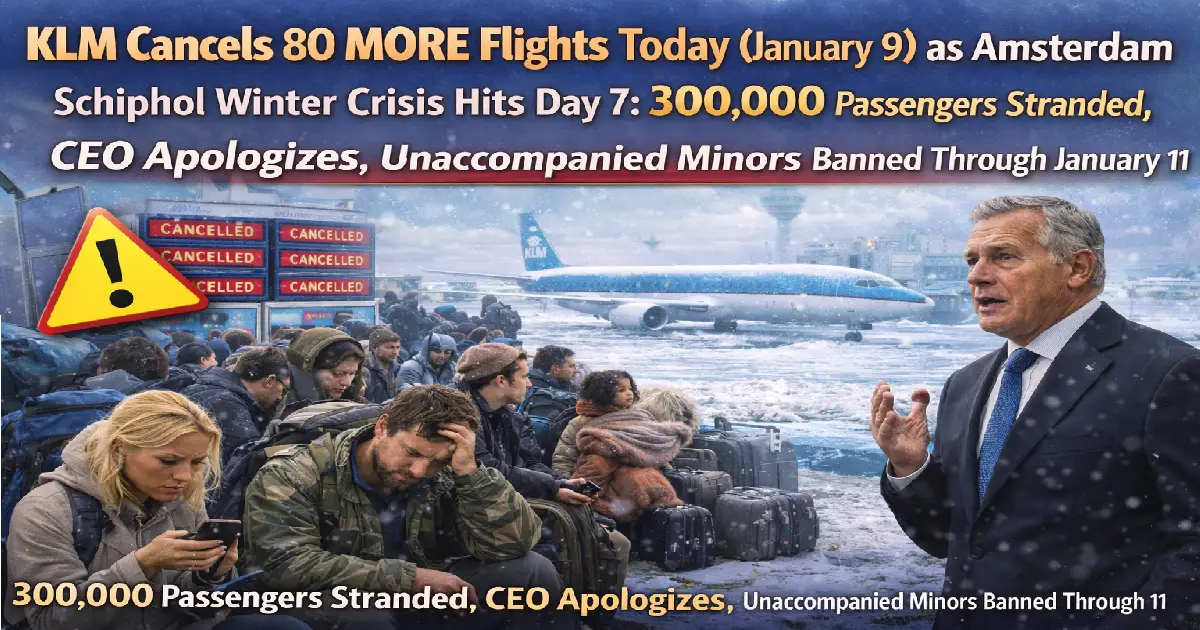
The Netherlands’ flagship carrier KLM has cancelled 80 additional flights scheduled for today, Friday January 9, extending the winter weather crisis at Amsterdam Schiphol Airport into its seventh consecutive day. The airline confirmed the cancellations will primarily affect evening departures as Storm Goretti approaches, bringing renewed snow and strong winds to the region.
The scale of disruption at Europe’s third-busiest hub has reached unprecedented levels:
KLM announced on Thursday evening that due to expected bad weather Friday evening, they are proactively cancelling 80 flights to and from Schiphol, with daytime operations remaining largely unaffected. The airline transported approximately 100,000 passengers on Thursday using 675 flights, representing near-normal operations during favorable weather conditions.
In a rare televised interview on Thursday evening’s “Pauw & De Wit” program, KLM CEO Marjan Rintel apologized for inadequate communication with stranded passengers, acknowledging that travelers needed much more information than what was provided through apps, emails, or phones.
“I understand that frustration,” Rintel stated during the broadcast. She explained that rebooking 300,000 people becomes extremely difficult when 70 percent of flights are canceled due to insufficient airport capacity, creating a cascading crisis where passengers cannot receive definitive travel plans.
The CEO committed to evaluating the airline’s response: “How can we ensure that we inform our customers better? We have to do better than we have done now.”
Storm Goretti is expected to bring snow, heavy rain, and strong winds to Schiphol, potentially arriving around 5 p.m. local time on Friday. Meteorological forecasts indicate temperatures will remain below freezing through Sunday and into Monday morning, prolonging recovery efforts.
The storm represents the fifth winter weather event to impact Schiphol since January 2, compounding the existing backlog of stranded passengers and displaced aircraft across KLM’s European network.
Aviation analysts have identified multiple compounding factors that transformed routine winter weather into a week-long operational collapse:
The most critical failure involved inadequate de-icing fluid inventory management. When persistent snowfall required repeated de-icing cycles, KLM’s supplies reached critically low levels, creating a potential scenario where operations might need complete suspension. Emergency logistics operations brought 100,000+ liters from alternative suppliers, but the disruption highlighted supply chain vulnerabilities.
The pilots’ union VNV blamed insufficient staff capacity due to KLM’s policy choices, noting shortages of drivers for aircraft towing and refueling that have persisted for some time. The union stated these operational weaknesses mean “it wouldn’t take much for the correct operation to collapse like a house of cards.”
As Europe’s third-largest hub, Schiphol’s disruption rippled across the continent. Short-haul feeder flight cancellations displaced crews and aircraft, cascading into long-haul service disruptions affecting passengers far beyond Amsterdam.
The scale of weekend disruption has reignited discussion around Schiphol’s ability to absorb prolonged winter weather, particularly given high daily traffic volumes and limited operational buffers.
European Union regulations provide extensive protections for affected travelers:
Passengers with tickets issued on or before January 6 can rebook free of charge to travel dates through January 19, provided the same travel class remains available. KLM also offers:
Important Note: KLM is asking passengers to arrange their own accommodation and meals, then seek reimbursement later – a controversial approach given EU regulations requiring immediate provision of these services.
The crisis particularly affects North American and British travelers:
Schiphol serves as a critical European gateway for:
KLM deployed larger aircraft on key routes including London, Berlin, Copenhagen, Rome, and Stockholm to maximize seat availability for rebookings.
1. Check Status Obsessively
2. Proactive Rebooking
3. Document Everything
4. Know Your Rights
5. Travel Insurance Weather disruptions typically aren’t covered unless you purchased “Cancel For Any Reason” (CFAR) coverage before the crisis began.
As of 11:00 AM EST Friday, January 9:
Flight Operations:
Terminal Conditions:
Ground Operations:
Aviation experts note this crisis represents one of Europe’s most severe weather-related operational failures in recent memory. The combination of persistent snowfall, supply chain failures, staffing shortages, and hub concentration created a “perfect storm” of disruption.
Amsterdam Schiphol became the world’s most disrupted airport during the January 2-4 weekend according to Flightradar24, surpassing even airports affected by Caribbean airspace closures.
The crisis has exposed vulnerabilities in European aviation infrastructure:
KLM’s path back to normal operations remains uncertain:
Short-term (January 9-11):
Medium-term (January 12-19):
Long-term (Beyond January 19):
Last Updated: January 9, 2026, 11:00 AM EST
Related Coverage:
Posted By : Vinay
Lastest News
2nd Floor, 39, Above Kirti Club, DLF Industrial Area, Kirti Nagar, New Delhi, Delhi 110015



Travel Tourister is a leading Travel portal where we introduce travellers to trusted travel agents to make their journey hasselfree, memorable And happy. Travel Tourister is a platform where travellers get Tour packages ,Hotel packages deals through trusted travel companies And hoteliers who are working with us across the world. We always try to find new and more travel agents and hoteliers from every nook and corners across the world so that you could compare the deals with different travel agents and hoteliers and book your tour or hotel with the one you have chosen according to your taste and budget.
Copyright © Travel Tourister, India. All Rights Reserved

 Call
Call Enquiry