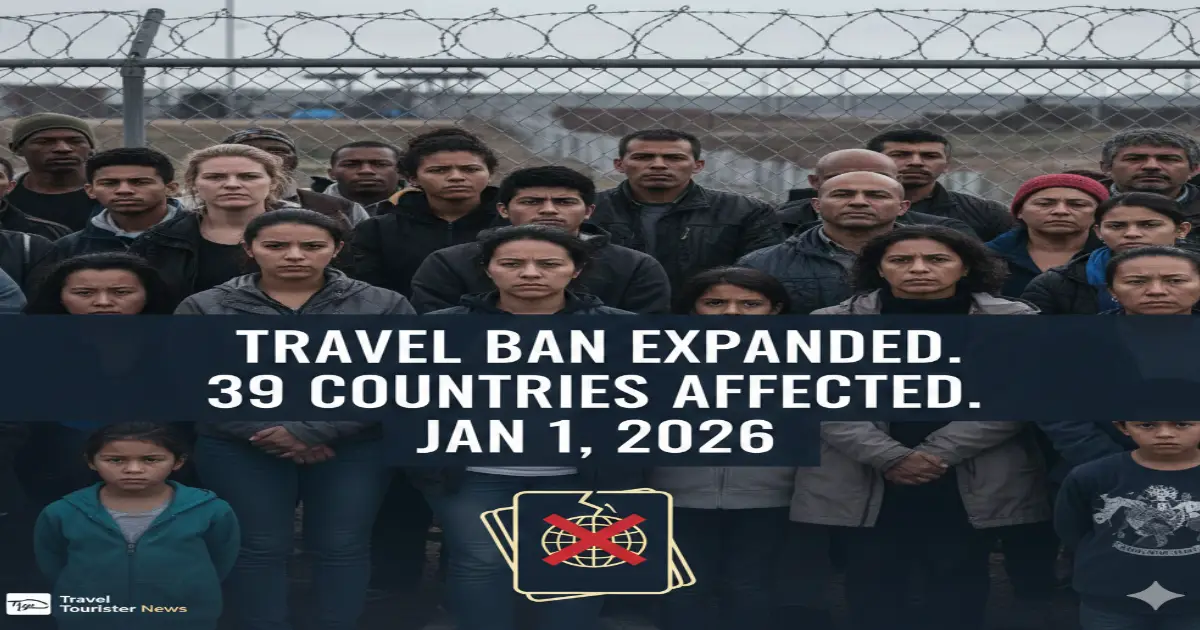
In a sweeping policy change, the Trump administration has announced an expanded travel and immigration ban affecting 39 countries and the Palestinian Authority, impacting nearly 20% of the world’s nations. The new restrictions, set to take effect January 1, 2026, significantly broaden the scope of the previous travel ban implemented in June 2025.
Key Developments
The expanded ban introduces two categories of restrictions targeting predominantly Muslim-majority, African, and Southeast Asian nations. Unlike the June 2025 version, the new policy eliminates exceptions for adopted children and imposes stricter limitations on family reunification, student visas, and employment-based immigration.
Immigration advocacy groups, including the Asian Law Caucus, have raised concerns about the humanitarian impact of these restrictions, noting that millions of families will be separated and thousands of students and workers will face indefinite uncertainty about their futures in the United States.
⚠️ Effective Date Alert: The expanded travel ban takes effect on January 1, 2026. Individuals with pending applications or travel plans should consult with immigration attorneys immediately.
Understanding the Two-Tier Restriction System
The policy divides affected countries into two categories:
Full Restrictions apply to countries where nationals are completely barred from obtaining both immigrant visas (green cards) and non-immigrant visas (temporary entry for tourism, study, or work). This represents the most severe level of restriction.
Partial Restrictions target countries where nationals cannot obtain immigrant visas or specific non-immigrant visa categories including B-1/B-2 (business/tourist), F (student), M (vocational student), and J (exchange visitor) visas. Other visa types may still be available but with reduced validity periods.
Countries Affected by Full Travel Ban
Country
Region
Primary Impact
Afghanistan
South Asia
All visa categories blocked
Burma (Myanmar)
Southeast Asia
All visa categories blocked
Chad
Central Africa
All visa categories blocked
Republic of the Congo
Central Africa
All visa categories blocked
Equatorial Guinea
Central Africa
All visa categories blocked
Eritrea
East Africa
All visa categories blocked
Haiti
Caribbean
All visa categories blocked
Iran
Middle East
All visa categories blocked
Libya
North Africa
All visa categories blocked
Somalia
East Africa
All visa categories blocked
Sudan
Northeast Africa
All visa categories blocked
Yemen
Middle East
All visa categories blocked
Countries Under Partial Restrictions
Country
Region
Blocked Visa Types
Burundi
East Africa
Immigrant, B-1/B-2, F, M, J visas
Cuba
Caribbean
Immigrant, B-1/B-2, F, M, J visas
Laos
Southeast Asia
Immigrant, B-1/B-2, F, M, J visas
Sierra Leone
West Africa
Immigrant, B-1/B-2, F, M, J visas
Togo
West Africa
Immigrant, B-1/B-2, F, M, J visas
Turkmenistan
Central Asia
Immigrant, B-1/B-2, F, M, J visas
Venezuela
South America
Immigrant, B-1/B-2, F, M, J visas
Palestinian Authority
Middle East
Immigrant, B-1/B-2, F, M, J visas
*Note: This table includes representative examples. The full ban affects 39 countries total.
Who Is Protected from the Ban?
Certain categories of individuals and visa holders remain exempt from the restrictions:
Exempt Category
Visa Types
Details
Current Green Card Holders
N/A
Permanent residents not affected
Pre-existing Visa Holders
All types
Visas granted by June 9, 2025 remain valid
Diplomatic Personnel
A-1, A-2, C-2, C-3, G-1 to G-4, NATO
Official government representatives
U.S. Government Employees
Special Immigrant Visas
Those who worked for U.S. government
Persecuted Minorities
Iran-specific
Ethnic/religious minorities fleeing persecution
Athletes
Various
Participants in major international sporting events
Impact on Families and Students
The removal of adoptee exceptions marks a significant departure from the June 2025 policy. Families who have been in the adoption process for years now face indefinite delays, with no clear path forward for children awaiting placement with American families.
International students from affected countries currently enrolled in U.S. universities face difficult choices about whether to return home during breaks, as re-entry may be denied even with valid student visas. Universities across the country are advising affected students to avoid international travel until the legal landscape becomes clearer.
📊 By The Numbers:
39 countries plus Palestinian Authority affected
Nearly 20% of the world’s nations impacted
12 countries under full travel ban
Thousands of families facing separation
International students from 39 countries affected
Asylum Applications Face Indefinite Hold
Compounding the travel restrictions, U.S. Citizenship and Immigration Services announced on December 2, 2025, an indefinite hold on all affirmative asylum applications, regardless of the applicant’s country of origin. This policy affects individuals filing Form I-589 proactively, though immigration judges retain authority to grant asylum to those already in removal proceedings.
Legal Challenges Expected
Immigration rights organizations have indicated they will challenge the expanded ban in federal courts. The Asian Law Caucus, which previously won significant victories against similar travel restrictions, including a 2023 settlement benefiting nearly 25,000 community members, has announced plans to coordinate legal opposition with partner organizations nationwide.
Legal experts note that while the Supreme Court upheld a version of the travel ban during Trump’s first term, the unprecedented scope of the expanded policy covering nearly 20% of the world’s countries may present new constitutional questions for the courts to consider.
ℹ️ Important Timeline:
December 16, 2025: Expanded travel ban announced
December 2, 2025: USCIS places hold on asylum applications
January 1, 2026: Expanded ban takes effect
June 9, 2025: Cutoff date for pre-existing visa holders
What Happens Next
The ban takes effect January 1, 2026, giving affected individuals less than three weeks to make critical decisions about travel, visa applications, and family reunification plans. Immigration attorneys are advising clients to:
Avoid international travel if currently in the U.S. with temporary status
Expedite pending visa applications before the January 1 deadline
Consult with legal counsel about individual circumstances
Document all screening experiences at ports of entry
Stay informed about legal challenges and policy changes
The State Department is expected to issue additional guidance on implementation procedures in the coming weeks. Meanwhile, advocacy organizations are mobilizing to provide legal assistance and support to affected communities.
Frequently Asked Questions (FAQ)
General Questions
Q1: What exactly is the Expanded Travel and Immigration Ban?
The Expanded Travel and Immigration Ban is a presidential policy announced December 16, 2025, that restricts or prohibits entry to the United States for nationals from 39 countries plus the Palestinian Authority. It updates and significantly expands a previous June 2025 travel ban.
Q2: When does this ban start?
The expanded ban takes effect on January 1, 2026.
Q3: How many countries are affected?
39 countries plus the Palestinian Authority are affected, representing approximately 20% of all countries worldwide. The affected nations are predominantly Muslim-majority, Black-majority, African, and Southeast Asian countries.
Q4: Is this permanent?
The policy does not have an expiration date, but it could be challenged in courts, modified by future executive action, or changed by Congress. Immigration law in this area remains subject to ongoing legal and political developments.
About the Restrictions
Q5: What’s the difference between full and partial restrictions?
Full restrictions block all visa types (both immigrant and non-immigrant visas), meaning no entry is permitted for any purpose. Partial restrictions block immigrant visas and specific non-immigrant categories (B-1/B-2 tourist/business, F student, M vocational, J exchange visitor visas), but other visa types may still be available with reduced validity.
Q6: Can I still visit the U.S. as a tourist from an affected country?
If your country is under full restrictions, no. If under partial restrictions, tourist visas (B-1/B-2) are blocked, so you cannot visit as a tourist. Other visa categories might be available depending on your purpose of travel.
Q7: What if I’m a student from a banned country?
If you’re from a country under full or partial restrictions and don’t already have a visa, you cannot obtain a new F or M student visa. If you currently have a valid student visa issued before June 9, 2025, you should be able to continue your studies, but be very cautious about international travel.
Current Visa and Status Holders
Q8: I have a green card. Am I affected?
No. If you already have lawful permanent resident status (green card), the ban does not apply to you. You can continue to travel and re-enter the United States.
Q9: I already have a valid visa. Can I still use it?
Yes. If you were granted any type of visa to travel to or immigrate to the United States as of June 9, 2025, the ban does not apply to you and your visa remains valid.
Q10: I’m in the U.S. on a work visa. Should I leave for vacation?
Immigration attorneys strongly advise caution. Even with a valid visa, you may face intensive screening, delays, or potential denial of re-entry at U.S. ports of entry. If you must travel, consult with an immigration attorney first and prepare for detailed questioning about your background, social media, and travel history.
Q11: I’m in the U.S. with temporary protected status (TPS) or DACA. Am I affected?
The ban specifically addresses visa issuance for entry into the U.S. If you’re already here with TPS or DACA, the ban doesn’t directly affect your current status, but you should avoid international travel as re-entry could be denied.
Pending Applications
Q12: I’ve already applied for a visa. What happens now?
If you’re from a country on the June ban list, your application may only be approved if you’re seeking a visa category not subject to restrictions or if you qualify for an exception. If you’re from a newly added country, your application should be processed normally if a final decision is made before January 1, 2026.
Q13: I’m waiting for my green card application to be processed. What should I do?
Consult with an immigration attorney immediately. If you’re from an affected country, new immigrant visa applications will not be approved after January 1, 2026, unless you qualify for an exception. Your attorney can assess whether expedited processing is possible.
Q14: Can I apply for asylum?
As of December 2, 2025, USCIS placed an indefinite hold on all affirmative asylum applications (Form I-589) regardless of country of origin. However, if you’re already in removal proceedings, an immigration judge can still consider and grant your asylum claim.
Q15: Will my work permit (EAD) be affected?
It’s unclear. The policy doesn’t explicitly address work permit renewals, but applications from nationals of Travel Ban countries may be treated as “benefit requests” and could face delays or denials. Monitor updates from USCIS and consult with an attorney about your specific situation.
Family and Adoption
Q16: Can I still sponsor my spouse or parents for immigration?
If your family members are from countries under full or partial restrictions, immigrant visa applications (family-based green cards) will not be approved after January 1, 2026. Only if an exception applies or if the visa is issued before the effective date can they proceed.
Q17: What happened to adoption exceptions?
The expanded ban removed the exception that existed in the June 2025 version for adoptee visas (IR-3, IR-4, IH-3, IH-4). Families adopting children from affected countries will not be able to bring them to the U.S. after January 1, 2026.
Exceptions
Q18: Are there any exceptions to the ban?
Yes. Exceptions include diplomatic visa holders, Special Immigrant Visa holders who worked for the U.S. government, ethnic and religious minorities facing persecution in Iran, and athletes competing in major international sporting events.
Q19: How do I apply for an exception?
The policy doesn’t outline a clear waiver or exception process for most categories. If you believe you may qualify for an exception based on the categories listed, consult with an immigration attorney who can guide you through any available procedures.
Screening and Entry
Q20: What should I expect if I try to enter the U.S. from an affected country?
Even with valid documentation, expect significantly enhanced screening procedures. You may face detailed questioning about your background, social media activity, political views, religious beliefs, travel history, and associations. Be prepared for potential delays or secondary inspection.
Q21: Can they search my phone at the border?
Yes. U.S. Customs and Border Protection has broad authority to search electronic devices at ports of entry. This includes reviewing social media accounts, messages, photos, and other content on phones, laptops, and tablets.
Getting Help
Q22: Where can I get legal assistance?
Contact immigration advocacy organizations such as: Asian Law Caucus at (415) 896-1701, National Immigration Legal Services Directory for attorney referrals, local immigration legal aid organizations, or consult with a qualified immigration attorney about your specific situation.
Q23: Is this legal? Can it be challenged?
While the Supreme Court upheld a version of the travel ban during Trump’s first presidential term, the expanded scope of this policy may face new legal challenges. Immigration advocacy groups have announced plans to challenge the ban in federal courts.
Q24: Will this policy change?
Immigration policy is dynamic. The Trump administration may issue modifications, courts may impose injunctions or overturn the policy, or future administrations may revoke it. Check trusted sources like the Asian Law Caucus, USCIS, and the State Department for regular updates.
Q25: What should I do right now?
If you’re in the U.S. with temporary status, avoid international travel
If you have pending visa applications, consult with an attorney about expediting
If you’re planning to apply for a visa, act before January 1, 2026
Document all interactions with immigration authorities
Stay informed through reliable legal sources
Consider consulting with an immigration attorney about your specific circumstances
Resources and Contact Information
📞 For Legal Assistance
Asian Law Caucus: (415) 896-1701
ACLU Immigrants’ Rights Project
National Immigration Law Center
Immigration Advocates Network
🌐 For Official Information
U.S. Department of State: travel.state.gov
U.S. Citizenship and Immigration Services: uscis.gov
U.S. Customs and Border Protection: cbp.gov
📧 Emergency Contacts
National Immigration Hotline
Legal Aid Societies
Community Support Organizations
University International Student Offices
⚖️ Legal Disclaimer: This article provides general information and does not constitute legal advice. Immigration law is complex and individual circumstances vary. Anyone affected by the travel ban should consult with a qualified immigration attorney about their specific situation. The information presented here is current as of the publication date and may be subject to change.
Posted By : Vinay
As a lead contributor for Travel Tourister, Vinay is dedicated to serving our Tier 1 audience (US, UK, Canada, Australia). His mission is to deliver precise, fact-checked news and actionable, data-driven articles that empower readers to make informed decisions, minimize travel risks, and maximize their adventure without compromising safety or budget.
Travel Tourister is a leading Travel portal where we introduce travellers to trusted travel agents to make their journey hasselfree, memorable And happy. Travel Tourister is a platform where travellers get Tour packages ,Hotel packages deals through trusted travel companies And hoteliers who are working with us across the world. We always try to find new and more travel agents and hoteliers from every nook and corners across the world so that you could compare the deals with different travel agents and hoteliers and book your tour or hotel with the one you have chosen according to your taste and budget.




 Call
Call Enquiry