Chatham Saw Mill Port Blair: Complete Visitor Guide
About Chatham Saw Mill
Chatham Saw Mill stands as a remarkable testament to industrial heritage in the Andaman and Nicobar Islands, holding the distinguished title of being Asia’s oldest and largest operational sawmill. Established in 1883 during British colonial rule, this historic mill has witnessed over 140 years of history, surviving wars, regime changes, and evolving into a major tourist attraction in Port Blair.
What makes Chatham Saw Mill extraordinary isn’t just its age or size—it’s the living history contained within its walls. This isn’t a static museum piece but a functioning industrial facility that continues to process timber while offering visitors a fascinating glimpse into colonial-era engineering and the islands’ economic development. The mill processes approximately 20,000 logs annually, employing around 800 local workers and serving as the backbone of Andaman’s wood-based industries.
Located on Chatham Island and connected to Port Blair by a 100-meter bridge, the mill complex houses several attractions including the Forest Museum, a souvenir shop selling exquisite wooden handicrafts, World War II remnants like the Japanese bunker and bomb pit, and the Pillar of the Planet memorial. For anyone planning an Andaman tour, Chatham Saw Mill offers a unique blend of industrial tourism, history, and craftsmanship.
The serene surroundings, away from the bustling city noise, make it an ideal spot for those seeking both education and tranquility. The sight of massive logs being transformed into beautiful timber products through traditional methods is genuinely mesmerizing and provides visitors with appreciation for skilled craftsmanship that has endured through generations.
Where Is Chatham Saw Mill Located & How to Reach
Location Details
Chatham Saw Mill is situated on Chatham Island in the Haddo region, on the outskirts of Port Blair. The mill sits approximately 11 kilometers from Port Blair city center and about 6-7 km from the main bus terminus and Aberdeen Bazaar. The island is connected to Port Blair through a concrete bridge that replaced the original 100-meter timber bridge constructed during colonial times.
Complete Address: Haddo, Chatham Island, Port Blair, Andaman and Nicobar Islands, 744102, India
By Air: The nearest airport is Veer Savarkar International Airport in Port Blair, located approximately 7 km from Chatham Saw Mill. Upon arrival, you can hire prepaid taxis, auto-rickshaws, or app-based cabs to reach the mill. The journey takes about 20-25 minutes depending on traffic conditions.
By Road: Chatham Saw Mill is well-connected by road to all parts of Port Blair. Transportation options include:
Taxis and Cabs: Most convenient option for tourists, offering door-to-door service with air conditioning
Auto-rickshaws (Tuk-tuks): Budget-friendly and easily available throughout Port Blair; drivers are familiar with the location
Local Buses: Regular bus services operate from STS Bus Stand/Aberdeen Bazaar to Chatham, though less convenient for tourists on tight schedules
Rental Vehicles: Two-wheelers and scooters available for rent on a per-day basis for independent exploration
Navigation Tips:
The mill is well-signposted as “Chatham Saw Mill” or “Government Saw Mill”
GPS Coordinates: 11.6678° N, 92.7428° E
Ask for “Chatham Island” or “Forest Museum” if drivers seem unfamiliar
The distinctive bridge to Chatham Island is a clear landmark
From Other Islands: If you’re staying in Havelock Island or Neil Island, ferry services operate daily to Port Blair. From Aberdeen Jetty, the mill is just a short 15-minute ride away by taxi or auto-rickshaw.
For travelers interested in exploring multiple islands, consider checking Andaman tour packages that include Port Blair sightseeing along with island hopping.
Chatham Saw Mill: History & Legacy
Colonial Origins (1789-1883)
The story of Chatham Saw Mill begins with Lieutenant Archibald Blair’s arrival in the Andamans in December 1788. Dispatched from Calcutta to assess the islands’ potential for establishing a port and fortified refuge for the British Navy, Blair sailed his vessel “Viper” into Andaman waters on December 29, 1788. During his survey, the Viper crashed near a small island (now named Viper Island after the vessel), and Blair subsequently set foot on Chatham Island.
Blair chose Chatham Island—a small 12-acre island within the harbor—as his settlement site. Connected to the mainland by a causeway at low tide and easy to defend, the island proved ideal for establishing British presence. Within three months of his initial survey, by September 1789, Blair returned with Lieutenant Colebrooke, Lieutenant Wales, and approximately 200 mechanics, craftsmen, sepoys, and laborers to establish Port Cornwallis (later renamed Port Blair in his honor).
The work proceeded with remarkable efficiency—supplies came from Penang and Calcutta, visits to the mainland were organized for settlers, and indigenous populations were managed through gifts, gestures of friendship, and minimal force. Within a year, Blair had constructed a wharf, laid a road from Phoenix Bay to Navy Bay, and planned agriculture while considering timber trade possibilities. By 1791, settlers were bringing families, and the settlement appeared stable.
The formal establishment of Chatham Saw Mill came in 1883, equipped with second-hand imported machines. Its primary objective was meeting local timber requirements for construction works. The mill quickly became central to the island’s development, providing timber for settlers and colonial projects.
Colonial Era Operations
During the British colonial period, Chatham Saw Mill expanded far beyond local needs. The British utilized the mill to convert massive quantities of timber for export to London, New York, and various other cities worldwide. The mill processed premium Andaman timber varieties including:
Padauk Wood: Native to Andaman, known for its distinctive crimson color
Gurjan (Satin Wood): Valued for its strength and beauty
Marble Wood: Prized for decorative purposes
Peauma: Used in construction and furniture
One of the mill’s most notable achievements was supplying timber for prestigious projects abroad. Historical accounts suggest that the glorious crimson wall paneling at Buckingham Palace in London was crafted from Andaman Padauk wood processed at Chatham Saw Mill—a connection that reminds visitors of the mill’s international significance during colonial times.
World War II: Destruction and Resilience (1942-1945)
The mill’s history took a dark turn during World War II. In 1942, Japanese forces invaded and occupied the Andaman Islands. On March 10, 1942, British forces heavily bombarded Port Blair in an attempt to regain control from Japanese occupation. Chatham Saw Mill suffered tremendous damage during this hour-long bombing, with many workers losing their lives. Historical accounts describe how rocks flew like frisbee discs and underlying seawater gushed out from the force of explosions.
A half-hemispherical bomb pit created during these bombings remains preserved at the site today, filled with water and accessible via a canopy walkwalk—a somber reminder of wartime destruction. The Japanese bunker behind the mill also stands as evidence of this turbulent period.
The mill remained non-operational throughout Japanese occupation (1942-1945). Following Japan’s defeat and India moving toward independence, the mill began its revival process in 1946.
Post-Independence Revival (1947-Present)
During the 1950s and 1960s, significant migration to the Andaman Islands occurred. People from Sri Lanka, East Pakistan (now Bangladesh), Burma (Myanmar), and various Indian states settled in the islands, dramatically increasing the demand for sawn timber. This population influx resulted in the rebirth of Chatham Saw Mill.
The mill evolved from a colonial timber export facility into the backbone of local wood-based industries. Today, it operates under the management of the Forest Department of Andaman and Nicobar Islands, functioning across three shifts with an installed capacity of processing 20,000 cubic meters of logs annually.
All timber produced is consumed locally through an administered price mechanism, catering to:
Local construction needs
Furniture manufacturing units
Handicraft industries
Government projects
The mill has maintained traditional processing methods while incorporating modern safety and efficiency standards, making it a unique blend of heritage and functionality.
Chatham Saw Mill: Attractions & Things to See
The Operational Mill
The primary attraction is witnessing the mill in action. Visitors can observe the entire timber processing operation:
Log Depot Unit: Separates logs received by sea from Andaman forests and feeds them into the mill’s saws
Milling Process: Watch as massive round logs are cut into various shapes and sizes using:
Three resawing machines (42″, 48″, and 54″)
Band saws with specialized blades
Tensioning machines for blade preparation
Timber Processing Unit: Observe the seasoning and preservative treatment process where timber is soaked in boron salt solutions to increase longevity
Yard Unit: The final area manages processed, seasoned sawn timber and handles sales operations
The intricate machinery, skilled workers, and the sheer scale of operations provide a fascinating educational experience. The rhythmic sounds of saws and the aroma of fresh-cut wood create an immersive industrial atmosphere.
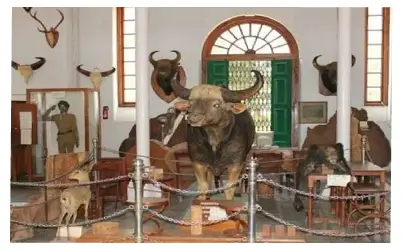
Forest Museum
Established in September 2006 by the Department of Environment & Forests, the Forest Museum is a modern addition to the mill complex and a must-visit attraction.
Museum Highlights:
Category
Features
Historical Exhibits
Photographs documenting different phases of the mill
Display of Padauk, Marble, Gurjan, Satin Wood, Peauma
Workmanship Display
Showcases skilled artisanship with detailed carving and design
Biodiversity Information
Details about Andaman’s flora and fauna
Wall Exhibits
Illustrations of Forest Department operations
Special Collections:
Wooden chain entirely carved from a single piece of wood
Ganesha idols crafted from local timber
Miniature wooden vehicles and utensils
Padauk wood furniture with immaculate polishing
Native plant species in the zoological garden
Museum Timings:
Morning: 8:00 AM – 12:00 PM
Afternoon: 2:30 PM – 5:00 PM
Closed: Sundays
The museum entrance requires a separate ticket, and the exhibits provide excellent insights into the region’s forestry heritage and indigenous craftsmanship.
The Bomb Pit & Japanese Bunker
History enthusiasts shouldn’t miss these World War II remnants that tell the story of the mill’s darkest period.
The Bomb Pit: A half-hemispherical crater created by British bombs during the 1942 attack on Japanese-occupied Andaman. Now filled with water, the pit features a canopy walkway allowing visitors to view it safely. Information boards explain the bombing’s impact and the mill’s three-year recovery period.
Japanese Bunker: Located behind the saw mill, this fortified structure served as a defensive position during Japanese occupation (1942-1945). The bunker’s preserved condition offers a tangible connection to wartime history.
These sites provide sobering reminders of how global conflicts impacted even remote locations like the Andaman Islands.
Pillar of the Planet
Erected in March 2009, this memorial commemorates 125 years of forest management in the Andaman Islands. The pillar stands as a symbol of sustainable forestry practices and the mill’s role in the islands’ environmental stewardship.
The monument features inscriptions detailing the history of forest conservation efforts and the evolution of timber processing from colonial exploitation to sustainable modern practices.
Souvenir Shop
The on-site souvenir shop offers visitors an opportunity to purchase authentic Andaman wooden products:
Available Items:
Hand-carved decorative pieces made from Padauk wood
Wooden jewelry boxes with intricate designs
Table coasters and name boards
Off-cuts of Padauk wood in various sizes (oval-shaped slices ideal for custom projects)
Miniature handicrafts including keychains
Traditional wooden utensils and artifacts
Prices are reasonable, and purchasing these items supports local artisans and the mill’s operations. The quality is excellent, with each piece showcasing the unique characteristics of Andaman timber.
Nearby Attractions to Explore
After visiting Chatham Saw Mill, consider exploring these nearby Port Blair attractions:
Planning a comprehensive Port Blair itinerary allows you to combine industrial heritage with beaches, museums, and historical sites for a well-rounded experience.
Visitor Information & Practical Tips
Timings & Entry Fees
Chatham Saw Mill Operating Hours:
Open Days: Monday to Saturday
Timing: 8:00 AM to 2:30 PM
Closed: Sundays and public holidays
Last Entry: 2:00 PM
Entry Fees:
Adults: ₹10 per person
Children: Free entry
Camera: Photography restrictions apply (still cameras and video cameras not allowed inside the operational mill)
Forest Museum: Separate ticket (approximately ₹10-20)
Important Notes:
The mill operates in the first half of the day only
Visit during morning hours (8-11 AM) to see the crew in action
Weekdays are best for witnessing active timber processing
Entry fees are nominal and may be subject to change
Best Time to Visit
By Season:
Season
Months
Advantages
Winter
November – February
Pleasant weather (20-28°C), ideal for sightseeing
Summer
April – July
Warm (28-35°C) but manageable, fewer crowds
Monsoon
June – September
Heavy rainfall, mill operations continue but access may be affected
Best Months: November to March offers the most comfortable weather conditions for exploring the mill and surrounding areas.
Time of Day: Early morning (8:00-10:00 AM) is ideal to:
Avoid afternoon heat and humidity
Witness active timber processing operations
Enjoy fewer tourist crowds
Have better lighting for photography in outdoor areas
Duration of Visit: Allocate 1.5 to 2 hours to thoroughly explore the mill, Forest Museum, bomb pit, and souvenir shop.
For comprehensive trip planning, check the best time to visit Andaman guide to align your Chatham Saw Mill visit with optimal weather conditions.
What to Bring
Essential Items:
Comfortable walking shoes (you’ll be touring industrial areas)
Water bottle (Port Blair can be hot and humid)
Sunscreen, sunglasses, and hat
Valid photo ID for entry
Sufficient cash (limited card payment facilities)
Photography Considerations:
Photography inside the operational mill is restricted
Outdoor areas, Forest Museum, and bomb pit allow photography
Bring a camera for capturing the bridge, exterior views, and artifacts
Additional Recommendations:
Light, breathable clothing suitable for tropical climate
Small backpack for carrying purchases from the souvenir shop
Notebook for taking notes during guided tours
Guided Tours & Local Guides
While the mill has informational boards, hiring a local guide significantly enhances your experience:
Guide Benefits:
Detailed explanations of milling processes
Historical context and fascinating stories
Information about different timber varieties
Access to areas with better vantage points
Guide Availability:
Local guides available at the entrance
Cost: Approximately ₹50-200 per group
Duration: 45-60 minutes
Languages: Hindi, English, Bengali, and other regional languages
Staff from the Forest Department are generally helpful and can answer questions about mill operations and history.
Visitor Guidelines
Respectful Behavior:
This is an active industrial facility—maintain safe distances from machinery
Follow all safety instructions and posted warnings
Don’t touch equipment or interfere with operations
Keep noise levels reasonable to avoid disturbing workers
Safety Considerations:
Stay within designated visitor areas
Supervise children closely, especially near the bomb pit
Wear closed-toe shoes (mandatory in certain areas)
Follow staff instructions at all times
Environmental Consciousness:
Do not litter—use designated waste bins
Avoid picking plants from the surrounding forest areas
Respect the natural habitat around the mill
Facilities Available
On-Site:
Restroom facilities (basic)
Drinking water
Souvenir shop with wooden handicrafts
Small staff canteen (limited menu, very affordable)
Parking area for vehicles
Nearby (Within 1-2 km):
Restaurants and cafes in Haddo area
ATM facilities
Medical shops/pharmacies
Petrol pumps for rented vehicles
Interesting Facts About Chatham Saw Mill
Asia’s Oldest Operating Sawmill: Established in 1883, Chatham Saw Mill has been continuously operational for over 140 years, making it not just the oldest in Asia but one of the oldest continuously functioning sawmills globally.
Buckingham Palace Connection: The crimson wall paneling at Buckingham Palace in London is believed to have been crafted from Andaman Padauk wood processed at Chatham Saw Mill during the colonial era—a connection that continues to fascinate visitors.
Built on Second-Hand Machinery: When established in 1883, the mill was equipped entirely with second-hand imported machines. Despite this humble beginning, it grew to become Asia’s largest sawmill.
Prisoner-Built Bridge: The original 100-meter timber bridge connecting Chatham Island to Port Blair was constructed using timber from the mill and built by convicts from the Cellular Jail. This historic bridge was later replaced with the current concrete structure.
Employment Powerhouse: The mill directly employs approximately 800 people from the local community, making it one of the largest employers in Port Blair and a crucial economic engine for the islands.
Annual Processing Capacity: Operating in three shifts, the mill processes around 20,000 cubic meters of logs annually—equivalent to roughly 8,000-10,000 trees, all sourced from sustainably managed Andaman forests.
World War II Survivor: The mill sustained massive damage during the British bombing of March 10, 1942. It took three years (1942-1945) to revive operations after the war ended, with many parts of the original structure rebuilt.
Living Museum Status: Unlike most historical sites, Chatham Saw Mill functions as both an active industrial facility and tourist attraction—visitors observe real timber processing rather than just historical exhibits.
Timber Variety Expertise: The mill specializes in processing unique Andaman timber varieties not found elsewhere in India, including the prized Padauk wood (known for its blood-red color), Marble wood, Gurjan, and Peauma.
Colonial to Sustainable: The mill has transformed from a colonial exploitation facility exporting timber globally to a sustainable operation serving only local needs, reflecting changing environmental consciousness and forest management practices.
Three-Machine Marvel: The mill’s three resawing machines (42″, 48″, and 54″) remain operational using techniques and methods largely unchanged since the early 20th century, demonstrating the durability of quality engineering.
Forest Museum’s Hidden Gem: The Forest Museum houses a complete chain carved from a single piece of wood—an incredible demonstration of craftsmanship that amazes visitors who assume it’s multiple pieces linked together.
Q: What makes Chatham Saw Mill special? A: Chatham Saw Mill is Asia’s oldest and largest operational sawmill, established in 1883. Unlike static museums, it’s a working industrial facility where visitors can witness actual timber processing while learning about 140+ years of history, colonial-era engineering, and traditional craftsmanship.
Q: What are the visiting hours for Chatham Saw Mill? A: The mill is open Monday to Saturday from 8:00 AM to 2:30 PM. It’s closed on Sundays and public holidays. The best time to visit is early morning (8-10 AM) to see active mill operations.
Q: How much is the entry fee? A: Entry to Chatham Saw Mill costs ₹10 per adult; children enter free. The Forest Museum requires a separate ticket (approximately ₹10-20). Photography inside the operational mill is restricted.
Q: How do I reach Chatham Saw Mill from Port Blair city center? A: The mill is approximately 11 km from Port Blair center. You can take a taxi (₹100-200), auto-rickshaw (₹80-150), local bus (₹10-20), or rent a two-wheeler. The journey takes 15-25 minutes depending on your chosen transport.
Q: Is Chatham Saw Mill worth visiting? A: Absolutely! It offers a unique blend of industrial tourism, colonial history, World War II heritage, and skilled craftsmanship. The Forest Museum, bomb pit, Japanese bunker, and operational mill provide diverse attractions for history buffs, photography enthusiasts, and families alike.
Q: How much time should I allocate for the visit? A: Plan for 1.5 to 2 hours to thoroughly explore the mill, Forest Museum, bomb pit, Japanese bunker, and souvenir shop. If you want a more leisurely experience with a guided tour, allocate 2-3 hours.
Q: Can I take photographs inside the mill? A: Photography inside the operational mill area is restricted for safety reasons. However, you can photograph outdoor areas, the Forest Museum exhibits, bomb pit, Japanese bunker, and the bridge connecting to Chatham Island.
Q: What is the Forest Museum? A: Established in 2006 inside the mill complex, the Forest Museum showcases wooden handicrafts, historical photographs, timber samples (Padauk, Marble, Gurjan, Satin wood), and exhibits about Andaman’s biodiversity and forestry history. It features intricate wood carvings and a zoological garden.
Q: Are guided tours available? A: Yes, local guides are available at the entrance for approximately ₹50-200. They provide 45-60 minute tours explaining mill processes, history, and timber varieties in Hindi, English, Bengali, and other regional languages.
Q: What should I buy from the souvenir shop? A: Popular items include hand-carved Padauk wood decorative pieces, wooden jewelry boxes, table coasters, name boards, off-cuts of Padauk wood (for custom projects), miniature handicrafts, keychains, and traditional wooden utensils.
Q: What is the bomb pit at Chatham Saw Mill? A: The bomb pit is a half-hemispherical crater created during British bombing on March 10, 1942, when they attempted to reclaim the islands from Japanese occupation. Now filled with water and accessible via a canopy walkway, it serves as a sobering World War II memorial.
Q: Can I visit Chatham Saw Mill during Andaman honeymoon packages? A: Yes, many couples include it in their itinerary for cultural enrichment. While not traditionally romantic, it adds educational value and photographic opportunities. Most combine it with beach visits and water activities for a balanced experience.
Q: Is the mill child-friendly? A: Yes, but parental supervision is essential due to active machinery. Children find the operational mill fascinating, and the Forest Museum’s wooden handicrafts and zoological garden engage younger visitors. Entry is free for children.
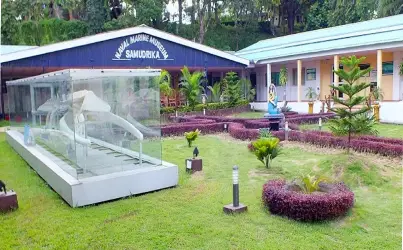
Q: What nearby attractions can I combine with Chatham Saw Mill? A: Nearby attractions include the Cellular Jail (8 km), Ross Island (2 km by boat), Anthropological Museum (5 km), Samudrika Museum (7 km), and Corbyn’s Cove Beach (10 km). Most can be visited in a single day of Port Blair sightseeing.
Q: When is the best season to visit? A: November to March offers the most pleasant weather (20-28°C) for touring the mill. Summer (April-July) is warm but manageable. Monsoon (June-September) brings heavy rainfall that may affect outdoor exploration.
Q: Are there food options available? A: A small staff canteen offers basic snacks and meals at very affordable prices. For more dining options, restaurants and cafes are available within 1-2 km in the Haddo area.
Conclusion: Chatham Saw Mill represents a unique intersection of industrial heritage, colonial history, and living craftsmanship. As Asia’s oldest operational sawmill, it offers visitors something rarely found—a chance to witness history not as a frozen exhibit but as a continuing legacy. From the rhythmic sounds of saws cutting timber to the intricate handicrafts in the Forest Museum, from World War II remnants to sustainable forestry practices, Chatham Saw Mill tells multiple stories spanning 140+ years. Whether you’re a history enthusiast, photography lover, or simply curious about how things work, this remarkable facility provides an enriching, educational, and memorable experience in Port Blair.
Travel Tourister is a leading Travel portal where we introduce travellers to trusted travel agents to make their journey hasselfree, memorable And happy. Travel Tourister is a platform where travellers get Tour packages ,Hotel packages deals through trusted travel companies And hoteliers who are working with us across the world. We always try to find new and more travel agents and hoteliers from every nook and corners across the world so that you could compare the deals with different travel agents and hoteliers and book your tour or hotel with the one you have chosen according to your taste and budget.



















 Call
Call Enquiry