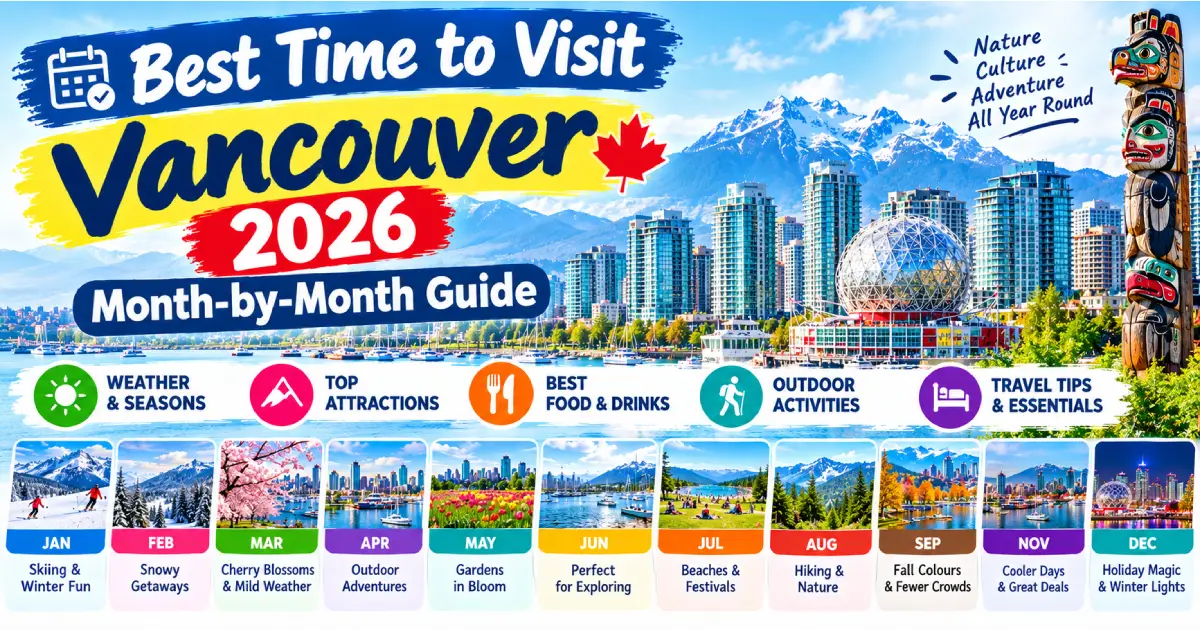
Best Time to Visit Vancouver 2026: Month-by-Month Guide
Published on : 14 Oct 2026
Best Time to Visit Vancouver — Dry Summer Seawalls vs Golden September vs Cozy Rainy Winters vs Cherry Blossom Springs: How to Choose the Right Season for Your Trip
By Travel Tourister | Updated October 2026
The best time to visit Vancouver is June to September, when the weather is at its driest and sunniest, daylight stretches to about 16 hours, and every beach, ferry, mountain trail, and day trip is open, with September offering the best balance of warm days, thinner crowds, and softer hotel rates; late March and April bring the cherry blossoms and the lowest prices outside winter, while November to March is the wet, grey, budget-friendly season that rewards travelers who plan around skiing, festivals, and cozy dining. For most first-time visitors, the honest short answer is July to mid September, with early September the single best window for weather, crowds, and value.
The season matters more in Vancouver than in most big cities because of how sharply rainfall swings through the year. Summer is genuinely dry — July and August typically see only about 30 to 45 millimeters of rain a month, compared with 150 to 200 millimeters in the wettest winter months — and highs reach about 22 to 23°C (72–73°F), which is warm but rarely oppressive thanks to the ocean. Winter is mild by Canadian standards, with highs of about 5 to 9°C (41–48°F) and very little snow in the city, but it is wet, and the mountains behind downtown are often hidden by cloud for days. At the same time, the nearby mountains tell a completely different seasonal story, with skiing at Grouse, Cypress, and Whistler in winter and hiking in summer, which is why it is worth deciding whether you want city time, mountain time, or both.
This guide breaks down all four seasons honestly, then goes deeper — a month-by-month calendar, a festival and event calendar, the best months for specific activities (Seawall and beaches, cherry blossoms, whale watching, skiing, Whistler, and Victoria day trips), realistic seasonal costs in Canadian dollars, packing advice, and a clear verdict for each type of traveler planning a 2026 or 2027 trip.
For complete guides, see our Vancouver Travel Guide 2026, Best Time to Visit Canada, and Canada Trip Cost guides.
The Most Important Facts First
Key Fact
🌸 Spring (Mar–May)
☀️ Summer (Jun–Aug)
🍂 Fall (Sep–Oct)
❄️ Winter (Nov–Feb)
Typical Highs
10–17°C (50–63°F)
20–23°C (68–73°F)
14–19°C (57–66°F)
5–9°C (41–48°F)
Typical Lows
4–9°C (39–48°F)
12–14°C (54–57°F)
7–11°C (45–52°F)
1–4°C (34–39°F)
Rain
Moderate, often showery
Driest season
Rain returns by October
Wettest season
Daylight Hours
12–15.5 hours
15–16 hours
10–13 hours (shrinking)
8–10 hours
Crowds
Low to moderate
Very high
Moderate; quiet after Labour Day
Low (except holidays)
Hotel Prices (Mid-Range, Before Taxes)
CAD 200–320
CAD 250–400
CAD 200–330
CAD 160–280
Mountains and Day Trips
Whistler skiing into spring; trails snowy until June
Everything open
Good until October
Ski season; many trails closed
Best For
Cherry blossoms, value, spot prawns
Seawall, beaches, festivals, day trips
Fall color, value, film festival
Skiing, Christmas events, cozy dining
Biggest Drawback
Showers, cool days
Cost, crowds, wildfire smoke risk
Rain returns, shorter days
Rain, grey skies, short days
Quick Verdict: Best Time to Visit Vancouver by Goal
Goal
What Matters
Best Season
Winner
Driest, sunniest weather
Beach days and outdoor plans
July–August
☀️ Summer
Stanley Park Seawall and beaches
Comfortable walking and biking
June–September
☀️ Summer
Cherry blossoms
Peak bloom in parks and streets
Late March–April
🌸 Spring
Best overall value
Good weather, fewer crowds, softer rates
Early–mid September
🍂 Fall
Lowest prices
Cheapest hotels and flights
November–March
❄️ Winter
Skiing and snowboarding
Snow at Grouse and Whistler
December–April
❄️ Winter
Whistler and Sea to Sky
Hiking, biking, and road access
July–September
☀️ Summer
Victoria and Vancouver Island
Gardens, ferries, whales
May–October
☀️ Summer / 🍂 Fall
Whale watching
Orcas and humpbacks
May–October
☀️ Summer
Spot prawns and seafood
Fresh local catch
May–June
🌸 Spring
Fireworks and festivals
Celebration of Light, Pride, music festivals
July–August
☀️ Summer
Christmas events
Markets, lights, and Bright Nights
Late November–December
❄️ Winter
Fewest crowds
Quiet attractions
November–March
❄️ Winter
Best Time to Visit Vancouver: Summer (June–August)
Summer is Vancouver’s peak season: the rain largely disappears, the Seawall and beaches are at their best, and the long days (about 16 hours in June) leave room for a city morning and a mountain afternoon.
Why Summer Works
Driest and sunniest weather: July and August bring highs near 22–23°C (72–73°F), low rainfall, and the clearest mountain views of the year.
Outdoor everything: The Stanley Park Seawall, English Bay, Kitsilano and Jericho beaches, Granville Island, and the North Shore trails are all at their best.
Festivals and events: The Celebration of Light fireworks competition at English Bay (late July to early August), Pride celebrations, the Vancouver Folk Music Festival at Jericho Beach in July, and the Pacific National Exhibition from mid August to Labour Day fill the calendar.
Day trips and ferries: Victoria, Whistler, Squamish, and the Gulf Islands are all easy and scenic, and whale-watching tours run from May through October.
Summer Drawbacks
Highest prices and crowds: Mid-range hotels often cost CAD 250 to 400 per night before taxes, and Alaska cruise-ship days put extra pressure on downtown hotels and attractions.
Wildfire smoke: Smoke from interior wildfires can occasionally affect air quality and views in July to September.
Heat spells: Short heat waves can push temperatures well above 30°C, and some hotels and older buildings have limited air conditioning.
Booking pressure: Popular tours, ferries, and restaurants need advance reservations.
Summer verdict: Best for first-time visitors who want the full Vancouver experience and can accept peak prices. Book hotels and tours six to eight weeks ahead (earlier for cruise-season weekends and fireworks nights), and check air-quality updates before mountain plans.
Best Time to Visit Vancouver: Fall (September–October)
Fall is the season experienced travelers choose: September often feels like an extension of summer, rates ease after Labour Day, and the city’s parks glow with fall color before the rains return.
Why Fall Works
Warm early fall: September highs near 19°C (66°F) with plenty of sunshine make it excellent for the Seawall, beaches, and North Shore hikes.
Better value: Hotel rates drop after Labour Day and crowds thin at major attractions.
Culture and nature: The Vancouver International Film Festival runs from late September into October, fall color lights up Stanley Park, Queen Elizabeth Park, and VanDusen Botanical Garden, and salmon runs draw visitors to local streams and hatcheries.
Day trips still work: Victoria, Whistler, and Squamish are open, and whale-watching tours run into October.
Fall Drawbacks
Rain returns: By mid to late October, showers become frequent, and highs fall to about 13–14°C (55–57°F).
Shorter days: Daylight falls from about 13 hours in early September to about 10 hours by late October.
Reduced seasonal services: Some tours and attractions shift to reduced schedules.
Fall verdict: Best overall season for travelers with flexible dates. Choose early to mid September for the best weather and value, and pack a rain jacket for October.
Best Time to Visit Vancouver: Winter (November–March)
Winter is wet, grey, and mild — not the best season for sightseeing views, but the best for budget travelers, skiers, and anyone who enjoys cozy restaurants, festive events, and moody mountain scenery.
Why Winter Works
Lowest prices: Outside holiday weeks, mid-range hotels are often CAD 160 to 280 per night before taxes, and flights are cheaper.
Skiing close to the city: Grouse Mountain and other North Shore areas offer skiing and snowshoeing when snow conditions allow, and Whistler’s season usually runs from late November into April.
Festive events: The Vancouver Christmas Market, Stanley Park’s Bright Nights, and holiday light displays brighten December, and the Dine Out Vancouver festival in January and February offers prix-fixe menus at participating restaurants.
Cozy dining and culture: Museums, Granville Island Public Market, ramen shops, and dim sum halls are especially appealing on rainy days.
Storm watching: Dramatic Pacific storms draw visitors to Tofino from November to February.
Winter Drawbacks
Rain almost daily: November to January are the wettest months, with long stretches of cloud that hide the mountains.
Short days: Roughly 8 hours of daylight in December.
Occasional snow and storms: Snow is rare in the city but can disrupt roads, transit, and ferries when it falls.
Limited trails: Many hiking trails are wet, icy, or closed.
Winter verdict: Best for budget travelers, skiers, and holiday-season visitors. Bring a waterproof jacket and boots, plan indoor options, and check road and ferry conditions before day trips.
Best Time to Visit Vancouver: Spring (March–May)
Spring is Vancouver’s blossom season — the city blooms weeks before most of Canada, prices stay low, and showers alternate with bright days.
Why Spring Works
Cherry blossoms: The city has tens of thousands of cherry trees, and the Vancouver Cherry Blossom Festival celebrates the bloom from late March through April, with peak timing varying by weather.
Lower prices and crowds: Hotels and flights are cheaper than in summer, and attractions are quieter.
Food and events: Spot prawn season begins in May, the BMO Vancouver Marathon takes place in early May, and Craft Beer Week follows in late spring.
Wildlife and day trips: Gray whales migrate past Tofino in March and April, and whale-watching tours from the Vancouver area ramp up from May.
Spring Drawbacks
Showers and cool days: March highs near 10°C (50°F) and frequent rain make for changeable days.
Snow on mountain trails: Many higher trails stay snowy until June, though Whistler may ski into spring.
Limited services early: Some seasonal tours and attractions open later in spring.
Spring verdict: Best for budget travelers, blossom chasers, and food lovers. Plan flexible indoor options for rainy days, and book accommodation only a few weeks ahead outside holiday weekends.
Best Time to Visit Vancouver: Month-by-Month Calendar
Average highs and lows below are approximate for Vancouver and vary from year to year.
Month
Typical High / Low
Rain, Crowds, and Prices
Highlights
Rating
January
7°C (45°F) / 2°C (36°F)
Very wet; low prices
Dine Out Vancouver, Lunar New Year in Chinatown, skiing nearby
★★★
February
8°C (46°F) / 2°C (36°F)
Wet; low prices
Dine Out, Whistler and Grouse skiing, early blossoms
★★★
March
10°C (50°F) / 4°C (39°F)
Showery; low prices
Cherry blossoms begin late month, gray whales at Tofino
★★★
April
13°C (55°F) / 6°C (43°F)
Showery; low to moderate
Cherry Blossom Festival, parks in bloom, spring skiing in Whistler
★★★★
May
17°C (63°F) / 9°C (48°F)
Drier; moderate
Spot prawn season, marathon, whale-watching season begins
★★★★
June
19°C (66°F) / 12°C (54°F)
Mixed, often cloudy early; rising prices
Long days, patios, Craft Beer Week, Seawall
★★★★
July
22°C (72°F) / 14°C (57°F)
Driest; peak prices
Canada Day, Folk Music Festival, Celebration of Light begins
★★★★★
August
22°C (72°F) / 14°C (57°F)
Very dry; peak prices
Fireworks, Pride, PNE, beaches, day trips (smoke risk)
★★★★★
September
19°C (66°F) / 11°C (52°F)
Mostly dry; prices ease after Labour Day
Warm days, fewer crowds, Fringe Festival, film festival begins
★★★★★
October
14°C (57°F) / 7°C (45°F)
Rain returns; low to moderate
Fall color, film festival, salmon runs
★★★
November
9°C (48°F) / 4°C (39°F)
Very wet; low prices
Quiet city, Christmas events begin late month, skiing opens
Event dates shift each year, so verify before you book travel around them.
Event
Typical Timing
Notes
Vancouver Cherry Blossom Festival
Late March–April
Peak bloom varies by weather
BMO Vancouver Marathon
Early May
Road closures downtown and around Stanley Park
Spot prawn season
May–June
Fresh prawns sold directly from boats and restaurants
Craft Beer Week
Late May–early June
Brewery events across the city
Canada Day
July 1
Events at Canada Place and the waterfront
Vancouver Folk Music Festival
Mid July
Held at Jericho Beach
Celebration of Light fireworks
Late July–early August
Multiple nights over English Bay; book hotels early
Vancouver Pride
Late July–early August
Parade on the first Sunday of August
Pacific National Exhibition (PNE)
Mid August–Labour Day
Fair, food, rides, and concerts
Vancouver Fringe Festival
September
Theater and performance
Vancouver International Film Festival (VIFF)
Late September–early October
Screenings across the city
Salmon runs
October
Viewing at local streams and hatcheries
Vancouver Christmas Market
Late November–December
Held at Jack Poole Plaza
Bright Nights in Stanley Park
December
Holiday train and lights
Dine Out Vancouver
January–February
Prix-fixe menus at participating restaurants
Canucks season
October–April
Rogers Arena
Best Time to Visit Vancouver for Specific Activities
Activity
Best Months
Notes
Stanley Park Seawall and beaches
June–September
Driest weather; May and early October also pleasant
Cherry blossoms
Late March–April
Check bloom updates
Hiking the North Shore
Late June–September
Higher trails can be snowy until June
Grouse Mountain Skyride and views
Clear days year-round
Low cloud can block views, especially in winter
Skiing and snowboarding
December–April
Grouse and Cypress when snow allows; Whistler season runs longer
Whistler summer activities
July–September
Hiking, biking, and gondolas
Victoria and Butchart Gardens day trip
May–October
Gardens at their best in spring and summer
Whale watching
May–October (gray whales March–April at Tofino)
Orcas and humpbacks most reliable in summer
Spot prawns and seafood
May–June
Fresh local catch
Fireworks and festivals
Late July–August
Book hotels early
Christmas events
Late November–December
Markets, lights, and Bright Nights
Museums and indoor attractions
Year-round (best in winter)
Museum of Anthropology, Science World, Granville Island Public Market
Alaska cruise departures
May–September
Vancouver is a major cruise port
Best Time to Visit Vancouver: Cost Comparison
The table below gives indicative planning estimates in Canadian dollars, not quotes — actual prices vary by year, event dates, and booking time.
Cost Category
🌸 Spring
☀️ Summer
🍂 Fall
❄️ Winter
Cheapest?
Mid-Range Hotel (Per Night, Before Taxes)
CAD 200–320
CAD 250–400
CAD 200–330
CAD 160–280
❄️ Winter
Flights to Vancouver
Lowest
Highest
Moderate
Mixed (holiday peaks)
🌸 Spring
Attractions and Day Trips
Limited services early
Full menu, peak pricing
Full menu, some discounts
Indoor focus, some closures
🌸 Spring / ❄️ Winter
Estimated Mid-Range Daily Total (Per Person, Before Hotel Taxes)
CAD 270–420
CAD 300–480
CAD 280–440
CAD 240–400
❄️ Winter
Hotel stays in the City of Vancouver also carry roughly 20 percent in taxes (8 percent PST, 3 percent MRDT, a temporary 2.5 percent Major Events tax, and GST on the total; verify with your hotel). Cost verdict: Winter (outside holiday weeks) and spring are cheapest, fall is the best value, and summer is the most expensive. For national budgets, see our Canada Trip Cost guide.
Who Should Visit Vancouver in Summer?
Choose summer if you:
Want the driest, sunniest weather and the clearest mountain views
Plan to bike the Seawall, swim at the beaches, or take day trips to Victoria and Whistler
Love festivals, fireworks, and long evenings
Travel with school-age children during summer holidays
Can book early and accept peak prices
Who Should Visit Vancouver in Fall?
Choose fall if you:
Want warm early-fall weather with fewer crowds and softer prices
Love fall color in Stanley Park and local gardens
Are a film fan and want to experience VIFF
Want hiking and day trips with fewer visitors
Can handle returning rain in October
Who Should Visit Vancouver in Winter?
Choose winter if you:
Want the lowest prices and quieter attractions
Ski or snowboard at Grouse, Cypress, or Whistler
Love Christmas events, cozy restaurants, and moody weather
Plan a museum-heavy, food-focused trip
Have a good rain jacket and a flexible attitude
Who Should Visit Vancouver in Spring?
Choose spring if you:
Want to see the cherry blossoms
Prefer low prices and few crowds
Love spot prawns and fresh seafood
Plan city-focused sightseeing with flexible weather plans
Combining Vancouver with Other Destinations
Trip Idea
Best Time
Why
Vancouver and Victoria
May–October
Gardens, ferries, and whale watching
Vancouver and Whistler
December–April (ski); July–September (hiking and biking)
Waterproof coat and boots, warm layers, hat and gloves, umbrella (or a hood), a compact travel umbrella
All year
Passport and travel documents, power adapter (Type A and B, 120V), reusable water bottle, travel insurance details
Locals favor a good rain jacket over an umbrella, because wind and mountain showers can make umbrellas awkward.
Best Time to Visit Vancouver: Practical Tips
Topic
Details
Best Overall Month
Early to mid September (warm, mostly dry, fewer crowds, softer prices)
Least Appealing Times
November to January (very wet and grey) unless you want low prices, skiing, or Christmas events
How Long to Stay
3–4 days in Vancouver, plus 1–2 days for Victoria, Whistler, or other day trips
Booking Timeline
Summer and fireworks nights: 6–8 weeks or more ahead; holidays: 2–4 months; spring and winter: 2–4 weeks
Rain Strategy
Plan one or two indoor days (Museum of Anthropology, Science World, Granville Island Public Market) and keep outdoor plans flexible
Wildfire Smoke
Possible in July–September; check air-quality updates and keep a flexible day
Weather Resources
Environment and Climate Change Canada for forecasts and warnings
Transit
TransLink one-zone adult fare is CAD 3.50 with cash or tap-to-pay and CAD 2.85 with Compass stored value since July 1, 2026; evenings and weekends are one-zone fares (verify current fares)
Ferries
Reserve BC Ferries vehicle space in summer and check storm cancellations in winter
Frequently Asked Questions: Best Time to Visit Vancouver
What is the best month to visit Vancouver?
September is the best single month for most travelers, with warm, mostly dry weather, thinner crowds, and prices easing after Labour Day. July and August are the sunniest and driest months if you want guaranteed beach and mountain weather and can accept higher prices.
What is the cheapest time to visit Vancouver?
November to March generally has the lowest hotel and flight prices, outside holiday weeks. Spring is also good value, and September offers the best balance of weather and price.
When is the rainy season in Vancouver?
The wettest months run from November to January, with rain often falling on most days. July and August are the driest months, with only about 30 to 45 millimeters of rain.
When are the cherry blossoms in Vancouver?
The cherry blossoms typically bloom from late March through April, with peak timing varying by weather and variety. The Vancouver Cherry Blossom Festival celebrates the season, so check local bloom updates before you go.
Is Vancouver worth visiting in winter?
Yes, if you plan indoor activities, skiing, and festive events and bring a good rain jacket. Hotel rates are lower, attractions are quiet, and the city’s restaurants and museums are at their coziest.
When is the best time for skiing near Vancouver?
Grouse and Cypress offer skiing when snow conditions allow, typically December to March, while Whistler’s season usually runs from late November into April. Check snow reports and road conditions before you go.
When is the best time to visit Victoria from Vancouver?
May to October is best, when the Butchart Gardens are at their best, ferries run on full schedules, and whale-watching tours operate. Reserve ferry space early in summer.
When is the best time for whale watching in Vancouver?
May to October is the main season, with orcas and humpbacks most reliable in summer. Gray whales migrate past Tofino in March and April.
How rainy is Vancouver in summer?
Very little. July and August are the driest months, with warm days and clear mountain views, though occasional showers and, in some years, wildfire smoke can still occur.
Final Verdict: Best Time to Visit Vancouver
Vancouver does not have a single best season — it has a best season for each kind of trip, and the most honest verdict is to choose the one that matches your priorities rather than searching for one perfect month.
Choose summer (June–August) if you want the driest, sunniest weather, the Seawall and beaches at their best, festivals and fireworks, and easy day trips, and you can accept peak prices. Choose fall (September–October) if you want the best balance of weather, crowds, and cost, with early September as the sweet spot and the film festival and fall color as bonuses. Choose winter (November–March) if you want the lowest prices, skiing, Christmas events, and cozy dining, and you are prepared for rain. Choose spring (March–May) if your priorities are cherry blossoms, spot prawns, and low prices rather than guaranteed sunshine.
If you are still undecided, choose early September — it is the closest thing Vancouver has to a universal best month. And whatever the season, pack a good rain jacket, book hotels early for summer and fireworks nights, and keep one flexible day for weather.
About Travel TouristerTravel Tourister’s destination specialists have studied Vancouver across all four seasons — from dry summer Seawalls and golden September days to cherry blossom springs and cozy, rainy winters — to deliver the most practical and honest guide to the best time to visit Vancouver for every type of 2026 traveler.Need help choosing the right season for your Vancouver trip? Our specialists can help you match dates to events, book hotels early for summer and fireworks nights, add Victoria, Whistler, or the Rockies, and build a realistic budget before you commit to non-refundable flights.
Posted By : Vinay
As a lead contributor for Travel Tourister, Vinay is dedicated to serving our Tier 1 audience (US, UK, Canada, Australia). His mission is to deliver precise, fact-checked news and actionable, data-driven articles that empower readers to make informed decisions, minimize travel risks, and maximize their adventure without compromising safety or budget.
Travel Tourister is a leading Travel portal where we introduce travellers to trusted travel agents to make their journey hasselfree, memorable And happy. Travel Tourister is a platform where travellers get Tour packages ,Hotel packages deals through trusted travel companies And hoteliers who are working with us across the world. We always try to find new and more travel agents and hoteliers from every nook and corners across the world so that you could compare the deals with different travel agents and hoteliers and book your tour or hotel with the one you have chosen according to your taste and budget.




 Call
Call Enquiry