Chiang Mai Guide 2026: Northern Thailand’s Cultural Heart

Published on : 27 Jan 2026

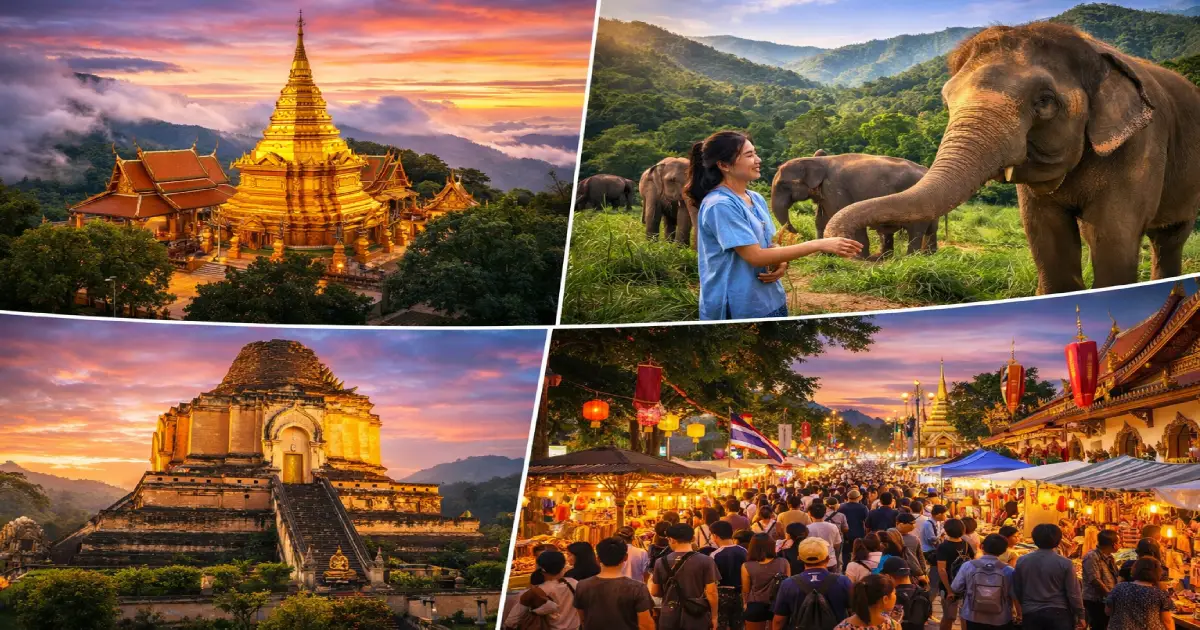
Chiang Mai attractions collage showing golden Wat Phra That Doi Suthep temple on misty mountaintop, ancient temple ruins in Old City, vibrant Sunday Walking Street night market, ethical elephant sanctuary experience, and lush mountain landscapes representing northern Thailand's cultural heart

Standing at Wat Phra That Doi Suthep last March, I watched a French couple remove their face masks to take photos. “The guidebook said March was perfect for Chiang Mai,” the woman said, coughing slightly as haze obscured the city view below.

Her partner checked his phone’s air quality app. “PM2.5 is 187. That’s ‘very unhealthy.’ Maybe we should’ve come in November like that blog suggested.”

They’d made a mistake that ruins thousands of Chiang Mai trips annually.

After eight visits to Chiang Mai over six years—experiencing pristine November mountain air, suffocating March pollution, monsoon season lushness, and festival madness—I’ve learned this: Chiang Mai guide success depends more on timing than most destinations, and understanding what makes this city special beyond the typical temple checklist.

Chiang Mai isn’t Bangkok’s quieter cousin. It’s fundamentally different—700-year-old walled city, mountain-ringed valley, distinct Lanna culture, manageable scale, and a vibe that makes digital nomads extend one-week visits into six-month stays.

But it’s also a city that disappears into toxic haze for months each year, transforms during festivals, and rewards slowness over rushed sightseeing. The temples everyone photographs look identical in pictures but feel completely different when you’re there. The “digital nomad paradise” reputation attracts crowds that dilute what made it special.

This isn’t another “Top 10 Chiang Mai Temples” listicle. This is a comprehensive guide to experiencing Chiang Mai’s depth—the temples worth visiting and which to skip, neighborhoods with genuine character, where locals actually eat, how to experience hill tribe culture ethically, and—critically—when to absolutely avoid visiting due to air quality that reaches hazardous levels.

I’ll show you how to spend 3-7 days in Chiang Mai, which activities justify their hype versus which waste time, and how to experience northern Thai culture beyond tourist performances. Whether you’re a first-timer hitting the highlights or a return visitor seeking depth, you’ll know exactly how to navigate Thailand’s cultural heart.


Quick Summary: Chiang Mai Guide Essentials

Let’s start with what you need to know immediately:

Category Essential Info
Best time to visit November-February (cool, clear air)
AVOID at all costs March-April (burning season, hazardous air quality)
Minimum stay 3-4 days for highlights; 5-7 days for depth
Main attractions Temples, Old City, Sunday Walking Street, Doi Suthep, elephant sanctuaries
Getting there Fly from Bangkok (1h 20m, ฿1,200-2,500)
Getting around Songthaews (red trucks), motorbikes, walk Old City
Daily budget Budget: ฿800-1,200 / Mid-range: ฿1,500-3,000 / Luxury: ฿4,000+
Unique experiences Cooking classes, monk chats, hill tribe visits, Thai massage courses

The #1 thing most guides ignore but I won’t: Chiang Mai’s air quality from late February through April makes the city genuinely unpleasant and unhealthy to visit. I’ll explain this in detail below.


Understanding Chiang Mai Before You Arrive

The Geographic & Cultural Context

Location: Northern Thailand, 700km north of Bangkok, mountainous region bordering Myanmar and Laos

Elevation: 310 meters (1,020 feet) – cooler than Bangkok

Historical significance: Founded 1296, capital of Lanna Kingdom for centuries, maintained distinct culture separate from central Thailand

What makes it different from Bangkok:

  • Scale: Compact, walkable Old City vs. sprawling megacity
  • Culture: Lanna traditions vs. central Thai
  • Pace: Relaxed, slower vs. frenetic
  • Language: Northern Thai dialect still spoken vs. central Thai only
  • Architecture: Wooden houses, different temple styles vs. modern concrete
  • Food: Khao Soi, sai oua (northern specialties) vs. pad thai dominance

The digital nomad invasion:

Over the past decade, Chiang Mai transformed from sleepy cultural city to digital nomad headquarters. Coworking spaces, Western cafes, and “location-independent entrepreneurs” now define certain neighborhoods.

Effects:

  • Pros: Excellent WiFi, international food, English widely spoken, infrastructure improved
  • Cons: Rising prices, diluted local culture in nomad areas, less authentic feel

The Burning Season Reality (March-April)

I need to address this immediately because most guidebooks minimize or ignore it:

What happens: Late February through April, agricultural burning across northern Thailand and Myanmar creates severe air pollution that settles in Chiang Mai’s mountain-ringed valley.

Air quality levels:

  • WHO safe guideline: 25 µg/m³ PM2.5
  • Chiang Mai during burning season: Regularly 150-300+ µg/m³
  • March 2025: Chiang Mai ranked among world’s most polluted cities

Health effects:

  • Respiratory irritation, coughing
  • Eye burning and headaches
  • Exacerbation of asthma, heart conditions
  • Visibility reduced (can’t see mountains from city)
  • Masks become necessary for outdoor activities

What this means for your trip:

  • Temple visits less enjoyable through haze
  • Outdoor activities (hiking, cycling) unhealthy
  • Mountain views obscured
  • Local residents flee if possible

If you must visit during burning season:

  • Monitor air quality daily (IQAir app)
  • Purchase N95/FFP2 masks
  • Book accommodation with air purifiers
  • Limit outdoor time when PM2.5 exceeds 150
  • Consider shortening stay

Better strategy: Visit November-February when air is pristine and mountain views spectacular.

For detailed seasonal planning, see our Best Time to Visit Thailand Guide.


Chiang Mai’s Neighborhoods: Where to Stay & Explore

Understanding Chiang Mai’s districts helps you plan efficiently:

Old City (Inside the Moat)

Character: Historic heart, temple-dense, tourist-friendly, walkable

What’s here:

  • 30+ temples within 1.5km² walled area
  • Sunday Walking Street (Ratchadamnoen Road)
  • Guesthouses, hostels, mid-range hotels
  • Tourist restaurants, tour operators
  • Traditional massage shops

Pros:

  • Walk to major temples
  • Atmospheric, historic feel
  • Easy orientation (square moat as landmark)
  • Cheap accommodation options

Cons:

  • Touristy, less authentic
  • Noise from tuk-tuks
  • Limited high-end options
  • Can feel same-same after a while

Best for: First-time visitors, temple enthusiasts, budget travelers, those without transport


Nimman (Nimmanhaemin Road)

Character: Hip, modern, digital nomad central, cafe-heavy

What’s here:

  • Coworking spaces, boutique cafes
  • International restaurants
  • MAYA mall, Design Centre
  • Boutique hotels, Airbnbs
  • Art galleries, design shops

Pros:

  • Best WiFi in Chiang Mai
  • Excellent coffee and brunch spots
  • Modern, comfortable
  • English everywhere
  • Social scene for remote workers

Cons:

  • Least “Thai” area
  • More expensive
  • Generic international vibe
  • Farther from temples
  • Can feel like anywhere

Best for: Digital nomads, long-term travelers, café hoppers, those prioritizing comfort/WiFi over culture


Riverside (East of Old City)

Character: Mix of local and tourist, emerging cool, artsy

What’s here:

  • Ping River, riverside bars/restaurants
  • Saturday Walking Street (Wualai Road)
  • Local markets, authentic eateries
  • Boutique guesthouses
  • Silversmith community

Pros:

  • More authentic than Old City
  • River views, pleasant walks
  • Emerging restaurant scene
  • Balance of local and tourist
  • Cheaper than Nimman

Cons:

  • Spread out, less walkable
  • Fewer major sights
  • Night market area touristy
  • Some areas scruffy

Best for: Return visitors, foodies, those seeking authentic-but-comfortable balance


Santitham (North of Old City)

Character: Local neighborhood, budget-friendly, university area

What’s here:

  • Chiang Mai University nearby
  • Local markets, cheap eats
  • Budget guesthouses
  • Authentic northern Thai restaurants
  • Few tourists

Pros:

  • Very cheap
  • Authentic local life
  • Excellent value food
  • Easy songthaew access to Old City

Cons:

  • No major sights
  • Limited English
  • Basic accommodation
  • Motorbike helpful

Best for: Long-term budget travelers, those wanting local immersion


Hang Dong (South, near airport)

Character: Suburban, less central, accommodation spread out

Pros: Quiet, some upscale resorts, near airport

Cons: Far from attractions, need transport everywhere

Best for: Those prioritizing resort relaxation over sightseeing


The Temple Guide: Which Ones Actually Matter

Chiang Mai has 300+ temples. You don’t need to see them all. Here’s what actually deserves your time:

Must-Visit Temples (Genuinely Special)

Wat Phra That Doi Suthep

Why it’s essential:

  • Chiang Mai’s most sacred temple
  • Mountain-top location, 1,676m elevation
  • Panoramic city views (when air is clear)
  • 309-step naga-lined staircase
  • Gold chedi, intricate murals
  • Active worship site, not just tourist attraction

Practical info:

  • Location: 15km west of city, up mountain
  • Entry: ฿50 for foreigners
  • Dress code: Shoulders/knees covered
  • Transport: Shared songthaew (฿100 round-trip from zoo), private hire (฿600), motorbike
  • Time needed: 2-3 hours including travel
  • Best time: Early morning (7-8 AM) or late afternoon for sunset
  • Crowds: Always busy but manageable early/late

Pro tip: Come for 6 PM monk chanting—atmospheric and less crowded than midday.

Rating: 5/5 – Non-negotiable Chiang Mai experience


Wat Chedi Luang

Why it’s special:

  • Massive 15th-century ruined chedi (partially earthquake-damaged)
  • Enormous scale conveys historic power
  • Active temple with resident monks
  • Monk Chat program (3-5 PM daily)
  • City pillar shrine on grounds

Practical info:

  • Location: Central Old City
  • Entry: ฿40 foreigners
  • Time needed: 45 minutes – 1 hour
  • Monk Chat: Free, practice English with monks, ask questions about Buddhism

What to see:

  • Main ruined chedi (impressive even damaged)
  • Smaller gold chedi behind
  • Inthakin city pillar shrine
  • Elephant statues (reproductions, originals damaged)

Pro tip: Time visit for 3 PM to include Monk Chat—genuinely interesting cultural exchange.

Rating: 4.5/5 – Essential Old City temple


Wat Phra Singh

Why it matters:

  • Classic Lanna architecture
  • Impressive Lai Kham viharn with murals
  • Houses revered Phra Singh Buddha image
  • Important pilgrimage site
  • Beautiful temple grounds

Practical info:

  • Location: Western Old City
  • Entry: ฿50 foreigners
  • Time needed: 45 minutes
  • Often combined with Wat Chedi Luang (5-minute walk apart)

Rating: 4/5 – One of Old City’s best


Wat Chiang Man

Why visit:

  • Oldest temple in Chiang Mai (founded 1297)
  • Small but historically significant
  • Two ancient Buddha images
  • Peaceful, less touristy than others
  • Beautiful elephant-buttressed chedi

Practical info:

  • Location: Northern Old City
  • Entry: Free
  • Time needed: 30 minutes
  • Often skipped but shouldn’t be

Rating: 3.5/5 – History buffs love it, others might skip


Good But Optional Temples

Wat Suan Dok:

  • Royal cemetery with white chedis
  • Sunset photo opportunity
  • Monk Chat program
  • Rating: 3.5/5

Wat Umong:

  • Forest temple, tunnel shrines
  • Peaceful, different vibe from typical temples
  • Outside Old City (20 mins)
  • Rating: 3.5/5 if you have extra time

Wat Lok Molee:

  • Beautiful Lanna architecture
  • Less crowded
  • Northern Old City
  • Rating: 3/5

You Can Skip These

Silver Temple (Wat Sri Suphan):

  • Photogenic but small
  • Closed to women (seriously)
  • Not worth special trip
  • Rating: 2/5

Wat Phan Tao:

  • Small wooden temple
  • Pretty but quick
  • Often combined with nearby temples
  • Rating: 2.5/5

Most other Old City temples:

  • Beautiful but repetitive after seeing the majors
  • Feel similar after 5-6 temples
  • Diminishing returns on temple fatigue

Temple Visiting Strategy

Efficient 1-day temple tour:

  • Morning: Wat Phra That Doi Suthep (7-10 AM)
  • Late Morning: Wat Chedi Luang + Monk Chat
  • Lunch break (air-con restaurant)
  • Afternoon: Wat Phra Singh
  • Evening: Wat Suan Dok at sunset

Reality check: Five temples in one day causes temple fatigue. Consider spreading across 2 days or focus on quality over quantity.

Temple etiquette:

  • Remove shoes before entering buildings
  • Cover shoulders and knees
  • Don’t point feet at Buddha images
  • No photos during active worship
  • Speak quietly, respectful behavior
  • Women cannot touch monks or hand them objects directly

Essential Chiang Mai Experiences

Sunday Walking Street Market

What it is: Weekly night market closing Ratchadamnoen Road through Old City

When: Every Sunday, 4 PM – midnight

Why it’s unmissable:

  • Hundreds of vendors selling handicrafts
  • Street food galore
  • Live performances, traditional music
  • Locals and tourists mix
  • Authentic, non-touristy feel despite popularity
  • Excellent souvenirs, reasonable prices

What to buy:

  • Hill tribe textiles and crafts
  • Silver jewelry
  • Wood carvings
  • Lanterns, home décor
  • Art, paintings
  • Clothing

What to eat:

  • Sai oua (northern sausage)
  • Khao soi (curry noodles)
  • Grilled meats on sticks
  • Mango sticky rice
  • Fresh fruit shakes

Strategy:

  • Arrive 5-6 PM before peak crowds
  • Walk entire length before buying (compare prices/quality)
  • Bring small bills (฿20, ฿50, ฿100 notes)
  • Negotiate politely (expect 10-20% off asking price)
  • Eat dinner from street vendors (฿40-80)

Saturday alternative: Saturday Walking Street on Wualai Road (smaller, less crowded, more local)

Budget: ฿500-2,000 depending on shopping enthusiasm

Rating: 5/5 – Schedule your Chiang Mai visit to include a Sunday if possible


Cooking Classes

Why everyone does them:

  • Learn to actually cook Thai food
  • Market visit typically included
  • Hands-on, fun, social
  • Take skills home
  • Half-day or full-day options

Top schools:

Thai Farm Cooking School:

  • Organic farm setting, 30 mins outside city
  • Small groups (max 10-12)
  • Pick ingredients from garden
  • ฿1,000-1,300
  • Excellent reputation

Mama Noi’s Cooking School:

  • Local home setting
  • Personal, intimate
  • Market visit included
  • ฿1,000
  • Very authentic

Basil Cookery School:

  • Central location
  • Professional setup
  • Larger groups
  • ฿1,000-1,200

Zabb E Lee Cooking School:

  • Northern Thai specialties focus
  • Smaller groups
  • Local market visit
  • ฿1,200-1,500

What you’ll cook (typical menu, choose 5-6 dishes):

  • Curry paste from scratch (red/green/massaman)
  • One curry using your paste
  • Pad Thai or fried rice
  • Tom Yum or Tom Kha soup
  • Papaya salad or spring rolls
  • Mango sticky rice

Time commitment: Half-day (9 AM – 1 PM or 3 PM – 7 PM)

Pro tip: Book 3-5 days ahead. Morning classes better than afternoon (cooler, fresher market experience).

Budget: ฿1,000-1,500 including market visit, ingredients, meal

Rating: 4.5/5 – One of Thailand’s best value activities


Ethical Elephant Sanctuaries

Critical context: Riding elephants harms them. Ethical sanctuaries focus on observation, feeding, bathing—no riding.

How to identify ethical sanctuaries:

  • ✅ No riding
  • ✅ No circus tricks/performances
  • ✅ Elephants roam freely
  • ✅ Focus on conservation/rescue
  • ✅ Limited visitor numbers
  • ❌ Avoid anywhere offering riding

Recommended sanctuaries:

Elephant Nature Park:

  • Most famous, largest
  • Rescued elephants, professional operation
  • Various programs (half-day to multi-day)
  • ฿2,500 for full-day visit
  • Book weeks ahead (very popular)
  • Rating: 4.5/5

Elephant Jungle Sanctuary:

  • Multiple locations near Chiang Mai
  • Smaller groups
  • Feed, bathe, walk with elephants
  • ฿1,800-2,500
  • Rating: 4/5

Ran-Tong Save and Rescue Elephant Centre:

  • Small, intimate
  • Family-run
  • Very personal experience
  • ฿1,600-2,000
  • Rating: 4/5

What to expect:

  • Full-day programs: 8 AM – 5 PM typically
  • Learn about elephants, their rescue stories
  • Feed them (lots of bananas and sugar cane)
  • Mud bath + river bath with elephants
  • Lunch included (usually buffet)
  • Transportation from/to city included

What to bring:

  • Change of clothes (you WILL get wet and muddy)
  • Towel
  • Sunscreen, hat
  • Camera (waterproof or phone in waterproof case)

Reality check: These sanctuaries are touristy. But they’re ethical tourism supporting genuine rescue work. Worth doing once.

Budget: ฿1,600-2,500 depending on program

Rating: 4/5 – Essential if you care about elephants; skip if not


Thai Massage Courses

Unique to Chiang Mai: Learn traditional Thai massage

Why people do it:

  • Gain useful skill
  • Cultural immersion
  • Meet other travelers
  • Return home with certification

Lengths:

  • 5-day basic course (30 hours): ฿6,000-9,000
  • 10-day advanced: ฿12,000-18,000
  • 15-day professional: ฿18,000-25,000

Top schools:

  • TMC (Thai Massage Conservation Club): Old City, respected
  • ITM (International Training Massage): Established, professional
  • Loi Kroh: Budget-friendly, decent quality
  • Old Medicine Hospital: Traditional, strict

What you learn:

  • Traditional Thai massage techniques
  • Sen lines (energy meridians)
  • Pressure points
  • Stretches, compressions
  • Practice on classmates daily

Time commitment: Full days (9 AM – 5 PM usually)

Physical demand: Expect sore muscles—giving massage is workout

Certification: Receive certificate at completion (recognized in Thailand, varies elsewhere)

Who does this:

  • Career changers wanting massage skills
  • Travelers with 1-2 weeks to spend
  • Wellness enthusiasts
  • Couples learning together

Budget: ฿6,000-25,000 depending on course length

Rating: 4/5 for those interested in wellness; skip if not


Day Trips from Chiang Mai

Doi Inthanon National Park

What it is: Thailand’s highest peak (2,565m), waterfalls, hill tribe villages

Highlights:

  • Summit with twin royal chedis
  • Mae Klang, Wachirathan waterfalls
  • Karen hill tribe villages
  • Coffee plantations
  • Cool mountain air

How to visit:

  • Tour: ฿1,200-1,800 (easiest, includes transport/guide)
  • Motorbike: Full day, experienced riders only, 100km round-trip
  • Private driver: ฿2,500-3,500

Time needed: Full day (7 AM – 5 PM)

Best season: November-February (cool, clear); avoid rainy season (waterfalls full but roads dangerous)

Budget: Tour ฿1,500 + park entry ฿300 = ฿1,800

Rating: 4/5 – Beautiful if you love nature; skip if not outdoorsy


Pai (Mountain Town)

What it is: Hippie town in mountains, 3 hours north

Character:

  • Bohemian, relaxed vibe
  • Reggae bars, vegan cafes
  • Hot springs, waterfalls, canyons
  • Backpacker favorite
  • Beautiful countryside

How to get there:

  • Minivan: 3 hours, ฿150-200, 762 curves (motion sickness warning!)
  • Motorbike: Scenic but challenging mountain roads

Whether to go:

  • Pros: Beautiful scenery, chill vibe, escape Chiang Mai
  • Cons: Long, nauseating journey; touristy; similar to Chiang Mai but smaller

Recommendation: Only if you have 5+ days in north and want different vibe

Budget: ฿500-800/day including accommodation

Rating: 3.5/5 – Divisive; some love it, others find it overhyped


Chiang Rai & White Temple (Full Day)

What it is: City north of Chiang Mai, famous for Wat Rong Khun (White Temple)

Highlights:

  • White Temple: Modern, unconventional, Instagram-famous
  • Blue Temple: Also modern, beautiful
  • Black House: Art museum, dark aesthetic
  • Golden Triangle: Myanmar/Laos/Thailand border

How to visit:

  • Day tour: ฿1,000-1,500 (long day, 12 hours)
  • Multi-day: Stay overnight in Chiang Rai

Reality check:

  • 3 hours each way = 6 hours in vehicle
  • White Temple undeniably photogenic but small
  • Exhausting day trip
  • Better as overnight trip if visiting Golden Triangle too

Budget: Tour ฿1,200 or ฿800 bus + ฿300 attractions = ฿1,100

Rating: 3/5 – White Temple worth seeing but day trip brutal


Chiang Mai Food Scene

Must-Try Northern Thai Dishes

Khao Soi:

  • Curry noodle soup with crispy noodles on top
  • Chiang Mai’s signature dish
  • Usually chicken or beef
  • Rich, coconutty, slightly spicy
  • Where: Khao Soi Mae Sai, Khao Soi Khun Yai, Khao Soi Nimman
  • Cost: ฿40-80

Sai Oua:

  • Northern Thai sausage
  • Herbal, slightly spicy
  • Grilled, served with sticky rice and vegetables
  • Where: Sunday Walking Street, local markets
  • Cost: ฿60-100

Nam Prik Ong:

  • Tomato-pork dip with vegetables
  • Eaten with sticky rice and fresh veggies
  • Mild, savory
  • Where: Huen Phen, local restaurants
  • Cost: ฿60-120

Gaeng Hang Lay:

  • Pork belly curry, Burmese influence
  • Sweet-savory, ginger, tamarind
  • Rich, comfort food
  • Where: Tong Tem Toh, traditional restaurants
  • Cost: ฿80-150

Larb:

  • Minced meat salad (pork, chicken, beef)
  • Spicy, herbal, lime
  • Eaten with sticky rice
  • Where: Everywhere, best at local places
  • Cost: ฿60-100

Best Restaurants by Category

Authentic Northern Thai:

  • Huen Phen: Old City, traditional setting, excellent khao soi (฿60-150/dish)
  • SP Chicken: Famous rotisserie chicken, local favorite (฿100-200/meal)
  • Tong Tem Toh: Northern specialties, set menus (฿150-300/person)

International/Fusion:

  • Ginger & Kafe: Farm-to-table, beautiful setting (฿200-400/dish)
  • The Service 1921: Fine dining Thai, colonial building (฿500-1,000/person)
  • Khum Khantoke: Traditional dinner + cultural show (฿600-800 all-inclusive)

Vegetarian/Vegan:

  • Goodsouls Kitchen: Vegan comfort food (฿100-250/meal)
  • Pun Pun: Organic vegetarian, seed-saving project (฿80-180/meal)
  • Free Bird Cafe: Vegetarian, supports ex-prisoners (฿100-200/meal)

Cafes (Digital Nomad HQ):

  • Ristr8to: Best coffee, barista champion, Nimman (฿80-150)
  • Graph Cafe: Industrial-chic, good WiFi (฿100-200)
  • Akha Ama Coffee: Hill tribe coffee, multiple locations (฿70-120)

Food Markets

Warorot Market:

  • Old City east side
  • Huge local market
  • Food section downstairs
  • Authentic, cheap (฿30-60/meal)
  • Open daily

Somphet Market:

  • Local evening market
  • Northern food specialties
  • Few tourists
  • ฿40-80/meal

JingJai Market:

  • Organic farmers market
  • Weekends only
  • Local vibe, live music
  • ฿100-200/meal

Practical Chiang Mai Information

Getting There

By Air:

  • Chiang Mai International Airport (CNX)
  • Direct flights from Bangkok (1h 20m, ฿1,200-2,500)
  • Direct from Singapore, KL, Hong Kong, other Asian hubs
  • Airport to Old City: 15 mins, taxi ฿150-200, Grab ฿100-150

By Train:

  • Overnight sleeper from Bangkok (11-13 hours)
  • Second-class sleeper: ฿881
  • First-class sleeper: ฿1,453
  • Scenic but slow
  • Arrive Chiang Mai morning

By Bus:

  • VIP bus from Bangkok (10-11 hours, ฿650-800)
  • Overnight, comfortable
  • Cheaper than train/flight but less comfortable

Getting Around

Songthaews (Red Trucks):

  • Shared taxis, fixed-ish routes
  • Flag down, tell driver destination
  • ฿30-40 per person for shared trips within city
  • ฿100-200 for private hire

Grab:

  • Most reliable for tourists
  • Upfront pricing
  • Available everywhere
  • Slightly more than songthaews

Motorbike Rental:

  • ฿150-250/day for scooter
  • International license technically required
  • Many rent without checking
  • Traffic calmer than Bangkok but still chaotic
  • Helmet mandatory (฿500 fine)

Bicycle:

  • Great for Old City
  • Many guesthouses offer free bikes
  • Rental: ฿50-100/day
  • Watch for traffic

Walking:

  • Old City very walkable
  • Nimman walkable within neighborhood
  • Doi Suthep, outer areas need transport

When to Visit: Month-by-Month

November-February (Cool Season) – BEST:

  • Temperature: 15-28°C (59-82°F)
  • Clear skies, low humidity
  • Perfect hiking weather
  • Yi Peng Lantern Festival (November)
  • Peak season: higher prices, book ahead

March-April (Hot Season + Burning Season) – AVOID:

  • Temperature: 25-40°C (77-104°F)
  • Hazardous air quality: PM2.5 often 150-300+
  • Mountains invisible through haze
  • Outdoor activities unpleasant/unhealthy
  • Songkran (mid-April) brings water fights but still smoky

May-October (Rainy Season) – GOOD VALUE:

  • Temperature: 24-32°C (75-90°F)
  • Afternoon rain showers
  • Lush, green landscapes
  • Low season prices (40-60% off)
  • Mornings often clear
  • Air quality improves dramatically (rain clears smoke)

What to Pack

Cool Season (Nov-Feb):

  • Light jacket for evenings (15°C possible)
  • Long pants for temples
  • Layers (mornings cool, afternoons warm)

Hot Season (Mar-May):

  • Lightest clothes possible
  • N95 masks for burning season
  • Sunscreen, hat
  • Hydration supplies

Rainy Season (May-Oct):

  • Light rain jacket or umbrella
  • Quick-dry clothes
  • Sandals that dry fast
  • Waterproof bag for electronics

Year-round:

  • Modest temple clothes (shoulders/knees covered)
  • Comfortable walking shoes
  • Sunscreen, insect repellent
  • Reusable water bottle

Sample Chiang Mai Itineraries

3 Days in Chiang Mai (First-Timer Essentials)

Day 1: Old City Temples

  • Morning: Wat Phra That Doi Suthep (7-10 AM)
  • Late Morning: Return to city, Wat Chedi Luang
  • Lunch: Huen Phen (khao soi)
  • Afternoon: Wat Phra Singh, rest at hotel/cafe
  • Evening: Explore Old City, dinner, massage

Day 2: Culture & Cooking

  • Morning: Cooking class (9 AM-1 PM)
  • Afternoon: Rest, explore Nimman cafes
  • Evening: Prepare for Sunday Walking Street OR Saturday Walking Street

Day 3: Elephants & Markets

  • Full day: Elephant sanctuary visit (8 AM-5 PM)
  • Evening: Walking Street market (if Sunday/Saturday)

5 Days in Chiang Mai (Deeper Exploration)

Days 1-3: As above

Day 4: Day Trip

  • Option A: Doi Inthanon National Park
  • Option B: Sticky Waterfalls + Mae Kampong village
  • Option C: Chiang Rai & White Temple (long day)

Day 5: Neighborhoods & Relaxation

  • Morning: Explore Riverside area, Saturday market setup
  • Afternoon: Thai massage (2 hours)
  • Evening: Dinner at nice restaurant, rooftop bar

7 Days in Chiang Mai (Full Experience + Day Trips)

Days 1-5: As above

Day 6: Pai Overnight

  • Morning: Travel to Pai (3 hours)
  • Afternoon: Explore Pai town, hot springs
  • Evening: Sunset at Pai Canyon, dinner at walking street
  • Overnight: Pai

    Day 7: Pai to Chiang Mai

    • Morning: Pai waterfalls
    • Day 7: Return & Relax
    • Morning: Travel back to Chiang Mai (11 AM)
    • Afternoon: Final temple (Wat Umong), shopping
    • Evening: Farewell dinner, final massage

    Where to Stay in Chiang Mai

    Budget (฿400-1,000/night)

    Old City:

    • Deejai Backpackers: Social hostel, dorms ฿250-400
    • Julie Guesthouse: Private rooms ฿600-900, pool
    • Bodhi Serene Hotel: Budget hotel ฿700-1,000, good location

    Nimman:

    • Stamps Backpackers: Modern hostel, dorms ฿350-500
    • Aoi Garden Home: Private rooms ฿800-1,200

    Best for: Backpackers, long-term budget travelers, social atmosphere


    Mid-Range (฿1,000-3,000/night)

    Old City:

    • Rarin Jinda Wellness Spa Resort: Boutique with spa, ฿2,500-3,500
    • Banthai Village: Traditional style, pool, ฿1,800-2,800
    • De Naga Hotel: Chiang Mai University, pool, ฿1,500-2,500

    Nimman:

    • Nimman Mai Design Hotel: Modern, rooftop pool, ฿2,200-3,200
    • STAY Hotel: Stylish, great location, ฿1,800-2,800
    • Hotel Des Artists: Boutique, art-themed, ฿2,000-3,000

    Riverside:

    • Ping Nakara Boutique Hotel: Colonial charm, river views, ฿2,500-3,500
    • Tamarind Village: Boutique resort, quiet, ฿2,800-4,000

    Best for: Comfort-seekers, couples, those wanting quality without luxury prices


    Luxury (฿3,000-10,000+/night)

    In/Near Old City:

    • 137 Pillars House: Colonial mansion, exceptional service, ฿8,000-15,000
    • Rachamankha: Traditional Lanna design, sophisticated, ฿5,000-9,000
    • Anantara Chiang Mai: Riverside luxury, British colonial style, ฿6,000-12,000

    Outside City:

    • Four Seasons Resort: Mountain resort, infinity pools, ฿10,000-25,000
    • Dhara Dhevi: Luxury resort resembling Lanna palace, ฿8,000-20,000

    Best for: Honeymooners, luxury travelers, special occasions


    Long-Term Stays (Monthly)

    Nimman Airbnbs/Condos:

    • Studio apartments: ฿12,000-20,000/month
    • 1-bedroom: ฿15,000-30,000/month
    • Includes: WiFi, pool, gym typically

    Best areas:

    • Nimman (digital nomad central, highest prices)
    • Santitham (budget, near university)
    • Riverside (balance of local and comfort)

    Booking: Airbnb, Facebook groups (Chiang Mai Expats, Digital Nomads)


    Chiang Mai Costs: Budget Breakdown

    Daily Budget Examples

    Budget Traveler (฿800-1,200/day):

    • Hostel dorm: ฿350
    • Food (street + local restaurants): ฿400
    • Transport (songthaews, walking): ฿100
    • Activities: ฿150
    • Total: ฿1,000

    Mid-Range Traveler (฿2,000-3,500/day):

    • Nice hotel: ฿2,200
    • Food (mix of local and nice restaurants): ฿800
    • Transport (Grab, motorbike): ฿300
    • Activities (temple entries, tours): ฿700
    • Massage/spa: ฿500
    • Total: ฿4,500

    Luxury Traveler (฿5,000-10,000+/day):

    • 5-star resort: ฿8,000
    • Fine dining: ฿2,000
    • Private driver: ฿1,500
    • Premium activities: ฿2,500
    • Luxury spa: ฿3,000
    • Total: ฿17,000

    Specific Costs

    Food:

    • Street food: ฿40-80/meal
    • Local restaurants: ฿80-150/meal
    • Mid-range: ฿200-400/meal
    • Fine dining: ฿800-2,000+/meal
    • Coffee: ฿50-120

    Transport:

    • Songthaew shared: ฿30-40
    • Songthaew private: ฿100-200
    • Grab across city: ฿60-120
    • Motorbike rental: ฿150-250/day
    • Bicycle: ฿50-100/day

    Activities:

    • Temple entries: ฿40-50 each
    • Cooking class: ฿1,000-1,500
    • Elephant sanctuary: ฿1,800-2,500
    • Massage (1 hour): ฿200-400
    • Doi Inthanon tour: ฿1,500-1,800

    For comprehensive Thailand budgeting, see our Thailand Trip Cost Guide.


    What to Skip (Honest Advice)

    Chiang Mai Night Bazaar:

    • Touristy, overpriced
    • Similar to Sunday Walking Street but inferior quality
    • Aggressive touts
    • Skip it: Go to Sunday Walking Street instead

    Tiger Kingdom:

    • Ethical concerns about animal welfare
    • Sedated/controlled tigers
    • Photo op, not conservation
    • Skip it: Visit elephant sanctuary instead

    Most “Hill Tribe Tours”:

    • Exploitative human zoo feel
    • Staged, inauthentic
    • Benefits tour companies, not tribes
    • Alternative: Visit respectfully independently or through ethical organizations

    Doi Suthep-Pui National Park Trek:

    • Most skip the long hiking trails
    • Road to Doi Suthep temple sufficient
    • Unless serious hiker
    • Alternative: Doi Inthanon for better nature experience

    Khan Toke Dinner Shows:

    • Touristy cultural performances with dinner
    • Mediocre food, kitschy shows
    • Expensive (฿600-800)
    • Alternative: Experience culture at festivals, markets

    Digital Nomad Guide

    Why Chiang Mai Became Nomad Capital

    Pros:

    • Cheap living (฿30,000-50,000/month comfortable)
    • Reliable internet (100+ Mbps common)
    • Coworking spaces everywhere
    • Large nomad community
    • Comfortable climate (except burning season)
    • English widely spoken
    • Time zone works for Asia/Europe clients

    Cons:

    • Crowded with nomads (diluted authentic culture)
    • Rising prices
    • Burning season forces exodus March-April
    • Can feel same-same after months

    Best Coworking Spaces

    CAMP:

    • Nimman location, most popular
    • ฿250/day, ฿3,500/month
    • Professional, excellent facilities
    • Cafe, events, networking

    Punspace:

    • Multiple locations
    • ฿200/day, ฿2,500/month
    • Community-oriented
    • Long-standing favorite

    Alt_Chiangmai:

    • Riverside location
    • ฿180/day, ฿2,000/month
    • Smaller, quieter

    Maya Lifestyle Shopping Center:

    • Free WiFi, AC, workspaces
    • Mall atmosphere
    • ฿0 but buy coffee/food

    Visa Considerations

    Tourist Visa (60 days + 30-day extension):

    DTV (Destination Thailand Visa):

    • 5-year multiple entry
    • ฿10,000 one-time
    • Perfect for digital nomads
    • Requires proof of remote work

    Visa Runs:

    • Common to Myanmar/Laos border
    • Fly to neighboring countries
    • Not sustainable long-term

    Nomad Monthly Budget

    Minimal (฿25,000-35,000/month):

    • Basic studio: ฿8,000
    • Food (local): ฿10,000
    • Coworking: ฿2,500
    • Transport: ฿2,000
    • Miscellaneous: ฿2,500

    Comfortable (฿40,000-60,000/month):

    • Nice 1-bedroom: ฿15,000
    • Food (mixed): ฿15,000
    • Coworking: ฿3,000
    • Transport: ฿3,000
    • Entertainment: ฿4,000
    • Gym/activities: ฿2,000

    Frequently Asked Questions

    Is 3 days enough for Chiang Mai?

    3 days covers essential highlights (Doi Suthep, Old City temples, Sunday Walking Street, cooking class) but feels rushed. 4-5 days allows more depth and day trips. 7 days lets you truly relax and explore neighborhoods.

    When should I absolutely NOT visit Chiang Mai?

    March-April due to burning season air pollution. PM2.5 levels regularly hit 150-300+ (WHO safe level: 25), causing respiratory issues, obscured views, and general unpleasantness. This isn’t exaggerated—it genuinely ruins visits.

    Is Chiang Mai safe for solo travelers?

    Very safe. Lower crime rates than Bangkok. Solo female travelers commonly visit without issues. Normal precautions apply: watch belongings, avoid isolated areas at night, use registered transport. The large expat/nomad community adds extra safety feeling.

    Can I get by without speaking Thai?

    Yes, especially in Old City and Nimman where English is common. Learning basic phrases helps and is appreciated. Google Translate works well. Outside tourist areas, English becomes rarer but gestures and smiles go far.

    How many temples should I visit?

    Quality over quantity. 3-5 temples thoroughly experienced beats rushing through 10. Must-sees: Doi Suthep, Wat Chedi Luang, Wat Phra Singh. Add 1-2 more based on interest. After 5-6 temples, diminishing returns from temple fatigue.

    Is the Sunday Walking Street worth visiting?

    Absolutely yes. If your schedule allows, plan your Chiang Mai visit to include a Sunday. It’s authentic, reasonably priced, great atmosphere, excellent food, and showcases local crafts. Saturday Walking Street is smaller alternative if Sunday doesn’t work.

    Do I need to book cooking classes/elephant sanctuaries in advance?

    Cooking classes: 3-5 days ahead recommended, sometimes same-day possible. Elephant sanctuaries: 1-2 weeks ahead in high season (Nov-Feb), especially Elephant Nature Park which books months ahead for peak periods.

    What’s the best base neighborhood for first-time visitors?

    Old City offers walkable access to temples and markets but can be touristy and noisy. Nimman provides modern comfort, cafes, and English but less cultural authenticity. Riverside balances both. Choose based on priorities: culture (Old City), comfort (Nimman), balance (Riverside).

    Can I ride a motorbike in Chiang Mai without a license?

    Technically no—international driving permit required. Many shops rent without checking. However: traffic accidents are common, insurance won’t cover you without proper license, police checkpoints issue ฿500 fines. If inexperienced, stick to Grab/songthaews or rent bicycle.


    Final Thoughts: Experiencing Chiang Mai Beyond the Checklist

    After eight visits spanning different seasons, lengths, and purposes, I’ve learned that Chiang Mai rewards patience and timing more than most destinations.

    That French couple at Doi Suthep made a common mistake: they followed generic “best time” advice without understanding the burning season reality. March might be theoretically “cool season” but the air quality makes it genuinely unpleasant.

    Here’s what I want you to understand:

    Timing determines everything. The difference between November Chiang Mai (crisp air, mountain views, comfortable temples visits) and March Chiang Mai (haze obscuring mountains, outdoor activities unhealthy, masks necessary) is dramatic. Choose your dates wisely.

    Temple fatigue is real. After visiting 5-6 temples, they blur together. Instead of rushing through 10 temples in two days, spend quality time at 3-4 excellent ones. Sit in the courtyards. Watch monks. Observe actual worshippers. The depth matters more than quantity.

    The digital nomad transformation changed things. Ten years ago, Chiang Mai was sleepy northern cultural city. Now Nimman resembles Brooklyn with better weather. This brings better infrastructure and English but dilutes authentic culture. Embrace this or seek authenticity in neighborhoods nomads haven’t colonized yet.

    Slow down. Chiang Mai’s magic reveals itself gradually. The best moments aren’t ticking off temples—they’re stumbling into neighborhood festivals, chatting with monks, getting lost in markets, discovering tiny cafes in converted teak houses.

    The elephant in the room: Ethical animal tourism matters. Riding elephants harms them—period. Pay the premium for observation-only sanctuaries. Your Instagram photo isn’t worth animal suffering.

    Start with this framework, then customize:

    First visit (3-4 days):

    • Doi Suthep + 2-3 Old City temples
    • Cooking class
    • Sunday Walking Street
    • One elephant sanctuary or day trip
    • Rest, explore, eat

    Return visit (5-7 days):

    • Deeper neighborhood exploration
    • Multiple day trips
    • Massage course or extended classes
    • Time to just exist without agenda

    Long-term stay (weeks/months):

    • Settle into neighborhood
    • Establish routines
    • Take serious courses
    • Day trips to Pai, Chiang Rai
    • Experience seasonal festivals

    Book accommodation with good reviews and cancellation policies. Arrive flexible with plans—Chiang Mai rewards spontaneity. Skip the packaged tours when possible—renting a motorbike (if experienced) or hiring private driver unlocks exploration.

    And please, check air quality forecasts. If PM2.5 consistently exceeds 100 during your planned dates, consider rescheduling or visiting southern beaches instead.

    Chiang Mai is Thailand’s cultural heart—ancient, authentic, increasingly modernized, and deeply rewarding for those who visit at the right time with the right mindset.

    Your northern Thailand adventure awaits. Now you know exactly when to go and what deserves your time.


    About Travel Tourister: Our team has collectively spent months exploring Chiang Mai across all seasons and return trips. This guide draws from extensive on-the-ground experience during both pristine cool season and challenging burning season, testing accommodations across all budgets, and helping thousands of readers time their Chiang Mai visits perfectly. We update recommendations quarterly based on seasonal changes, air quality patterns, and evolving neighborhood dynamics.

    Essential Reading for Thailand Travel:

Posted By : Vinay

As a lead contributor for Travel Tourister, Vinay is dedicated to serving our Tier 1 audience (US, UK, Canada, Australia). His mission is to deliver precise, fact-checked news and actionable, data-driven articles that empower readers to make informed decisions, minimize travel risks, and maximize their adventure without compromising safety or budget.

How to reach

2nd Floor, 39, Above Kirti Club, DLF Industrial Area, Kirti Nagar, New Delhi, Delhi 110015

Payment Methods

card

Connect With Us

Travel Tourister is a leading Travel portal where we introduce travellers to trusted travel agents to make their journey hasselfree, memorable And happy. Travel Tourister is a platform where travellers get Tour packages ,Hotel packages deals through trusted travel companies And hoteliers who are working with us across the world. We always try to find new and more travel agents and hoteliers from every nook and corners across the world so that you could compare the deals with different travel agents and hoteliers and book your tour or hotel with the one you have chosen according to your taste and budget.

Your Tour Package Requirement

Copyright © Travel Tourister, India. All Rights Reserved

Travel Tourister Rated 4.6 / 5 based on 22924 reviews.
