Best Time to Visit Florida 2026: Complete Guide to Avoiding Hurricanes
Published on : 06 Mar 2026
Best Time to Visit Florida — Balancing Perfect Weather, Hurricane Risk & Seasonal Pricing
By Travel Tourister | Updated February 2026
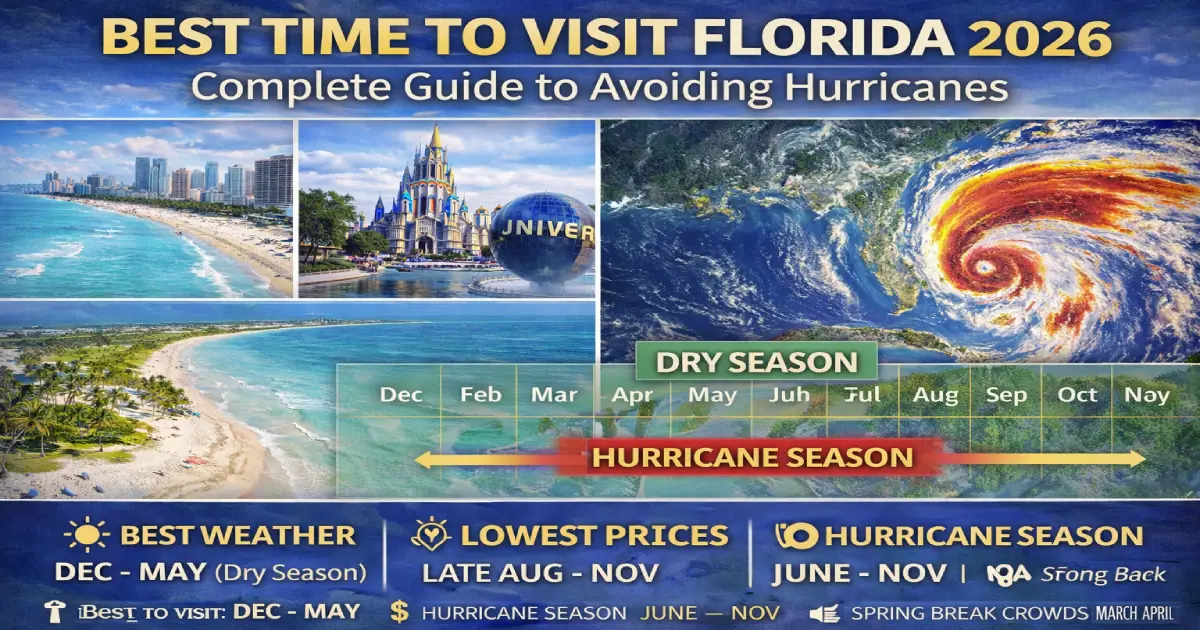
Florida doesn’t have one “best time to visit”—it has competing optimal windows depending on whether you prioritize perfect weather, avoiding hurricanes, minimizing crowds, or finding best value. The state’s subtropical climate delivers warm temperatures year-round, but hurricane season (June-November), oppressive summer humidity, spring break chaos, and winter snowbird pricing create dramatically different experiences month to month.
I’ve visited Florida 18 times across all seasons over the past decade, tracking weather patterns, crowd levels, and seasonal pricing meticulously. The reality contradicts popular wisdom: Florida’s “winter paradise” reputation (December-February) brings perfect weather but also peak crowds and 50-100% hotel price premiums. Summer’s affordable rates come with punishing 95°F heat, afternoon thunderstorms, and hurricane season anxiety. The sweet spots—November and May—deliver excellent conditions at reasonable prices but require navigating shoulder season trade-offs.
This comprehensive 2026 guide breaks down Florida’s optimal visiting windows using verified data from the National Weather Service, historical hurricane tracking, tourism patterns, and years of personal experience across all regions. We’ll analyze Florida’s two-season climate reality, decode hurricane season month-by-month, explore regional weather variations (Miami differs from Pensacola), reveal how timing affects costs (40-60% swings), and provide strategic recommendations for different traveler priorities.
Whether you’re planning a Disney World family trip, Miami Beach escape, Gulf Coast relaxation, or Florida Keys adventure, understanding seasonal patterns transforms good timing into perfect timing—or prevents costly mistakes like booking March spring break or September hurricane peak.
Understanding Florida’s Climate: Not Your Typical Four Seasons
The Two-Season Reality
Florida doesn’t experience traditional spring, summer, fall, winter. Instead, the Sunshine State operates on a subtropical two-season cycle that fundamentally shapes travel planning:
Dry Season (November-April):
Lower humidity (50-70%)
Minimal rainfall (2-3 inches monthly)
Comfortable temperatures: 70-85°F (21-29°C)
Fewer mosquitoes
Peak tourism season (crowds + prices)
Best overall weather conditions
Wet Season (May-October):
High humidity (75-90%)
Frequent rainfall (6-9 inches monthly)
Hot temperatures: 85-95°F (29-35°C)
Daily afternoon thunderstorms (3-5 PM typically, brief but intense)
Hurricane season (June 1-November 30, peak August-October)
Lower prices, fewer crowds
Critical Understanding: “Wet season” doesn’t mean constant rain—it means daily 30-60 minute thunderstorms that arrive predictably around 3-5 PM, then clear. Plan indoor activities (theme parks, museums, shopping) for afternoon hours, beaches and outdoor activities for mornings.
Regional Climate Variations
Florida spans 500 miles north-south, creating meaningful regional differences:
South Florida (Miami, Keys):
True tropical climate
Warmest year-round (never cold)
Highest humidity
Wettest in summer (heavy afternoon downpours)
Hurricane risk: Moderate to High
Central Florida (Orlando, Tampa):
Subtropical climate
Occasional winter cold snaps (40-50°F possible)
Afternoon thunderstorms daily in summer
Hurricane risk: Moderate
North Florida/Panhandle (Jacksonville, Pensacola):
Humid subtropical
Actual winter (50-65°F December-February)
Less humid than south
Ocean too cold for comfortable swimming December-March
Hurricane risk: Moderate to Low (but not immune)
Best Time to Visit Florida: Quick Reference by Priority
Priority
Best Months
Why These Months
Best Weather Overall
December-April
Dry season, low humidity, comfortable temps, zero hurricane risk
Best Value (Lower Costs)
May, September, October, November
Hotels 40-60% cheaper than winter, decent weather despite risks
Avoiding Hurricanes
December-May
Hurricane season June 1-November 30, zero risk outside this window
Avoiding Crowds
May, September, October, November
Between winter snowbirds and summer families, minimal tourism
Beach & Water Activities
May-October (South FL), June-September (Panhandle)
Warmest ocean temperatures, calm seas
Theme Parks (Orlando)
January-February, September, November
Shortest lines, pleasant weather (except summer heat)
Family Vacation (School Break)
June-August, December-January
School schedules dictate timing, expect peak crowds/prices
Wildlife (Manatees)
November-March
Manatees migrate to warm springs in winter months
Hurricane Season: The Critical Factor
Hurricane Season Timeline: June 1-November 30
Florida’s Atlantic hurricane season officially runs June 1 through November 30, but risk varies dramatically by month. Understanding this monthly risk profile is essential for strategic trip planning.
Month-by-Month Hurricane Risk
June (Hurricane Season Begins):
Risk Level: Low (5% of annual hurricanes)
Reality: Extremely rare for major hurricanes
Historical Impact: 1-2 tropical storms per decade affect Florida in June
Travel Verdict: Safe to book, minimal risk
Note: Heat and humidity building, afternoon storms increasing
July:
Risk Level: Low to Moderate (10% of annual hurricanes)
Reality: Occasional tropical storms, rare major hurricanes
Historical Impact: Most July storms stay weak or miss Florida
Travel Verdict: Generally safe, monitor forecasts week before
Note: Peak summer heat (95°F), heavy afternoon thunderstorms
August:
Risk Level: Moderate to High (20% of annual hurricanes)
Book refundable rates: Pay 10-20% premium for flexible cancellation
Monitor forecasts: Check National Hurricane Center 7-10 days before travel
Understand hotel policies: Most waive cancellation fees during hurricane warnings
Have backup plans: Alternative dates, different destinations
Track flights: Airlines waive change fees during hurricanes but rebooking limited
Historical Context: Major hurricanes hit Florida on average every 2-3 years, affecting specific regions (not entire state simultaneously). Your specific trip dates face low individual probability, but September visit carries 20-30% chance of some tropical weather impact to Florida during that month.
Florida Month-by-Month Weather & Travel Guide
Month
Temp Range
Rainfall
Crowds
Prices
Hurricane Risk
Rating
January
65-75°F (18-24°C)
Low
High
$$$$
None
★★★★☆
February
67-77°F (19-25°C)
Low
Very High
$$$$
None
★★★★☆
March
70-80°F (21-27°C)
Low
EXTREME (Spring Break)
$$$$$
None
★★☆☆☆
April
74-84°F (23-29°C)
Low-Moderate
Moderate
$$$
None
★★★★★
May
78-88°F (26-31°C)
Moderate
Low-Moderate
$$
None
★★★★★
June
82-91°F (28-33°C)
High (daily storms)
High (families)
$$$
Low (begins June 1)
★★★☆☆
July
83-92°F (28-33°C)
High (daily storms)
Very High
$$$
Low-Moderate
★★☆☆☆
August
83-92°F (28-33°C)
Very High
High
$$-$$$
Moderate-High
★★☆☆☆
September
81-90°F (27-32°C)
Very High
Low
$
HIGHEST RISK
★★☆☆☆
October
77-86°F (25-30°C)
Moderate-High
Low-Moderate
$
High
★★★☆☆
November
72-82°F (22-28°C)
Low-Moderate
Low
$$
Low (ends Nov 30)
★★★★★
December
67-77°F (19-25°C)
Low
High (holidays)
$$$$
None
★★★★☆
Peak Season vs Off-Season: Understanding the Trade-Offs
Peak Season (December-April): Perfect Weather, Peak Prices
Peak hurricane season (September = statistical peak month)
Trip cancellation high probability during active years
Still hot and humid (improving by late October)
Travel insurance mandatory ($50-150)
Stress of monitoring forecasts
September Verdict: Only book if: (a) you have completely flexible dates, (b) you buy comprehensive travel insurance, (c) you accept 20-30% probability of some weather disruption to Florida during your travel month, and (d) significant savings justify risk. Many seasoned travelers avoid September entirely despite deals.
Regional Timing Differences
South Florida (Miami, Fort Lauderdale, Keys)
Best Months: December-April (peak), November, May (shoulder)
Characteristics:
Summer: Brutal 95°F heat, afternoon thunderstorms disrupt park touring
Hurricane risk: Moderate (inland buffering helps)
Crowd variations extreme: January weekdays (low) vs July (insane) vs December holidays (nightmare)
Theme Park Timing Strategy:
Shortest lines: September, January-February (except holidays), early November
Best weather + manageable crowds: November, early December, April
Avoid: March (spring break), December 20-January 5 (holiday madness), July 4 week
Gulf Coast (Tampa, Clearwater, Naples, Panhandle)
Best Months: April-May, October-November
Characteristics:
Slightly cooler than Atlantic coast
Winter ocean chilly (65-72°F) for swimming
Summer ocean perfect (82-85°F)
Hurricane risk: Moderate (Gulf storms possible)
Panhandle beaches best May-September (ocean warm enough)
Winter Note: Panhandle (Destin, Panama City Beach, Pensacola) experiences actual winter—50-65°F December-February, too cold for beach activities. Target April-October for Panhandle beaches.
Northeast Florida (Jacksonville, St. Augustine, Amelia Island)
Best Months: April-May, September-October
Characteristics:
True four seasons (mildly)
Winter chilly: 50-70°F, occasional 40°F nights
Ocean too cold for swimming December-April
Less humid than South Florida
Hurricane risk: Lower but not immune
Spring/fall ideal for historic St. Augustine exploration
Special Events & Seasonal Considerations
Events That Impact Timing
Art Basel Miami (December):
International art fair, first week of December
Miami Beach hotels +100-200% that week
Advance booking essential or avoid Miami this week
Daytona 500 (February):
NASCAR race, Presidents’ Day weekend typically
Daytona Beach area hotels +150-300%
Traffic nightmares
Miami Music Week/Ultra Music Festival (March):
Electronic music festival, coincides with spring break
South Beach impossible to navigate
Hotel prices astronomical
Spring Break (March, early April):
Varies by school district but peaks mid-March
Panama City Beach, Miami Beach, Fort Lauderdale overrun
Prices +80-150%, crowds intolerable
Recommendation: Avoid Florida beaches entirely during March if possible
Fantasy Fest Key West (October):
10-day costumed street party, Halloween week
Key West hotels booked solid months ahead
Adult-oriented (not family-friendly)
Wildlife Viewing Seasons
Manatees (November-March):
Migrate to warm springs when ocean cools
Crystal River, Homosassa Springs, Blue Spring State Park
Peak viewing: January-February
Swimming with manatees: November-March only
Sea Turtles Nesting (May-October):
Loggerhead turtles nest on beaches statewide
Peak: June-July
Guided night watches available
Hatchlings emerge August-October
Bird Migration (Fall & Spring):
Spring migration: March-May
Fall migration: August-November
Everglades, Merritt Island excellent birding
Frequently Asked Questions
What is the best month to visit Florida?
April and November represent Florida’s optimal months, balancing excellent weather, zero hurricane risk, moderate crowds, and reasonable prices (30-40% below winter peak). April offers warming temperatures (74-84°F), pre-summer conditions, and happens after spring break chaos but before hurricane season. November delivers pleasant weather (72-82°F), marks hurricane season’s end (November 30), and provides lowest prices outside hurricane peak months. December-March offer best weather but cost 50-100% more. May provides similar advantages to April with slightly warmer conditions and increasing afternoon storms.
When should you not go to Florida?
Avoid September (peak hurricane month with 35% of annual hurricanes, lowest prices reflect this danger) and March (spring break creates +80-150% hotel premiums, intolerable beach crowds, especially Panama City Beach and Miami). Also avoid: Christmas week through New Year’s (extreme crowds, +100-200% prices), Presidents’ Day weekend in Daytona Beach area (Daytona 500), and first week December in Miami (Art Basel). If you must visit hurricane season (June-November), September-October carry highest risk while June-July remain relatively safer with lower hurricane probability.
What months are hurricane season in Florida?
Official Atlantic hurricane season runs June 1 through November 30, but risk varies dramatically: June (5% of hurricanes, minimal risk), July (10%, low risk), August (20%, moderate-high risk, activity accelerating), September (35%, PEAK MONTH, highest danger), October (20%, high risk continuing), November (10%, risk dropping sharply). September statistically most dangerous month—major hurricanes like Irma (2017) and numerous others struck during September. November 30 marks official season end, though rare late-season outliers possible. December-May completely hurricane-free, zero risk during these months.
Is Florida worth visiting in summer?
Summer (June-August) works for budget-conscious families despite challenges: hotels 20-40% cheaper than winter, ocean warmest (85°F+), and school schedules align. However, trade-offs significant: oppressive 90-95°F heat with 80-90% humidity makes midday outdoor activities miserable, daily 3-5 PM thunderstorms disrupt plans (though brief), and hurricane season begins June 1 (July-August moderate risk, not peak). Strategy for summer success: plan outdoor activities 8 AM-1 PM, retreat to air conditioning or indoor attractions (theme parks, museums) afternoon, resume outdoor activities evening. Locals embrace summer—it’s survivable with proper planning and heat tolerance.
How do I avoid crowds in Florida?
Visit during shoulder seasons: May, September, October, or November (avoiding Thanksgiving week). These months deliver minimal crowds as families return to school and snowbirds haven’t arrived yet. For theme parks specifically, choose: January-February weekdays (except Presidents’ Day), September (if hurricane-risk tolerant), or early November. Avoid at all costs: March (spring break nightmare), July-August (family vacation peak), Christmas-New Year’s week (worst crowds all year), and Presidents’ Day weekend (Daytona especially). Even within peak months, weekdays significantly less crowded than weekends.
What is the cheapest month to visit Florida?
September offers absolute lowest prices (40-60% below winter peak) but carries peak hurricane risk (35% of annual hurricanes occur in September). October provides similar discounts with slightly lower hurricane probability. For cheap travel WITHOUT hurricane risk, May and November deliver 30-40% savings compared to winter while offering zero hurricane danger. Late August (after most families return to school) and early December (before holiday rush) also provide good value. Most expensive: February-March (snowbird peak + spring break), Christmas-New Year’s week, and any major event weeks (Art Basel, Daytona 500).
Can you swim in Florida ocean in winter?
Depends on location and personal cold tolerance. South Florida (Miami, Keys): Yes, ocean remains 72-77°F December-February—cool but swimmable for most people. Central Florida (Tampa, Space Coast): Borderline at 65-72°F—chilly, locals often avoid but tourists from cold climates find acceptable. North Florida/Panhandle: No, ocean drops to 58-68°F—too cold for comfortable swimming without wetsuit. Winter swimming best in South Florida; Panhandle beaches excellent May-September when ocean reaches 78-85°F. Hotel pools heated year-round statewide, providing swimming option regardless of ocean temperature.
Is travel insurance necessary for Florida trips?
Travel insurance essential if visiting during hurricane season (June-November), especially August-October peak months. Comprehensive policies ($50-150 for typical week) cover trip cancellation due to hurricanes, missed flights from storm delays, and accommodation costs if evacuated. Outside hurricane season (December-May), insurance optional unless booking expensive non-refundable rates. Most hotels waive cancellation fees during official hurricane warnings, but airlines charge hefty change fees outside weather exceptions. For September-October travel, insurance non-negotiable—low prices reflect hurricane risk, and insurance protects this investment if storms materialize.
What is the rainiest month in Florida?
June-September receive heaviest rainfall (6-9 inches monthly) with daily afternoon thunderstorms. However, “rainiest” misleads—rain arrives predictably 3-5 PM, lasts 30-60 minutes, then clears. This differs from all-day rain regions. Total precipitation peaks June-August, but brief intense storms rather than dreary continuous drizzle. Dry season (November-April) brings 2-3 inches monthly, mostly occasional light showers. October-November transition period sees decreasing rainfall. Planning around Florida’s wet season means scheduling outdoor activities mornings, indoor activities afternoons when storms hit—not canceling outdoor plans entirely.
Does Florida get cold in winter?
South Florida (Miami, Keys): No, temperatures rarely drop below 65°F, average 70-80°F. True tropical climate, never “cold” by traditional standards. Central Florida (Orlando, Tampa): Mild winters, 60-75°F typical, occasional cold fronts bring 45-55°F overnight (rare). North Florida/Panhandle (Jacksonville, Pensacola): Yes, actual winter with 50-65°F days, occasional 35-45°F nights, rare freezes possible. Statewide, “winter” means bringing light jacket for evenings, not heavy coats. Ocean temperatures follow similar pattern: South (72-77°F), Central (65-72°F), North (58-68°F). Florida’s “winter” attracts snowbirds precisely because it’s mild compared to northern US—but it’s not uniformly warm everywhere.
Final Thoughts: Timing Your Perfect Florida Trip
After visiting Florida 18 times across all seasons and meticulously tracking weather patterns, costs, and crowd levels, three fundamental principles emerge for optimal timing:
1. Hurricane season (June-November) represents THE defining factor in Florida timing. September’s rock-bottom prices (40-60% below winter) exist precisely because it’s peak hurricane month with 35% of annual storms. This isn’t theoretical risk—major hurricanes hit Florida every 2-3 years on average during this window. Outside hurricane season (December-May), you can book with confidence focusing on weather and crowds. Inside hurricane season, you’re gambling on statistics. November and May occupy sweet spots: excellent weather, reasonable prices, and hurricane-free timing (May before June 1, November as season ends November 30).
2. Florida’s two-season climate creates distinct travel experiences—choose deliberately. Dry season (November-April) delivers perfect weather—75-85°F, low humidity, minimal rain, comfortable conditions for all activities. This perfection commands 50-100% price premiums and peak crowds, especially December-March. Wet season (May-October) brings oppressive heat (90-95°F), daily afternoon thunderstorms, and hurricane anxiety, but also dramatically lower prices and thin crowds. Smart travelers embrace wet season realities: plan outdoor activities mornings, retreat to air conditioning or indoor attractions afternoons, monitor hurricane forecasts, and enjoy savings if willing to accept trade-offs.
3. April and November emerge as optimal months for balanced Florida experiences. Both offer excellent weather (74-88°F April, 72-82°F November), zero hurricane risk, moderate crowds, and 30-40% savings versus winter peak. April warms into summer with increasing afternoon storms. November cools from summer with decreasing humidity. Neither reaches winter’s perfect 75°F low-humidity days, but both avoid hurricane season entirely while delivering comfortable conditions at reasonable prices. For risk-averse travelers unwilling to gamble on September bargains, April and November provide sweet spot timing.
Florida timing ultimately depends on your priorities: Weather perfection (December-March)? Budget savings (May, September-October, November)? Avoiding hurricanes (December-May)? Minimal crowds (May, September-November)? Family vacation scheduling (June-August)? Theme park optimal conditions (January-February, September, November)? No single month satisfies all priorities simultaneously—you must choose your primary goal and accept corresponding trade-offs.
My personal recommendation for first-time Florida visitors: Target April or November. Both deliver excellent weather without hurricane risk at reasonable prices. If budget matters more than perfection, add May to consideration—warm enough for beaches, hurricane season hasn’t started, and prices quite reasonable. If you absolutely need winter perfection and budget allows, choose January or February (avoid December holidays and February Presidents’ Day weekend).
Whatever timing you choose, Florida rewards seasonal awareness. Understanding that March brings spring break chaos, September carries hurricane risk, and summer delivers afternoon thunderstorms prevents disappointment and enables strategic planning. Book accordingly: winter trips require 2-4 months advance planning for good rates, summer offers last-minute availability, and hurricane season demands travel insurance and flexible cancellation policies.
The Sunshine State shines brightest when visited at the right time—whether that’s winter perfection, spring transition, summer bargains (with heat tolerance), fall shoulder season, or any month if you understand and embrace that period’s characteristics. Perfect Florida timing isn’t one answer for everyone—it’s matching your priorities with seasonal realities.
For official Florida weather resources and hurricane tracking, consult National Weather Service Florida, National Hurricane Center, and Visit Florida (Official Tourism) for current conditions and travel planning.
—
—
About Travel TouristerTravel Tourister’s Florida specialists provide honest, data-driven seasonal analysis based on extensive personal travel experience across all Florida regions and seasons. We understand that optimal timing balances weather perfection, hurricane avoidance, crowd management, and budget considerations—one size doesn’t fit all.Need help timing your Florida trip? Contact our specialists who can analyze your priorities, risk tolerance, and budget to recommend optimal travel dates. We help travelers avoid hurricane season pitfalls, spring break chaos, and winter price premiums while maximizing Florida’s year-round appeal.
Posted By : Vinay
As a lead contributor for Travel Tourister, Vinay is dedicated to serving our Tier 1 audience (US, UK, Canada, Australia). His mission is to deliver precise, fact-checked news and actionable, data-driven articles that empower readers to make informed decisions, minimize travel risks, and maximize their adventure without compromising safety or budget.
Travel Tourister is a leading Travel portal where we introduce travellers to trusted travel agents to make their journey hasselfree, memorable And happy. Travel Tourister is a platform where travellers get Tour packages ,Hotel packages deals through trusted travel companies And hoteliers who are working with us across the world. We always try to find new and more travel agents and hoteliers from every nook and corners across the world so that you could compare the deals with different travel agents and hoteliers and book your tour or hotel with the one you have chosen according to your taste and budget.




 Call
Call Enquiry