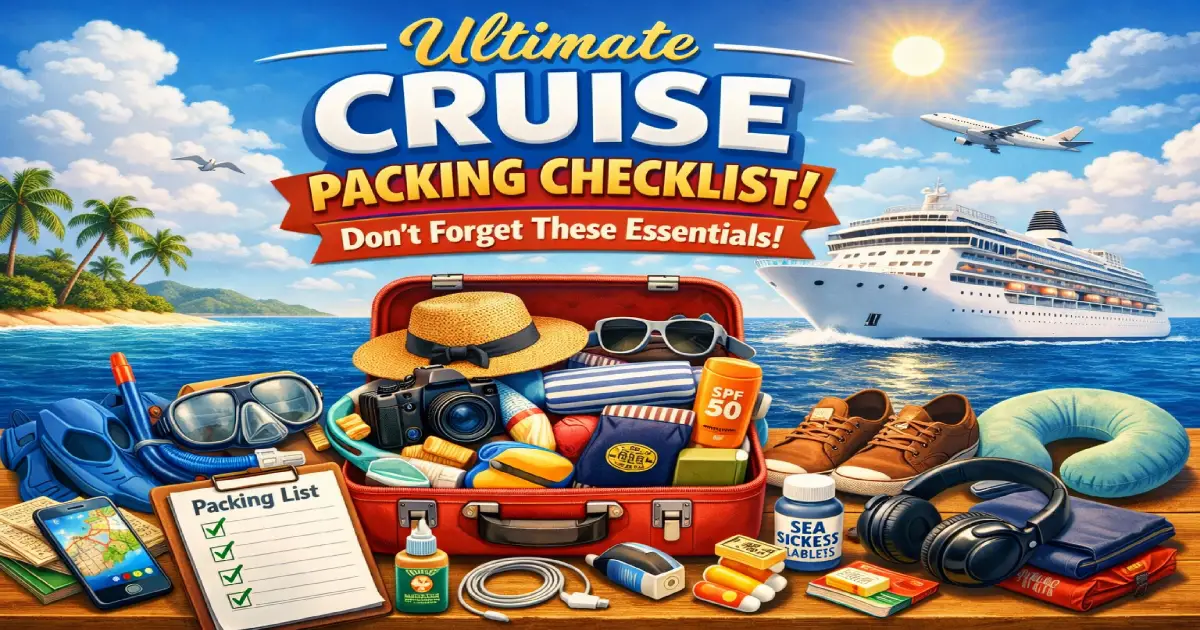
Ultimate Cruise Packing Checklist: Don’t Forget These Essentials!

Ultimate Cruise Packing Checklist: Don’t Forget These Essentials!

Complete Cruise Packing Checklist 2026: What to Pack (and What to Leave Home)


Introduction

Picture this: You’re standing at the cruise terminal, bags checked, ready to board your dream vacation. Then panic strikes—did you pack your passport? Your medications? That perfect outfit for formal night? I’ve watched countless travelers experience that sinking feeling of forgotten essentials, and trust me, it’s a vacation mood-killer you can completely avoid.

Here’s something most first-time cruisers don’t realize: cruise packing is fundamentally different from regular vacation packing. You’re not just packing for a destination—you’re packing for multiple destinations, various dress codes, changing weather conditions, and limited cabin storage. The confined space of a cruise cabin means every item needs to earn its place in your luggage.

After years of helping travelers plan cruises and analyzing thousands of cruise reviews, I’ve identified the most commonly forgotten items, the stuff people wish they’d left home, and the clever packing hacks that transform cruise experiences. This comprehensive cruise packing checklist covers everything from absolute must-haves to nice-to-have luxuries.

Whether you’re boarding a last-minute cruise to the Caribbean, planning a Mediterranean adventure months in advance, or embarking on an Alaskan expedition, this guide ensures you’re prepared for every scenario. We’ll walk through essential documents, strategic clothing choices, cabin comfort items, shore excursion gear, and those often-overlooked essentials that separate cruise veterans from stressed-out rookies.

The best part? I’m not just giving you a generic list. We’re breaking down why each item matters, how many you actually need, and space-saving alternatives that keep your luggage manageable. By the end, you’ll have a personalized cruise packing checklist tailored to your specific voyage.

Let’s dive in and ensure your cruise is remembered for incredible ports, delicious meals, and amazing experiences—not for scrambling to buy overpriced replacements at the ship’s boutique!


Why a Cruise Packing Checklist Matters

The Cruise Packing Challenge

Cruise packing presents unique challenges that make a systematic checklist absolutely essential:

Limited Cabin Storage Unlike hotel rooms with spacious closets, cruise cabins offer minimal storage. A standard inside or oceanview cabin provides:

  • One small closet (approximately 2-3 feet wide)
  • 4-6 drawers under the bed or in furniture
  • Limited shelf space
  • No additional storage areas

Overpacking creates cabin chaos. Your suitcases can’t stay in the cabin—they go under the bed. Everything you bring needs to fit in those compact storage spaces.

Multiple Dress Codes A typical 7-day cruise requires different outfits for:

  • Formal nights (1-2 evenings): Cocktail dresses, suits, tuxedos
  • Smart casual dining (most nights): Nice pants/skirts, collared shirts
  • Casual daytime (on ship): Comfortable resort wear
  • Shore excursions: Practical clothing for activities
  • Pool/beach time: Swimwear and cover-ups
  • Gym/fitness: Athletic wear

That’s 6-7 different dress codes for one trip! Strategic packing becomes crucial.

No Last-Minute Shopping Here’s a reality check: Once the ship sails, you’re stuck with what you packed. Unlike land vacations where you can run to a nearby store:

  • Ship boutiques carry limited items at premium prices
  • Port shopping requires valuable excursion time
  • Certain essentials (medications, documents) are irreplaceable at sea
  • You can’t just “order something online” mid-ocean

Forgetting your prescription medication? Your formal wear? Your phone charger? These become genuine problems without easy solutions.

International Travel Complications Many cruises involve international ports, adding complexity:

  • Passport requirements even for “closed-loop” cruises
  • Voltage converters for international electricity
  • Currency considerations for shore excursions
  • Customs regulations affecting what you can pack

Climate Variations Unlike staying in one destination, cruises often traverse multiple climate zones:

  • Caribbean cruises: Tropical heat on islands, air-conditioned cold indoors
  • Alaska cruises: Warm summer days, cold glacier viewing, rainy conditions
  • Mediterranean cruises: Hot southern ports, cooler northern cities
  • Repositioning cruises: Dramatic weather changes over weeks

You’re packing for multiple seasons simultaneously!

The Cost of Forgetting

Let me show you the real financial impact of poor packing:

Ship Boutique Markup Comparison:

Item Regular Retail Price Ship Boutique Price Markup %
Sunscreen (SPF 50) $12-15 $28-35 130-180%
Basic Medication (20 tablets) $8-12 $22-28 175-230%
Phone Charger $15-25 $45-65 200-260%
Formal Dress Shirt $30-50 $89-120 200-300%
Swimsuit $35-60 $95-140 170-230%
Reading Glasses $20-40 $75-120 275-380%

Real-World Example: Forget your phone charger, sunscreen, and basic pain medication? You’re looking at $95-128 in unnecessary ship boutique purchases. That’s the cost of a shore excursion or two specialty dining experiences!

Time and Stress Savings

Beyond money, proper packing saves:

Pre-Cruise Peace of Mind No last-minute panic wondering if you forgot something crucial. Your comprehensive checklist provides confidence.

Embarkation Day Efficiency Everything organized and easily accessible. Security screening moves faster. Cabin unpacking takes minutes, not hours.

During Cruise Comfort No wardrobe stress about what to wear. All necessary items readily available. Focus stays on enjoying the vacation, not managing crises.

Disembarkation Smoothness Strategic packing makes repacking simpler. Nothing forgotten in cabin drawers. Customs declarations accurate and complete.

A solid cruise packing checklist isn’t just about items—it’s about transforming your entire cruise experience from stressful to seamless.


Essential Documents and Money

Critical Documents (The Non-Negotiables)

These items are absolute must-haves. Without them, you literally cannot cruise:

Passport

  • Required for: All international cruises, highly recommended for domestic cruises
  • Validity requirement: Must be valid for at least 6 months beyond cruise end date
  • What to pack:
    • Original passport (photocopies insufficient for international cruises)
    • 2 color photocopies stored separately from original
    • Digital scan saved in cloud storage and email
    • Emergency passport photos (2) for replacement if needed

Pro Tip: Store passport in cabin safe during cruise. Only carry when disembarking at international ports.

Cruise Documentation

  • Boarding passes: Print multiple copies or have digital backup
  • E-tickets/confirmation: Cruise line booking number and details
  • Travel insurance documents: Policy number, 24/7 emergency contact
  • Luggage tags: Pre-printed from cruise line (attach before terminal)

Government-Issued ID

  • For domestic cruises: Driver’s license or state ID (even if you have passport)
  • For children: Birth certificates if traveling on closed-loop cruise without passports
  • Keep separate: Store ID in different location from passport for backup

Credit Cards and Payment Methods

  • Primary credit card: For ship account setup and onboard purchases
  • Backup credit card: Different card network (Visa + Mastercard)
  • Small amount of cash: $200-500 in small bills for tips, port purchases
  • Foreign currency: If visiting international ports (€50-100 or local equivalent)

Important Financial Documents:

  • Credit card customer service numbers (stored separately)
  • Bank contact information
  • Travel insurance emergency assistance numbers
  • Pre-authorization notice to credit card companies (prevent fraud holds)

Medical and Health Documents

Prescription Documentation:

  • List of all medications with generic names
  • Prescribing doctor’s contact information
  • Letter from doctor for controlled substances
  • Prescription copies in case replacement needed

Health Insurance Cards:

  • Primary health insurance card
  • Supplemental coverage information
  • Medicare/Medicaid cards if applicable
  • Travel insurance card with policy number

Medical History Summary:

  • Allergies (especially medication allergies)
  • Chronic conditions
  • Emergency contacts with phone numbers
  • Blood type
  • Recent vaccinations

COVID-19/Vaccination Records:

  • Vaccination card or digital proof
  • Recent test results if required
  • Any cruise line specific health declarations
  • Children’s vaccination records

Special Situation Documents

Traveling with Children:

  • Birth certificates for children under 18
  • Notarized parental consent if child traveling without both parents
  • Custody documentation if applicable
  • School permission letter if traveling during school term

Special Needs:

  • Disability documentation for accessibility services
  • Service animal certification
  • Medical equipment authorization
  • Dietary restriction verification from doctor

Wedding/Vow Renewal Cruisers:

  • Marriage license (for getting married on ship)
  • Original marriage certificate (for vow renewals)
  • Wedding package confirmation
  • Vendor contact information

Organizational System

Document Organization Strategy:

Waterproof Document Holder:

  • All critical documents in one place
  • Zippered, waterproof travel wallet recommended
  • Keep in carry-on, never checked luggage
  • Cost: $15-30, invaluable protection

Digital Backup System:

  • Scan all documents to PDF
  • Upload to secure cloud storage (Google Drive, Dropbox)
  • Email scans to yourself
  • Share with trusted family member at home

Physical Backup Strategy:

  • Passport photocopy in separate luggage piece
  • Second set of cruise documents in partner’s bag
  • Hotel reservation printouts for pre/post-cruise stays
  • Emergency contact card in wallet

Money Organization:

Cabin Safe Contents:

  • Passport when not in use
  • Extra credit cards
  • Larger cash amounts
  • Jewelry and valuables
  • Important documents

Daily Carry Items:

  • One credit card
  • Small cash amount ($40-80)
  • Ship card (your room key/payment card)
  • Port map and excursion details

Pre-Cruise Financial Preparation:

Two Weeks Before Sailing:

  • Notify credit card companies of travel dates and destinations
  • Verify cards have no pending expirations during cruise
  • Check daily spending limits adequate for onboard account
  • Request increased limit if planning major purchases
  • Set up text/email alerts for all transactions

One Week Before:

  • Withdraw cash in small bills
  • Order foreign currency if needed
  • Verify all cards activate international usage
  • Download banking apps for account monitoring
  • Store bank customer service numbers in phone

The documents section of your cruise packing checklist requires the most meticulous attention. Everything else you can potentially replace or work around—but without proper documentation, your cruise ends before it begins.


Clothing Strategy for Cruises

Understanding Cruise Dress Codes

Modern cruises operate on flexible dress codes that vary by:

  • Cruise line (luxury vs contemporary vs casual)
  • Time of day
  • Dining venue choice
  • Special events and theme nights

Typical 7-Day Cruise Dress Code Breakdown:

Day/Event Dress Code What This Means
Embarkation Day Casual/Resort Casual Comfortable travel clothes, resort wear
Sea Days (Daytime) Casual Shorts, sundresses, swimwear, activewear
Port Days Casual/Practical Comfortable walking clothes, weather-appropriate
Regular Dinner Nights (5-6) Smart Casual Nice jeans/khakis, polo/blouse, sundress
Formal Nights (1-2) Formal/Semi-Formal Suits, cocktail dresses, evening gowns
Theme Nights Varies White party, tropical, decades, etc.
Specialty Restaurants Smart Casual to Formal Depends on restaurant

The Strategic Packing Formula

Here’s my proven formula for 7-day cruise clothing:

Base Layer Strategy (Mix and Match Philosophy):

Bottoms (7-9 items total):

  • 2 pairs nice pants/trousers (1 dark, 1 neutral)
  • 2 skirts or additional pants
  • 1 pair dark jeans (premium, no distressing)
  • 2-3 shorts/casual skirts
  • 1 formal bottom (dress pants or elegant skirt)

Tops (10-12 items total):

  • 3 dressy tops (blouses, button-downs)
  • 4 casual t-shirts/tank tops
  • 2-3 resort casual tops
  • 1-2 formal tops (or built into formal dress)
  • 1 light sweater/cardigan

Dresses (3-5 total):

  • 1 formal dress/gown
  • 1-2 cocktail/semi-formal dresses
  • 2 casual sundresses/maxi dresses

Outerwear:

  • 1 light jacket or blazer (for formal nights and air conditioning)
  • 1 hoodie or casual jacket
  • 1 rain jacket (compact, packable)
  • 1 warm layer (depending on destination)

This formula creates 15-20+ different outfits from ~25-30 pieces!

Specific Clothing Items for Your Cruise Packing Checklist

Swimwear (Essential!):

  • 2-3 swimsuits: Rotation allows drying time between pool/beach visits
  • 1 rash guard: UV protection for water activities and snorkeling
  • 2 cover-ups: Pool to cabin transitions, buffet visits
  • Beach dress/shorts: Quick throw-on for casual moments

Footwear (Maximum 5-6 pairs):

  • 1 pair formal shoes: Dress shoes, heels, or dressy flats for formal nights
  • 1 pair smart casual shoes: Loafers, ballet flats, nice sandals
  • 1 pair comfortable walking shoes: Well-broken-in sneakers or walking sandals
  • 1 pair flip-flops: Pool, beach, and cabin use
  • 1 pair water shoes: Essential for rocky beaches and water excursions
  • 1 pair athletic shoes: If using ship gym or doing active excursions

Undergarments and Intimates:

  • 7-10 underwear: Daily changes plus extras for water activities
  • 2-3 bras (including 1 strapless for formal wear)
  • 7-10 pairs socks: If wearing closed-toe shoes
  • 1 shapewear: For formal nights if desired
  • Pajamas/sleepwear: 2-3 sets for comfort

Accessories (The Outfit Transformers):

  • 2-3 scarves: Transform outfits, provide sun/cold protection
  • Statement jewelry: Elevate casual outfits for dinner
  • Belt: Defines waist, adds polish
  • Hat with brim: Sun protection for pool and port days
  • Sunglasses: UV protection essential
  • Small crossbody bag: Port excursions and ship exploration
  • Evening clutch: Formal nights and specialty dining

Formal Night Strategy

Formal nights intimidate many cruisers unnecessarily. Here’s the reality:

Formal Night Dress Codes by Cruise Line:

Traditional Formal (Holland America, Princess, Cunard):

  • Women: Evening gowns, cocktail dresses, dressy pantsuits
  • Men: Tuxedos, dark suits, dress shirts with ties
  • Truly elegant affairs

Smart Casual to Semi-Formal (Norwegian, Royal Caribbean, Carnival):

  • Women: Cocktail dresses, dressy separates, nice jumpsuit
  • Men: Suits, sport coats with dress pants, button-down shirts
  • More relaxed interpretation

Resort Elegant (Celebrity, Disney):

  • Women: Dresses, skirts, pantsuits
  • Men: Jackets, ties optional
  • Polished but not strictly formal

Important: Most cruise lines offer alternative dining venues on formal nights if you prefer not to dress up. Buffet and casual restaurants remain open with relaxed dress codes.

Budget-Friendly Formal Options:

Rental Services:

  • Men can rent tuxedos for $40-80 for the cruise duration
  • Some cruise lines offer onboard tuxedo rental
  • Eliminates packing bulky formal wear

Mix and Match:

  • One formal dress/suit creates 2 nights with different accessories
  • Change jewelry, shoes, hairstyle for fresh look
  • Most fellow cruisers won’t notice the repeat

Buy Secondhand:

  • Consignment shops offer formal wear at 70-80% off retail
  • Perfect for one-time cruise use
  • Donate or resell after cruise

Climate-Specific Additions

Caribbean/Tropical Cruises:

  • Lightweight, breathable fabrics (cotton, linen, moisture-wicking)
  • Light colors reflect heat
  • UPF-rated clothing for sun protection
  • Rain jacket for tropical showers
  • Avoid heavy fabrics and dark colors

Alaska/Cold Weather Cruises:

  • Layering system crucial
  • Base layers (thermal underwear)
  • Fleece or wool mid-layers
  • Waterproof outer shell
  • Warm hat and gloves
  • Insulated jacket for glacier viewing
  • Waterproof pants for excursions

Mediterranean/European Cruises:

  • Modest clothing for religious sites (covered shoulders, longer skirts)
  • Comfortable walking shoes (cobblestones everywhere)
  • Light layers for variable weather
  • Scarf or shawl (versatile accessory)
  • Stylish but practical (European dress standards)

Repositioning/Extended Cruises:

  • Pack for season changes
  • Compression bags to maximize space
  • Versatile pieces that layer
  • Laundry service becomes essential (factor into budget)

Space-Saving Packing Techniques

Rolling vs Folding:

  • Roll: Casual items, t-shirts, shorts (saves space, reduces wrinkles)
  • Fold: Dress shirts, formal wear, structured items
  • Hybrid: Roll casual, fold nice items

Packing Cubes Revolution:

  • Organize by category (swimwear, formal, casual, underwear)
  • Compress items saving 30-40% space
  • Easy to find items in limited cabin storage
  • Cost: $20-40 for set, game-changing investment

Outfit Pre-Planning:

  • Photo each planned outfit before packing
  • Ensures everything matches and works together
  • Prevents “I have nothing to wear” moments
  • Identifies gaps before departure

Wear Bulkiest Items for Travel:

  • Jacket, jeans, and heaviest shoes on flight
  • Saves precious luggage space
  • Provides comfort during cold airplane AC

Your clothing forms the foundation of your cruise packing checklist, but strategic selection means you don’t need a massive wardrobe—just a smart one.


Toiletries and Personal Care

Essential Toiletries

Cruise Cabin Reality Check: Most cruise cabins provide:

  • Basic shampoo and conditioner (small bottles)
  • Body soap/shower gel
  • Hand soap
  • Toilet paper and tissues
  • Limited counter space

What they DON’T provide:

  • Toothpaste, toothbrush, floss
  • Deodorant
  • Razors and shaving cream
  • Hair styling products
  • Makeup and skincare
  • Feminine hygiene products
  • Q-tips, cotton pads
  • Nail care items

Complete Toiletries Checklist:

Hair Care:

  • Shampoo and conditioner (travel size or full bottles)
  • Hair brush/comb
  • Hair ties and clips
  • Hair dryer (cabins provide basic ones, bring if you have specific needs)
  • Styling products (gel, mousse, hairspray)
  • Heat protection spray

Skincare:

  • Facial cleanser
  • Moisturizer (face and body)
  • Sunscreen SPF 50+ (reef-safe for Caribbean/tropical)
  • After-sun lotion with aloe
  • Anti-aging serums/treatments
  • Lip balm with SPF
  • Eye cream
  • Exfoliator

Dental Care:

  • Toothbrush (and case)
  • Toothpaste
  • Floss
  • Mouthwash (travel size)
  • Denture supplies if applicable

Personal Hygiene:

  • Deodorant/antiperspirant
  • Body wash or soap
  • Shaving razor (multiple blades)
  • Shaving cream/gel
  • Feminine hygiene products
  • Nail clippers and file
  • Tweezers
  • Q-tips/cotton swabs

Makeup:

  • Foundation/BB cream
  • Concealer
  • Powder
  • Blush/bronzer
  • Eye makeup (shadow, liner, mascara)
  • Lipstick/gloss
  • Makeup remover
  • Brushes and applicators

Men’s Grooming:

  • Razor/electric shaver
  • Shaving cream/gel
  • Aftershave/cologne
  • Beard trimmer/grooming kit
  • Comb/styling products

Size and Container Considerations

TSA Liquid Rules (Carry-On Luggage):

  • 3.4 oz (100ml) maximum per container
  • All containers must fit in one quart-size clear bag
  • One bag per passenger

Strategic Toiletry Packing:

Option 1: All Checked Luggage

  • Pack full-size products in checked bag
  • No liquid restrictions
  • More economical than travel sizes
  • Risk: Delayed luggage = no toiletries first day

Option 2: Carry-On Essentials

  • 1-2 day supply in carry-on (TSA compliant)
  • Remainder in checked luggage
  • Best for overnight cabin readiness
  • Allows freshening up before cabin access

Option 3: Buy on Ship

  • Ship boutiques sell toiletries
  • Expensive (2-3x normal retail)
  • Saves luggage space
  • Last resort for forgotten items

Leakage Prevention Tips:

Travel Containers:

  • Invest in quality leak-proof bottles ($15-25 for set)
  • Test at home filled with water
  • Press out air before sealing
  • Use GoToobs, Humangear, or similar trusted brands

Double Protection:

  • Each liquid in individual ziplock bag
  • All toiletries in larger ziplock or toiletry bag
  • Separates liquids from clothes in case of leaks

Pressure Considerations:

  • Airplane cabin pressure can cause leaks
  • Don’t fill bottles 100% (leave air space)
  • Keep caps facing up in luggage

Cruise-Specific Toiletry Additions

Sun Protection (Cannot Overemphasize):

  • SPF 50+ sunscreen: 2-3 bottles minimum for 7-day cruise
  • Reef-safe formula: Required/recommended many destinations
  • Spray sunscreen: Convenient reapplication
  • SPF lip balm: Lips burn easily
  • After-sun lotion: Aloe-based for overexposure relief

Sunscreen usage increases dramatically on cruises. You’ll go through more than typical land vacations!

Sea Sickness Prevention:

  • Dramamine or Bonine tablets
  • Ginger candies (natural remedy)
  • Acupressure wristbands
  • Prescription medication if needed
  • Pack even if you think you won’t need it

Foot Care (Often Overlooked):

  • Band-aids and blister prevention
  • Foot powder (lots of walking in humid climates)
  • Moisturizing foot cream
  • Insoles for walking shoes

Hands and Sanitization:

  • Hand sanitizer (ship provides but having personal is convenient)
  • Hand lotion (frequent washing and sanitizing dries hands)
  • Antibacterial wipes

Organizing Toiletries in Cabin

Hanging Toiletry Bag:

  • Absolute game-changer for cruise cabins
  • Hangs on bathroom door or shower rod
  • Keeps items accessible and organized
  • Cabin bathrooms have minimal counter space
  • Cost: $20-40, worth every penny

Magnetic Hooks:

  • Cruise cabin walls are metal
  • Magnetic hooks hold lightweight items
  • Create extra storage without damage
  • Hang small organizers for makeup, brushes, accessories

Shower Caddy:

  • Cruise showers typically have no shelf space
  • Hanging caddy keeps products organized
  • Mesh allows water drainage
  • Suction cups or hanging style both work

Electronics and Entertainment

Essential Electronics

Smartphones:

  • Your phone: Obviously essential
  • Partner’s phone: If traveling as couple
  • Backup phone: Inexpensive prepaid if primary fails

Charging Equipment:

  • Phone chargers: 2 per phone (one backup)
  • Charging cables: USB-C, Lightning, Micro-USB as needed
  • Portable power bank: 10,000-20,000 mAh capacity
  • Multi-port USB charger: Powers multiple devices from one outlet
  • International adapter: If cruise visits international ports
  • Extension cord or power strip: Cruise cabins have limited outlets (check cruise line policies—some restrict)

Camera Equipment:

  • Digital camera: If you prefer over smartphone
  • Extra memory cards: 2-3 high-capacity cards
  • Camera batteries: Charged extras
  • Waterproof camera/GoPro: For pools, beaches, snorkeling
  • Camera bag: Protects equipment during shore excursions

E-Readers and Tablets:

  • Kindle/e-reader: Loaded with books for relaxation
  • Tablet: Entertainment, reading, game playing
  • Chargers and cases: Protect investment

Headphones:

  • Wired headphones: For in-cabin TV and entertainment
  • Wireless earbuds: Gym, pool area, privacy
  • Noise-canceling headphones: Flight and cabin relaxation
  • Cases: Protect during travel

Laptop (Optional):

  • Only if necessary for work
  • Creates remote work capability
  • Occupies significant luggage space
  • Security concern in cabin

Entertainment for Sea Days

Reading Materials:

  • E-reader loaded: 10-15 books for variety
  • Physical books: 1-2 if you prefer paper
  • Magazines: Light reading for pool time
  • Travel guides: Port destination research

Games and Activities:

  • Playing cards: Compact entertainment
  • Travel games: Compact board games, travel editions
  • Crossword/puzzle books: Brain stimulation
  • Journal/diary: Document experiences

For Families:

  • Kids’ tablets: Loaded with games, movies, educational apps
  • Coloring books and crayons: Younger children
  • Small toys: Quiet play items
  • Pool toys: Inflatable arm floaties, small balls

Music:

  • Spotify/Apple Music offline downloads: For areas without connectivity
  • Portable Bluetooth speaker: Cabin ambiance (respect neighbors with volume!)

WiFi and Connectivity Considerations

Cruise Ship Internet Reality:

  • Expensive: $15-40 per day typical pricing
  • Slow: Satellite internet, not fiber optic speeds
  • Unreliable: Weather and location affect quality
  • Data caps: Many plans limit streaming

Strategic Internet Planning:

Option 1: Digital Detox

  • Use cruise as technology break
  • Save $100-280 on 7-day cruise
  • Use ship’s public computers for essential emails
  • Reconnect at ports with café WiFi

Option 2: Limited Package

  • Social media/messaging only package ($10-20/day)
  • Check emails, send updates
  • No streaming or video calls
  • Budget-friendly middle ground

Option 3: Unlimited Package

  • $25-40 per day for unlimited (usually 1-2 devices)
  • Work remotely capability
  • Stream content
  • Video calls with family

Option 4: Port WiFi

  • Free/cheap WiFi at port stops
  • Café, restaurant, and public WiFi
  • Download content for next sea day
  • Cost-effective but requires planning

Pre-Download Strategy:

  • Netflix/Amazon Prime: Download movies and shows
  • Spotify/Apple Music: Download playlists
  • Google Maps: Offline maps of ports
  • E-books: Pre-load reading material
  • Podcasts: Download episodes

All preparation before WiFi costs kick in!

Photography Strategy

Capturing Cruise Memories:

Smartphone Photography Tips:

  • Clean lens regularly (sea spray creates smudges)
  • Use burst mode for moving ships and wildlife
  • Golden hour shots (sunrise/sunset) are spectacular
  • Portrait mode for formal night photos
  • Turn off flash for indoor dining shots

Professional Photo Packages:

  • Ship photographers capture key moments
  • Formal night portraits
  • Embarkation day photos
  • Dining with officers opportunities
  • Costs: $200-500 for packages (expensive!)

DIY Photo Quality:

  • Bring tripod or phone tripod for self-portraits
  • Remote shutter for group photos
  • Invest in good photo editing app
  • Save hundreds vs professional packages

Photo Backup:

  • Cloud backup using WiFi packages
  • Daily backup to laptop if brought
  • Multiple memory cards rotating
  • Never delete photos until safely backed up

Social Media Sharing:

  • Post using ship WiFi if purchased
  • Share at port WiFi hotspots
  • Create posts offline, upload when connected
  • Use Instagram/Facebook scheduling features

Medications and Health Essentials

Prescription Medications

Critical Medication Rules:

Quantity:

  • Pack 150% of needed amount
  • 7-day cruise = bring 11 days worth
  • Accounts for delays, lost luggage, extensions

Packing Location:

  • Carry-on luggage: All essential medications
  • Never checked luggage: Bags can be delayed or lost
  • Original containers: Prescription labels visible
  • Doctor’s letter: Especially for controlled substances

Documentation:

  • List of medications with generic names
  • Prescribing doctor contact information
  • Pharmacy contact for refills
  • Dosage instructions
  • Allergy information

Medication Organization:

  • Daily pill organizer for the trip
  • Keep original bottles as backup
  • Separate AM/PM medications if applicable
  • Set phone alarms for medication times

Over-the-Counter Medications

Essential OTC Medicine Kit:

Pain and Fever:

  • Ibuprofen/Advil (20-30 tablets)
  • Acetaminophen/Tylenol (20-30 tablets)
  • Aspirin (if you use)

Digestive Issues:

  • Antacids (Tums, Rolaids)
  • Anti-diarrheal (Imodium)
  • Laxative (travel constipation is common)
  • Gas relief (Beano, Gas-X)
  • Pepto-Bismol tablets

Motion Sickness:

  • Dramamine or Bonine
  • Ginger tablets/candies
  • Acupressure wristbands
  • Prescription medication if prone to seasickness

Allergy and Cold:

  • Antihistamine (Claritin, Zyrtec)
  • Decongestant (Sudafed)
  • Cough drops/lozenges
  • Cold medicine (DayQuil/NyQuil)

Topical Treatments:

  • Hydrocortisone cream (1%)
  • Antibiotic ointment (Neosporin)
  • Aloe vera gel (sunburn relief)
  • Anti-itch cream (bug bites)

First Aid Supplies:

  • Band-aids (various sizes)
  • Blister prevention/treatment
  • Medical tape
  • Gauze pads
  • Antiseptic wipes
  • Tweezers (splinters, ticks)
  • Small scissors
  • Digital thermometer
  • Disposable gloves

Special Health Considerations

Diabetes Management:

  • Insulin and injection supplies
  • Blood glucose monitor and strips
  • Extra batteries for monitor
  • Glucose tablets/snacks for low blood sugar
  • Medical alert bracelet
  • Doctor’s note for airport security

Sleep and Comfort:

  • Melatonin or sleep aid (time zone changes, excitement)
  • Eye mask (cabin light control)
  • Earplugs (noisy neighbors, ship sounds)
  • Neck pillow (flights and ship napping)

Women’s Health:

  • Birth control pills (extra month supply)
  • Feminine hygiene products (ship boutique limited/expensive)
  • Yeast infection treatment (warm humid climates trigger them)
  • UTI test strips and treatment
  • Pregnancy test if there’s any possibility

Contact Lens Care:

  • Solution (one bottle per week)
  • Lens case
  • Backup glasses
  • Rewetting drops

Special Medical Equipment:

  • CPAP machine and supplies
  • Wheelchair or mobility aids (notify cruise line in advance)
  • Hearing aid batteries
  • EpiPen for severe allergies
  • Medical alert jewelry

Ship Medical Facilities

What Cruise Ships Provide:

  • Licensed medical staff (doctors and nurses)
  • Basic medical facility with exam rooms
  • Emergency equipment
  • Common medications
  • Minor procedure capabilities

What They DON’T Provide:

  • Dialysis
  • Major surgeries
  • Specialized treatments
  • Free services (all medical care is charged)

Medical Costs on Ships:

  • Doctor consultation: $100-150
  • Basic medication: $20-50
  • More serious treatment: $200-1,000+
  • Medical evacuation: $10,000-100,000+

This is why travel insurance and bringing your own medications matters!

Travel Insurance Considerations

Medical Coverage:

  • Emergency medical treatment
  • Medical evacuation (essential for international cruises)
  • Trip interruption for medical reasons
  • Pre-existing condition coverage (if purchased correctly)

When to Buy:

  • Within 14-21 days of initial deposit for full coverage
  • Before final payment deadline at minimum
  • Cost: 4-10% of total trip cost

What to Bring:

  • Insurance policy documents
  • 24/7 emergency contact number
  • Policy number and coverage details
  • Claim forms if provided

A comprehensive medical kit is non-negotiable on your cruise packing checklist—ship medical care is expensive and limited.


Day Excursion Essentials

Shore Excursion Gear

Universal Excursion Items:

Bags and Carriers:

  • Waterproof dry bag (20-30L): Protects phone, camera, wallet
  • Small backpack or daypack: Comfortable for walking tours
  • Beach bag: Mesh allows sand to fall through
  • Crossbody bag: Secure and hands-free for shopping

Sun and Weather Protection:

  • Reef-safe sunscreen: Many destinations require it
  • Wide-brimmed hat: Better protection than baseball cap
  • Sunglasses with UV protection: High-quality lenses essential
  • Light rain jacket: Compact, packable for sudden showers
  • Umbrella: Compact travel size

Water and Hydration:

  • Reusable water bottle: Save money on bottled water
  • Collapsible water bottle: Space-saving option
  • Hydration pack: For active excursions
  • Electrolyte packets: Hot climate protection

Navigation and Communication:

  • Port maps: Picked up at guest services
  • Excursion tickets/confirmations: Digital and printed
  • Ship contact card: Emergency contact if separated
  • Portable charger: Phone battery essential for navigation
  • International SIM card or eSIM: If needed for data

Activity-Specific Packing

Beach and Water Excursions:

  • 2 beach towels (ship provides but nice to have own)
  • Snorkel gear (optional—tours provide, but personal fits better)
  • Water shoes: Essential for rocky entries
  • Rash guard: Superior sun protection while swimming
  • Waterproof phone case: Underwater photos
  • Dry bag: Keeps items protected
  • Change of clothes: Dry outfit for return

Adventure and Hiking Excursions:

  • Hiking boots or sturdy shoes: Broken in before trip!
  • Moisture-wicking clothing: Avoid cotton
  • Trekking poles: If provided they’re usually basic
  • Insect repellent: DEET-based for tropical areas
  • First aid supplies: Blister prevention, bug bite treatment
  • Energy snacks: Granola bars, trail mix
  • Light layers: Temperature changes with elevation

Cultural and City Tours:

  • Comfortable walking shoes: Cities mean cobblestones and miles
  • Modest clothing: Required for religious sites
  • Scarf or shawl: Cover shoulders/head at temples
  • Small cash: Many vendors don’t take cards
  • Guidebook or offline maps: Research-enhanced experiences
  • Notepad and pen: Shopping prices, addresses, notes

Snorkeling and Diving:

  • Personal mask and snorkel: Better fit than rentals
  • Anti-fog solution: Clear underwater vision
  • Prescription mask: If needed
  • Underwater camera: GoPro or equivalent
  • Reef-safe sunscreen: Protect coral ecosystems
  • Rash guard: Sun protection while submerged

Money and Valuables for Excursions

What to Bring:

  • Small amount of cash ($50-100 in local currency)
  • One credit card only
  • Ship card (required for re-boarding)
  • Small bills for tips

What to Leave on Ship:

  • Extra credit cards (in cabin safe)
  • Passport (unless excursion requires—most don’t)
  • Expensive jewelry
  • Extra cash

Excursion Money Tips:

  • Research typical costs at destination beforehand
  • Port shopping often negotiable
  • Some places cash-only, others card-only
  • Keep money in secure, difficult-to-pickpocket location
  • Use hotel-style safe at beach if available
  • Never leave valuables unattended

Port Shopping Considerations

Shopping Supplies:

  • Reusable shopping bags: Environmental responsibility
  • Extra luggage space: Plan for souvenirs
  • Packing materials: Bubble wrap for fragile items
  • Size measurements: For clothing purchases
  • Customs allowance knowledge: Avoid over-purchasing

Duty-Free Shopping:

  • Remember alcohol/tobacco limits
  • Purchases delivered to cabin on final night
  • Can’t consume until disembarkation
  • Factor into luggage space for flight home

Dining and Formal Night Attire

Formal Night Essentials

Women’s Formal Night Options:

Traditional Formal:

  • Long evening gown
  • Cocktail dress (knee-length or longer)
  • Dressy pantsuit
  • Elegant jumpsuit

Accessories:

  • Statement jewelry
  • Dressy heels or elegant flats
  • Evening clutch or small handbag
  • Wrap or shawl (air conditioning can be cold)
  • Sparkly or embellished belt

Hair and Makeup:

  • Pack formal hairstyle tools
  • Consider ship salon services ($50-150)
  • Bring makeup for evening look
  • Special occasion perfume

Men’s Formal Night Options:

Traditional Formal:

  • Tuxedo with bow tie
  • Dark suit (black, navy, charcoal)
  • Dress shirt (white traditional, but colored acceptable)
  • Tie or bow tie
  • Dress shoes (polished)
  • Belt (matching shoe color)
  • Cufflinks (if French cuff shirt)

Rental Options:

  • Ship tuxedo rental ($80-120 for cruise)
  • Reserve in advance or at embarkation
  • Saves luggage space
  • Professional tailoring included

Smart Casual Dining

Women’s Smart Casual:

  • Nice pants or skirt with blouse
  • Sundress with cardigan
  • Capris with nice top
  • Casual dress

Not Acceptable:

  • Shorts
  • Tank tops
  • Flip-flops
  • Swimwear
  • Baseball caps

Men’s Smart Casual:

  • Long pants (khakis, chinos, dark jeans)
  • Collared shirt (polo or button-down)
  • Closed-toe shoes
  • Belt

Not Acceptable:

  • Shorts
  • Sleeveless shirts
  • Athletic wear
  • Flip-flops
  • Baseball caps

Specialty Restaurant Considerations

Many cruise ships have upscale specialty restaurants with stricter dress codes:

Premium Steakhouse:

  • Smart casual minimum
  • Jacket recommended for men
  • Dress or nice separates for women
  • No jeans typically

Italian Specialty:

  • Smart casual
  • Sundresses acceptable
  • Polo shirts acceptable for men

Asian Specialty:

  • Resort casual to smart casual
  • Varies by cruise line

Check specific restaurant requirements when booking reservations.

Dining Accessories

Handy Items for Dining:

  • Lightweight shawl or cardigan: Air conditioning in dining rooms can be extreme
  • Small evening bag: For formal nights
  • Tie clip/cufflinks: Elevate men’s formal look
  • Lint roller: Quick outfit refreshers
  • Stain remover pen: Accidents happen at dinner
  • Comfortable dressy shoes: You’ll walk to/from dining room

What NOT to Pack

Prohibited Items

Strictly Forbidden on Cruise Ships:

Weapons:

  • Firearms
  • Ammunition
  • Knives (beyond small pocket knife)
  • Pepper spray/mace
  • Martial arts equipment
  • Tasers

Electrical Hazards:

  • Hotplates
  • Coffee makers
  • Clothing irons (ships provide ironing service/facilities)
  • Candles or incense
  • Heating pads
  • Extension cords (some cruise lines—check specific policy)

Alcohol:

  • Wine/champagne limited to 1-2 bottles (policies vary)
  • Hard liquor prohibited
  • Beer prohibited
  • If allowed, consumption fee charged ($15-25/bottle)

Illegal Substances:

  • Marijuana (even if legal in your state/country)
  • CBD products
  • Illegal drugs
  • Drug paraphernalia

Hazardous Materials:

  • Fireworks
  • Explosives
  • Flammable liquids
  • Chemicals

Other Restricted:

  • Drones (many cruise lines ban them)
  • Hoverboards
  • Electric skateboards
  • Fishing gear
  • Surfboards/boogie boards (ship provides when applicable)

Items That Waste Space

Don’t Pack These—Ship Provides:

  • Beach towels (available at pool/beach)
  • Hair dryer (basic one in cabin)
  • Hangers (cabin closet has some)
  • Iron/ironing board (self-service facilities available)
  • Shampoo/conditioner (basic provided)
  • Tissues and toilet paper

Don’t Pack These—You Won’t Use Them:

  • Entire book collection (bring e-reader)
  • Full-size toiletries for week cruise (travel sizes sufficient)
  • Every electronic device you own (choose essentials)
  • “Just in case” formal outfits (1-2 formal nights maximum)
  • Huge beach bag (cabin space limited)
  • Ten pairs of shoes (5-6 maximum)

Don’t Pack These—Buy at Destination:

  • Bulky souvenirs you could buy anywhere
  • Snorkel gear if doing single excursion (rentals available)
  • Beach items for single beach day
  • Resort wear you can buy cheaper at port

Weight and Size Considerations

Luggage Limits:

  • Airlines: Typically 50 lbs (23 kg) per checked bag
  • Budget airlines: Often 40 lbs (18 kg)
  • Overweight fees: $50-200 per bag
  • Cruise ships: Generally no weight limit but consider return flight

Packing Strategy:

  • Weigh luggage before leaving home
  • Use luggage scale ($10-15 investment)
  • Leave room for souvenirs
  • Consider shipping purchases home if extensive shopping planned

Space Management:

  • Compression bags save 30-50% space
  • Roll vs fold strategically
  • Wear bulkiest items during travel
  • Pack shoes with items inside (socks, underwear)

Packing Tips by Cruise Type

Caribbean Cruise Packing

Climate: Hot and humid year-round (75-90°F / 24-32°C)

Essential Additions:

  • Maximum sun protection (SPF 50+, reef-safe)
  • Light, breathable fabrics
  • Mosquito repellent (tropical destinations)
  • Water shoes (rocky beaches common)
  • Light rain jacket (tropical showers frequent)
  • Snorkel gear (if Caribbean is your specialty)

Clothing Strategy:

  • Minimal clothing needed (wash/repeat acceptable in hot weather)
  • Quick-dry fabrics essential
  • Light colors stay cooler
  • Multiple swimsuits (constant rotation)

Alaska Cruise Packing

Climate: Cool to cold (40-65°F / 4-18°C typical)

Essential Additions:

  • Warm waterproof jacket
  • Layering system (base, mid, outer)
  • Warm hat and gloves
  • Waterproof pants
  • Binoculars (wildlife viewing)
  • Warm layers for glacier viewing

Clothing Strategy:

  • Layering is everything
  • Waterproof outerwear crucial
  • Warm indoor clothes for cabin
  • Dressy layers for formal nights

Mediterranean Cruise Packing

Climate: Varies by season and region (55-90°F / 13-32°C)

Essential Additions:

  • Modest clothing for religious sites
  • Very comfortable walking shoes (cobblestones everywhere)
  • Light scarf (religious sites, weather versatility)
  • International adapter (European outlets)
  • Cross-body bag (pickpocket prevention)

Clothing Strategy:

  • Smart casual European style
  • Modest but stylish
  • Walking-tour appropriate
  • Layers for variable weather

River Cruise Packing

Unique Considerations:

  • Smaller cabins (pack lighter than ocean cruises)
  • More formal atmosphere on many river cruises
  • Daily excursions (comfortable walking shoes essential)
  • European river cruises (international adapters)
  • Less formal nights than ocean cruises

Packing Differences:

  • More dressy-casual, less formal gowns
  • Focus on comfortable walking outfits
  • Smaller luggage due to space constraints
  • Binoculars for scenic cruising

Last-Minute Cruise Considerations

Booking a Last-Minute Cruise

Sometimes the best cruise deals come from boarding a last-minute cruise. When you book within 90 days of departure, packing becomes even more critical since you have less time to prepare.

Last-Minute Packing Strategy:

Use This Checklist Immediately:

  • Print or save this comprehensive cruise packing checklist
  • Check off items as you pack
  • Focus on essentials first, nice-to-haves later
  • Don’t stress about perfection

Prioritize These Categories:

  1. Documents and money (absolute must-haves)
  2. Medications and health items (irreplaceable)
  3. Basic clothing (you can make limited wardrobe work)
  4. Toiletries (ship boutique backup available)
  5. Electronics (chargers especially important)

Quick Shopping List for Last-Minute Cruisers:

Visit these stores in one trip:

  • Target/Walmart: Travel-size toiletries, sun protection, basic clothing
  • REI/Sports store: Water shoes, dry bags, backpack
  • Pharmacy: Medications, first aid supplies, motion sickness remedies
  • Department store: Formal night outfit if needed
  • Amazon: 2-day shipping for specific needs

Order Online Immediately:

  • Packing cubes (speeds unpacking, organization)
  • Reef-safe sunscreen (if Caribbean destination)
  • Travel accessories (adapters, portable charger)
  • E-books and entertainment downloads

Time-Saving Hacks:

  • Order online pickup at local stores
  • Use Amazon Prime 2-day shipping
  • Borrow formal wear from friends/family
  • Ship items to yourself (priority mail)

Final Week Preparations

7 Days Before Sailing:

  • Complete online check-in (opens 14-30 days before)
  • Print luggage tags and boarding documents
  • Verify passport validity and required documents
  • Arrange pet/house care
  • Stop mail and newspaper delivery
  • Notify credit card companies of travel dates

3-5 Days Before:

  • Fill prescriptions with extra supply
  • Pack non-essentials (formal wear, books, etc.)
  • Charge all electronics and power banks
  • Download offline entertainment content
  • Purchase travel insurance if not already done
  • Confirm pre/post cruise hotel if applicable

1-2 Days Before:

  • Pack remaining clothing and toiletries
  • Set out travel outfit and carry-on items
  • Verify flight times and airport transportation
  • Weigh luggage to avoid overweight fees
  • Prep home (thermostat, lights, security)
  • Arrange airport parking or pickup

Day Before Sailing:

  • Final luggage check against this cruise packing checklist
  • Charge phone and electronics overnight
  • Print or screenshot all travel documents
  • Pack carry-on with valuables and essentials
  • Set multiple alarms for departure
  • Relax and get good sleep!

Departure Day:

  • Wallet with ID, credit cards, cash
  • Phone and charger
  • Cruise documents and passports
  • Medications in carry-on
  • Entertainment for travel day
  • Snacks for journey
  • Positive attitude and excitement!

Frequently Asked Questions

What should I not forget to pack for a cruise?

The five most commonly forgotten items are: 1) Power strip/outlet extender (cabins have limited outlets), 2) Motion sickness medication (even if you think you won’t need it), 3) Sunscreen in sufficient quantity (you’ll use 2-3x more than expected), 4) Formal night attire (some first-timers don’t realize this requirement), and 5) Passport copies stored separately from original. Additionally, many cruisers forget to pack hangars for formal wear, reef-safe sunscreen for Caribbean destinations, and waterproof phone cases for water activities.

How many outfits do I need for a 7-day cruise?

For a 7-day cruise, pack 7-9 bottoms, 10-12 tops, 3-5 dresses, 2-3 formal/semi-formal outfits, and 2-3 swimsuits. This creates 15-20+ outfit combinations using the mix-and-match method. Most cruise lines have 1-2 formal nights, 5-6 smart casual dinners, and casual daytime wear. Remember that cruise cabins have limited storage, so focus on versatile pieces that create multiple looks. Many experienced cruisers use the 5-4-3-2-1 method: 5 tops, 4 bottoms, 3 dresses, 2 pairs shoes, 1 formal outfit, then mix and match throughout the week.

Can I bring food and drinks on a cruise?

Cruise line policies vary significantly. Most allow: one 12-pack of soda per person, 1-2 bottles of wine per cabin (consumption fee $15-25 if drinking in main dining room), sealed pre-packaged snacks, baby food/formula, and special dietary items with documentation. Prohibited items typically include: hard liquor, beer, open food containers, homemade items, and perishables. Water is provided free at buffets and dining rooms, so bringing bottled water wastes luggage space. Some cruise lines inspect luggage at embarkation and confiscate prohibited items. Check your specific cruise line’s policy before packing food items.

What kind of luggage is best for cruises?

Soft-sided, expandable luggage works best for cruises. Hard-shell suitcases don’t compress when empty (they must be stored under your bed), while soft luggage can fold or compress. Choose luggage with 4-wheel spinners for easy maneuvering through terminals and airports. Size recommendations: 24-28 inch suitcase for week-long cruises, plus carry-on for valuables and essentials. Packing cubes maximize organization in limited cabin storage. Avoid oversized luggage—you’ll pay airline overweight fees and struggle with cabin storage. For longer cruises (14+ days), consider checking two medium bags rather than one massive suitcase.

Do I need formal clothes for a cruise?

Most cruises include 1-2 formal or semi-formal nights depending on cruise length (typically one formal night per 7 days). Modern cruise lines offer flexible dress code interpretations: traditional formal (gowns, tuxedos), smart casual (cocktail dresses, suits), or resort elegant (dressy but relaxed). Alternative dining venues (buffet, casual restaurants) remain open on formal nights with relaxed dress codes if you prefer not to dress up. Budget-friendly options include renting tuxedos onboard ($80-120), bringing one versatile formal outfit and changing accessories, or purchasing secondhand formal wear specifically for the cruise.

Should I pack a power strip for my cruise?

Yes, but verify your cruise line’s policy first. Many cruise lines allow non-surge-protector power strips and multi-outlet USB chargers. Surge protectors and extension cords are often prohibited due to fire safety regulations. Cruise cabins typically have only 1-2 outlets for 2 people with multiple devices (phones, tablets, cameras, e-readers, power banks). A 3-outlet power strip or 4-port USB charger solves this problem. Celebrity Cruises, Royal Caribbean, and Norwegian generally allow basic power strips; check specific cruise line policies before packing. This is one of the most valuable items in your cruise packing checklist.

How much cash should I bring on a cruise?

Bring $200-500 cash in small bills ($1, $5, $10, $20). Onboard purchases charge to your cabin (cashless system using ship card), but cash is needed for: crew tips (if not pre-paid), port shopping at small vendors, taxis and transportation at ports, and emergency backup. If visiting international ports, bring $50-100 in local currency or euros for port expenses. Keep most cash in cabin safe, carrying only $40-80 daily for port excursions. Credit cards work at most port locations, but small vendors, taxis, and markets often prefer cash. Separate cash between multiple locations (wallet, cabin safe, partner’s bag) for security.

Can I do laundry on a cruise ship?

Most cruise ships offer laundry services (expensive at $2-4 per item) and self-service laundromats (much cheaper at $3-4 per load). Luxury cruise lines include complimentary laundry service. Self-service facilities provide washers, dryers, irons, and ironing boards but often require quarters or laundry cards (purchased at guest services). For cruises longer than 7 days, using ship laundry services allows packing less clothing. Bring laundry detergent pods if using self-service facilities (ship convenience store sells them but at premium prices). Hand-washing delicates in cabin sinks works for small items; bring travel clothesline or request from cabin steward.

What should I pack in my carry-on for a cruise?

Pack carry-on items you’ll need immediately since checked luggage may not arrive at your cabin for 3-6 hours after boarding. Essential carry-on contents: passport and cruise documents, medications (full supply), phone and charger, valuables (jewelry, camera), swimsuit and cover-up (pools open immediately), sunscreen, change of clothes, and essential toiletries. Many cruisers enjoy lunch at the buffet and swimming while waiting for cabin access—having these items in carry-on maximizes embarkation day enjoyment. Avoid packing prohibited items (scissors, knives, liquids over 3.4oz if flying) in carry-on.

How early should I start packing for a cruise?

Start packing 1-2 weeks before departure for stress-free preparation. Begin with a comprehensive cruise packing checklist (like this one), then pack in stages: Week 1 (formal wear, rarely used items, non-essentials), Week 2 (clothing, shoes, accessories), Final 2-3 days (toiletries, medications, chargers), Day before (last-minute items, travel day outfit). This staged approach prevents forgotten items and allows time to purchase anything missing. For last-minute cruise bookings within 30 days, accelerate this timeline but maintain organization by category. Lay out everything before packing to visualize outfits and identify gaps.


Conclusion

Packing for a cruise doesn’t need to overwhelm you. With this comprehensive cruise packing checklist, you’re equipped to prepare for any cruise type, destination, or length. The key is systematic organization—tackle one category at a time, use packing cubes for organization, and focus on versatile items that serve multiple purposes.

Remember the golden rules of cruise packing:

Essential Documents First: Without passport, boarding passes, and proper documentation, your cruise ends before it begins. Double and triple-check these items.

Medications Are Non-Negotiable: Pack 150% of needed prescription medications in carry-on luggage. Ship medical facilities are expensive and may not have your specific medications.

Less Is More: Cruise cabin storage is limited. Strategic packing with mix-and-match clothing creates more outfits from fewer pieces.

Sun Protection Matters: You’ll use 2-3 times more sunscreen than typical vacations. Pack generously and choose reef-safe formulas for Caribbean destinations.

Prepare for Formal Nights: Even casual cruise lines have dressed-up evenings. One formal outfit per formal night prevents stress and allows full dining room participation.

Electronics and Chargers: In our connected world, don’t forget chargers, power banks, and international adapters. These are expensive and limited onboard.

Whether you’re boarding a last-minute cruise next week or planning a bucket-list voyage six months out, this cruise packing checklist ensures you’re prepared for every contingency. Print this guide, check items as you pack them, and adjust based on your specific cruise details.

The difference between a good cruise and a great cruise often comes down to preparation. Proper packing eliminates stress, saves money, and maximizes your time enjoying incredible destinations rather than scrambling for forgotten essentials or buying overpriced replacements.

Now take a deep breath, start working through this checklist systematically, and get ready for an incredible cruise adventure. Bon voyage!


Printable Cruise Packing Checklist Summary

Documents & Money

  • Passport (valid 6+ months)
  • Cruise documents and boarding passes
  • Government-issued ID
  • Credit cards (2) and cash
  • Travel insurance documents
  • Prescriptions and medical documents

Clothing

  • Formal night outfits (1-2)
  • Smart casual dinner outfits (5-6)
  • Casual daytime clothes
  • Swimwear (2-3)
  • Cover-ups and beach wear
  • Comfortable shoes (5-6 pairs max)
  • Undergarments and sleepwear

Toiletries

  • Sunscreen SPF 50+ (reef-safe)
  • After-sun lotion
  • Shampoo and conditioner
  • Toothbrush, toothpaste, floss
  • Deodorant
  • Razors and shaving supplies
  • Makeup and skincare
  • Hair care items

Health & Medications

  • Prescription medications (150% supply)
  • Motion sickness medication
  • Pain relievers
  • Digestive aids
  • First aid kit
  • Hand sanitizer

Electronics

  • Phone and charger
  • Camera and memory cards
  • Power bank
  • Power strip/multi-outlet charger
  • E-reader or tablet
  • Headphones

Excursion Gear

  • Waterproof dry bag
  • Day backpack
  • Water bottle
  • Snorkel gear (optional)
  • Water shoes
  • Binoculars (Alaska, wildlife cruises)

Miscellaneous

  • Books or entertainment
  • Plastic bags (dirty laundry)
  • Small umbrella or rain jacket
  • Sunglasses
  • Hat with brim
  • Travel pillow and earplugs

Essential Resources

Cruise Line Websites for Policies

Packing Product Recommendations

  • Packing Cubes: Eagle Creek, eBags (organize cabin storage)
  • Dry Bags: Sea to Summit, Earth Pak (waterproof protection)
  • Power Strips: Cruise-approved non-surge models
  • Hanging Toiletry Bag: Essential for small bathrooms
  • Reef-Safe Sunscreen: Stream2Sea, All Good brands

Travel Planning Resources

  • Travel Tourister Cruise Packages – Expert cruise planning
  • Cruise Critic Forums – Veteran cruiser advice
  • CruiseMapper – Port information and ship tracking

client

As an upcoming travel agent I got much support from travel tourister. We are getting very good leads from travel tourister and they mend our website which is also very commendable.... Excellent work Hope to do more business forward.... Thanks and regards CEO,Andaman Unlocked

client

Mrs. Anisha Hamza

Rating:

10/20/2018


client

As an upcoming travel agent I got much support from travel tourister. We are getting very good leads from travel tourister and they mend our website which is also very commendable.... Excellent work Hope to do more business forward.... Thanks and regards CEO,Andaman Unlocked

client

Mrs. Anisha Hamza

Rating:

10/20/2018


How to reach

2nd Floor, 39, Above Kirti Club, DLF Industrial Area, Kirti Nagar, New Delhi, Delhi 110015

Payment Methods

card

Connect With Us

Travel Tourister is a leading Travel portal where we introduce travellers to trusted travel agents to make their journey hasselfree, memorable And happy. Travel Tourister is a platform where travellers get Tour packages ,Hotel packages deals through trusted travel companies And hoteliers who are working with us across the world. We always try to find new and more travel agents and hoteliers from every nook and corners across the world so that you could compare the deals with different travel agents and hoteliers and book your tour or hotel with the one you have chosen according to your taste and budget.

Your Tour Package Requirement

Copyright © Travel Tourister, India. All Rights Reserved

Travel Tourister Rated 4.6 / 5 based on 22924 reviews.