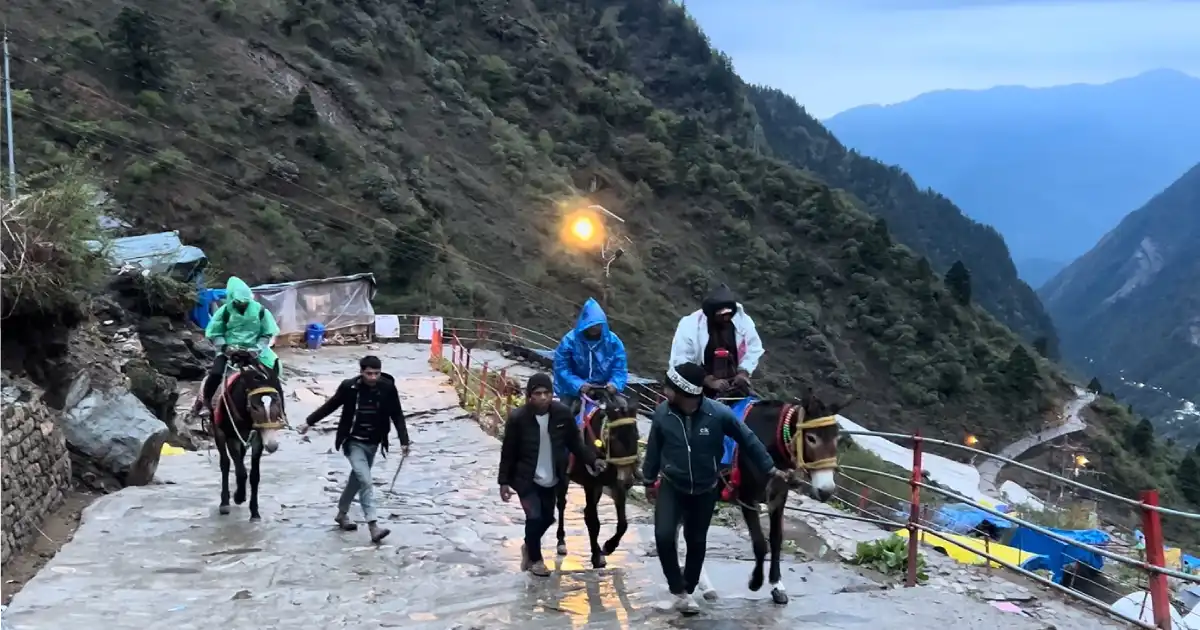
The Kedarnath Trek is India’s most demanding mainstream pilgrimage trail — 16 km each way from Gaurikund to the Kedarnath Temple at 3,583 metres, rising through alpine meadows, river crossings, and glacier-fed terrain in Uttarakhand’s Rudraprayag district. For 2026, the Kedarnath shrine opened on 2 May 2026 and the season runs through November 2026 (exact closing date subject to meteorological conditions and Devasthanam Board notification). Over 15 lakh pilgrims are expected this season, making advance planning, registration, and physical preparation non-negotiable for a safe and spiritually meaningful yatra.
This guide covers every distance marker, trail segment, difficulty rating, altitude profile, permit and registration process, horse and helicopter options, best-season breakdown, packing list, and safety protocol that trekkers need for the Kedarnath Trek in 2026 — whether you’re a first-time pilgrim or a returning trekker planning a faster ascent.
For those who want a structured, hassle-free experience with accommodation, meals, transport, and guide all arranged in advance, a dedicated Kedarnath yatra package removes the logistical burden and lets you focus entirely on the trek and the temple.
| Detail | Information |
|---|---|
| Trek Distance (One Way) | 16 km (Gaurikund to Kedarnath Temple) |
| Total Trek Distance (Round Trip) | 32 km |
| Starting Point | Gaurikund (1,982 m / 6,503 ft) |
| Temple Altitude | 3,583 m / 11,755 ft |
| Altitude Gain | ~1,600 m / ~5,252 ft |
| Shrine Opening 2026 | 2 May 2026 |
| Shrine Closing 2026 | November 2026 (date TBC) |
| Trek Difficulty | Moderate to Strenuous |
| Average Trek Time (Ascent) | 6–8 hours |
| Average Trek Time (Descent) | 4–5 hours |
| Nearest Roadhead | Gaurikund |
| Nearest Town | Sonprayag (5 km from Gaurikund) |
| Helicopter Base | Phata, Guptkashi, Sirsi |
| Registration Required | Yes — Devasthanam Board / eDevasthanam portal |
| Best Season | May–June and September–October |
The Kedarnath Trek follows a single defined trail from Gaurikund upward to the temple — there is no alternative route for trekkers (the pony and palanquin trail overlaps with the walking path). Understanding each segment helps you pace correctly, identify rest points, and plan overnight halts.
| Segment | Distance | Altitude (End Point) | Terrain | Estimated Time |
|---|---|---|---|---|
| Gaurikund to Jungle Chatti | 4 km | ~2,440 m | Paved path, gradual ascent, forest cover | 1.5–2 hrs |
| Jungle Chatti to Bheembali | 3.5 km | ~2,730 m | Steeper gradient, mixed terrain | 1.5 hrs |
| Bheembali to Linchauli (Lincholi) | 3.5 km | ~3,168 m | Rocky trail, significant altitude gain | 1.5–2 hrs |
| Linchauli to Base Camp | 2 km | ~3,400 m | Open meadow, glacial moraine | 45 min–1 hr |
| Base Camp to Kedarnath Temple | 3 km | 3,583 m | Flat glacial plain, some stone paving | 45 min–1 hr |
| TOTAL | 16 km | 3,583 m | — | 6–8 hrs |
Gaurikund (1,982 m): The official trek start. Warm springs (Tapt Kund) here are used for ritual bathing before the yatra. Most trekkers start between 4–6 AM to avoid afternoon mist and reach the temple before midday darshan queues build. Token/permit check happens here.
Jungle Chatti (approx. 2,440 m): First major rest stop with tea stalls, basic snacks, and toilet facilities. The trail is well-paved in this stretch — the easiest section of the entire trek.
Bheembali (approx. 2,730 m): Named after the Pandava Bheem who reportedly rested here. Significant tea stalls, basic medical post during peak season. The gradient steepens noticeably beyond this point.
Linchauli / Lincholi (approx. 3,168 m): A major halt with GMVN accommodation (book months in advance for peak season), helicopter landing pad (Lincholi helipad serves emergency evacuations), and a forest rest house. Many trekkers doing the trek over two days halt overnight here.
Kedarnath Base Camp (approx. 3,400 m): The point where the glacial plain opens up and the Kedarnath Temple becomes visible in the distance. The terrain flattens significantly — the final 3 km walk across the plain is emotionally the most powerful section of the trek.
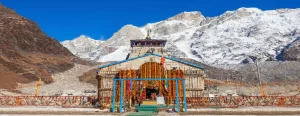
Kedarnath Temple (3,583 m): The 8th-century Adi Shankaracharya shrine dedicated to Lord Shiva, built from massive interlocking stone blocks. The temple’s conical stone shikhara is one of Indian pilgrimage’s most dramatic visual arrivals after a 16 km ascent.
The Kedarnath Trek is officially classified as Moderate to Strenuous — not a casual walk, but accessible to physically fit individuals without technical mountaineering skills. The difficulty comes primarily from altitude, not technical terrain.
| Factor | Rating | Notes |
|---|---|---|
| Physical Fitness Required | Moderate–High | 32 km round trip; daily cardio preparation strongly recommended |
| Altitude / AMS Risk | Moderate–High | 3,583 m is well within AMS risk zone; acclimatisation day at Sonprayag/Guptkashi advised |
| Trail Technicality | Low–Moderate | No scrambling or technical sections; trail is well-marked |
| Weather Variability | High | Afternoon thunderstorms common June–August; cold nights year-round |
| Crowd Density (Peak Season) | Very High | May and June weekends see 20,000+ pilgrims per day; trail congestion is real |
| Return Descend Difficulty | Moderate | Knee strain on descent is the most common complaint; trekking poles essential |
You do not need to be a seasoned mountaineer, but you should not attempt the Kedarnath Trek without conditioning. Recommended minimum:
| Month | Conditions | Crowd Level | Recommendation |
|---|---|---|---|
| May (Opening) | Cool, clear mornings; some snow on upper trail | Very High | ✅ Excellent — best clarity, manageable temperatures |
| June | Warming; pre-monsoon rains begin late June | Very High | ✅ Good (early June) — avoid last two weeks |
| July | Heavy monsoon rain; landslide risk | Moderate | ⚠️ Risky — trail closures possible; not recommended |
| August | Continued monsoon; wettest month | Low | ❌ Avoid — high landslide and flash flood risk |
| September | Post-monsoon clearing; lush green landscape | Moderate | ✅ Excellent — clearer skies, cooler temperatures |
| October | Pre-closure; crisp autumn weather; some snow above 3,200 m | High | ✅ Very Good — beautiful conditions, lower crowds than May |
| November (Closing) | Heavy snow risk; shrine closes | Very High (final days) | ⚠️ Only for closing ceremony (Bhai Dooj); weather unpredictable |
Best months overall: May (first three weeks), September, and early October. These windows offer the best combination of stable weather, trail safety, and manageable temperatures at 3,583 m altitude.
Acute Mountain Sickness is the single biggest medical risk on the Kedarnath Trek. Gaurikund sits at 1,982 m — mild AMS territory — but the temple at 3,583 m is well within the zone where symptoms develop, particularly in pilgrims ascending without any acclimatisation.
| Severity | Symptoms | Action |
|---|---|---|
| Mild AMS | Headache, fatigue, mild nausea, poor sleep | Rest, hydrate, do not ascend further until symptoms resolve |
| Moderate AMS | Persistent headache (not relieved by paracetamol), vomiting, dizziness, reduced urine | Descend 500–1,000 m immediately; seek medical post |
| Severe AMS / HACE / HAPE | Confusion, inability to walk straight, breathlessness at rest, coughing pink froth | Emergency descent and evacuation; life-threatening |
Prevention protocol:
Medical posts with basic AMS treatment capability operate at Jungle Chatti, Bheembali, and Linchauli during peak season. Helicopter emergency evacuations from Linchauli helipad are available but depend on weather.
Registration is mandatory for all pilgrims on the Kedarnath Trek since the Uttarakhand Char Dham Act brought pilgrim management under the Devasthanam Board. Without a valid registration, you will not be allowed past checkpoints at Sonprayag.
| Step | Detail |
|---|---|
| Online Portal | registrationandfacilitation.uk.gov.in or eDevasthanam app |
| Documents Required | Aadhaar card (Indian nationals); passport (foreign nationals); medical fitness certificate (age 50+) |
| Slot Booking | Choose preferred darshan date; capacity-controlled daily limits apply |
| Token Issuance | Physical tokens issued at Sonprayag counter on presentation of online registration |
| Cost | Registration is free; token issuance is free; pony/palki/helicopter are separately priced |
Important: Daily pilgrim caps apply in 2026. Do not travel to Sonprayag without a confirmed registration slot — the system has returned pilgrims who arrived without pre-registration during peak demand periods.
Not all pilgrims trek on foot. Uttarakhand tourism manages official pony (horse), palki (palanquin), and helicopter services for those who cannot manage the full 16 km ascent.
| Mode | Route | Approx. Cost (2026) | Booking | Best For |
|---|---|---|---|---|
| Walking | Gaurikund → Temple (16 km) | Free | No booking required | Fit pilgrims; trekkers |
| Pony (Horse) | Gaurikund → Temple | ₹3,500–₹5,000 one way | On-site at Gaurikund | Elderly; partial fitness |
| Palki (Doli/Palanquin) | Gaurikund → Temple | ₹10,000–₹15,000 one way | On-site; limited availability | Very elderly; mobility issues |
| Helicopter | Phata/Guptkashi/Sirsi → Kedarnath | ₹5,000–₹8,500 per person one way | Online (official portals); pre-book | Time-limited pilgrims |
Helicopter note: Helicopter services operate from Phata (closest), Guptkashi, and Sirsi helipads. Book only through official Uttarakhand Tourism or verified operators. Helicopter services are weather-dependent and frequently cancelled with little notice — always have a backup plan.
A well-organised Kedarnath yatra package typically includes helicopter or pony options as add-ons with pre-arranged booking, avoiding the on-site queue scramble that can cost hours during peak season.
| Item | Quantity | Notes |
|---|---|---|
| Moisture-wicking base layer (top + bottom) | 2 sets | No cotton — cotton holds sweat and causes rapid cooling |
| Fleece mid-layer | 1 | For Linchauli and above; nights at 3,583 m are cold |
| Waterproof windproof outer jacket | 1 | Essential — afternoon rain can appear rapidly |
| Trekking trousers | 2 | Quick-dry synthetic |
| Warm socks (wool/synthetic) | 3–4 pairs | Blisters are the #1 reason trekkers stop before the temple |
| Woollen cap / beanie | 1 | Temperature at temple drops to 2–5°C at night even in May |
| Sun hat / baseball cap | 1 | UV exposure above 3,000 m is significantly higher |
| Gloves (light fleece) | 1 pair | Required September–November |
| Item | Notes |
|---|---|
| Trekking poles (2) | Non-negotiable for descent knee protection on 16 km return |
| Daypack (20–25 litre) | Carry essentials; larger bags go with pony or porter |
| Headlamp + spare batteries | For pre-dawn departures from Gaurikund |
| Water bottles (1 litre × 2) or hydration bladder | Refill at checkpoints; do not drink stream water without purification |
| Water purification tablets | Backup |
| Sunscreen SPF 50+ | High UV at altitude |
| Sunglasses (UV400) | Glacial glare above 3,000 m |
| First aid kit | Blister pads, paracetamol, ORS sachets, bandage, antiseptic |
| Rain cover for pack | Afternoon monsoon showers can be sudden and heavy |
| Location | Provider | Type | Cost Range | Booking |
|---|---|---|---|---|
| Gaurikund | Private lodges, dharamshalas | Dormitory to private room | ₹500–₹2,000 | On arrival or phone |
| Jungle Chatti | GMVN tents, private camps | Tent dormitory | ₹400–₹800 per bed | Limited; on arrival |
| Linchauli | GMVN rest house, private tents | Rest house room / tent | ₹800–₹2,500 | gmvnl.com; advance booking essential |
| Kedarnath Base Camp | GMVN, private camps, dharamshalas | Dormitory, tents | ₹500–₹3,000 | Advance or on arrival |
| Kedarnath Town | GMVN, private lodges, Tirth Purohit houses | Private room to dormitory | ₹1,500–₹5,000 | Advance booking recommended |
2026 Tip: GMVN accommodation at Kedarnath (3,583 m) books out months in advance for peak season weekends. The Devasthanam Board controls some accommodation allocation tied to your pilgrim registration slot. Check both the GMVN portal and your registration confirmation for accommodation entitlements.
| Time | Activity |
|---|---|
| 3:30 AM | Depart Gaurikund |
| 7:00–8:30 AM | Arrive Kedarnath; Brahma Muhurta or morning darshan |
| 9:30 AM | Depart for descent |
| 1:30–2:00 PM | Return Gaurikund |
Suitable for: Fit trekkers with prior high-altitude experience, no AMS history, and an early-season visit (May) when trails are clear.
| Day | Activity |
|---|---|
| Day 1 | Gaurikund → Linchauli (9 km, ~4 hrs); overnight at Linchauli |
| Day 1 Evening | Acclimatise; light dinner; early sleep (by 8 PM) |
| Day 2 Morning | Linchauli → Kedarnath Temple (7 km, ~3 hrs); morning darshan |
| Day 2 Afternoon | Trek back to Gaurikund (16 km, ~4–5 hrs) |
Suitable for: Most pilgrims, first-time trekkers, those over 45, and anyone wanting to prioritise the darshan experience over speed.
Q: What is the total distance of the Kedarnath Trek? The Kedarnath Trek is 16 km one way from Gaurikund to the Kedarnath Temple, making it a 32 km round trip. Most trekkers complete the ascent in 6–8 hours and the descent in 4–5 hours.
Q: Is the Kedarnath Trek difficult for beginners? The trek is classified Moderate to Strenuous. The trail itself has no technical sections — it is well-paved or clearly marked throughout — but the altitude (3,583 m), distance (32 km round trip), and weather variability make it physically demanding. Beginners who have completed 4–6 weeks of conditioning can manage it with proper preparation.
Q: Can I do the Kedarnath Trek without registration in 2026? No. Registration via the Uttarakhand Government’s eDevasthanam portal (registrationandfacilitation.uk.gov.in) is mandatory. Pilgrims without registration are turned back at the Sonprayag checkpoint before reaching Gaurikund.
Q: What is the best month to visit Kedarnath in 2026? May (first three weeks), September, and early October offer the best combination of stable weather, clear skies, and manageable trail conditions. July and August should be avoided due to monsoon-related landslide risk.
Q: Is a helicopter available to Kedarnath? Yes. Helicopter services operate from Phata, Guptkashi, and Sirsi helipads. One-way fares run approximately ₹5,000–₹8,500 in 2026 depending on the operator and departure point. Services are weather-dependent and should be pre-booked through official portals or a reputable Kedarnath yatra package.
Q: What should I eat during the Kedarnath Trek? Stick to light, high-carbohydrate foods: khichdi, dal-rice, poha, boiled potatoes, and nuts at trail stalls. Avoid heavy, oily meals — digestion is impaired at altitude. Carry energy bars and ORS sachets. Eat regularly (every 1.5–2 hours) rather than waiting for large meals. Most trail dhabas at Jungle Chatti, Bheembali, and Linchauli serve basic hot meals.
Q: What is the age limit for the Kedarnath Trek? There is no official upper age limit, but pilgrims over 50 are required to submit a medical fitness certificate at the time of registration under 2024–2026 Devasthanam Board guidelines. Children under 12 are not recommended for the full 16 km trek without horse or helicopter support.
Q: Can I carry my own tent and camp on the trail? Independent camping on the trail itself is not permitted. Accommodation must be in designated GMVN facilities, private lodges, or official tent camps at Jungle Chatti, Linchauli, and Kedarnath. The Uttarakhand government enforces this regulation to manage environmental impact on the sensitive high-altitude ecosystem.
Q: Are there ATMs or phone networks on the trail? ATMs are available at Sonprayag and Gaurikund. Beyond Gaurikund, network coverage is limited and ATMs are absent — carry sufficient cash (₹3,000–₹5,000 minimum) in small denominations for tea stalls, meals, and emergency pony/porter hire. BSNL has the most consistent signal on the trail; private operator coverage is patchy above Jungle Chatti.
Q: What makes a guided Kedarnath yatra package better than self-planned travel? A quality package handles Sonprayag-to-Gaurikund transport, trail-side accommodation, trek guide, porter arrangement, and return logistics — eliminating the coordination burden that causes most self-planned yatra stress. This Kedarnath yatra package from Musafir Resort includes accommodation, meals, and guided support structured around the trek.
About Travel Tourister Travel Tourister’s destination specialists have researched the Kedarnath Trail extensively — cross-checking official Devasthanam Board capacity data, GMVN accommodation availability, and on-ground 2026 season conditions — to deliver the most accurate and actionable trek guide for pilgrims and trekkers planning their Kedarnath yatra this season.

As an upcoming travel agent I got much support from travel tourister. We are getting very good leads from travel tourister and they mend our website which is also very commendable.... Excellent work Hope to do more business forward.... Thanks and regards CEO,Andaman Unlocked
Rating:
10/20/2018
As an upcoming travel agent I got much support from travel tourister. We are getting very good leads from travel tourister and they mend our website which is also very commendable.... Excellent work Hope to do more business forward.... Thanks and regards CEO,Andaman Unlocked
Rating:
10/20/2018
2nd Floor, 39, Above Kirti Club, DLF Industrial Area, Kirti Nagar, New Delhi, Delhi 110015



Travel Tourister is a leading Travel portal where we introduce travellers to trusted travel agents to make their journey hasselfree, memorable And happy. Travel Tourister is a platform where travellers get Tour packages ,Hotel packages deals through trusted travel companies And hoteliers who are working with us across the world. We always try to find new and more travel agents and hoteliers from every nook and corners across the world so that you could compare the deals with different travel agents and hoteliers and book your tour or hotel with the one you have chosen according to your taste and budget.
Copyright © Travel Tourister, India. All Rights Reserved



 Call
Call Enquiry