Complete Guide to Staying Entertained While Traveling Solo (2026)
Introduction
Picture this: You’re sitting in a café in Prague, rain drumming against the windows, and you’ve already spent two hours wandering the Old Town Square. Your museum ticket isn’t valid until tomorrow. Your walking tour got cancelled due to weather. You’re alone, the language barrier is real, and you’re wondering—now what?
Or imagine this scenario: You’ve arrived at your Airbnb in Tokyo three hours before check-in is allowed. Your bags are stored, but you’re exhausted from the 14-hour flight and not quite ready for sightseeing. You need something to occupy the next few hours that doesn’t require monumental energy or navigating an unfamiliar city while jetlagged.
These moments—the in-between times, the weather delays, the unexpected free hours, the long train journeys—are where solo travel either becomes tedious or transforms into something wonderfully personal and enriching.
I’ve spent years talking to solo travelers, analyzing what separates those who thrive on their own from those who struggle with loneliness and boredom. Here’s what I’ve discovered: The secret to successful solo travel isn’t just about planning what you’ll do—it’s about preparing how you’ll entertain yourself during the inevitable downtime.
Solo travel offers incredible freedom. You wake when you want, eat what you choose, change plans spontaneously, and follow your interests without compromise. But with that freedom comes responsibility for your own entertainment. No travel companion to chat with during the four-hour bus ride. No partner to share observations with over dinner. No friend to laugh with when plans fall apart.
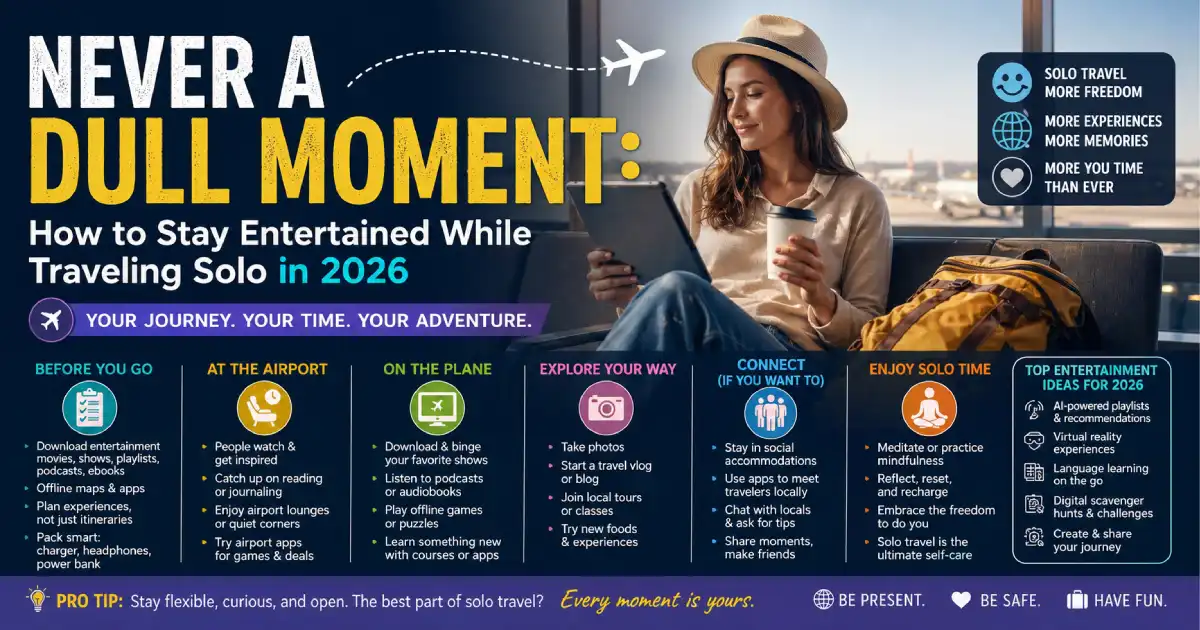
This comprehensive guide covers how to stay entertained while traveling solo across every scenario you’ll encounter: long flights and train journeys, rainy afternoons in unfamiliar cities, solo meals at restaurants, evenings in your accommodation, cultural barriers that make social connection challenging, and those beautiful moments of solitude that make solo travel so rewarding.
Whether you’re a digital nomad working remotely from Bali, a retiree exploring Europe by rail, a young backpacker island-hopping through Southeast Asia, or a professional taking a career break for extended travel, you’ll find practical strategies, creative ideas, and honest advice about keeping yourself engaged, inspired, and genuinely enjoying your solo adventure.
Let’s ensure you never face that “now what?” moment unprepared. Let’s fill your solo travel with purpose, pleasure, and plenty of entertainment that doesn’t require a companion to enjoy.
Why Solo Travel Entertainment Matters
The Unique Challenge of Solo Travel
Solo travel delivers unparalleled freedom, but it also presents a specific challenge that group travelers rarely face: you are responsible for filling every moment of your own time. This isn’t inherently negative—in fact, it’s one of solo travel’s greatest gifts. But it requires preparation and mindset.
The Loneliness vs. Solitude Balance:
There’s a crucial distinction between chosen solitude (peaceful, restorative, intentional) and unwanted loneliness (isolating, boring, frustrating). The difference often comes down to whether you have engaging ways to occupy your time.
Chosen Solitude Examples:
- Sitting in a Parisian café with a great book, genuinely content
- Taking a solo sunset walk along the beach, fully present
- Spending an evening journaling about your day’s adventures
- Enjoying a quiet museum visit at your own pace
Unwanted Loneliness Examples:
- Staring at your phone because you don’t know what else to do
- Eating dinner as quickly as possible to escape awkward aloneness
- Returning to your hotel room at 7 PM because there’s nothing else to do
- Feeling bored during a six-hour train journey
The difference isn’t about whether you’re alone—it’s about whether you have meaningful, engaging ways to use that time.
The Downtime Reality
Even the most packed itineraries include significant downtime:
Transit Time:
- Flights: 2-15+ hours depending on destination
- Train journeys: Often 3-8 hours between major cities
- Bus rides: Can be 4-12 hours for budget travel
- Airport layovers: 2-6 hours common for connections
- Waiting time: Gates, platforms, security lines
Weather-Related Delays:
- Rainy days: Outdoor plans cancelled
- Extreme heat: Midday hours require indoor refuge
- Wind/storms: Boat tours, outdoor activities cancelled
- Winter cold: Limited outdoor time
Practical Waiting:
- Early hotel/Airbnb arrivals (3-4 hours before check-in)
- Late checkout to flight time gaps
- Restaurant waits in popular cities (30-60 minutes)
- Museum/attraction queues
- Laundry time (2-3 hours at laundromats)
Evening Solo Time:
- After dinner: 7 PM – 10 PM typically
- Too tired for major activities but not ready for sleep
- Cultural barriers to nightlife (language, safety concerns)
- Budget constraints limiting evening activities
Add it up: On a two-week trip, you might have 30-40 hours of pure downtime that requires self-entertainment. That’s significant time that can either drag painfully or become some of your trip’s most memorable moments.
The Mental Health Connection
Proper entertainment while solo traveling isn’t frivolous—it’s essential for mental health and trip enjoyment.
Boredom and Loneliness Risks:
- Increased anxiety and homesickness
- Cutting trips short due to isolation
- Excessive social media scrolling (comparison trap)
- Depression or mood drops
- Impulse decisions to avoid boredom (overspending, poor choices)
Positive Entertainment Effects:
- Maintains emotional stability
- Creates structure and routine
- Provides sense of purpose
- Facilitates cultural learning
- Generates positive memories
- Reduces homesickness through engagement
Research Findings: Studies on solo travelers show those who actively plan entertainment strategies report:
- 67% higher trip satisfaction
- 43% less loneliness
- Significantly more positive memories
- Greater likelihood to solo travel again
Entertainment preparation isn’t about being antisocial or avoiding authentic experiences—it’s about ensuring you have the emotional resources to fully engage with your journey.
Digital Entertainment Essentials
Pre-Download Strategy
The biggest mistake solo travelers make: assuming they’ll have constant internet access. Reality check—you won’t. And paying for international data gets expensive fast.
What to Download Before Leaving:
Entertainment Apps:
- Netflix: 10-15 movies/shows for offline viewing
- Spotify/Apple Music: Playlists (20-30 hours of music)
- Audible/audiobook apps: 3-5 audiobooks
- Kindle/reading apps: 5-10 books
- YouTube Premium: Download favorite channels
Gaming Apps:
- Offline puzzle games (Monument Valley, Sudoku)
- Story-driven games (80 Days, Florence)
- Strategy games (Civilization VI, Stardew Valley)
- Classic games (Chess, Solitaire)
Educational Apps:
- Language learning (Duolingo, with offline lessons)
- Masterclass or skill-building apps
- Documentary apps with downloads
Creative Apps:
- Digital journaling apps
- Photo editing (Adobe Lightroom, VSCO)
- Drawing/sketching apps
- Music creation apps
Download Schedule:
- 2 weeks before: Subscribe to services if needed
- 1 week before: Download bulk content
- 2 days before: Final updates and additions
- At airport WiFi: Last-minute downloads
Device Management
Battery Life Strategies:
- Portable charger: 20,000 mAh minimum capacity
- Charging cables for all devices
- International adapter with USB ports
- Airplane mode when not using cellular
- Brightness reduction extends battery 30-40%
Storage Management:
- 64GB minimum for phones (128GB ideal)
- External storage for photos (cloud backup)
- Regularly delete consumed content
- Offline mode for maps (Google Maps offline)
Device Recommendations:
- Kindle/e-reader: Dedicated reading device (weeks of battery life)
- Tablet: Better for movies, games, reading (iPad or Android)
- Phone: Always have, but screen size limits entertainment value
- Laptop: If working remotely or need serious entertainment library
Streaming Services Worth the Investment
For Solo Travelers:
Netflix Premium:
- $15.99/month (2026 pricing)
- Download up to 100 titles
- 4K quality available
- Best for: Movies and series for long flights
Spotify Premium:
- $10.99/month
- Unlimited downloads
- Offline playlists
- Best for: Music lovers, background ambiance
Audible:
- $14.95/month (1 credit)
- One audiobook monthly
- Extensive library
- Best for: Train journeys, walking time
YouTube Premium:
- $13.99/month
- Ad-free, downloads enabled
- YouTube Music included
- Best for: Documentaries, educational content, music videos
Apple TV+:
- $6.99/month
- Growing content library
- High-quality originals
- Best for: Apple ecosystem users
Cost-Benefit Analysis: $50-70/month for 4-5 services might seem expensive, but:
- Replaces hours of expensive coffee shop sitting
- Provides entertainment worth hundreds in alternatives
- Cancel after trip if budget-conscious
- Share accounts with family (within terms of service)
Gaming for Solo Travelers
Best Solo Travel Games:
Story-Driven (Engaging Narratives):
- 80 Days – Travel around the world game
- Florence – Beautiful interactive story
- Gris – Artistic platformer
- Monument Valley – Puzzle adventure
- The Room series – Mystery puzzles
Time-Killers (Quick Sessions):
- Mini Metro – Transit system puzzle
- Alto’s Adventure – Relaxing endless runner
- Threes! – Number puzzle
- Plague Inc. – Strategy simulation
- Reigns – Card-based decision game
Deep Engagement (Hours of Gameplay):
- Stardew Valley – Farming simulation
- Civilization VI – Strategy game
- XCOM – Tactical strategy
- The Witness – Puzzle exploration
- Dead Cells – Action platformer
Offline Capability: Verify games work offline before traveling. Many require initial online verification but play offline afterward.
Social Media as Entertainment (With Caution)
Productive Social Media Use:
- Document your journey through Instagram stories
- Engage with travel communities (solo travel groups)
- Research next destinations via Pinterest
- Connect with locals through travel apps
- Share experiences to process emotions
Avoiding Social Media Pitfalls:
- Set time limits (30 minutes max per session)
- Avoid comparison trap (others’ highlight reels)
- Don’t let scrolling replace real experiences
- Use airplane mode during prime exploration hours
- Focus on creation (your content) vs consumption (others’)
Reading and Audiobooks: The Solo Traveler’s Best Friend
Why Reading is Perfect for Solo Travel
Reading provides the ideal solo travel entertainment because it:
- Requires no internet connection once downloaded
- Occupies mind completely (prevents loneliness)
- Portable and lightweight (especially e-books)
- Culturally universal (read anywhere without drawing attention)
- Adjustable (5 minutes or 5 hours)
- Budget-friendly (library books, free classics)
Building Your Travel Reading List
Genre Diversity Strategy:
Don’t pack all one genre. Vary your selections to match different moods and situations:
Light & Escapist (40% of list):
- Beach reads and mysteries
- Romantic comedies
- Thriller page-turners
- Feel-good fiction
Perfect for: Flights, beaches, poolside, light evening reading
Destination-Related (30% of list):
- Books set in places you’re visiting
- Historical fiction about the region
- Travel memoirs from similar journeys
- Cultural explorations
Perfect for: Enhancing understanding of where you are, creating deeper connection
Challenging & Thought-Provoking (20% of list):
- Literary fiction
- Philosophical works
- Biographies
- Science or history deep-dives
Perfect for: Rainy days, long train rides, when you want mental engagement
Practical & Inspirational (10% of list):
- Travel guides and planning
- Language learning books
- Photography guides
- Creative writing or journaling prompts
Perfect for: Planning next moves, learning new skills
Sample Two-Week Trip Reading List:
- Light thriller (airport/flight reading)
- Romance or comedy (easy evening reading)
- Book set in destination (cultural connection)
- Literary fiction (challenging engagement)
- Travel memoir (inspiration and perspective)
- Short story collection (flexible reading)
- Non-fiction about region’s history
- Poetry or essays (bite-sized pieces)
E-Readers vs Physical Books
E-Reader Advantages:
- Carry hundreds of books in one device
- Weeks of battery life
- Built-in dictionary and translation
- Adjustable text size and lighting
- Lightweight and durable
- Instant downloads anywhere with WiFi
Physical Book Advantages:
- No battery concerns
- Tactile reading experience
- Can leave finished books for other travelers
- Buy local editions as souvenirs
- Share with travel friends
- No screen fatigue
Best Approach: Bring an e-reader for bulk reading + 1-2 physical books you’re excited about. This combines digital convenience with physical book pleasure.
Audiobooks: The Underrated Travel Companion
Perfect Audiobook Situations:
- Long flights (sleeping aid or engagement)
- Train/bus journeys with scenery
- Walking or hiking alone
- Cooking in hostel kitchens
- Falling asleep in unfamiliar rooms
- Doing laundry or other tasks
- Solo meal times (less obvious than reading)
Audiobook Selection Tips:
- Engaging narrators matter more than for reading
- Mystery and thriller work wonderfully
- Memoirs and biographies excellent
- Avoid complex literary fiction (hard to follow audio-only)
- Non-fiction with clear structure works well
Audiobook Services:
Audible:
- $14.95/month = 1 credit (1 book)
- Additional books at member prices
- Excellent app and offline downloads
- Largest selection
Libro.fm:
- Similar pricing to Audible
- Supports local bookstores
- Good selection
Library Apps (Free!):
- Libby/OverDrive
- Connect with home library card
- Free audiobooks and e-books
- Limited selection but zero cost
Spotify/YouTube:
- Some audiobooks available
- Free options exist
- Quality and selection vary
Reading-Specific Solo Travel Tips
Creating Reading Rituals:
- Morning coffee + chapter = perfect daily start
- Afternoon café reading sessions
- Evening wind-down reading in bed
- Beach/park reading with sunset
Finding Reading Spaces:
- Hotel lobbies (comfortable, air-conditioned, often free coffee)
- Parks and gardens
- Cafés (order something, stay hours)
- Quiet corners of museums between exhibits
- Library reading rooms (many cities have beautiful public libraries)
Book Swapping:
- Hostel book exchanges
- Little Free Libraries in cities
- Leave-one-take-one shelves
- Trade with other travelers
- Donate to next accommodation
Enhancing Reading Experience:
- Travel journal to note favorite quotes
- Photos of yourself reading in different locations
- Goodreads tracking of books read per destination
- Reading challenges (one book per country visited)
Genre Recommendations for Different Trip Types
Beach/Relaxation Trips:
- Light mysteries (Agatha Christie)
- Romance novels – consider exploring romance novels online for extensive digital options perfect for beach reading
- Humorous fiction (David Sedaris, Bill Bryson)
Cultural/City Exploration:
- Historical fiction set locally
- Travel memoirs
- Literary fiction about the region
- Books by local authors translated
Adventure/Active Travel:
- Survival stories
- Mountaineering memoirs
- Exploration narratives
- Nature writing
Solo Self-Discovery Journeys:
- Memoirs of transformation
- Philosophical works
- Creative inspiration books
- Self-help and personal growth
Music and Podcasts: Your Portable Soundtrack
Creating the Perfect Travel Playlists
Music transforms solo travel experiences. The right soundtrack can:
- Elevate ordinary moments to memorable ones
- Provide emotional regulation (energize or calm)
- Block out unwanted noise
- Create personal space in crowded places
- Mark memories (songs forever linked to places)
Essential Playlists to Create:
Morning Energy Playlist (60-90 minutes):
- Upbeat, motivational songs
- Music that makes you smile
- Energizing tempo
- Perfect for: Morning routines, starting adventures, walking to attractions
Transit Playlist (3-4 hours):
- Longer, cohesive listening experience
- Can include albums you’ve wanted to explore
- Moderate tempo (not too energizing for long periods)
- Perfect for: Flights, trains, buses, long walks
Evening Wind-Down (45-60 minutes):
- Slower, calming music
- Acoustic or instrumental
- Helps transition from day energy to rest
- Perfect for: Post-dinner walks, back at accommodation, falling asleep
Exploration Soundtrack (2-3 hours):
- Music matching your destination vibe
- Local artists from the region
- Cinematic, atmospheric tracks
- Perfect for: Walking unknown streets, discovering neighborhoods
Workout/Active Playlist (30-45 minutes):
- High-energy, fast tempo
- Music that motivates movement
- Perfect for: Hotel gym, morning runs, hiking
Language Learning Playlist:
- Songs in the local language
- Helps ear training and pronunciation
- Cultural immersion through music
- Perfect for: Learning while enjoying
Rainy Day Jazz/Classical (2-3 hours):
- Sophisticated, engaging
- Perfect café accompaniment
- Non-intrusive for reading or writing
- Perfect for: Rainy afternoons, writing sessions, café time
Podcast Recommendations for Solo Travelers
Why Podcasts Excel for Solo Travel:
- Free content (mostly)
- Educational and entertaining
- Feels like companionship (voices and conversation)
- Wide variety of lengths (15 minutes to 3+ hours)
- Can listen while doing other things
Travel & Adventure Podcasts:
- Zero To Travel – Solo travel specific advice
- Travel with Rick Steves – European travel focus
- The Travel Diaries – Personal travel stories
- Women Who Travel – Female traveler perspectives
- Budget Travel Podcast – Money-saving strategies
True Crime (Perfect for Long Journeys):
- Serial – Investigative journalism
- Criminal – Short crime stories
- My Favorite Murder – Comedy + crime
- Case file – Australian true crime
Comedy (Mood Boosting):
- Conan O’Brien Needs a Friend
- WTF with Marc Maron
- The Daily Show podcast
- Comedy Bang Bang
Educational & Informative:
- Stuff You Should Know – Everything explained
- Radiolab – Science and philosophy
- Freakonomics Radio – Economics made interesting
- TED Radio Hour – TED talks expanded
Storytelling:
- The Moth – True personal stories
- This American Life – Documentary storytelling
- Love + Radio – Intimate narratives
- Risk! – True stories people shouldn’t tell
Language Learning:
- Coffee Break [Language] – Structured lessons
- News in Slow [Language] – Current events at learner pace
- Native podcasts on topics you enjoy
Mindfulness & Reflection:
- On Being – Meaningful conversations
- The Daily – News understanding
- Philosophize This! – Philosophy made accessible
Music Discovery While Traveling
Finding Local Music:
- Shazam live performances you hear
- Ask locals for favorite artists
- Visit local record stores
- Attend free concerts or busker performances
- Spotify “Made in [Country]” playlists
- YouTube music from the region
Creating Location-Specific Playlists:
- One playlist per city/country visited
- Mix of local artists and songs heard there
- Music that captures the destination’s feeling
- Permanent soundtrack to memories
Live Music Opportunities:
- Free outdoor concerts
- Church performances (often free/donation)
- Street performers (beautiful unexpected moments)
- Local bars and small venues
- Music festivals if timing aligns
Headphone Strategy
Best Headphones for Solo Travel:
Noise-Canceling Over-Ear:
- Sony WH-1000XM5 or Bose QuietComfort
- Best for: Long flights, trains, blocking out noise
- Downside: Bulky for packing
Wireless Earbuds:
- AirPods Pro, Samsung Galaxy Buds
- Best for: Walking, working out, lightweight packing
- Downside: Easier to lose, shorter battery
Wired Backup:
- Cheap wired earbuds as backup
- No battery needed
- Use when wireless batteries die
Sleep Headphones:
- Soft headband with speakers
- Comfortable for sleeping
- Blocks noise, plays calming music
- Perfect for hostels, overnight transport
When NOT to Use Headphones:
- Walking in unfamiliar areas at night (safety awareness)
- When locals are trying to communicate
- During tours (respect guide and group)
- In certain cultural sites (temples, sacred spaces)
Creative Pursuits on the Road
Travel Journaling: More Than Just Diary Entries
Why Journaling is Perfect for Solo Travelers:
- Processes experiences and emotions
- Creates permanent record of journey
- Provides entertainment during downtime
- Therapeutic for loneliness
- Improves writing skills
- Free entertainment requiring minimal supplies
Journaling Formats:
Traditional Written Journal:
- Notebook and pen
- Daily entries about experiences
- Thoughts, observations, feelings
- Can include ticket stubs, receipts, pressed flowers
Bullet Journal Travel Edition:
- Lists and trackers
- Places visited checklist
- Budget tracking
- Packing lists refined
- Memories in bullet points
Sketch Journal:
- Visual documentation
- Simple drawings of scenes
- Doesn’t require artistic skill
- Quick sketches more memorable than photos sometimes
Question-Based Journal: Prompts for each day:
- What surprised me today?
- Best meal/worst meal
- Most interesting person I met
- What I learned about myself
- Moment I felt most alive
- Challenge I overcame
Digital Journaling:
- Day One app or similar
- Can include photos inline
- Location tagged
- Searchable
- Cloud backup (never lose it)
Journaling Routine:
- Morning pages (stream of consciousness)
- Evening reflection (day’s events)
- Weekly summary (big picture perspective)
- Monthly review (patterns and growth)
Photography: The Purposeful Solo Pursuit
Photography Benefits for Solo Travelers:
- Gives purpose to wandering
- Encourages observation
- Creates tangible memories
- Can share experiences with others
- Improves artistic eye
- Endless learning opportunity
Photography Projects:
- Door photography (every destination’s unique doors)
- Street food documentation
- Local life candids
- Architecture details
- Sunrise/sunset collection
- Self-portrait series (you in different locations)
- Color-themed (one color per day)
- Texture hunt (walls, fabrics, natural patterns)
Self-Portrait Strategies:
- Tripod + timer (looks more natural than selfie stick)
- Ask kind strangers (better angles than selfies)
- Reflections (mirrors, windows, water)
- Shadows and silhouettes
- Environmental context (show scale and place)
Photography Education While Traveling:
- YouTube tutorials downloaded
- Photography podcasts
- Experiment with manual mode
- Study other photographers’ work
- Join photo walks if available
Drawing and Sketching
No Artistic Skill Required: The point isn’t creating masterpieces—it’s slowing down to observe and engage deeply with places.
Simple Sketching Ideas:
- Coffee cup at café
- View from hotel window
- Street scene (even stick figures tell stories)
- Food before eating
- Architectural details
- Map of walking route
- Objects with memories attached
Supplies (Minimal):
- Small sketchbook (A5 or smaller)
- Pencil or pen
- Colored pencils (optional)
- Portable watercolors (advanced)
Urban Sketching Benefits:
- Forces you to sit and observe (20-30 minutes)
- Notice details you’d miss walking
- Creates unique personal souvenirs
- Meditative and calming
- Conversation starter with locals
Writing Beyond Journaling
Blog or Newsletter:
- Document journey for friends/family
- Writing clarifies experiences
- Creates accountability to explore
- Potential future income source
- Improves writing skills
Fiction or Poetry:
- Inspired by places and people
- Process emotions creatively
- Experiment without pressure
- New perspectives from travel
Letters and Postcards:
- Physical mail to loved ones
- Forces reflection on experiences
- Creates joy for recipients
- Collectible stamps and postage
- Forces you to find beautiful cards/views
Music Creation
For Musicians:
- Portable instruments (ukulele, harmonica)
- Digital music apps on phone/tablet
- GarageBand or similar software
- Create soundscapes of locations
- Busking (if permitted) for extra income
Learning New Creative Skills
Courses and Tutorials:
- Skillshare, Udemy downloaded courses
- YouTube tutorial series
- Learn watercolors, calligraphy, knitting
- Language through creative expression
- Photography editing techniques
Creative Challenges:
- 30-day challenges (daily photos, daily sketches)
- Copying masters (recreate famous paintings)
- Style experimentation
- Collaboration with other travelers
Learning While Traveling: Entertainment That Enriches
Language Learning as Entertainment
Why Language Learning is Perfect Solo Travel Entertainment:
- Practically useful immediately
- Shows respect for local culture
- Opens conversations and connections
- Challenges brain (prevents boredom)
- Measurable progress (motivating)
- Free or very cheap
Language Learning Apps:
Duolingo:
- Free with ads (or $12.99/month Premium)
- Gamified learning (fun and addictive)
- Offline lessons available
- Works for 40+ languages
- Perfect for: Beginners, casual learning, daily practice
Babbel:
- $13.95/month
- More structured than Duolingo
- Conversation-focused
- Quality grammar explanations
- Perfect for: Serious learners, practical usage
Pimsleur:
- $14.99/month
- Audio-based learning
- 30-minute daily lessons
- Excellent for pronunciation
- Perfect for: Audio learners, commute time
Memrise:
- Free with Premium option
- Real native speaker videos
- Vocabulary focused
- Practical phrases
- Perfect for: Visual learners, travel-specific phrases
Language Learning Schedule:
- Morning: 15-30 minutes app practice
- During transit: Audio lessons
- Afternoon: Try new vocabulary in real situations
- Evening: Review and consolidate
Practical Language Practice:
- Order in restaurants using local language
- Ask directions (even if you know the way)
- Make small talk at shops
- Read signs and menus aloud (to yourself)
- Watch local TV with subtitles
- Listen to local radio
Conversation Practice:
- Language exchange apps (Tandem, HelloTalk)
- Language cafés if available
- Chat with hotel/hostel staff
- Join local meetups
- Offer language exchange (your language for theirs)
Online Courses and Skill Development
Free Educational Platforms:
Coursera:
- University courses free to audit
- Downloadable videos
- Wide subject range
- Perfect for: Academic interests, structured learning
Khan Academy:
- Completely free
- Math, science, history, art
- Self-paced
- Perfect for: Filling knowledge gaps, structured learning
edX:
- Top university courses
- Free auditing
- Certificates available (paid)
- Perfect for: Professional development, serious study
YouTube Education:
- Crash Course (everything explained)
- TED-Ed (short educational videos)
- Veritasium (science)
- Vsauce (fascinating questions)
Skills Perfect for Travel Learning:
Photography Editing:
- Lightroom mobile tutorials
- Photo composition courses
- Editing your travel photos as you go
- Build portfolio while traveling
Writing and Storytelling:
- Creative writing courses
- Travel writing specific classes
- Memoir writing
- Blogging and content creation
Business and Marketing:
- Digital marketing
- Social media strategy
- Freelancing skills
- Location-independent career building
Creative Skills:
- Graphic design
- Video editing
- Music production
- Drawing and illustration
Technical Skills:
- Coding basics
- Web development
- Data analysis
- Digital tools mastery
Documentaries and Educational Videos
Downloaded Documentary Series:
- Planet Earth / Blue Planet (nature)
- Cosmos (science and space)
- Abstract (art and design)
- Chef’s Table (food and culture)
- Our Planet (environmental)
- The Story of… (various topics)
Documentary Streaming:
- CuriosityStream (documentary-specific service)
- National Geographic on Disney+
- PBS documentaries
- BBC documentary archives
Podcast Learning
Educational Podcasts:
- Hardcore History – Deep historical dives
- Planet Money – Economics explained
- Science Vs – Fact-checking popular beliefs
- How I Built This – Entrepreneur stories
- Revisionist History – Reexamining the past
Social Entertainment Options for Solo Travelers
Meeting Other Travelers
Hostels (Even If Not Staying):
- Common areas welcome outside guests usually
- Organized events (pub crawls, dinners)
- Game nights and movie nights
- Rooftop bars and social spaces
- Meet people naturally through proximity
Free Walking Tours:
- Not just learning—social opportunity
- Meet other travelers during tour
- Common experience creates conversation
- Usually includes recommendations for later
- Can continue exploring with tour companions
Organized Group Activities:
- Cooking classes (social and educational)
- Food tours (eating together creates bonds)
- Day trips and excursions
- Adventure activities (hiking, diving, etc.)
- Pub crawls (if that’s your scene)
Meetup Groups:
- Meetup.app for local events
- Language exchange meetups
- Hobby-based groups (photography, hiking)
- Expat and traveler meetups
- Professional networking events
Coworking Spaces:
- Day passes available ($10-30)
- Digital nomad communities
- Social events and networking
- Professional connections + friendship
- Often include coffee/tea and lunch options
Social Apps and Platforms
Travel-Specific Social Apps:
Couchsurfing (Hangouts Feature):
- Meet locals even without staying with them
- “Hangouts” feature for finding companions
- Events organized by locals
- Free to use
Meetup:
- Find events and activities
- Hobby-based groups
- One-time events and regular meetups
- Varies by city
Bumble BFF:
- Friend-finding (not dating)
- Swipe to meet potential friends
- Especially good for solo female travelers
Travel Companions Apps:
- Tourlina (women-only)
- Backpackr
- Travello
- Connect with others in same location
Organized Social Entertainment
Food Experiences:
- Food tours with small groups
- Cooking classes (usually social)
- Wine tastings (conversation flows naturally)
- Street food crawls
- Farm-to-table experiences
Adventure and Activities:
- Group hikes
- Diving trips (buddy system creates connections)
- Cycling tours
- Kayaking or water sports
- Rock climbing gyms (social climbing communities)
Cultural Experiences:
- Dance classes (salsa, tango, traditional)
- Art workshops
- Music jam sessions
- Theater and performance (intermission conversations)
- Festivals and celebrations
Creating Your Own Social Opportunities
Initiate Conversations:
- “Where are you from?” (classic but works)
- “Any recommendations for [activity]?”
- “Want to split this [food item/tour/taxi]?”
- “Mind if I join you?” (at communal tables)
- Compliment something specific (not creepy, genuine)
Sharing Economy Creates Connections:
- Shared taxis (split costs, meet people)
- Group tours (built-in companions)
- Communal meals at hostels
- Table sharing at busy restaurants
- Rideshares for long distances
Outdoor and Physical Activities
Solo Hiking and Walking
Benefits for Solo Travelers:
- Free or very cheap
- Explore at your own pace
- Exercise combats travel fatigue
- Natural settings therapeutic
- Creates sense of accomplishment
Urban Walking Adventures:
- Self-guided walking tours (apps available)
- Photography walks with purpose
- Follow street art trails
- Market wandering
- Neighborhood exploration beyond tourist centers
Nature Hiking:
- Research well-marked trails (safety first)
- AllTrails app for route planning
- Start early (safer, fewer crowds)
- Always tell someone your plans
- Bring entertainment for breaks (book, music, snacks)
Walking Challenges:
- Daily step goals (10,000-20,000)
- Explore every neighborhood in a city
- Walk from accommodation to major sites (instead of transport)
- Sunrise or sunset walks
- Late-night city exploration (safe areas)
Solo Fitness While Traveling
Hotel Room Workouts:
- Bodyweight exercises (no equipment needed)
- Yoga (YouTube videos downloaded)
- HIIT workouts (20-30 minutes)
- Stretching and mobility
- Creates routine and structure
Fitness Apps:
- Nike Training Club – Free workouts
- 7 Minute Workout – Quick sessions
- Yoga with Adriene – YouTube free yoga
- Fitness Blender – Varied workout videos
Running Adventures:
- Early morning runs in new cities
- Park runs (international organized running)
- Running tours (some cities offer)
- Trail running in nature
- Strava for route discovery
Gym Options:
- Hotel gyms (if available)
- Day passes at local gyms ($10-20)
- CrossFit drop-ins (community + workout)
- Yoga studios (single class bookings)
- Swimming pools (hostels, public pools)
Water Activities
Solo-Friendly Water Sports:
- Swimming (beaches, pools, natural swimming holes)
- Snorkeling (can do solo safely in popular spots)
- Kayaking (many places rent singles)
- Stand-up paddleboarding
- Surfing lessons
Water Activity Safety:
- Always tell someone your plans
- Stick to supervised or popular areas
- Respect your skill level
- Consider guided tours for new activities
- Never swim alone in isolated areas
Cycling and Biking
Bike Rental Options:
- City bike-share programs
- Tourist bike rentals
- Electric bikes (longer distances easier)
- Mountain bike rentals in nature areas
Cycling Entertainment:
- City exploration by bike
- Countryside cycling tours
- Coastal bike paths
- Cycling to nearby towns
- Follow cycling routes (Europe especially)
Rainy Day Backup Plans
Indoor Cultural Activities
Museums (The Obvious Choice):
- Art museums (hours of engagement)
- History museums (learn about location)
- Quirky museums (every city has unique ones)
- Free museum days (research schedule)
- Audio guides provide company and context
Libraries:
- Beautiful architecture often
- Free WiFi and seating
- Reading spaces
- Local newspapers and magazines
- Sometimes offer events or lectures
Theaters and Performances:
- Matinee shows (cheaper)
- Local theater productions
- Classical music concerts
- Opera (standing room often cheap)
- Movie theaters (foreign films with subtitles)
Religious Sites:
- Cathedrals and churches
- Temples and mosques (respectful visiting)
- Often architectural marvels
- Peaceful contemplation spaces
- Usually free or donation
Shopping as Entertainment
Not Just Buying—Experiencing:
- Markets (covered markets perfect for rain)
- Bookstores (browse for hours)
- Antique shops (treasure hunting)
- Local craft stores
- Department stores (people watching, cafés inside)
Budget-Friendly Shopping Entertainment:
- Window shopping (no purchase required)
- Trying on clothes (entertainment without buying)
- Sampling at food markets
- Collecting business cards or small free items as souvenirs
Spa and Wellness
Rainy Day Self-Care:
- Public baths (Japan, Turkey, Korea)
- Budget spas and massage
- Hair salons (experience local beauty culture)
- Nail salons (read while getting nails done)
- Hammams and saunas
Hotel Room Spa:
- Face masks (pack from home)
- Long bath with book
- Self-massage techniques
- Deep conditioning hair treatments
- Create peaceful environment
Indoor Sports and Recreation
Rainy Day Activities:
- Bowling alleys
- Indoor climbing gyms
- Billiards or pool halls
- Arcade or gaming cafés
- Ice skating or roller skating rinks
Cultural Immersion Entertainment
Language and Cultural Learning
Immersive Language Practice:
- Watch local TV (news, soap operas, game shows)
- Listen to local radio
- Read local newspapers or magazines
- Children’s books (easier language)
- Cooking shows (visual context helps understanding)
Cultural Observation:
- Sit in parks and observe local life
- Watch how people interact
- Notice cultural differences
- Take mental notes for journal later
- Learn through observation
Local Experiences
Free Cultural Entertainment:
- Street performances and buskers
- Public festivals and celebrations
- Religious ceremonies (respectfully)
- Market culture and shopping rituals
- Local sports events (soccer matches often cheap)
Participatory Culture:
- Attend religious services (if appropriate)
- Join community events
- Volunteer for short-term projects
- Participate in local traditions
- Learn traditional crafts or skills
Technology-Free Entertainment
Analog Activities
Rediscovering Non-Digital Fun:
- Reading physical books
- Writing letters home
- Drawing and sketching
- Journaling by hand
- Playing cards (solo games or with others)
Mindfulness Practices:
- Meditation (headspace offline downloads)
- Breathing exercises
- Walking meditation
- Mindful eating
- Body scans and relaxation
Observation Games:
- Count things (red cars, types of dogs)
- Photograph mentally (observe as if taking photo)
- Memory games (recall details later)
- Story creation about people you see
- Architectural detail spotting
Solo Games and Puzzles
Travel-Friendly Games:
- Travel-size chess or checkers
- Deck of cards (solitaire, patience)
- Sudoku books
- Crossword puzzles
- Brain teaser books
Mental Challenges:
- Memory exercises
- Math problems for fun
- Word games (how many words from destination name?)
- Planning and strategizing next moves
Solo Dining Entertainment
Making Meals Enjoyable Alone
The Solo Dining Mindset: Eating alone is one of solo travel’s biggest mental hurdles. Shift from “eating alone is sad” to “dining solo is freedom.”
Restaurant Strategies:
- Choose counter seating (watch cooking, less isolated)
- Bring book or journal (acceptable companion)
- Observe and people-watch
- Strike up conversations with staff
- Use time to write reviews or plan next day
Timing Matters:
- Early dinners (less crowded, less attention)
- Lunch easier than dinner
- Cafés more solo-friendly than restaurants
- Street food and takeout (no awkward sitting)
Entertainment While Eating:
- Kindle/book (classic choice)
- Journal writing
- Sketching the scene
- Photography of food
- Language learning app
- Podcast or music (one earbud)
- People watching
Food Markets:
- Assemble picnic from various stalls
- Eat at communal tables
- Natural conversation opportunities
- Watch food preparation
- Sample and taste
Cooking Your Own Meals
Hostel Kitchen Entertainment:
- Cooking as creative activity
- Meet other travelers naturally
- Try local ingredients
- Learn recipes from others
- Save money for other entertainment
Market Shopping:
- Morning market visits (entertainment itself)
- Learn about local produce
- Practice language
- Discover new ingredients
- Cultural education through food
Frequently Asked Questions
How do I avoid getting lonely while traveling solo?
Loneliness while solo traveling is normal but manageable through strategic planning: maintain regular contact with home (video calls), join group activities (tours, classes, meetups), stay in social accommodations (hostels with common areas), keep yourself engaged with entertainment that occupies your mind (books, podcasts, creative projects), and embrace solitude as opportunity for self-reflection rather than isolation. The key is balancing alone time with social opportunities—you don’t need constant companionship, just enough human interaction to feel connected. Most importantly, have engaging activities planned so downtime feels purposeful rather than empty.
What should I pack for entertainment while traveling solo?
Essential entertainment items: e-reader or 2-3 physical books, smartphone with offline content downloaded (movies, music, podcasts, audiobooks), portable charger and charging cables, journal and pen, playing cards, headphones (noise-canceling for flights, earbuds for walking), small sketchbook if creative, and any hobby-specific items that pack small (harmonica, knitting, etc.). Download all digital content before departure—apps, ebooks, audiobooks, music playlists, educational courses, maps, and translation tools. The right entertainment balance is 70% digital (space-efficient) and 30% analog (no battery required, more tactile).
Is it weird to eat alone at restaurants while traveling?
No—it’s completely normal and increasingly common. Millions of solo travelers eat alone daily, and restaurant staff in tourist areas see solo diners constantly. To feel more comfortable: choose counter seating where you can watch cooking or interact with staff, bring a book or journal as a “companion,” visit during off-peak hours when restaurants are less crowded, choose casual restaurants over fine dining for first solo meals, and remember that locals often eat alone without thinking twice about it. Most perceived awkwardness exists only in your mind—others aren’t judging you nearly as much as you imagine. Consider it practice in self-sufficiency and confidence building.
How can I stay entertained on long flights when traveling solo?
Create a structured entertainment plan for long flights: download 2-3 movies or 4-5 TV episodes, load 2-3 audiobooks or podcasts series, bring 1-2 books (physical or e-reader), download games that work offline, prepare a long playlist for sleeping, and bring a journal for reflections. Break your flight into chunks: first 2 hours watch a movie, next hour read or listen to audiobook, meal service break, 2-3 hours sleep with sleep playlist, final hours catch up on downloaded podcasts or prepare for arrival (research, planning). Bring noise-canceling headphones, neck pillow, and eye mask. The key is variety—switching between entertainment types prevents boredom better than marathon-ing one activity.
What are the best apps for solo travelers?
Essential solo travel apps: Entertainment (Netflix, Spotify, Kindle, Audible for downloaded content), Navigation (Google Maps offline, Citymapper for public transport), Communication (WhatsApp, Skype for staying connected), Language (Duolingo, Google Translate offline), Social (Meetup, Couchsurfing Hangouts for meeting people), Productivity (Day One for journaling, Lightroom for photos), Safety (TripIt for itinerary organization, Find My Friends for sharing location), Finance (Trail Wallet for budget tracking), and Discovery (TripAdvisor, Google Reviews). Download and test all apps before traveling, ensure offline functionality where needed, and organize apps into folders by purpose for easy access.
How do solo travelers stay motivated during long trips?
Maintaining motivation during extended solo travel requires strategic planning: set small daily goals (visit one museum, try one new food, learn five new words), create routines that provide structure (morning coffee at café, evening journaling), track progress visually (map of places visited, journal entries counted), reward yourself for milestones (nice dinner after one month, splurge accommodation mid-trip), stay connected to home without dwelling there (weekly calls, not daily), join short-term communities (hostels, classes, tours), allow rest days without guilt, and remember why you started (revisit your initial travel motivation). Long-term travel is a marathon, not a sprint—pace yourself, accept low-energy days, and celebrate small victories.
Can introverts enjoy solo travel?
Absolutely—many introverts find solo travel ideal because it offers complete control over social interaction. Introverts can: schedule social activities when they have energy (morning tours, then alone afternoon), choose quiet accommodations over party hostels, use entertainment (books, podcasts) as legitimate alone time without explanation, skip activities that drain them, create daily routines that include necessary solitude, communicate through writing instead of verbal conversation, and enjoy the freedom to be alone without it being weird. Solo travel doesn’t mean constant socializing—it means choosing when and how you interact. Introverts often thrive solo traveling because they can finally travel at their natural social pace without accommodating extroverted companions.
What are good rainy day activities for solo travelers?
Indoor entertainment for rainy travel days: visit museums (art, history, quirky local museums), explore covered markets (food, antiques, crafts), spend hours in bookstores or libraries, watch movies at local cinemas (foreign films with subtitles), try local spa or bath experiences (hammams, onsens, public baths), take cooking or craft classes, work from cozy cafés with books and laptop, visit shopping malls (dry, people-watching, food courts), attend matinee theater performances, or embrace the hotel room (catch up on journaling, sort photos, plan upcoming destinations, rest and self-care). Rain doesn’t ruin solo travel—it just redirects it indoors where different discoveries await.
How do you make friends while traveling solo?
Making travel friends happens through: staying in social accommodations (hostels with common areas and organized events), joining group activities (free walking tours, cooking classes, day trips), using social apps (Couchsurfing Hangouts, Meetup, Bumble BFF), frequenting same places repeatedly (regular café, gym, coworking space creates familiar faces), being open and approachable (smile, make eye contact, initiate simple conversations), offering to share (tables at restaurants, taxis to airport, food portions), attending events specifically for meeting people (pub crawls, language exchanges), and accepting that not all connections become friendships—many are pleasant brief encounters that still combat loneliness. The key is putting yourself in social situations regularly while remaining genuine and open.
Is solo travel boring compared to traveling with others?
Solo travel isn’t boring—it’s differently entertaining. You trade shared experiences and conversation for complete freedom, deeper self-reflection, and pursuits you genuinely enjoy without compromise. Solo travel can be more engaging because: you follow curiosities fully without negotiating, you meet more locals and travelers (companions create social bubbles), you’re more present and observant, you discover personal interests without group influence, you create entertainment meaningful to you specifically, and you build self-reliance and confidence. That said, solo travel requires more initiative—you can’t passively follow a companion’s plans. The entertainment must come from you, which for many people is liberating rather than boring. Mix solo travel with occasional group activities for ideal balance.
Conclusion
Solo travel doesn’t mean solitary suffering. It means freedom—freedom to wake when you choose, explore what fascinates you, spend hours in that perfect café without apology, change plans on a whim, and fill your days with exactly the entertainment that brings you joy.
The secret to never having a dull moment while traveling solo isn’t exotic destinations or expensive activities. It’s preparation, mindset, and embracing the unique opportunities that solo travel provides.
The Three Pillars of Solo Travel Entertainment
Preparation: Before you leave home, build your entertainment infrastructure:
- Download digital content (books, music, podcasts, movies, courses)
- Pack analog backup (physical books, journal, cards)
- Research destination-specific activities
- Install and test all apps
- Create playlists and reading lists
Variety: Don’t rely on one entertainment type:
- Mix digital and analog
- Balance social and solitary
- Alternate active and restful
- Combine learning and leisure
- Switch between planned and spontaneous
Mindset: Shift how you view alone time:
- Solitude as gift, not punishment
- Boredom as opportunity for creativity
- Downtime as restoration
- Solo meals as meditation
- Alone moments as self-discovery
Your Solo Travel Entertainment Toolkit
Always Have Ready:
- Book you’re excited to read
- Playlist that matches your mood
- Podcast episode you’ve saved
- Creative outlet (journal, sketching)
- Conversation starter (for meeting people)
- Backup plan (when primary fails)
For Different Scenarios:
- Long flights: Downloaded movies + audiobooks + sleep playlist
- Rainy days: Museums + cafés with books + indoor activities
- Solo evenings: Journaling + people watching + local TV
- Transit time: Podcasts + language learning + window gazing
- Waiting periods: Reading + photo editing + planning
The Beauty of Solo Travel
Here’s what I want you to remember: Some of your most memorable travel moments will happen alone. Not despite being alone, but because of it.
The sunrise you watch solo becomes meditation. The café where you spend three hours reading becomes your temporary home. The stranger you chat with at a museum becomes a brief but meaningful connection. The journal entry you write captures emotions you couldn’t have processed in conversation.
Solo travel isn’t about constantly entertaining yourself to avoid being alone. It’s about being so comfortable with yourself that solitude becomes preferable to poor company.
Your Action Plan
Before Your Next Solo Trip:
This Week:
- Subscribe to 1-2 streaming services if needed
- Download Kindle/audiobook app
- Start building travel playlists
- Research solo activities at your destination
Two Weeks Before:
- Download bulk entertainment content
- Buy/borrow books for trip
- Update all apps
- Create offline maps
One Week Before:
- Final content downloads
- Pack entertainment items
- Prepare journal and creative materials
- Mental preparation for solo time
During Your Trip:
- Embrace alone time without guilt
- Try new entertainment forms
- Balance social and solitary
- Document what brings you joy
- Adjust plans when bored
The Final Word
Traveling solo doesn’t mean traveling lonely. It means traveling free—free to be completely, authentically yourself without compromise or explanation.
You’ve invested time, money, and courage into your solo adventure. Invest a little more in preparing entertainment that makes every moment meaningful. Download that audiobook. Pack that journal. Create those playlists. Research those museums.
Because the truth about solo travel is this: You’re never actually alone when you’re engaged with the world around you, pursuing what fascinates you, and comfortable in your own company.
The best entertainment while traveling solo? Being exactly where you are, doing exactly what you want, without anyone else’s schedule or preferences determining your experience.
That freedom—that pure, unapologetic freedom to entertain yourself however you choose—is what makes solo travel not just bearable, but extraordinary.
Ready for your solo adventure? Start building your entertainment toolkit today, and discover that the best travel companion you’ll ever have is yourself.
Essential Resources and Tools
Recommended Apps and Services
Entertainment:
- Netflix – Download movies and series
- Spotify Premium – Offline music playlists
- Audible – Audiobooks for transit time
- Kindle – E-books for reading
- YouTube Premium – Educational content offline
Learning:
- Duolingo – Language learning gamified
- Coursera – University courses free
- Skillshare – Creative skill development
- Masterclass – Expert-taught courses
Social Connection:
- Meetup – Find local events and groups
- Couchsurfing – Meet travelers and locals
- Bumble BFF – Make new friends
- Travello – Connect with fellow travelers
Creative Tools:
- Day One – Digital journaling
- Lightroom Mobile – Photo editing
- Procreate – Digital sketching (iPad)
- GarageBand – Music creation
Useful Planning Resources
- Travel Tourister – Expert solo travel guides and tips
- Nomadic Matt – Solo travel advice and resources
- Solo Traveler Blog – Community and destination guides
- Reddit r/solotravel – Community support and advice
Entertainment While Reading
- Romance novels online – Extensive digital romance fiction library
- Project Gutenberg – Free classic literature
- Libby/OverDrive – Free library audiobooks and ebooks
- Goodreads – Book recommendations and tracking
This comprehensive guide to staying entertained while traveling solo is brought to you by Travel Tourister, your trusted companion for solo travel adventures worldwide. For more expert solo travel advice, destination guides, and tips for independent travelers, visit our website today.









 Call
Call Enquiry