Cellular Jail Port Blair: Complete Visitor Guide & History
About Cellular Jail
The Cellular Jail in Port Blair stands as one of India’s most significant national monuments, serving as a powerful reminder of the sacrifices made during the country’s freedom struggle. Known as “Kala Paani” (black water), this colonial-era prison was specifically designed to exile and torture political prisoners, far from mainland India where they had no hope of escape or contact with the outside world.
Today, visitors from across the globe come to witness this somber yet inspiring site. The jail’s remaining three wings and central tower continue to echo stories of resilience, courage, and unwavering patriotism. For anyone exploring Port Blair, this memorial represents an essential stop on their journey through Andaman’s rich history.
The experience of visiting Cellular Jail goes beyond typical sightseeing—it’s an emotional pilgrimage that connects you with India’s struggle for independence. Many visitors report feeling deeply moved as they walk through the narrow corridors and peer into the tiny cells where freedom fighters endured unimaginable hardships.
Where Is Cellular Jail Located & How to Reach It?
Location Details
Cellular Jail is strategically located approximately 2 km from Port Blair city center, at Atlanta Point in the North-East corner of the city. The jail sits close to Aberdeen Jetty, Marina Park, the Water Sports Complex, and Aberdeen Bazaar, making it easily accessible from most tourist accommodations.
Complete Address: Atlanta Point, Port Blair, Andaman and Nicobar Islands, 744104, India
Transportation Options
Transport Mode
Distance
Approximate Cost
Travel Time
Airport to Jail
4 km
₹150-300 (taxi/auto)
15-20 minutes
City Center
2 km
₹50-100 (auto)
10-15 minutes
From Havelock
Ferry + Road
₹1000-2000
3-4 hours total
From Neil Island
Ferry + Road
₹800-1500
2.5-3.5 hours
Reaching Cellular Jail:
By Air: Veer Savarkar International Airport serves as the primary entry point to Port Blair. From the airport, you can hire taxis, auto-rickshaws, or app-based cabs directly to Cellular Jail. The journey takes approximately 15-20 minutes depending on traffic.
By Road: Port Blair’s well-connected road network makes reaching the jail convenient. Local buses run regularly from various parts of the city. Auto-rickshaws are abundant and affordable, making them the most popular choice among tourists. You can also rent two-wheelers or scooters if you prefer exploring at your own pace.
From Other Islands: If you’re staying in Havelock Island or Neil Island, ferry services operate daily to Port Blair. Once you reach Port Blair’s jetty, the jail is just a short taxi or auto ride away.
Navigation Tips
The jail is well-signposted throughout Port Blair
Most auto-rickshaw drivers know “Cellular Jail” by name
GPS coordinates: 11.6739° N, 92.7472° E
Free parking is available near the entrance for private vehicles
Cellular Jail: Places of Note & Attractions
Within the Jail Complex
The Central Watch Tower
The architectural centerpiece of Cellular Jail features a distinctive design resembling a bicycle wheel, with seven wings (three remaining) radiating from a central watchtower. Climbing this tower rewards visitors with panoramic views of Ross Island and the surrounding sea—particularly breathtaking during sunset hours.
Individual Cells
Each of the 696 original cells measured just 4.5 by 2.7 meters, designed for complete isolation. The walls were specifically constructed to prevent any form of communication between prisoners. Walking through these cells today provides a haunting glimpse into the daily reality faced by freedom fighters.
Freedom Fighters’ Gallery
This comprehensive exhibition showcases photographs, personal belongings, and documented stories of the brave souls who suffered within these walls. The gallery displays replicas of torture instruments, the hanging gallows, and provides detailed accounts of the prisoners’ daily routines and punishments.
Veer Savarkar’s Cell
One of the most visited sections is the preserved cell of Vinayak Damodar Savarkar, who served two life sentences here. Information boards detail his remarkable intellect, poetry written in confinement, and his eventual contribution to India’s freedom movement.
The Gallows
Located near the compound’s outer wall, these gallows could execute three prisoners simultaneously. A separate exit door was specifically constructed for removing bodies, hidden from other inmates to prevent unrest. The execution chamber remains preserved as a stark reminder of British colonial brutality.
The National Memorial Museum
Multiple galleries within the museum present:
Historical photographs and documents
Maps showing prisoners’ origins across India
Detailed timelines of the jail’s operation
Personal letters and artifacts from inmates
A research library with extensive documentation
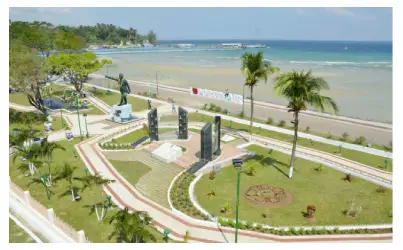
Swatantrya Jyot (Eternal Flame)
This memorial flame burns continuously in honor of freedom fighters who sacrificed their lives. Many visitors pay their respects here, and the site often hosts ceremonial gatherings on national holidays.
The Light and Sound Show
Every evening (except Mondays), the jail hosts a spectacular Light and Sound Show narrated by acclaimed actor Om Puri. The 60-minute performance dramatically brings to life the jail’s history through:
Projected imagery on the jail walls
Stirring background music
Narration of real incidents and prisoner testimonies
Emotional portrayal of India’s freedom struggle
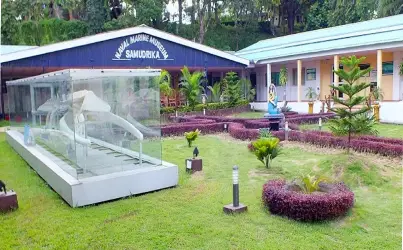
For those interested in exploring more of Port Blair, consider visiting the Anthropological Museum to understand the region’s indigenous tribes, or the Samudrika Museum for marine life exhibits.
Nearby Attractions
Attraction
Distance
Key Features
Marina Park & Aquarium
2-min walk
Waterfront park, marine aquarium
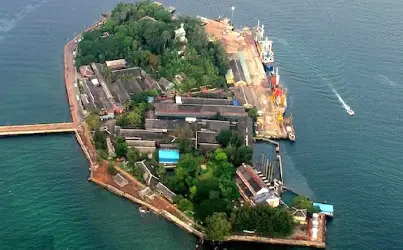
Ross Island
2 km (by boat)
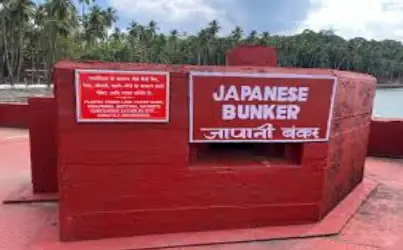
Colonial ruins, Japanese bunkers
Corbyn’s Cove Beach
7 km
Water sports, beach activities
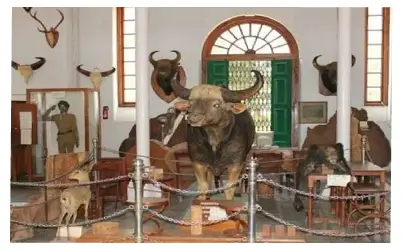
Anthropological Museum
3 km
Tribal culture exhibits
Chidiya Tapu Beach
30 km
Bird watching, sunset views
Planning an Andaman tour allows you to combine Cellular Jail with these nearby attractions for a comprehensive experience.
Cellular Jail: History & Historical Significance
Origins and Construction (1896-1906)
The British first established a penal colony in Port Blair in 1789 under Archibald Blair of the British East India Company, but operations ceased in 1796 due to harsh conditions and high mortality rates. The site remained largely abandoned until 1858, when the British returned following the Indian Rebellion of 1857 (also called the Indian Mutiny or First War of Independence).
The British colonial government decided they needed a more secure and isolated location to imprison political dissidents who threatened their rule. Construction of the Cellular Jail began in 1896 and took a decade to complete, finishing in 1906. Approximately 20,000 cubic feet of local stone and 3,000,000 bricks—manufactured by prisoners themselves—went into building this massive structure.
Architectural Design & Philosophy
The jail’s architecture reflected the latest thinking in prison design, heavily influenced by British philosopher Jeremy Bentham’s “Panopticon” concept. This design allowed guards stationed in the central tower to observe all seven wings simultaneously without prisoners knowing if they were being watched—a psychological control mechanism.
The structure originally comprised:
Seven three-story wings radiating from a central tower
696 individual cells (99 cells per wing × 7 wings)
Each cell measuring 4.5 × 2.7 meters with 3-meter-high ventilators
Walls thick enough to prevent any communication between prisoners
A unique locking system making escape virtually impossible
The term “cellular” referred to the individual cells designed for complete solitary confinement—psychological torture that often proved more devastating than physical punishment.
Life Inside Kala Paani
Prisoners faced conditions specifically designed to break their spirit:
Daily Routine:
Pre-dawn wake-up calls
Forced labor from sunrise to sunset
Meals consisting of minimal rice and lentils
No toilet facilities in cells (controlled bathroom breaks)
Complete isolation from other prisoners
Extreme heat and humidity with minimal ventilation
Forms of Punishment:
Public flogging and beating
Forced standing in the sun for hours
Medical experimentation on unwilling subjects
Solitary confinement in dark cells
Denial of medical treatment
Psychological torture through isolation
Many prisoners couldn’t endure these conditions. Historical records document numerous cases of mental breakdowns, suicides, and deaths from disease and malnutrition. Those who went on hunger strikes—common between 1932-1937—were force-fed through brutal methods.
Notable Prisoners & Their Contributions
Freedom Fighter
Years Imprisoned
Notable Contribution
Vinayak Damodar Savarkar
1911-1921
Revolutionary leader, writer, poet
Batukeshwar Dutt
1929-1938
Bombed Central Assembly with Bhagat Singh
Yogendra Shukla
1912-1919
Kakori conspiracy participant
Sachindra Nath Sanyal
1915-1920
Founded Hindustan Republican Association
Fazl-e-Haq Khairabadi
1857-1862
Scholar, revolutionary in 1857 rebellion
Babarao Savarkar
1909-1920
Vinayak Savarkar’s brother, revolutionary
These individuals, along with hundreds of others, endured years of suffering but never compromised their principles or betrayed their cause.
Closure and Japanese Occupation
Following sustained campaigns by Mahatma Gandhi and Rabindranath Tagore highlighting the inhumane conditions, the British government began repatriating political prisoners between 1937-1938. By 1939, the jail stood empty.
During World War II, Japanese forces invaded the Andaman Islands in 1942, capturing the Cellular Jail and converting it into their prisoner-of-war camp. British colonial officials and soldiers who once guarded the jail became prisoners themselves. Netaji Subhash Chandra Bose visited the islands during this period to meet with Japanese commanders and inspect the jail.
Post-Independence Transformation
After India gained independence in 1947, debates arose about the jail’s future. Some suggested demolishing it entirely, but former prisoners and political leaders argued for its preservation as a memorial to those who suffered. Two wings were unfortunately demolished before this debate concluded.
In 1979, the Government of India officially declared Cellular Jail a National Memorial, protecting the remaining three wings and central tower for future generations.
Today, the site represents not just a building but a testament to human endurance, sacrifice, and the ultimate triumph of freedom over oppression.
Cellular Jail Timings & Visiting Hours
Regular Opening Hours
Detail
Timing
Operating Days
Tuesday to Sunday
Closed On
Mondays & National Holidays
Morning Session
9:00 AM – 12:30 PM
Lunch Break
12:30 PM – 1:30 PM
Afternoon Session
1:30 PM – 5:00 PM
Last Entry
3:15 PM (strictly enforced)
Important Note: The museum section closes during the lunch break (12:30 PM – 1:30 PM), though the grounds may remain accessible.
Light and Sound Show Schedule
Day
Language
Show Time
Monday
–
No show (closed)
Tuesday
Hindi
6:00 PM & 7:15 PM
Wednesday
English
7:15 PM
Thursday
Hindi
6:00 PM & 7:15 PM
Friday
English
7:15 PM
Saturday
Hindi
6:00 PM & 7:15 PM
Sunday
Hindi
6:00 PM & 7:15 PM
Show Duration: Approximately 60 minutes
Booking Recommendations:
Arrive 30 minutes before show time
Shows often sell out during peak season (November-February)
Book tickets at the counter upon arrival
Some online platforms offer advance booking
Best Time to Visit
By Season:
October to March: Ideal weather, pleasant temperatures (20-30°C)
November to February: Peak tourist season, expect crowds
April to September: Monsoon season, fewer tourists but potential rain
Afternoon (2-4 PM): More guides available, time to explore before evening show
Evening: Perfect for Light and Sound Show, cooler weather
Pro Tip: Visit in the afternoon around 2-3 PM. This timing allows you to explore the jail thoroughly with a guide, avoid morning crowds, and stay for the evening Light and Sound Show. The combination makes for a complete, memorable experience.
For those planning a comprehensive Andaman itinerary, allocating an entire afternoon and evening for Cellular Jail ensures you don’t rush through this significant site.
Visitor Information & Essential Tips
Entry Fees & Charges
Category
Fee
Indian Adults
₹30
Foreign Tourists
₹100-150
Children (Below 15 years)
Free
Still Camera
₹25-200
Video Camera
₹100-1,000
Film Shooting (per day, prior permission required)
₹10,000
Light & Sound Show – Adults
₹50
Light & Sound Show – Children
₹25
Note: Fees are subject to change. Foreign nationals should carry their passport for verification and ticket purchase.
What to Bring
Essential Items:
Valid photo ID (Aadhar Card, Passport, Driver’s License)
Maintain silence in cell areas and memorial spaces
Avoid loud conversations or disruptive behavior
Dress modestly out of respect for the memorial site
Remove hats/caps when entering memorial chambers
No smoking or alcohol consumption anywhere on premises
Photography Rules:
Personal photography generally allowed after paying camera fees
No photography during Light and Sound Show
No flash photography in galleries
Respect “No Photography” signs in specific areas
Commercial photography requires special permission
Security Measures:
Bag checks at entrance are mandatory
Sharp objects, weapons not permitted
Large bags may need to be deposited at security
Follow guard instructions at all times
Duration & Planning
Recommended Time Allocation:
Jail and Museum Tour: 90-120 minutes
Light and Sound Show: 60 minutes
Total Recommended Time: 3-4 hours including breaks
Guided Tours:
Hiring a guide significantly enhances your experience. Guides are available:
At the entrance (official guides with ID badges)
Through your tour package (if booked)
Private guides can be hired for approximately ₹300-500
Tour languages available:
English
Hindi
Bengali
Tamil
Other regional languages (limited availability)
A knowledgeable guide brings the jail’s history to life with detailed stories, lesser-known facts, and answers to your questions that you won’t find on information boards.
Facilities Available
On-Site:
Clean restroom facilities
Drinking water fountains
First aid room
Souvenir shop (books, postcards, memorabilia)
Small cafeteria (limited snacks and beverages)
Wheelchair accessibility (limited to ground floor areas)
Nearby (Within 500m):
Multiple restaurants and cafes
ATMs and banks
Pharmacies
Convenience stores
Accessibility Considerations
Ground floor and outdoor areas are wheelchair accessible
Upper floors have staircases without elevator access
Elderly visitors should allocate more time for rest breaks
Seating areas available throughout the complex
Staff assistance available upon request
If you’re planning your trip, consider checking Andaman weather conditions to choose the most comfortable time for your visit.
Interesting Facts About Cellular Jail
The Dreaded Name “Kala Paani”: The term “Kala Paani” (black water) held deep cultural significance in Hindu society, where crossing the ocean meant losing one’s caste. For prisoners, it symbolized complete social death—no return, no communication, no hope. The psychological impact of this stigma was intentionally weaponized by the British.
Impossible Communication Design: The cellular structure prevented prisoners from seeing or communicating with each other. Each cell’s positioning ensured that the face of cells in one wing saw only the backs of cells in adjacent wings. Even whispers couldn’t travel between cells due to the thick walls.
The Ingenious Lock System: Locks were designed with such precision that inmates could never reach the latch. Guards would lock the door from outside and toss the key through a small opening into the cell’s interior, making it physically impossible for prisoners to unlock their own cells despite having the key visible.
Prisoner-Built Prison: The ultimate irony—prisoners built their own prison. Approximately 20,000 cubic feet of stone and 3,000,000 bricks (made by prisoners) went into construction. Many prisoners who built the jail later became its inmates.
No Toilets, Scheduled Suffering: Not a single cell contained toilet facilities. Prisoners had to wait for scheduled bathroom breaks, often having to hold bodily functions for hours, adding another layer of humiliation and physical discomfort to their suffering.
The Oil Mill Torture: Prisoners were forced to operate oil mills (kolhu) by crushing copra (dried coconut) with wooden pestles. This backbreaking labor continued for hours in sweltering heat. Some prisoners deliberately crushed their own hands in these mills to avoid the work, choosing permanent disability over continued torture.
Hunger Strike Legacy: Between 1932-1937, prisoners conducted multiple mass hunger strikes protesting inhumane conditions. The longest strike lasted 45 days in July 1937. Authorities force-fed strikers through brutal methods, but the strikes eventually pressured the British government to begin releasing political prisoners.
Cellular Becomes Ironic: During Japanese occupation (1942-1945), the colonizers became the colonized. British officers and guards who once tormented prisoners were themselves imprisoned in the same cells, experiencing the conditions they had imposed on freedom fighters.
Literature Born in Chains: Despite extreme conditions, several prisoners composed poetry, wrote memoirs, and created literary works. Veer Savarkar wrote his revolutionary literature on jail walls using thorns and charcoal, memorizing thousands of lines. Some of these writings were smuggled out and became rallying cries for independence.
The Forgotten Gallows Statistics: Historical records indicate that at least 80 prisoners were hanged at Cellular Jail’s gallows, though the actual number may be higher. Bodies were disposed of secretly through a dedicated exit to prevent other inmates from discovering the executions.
Survival Rate Horror: It’s estimated that approximately 30% of prisoners died within the jail—from disease, torture, suicide, or execution. Malaria, dysentery, and other tropical diseases were rampant, with minimal medical care provided.
The Demolition Controversy: After independence, two wings were demolished before their historical significance was fully recognized. This sparked outrage among former prisoners and historians, leading to the preservation of the remaining three wings and eventual declaration as a National Memorial in 1979.
For travelers interested in understanding more about Andaman’s fascinating history, Cellular Jail represents the most significant historical monument in the islands.
Frequently Asked Questions (FAQs)
Q: What exactly is Cellular Jail, and why is it historically significant?
A: Cellular Jail is a colonial-era prison built by the British between 1896-1906 in Port Blair to incarcerate Indian political prisoners and freedom fighters. Its significance lies in being the primary location where hundreds of independence activists were tortured, isolated, and subjected to inhumane conditions. Today it stands as a National Memorial representing India’s struggle for freedom and the sacrifices made by revolutionaries.
Q: Why is it called “Cellular Jail” and “Kala Paani”?
A: The name “Cellular Jail” comes from its 696 individual cells designed for solitary confinement, preventing any prisoner communication. “Kala Paani” (black water) refers to the surrounding ocean and symbolized a sentence worse than death in Hindu culture, as crossing the sea meant losing one’s caste and social standing, with no hope of return.
Q: What are the current visiting hours for Cellular Jail?
A: The jail is open Tuesday to Sunday from 9:00 AM to 12:30 PM and 1:30 PM to 5:00 PM. It’s closed on Mondays and national holidays. Last entry is strictly at 3:15 PM. The museum section closes during the lunch break (12:30 PM – 1:30 PM).
Q: How much time should I allocate for visiting Cellular Jail?
A: Plan for at least 2-3 hours for a thorough visit of the jail, museum, and galleries. If you’re staying for the Light and Sound Show (highly recommended), allocate 3-4 hours total. This allows adequate time to explore without rushing and absorb the historical significance.
Q: Is the Light and Sound Show worth attending?
A: Absolutely yes. The 60-minute show, narrated by Om Puri, dramatically brings the jail’s history to life through lighting, music, and powerful storytelling. It’s arguably the most emotionally impactful part of the visit, helping visitors understand the prisoners’ suffering and courage. Shows run every evening except Mondays—English on Wednesday and Friday at 7:15 PM, Hindi on other days at 6:00 PM and 7:15 PM.
Q: What is the entry fee for Cellular Jail?
A: Entry fees are ₹30 for Indian nationals and ₹100-150 for foreign visitors. Children below 15 years enter free. The Light and Sound Show costs an additional ₹50 for adults and ₹25 for children. Camera fees range from ₹25-200 for still cameras and ₹100-1,000 for video cameras.
Q: Can I take photographs inside Cellular Jail?
A: Yes, photography for personal use is permitted in most areas after paying camera fees (₹25-200 for still cameras). However, photography is strictly prohibited during the Light and Sound Show and in some specific sections marked with “No Photography” signs. Always respect these restrictions and avoid flash photography in galleries.
Q: Who were some famous prisoners at Cellular Jail?
A: Notable prisoners included Vinayak Damodar Savarkar (Veer Savarkar), Batukeshwar Dutt (who bombed the Central Legislative Assembly with Bhagat Singh), Yogendra Shukla, Sachindra Nath Sanyal, Fazl-e-Haq Khairabadi, Babarao Savarkar, and many other prominent freedom fighters. Each endured years of torture but never compromised their principles.
Q: How many wings of the original jail still exist today?
A: Only three of the original seven wings remain intact, along with the central watch tower. Two wings were demolished after independence before the jail’s historical significance was fully recognized, leading to protests and the eventual preservation of the remaining structure as a National Memorial in 1979.
Q: Are food and refreshments available at Cellular Jail?
A: A small cafeteria on-site offers limited snacks and beverages. However, for a full meal, you’ll find various restaurants, cafes, and food stalls within walking distance (approximately 2-5 minutes from the entrance) offering local Andamanese cuisine as well as Indian and international options.
Q: Are guided tours available, and in what languages?
A: Yes, guided tours are highly recommended and available in English, Hindi, Bengali, Tamil, and other regional languages. Official guides are present at the entrance, or you can hire one through your tour package. Tour duration is approximately one hour, and the cost ranges from ₹300-500 for private guides.
Q: What is the best time of year to visit Cellular Jail?
A: The best time is October through March when weather is pleasant (20-30°C) and ideal for sightseeing. November to February is peak tourist season, so expect larger crowds. The monsoon season (June-September) brings fewer tourists but potential rain. Morning visits (9-11 AM) offer cooler temperatures and fewer crowds.
Q: How do I reach Cellular Jail from the Port Blair airport?
A: Cellular Jail is approximately 4 km from Veer Savarkar International Airport, reachable within 15-20 minutes. You can hire taxis (₹150-300), auto-rickshaws (₹100-150), or app-based cabs directly from the airport. The route is well-signposted, and all local drivers know the location.
Q: Is Cellular Jail accessible for people with disabilities or elderly visitors?
A: Ground floor areas and outdoor sections are wheelchair accessible. However, upper floors are accessed via staircases with no elevator facilities. Elderly visitors should allocate extra time for rest breaks. Seating areas are available throughout the complex, and staff assistance can be requested.
A: Yes, many couples include Cellular Jail in their itinerary as it provides cultural depth to their trip. While it’s a somber historical site rather than a romantic destination, understanding Andaman’s history enriches your overall experience. Most couples pair it with visits to beaches and water activities.
Q: What should I absolutely not miss during my visit?
A: Don’t miss: (1) The Light and Sound Show—the most emotionally powerful experience; (2) Veer Savarkar’s cell with detailed information about his imprisonment; (3) The Freedom Fighters’ Gallery showcasing photographs and stories; (4) The gallows area where executions took place; (5) The view from the central watch tower, especially at sunset.
Final Thoughts: Visiting Cellular Jail isn’t just about tourism—it’s about connecting with a crucial chapter of India’s freedom struggle. The experience evokes deep emotions as you walk through spaces where countless brave souls endured unimaginable suffering for a cause greater than themselves. This National Memorial stands as a powerful testament to human courage, resilience, and the ultimate triumph of freedom over oppression. Every Indian should visit at least once to truly understand the price of the freedom we enjoy today.
Travel Tourister is a leading Travel portal where we introduce travellers to trusted travel agents to make their journey hasselfree, memorable And happy. Travel Tourister is a platform where travellers get Tour packages ,Hotel packages deals through trusted travel companies And hoteliers who are working with us across the world. We always try to find new and more travel agents and hoteliers from every nook and corners across the world so that you could compare the deals with different travel agents and hoteliers and book your tour or hotel with the one you have chosen according to your taste and budget.




















 Call
Call Enquiry