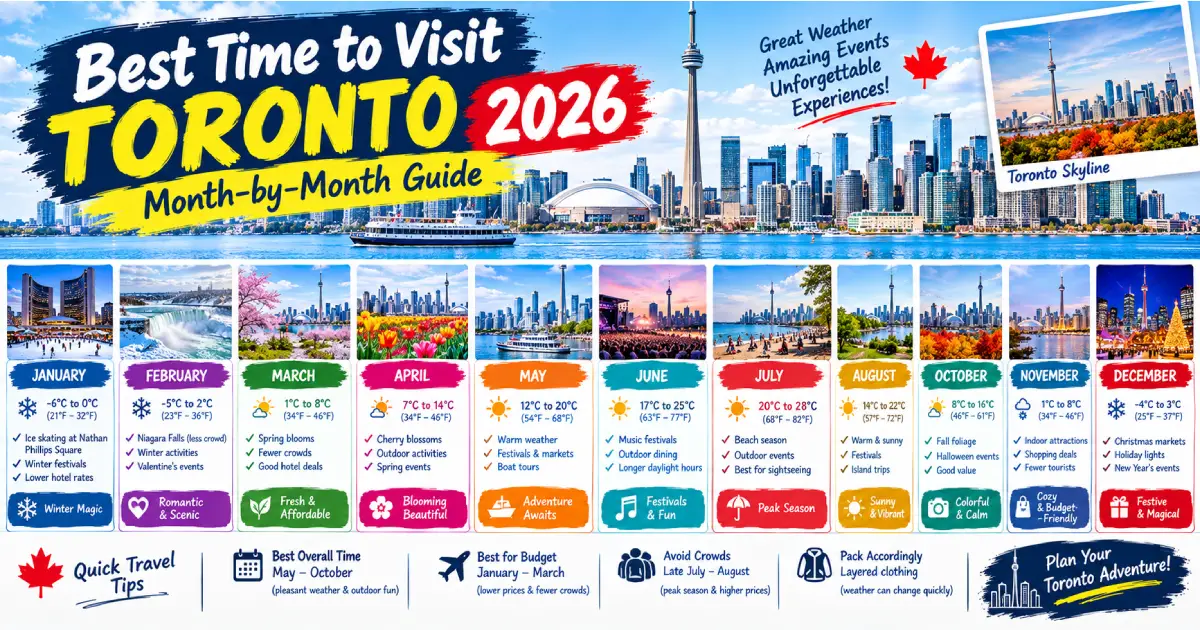
Best Time to Visit Toronto 2026: Month-by-Month Guide
Published on : 13 Oct 2026
Best Time to Visit Toronto — Summer Patios and Islands vs Fall Film Festival and Foliage vs Winter Markets and Skating vs Spring Blossoms and Value: How to Choose the Right Season for Your Trip
By Travel Tourister | Updated October 2026
The best time to visit Toronto is June to September for warm weather, patios, island beaches, and a packed festival calendar, with September and early October offering the best overall balance of comfortable temperatures, fall color, the Toronto International Film Festival, and hotel rates that ease after Labour Day; winter (December to March) is the cheapest and coziest season, with Christmas markets, skating, and indoor attractions at the cost of real cold; and spring (April to May) is the quietest and most affordable window, with High Park cherry blossoms in late April and early May but cool, unpredictable weather. For most first-time visitors, the honest short answer is late June through September, with September the single best month for weather, crowds, and value.
The season matters more in Toronto than in many big cities because the city’s best-loved experiences are tied to the calendar. The Toronto Islands ferry, Centreville amusement park, lakefront patios, Niagara Falls boat tours, and open-air concerts are summer experiences; the film festival and fall color belong to September and October; the Distillery District Christmas Market, outdoor rinks, and Winterlicious dining event belong to winter; and cherry blossoms come once a year, for about a week. Temperatures swing from hot, humid July afternoons near 27°C (81°F) to January highs near −1°C (30°F) with wind chill that can feel far colder, so what you pack and plan depends heavily on when you go.
This guide breaks down all four seasons honestly, then goes deeper — a month-by-month calendar, a festival and event calendar, the best months for specific activities (islands, patios, skating, foliage, blossoms, sports, and Niagara day trips), realistic seasonal costs in Canadian dollars, packing advice, and a clear verdict for each type of traveler planning a 2026 or 2027 trip.
For complete guides, see our Toronto Travel Guide 2026, Best Time to Visit Canada, and Canada Trip Cost guides.
The Most Important Facts First
Key Fact
🌸 Spring (Apr–May)
☀️ Summer (Jun–Aug)
🍂 Fall (Sep–Oct)
❄️ Winter (Dec–Mar)
Typical Highs
12–19°C (54–66°F)
24–27°C (75–81°F)
15–22°C (59–72°F)
−1 to 5°C (30–41°F)
Typical Lows
3–9°C (37–48°F)
15–18°C (59–64°F)
7–14°C (45–57°F)
−7 to −3°C (19–27°F)
Daylight Hours
13–15 hours
14–15.5 hours
11–12.5 hours (shrinking)
9–11 hours
Crowds
Low
Very high
High at TIFF, moderate otherwise
Low (higher at holidays)
Hotel Prices (Mid-Range)
CAD 200–300
CAD 250–400
CAD 250–400 (spikes during TIFF)
CAD 180–300
Islands and Patios
Limited until May–June
Full season
Good in September
Reduced or closed
Niagara Falls Boat Tours
Resume in spring
Full operation
Run through fall
Generally not operating
Best For
Cherry blossoms, low prices, museums
Festivals, islands, patios, sports
Film festival, foliage, value, food
Christmas markets, skating, cozy city breaks
Biggest Drawback
Cool, rainy, unpredictable
Heat, humidity, cost, crowds
Shorter days, event price spikes
Cold, snow, short days
Quick Verdict: Best Time to Visit Toronto by Goal
Goal
What Matters
Best Season
Winner
Warm weather and patios
Comfortable outdoor dining and walking
June–September
☀️ Summer
Toronto Islands and beaches
Ferries, swimming, bike rides
June–August
☀️ Summer
Film festival
TIFF screenings and celebrity buzz
Early–mid September
🍂 Fall
Fall color
Peak foliage in parks and ravines
Mid October
🍂 Fall
Best overall value
Good weather, fewer crowds, softer rates
Late September–October
🍂 Fall
Lowest prices
Cheapest hotels and flights
January–March, April
❄️ Winter / 🌸 Spring
Christmas markets
Festive lights and markets
Mid November–December
❄️ Winter
Ice skating
Outdoor rinks
December–February
❄️ Winter
Cherry blossoms
High Park peak bloom
Late April–early May
🌸 Spring
Museums and indoor attractions
Rainy-day and cold-day options
Year-round (best in winter and spring)
❄️ Winter
Niagara Falls day trip
Boat tours and wine country
May–October
☀️ Summer / 🍂 Fall
Baseball
Blue Jays home games
April–September
☀️ Summer
Hockey and basketball
Maple Leafs and Raptors seasons
October–April
❄️ Winter
Fewest crowds
Quiet attractions
January–March, April–early May
❄️ Winter / 🌸 Spring
Best Time to Visit Toronto: Summer (June–August)
Summer is Toronto’s peak season: the lake is warm enough for the islands to be at their best, patios spill onto sidewalks, daylight lasts about 15 hours, and almost every attraction and day trip is open.
Why Summer Works
Islands and waterfront: The Toronto Islands ferry runs a full schedule, beaches and bike paths are at their best, and Harbourfront hosts free outdoor events and concerts.
Festivals and events: Pride Toronto in June, Canada Day fireworks on July 1, Summerlicious in July, the Toronto Caribbean Carnival in late July and early August, and the Canadian National Exhibition from mid August to Labour Day fill the calendar.
Sports: The Blue Jays play at Rogers Centre next to the CN Tower, and the retractable roof closes in rain.
Day trips: Niagara Falls boat tours, Niagara-on-the-Lake wineries, Prince Edward County, and Algonquin canoeing are all at their peak.
Summer Drawbacks
Heat and humidity: July highs near 27°C (81°F) can feel much hotter on humid days, and heat waves above 30°C (86°F) are common.
Highest prices: Mid-range hotels often cost CAD 250 to 400 per night, and flights are at their most expensive.
Crowds and queues: The CN Tower, the Islands ferry, and popular restaurants are busiest on summer weekends.
Storms and smoke: Thunderstorms can disrupt plans, and wildfire smoke from distant fires occasionally affects air quality.
Summer verdict: Best for first-time visitors who want the full Toronto experience and can handle heat and higher prices. Book hotels and top restaurants six to eight weeks ahead, take the Islands ferry early on weekends, and plan indoor attractions for the hottest afternoons.
Best Time to Visit Toronto: Fall (September–October)
Fall is the season experienced travelers choose: temperatures are comfortable, crowds ease after Labour Day, the film festival brings energy, and parks and ravines turn orange and red.
Why Fall Works
Toronto International Film Festival (TIFF): Held in early to mid September, TIFF brings premieres, red-carpet events, and a lively atmosphere downtown.
Foliage: Parks and ravines such as High Park, Rosedale Valley, and the Don Valley peak around mid October, and Evergreen Brick Works and the Toronto Islands make good viewpoints.
Great weather for walking: September highs near 22°C (72°F) and October highs near 15°C (59°F) are comfortable for exploring on foot.
Food and harvest: Restaurants highlight seasonal menus, and Niagara’s wine harvest events are within an easy day trip.
Better value: Hotel rates ease after Labour Day (outside TIFF), and crowds thin at major attractions.
Fall Drawbacks
TIFF price spikes: Hotels near the festival fill up and prices rise sharply for about ten days in September.
Shorter days: Daylight falls from about 12.5 hours in early September to about 11 hours in late October.
Rain and cooler evenings: Showers and cool nights are common by October.
Reduced seasonal services: Some Islands attractions and ferry schedules shrink after the summer season.
Fall verdict: Best overall season for travelers with flexible dates. Choose late September to mid October for the best balance of weather, crowds, and value, and book early if your dates overlap with TIFF.
Best Time to Visit Toronto: Winter (December–March)
Winter is cold, but Toronto is built for it: indoor attractions are plentiful, the PATH underground network connects much of downtown, and the city leans into the season with markets, rinks, and dining events.
Why Winter Works
Christmas markets and lights: The Toronto Christmas Market in the Distillery District typically runs from mid November through late December, and downtown buildings and streets are lit for the holidays.
Skating: Outdoor rinks at Nathan Phillips Square and Harbourfront are open in winter, and skating in front of City Hall is a classic Toronto experience.
Winterlicious: The city’s prix-fixe dining event, usually held from late January into February, offers a chance to try top restaurants at set prices.
Indoor culture and sports: The ROM, AGO, Casa Loma, Ripley’s Aquarium, and Hockey Hall of Fame are all great in cold weather, and the Maple Leafs and Raptors are in season.
Lowest prices: Outside holiday weeks, hotels are often CAD 180 to 300 per night and flights are cheaper.
Winter Drawbacks
Cold and wind chill: January highs near −1°C (30°F) and lows near −7°C (19°F), with wind chill making it feel much colder on bad days.
Snow and ice: Sidewalks can be slippery, and storms can delay flights at Pearson.
Short days: Roughly 9 hours of daylight in December.
Closures and limits: Niagara boat tours generally do not run in winter, Toronto Islands ferry service is reduced, and some outdoor attractions close.
Winter verdict: Best for budget travelers, holiday-season visitors, hockey fans, and anyone who loves cozy city breaks. Dress in layers, use the PATH and TTC, and book holiday-week stays and Christmas Market visits ahead.
Best Time to Visit Toronto: Spring (April–May)
Spring is Toronto’s shoulder season — the quietest and cheapest time to visit outside winter, with the city waking up but the weather still unpredictable.
Why Spring Works
Cherry blossoms: High Park’s sakura bloom usually peaks from late April to early May for about a week, and bloom timing varies with the weather.
Lower prices and crowds: Hotels and flights are cheaper, and museums and attractions are quiet.
Patios reopen: By mid to late May, patios and outdoor dining return, and the Victoria Day long weekend marks the start of summer season.
Baseball returns: The Blue Jays season begins in late March or April.
Spring Drawbacks
Cool and wet: April highs near 12°C (54°F) and frequent rain make for unpredictable days.
Limited island services: Ferry schedules and attractions on the Toronto Islands ramp up late, around May and June.
Slow start for day trips: Niagara boat tours resume in spring, but some seasonal services open later.
Spring verdict: Best for budget travelers, museum lovers, and blossom chasers. Plan flexible indoor options for rainy days and book accommodation only a few weeks ahead outside holiday weekends.
Best Time to Visit Toronto: Month-by-Month Calendar
Average highs and lows below are approximate for Toronto and vary year to year.
Month
Typical High / Low
Crowds and Prices
Highlights
Rating
January
−1°C (30°F) / −7°C (19°F)
Low; cheapest hotels
Skating, hockey, museums, Winterlicious begins late month
Event dates shift each year, so verify before you book travel around them.
Event
Typical Timing
Notes
High Park cherry blossoms
Late April–early May
Peak bloom lasts about a week; timing varies by weather
Pride Toronto
June
Month-long celebration with a major parade in late June
Canada Day
July 1
Fireworks and events on the waterfront
Summerlicious
July
Prix-fixe dining event at participating restaurants
Toronto Caribbean Carnival
Late July–early August
Grand Parade on the August long weekend
Canadian National Exhibition (CNE)
Mid August–Labour Day
Fair, food, rides, and shows
Toronto International Film Festival (TIFF)
Early–mid September
Hotels spike; book early
Nuit Blanche
Early October
Overnight contemporary art event (verify current format)
Toronto Christmas Market
Mid November–late December
Held in the Distillery District
Winterlicious
Late January–February
Prix-fixe winter dining event
Blue Jays home games
April–September (and October if playoffs)
Rogers Centre, retractable roof
Maple Leafs and Raptors seasons
October–April
Scotiabank Arena
Best Time to Visit Toronto for Specific Activities
Activity
Best Months
Notes
Toronto Islands and beaches
June–August (May and September also good)
Ferry service is reduced in cooler months
Patios and outdoor dining
Mid May–September
Peak in June–August
Niagara Falls day trip
May–October
Boat tours generally do not run in winter
Niagara wine harvest
September–October
Harvest events and quieter vineyards
Fall foliage
Mid October
High Park, ravines, and Evergreen Brick Works
Cherry blossoms
Late April–early May
Check local bloom updates
Ice skating
December–February
Nathan Phillips Square and Harbourfront
Christmas markets
Mid November–December
Distillery District
Museums and galleries
Year-round (best in winter and spring)
ROM, AGO, Casa Loma
Baseball
April–September
Blue Jays at Rogers Centre
Hockey and basketball
October–April
Maple Leafs and Raptors
Film festival
Early–mid September
TIFF
Algonquin fall color (day or overnight trip)
Late September–early October
About three hours from Toronto
Best Time to Visit Toronto: Cost Comparison
The table below gives indicative planning estimates in Canadian dollars, not quotes — actual prices vary by year, event dates, and booking time.
Cost Category
🌸 Spring
☀️ Summer
🍂 Fall
❄️ Winter
Cheapest?
Mid-Range Hotel (Per Night)
CAD 200–300
CAD 250–400
CAD 250–400 (higher during TIFF)
CAD 180–300
❄️ Winter
Flights to Toronto
Lowest
Highest
Moderate
Mixed (holiday peaks)
🌸 Spring
Attractions and Day Trips
Limited services early
Full menu, peak pricing
Full menu, some discounts
Indoor focus, some closures
🌸 Spring / ❄️ Winter
Estimated Mid-Range Daily Total (Per Person)
CAD 260–400
CAD 300–470
CAD 290–460
CAD 250–400
❄️ Winter
Cost verdict: Winter (outside holiday weeks) and spring are cheapest, fall is the best value outside TIFF, and summer is the most expensive. For national budgets, see our Canada Trip Cost guide.
Who Should Visit Toronto in Summer?
Choose summer if you:
Want the full Toronto experience: islands, patios, festivals, and outdoor events
Plan a Niagara Falls boat tour and wine country day trip
Travel with school-age children during summer holidays
Love baseball and want to catch a Blue Jays game
Do not mind heat, humidity, and peak prices
Who Should Visit Toronto in Fall?
Choose fall if you:
Want comfortable walking weather with fewer crowds and softer prices
Are a film fan and want to experience TIFF in September
Love fall foliage in parks and ravines
Enjoy harvest menus and Niagara wine events
Can book early if visiting during TIFF
Who Should Visit Toronto in Winter?
Choose winter if you:
Want the lowest prices and quieter attractions
Love Christmas markets, skating, and cozy city breaks
Are a hockey or basketball fan
Plan a museum-heavy trip and are comfortable in the cold
Have proper winter gear and flexible travel dates
Who Should Visit Toronto in Spring?
Choose spring if you:
Want to see High Park’s cherry blossoms
Prefer low prices and few crowds
Plan indoor attractions and neighborhood walks
Can handle cool, changeable weather
Combining Toronto with Other Canadian Destinations
Trip Idea
Best Time
Why
Toronto and Niagara Falls
May–October
Boat tours and wine country are open
Toronto, Montreal, and Quebec City
June–October; January–February for winter festivals
Insulated waterproof boots with good grip, thermal layers, down or insulated coat, hat, gloves, scarf
All year
Passport and travel documents, power adapter (Type A and B, 120V), reusable water bottle, travel insurance details
Best Time to Visit Toronto: Practical Tips
Topic
Details
Best Overall Month
September (good weather, TIFF, fall color beginning, softer prices after Labour Day outside TIFF)
Least Appealing Times
Late March and early April (slush, cold) and November (grey, between seasons) unless you want low prices
How Long to Stay
3–4 days in Toronto, plus 1–2 days for Niagara Falls and other day trips
Booking Timeline
Summer: 6–8 weeks ahead; TIFF: 3–6 months ahead; holidays: 2–4 months; spring and winter: 2–4 weeks
Heat Days
Plan indoor attractions for hot afternoons, drink water, and use air-conditioned transit
Winter Safety
Wear boots with grip, dress in layers, and allow extra time for flights and transport during storms
Weather Resources
Environment and Climate Change Canada for forecasts and warnings
Transit
TTC adult fare is CAD 3.30 with a two-hour transfer; the UP Express connects Pearson Airport to Union Station in about 25 minutes (verify current fares)
Day Trips
Boat tours and wineries run May–October; confirm seasonal hours before you go
Frequently Asked Questions: Best Time to Visit Toronto
What is the best month to visit Toronto?
September is the best single month for most travelers, with warm weather, patios still open, TIFF energy, and prices easing after Labour Day. June is a strong alternative if you want longer daylight and island weather.
What is the cheapest time to visit Toronto?
January to March and April generally have the lowest hotel and flight prices, outside holiday weeks and major events. The trade-off is cold, changeable weather and some limited seasonal services.
Is Toronto worth visiting in winter?
Yes, if you dress warmly and plan indoor activities. Christmas markets, outdoor skating, museums, hockey games, and cozy restaurants make winter a rewarding and affordable season.
How cold is Toronto in January?
Highs average around −1°C (30°F) and lows around −7°C (19°F), with wind chill making it feel much colder on bad days. The PATH walkway and TTC make it manageable.
When are the cherry blossoms in Toronto?
High Park’s cherry blossoms usually peak from late April to early May for about a week, depending on the weather. Check local bloom updates before you go.
When is the Toronto International Film Festival?
TIFF is typically held in early to mid September. Hotels fill up and prices rise, so book early if your dates overlap.
What is the best time for a Niagara Falls day trip from Toronto?
May to October is best, when boat tours operate and the weather is comfortable. Weekday mornings in late spring or early fall are quieter than summer weekends.
When is the best time to see fall colors in Toronto?
Mid October is typically the peak for city parks and ravines, while Algonquin Park usually peaks from late September to early October. Peak dates vary with the weather.
When can I visit the Toronto Islands?
The islands are at their best from June to August, with May and September also pleasant. Ferry service continues in cooler months on a reduced schedule, and Centreville and some seasonal services operate on a limited calendar, so verify before you go.
Final Verdict: Best Time to Visit Toronto
Toronto does not have a single best season — it has a best season for each kind of trip, and the most honest verdict is to choose the one that matches your priorities rather than searching for one perfect month.
Choose summer (June–August) if you want islands, patios, festivals, and day trips at full strength, and you can accept heat and peak prices. Choose fall (September–October) if you want the best balance of weather, scenery, crowds, and cost, with TIFF in September and foliage in October. Choose winter (December–March) if you want Christmas markets, skating, cozy restaurants, hockey, and the lowest prices, and you are prepared for real cold. Choose spring (April–May) if your priorities are low prices, museums, and High Park’s cherry blossoms rather than warm-weather outdoor activities.
If you are still undecided, choose September — it is the closest thing Toronto has to a universal best month. And whatever the season, book hotels early for TIFF and holiday weeks, check seasonal hours for the islands and Niagara boat tours, and pack for the weather.
Toronto Pearson Airport — Official airport information, including UP Express and ground transport.
About Travel TouristerTravel Tourister’s destination specialists have studied Toronto across all four seasons — from summer islands and patios and September’s film festival to October foliage, December Christmas markets, and late-April cherry blossoms — to deliver the most practical and honest guide to the best time to visit Toronto for every type of 2026 traveler.Need help choosing the right season for your Toronto trip? Our specialists can help you match dates to events, book hotels early for TIFF and holiday weeks, add Niagara Falls and other day trips, and build a realistic budget before you commit to non-refundable flights.
Posted By : Vinay
As a lead contributor for Travel Tourister, Vinay is dedicated to serving our Tier 1 audience (US, UK, Canada, Australia). His mission is to deliver precise, fact-checked news and actionable, data-driven articles that empower readers to make informed decisions, minimize travel risks, and maximize their adventure without compromising safety or budget.
Travel Tourister is a leading Travel portal where we introduce travellers to trusted travel agents to make their journey hasselfree, memorable And happy. Travel Tourister is a platform where travellers get Tour packages ,Hotel packages deals through trusted travel companies And hoteliers who are working with us across the world. We always try to find new and more travel agents and hoteliers from every nook and corners across the world so that you could compare the deals with different travel agents and hoteliers and book your tour or hotel with the one you have chosen according to your taste and budget.




 Call
Call Enquiry