Published on : 22 Dec 2025
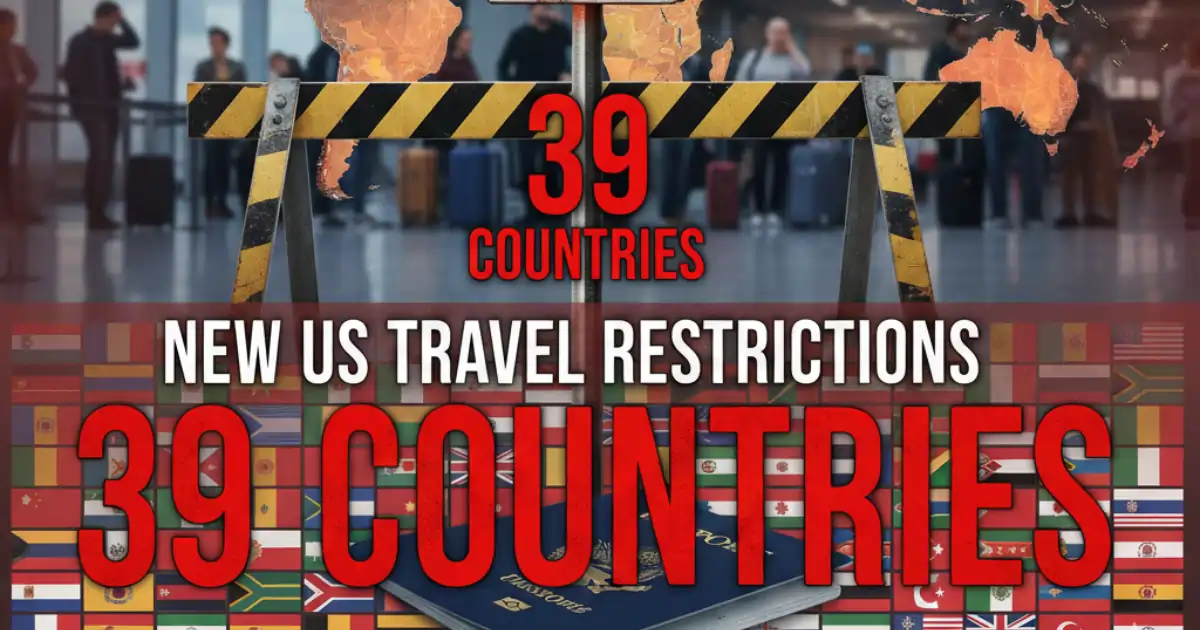
Starting at 12:01 AM EST on January 1, 2026, the United States implemented one of the most expansive travel restrictions in recent history. President Trump’s new proclamation more than doubles the previous travel ban, now affecting nationals from 39 countries plus individuals with Palestinian Authority travel documents.
This represents a significant shift in US immigration policy and will impact millions of potential visitors, students, and immigrants attempting to enter the United States.
The proclamation creates two categories of restrictions that travelers need to understand:
Full Entry Restrictions (19 Countries) Nationals from these countries face complete suspension of all immigrant and nonimmigrant visa issuance. This means no tourist visas, student visas, work visas, or green cards will be issued. The countries under full ban include Afghanistan, Belarus, Burma, Eritrea, Iran, Iraq, Kyrgyzstan, Libya, North Korea, Pakistan, Russia, Somalia, Sudan, Syria, Tajikistan, Yemen, along with Laos, Sierra Leone, and Niger – the latter three newly added to the full ban category.
Partial Entry Restrictions (20 Countries) Twenty countries face partial restrictions affecting specific visa categories. The ban applies to immigrant visas and nonimmigrant B-1/B-2 visitor visas and F, M, J student and exchange visitor visas. These countries include Angola, Antigua and Barbuda, Benin, Burundi, Cote D’Ivoire, Cuba, Dominica, Gabon, The Gambia, Malawi, Mauritania, Nigeria, Senegal, Tanzania, Togo, Tonga, Venezuela, Zambia, and Zimbabwe. Turkmenistan faces immigrant visa restrictions only.
Not everyone from affected countries is barred from entry. Several important exemptions exist:
Critically, the proclamation eliminated several exemptions that existed in the previous June 2025 travel ban, including immediate family members of US citizens, adoption cases, and Afghan Special Immigrant Visas.
The proclamation does not automatically revoke visas that were valid before January 1, 2026. If you hold a valid US visa issued prior to this date, you can generally continue to travel to the United States using that visa.
However, travelers should be aware that:
The proclamation allows for case-by-case waivers when travel serves the US national interest. The Secretary of State, Secretary of Homeland Security, or Attorney General can grant these waivers in coordination with other agencies.
However, the process for obtaining such waivers remains unclear, and there’s no guarantee of approval.
The partial ban on F, M, and J visas significantly impacts international education. Students from the 20 partially restricted countries cannot obtain new student or exchange visitor visas. This affects both undergraduate and graduate programs, research collaborations, and academic exchanges.
Existing students with valid visas can continue their studies, but they should avoid international travel if possible, as re-entry could become complicated.
If you’re a national of an affected country or were born in one of these countries:
Already in the US: You are not subject to the ban. However, avoid leaving if possible, as re-entry could be problematic even with a valid visa.
Have a valid visa: You can continue using it but should carry all supporting documentation and prepare for enhanced screening.
Planning to apply: Applications can still be submitted, but approval is highly unlikely unless you qualify for a specific exemption or waiver.
Dual nationals: Always travel on your non-restricted country passport.
The proclamation requires the Secretary of State to assess these restrictions every 180 days. Countries could be added, removed, or have their restriction level modified based on improvements in their security and vetting procedures.
This means the list isn’t permanent, but changes will depend on diplomatic negotiations and security assessments.
According to the White House, countries were added to the list due to inadequate screening and vetting processes, deficient passport issuance systems, high visa overstay rates, and failure to share security information with US authorities.
The administration frames this as a national security measure designed to protect Americans from terrorism and other threats.
This travel ban represents one of the most restrictive immigration policies in recent US history. It will significantly impact family reunification, international education, business travel, and diplomatic relations with dozens of countries.
Those affected should consult with immigration attorneys to understand their specific circumstances and explore any available options for waiver or exception.
The policy will likely face legal challenges, but until those are resolved, the restrictions remain in full effect.
Posted By : Vinay
This article is provided for general informational purposes only and is based on information available at the time of publication. Travel advisories, airline schedules, airport operations, visa requirements, government regulations, and other travel-related information are subject to change without prior notice. While Travel Tourister makes reasonable efforts to verify information using official announcements, government publications, airline and airport communications, and other reliable sources, we cannot guarantee that all information remains complete, accurate, or up to date at all times. Readers should independently verify any information that may affect their travel plans with the relevant airline, airport authority, government agency, embassy, or other official source before making travel, financial, or other decisions. Travel Tourister shall not be liable for any direct or indirect loss, inconvenience, or damages arising from the use of or reliance on the information contained in this article. Nothing in this publication constitutes legal, immigration, financial, or professional travel advice. If you believe any information in this article is inaccurate or outdated, please contact our editorial team. We review all credible correction requests promptly and update our content whenever appropriate.
Lastest News
2nd Floor, 39, Above Kirti Club, DLF Industrial Area, Kirti Nagar, New Delhi, Delhi 110015



Travel Tourister is a leading Travel portal where we introduce travellers to trusted travel agents to make their journey hasselfree, memorable And happy. Travel Tourister is a platform where travellers get Tour packages ,Hotel packages deals through trusted travel companies And hoteliers who are working with us across the world. We always try to find new and more travel agents and hoteliers from every nook and corners across the world so that you could compare the deals with different travel agents and hoteliers and book your tour or hotel with the one you have chosen according to your taste and budget.
Copyright © Travel Tourister, India. All Rights Reserved

 Call
Call Enquiry