Published on : 27 Dec 2025
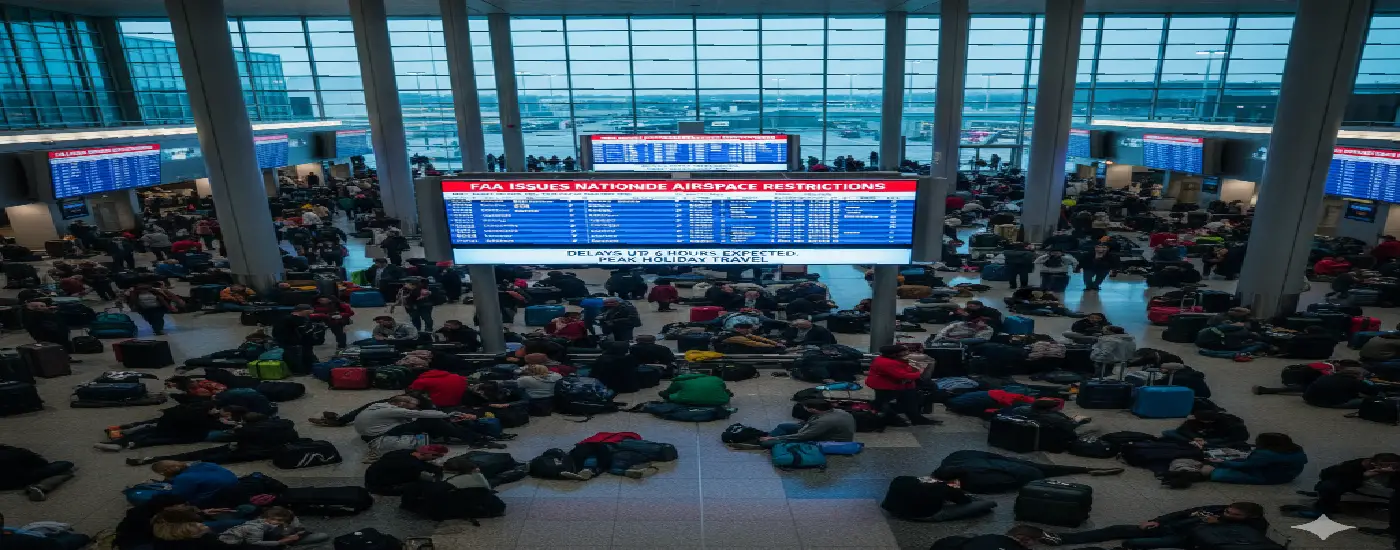
Breaking: Federal Aviation Administration implements emergency traffic control measures affecting major US and Canadian airports
Published: December 27, 2025 Source: FAA, Daily Mail, FlightAware Impact: 122+ million holiday travelers, 40 major airports affected Alert Level: High – Immediate travel impact
The Federal Aviation Administration issued at least eight separate airspace flow restrictions on Friday, December 27, limiting the number of flights allowed in busy airspace zones as 122 million Americans travel during the busiest holiday weekend of the year, according to multiple reports.
The emergency airspace flow programs could cause delays reaching six hours at major US and Canadian airports, compounding weather-related disruptions already affecting thousands of flights nationwide. The restrictions aim to prevent dangerous overcrowding as hundreds of flights head in similar directions during peak travel periods.
Transportation experts warn the combination of FAA airspace limits, winter storm disruptions, and record-breaking passenger volumes creates a perfect storm of travel chaos that could extend through the New Year’s holiday period as millions of Americans complete their holiday journeys.
The Federal Aviation Administration implemented emergency airspace flow programs to prevent catastrophic congestion in the nation’s busiest air corridors during unprecedented holiday travel volumes. The restrictions strategically limit how many aircraft can enter specific airspace zones simultaneously, spreading traffic across longer time periods.
According to the Daily Mail, which first reported the restrictions, the FAA issued the emergency measures to combat situations where hundreds of flights head toward the same destinations during compressed time windows. Without these controls, air traffic controllers would face dangerous overcrowding scenarios that could compromise safety.
The timing couldn’t be worse for travelers. The Transportation Security Administration projects screening 2.86 million passengers on Sunday, December 28—potentially breaking the single-day record set last year when TSA processed 2.85 million travelers on December 27, 2024.
Key factors driving the emergency restrictions:
“In an effort to prevent overcrowding amid hundreds of flights heading in similar directions, the FAA is slashing the number of planes allowed to take off and enter certain busy sections of airspace,” the Daily Mail reported, citing FAA sources.
The restrictions represent the most aggressive air traffic management intervention during a holiday period in recent years, reflecting both the unprecedented passenger volumes and the complexity of managing simultaneous coast-to-coast weather challenges.
The FAA’s airspace flow programs affect airports across the United States and Canada, with the heaviest restrictions concentrated in high-density corridors experiencing both weather impacts and peak passenger volumes.
Northeast Corridor (Worst Affected):
These airports already face massive weather-related cancellations from Winter Storm Devin, with JFK experiencing over 370 flight cancellations on Friday alone—representing more than a quarter of the day’s scheduled operations.
Other Major Airports Experiencing Restrictions:
| Airport | Typical Delay | With Restrictions | Combined Impact |
|---|---|---|---|
| JFK (New York) | 45 min | +2-3 hours | Up to 6 hours |
| Newark (NJ) | 35 min | +2-3 hours | Up to 5 hours |
| LaGuardia (NY) | 40 min | +2 hours | Up to 4 hours |
| O’Hare (Chicago) | 50 min | +1-2 hours | Up to 3 hours |
| LAX (Los Angeles) | 30 min | +1 hour | Up to 2 hours |
Reports indicate some delays could reach more than six hours when airspace restrictions combine with weather disruptions and standard holiday congestion. The FAA has not publicly confirmed specific delay projections but acknowledged implementing flow control measures during the busy travel period.
Transcontinental flights face the longest potential delays, particularly:
International long-haul flights connecting through major US hubs may experience cascading delays as domestic airspace restrictions affect arrival and departure slots.
Airspace flow programs represent the FAA’s primary tool for managing congestion in the National Airspace System. When controllers identify potential bottlenecks, they implement AFPs to meter traffic flow, similar to how highway ramp meters regulate vehicle entry onto congested freeways.
How AFPs Work:
“The FAA is proactively limiting flight volumes to match available staffing,” according to travel industry analysts tracking the restrictions. “Officials emphasize that safety remains the top priority for travelers and airline crews.”
If your flight is affected by airspace flow programs, you’ll likely experience:
Ground Delays: Your aircraft will remain at the gate or on the taxiway rather than taking off, waiting for its assigned departure slot in the restricted airspace.
Schedule Changes: Airlines may proactively adjust schedules, moving departure times earlier or later to avoid peak restriction periods.
Missed Connections: Passengers with tight connections face increased risk of missing flights, particularly at major hub airports experiencing the longest delays.
Gate Holds: Boarding may occur, but the aircraft won’t push back from the gate until cleared by air traffic control.
The FAA has not provided official estimates for how long the restrictions will remain in effect, though transportation experts expect them to continue through at least Sunday, December 29, as holiday travel volumes remain elevated.
Travel experts recommend these strategies for passengers facing potential airspace restriction delays:
1. Monitor Flight Status Obsessively
Airlines update schedules frequently as AFPs change. Check your flight status every 2-3 hours starting 24 hours before departure. Download your airline’s mobile app for real-time notifications.
“Flight statuses are changing by the minute,” warned aviation industry observers tracking the holiday disruptions. “Digital vigilance is essential.”
2. Arrive Extra Early at Major Hubs
Even if your flight isn’t delayed, airport congestion from displaced passengers creates longer security and check-in lines. Major airports recommend arriving:
Reagan National Airport in Washington recently topped global lists for disruptions, with officials recommending the three-hour buffer for all flights regardless of destination.
3. Build Massive Connection Buffers
If your itinerary includes connections, ensure you have at least:
Airlines won’t compensate for missed connections due to weather or FAA restrictions, but most will rebook you on the next available flight at no charge.
4. Choose First Flights of the Day
Morning departures face fewer cascading delays from earlier disruptions. The first flight of the day on any route typically performs best during periods of system-wide congestion.
5. Consider Alternative Airports
If traveling to or from major cities, check flights from nearby secondary airports:
Stay at the Gate: Don’t leave the boarding area. Departure times can suddenly advance if restrictions ease.
Proactively Rebook: If delays will cause you to miss connections, contact your airline immediately to rebook before all alternative flights fill.
Document Everything: Take photos of delay screens and save all airline communications for potential compensation claims or insurance purposes.
Know Your Rights: Airlines must provide full refunds for canceled flights but aren’t required to compensate for weather or FAA-related delays. However, some carriers offer meal vouchers or hotel accommodations as goodwill gestures during extended delays.
The 2025-2026 holiday period represents the busiest travel season in American history, shattering all previous records:
Overall Travel Statistics:
Peak Travel Days (TSA Projections):
“People are eager to travel this holiday season,” said Debbie Haas, vice president of travel for AAA. “That’s leading to record numbers on the roads and in the skies.”
Multiple factors drive the sustained growth in holiday travel despite higher costs and increased complexity:
Economic Factors:
Cultural Shifts:
Post-Pandemic Behavior:
Airlines for America projected carriers would achieve a record 52.6 million passengers during the holiday period, with this Friday and Sunday ranking among the busiest air travel days in history.
Airspace restrictions and flight delays create cascading economic impacts far beyond the aviation industry:
Tourism Industry: Hotels, restaurants, attractions, and rental car agencies in destination cities lose revenue when travelers arrive late or cancel trips due to severe delays.
Business Productivity: Corporate travelers missing meetings and conferences face productivity losses estimated at hundreds of millions of dollars during major disruptions.
Family Costs: Passengers forced to overnight during connections incur unexpected expenses for hotels, meals, and ground transportation that insurance often doesn’t cover.
Local Economies: Airports generate massive economic activity in their regions. Significant disruptions affect everything from parking revenues to restaurant sales to ground transportation services.
The FAA faces ongoing staffing challenges at air traffic control facilities nationwide, contributing to the need for aggressive traffic management during peak periods. While the agency continues recruiting and training controllers, current staffing levels remain below optimal for handling record passenger volumes.
Transportation Secretary Sean Duffy recently acknowledged the challenge: “When you see delays, it’s because we’re not willing to take additional risk if we don’t have the staff to fly your flight on time.”
The FAA implemented phased flight reductions at 40 major airports earlier in December, cutting operations by 6-10% to match available controller staffing during the government transition period. Combined with holiday travel peaks and weather disruptions, the system faces unprecedented strain.
Aviation experts expect airspace restrictions and elevated delays to continue through at least early January as holiday travel volumes remain above normal:
High-Risk Travel Dates:
“Even after the shutdown ends, it could take weeks for flight schedules to return to 100% as airlines reposition aircraft and staff recover,” warned industry analysts tracking the situation.
The National Weather Service forecasts additional winter systems sweeping through New England and the Great Lakes region through New Year’s, bringing continued potential for weather-related disruptions compounding the FAA restrictions.
Meanwhile, California faces ongoing atmospheric river storms causing flooding and travel disruptions on the West Coast, creating simultaneous coast-to-coast challenges for the air traffic system.
Most experts expect significant improvement after January 6, 2026:
However, Presidents’ Day weekend in February and spring break in March-April will bring another surge in travel that could strain the system again if staffing challenges persist.
The FAA’s implementation of airspace flow restrictions during the busiest holiday travel period in history creates unprecedented challenges for the 122 million Americans traveling between December 20 and January 1. Combined with Winter Storm Devin and record passenger volumes, delays reaching six hours are possible at major hubs.
Travelers should monitor flight status constantly, arrive at airports extremely early, build massive connection buffers, and maintain flexibility in their plans. The restrictions represent necessary safety measures but will cause significant inconvenience and potential trip disruptions.
Those with upcoming holiday travel should consider rebooking to less congested travel dates if possible, choosing morning flights over afternoon or evening departures, and avoiding tight connections at major hub airports. Travel insurance becomes particularly valuable during periods of system-wide disruptions.
The combination of FAA traffic management, weather challenges, and unprecedented passenger volumes means delays are likely for most travelers through at least January 5. Patience, preparation, and proactive monitoring remain the keys to successfully navigating what has become the most challenging holiday travel period in modern aviation history.
For Real-Time Updates:
Airline Customer Service (Quick Reference):
Travel Safety Reminder: With record numbers on roads and in skies, exercise patience and courtesy. Report suspicious activity to airport security, stay hydrated during delays, and keep medications and essential items in carry-on bags in case of unexpected overnight stays.
Posted By : Vinay
This article is provided for general informational purposes only and is based on information available at the time of publication. Travel advisories, airline schedules, airport operations, visa requirements, government regulations, and other travel-related information are subject to change without prior notice. While Travel Tourister makes reasonable efforts to verify information using official announcements, government publications, airline and airport communications, and other reliable sources, we cannot guarantee that all information remains complete, accurate, or up to date at all times. Readers should independently verify any information that may affect their travel plans with the relevant airline, airport authority, government agency, embassy, or other official source before making travel, financial, or other decisions. Travel Tourister shall not be liable for any direct or indirect loss, inconvenience, or damages arising from the use of or reliance on the information contained in this article. Nothing in this publication constitutes legal, immigration, financial, or professional travel advice. If you believe any information in this article is inaccurate or outdated, please contact our editorial team. We review all credible correction requests promptly and update our content whenever appropriate.
Lastest News
2nd Floor, 39, Above Kirti Club, DLF Industrial Area, Kirti Nagar, New Delhi, Delhi 110015



Travel Tourister is a leading Travel portal where we introduce travellers to trusted travel agents to make their journey hasselfree, memorable And happy. Travel Tourister is a platform where travellers get Tour packages ,Hotel packages deals through trusted travel companies And hoteliers who are working with us across the world. We always try to find new and more travel agents and hoteliers from every nook and corners across the world so that you could compare the deals with different travel agents and hoteliers and book your tour or hotel with the one you have chosen according to your taste and budget.
Copyright © Travel Tourister, India. All Rights Reserved

 Call
Call Enquiry