Published on : 10 Oct 2026
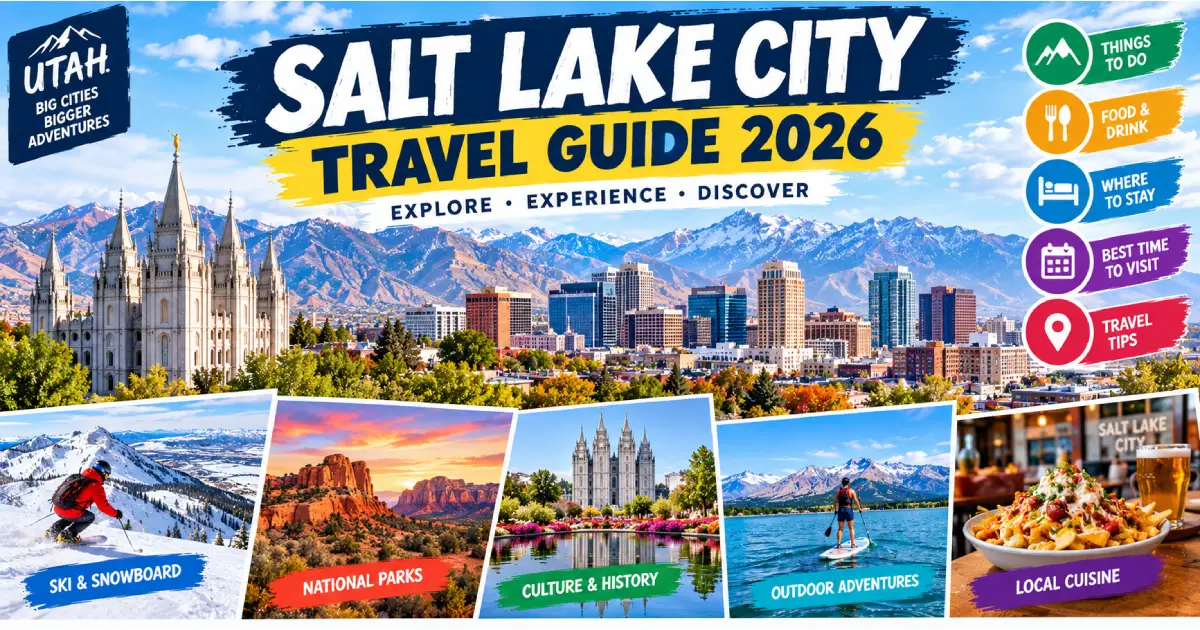
Salt Lake City is one of America’s most underrated destinations — a sophisticated, surprisingly international city set against one of the continent’s most dramatic mountain backdrops. At 4,226 feet elevation, with the Wasatch Range rising to 11,000 feet just 30 minutes to the east and the ancient Great Salt Lake stretching to the horizon in the west, SLC sits at a crossroads between urban culture and wilderness that few cities anywhere in the world can match. Within 45 minutes of downtown, you have six world-class ski resorts, dozens of hiking trails, mountain biking networks, and canyon drives of extraordinary beauty. Within the city itself, you have Temple Square, the Natural History Museum of Utah, an increasingly impressive restaurant and craft cocktail scene, and the understated but genuine cultural life of a mid-sized American city that punches well above its weight.
Planning a Salt Lake City trip well requires understanding a few local peculiarities. The city’s relationship with the Church of Jesus Christ of Latter-day Saints shapes its culture, its architecture, its liquor laws, and its Sunday rhythms in ways that visitors sometimes find surprising. Most restaurants and all attractions are open on Sundays, but some smaller businesses close, and the Sunday atmosphere in the Temple Square area is distinctly more contemplative. The liquor laws — which now permit drinks without mandatory food orders in most licensed establishments — are less restrictive than they once were, but they remain different from what visitors from coastal cities expect. A little preparation goes a long way toward having the best possible experience.
This guide covers everything you need to plan a Salt Lake City visit: how to get there, getting around town and to the ski resorts, the best neighborhoods to stay in, what to budget, and itineraries for 3-day and 5-day trips. Whether you’re here for the powder, the desert scenery, the food, or a combination of all three, Salt Lake City rewards visitors who come prepared.
| Category | Details |
|---|---|
| Airport | Salt Lake City International (SLC) — 7 miles from downtown |
| Downtown Distance | 7 miles from airport |
| Getting Around | TRAX light rail (free downtown), UTA bus, rideshare, rental car |
| Ski Resort Access | 25–45 min from downtown (canyon shuttles available) |
| Best Neighborhoods | Downtown, 9th & 9th, Sugar House, Avenues |
| Budget Per Day | $80–$120 (budget), $150–$250 (mid-range), $300+ (luxury) |
| Best Time to Visit | September–October (overall); January–March (skiing) |
| Official Currency | US Dollar |
| Language | English |
| Time Zone | Mountain Time (UTC–7 in summer, UTC–6 in winter) |
Salt Lake City International Airport is one of the best airports in the American West — a completely rebuilt facility that opened its new terminal complex in September 2020. The new terminal is spacious, efficient, and well-designed, a dramatic improvement over its predecessor. Delta Air Lines uses SLC as a major hub and offers direct service from virtually every US city; Southwest, United, American, Alaska, and numerous international carriers also serve the airport.
Location: 7 miles northwest of downtown Salt Lake City New Terminal: Single terminal complex (completed 2020) — significantly easier to navigate than the old multi-terminal layout International Arrivals: Direct international service from London (Delta), Amsterdam (KLM), and Mexico City; most other international travelers connect through US hubs
Getting from the Airport to Downtown:
| Option | Time | Cost | Notes |
|---|---|---|---|
| TRAX Light Rail (Green Line) | 25–30 min | $2.50/ride | Most efficient; runs every 15 min; drops at City Center and Gallivan stations |
| Rideshare (Uber/Lyft) | 15–20 min | $18–$30 | Fastest; pick-up from designated rideshare lot |
| Taxi | 15–20 min | $25–$35 | Available at taxi stand outside arrivals |
| Rental Car | 20–25 min | Variable | Car rental center at airport; strongly recommended if skiing or exploring canyons |
Pro Tip: The TRAX Green Line from the airport is one of the best airport transit connections in the US — quick, cheap, and reliable. For ski trips, however, a rental car (or canyon shuttle) is highly recommended, as TRAX doesn’t serve the ski resort canyons.
Salt Lake City sits at the intersection of I-15 (north–south) and I-80 (east–west), making it a natural stopping point on cross-country road trips.
Parking: Downtown SLC has adequate parking garages; rates are $8–$15/day at most facilities near major attractions. Street parking is metered during business hours. Temple Square and the Gateway mall area have large surface lots and garages.
Amtrak’s California Zephyr (Chicago–San Francisco) stops at Salt Lake City’s Amtrak station at Ogden (45 miles north) and at the downtown SLC station at 340 S 600 W. The Zephyr runs three times weekly in each direction and offers some of the most spectacular scenery on any US rail route (particularly the Colorado River canyon section). Not practical for tight schedules, but extraordinary for travelers with time.
TRAX is the Utah Transit Authority’s light rail network, with three lines serving downtown, the airport, the University of Utah, South Jordan, and West Valley. It’s the most reliable way to reach downtown attractions without a car.
Fares: $2.50 per trip; day pass $6.25; the Free Fare Zone covers all downtown stops between the Gateway and Gallivan Center stations — no ticket required within this zone Hours: Approx. 5am–midnight on weekdays, slightly reduced on weekends Frequency: Every 10–15 minutes on weekdays during peak hours
Key Stops for Visitors:
The UTA bus network extends throughout the Salt Lake Valley and is useful for reaching neighborhoods TRAX doesn’t serve (Sugar House, 9th and 9th, Avenues). The 200 series routes cover most visitor-relevant areas. Real-time bus tracking is available through the Transit app. Fare is $2.50/trip; transfers to TRAX are included within 2 hours.
Both services operate extensively throughout Salt Lake City and are often the most convenient option for restaurant-hopping and late-night transportation. Airport rideshare pick-up is from the designated lot (follow signs). Typical fares: $8–$15 within the downtown core; $15–$25 to Sugar House or 9th and 9th.
Essential for: Ski resort access (canyon shuttles are the alternative), Great Salt Lake/Antelope Island, Bonneville Salt Flats, day trips to Park City, Bryce Canyon or Zion National Park excursions.
Rental locations: All major companies at the airport’s consolidated car rental center. Downtown hotel rental is available but more expensive.
Ski Driving Notes: I-215 East (the Wasatch Front loop highway) connects downtown to Little Cottonwood Canyon (Alta/Snowbird) and Big Cottonwood Canyon (Brighton/Solitude) with good four-lane freeway until the canyon mouths. Canyon driving requires winter tires or AWD/4WD from November through April; snow chains may be required on the steepest canyon sections after heavy snowfall. The Utah Department of Transportation posts real-time canyon access requirements at udottraffic.utah.gov.
For visitors without a rental car who want to ski, UTA runs the Canyon Connector service during ski season (approximately Thanksgiving through April):
Park City Shuttle: Several private shuttle companies offer daily service from downtown SLC hotels to Park City resorts (approx. $35–$50/person roundtrip; book 24 hours ahead during peak weekends).
The city center, anchored by Temple Square and the Salt Lake Temple. Home to the major cultural institutions (Salt Lake Art Center, UMOCA), the best hotels, the convention center, and the Delta Center (Jazz arena). The Free Fare Zone on TRAX covers most of downtown. Best for: First-time visitors, business travelers, access to everything.
Where to Stay: Grand America Hotel (luxury, $$$$), Marriott Downtown ($$$), AC Hotel ($$$), Hilton Salt Lake City Center ($$$)
The city’s most beloved neighborhood — a walkable, tree-lined district of independent restaurants, coffee shops, boutiques, and old bungalow houses. Everything within a 6-block radius of the 900 South / 900 East intersection: The Copper Onion, Pago, Trio, Pretty Bird, Eggs in the City, and the area’s own farmers market. Salt Lake City residents will tell you this is where they spend their time. No hotels in the neighborhood itself — stay downtown and TRAX to the area, or use rideshare. Best for: Food lovers, independent travelers, anyone wanting to experience how SLC residents actually live.
A hip, slightly artsy neighborhood about 2 miles southeast of downtown with a strong independent business culture. Excellent for breakfast and brunch (Publik Coffee, Eggs in the City is actually closer to here than 9th & 9th). Sugar House Park — a large, flat green space — is the best urban park in the city. Good bicycle access; the TRAX Red Line has a Sugar House stop. Best for: Travelers who prefer a neighborhood feel to downtown hotel-land.
A historic residential neighborhood on the bench just above downtown, with Victorian and craftsman houses on a strict grid of narrow, tree-lined streets ascending toward the Wasatch foothills. Capitol Hill and the Utah State Capitol are at its western edge; City Creek Canyon (urban hiking trail) runs through its eastern edge. Some excellent bed-and-breakfasts and boutique hotels. Best for: Architecture enthusiasts, those who want to hike out the door, quieter city experience.
Salt Lake City’s emerging arts and creative district, south of downtown along 900 South. Former industrial buildings converted into breweries (Kiitos Brewing, Desert Edge), art galleries, and restaurant spaces. Laziz Kitchen is here. The district is still developing — some blocks are lively, others industrial — but it offers an authentic glimpse of a neighborhood in the middle of becoming. Best for: Craft beer enthusiasts, design and gallery visitors, those who enjoy emerging neighborhoods.
Not technically SLC, but accessible via I-80 in 35–45 minutes and often included in SLC-based trips. Park City is the most resort-oriented option: Main Street boutique hotels, excellent restaurants, and immediate ski resort access at Park City Mountain Resort and Deer Valley. Higher prices ($200–$400/night for hotels), but a walkable resort town atmosphere that’s very different from urban SLC. Best for: Ski-focused travelers; those who want resort amenities and don’t mind the premium.
Sample Budget Day: Hotel $75 + meals $45 + transport $10 + one paid attraction $20 = ~$150 total
Sample Budget Day: Hotel $150 + meals $100 + transport $25 + attractions $35 = ~$310 total for a couple
Skiing in Utah is not cheap, but it’s among the best value in North America compared to the quality of the product:
| Expense | Budget Option | Mid-Range | Premium |
|---|---|---|---|
| Lift ticket (day) | Brighton/Solitude $85 | Snowbird $110 | Deer Valley $175 |
| Equipment rental | $35–$50/day | $60–$80/day | $100+/day (demo) |
| Ski lesson | $80–$100 (group) | $150–$200 | $300–$500 (private) |
| Mountain lunch | $15–$25 | $30–$45 | $60+ (Deer Valley lodge) |
| Transportation | Canyon shuttle $5/way | Rental car ($50–$80/day) | Hotel shuttle/private car |
Ikon Pass (approx. $1,100–$1,300/season) covers Alta, Snowbird, Brighton, Solitude, and Park City — extraordinary value for anyone visiting more than 5 ski days.
Morning:
Afternoon:
Evening:
Morning:
Afternoon:
Evening:
Morning:
Afternoon:
Evening:
Days 1–3 as above, then:
Winter Option — Ski Day at Alta or Snowbird:
Summer/Fall Option — Bonneville Salt Flats and Great Salt Lake:
Morning:
Afternoon:
Evening:
Utah’s liquor laws are often misunderstood. As of 2024–2026:
Salt Lake City is at 4,226 feet; ski resorts top out at 11,000 feet. Altitude affects visitors differently:
Salt Lake City sits in a bowl surrounded by mountains, and in winter (typically December through February) temperature inversions trap cold air and pollutants in the valley. During inversions, the city can be blanketed in haze while the ski resorts above 7,000 feet are in brilliant sunshine. Check the air quality index (airnow.gov) before outdoor activities during inversions. The phenomenon typically lasts 3–10 days and breaks with the next storm system.
Coverage in the city and most canyon roads is excellent. Little Cottonwood Canyon and Big Cottonwood Canyon have good coverage on the main roads; cell service deteriorates on some trails. Most hotels, restaurants, and cafés offer free Wi-Fi.
| Destination | Distance | Time | Highlights |
|---|---|---|---|
| Park City | 40 miles | 40 min | Main Street, ski resorts, Utah Olympic Park |
| Antelope Island | 40 miles | 45 min | Bison, Great Salt Lake, bird life |
| Bonneville Salt Flats | 100 miles | 1.5 hr | Land speed history, alien landscape |
| Provo / BYU | 45 miles | 45 min | BYU campus, Provo Canyon, Sundance Resort |
| Timpanogos Cave | 40 miles | 50 min | Cave tour, American Fork Canyon hike |
| Bryce Canyon NP | 260 miles | 4 hr | Hoodoos, rim walk — long day or overnight |
| Zion National Park | 310 miles | 4.5 hr | Narrows, Angel’s Landing — long day or overnight |
| Arches NP | 230 miles | 3.5 hr | Delicate Arch, Fiery Furnace — long day |
All distances from downtown SLC. Bryce, Zion, and Arches work much better as overnight trips.
Posted By : Vinay
Latest Article
2nd Floor, 39, Above Kirti Club, DLF Industrial Area, Kirti Nagar, New Delhi, Delhi 110015



Travel Tourister is a leading Travel portal where we introduce travellers to trusted travel agents to make their journey hasselfree, memorable And happy. Travel Tourister is a platform where travellers get Tour packages ,Hotel packages deals through trusted travel companies And hoteliers who are working with us across the world. We always try to find new and more travel agents and hoteliers from every nook and corners across the world so that you could compare the deals with different travel agents and hoteliers and book your tour or hotel with the one you have chosen according to your taste and budget.
Copyright © Travel Tourister, India. All Rights Reserved

 Call
Call Enquiry