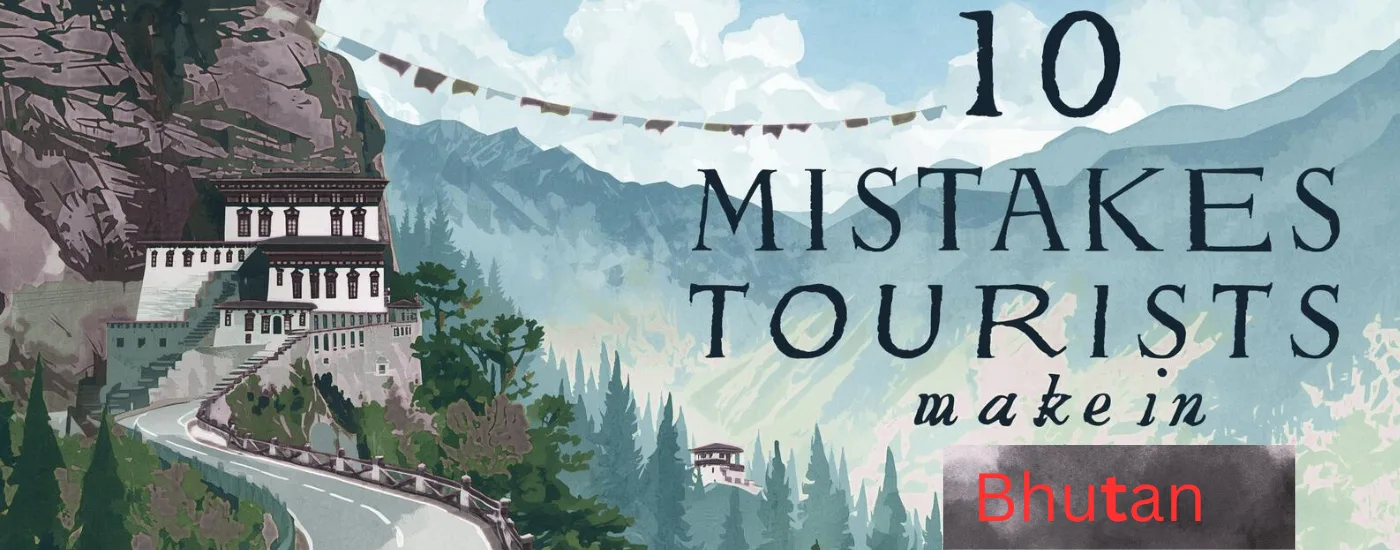
Bhutan receives fewer tourists in an entire year than Paris gets in a single day. This striking statistic reveals something profound about the Last Shangri-La—it’s not your typical destination. The 10 mistakes tourists Bhutan visitors commonly make can transform your dream journey into a challenging experience.
I’ve witnessed countless travelers make preventable errors that diminish their Bhutanese adventure. These mistakes range from cultural missteps to practical oversights that can seriously impact your trip.
Let’s explore the 10 Mistakes Tourists Make in Bhutan so you can avoid these common pitfalls and maximize your journey to this remarkable nation.
Before diving into specific mistakes, it’s crucial to understand Bhutan’s distinctive approach to tourism. The kingdom operates on a “high value, low impact” philosophy that shapes every aspect of your visit.
This isn’t mass tourism. It’s curated cultural immersion.
Bhutan’s dramatic elevation changes catch many visitors off guard. Thimphu sits at 2,320 meters above sea level, while some destinations reach over 4,000 meters.
I’ve seen tourists arrive from sea level and immediately struggle with breathlessness, headaches, and fatigue. The keyword here is preparation—your body needs time to adjust.
Actionable Solution:
Your designer shorts won’t cut it at Bhutan’s sacred sites. Temple visits require covered shoulders, long pants, and closed-toe shoes—non-negotiable requirements that many tourists learn about too late.
Actionable Solution:
Bhutan shuts down early. Seriously early! Most towns become quiet by 9 PM, and your options for evening entertainment are limited to hotel lounges or cultural performances.
This isn’t Vegas. It’s a Buddhist kingdom that prioritizes spiritual reflection over party scenes.
Actionable Solution:
Those Instagram shots inside monasteries? Absolutely forbidden. Photography rules in Bhutan are strict, and violations can result in serious consequences, including legal issues.
Actionable Solution:
Bhutan operates on “Bhutan time”—a more relaxed pace that emphasizes mindfulness over speed. Trying to cram multiple activities into each day goes against the kingdom’s core philosophy.
Actionable Solution:
Bhutanese cuisine revolves around chilies. Not as seasoning—as the main ingredient! I’ve watched grown adults cry over what locals consider mild dishes.
Ema datshi (chili with cheese) is the national dish for a reason. It’s seriously spicy.
Actionable Solution:
The Sustainable Development Fee isn’t a tourist tax—it’s an investment in Bhutan’s future. This $100-200 daily fee funds free healthcare, education, and environmental conservation for all Bhutanese citizens.
Understanding this context transforms your perspective on the cost. For a complete breakdown of expenses, including visa requirements and accommodation costs, read our detailed guide on how much does it cost to visit Bhutan from India.
Actionable Solution:
While English is taught in schools, many older Bhutanese in remote areas speak limited English. Don’t assume everyone can communicate fluently in English.
Actionable Solution:
Bhutan isn’t just a Buddhist country—it’s constitutionally Buddhist. Every aspect of daily life reflects these spiritual values, and casual disregard for religious customs can deeply offend locals.
Actionable Solution:
Bhutanese weather changes faster than your mood on a bad day! Mountain conditions can shift from sunny to stormy within hours, regardless of morning forecasts.
Actionable Solution:
| Aspect | What NOT to Do | What TO Do |
|---|---|---|
| Altitude | Arrive and immediately head to high elevations | Acclimatize gradually over 2-3 days |
| Clothing | Pack only casual Western wear | Include modest, culturally appropriate attire |
| Photography | Take pictures everywhere without asking | Respect photography restrictions and ask permission |
| Food | Expect mild, Western-style cuisine | Prepare for extremely spicy traditional dishes |
| Pace | Rush through multiple activities daily | Embrace slow, mindful travel approach |
| Communication | Assume everyone speaks fluent English | Learn basic Dzongkha phrases |
The 10 Mistakes Tourists Make in Bhutan are entirely avoidable with proper preparation and cultural awareness. Your keyword to success is respect—for the culture, the environment, and the spiritual significance of this incredible kingdom.
Bhutan offers transformative experiences when approached with the right mindset. Embrace the journey, not just the destination.
Q: How long should I stay in Bhutan to avoid these common mistakes? A: I recommend a minimum of 7-10 days to properly acclimatize, absorb the culture, and avoid rushing through experiences. This timeframe allows you to adapt to the altitude, understand local customs, and travel at Bhutan’s preferred mindful pace.
Q: What’s the best time to visit Bhutan to minimize travel difficulties? A: March-May and September-November offer the most stable weather conditions. These periods reduce weather-related complications while providing clear mountain views and comfortable temperatures for cultural activities.
Q: How spicy is Bhutanese food really? A: Extremely spicy by most international standards! Chilies are the main ingredient, not just seasoning. Even “mild” dishes can be overwhelming for visitors unaccustomed to serious heat levels. Always request reduced spice levels initially.
Q: Can I visit Bhutan independently or must I use a tour operator? A: All tourists (except Indian, Bangladeshi, and Maldivian citizens) must book through licensed Bhutanese tour operators. Independent travel isn’t permitted, which actually helps you avoid many common mistakes through professional guidance. Explore our curated Bhutan family packages for hassle-free planning.
Q: What happens if I accidentally break a cultural rule in Bhutan? A: Bhutanese people are generally understanding of innocent cultural mistakes by tourists. However, serious violations like inappropriate behavior in religious sites can result in legal consequences. When in doubt, ask your guide or observe local behavior.
Q: Is it safe to drink tap water in Bhutan? A: Stick to bottled or filtered water, especially during your first few days. Your digestive system needs time to adjust to local conditions. Most hotels provide safe drinking water, but it’s better to be cautious initially.
Q: How much cash should I bring to Bhutan? A: Bring sufficient USD cash for personal expenses beyond your tour package. Credit cards aren’t widely accepted outside major hotels. Budget $20-50 per day for souvenirs, tips, and additional meals depending on your shopping preferences.

As an upcoming travel agent I got much support from travel tourister. We are getting very good leads from travel tourister and they mend our website which is also very commendable.... Excellent work Hope to do more business forward.... Thanks and regards CEO,Andaman Unlocked
Rating:
10/20/2018
As an upcoming travel agent I got much support from travel tourister. We are getting very good leads from travel tourister and they mend our website which is also very commendable.... Excellent work Hope to do more business forward.... Thanks and regards CEO,Andaman Unlocked
Rating:
10/20/2018
2nd Floor, 39, Above Kirti Club, DLF Industrial Area, Kirti Nagar, New Delhi, Delhi 110015



Travel Tourister is a leading Travel portal where we introduce travellers to trusted travel agents to make their journey hasselfree, memorable And happy. Travel Tourister is a platform where travellers get Tour packages ,Hotel packages deals through trusted travel companies And hoteliers who are working with us across the world. We always try to find new and more travel agents and hoteliers from every nook and corners across the world so that you could compare the deals with different travel agents and hoteliers and book your tour or hotel with the one you have chosen according to your taste and budget.
Copyright © Travel Tourister, India. All Rights Reserved

 Call
Call Enquiry