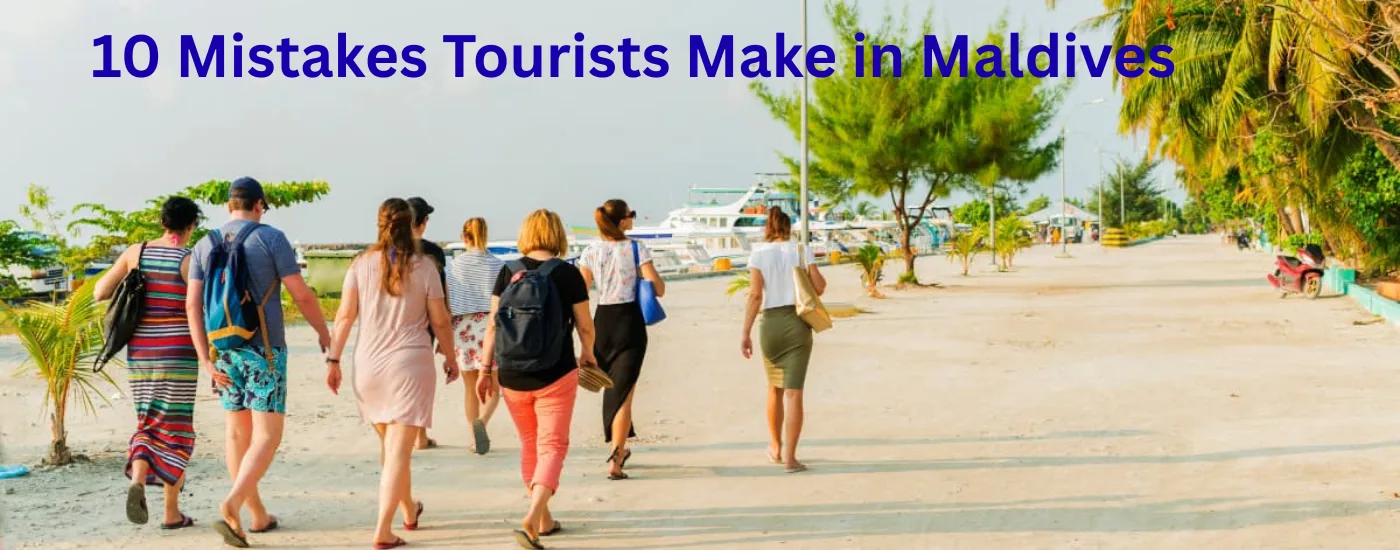
Avoid the 10 mistakes tourists make in Maldives by learning from travelers who’ve been there. The biggest mistakes tourists make in Maldives often involve budgeting, timing, and cultural misunderstandings. From overspending on transfers to missing whale shark season, the mistakes tourists make in Maldives can cost thousands of rupees and ruin dream vacations. This guide reveals the most common mistakes tourists make in Maldives and provides actionable solutions to ensure your trip goes smoothly. Don’t let preventable mistakes tourists make in Maldives derail your paradise getaway!
Last year, I watched a couple at Velana International Airport realize their “budget” Maldives trip would cost ₹80,000 more than planned. The seaplane transfer alone? ₹42,000 per person they hadn’t budgeted for.
Their faces said it all.
This scene repeats daily across the Maldives. First-time visitors make costly mistakes that transform dream vacations into financial nightmares. But here’s the good news: every single mistake is avoidable with proper planning.
I’ve analyzed thousands of trip reports, resort reviews, and traveler complaints to identify the most common errors. More importantly, I’ll show you exactly how to avoid them. We’re talking real money saved. Real frustration prevented. Real vacation quality improved.
The Maldives demands different planning than typical beach destinations. Those gorgeous overwater villas come with hidden costs. That “cheap” resort might require expensive transfers. The perfect beach weather requires precise timing.
Let’s break down the ten biggest mistakes tourists make—and turn your Maldives trip into the paradise experience you’re actually paying for.
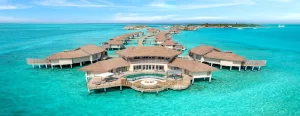
Instagram serves up endless dreamy Maldives content. That overwater villa at sunset! Those crystal-clear waters! The private infinity pool!
You book immediately.
Then reality hits. Your “perfect” resort sits 180 kilometers from Male airport. The speedboat transfer takes 3.5 hours in choppy seas, costing ₹35,000 per person each way. You arrive seasick and ₹70,000 poorer than expected.
Or you discover the resort has no house reef. Every snorkeling trip requires booking boat excursions at ₹6,000-12,000 each. That “affordable” room rate becomes expensive fast.
Research Beyond Pretty Pictures:
Check exact resort location and transfer requirements. Google Maps shows distance from Male airport—anything over 50km likely requires seaplane (₹35,000-50,000 per person) or lengthy speedboat rides (₹15,000-25,000 per person).
Investigate house reef quality through recent reviews. Search YouTube for “Resort Name house reef snorkeling” to see actual underwater footage. Properties like Kuramathi, Fihalhohi, and Reethi Beach offer exceptional house reefs with daily marine life encounters from shore—no excursion costs!
Read 50+ recent TripAdvisor and Google reviews focusing on complaints. What bothers multiple guests? Transfer difficulties? Food quality? Service issues? Hidden costs? Reviews reveal reality that marketing photos conceal.
Calculate total trip cost including transfers, meal plans, and typical activities. That ₹25,000/night room becomes ₹40,000-50,000/night after factoring everything.
Red Flags to Watch:
Compare 3-5 resorts thoroughly before booking. The extra research saves tens of thousands of rupees!
You find a resort at ₹30,000 per night. Four nights = ₹1,20,000. Add ₹80,000 for flights. Total budget: ₹2,00,000 for two people.
Seems reasonable!
Then the itemized bill arrives:
Actual Total: ₹4,44,000 (more than double your budget!)
This scenario plays out constantly. The Maldives operates on a “base rate plus everything else” model that catches travelers completely off-guard. Want to understand the complete cost breakdown? Read our in-depth analysis of Maldives trip costs for detailed budgeting guidance.
Calculate Comprehensive Costs Upfront:
| Cost Category | Budget Estimate | Pro Tips |
|---|---|---|
| Accommodation | Nightly rate x nights | Check if taxes included (usually not) |
| Flights | Round-trip per person | Book 3-6 months ahead for best rates |
| Transfers | Speedboat/seaplane/domestic | Often equals 30-50% of accommodation cost |
| Meal Plans | HB: ₹8,000-12,000/day<br>FB: ₹10,000-15,000/day<br>AI: ₹15,000-25,000/day | AI provides best value at isolated resorts |
| Activities | Diving: ₹10,000-15,000/dive<br>Excursions: ₹6,000-12,000 each | Budget ₹25,000-40,000 total |
| Alcohol | ₹2,000-5,000 per cocktail<br>₹8,000-15,000 per bottle | AI packages save heavy drinkers huge amounts |
| Tips | 10-15% of total services | Budget ₹8,000-15,000 |
| Taxes/Service | 10% service + 12-16% GST | Adds 22-26% to most bills |
Money-Saving Strategies:
Choose all-inclusive packages at isolated resort islands. The upfront cost seems high but eliminates surprise expenses. AI packages typically cost ₹15,000-25,000 extra per person daily but include unlimited meals, drinks, and select activities worth ₹20,000-35,000 if purchased separately.
Book local island guesthouses instead of resort islands for 60-70% savings. Properties on Maafushi, Gulhi, or Thulusdhoo offer similar beach access at ₹5,000-12,000 per night with multiple restaurant options nearby.
Visit during monsoon season (May-October) for 30-50% lower rates across accommodation, flights, and activities. Yes, weather is less predictable, but you’ll save ₹1,50,000-2,50,000 on a week-long trip!
Build a 25-30% buffer beyond calculated costs for spontaneous activities, souvenirs, and unexpected expenses. Better to bring money home than run short mid-trip.
Request detailed written quotes from resorts including all costs before booking. Reputable properties provide transparent pricing breakdowns.
You randomly book October because flights are cheap. You arrive to discover:
Weather ruins half your activities. You leave disappointed despite visiting paradise.
Alternatively, you visit in February—perfect weather!—but whale sharks won’t arrive until August. Manta rays haven’t started feeding aggregations yet. You miss the marine life encounters that motivated your trip.
Timing matters enormously in the Maldives! Understanding when to visit can make or break your experience. For a comprehensive month-by-month breakdown of Maldives weather patterns, check out our detailed guide on the best time to visit Maldives.
Match Your Visit to Your Priorities:
| Your Priority | Best Months | Why It Matters |
|---|---|---|
| Perfect Weather | December – March | Driest months, 8-9 hours sunshine daily, calm seas |
| Whale Sharks | August – November | 60-70% encounter success rate at South Ari Atoll |
| Manta Rays | May – November (peak June-Oct) | Hanifaru Bay feeding aggregations, up to 200 mantas |
| Surfing | May – October | Southwest monsoon creates consistent 3-6 foot swells |
| Bioluminescence | New moon nights (July-Feb peak) | Darkest skies maximize glowing plankton visibility |
| Budget Travel | May – October, especially Aug-Oct | 30-50% lower costs across everything |
| Balanced Value | November, late April | Good weather improving, moderate prices |
Seasonal Weather Reality Check:
Dry Season (November-April):
Monsoon Season (May-October):
Pro Timing Strategies:
Check marine life calendars before booking. If whale sharks or manta rays top your bucket list, visiting outside their seasons wastes your trip’s primary motivation.
Consider moon phases for specific activities. New moons maximize bioluminescence and manta ray feeding activity. Full moons provide natural light for night activities but reduce bioluminescence visibility.
Book November for the sweet spot. Weather improves weekly as dry season approaches. Prices remain 20-30% below December peaks. Late November delivers near-peak conditions at shoulder season rates!
Avoid October unless you’re extremely budget-conscious. It’s genuinely the wettest, most unpredictable month. September offers similar savings with slightly better conditions.
Research Ramadan dates if visiting during Islamic holy month. Resort islands operate normally, but local island restaurants may have limited daytime hours. Not a deal-breaker, just something to know.
Travelers arrive with:
Then they get hit with ₹8,000-15,000 excess baggage fees at seaplane check-in. Their chemical sunscreen gets confiscated. They buy reef-safe sunscreen at 400% markup.
Frustration mounts before reaching the island!
Essential Items Only:
Clothing (Minimalist Approach):
If Visiting Local Islands, Add:
Critical Items (Don’t Forget!):
Items to Leave Home:
Seaplane Weight Restrictions:
Most seaplanes limit total luggage to 20-25kg per person including carry-on. Excess baggage costs ₹350-500 per kg. That 30kg suitcase costs an extra ₹3,500-5,000 in fees!
Pack in soft bags rather than hard suitcases—easier to fit into seaplane storage compartments. Wear your heaviest items (shoes, jeans) during travel to reduce luggage weight.
Reef-Safe Sunscreen Critical:
Chemical sunscreens containing oxybenzone and octinoxate kill coral reefs. Many eco-conscious resorts ban them entirely. Bring mineral-based sunscreen with zinc oxide or titanium dioxide.
Indian brands like Aqualogica, Derma Co, and Minimalist offer reef-safe options at ₹600-1,000 per 50ml. Resort shops charge ₹3,000-4,000 for the same!
Smart Packing = Money Saved + Hassle Avoided!
You reach your resort excited to snorkel with manta rays at Hanifaru Bay. You visit the dive center.
“Sorry, all Hanifaru permits are sold out for the next three weeks.”
Your heart sinks. This experience motivated your entire trip. But you assumed you could book upon arrival.
Or you want sunset fishing your first evening. “All spots taken for tonight. We have availability four days from now.” Your 5-night stay suddenly has limited activity slots.
The spa? “Couples massages are booked through the week. We have individual slots Thursday at 2pm and Friday at 9am—different days, different times.”
Popular activities fill weeks in advance during peak season. Walk-up bookings rarely work for premium experiences!
Book These Activities Immediately After Confirming Resort:
Hanifaru Bay Manta Ray Snorkeling (June-October):
Whale Shark Snorkeling (August-November):
Spa Treatments:
Specialty Dining:
Diving Certification Courses:
How to Book Ahead:
Email resort concierge immediately after booking confirmation: “We’re arriving [dates] and would like to book [specific activities with preferred dates/times]. Please confirm availability and costs.”
Most resorts respond within 24-48 hours with availability and pricing. Pay deposits if required to secure bookings.
Activities That Usually Don’t Need Advance Booking:
Pro Tip: Create an activity wishlist with backup options. If first-choice dates fill, you have alternatives ready rather than scrambling last-minute.
Scenario A – The “Budget” Backfire:
You book bed & breakfast at an isolated resort island to “save money.” Room rate: ₹25,000/night. Seems smart!
Then you discover the only dining option is the resort restaurant. No nearby alternatives. No delivery. You’re captive.
Lunch: ₹3,500 per person Dinner: ₹6,000 per person Drinks: ₹2,000+ per person
Daily meal cost: ₹23,000 for two people Four nights: ₹92,000 additional
That “budget” B&B choice cost ₹92,000 extra versus upgrading to full board for ₹60,000 total!
Scenario B – The Prepaid Waste:
You book all-inclusive wanting “value.” The package costs ₹20,000 extra per person daily.
But you’re not big drinkers. You prefer light lunches. You want to skip dinner one night to sleep early.
You’ve prepaid for food and drinks you’re not using. That’s ₹80,000 spent on meals you don’t want.
Both scenarios waste money!
Choose All-Inclusive When:
AI Package Math: ₹18,000-25,000 per person daily seems expensive, but includes meals worth ₹12,000-18,000 plus drinks worth ₹8,000-15,000 if purchased separately. For couples who eat and drink heartily, AI delivers 30-40% savings!
Choose Half Board (Breakfast + Dinner) When:
HB Package Math: ₹8,000-12,000 per person daily covers two substantial meals. À la carte lunch costs ₹2,000-4,000 if wanted. Gives flexibility without full AI commitment.
Choose Bed & Breakfast When:
B&B Only Makes Sense: At local islands like Maafushi, Gulhi, or Thulusdhoo where 5-10 restaurants operate within 10-minute walk. Resort islands with B&B rates trap you into expensive à la carte.
Calculate Before Booking:
Estimate your typical daily consumption:
Total per person: ₹10,000-23,500 daily
Compare this to meal plan upgrade costs. If daily à la carte would exceed upgrade pricing, prepaying saves money and stress!
Travelers arrive expecting Maldives to operate like Goa, Thailand, Bali, or Caribbean destinations. Major disappointment follows.
“Why is everything so expensive?” “Where’s the nightlife?” “Why can’t I walk to nearby towns?” “Why are there no street food options?” “Why is the diving so expensive?”
The Maldives fundamentally differs from other beach destinations. Comparing apples to coconuts!
What Makes Maldives Different:
Extreme Isolation: Resort islands are exactly that—isolated private islands. No neighboring towns. No nearby attractions. No walking to alternative restaurants. You’re on one island with whatever that island offers. Period.
Local islands are small (300m x 800m typically). One main street. Limited infrastructure. No sprawling beach towns like Thai islands.
Import Economics: Almost everything is imported—food, construction materials, furniture, vehicles, fuel. This drives costs up 200-400% versus mainland destinations.
That ₹500 beer in India? ₹2,500 in Maldives. That ₹800 meal? ₹4,000. Everything costs multiples of familiar prices.
Islamic Culture: The Maldives is a conservative Muslim nation. Alcohol only exists on resort islands (exempt from alcohol prohibition). No alcohol on inhabited local islands. No party culture. No beach raves. Conservative dress codes on local islands.
This isn’t Goa’s beach party scene or Thailand’s Full Moon parties!
Resort-Focused Tourism: The entire model centers on private resort islands offering all-inclusive luxury experiences. You’re meant to stay on your island enjoying resort amenities, not island-hopping to explore culture and nightlife.
Limited Cultural Tourism: No ancient temples like Bali. No elaborate ceremonies like Thailand. No historic forts like Goa. Maldivian culture centers on fishing, traditional music, and Islamic practices—interesting but not “sightseeing-oriented.”
The Maldives Excels At:
The Maldives Does NOT Offer:
Come to Maldives For: Beach perfection, diving excellence, luxury pampering, romantic isolation, marine life, and ultimate relaxation.
Go Elsewhere For: Cultural immersion (Bali), adventure variety (Costa Rica), nightlife (Thailand), budget travel (Goa), diverse activities (Hawaii), or urban beaches (Miami).
Pro Strategy – Combination Trips:
Many savvy travelers combine Maldives with other Indian Ocean destinations:
This approach delivers both luxury beach time AND cultural variety without expecting Maldives to be something it’s not!
A couple visits Maafushi wearing bikinis and board shorts on the public beach (not the designated bikini beach). Locals approach them asking to cover up. They argue, “It’s a beach! We’re on vacation!”
Security arrives. They receive formal warnings. Their guesthouse owner is embarrassed. The atmosphere becomes tense. Their vacation is tainted.
Or a traveler tries bringing duty-free alcohol to their local island guesthouse. Customs confiscates it. They’re detained for questioning. Three hours of interrogation follows. They miss their first afternoon on the island.
These scenarios happen regularly—and they’re completely avoidable!
The Key Distinction:
Resort Islands (Private Islands):
Local Inhabited Islands:
Local Island Do’s and Don’ts:
DRESS CODE: ✅ Cover shoulders and knees in public areas ✅ Wear T-shirts and shorts/pants in villages ✅ Use designated “bikini beaches” for swimwear ✅ Carry a sarong for easy coverage ❌ Don’t wear bikinis on public beaches ❌ Don’t walk through villages in swimwear ❌ Don’t wear revealing clothing
BEHAVIOR: ✅ Remove shoes before entering mosques ✅ Ask permission before photographing locals ✅ Respect prayer times (5 times daily) ✅ Be respectful during Ramadan ❌ No public displays of affection ❌ No kissing or intimate contact in public ❌ No loud or disruptive behavior
ALCOHOL & SUBSTANCES: ✅ Understand alcohol is completely prohibited on local islands ✅ Enjoy alcohol at resort islands or liveaboard boats ❌ Don’t attempt to bring alcohol to local islands ❌ Don’t ask locals where to buy alcohol ❌ Don’t consume alcohol on local islands
Ramadan Considerations:
During the Islamic holy month of Ramadan:
Male City Guidelines:
The capital city Male follows stricter cultural norms:
Bikini Beach Zones:
Many local islands now designate specific “bikini beaches” where tourists can wear swimwear. These separated areas allow:
Use ONLY these designated areas for swimwear. Public beaches require modest dress.
The Bottom Line:
Respecting local culture isn’t difficult—it just requires awareness. Research before visiting inhabited islands. When in doubt, dress more conservatively. Ask your guesthouse host for specific guidance.
Resort islands? Do whatever you want! Local islands? Respect the culture that welcomes you.
“Travel insurance is a waste of money. Nothing bad will happen!”
Then:
Suddenly that ₹6,000 insurance policy you skipped would have saved ₹3,00,000+.
I’ve seen this happen. Travelers financially devastated by preventable losses.
What You Absolutely Need:
Medical Coverage (Minimum ₹50 lakhs):
Maldives medical costs are astronomical. Basic treatment in Male runs ₹10,000-50,000. Medical evacuation from remote atolls? ₹2,00,000-4,00,000. International evacuation if serious? ₹15,00,000+.
Trip Cancellation/Interruption:
Your ₹4,00,000 trip becomes ₹0 loss if you must cancel due to covered reasons.
Travel Delays:
Seaplanes only fly in good visibility. Delays happen weekly during monsoon season!
Diving Coverage (Critical for Divers):
Standard travel insurance often EXCLUDES diving! Verify diving coverage explicitly or add specialized diving insurance.
Baggage Loss/Delay:
Getting emergency supplies on remote islands costs 300-400% normal prices!
24/7 Emergency Assistance:
Cost vs. Value:
Travel insurance costs: ₹3,000-8,000 for week-long trip Potential losses without insurance: ₹50,000-5,00,000+
The math makes insurance a no-brainer!
Recommended Providers for Indian Travelers:
Compare policies focusing on:
Credit Card Travel Insurance:
Many premium credit cards include travel insurance. Check:
Often credit card insurance provides baseline coverage but may need supplemental policy for comprehensive protection.
Don’t Gamble With Your Dream Vacation!
Spending ₹5,000 on insurance to protect a ₹4,00,000 trip is smart financial planning. One incident pays for insurance ten times over.
You watch YouTube videos of incredible Maldives diving. Whale sharks gliding past. Mantas doing barrel rolls. Sea turtles everywhere. Reef sharks patrolling. Massive fish schools.
You book your trip expecting guaranteed daily encounters with marine megafauna.
Reality: Your house reef snorkeling reveals beautiful coral and colorful fish but no sharks or turtles. Your whale shark excursion returns without sightings. You spot two small manta rays briefly. You’re disappointed despite experiencing objectively excellent marine environments.
Expectation versus reality creates unnecessary frustration!
The Truth About Marine Life Encounters:
Whale Sharks:
Manta Rays:
Sea Turtles:
Reef Sharks:

As an upcoming travel agent I got much support from travel tourister. We are getting very good leads from travel tourister and they mend our website which is also very commendable.... Excellent work Hope to do more business forward.... Thanks and regards CEO,Andaman Unlocked
Rating:
10/20/2018
As an upcoming travel agent I got much support from travel tourister. We are getting very good leads from travel tourister and they mend our website which is also very commendable.... Excellent work Hope to do more business forward.... Thanks and regards CEO,Andaman Unlocked
Rating:
10/20/2018
2nd Floor, 39, Above Kirti Club, DLF Industrial Area, Kirti Nagar, New Delhi, Delhi 110015



Travel Tourister is a leading Travel portal where we introduce travellers to trusted travel agents to make their journey hasselfree, memorable And happy. Travel Tourister is a platform where travellers get Tour packages ,Hotel packages deals through trusted travel companies And hoteliers who are working with us across the world. We always try to find new and more travel agents and hoteliers from every nook and corners across the world so that you could compare the deals with different travel agents and hoteliers and book your tour or hotel with the one you have chosen according to your taste and budget.
Copyright © Travel Tourister, India. All Rights Reserved




 Call
Call Enquiry