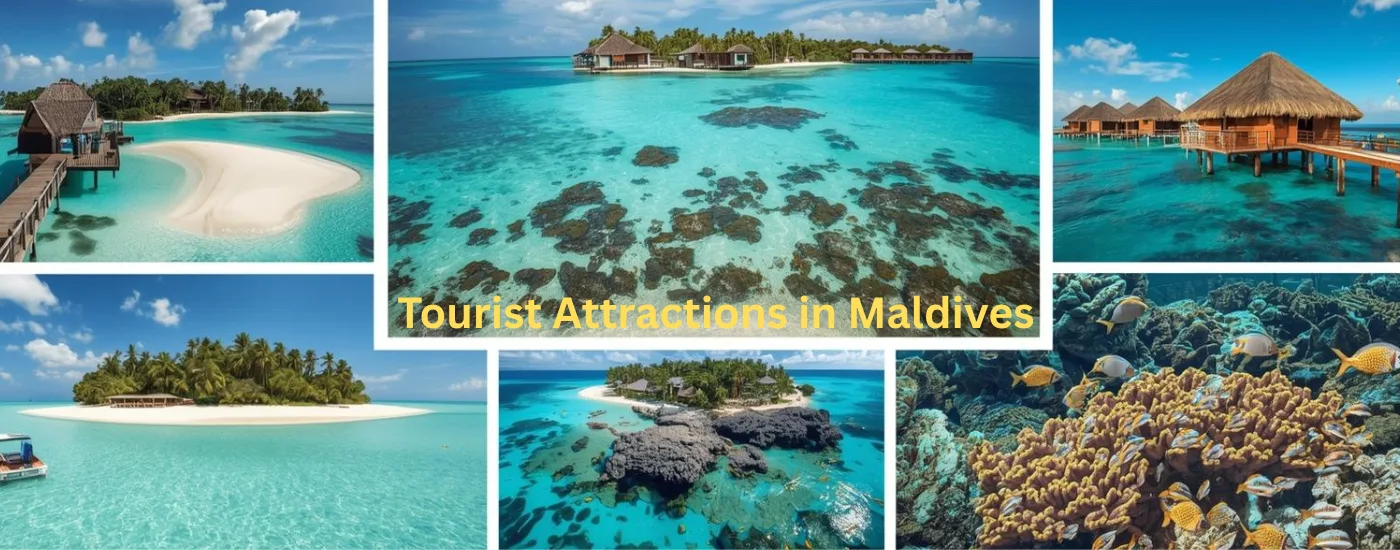
Over 1.8 million visitors descended on the Maldives in 2024, and they weren’t all coming just for overwater villas. This island nation packs an astonishing variety of experiences into its 26 atolls—from world-class diving sites to ancient coral mosques, from bioluminescent beaches to UNESCO marine reserves.
I’ve explored countless tropical destinations, but the Tourist Attractions in Maldives offer something truly unique. Yes, the beaches are spectacular. But beneath those turquoise waters and beyond those pristine shores lies a world that most travelers barely scratch the surface of.
This guide reveals the best Tourist Attractions in Maldives—the ones that transform a good vacation into an unforgettable adventure.
The Maldives isn’t just another beach destination. It’s a nation built entirely on coral atolls, creating an ecosystem unlike anywhere else on Earth.
Think about this: the country consists of 1,190 islands scattered across 90,000 square kilometers of ocean. Only 200 islands are inhabited, leaving nearly 1,000 pristine islands untouched by development. This creates something rare in our crowded world—genuine wilderness combined with luxury infrastructure.
The marine biodiversity here rivals the Great Barrier Reef. Over 2,000 species of fish call these waters home. Manta rays congregate in numbers found nowhere else. Whale sharks patrol the depths year-round. The coral reefs, though facing climate challenges, still display colors that seem almost artificial in their vibrancy.
But here’s what makes the Tourist Attractions in Maldives truly special: accessibility. You can snorkel with manta rays in the morning, explore a 17th-century mosque by afternoon, and dine under the stars at a Michelin-quality restaurant by evening. Few destinations offer this combination of natural wonder and sophisticated comfort.
Male packs surprising complexity into just 5.8 square kilometers. This is one of the world’s most densely populated cities, yet it maintains a distinct charm that larger capitals often lose.
The golden dome dominates Male’s skyline for good reason. Built in 1984 as part of the Islamic Centre, this is the largest mosque in the Maldives, and its architectural presence is genuinely striking.
The mosque accommodates over 5,000 worshippers, featuring intricate Arabic calligraphy and carved wood panels. Non-Muslim visitors can view the exterior and appreciate its architectural significance. The surrounding Islamic Centre includes conference halls and a library, making it a cultural hub beyond just religious functions.
Visit during late afternoon when the setting sun illuminates the golden dome—the photo opportunities are exceptional.
Constructed in 1656, this is one of the oldest and most important mosques in the Maldives, with its beautiful coral stone building and beautifully carved wooden details.
The coral stone construction represents traditional Maldivian craftsmanship at its finest. Centuries of skilled artisans carved intricate patterns into the stone, creating geometric designs and Quranic inscriptions that have survived tropical storms and salt air remarkably well.
The adjacent cemetery contains the graves of sultans and national heroes. The graveyard’s unique coral headstones feature ornate carvings that indicate the deceased’s social status—a fascinating glimpse into Maldivian social hierarchy.
Entry requires modest dress (shoulders and knees covered), and non-Muslims should confirm current visiting policies before arrival.
Housed in a modern building, the National Museum holds a treasure trove of Maldivian heritage spanning centuries of island history.
The collection spans pre-Islamic artifacts, sultanate treasures, and modern political history. You’ll find ancient royal regalia, traditional costumes, weapons, and household items that illustrate how Maldivians lived before tourism transformed their economy.
The exhibits on traditional boat building and fishing techniques prove particularly engaging, offering insight into the maritime culture that sustained these islands for generations.
Budget 1-2 hours for a thorough visit. Air conditioning provides welcome relief from Male’s heat!
The Fish Market pulses with authentic Maldivian life. This isn’t sanitized for tourists—it’s the real deal.
Early morning (5:00-7:00 AM) brings peak activity as fishing boats return with overnight catches. You’ll see tuna, grouper, and countless other species displayed on ice, with vendors expertly filleting and negotiating prices with restaurant buyers and locals.
The atmosphere is chaotic, loud, and absolutely fascinating. The gutting and cleaning might disturb squeamish visitors, but it offers unfiltered insight into the fishing industry that sustains the Maldivian economy even as tourism grows.
Bring your camera but ask permission before photographing vendors. A small purchase (dried fish or a fresh catch to take to your guesthouse) is appreciated if you’re spending time observing.
This former royal palace grounds now serves as Male’s primary green space. The park provides shaded walking paths, benches, and a peaceful atmosphere that contrasts sharply with the city’s busy streets.
The National Museum occupies one corner of the park. Locals use the space for afternoon relaxation, and you’ll often see families picnicking or friends chatting under the trees.
It’s not a major attraction by itself, but it offers a pleasant break if you’re spending several hours exploring Male.
North Male Atoll hosts the international airport and some of the Maldives’ most established resorts. It also contains several world-renowned dive sites.
HP Reef consistently ranks among the Maldives’ top dive sites. The reef’s healthy coral coverage displays the full spectrum of colors—hence the “Rainbow” nickname.
The site features pristine and colorful bright corals with commonly good fish action and large pelagics like reef sharks and mantas making regular appearances.
The site attracts turtles, Napoleon wrasse, and schools of fusiliers. Divers frequently encounter grey reef sharks patrolling the drop-off. The coral formations create swim-throughs and overhangs that add adventure to every dive.
Suitable for intermediate to advanced divers, with depths ranging from 15-30 meters. Currents can be strong, making this an exhilarating drift dive.
Banana Reef was the first dive site discovered in the Maldives, and it’s now a protected marine area with a wall of brilliantly-colored coral as well as caves and overhangs teeming with schools of fish.
The reef’s curved shape resembles a banana when viewed from above. The site’s historical significance doesn’t overshadow its current appeal—this remains a spectacular dive decades after its discovery.
Expect to see moray eels peering from crevices, lionfish hunting in the shadows, and massive groupers claiming territories. The caves create atmospheric lighting effects as sunlight filters through openings.
The protected status ensures healthy coral growth and abundant fish populations. Even experienced divers who’ve explored the Maldives extensively still consider Banana Reef a must-dive site.
Manta Point delivers exactly what the name promises—regular manta ray encounters. The site features a cleaning station where mantas visit to have parasites removed by smaller cleaner fish.
During the right seasons, you might see 5-10 mantas circling simultaneously. These graceful creatures can reach wingspans of 5 meters, creating unforgettable encounters. They’re completely harmless filter feeders, often curious about divers.
Snorkelers can experience Manta Point during calm conditions, making this accessible to non-divers. The cleaning station sits at relatively shallow depths (10-15 meters).
Best visited between November and April for optimal visibility and calmer seas.
South Male Atoll sees fewer visitors than its northern counterpart, despite offering equally impressive attractions.
House reef snorkeling reaches its peak at Embudu Village. The resort’s commitment to marine conservation has created an underwater paradise accessible directly from the beach.
Snorkelers regularly encounter sea turtles, blacktip reef sharks, octopuses, and schools of tropical fish. The coral gardens display healthy growth patterns with minimal bleaching damage.
No boat trip required—just wade in from shore. The reef’s proximity makes it perfect for multiple daily snorkeling sessions.
This underwater pinnacle rises from 30 meters to within 5 meters of the surface, creating a structure that attracts pelagic species and reef dwellers alike.
Grey reef sharks patrol the perimeter while eagle rays glide past. The pinnacle’s walls host soft corals, sea fans, and sponges creating a three-dimensional underwater landscape.
Advanced divers appreciate the site’s complexity and the strong currents that bring nutrient-rich water—and big fish. Visibility often exceeds 30 meters, allowing you to spot approaching sharks from impressive distances.
Night dives at Cocoa Thila reveal a completely different ecosystem as nocturnal creatures emerge.
Ari Atoll, particularly the southern section, has earned legendary status among marine enthusiasts worldwide.
This protected area offers some of the planet’s most reliable whale shark encounters. These gentle giants—the world’s largest fish—can reach lengths of 12 meters or more.
With over 2,000 fish species and whale sharks patrolling the depths year-round, encounter success rates reach 60-70% during peak seasons (August through October). Multiple certified operators run daily snorkeling excursions from Maamigili and Dhigurah islands.
Swimming alongside a whale shark creates perspective-shifting moments. Despite their massive size, they’re completely harmless filter feeders. Regulations require maintaining 3-meter distances to protect both sharks and swimmers.
The marine protected area designation ensures sustainable tourism practices. Your excursion fees directly fund conservation efforts.
Separate from North Male’s Manta Point, Ari Atoll hosts its own manta aggregation site with equally impressive encounters.
The season runs from May through November, coinciding with plankton blooms that attract mantas to feed. Peak months (June-August) can produce sightings of 10-20 mantas simultaneously executing barrel rolls through plankton clouds.
Both divers and snorkelers can experience these encounters. Snorkeling often provides better perspectives as mantas feed near the surface.
Respectful behavior is mandatory—no touching, no chasing, maintain distance. These are wild animals, and preserving their comfort ensures continued visits.
Baa Atoll earned UNESCO Biosphere Reserve status in 2011, recognizing its exceptional marine biodiversity and conservation importance.
Hanifaru Bay represents the Tourist Attractions in Maldives at their most spectacular. During certain months, this shallow bay hosts the largest known manta ray feeding aggregation on Earth.
May through November brings manta ray aggregations, with full moon and new moon phases triggering massive feeding frenzies of up to 200 mantas feeding simultaneously during peak conditions. The sight of dozens or hundreds of mantas filter-feeding is nothing short of spectacular.
Only 60-80 snorkelers are allowed daily through a permit system. Advance booking (often 2-3 months ahead) is essential. The exclusivity ensures quality encounters without overwhelming the site.
Snorkeling only—no diving allowed. The bay’s shallow depth (3-10 meters) makes snorkeling ideal anyway. Strict regulations prohibit touching and require maintaining proper distances.
This isn’t just impressive—it’s genuinely one of Earth’s great natural spectacles. If your travel dates align with manta season, prioritize Hanifaru Bay above almost everything else.
This inhabited local island serves as the gateway to Hanifaru Bay. But it deserves attention beyond just its logistical role.
Dharavandhoo offers authentic Maldivian life without resort filtering. You’ll see traditional boat building, visit local cafes, and interact with residents who’ve lived from fishing for generations.
Budget guesthouses provide affordable accommodation compared to resort prices. The island has expanded its tourism infrastructure while maintaining cultural authenticity.
Bikini beaches exist separate from local beaches, respecting Islamic cultural norms while accommodating tourists.
Maafushi has transformed from a quiet fishing village into the Maldives’ premier local island tourism destination.
Maafushi pioneered the “bikini beach” concept—designated beach areas where Western beach attire is acceptable, separate from beaches where locals swim in modest clothing.
The beach provides white sand, clear water, and all the tropical beach paradise you’d expect. Water sports operators offer jet skiing, parasailing, and banana boat rides at prices significantly below resort rates.
Beach bars serve drinks (including alcohol, unusual for local islands) and meals throughout the day. The social atmosphere attracts backpackers and budget travelers from around the world.
Free to access, making it perfect for budget-conscious travelers.
This might sound unusual, but Maafushi’s nearby prison island houses the Maldives’ only maximum-security facility. While you can’t visit the prison itself, boat trips pass by the island.
More interestingly, prison island day trips have become popular excursions. The uninhabited islands near the prison feature pristine beaches and excellent snorkeling without any actual prison interaction.
It’s become a quirky claim-to-fame that adds character to Maafushi’s story.
Maafushi operators run daily trips to uninhabited sandbanks—tiny islands that appear and disappear with tides.
These sandbars provide that iconic “stranded in paradise” photo opportunity. You’ll have pristine white sand, turquoise water, and absolutely nothing else. It’s gloriously simple and utterly beautiful.
Most excursions combine sandbank visits with snorkeling stops and sometimes even dolphin watching. Full-day trips typically cost $25-50 per person—incredible value compared to resort excursion pricing.
Let me consolidate the underwater highlights into a quick-reference guide:
| Site Name | Location | Best For | Difficulty Level | Best Season |
|---|---|---|---|---|
| Banana Reef | North Male Atoll | Diverse marine life, caves | Intermediate-Advanced | November-April |
| HP Reef | North Male Atoll | Colorful corals, reef sharks | Intermediate-Advanced | November-April |
| Manta Point | North Male Atoll | Manta ray encounters | All levels | November-April |
| Cocoa Thila | South Male Atoll | Pelagic species, pinnacle diving | Advanced | Year-round |
| South Ari MPA | South Ari Atoll | Whale shark swimming | All levels (snorkel) | August-October peak |
| Hanifaru Bay | Baa Atoll | Massive manta aggregations | All levels (snorkel) | May-November |
| Embudu House Reef | South Male Atoll | Easy access snorkeling | Beginner-Intermediate | Year-round |
| Maafushi Reefs | South Male Atoll | Budget-friendly snorkeling | Beginner | Year-round |
Beyond standard attractions, the Maldives offers experiences you won’t find elsewhere.
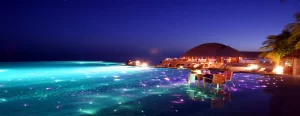
Vaadhoo Island’s beach occasionally glows with blue bioluminescence caused by phytoplankton. When disturbed by waves or movement, these microscopic organisms emit light, creating an ethereal blue glow.
The phenomenon occurs year-round but peaks during new moon nights (July-February) when there’s no moonlight to diminish the effect. Not every night produces strong bioluminescence—it depends on plankton concentration and weather conditions.
Photos rarely capture the magic adequately. You need to experience it in person, watching your footsteps create glowing blue trails in the sand.
Some resorts arrange special “sea of stars” excursions. Budget travelers can visit Vaadhoo independently and hope for the right conditions.
Dhonis are traditional Maldivian wooden boats that have transported islanders for centuries. Modern versions include engines, but they retain their distinctive design.
Sunset dhoni cruises combine cultural heritage with stunning scenery. You’ll sail across calm lagoons as the sun sets, often spotting dolphins playing in the boat’s wake.
Many cruises include snacks and non-alcoholic beverages. Some resorts offer champagne sunset sails for romantic occasions.
It’s wonderfully peaceful—just the sound of water, the warm breeze, and one of nature’s best light shows.
The Maldives pioneered underwater dining with Ithaa Undersea Restaurant at Conrad Rangali Island. This all-glass structure sits 5 meters below sea level, surrounding diners with marine life.
You’ll eat gourmet cuisine while sharks, rays, and colorful fish swim overhead and around you. It’s surreal, expensive (around $300+ per person), and absolutely unforgettable.
Other resorts have followed with their own underwater or partially submerged dining concepts. The novelty has worn off globally, but the Maldives still does it best.
Reservations required weeks or months in advance, especially during peak season.
Timing dramatically impacts which Tourist Attractions in Maldives you can access and enjoy.
The dry season (November-April) offers optimal weather conditions for virtually all attractions. Diving visibility reaches 30-40 meters. Sea conditions stay calm for boat transfers. Beach weather remains consistently perfect. However, this is also peak season with premium pricing.
The wet season (May-October) transforms the underwater world. Manta season at Hanifaru Bay runs May-November. Whale shark encounters peak August-October. Plankton blooms attract megafauna that’s less common during dry season.
Understanding seasonal patterns helps you prioritize. If swimming with whale sharks tops your list, visit August-October despite occasional rain. If your priority is diving visibility and calm seas, stick with November-April.
Before finalizing your itinerary, check our comprehensive guide on the best time to visit Maldives to align your trip with optimal conditions for your chosen attractions.
Tourist Attractions in Maldives vary dramatically in cost. Resort-based experiences (underwater restaurants, spa treatments, resort excursions) command premium prices. A resort-organized snorkeling trip might cost $100-200 per person.
The same snorkeling trip booked through a Maafushi operator? Maybe $30-40 per person. The experience quality differs minimally, but the price difference is massive.
Budget-conscious travelers should base themselves on local islands (Maafushi, Dharavandhoo, Gulhi) and book excursions through local operators. You’ll save 50-70% compared to resort pricing while supporting local businesses directly.
For detailed budget planning and cost-saving strategies, explore our in-depth Maldives trip cost guide that breaks down expenses for different travel styles.
The Maldives’ scattered geography means inter-island transportation is essential for seeing multiple attractions.
Speedboats connect nearby islands, typically costing $25-100 depending on distance. They’re fast but can be rough in choppy conditions. Seaplanes offer spectacular aerial views and access to remote atolls, but operate only during daylight hours and cost $200-500+ per person for transfers.
Domestic flights serve major atolls at more moderate costs than seaplanes. Public ferries provide ultra-budget transportation but run on limited schedules that might not suit tight itineraries.
Planning your route efficiently saves both time and money. If you’re island-hopping, group geographically close attractions together rather than zigzagging across atolls.
For complete transportation details including all transfer options and booking strategies, see our guide on how to reach Maldives and navigate between islands efficiently.
The Tourist Attractions in Maldives extend far beyond postcard-perfect beaches and luxury resorts. This nation offers world-class diving, rare wildlife encounters, cultural insights, and experiences that genuinely cannot be replicated elsewhere.
Your biggest mistake would be booking an all-inclusive resort and never leaving the property. Yes, resort life is comfortable. The food is excellent. The service is impeccable. But you’ll miss the authentic Maldives.
Balance resort relaxation with adventurous exploration. Spend a few days on Maafushi experiencing local island life. Book that whale shark excursion even if it means an early morning. Visit Male for a day to understand Maldivian culture beyond tourism. Prioritize Hanifaru Bay if your dates align with manta season.
The Maldives rewards curious travelers who engage with its full spectrum of attractions. The underwater world deserves your attention—bring your snorkel gear and use it daily. The marine life here exists in abundance and diversity that’s increasingly rare as reefs worldwide face pressure.
Most importantly, respect the fragility of these ecosystems. Use reef-safe sunscreen. Don’t touch coral or marine life. Follow all regulations at protected sites. Your respectful behavior ensures these Tourist Attractions in Maldives remain spectacular for future generations.
The islands are calling. The ocean is waiting. Your Maldivian adventure promises memories that last a lifetime—if you venture beyond your resort’s infinity pool to discover what makes this destination truly extraordinary.
The top Tourist Attractions in Maldives include Hanifaru Bay for manta ray encounters, South Ari Marine Protected Area for whale shark swimming, Male’s Old Friday Mosque and National Museum for cultural insights, Banana Reef for world-class diving, and bioluminescent beaches for a magical natural phenomenon. Each attraction offers unique experiences you won’t find elsewhere.
A minimum of 5-7 days allows you to experience key Tourist Attractions in Maldives comfortably. This gives time for diving or snorkeling at multiple sites, a day trip to Male for cultural attractions, whale shark or manta excursions, and adequate resort relaxation. Serious divers or those wanting to visit multiple atolls should plan 10-14 days.
Yes! Base yourself on local islands like Maafushi, Gulhi, or Dharavandhoo where accommodation costs $40-100 per night instead of $300-2,000 at resorts. Book excursions through local operators who charge 50-70% less than resort pricing for the same experiences. Many attractions like beaches, house reef snorkeling, and Male’s cultural sites are free or very affordable.
No certification is required for snorkeling, which provides access to many of the Maldives’ best marine encounters including whale sharks, manta rays, sea turtles, and vibrant coral reefs. However, a diving certification unlocks deeper sites like Cocoa Thila and Banana Reef. Many resorts and local dive shops offer beginner discovery dives and full certification courses.
Hanifaru Bay’s manta season runs from May through November, with peak activity during June, July, and August. Full moon and new moon phases trigger the largest feeding aggregations. Book permits 2-3 months in advance as only 60-80 snorkelers are allowed daily. Despite being monsoon season, the spectacle of hundreds of mantas feeding simultaneously is worth any weather uncertainty.
Absolutely! Many Tourist Attractions in Maldives are family-friendly. House reef snorkeling is safe for children with supervision. Sandbank excursions and dolphin watching tours appeal to all ages. Male’s National Museum educates kids about Maldivian culture. Many resorts offer kids’ clubs and family-friendly activities. Avoid strong current dive sites and always prioritize safety equipment like life jackets for children.
Inter-atoll transportation includes speedboats ($25-100 depending on distance), seaplanes ($200-500+ with spectacular aerial views, daylight only), domestic flights (moderate cost, connecting major atolls), and public ferries (ultra-budget but limited schedules). Most resorts arrange transfers. Independent travelers can book through local operators or use the government ferry system for the cheapest option.
Cover shoulders and knees when visiting Male and local inhabited islands out of respect for Islamic culture. Remove shoes before entering mosques. Women should carry a sarong or light scarf. Alcohol is illegal on local islands (except resort islands). Public displays of affection should be minimal. Photography is generally welcome, but ask permission before photographing people, especially women. Friday is the holy day with reduced business hours.
Whale sharks are present year-round in the Maldives, but encounter rates vary dramatically by season. The peak season runs from August through October at South Ari Marine Protected Area, with success rates reaching 60-70%. During these months, plankton blooms attract whale sharks to feed in the protected waters. Other months have lower but still reasonable encounter chances, especially at well-known aggregation sites.

As an upcoming travel agent I got much support from travel tourister. We are getting very good leads from travel tourister and they mend our website which is also very commendable.... Excellent work Hope to do more business forward.... Thanks and regards CEO,Andaman Unlocked
Rating:
10/20/2018
As an upcoming travel agent I got much support from travel tourister. We are getting very good leads from travel tourister and they mend our website which is also very commendable.... Excellent work Hope to do more business forward.... Thanks and regards CEO,Andaman Unlocked
Rating:
10/20/2018
2nd Floor, 39, Above Kirti Club, DLF Industrial Area, Kirti Nagar, New Delhi, Delhi 110015



Travel Tourister is a leading Travel portal where we introduce travellers to trusted travel agents to make their journey hasselfree, memorable And happy. Travel Tourister is a platform where travellers get Tour packages ,Hotel packages deals through trusted travel companies And hoteliers who are working with us across the world. We always try to find new and more travel agents and hoteliers from every nook and corners across the world so that you could compare the deals with different travel agents and hoteliers and book your tour or hotel with the one you have chosen according to your taste and budget.
Copyright © Travel Tourister, India. All Rights Reserved


 Call
Call Enquiry