Published on : 26 Sep 2026
By Travel Tourister | Updated Sep 2026
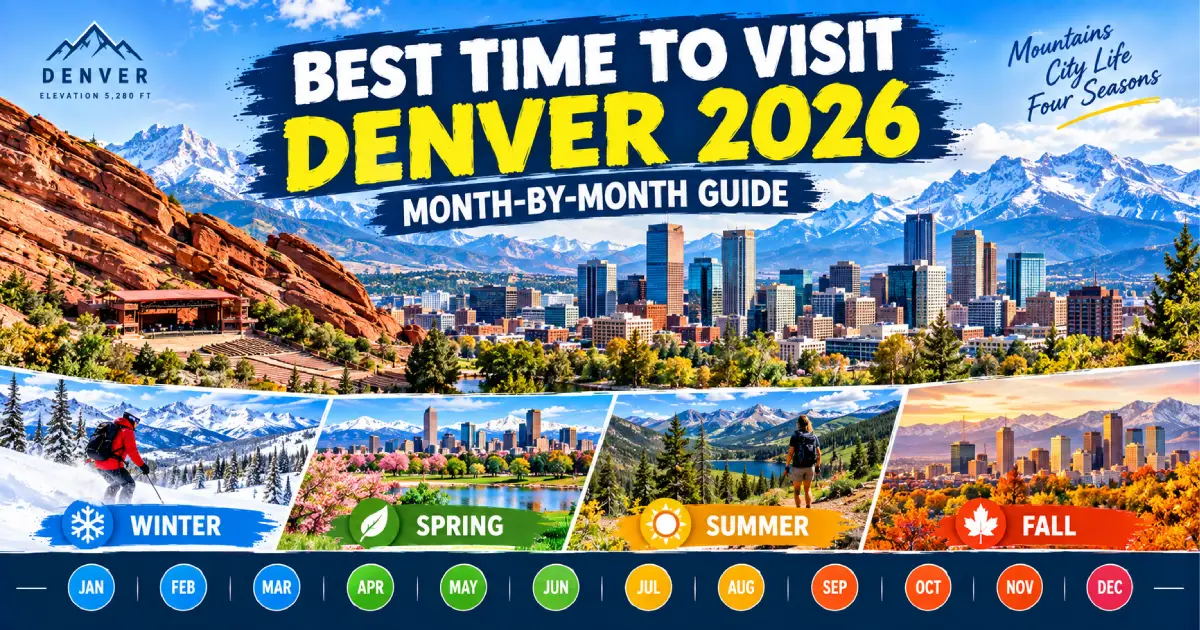
Denver’s “best time to visit” answer is more visitor-type-dependent than almost any other major American city — the answer for a skier (November through April, when the Colorado ski resorts are operating and the I-70 mountain corridor carries the weekly exodus of Denver’s powder-motivated residents) is essentially the opposite of the answer for a hiker and Red Rocks enthusiast (May through October, when the mountain trails are snow-free, the Red Rocks concert season is in full swing, and Rocky Mountain National Park’s Trail Ridge Road is open). Denver’s 300 days of annual sunshine make it simultaneously one of America’s sunniest cities and one of its most genuinely four-seasoned — the January days that begin at -5°F and end at 55°F in the same afternoon being the specific Colorado weather variability that the state’s most quoted meteorological observation captures: “If you don’t like Colorado weather, wait 5 minutes.”
The most broadly honest answer: September and October represent Denver’s finest single visiting window — the specific combination of the warm, clear, low-humidity days (the typical September-October Front Range weather: sunny, 65–80°F in the afternoon, cool and crisp in the morning and evening, the humidity at its annual minimum following the summer monsoon season’s conclusion), the Rocky Mountain National Park elk rut (September–October, the most specifically extraordinary single Colorado natural event accessible as a Denver day trip), the Denver restaurant and cultural season at its most active (the fall festival calendar, the post-summer reopening of the patios and outdoor venues, and the specific autumn energy of a university-and-tech city returning from summer), and the Red Rocks concert season in its final weeks before the October close.
For complete Denver planning, see our Things to Do in Denver 2026, Denver Travel Guide 2026, Day Trips from Denver 2026, and Best Restaurants in Denver 2026.
| Month | Avg High/Low | Conditions | Ski? | Hiking? | Crowds | Hotel Rates |
|---|---|---|---|---|---|---|
| January | 45°F/17°F (7°C/-8°C) | Cold, sunny; occasional snow | ✅ Best | ❌ Limited | Low | Low–Medium |
| February | 48°F/20°F (9°C/-7°C) | Cold, sunny; snow possible | ✅ Best | ❌ Limited | Low | Low–Medium |
| March | 55°F/27°F (13°C/-3°C) | Variable; spring snow possible | ✅ Good | ⚠️ Limited | Medium | Medium |
| April | 62°F/36°F (17°C/2°C) | Warming; “spring blizzards” | ⚠️ Late-season | ⚠️ Lower trails | Medium | Medium |
| May | 71°F/45°F (22°C/7°C) | Pleasant; shoulder season | ❌ Closed | ✅ Most trails | Medium | Medium |
| June | 82°F/55°F (28°C/13°C) | Warm; afternoon storms begin | ❌ Closed | ✅ All trails | Medium–High | Medium–High |
| July | 88°F/61°F (31°C/16°C) | Warm; daily PM storms; peak | ❌ Closed | ✅ All trails | Highest | Highest |
| August | 85°F/59°F (29°C/15°C) | Warm; PM storms; peak ending | ❌ Closed | ✅ All trails | High | High |
| September | 76°F/48°F (24°C/9°C) | Best weather; elk rut | ❌ Closed | ✅ Peak season | Medium | Medium |
| October | 63°F/36°F (17°C/2°C) | Crisp, clear; early snow high | ❌ Closed | ⚠️ Trails closing | Low–Medium | Low–Medium |
| November | 50°F/25°F (10°C/-4°C) | Cold; ski season opens | ✅ Opening | ❌ Limited | Low | Low |
| December | 44°F/19°F (7°C/-7°C) | Cold; ski season full swing | ✅ Good | ❌ Limited | Low–Medium | Medium (holidays) |
September and October represent Denver at its most specifically pleasant — the summer’s afternoon thunderstorm pattern concluding in early September, the humidity at its annual minimum, the temperatures in the ideal 65–80°F/18–27°C afternoon range with cool mornings (45–55°F/7–13°C) that make the hiking, the Red Rocks morning visits, and the Washington Park runs the most specifically enjoyable of any Denver outdoor activity period. The Rocky Mountain National Park elk rut (September–October, the bull elk bugling in the Horseshoe Park and Moraine Park meadows creating the most specifically extraordinary Colorado wildlife event accessible as a day trip) adds the most compelling single seasonal-specific Denver day trip to the already-excellent September-October conditions.
Hotel rates in September–October: Meaningfully below the July–August summer peak (20–30% reduction) while weather and outdoor conditions are actually superior — making September–October the most value-optimized single Denver visiting window.
The ski season’s peak (November through April, with January and February the most reliably excellent snow months across the Colorado resorts) is Denver’s most specifically purpose-driven visiting window — the visitor whose primary purpose is skiing the Breckenridge bowls or the Vail Back Bowls should visit in January or February when the snowpack is most reliably deep, the ski resort operations are at maximum capacity, and the specific powder days (the 24–48 hours following a significant snowfall when the mountain terrain is most specifically extraordinary) most frequently occur.
The Colorado mountain hiking season (June through September, when the high-altitude trails are snow-free and Trail Ridge Road in Rocky Mountain National Park is open) is Denver’s most specifically outdoor-recreation-oriented visiting window — the July wildflower bloom (the most dramatic single Colorado mountain wildflower display, the alpine meadows above treeline carpeted with columbines, Indian paintbrush, and the various other alpine wildflowers during their specific 6–8 week bloom window) and the September elk rut together bracketing the most specifically rewarding single hiking-and-wildlife Denver day-trip season.
Denver’s lowest hotel rates outside the ski holiday premium (the Christmas week and New Year’s spike) occur in January and February for non-ski visitors (the winter shoulder when visitors who aren’t skiing find fewer reasons to come) and in November (the pre-ski-season quiet before Thanksgiving). For visitors willing to accept cold temperatures and limited hiking in exchange for 25–35% hotel rate reductions, these three months provide the most cost-optimized Denver visits.
The July–August peak (the highest hotel prices, the largest tourist volumes, and the most consistently disruptive afternoon thunderstorm pattern) is Denver’s most consistently crowded and most weather-compromised single visiting window. The morning conditions are excellent (the clear, sunny Colorado mornings being genuinely pleasant in the 70–80°F range), but the specific daily afternoon convective thunderstorms (arriving with the reliability of an alarm clock between 2–5 PM, the lightning-thunder-heavy-rain sequence lasting 30–60 minutes before clearing to an evening of pleasant conditions) create a specific outdoor-activity disruption pattern that the most prepared visitors manage with the indoor-during-storms strategy but that the unprepared visitor consistently cites as the most frustrating single Denver summer experience.
Average high: 45°F (7°C) | Average low: 17°F (-8°C) | Snow: 6–10 inches (Denver city); much more at ski resorts | Crowds: Low (city); High (ski resorts) | Hotel rates: Low (city); Premium (ski resort towns)
January is Denver’s coldest month and its most specifically ski-centric — the ski resorts (Breckenridge, Vail, Keystone, Arapahoe Basin, Loveland, and the various other Front Range-accessible resorts) at their seasonal peak snowpack, the I-70 westbound Friday afternoon traffic at its most concentrated (the specific weekly exodus that makes the Denver-to-Breckenridge 1.5-hour drive extend to 3.5 hours on Friday afternoons in January), and the Denver city itself at its quietest and most specifically residential.
January weather nuance: The specific Colorado January weather pattern most misunderstood by out-of-state visitors — the average high of 45°F (7°C) represents the midday temperature after a morning that began at 17°F (-8°C). The specific January Colorado temperature arc: -5°F to 55°F in the same day is a genuinely documented Colorado January weather day. The afternoon temperatures (the midday warmth that the high-altitude solar radiation produces even in January) frequently make the afternoon feel like early spring while the morning requires serious winter gear. The specific pack-it-all strategy (the heavy morning layers, the zip-off mid-layers, and the afternoon capability to reduce to a light jacket all simultaneously accessible in the same day pack) is the most practical single Colorado January packing approach.
January events:
Who should visit in January: Skiers specifically — the January powder conditions (the deep snowpack, the specific Colorado powder quality [the low-moisture-content snow that the Rocky Mountain’s high altitude and cold-and-dry weather pattern produces, distinguishing it from the heavier Sierra Nevada snow and the wetter Pacific Northwest snow], and the January quiet on the mountain during the mid-week [the specific weekday January ski experience — the mountain nearly empty of the weekend crowds, the lift lines measured in seconds rather than minutes] being the most specifically rewarding single ski month) make January the ideal ski-motivated Denver visit.
Average high: 48°F (9°C) | Average low: 20°F (-7°C) | Snow: 6–9 inches (Denver city) | Crowds: Low–Medium (city); Peak (ski resorts, especially President’s Day) | Hotel rates: Low–Medium (city); Very High (ski resort, President’s Day weekend)
February maintains the January ski conditions while introducing the most specifically demanding single ski weekend of the Colorado season — the President’s Day weekend (the three-day MLK-to-Presidents-Day sequence, with Presidents’ Day [the third Monday of February] creating the highest single-weekend ski resort demand in the Colorado year, the I-70 traffic on Presidents’ Day weekend surpassing even the Christmas week in some years’ specific traffic counts). Visitors planning February Denver visits should specifically avoid the Presidents’ Day weekend (typically February 15–17 in 2026 — confirm the specific 2026 dates) for any ski resort day trips unless specifically planning for the resort’s maximum-energy atmosphere with the traffic and crowd cost acknowledged.
February events:
Who should visit in February: Skiers who specifically want the most reliable snowpack (February is statistically the snowiest month at most Colorado resorts, the accumulated seasonal snowpack at its deepest), and budget-conscious visitors who want the Denver city experience at lower hotel prices while accepting the cold temperatures. The specific Denver Restaurant Week timing makes February particularly rewarding for food-focused visitors.
Average high: 55°F (13°C) | Average low: 27°F (-3°C) | Snow: Variable — Denver’s snowiest month by city inches (8–10 inches average) | Crowds: Medium | Hotel rates: Medium | Character: Colorado’s most unpredictable month
March is Colorado’s most specifically weather-variable single month — the specific “spring blizzard” phenomenon (the late-season snowstorms that can deposit 12–24 inches of wet, heavy snow on Denver in a single March event, the most dramatically disruptive single Colorado weather occurrence relative to the month’s warming-trend expectations) coexisting with the genuinely spring-like March warm spells (the specific Front Range Chinook winds [the warm, dry air descending the eastern Rocky Mountain slope, creating the most dramatically rapid temperature increases available at any Front Range location — the temperature rising 40°F in a single hour being a documented Chinook event]) creates the most variable single Denver weather month.
March skiing: The late-season ski conditions (the accumulated snowpack at its deepest, the specific late-season “corn snow” — the freeze-thaw cycle creating the specific granular snowpack surface that the most experienced skiers prize for its speed and its forgiving quality relative to the powdery early-season conditions) and the specific spring skiing atmosphere (the Colorado ski resort spring break energy — the mountain-base outdoor concerts, the swimsuit skiing events, and the specific festive late-season party character that distinguishes March–April skiing from the serious January–February powder focus) create the most specifically social single Colorado ski month.
Who should visit in March: Skiers who specifically want the late-season resort atmosphere and the deepest single-month snowpack, and visitors who want shoulder-season pricing with the possibility of spring-like weather while accepting the “spring blizzard” possibility. The specific March Denver travel planning requirement: pack for both winter (the potential blizzard) and spring (the Chinook days), simultaneously.
Average high: 62°F (17°C) | Average low: 36°F (2°C) | Snow: 5–7 inches (Denver city); ski resorts closing | Crowds: Medium | Hotel rates: Medium | Character: The most genuinely transitional Denver month
April in Denver is the month most specifically defined by simultaneous winter and spring — the lower-elevation Denver streets frequently bare and warm (60–70°F on the best April afternoons) while the ski resorts at 9,000–12,000 feet maintain their operating conditions (most major Colorado resorts operating through April, the specific late-season conditions and the spring-break visitor traffic maintaining the ski business), and the city parks (Washington Park, City Park) transitioning from the winter-brown grass to the first green of the spring warming.
The April hiking transition: The Front Range foothills (the Red Rocks area, the lower Bear Creek Canyon trails, and the various sub-10,000-foot hiking areas) typically become fully snow-free in April — providing the first genuinely hikeable single Colorado mountain foothill conditions of the year. The high-altitude trails (the Rocky Mountain National Park above 10,000 feet) remain snow-covered through April and into May, the Trail Ridge Road typically closed through mid-May or later depending on the specific 2026 snowpack.
Who should visit in April: Late-season skiers who specifically want the spring resort atmosphere, budget-conscious city visitors who want warming temperatures at moderate hotel rates, and visitors specifically interested in the Front Range foothill hiking before the summer crowd season begins.
Average high: 71°F (22°C) | Average low: 45°F (7°C) | Rain: 2.3 inches | Crowds: Medium | Hotel rates: Medium | Hiking: Lower trails fully open; high-altitude trails opening late May
May is Denver’s most specifically transitional outdoor recreation month — the ski resorts closing (most major Colorado resorts close in late April or very early May, the specific 2026 closing dates available at each resort’s website), the hiking season beginning in earnest (the Front Range foothill trails fully snow-free, the lower Rocky Mountain National Park trails accessible by mid-May, and the Trail Ridge Road typically opening in late May depending on snowpack removal progress), and the Red Rocks concert season beginning (the May Red Rocks concerts marking the most anticipated single annual music return for Denver’s concert community).
The Red Rocks opening: The most specifically beloved single Denver May event — the first Red Rocks concert of the season (typically in late April or early May, the specific 2026 opening event announced at redrocksonline.com) marks the Denver cultural community’s most specific collective seasonal celebration, the return of the world’s most beautiful concert venue after the winter closure creating the most specifically anticipated single annual Denver event.
Bay to Breakers equivalent — Bolder Boulder (Memorial Day): The Bolder Boulder (the annual Memorial Day 10K road race in Boulder — the most attended single road race in the United States by runner count, the 50,000+ participants running through Boulder’s neighborhoods with the specific costumed-and-parade-float character that distinguishes it from the standard competitive race format) provides the most specifically accessible and most specifically Colorado-character single spring running event accessible from Denver.
Who should visit in May: Visitors who want the mountain hiking season’s beginning (the trail access before the summer crowd peak) at moderate pricing, Red Rocks concert enthusiasts who want the season-opening energy, and anyone seeking the most transitional-character Denver month — the city fully awakening from winter.
Average high: 82°F (28°C) | Average low: 55°F (13°C) | Rain: 1.6 inches | Crowds: Medium–High | Hotel rates: Medium–High | Afternoon storms: Beginning to establish
June is Denver’s first genuinely summer month — the temperatures reaching the mid-80s°F on the warmest days, the hiking season in full swing (all major trails including the Rocky Mountain National Park high-altitude trails accessible by early June, the Trail Ridge Road typically open by late May or early June), and the afternoon thunderstorm pattern beginning to establish the specific summer rhythm (the 2–5 PM convective storm window that defines Denver summer outdoor activity planning from June through August).
The June hiking ideal: The Rocky Mountain National Park wildflower season (beginning in the subalpine meadows in late June — the columbines, the Indian paintbrush, and the various other alpine wildflowers at the beginning of their specific 6–8 week bloom window) and the Trail Ridge Road in its newly-opened freshness (the first weeks of Trail Ridge Road operation providing the most specifically un-trafficked single RMNP experience of the season — the road not yet saturated with summer visitors) create the most specifically rewarding single RMNP June experience.
Who should visit in June: Hikers who want the full trail season open (all trails accessible) before the peak July–August crowds, Red Rocks concert enthusiasts (the full summer concert calendar underway), and visitors who want the summer character at slightly below-peak prices and crowds.
Average high: 88°F (31°C) | Average low: 61°F (16°C) | Rain: 2.0 inches | Crowds: Highest | Hotel rates: Highest | Afternoon storms: Daily and reliable
July is Denver’s most visited and most expensive month — the school-year-break travel maximum (the American family summer vacation concentrated in July), the hiking season at its full capacity (every trail open, every campground full, Rocky Mountain National Park at its visitor-volume peak), and the afternoon thunderstorm pattern at its most reliably daily. The July 4th holiday (Independence Day) creates specific Denver programming (the Civic Center Park fireworks, the various neighborhood celebrations, and the specific Red Rocks evening [the fireworks visible from the Red Rocks area creating the most dramatically staged single Colorado Independence Day viewing position]) alongside the most concentrated single July hotel demand spike.
Managing July in Denver: The specific strategies that transform July from the most overwhelming Denver month to a genuinely rewarding one:
The 6 AM hiking departure: Rocky Mountain National Park’s timed entry (the Bear Lake Corridor entry window opening at 5–6 AM for the earliest groups) rewards early risers with the pre-crowd mountain experience — the 6 AM Bear Lake arrival providing the most dramatic morning light on the Flatirons reflection in Dream Lake and the most specifically uncrowded single RMNP trail experience of any July day.
The afternoon indoor strategy: Planning indoor activities (Denver Art Museum, Meow Wolf Convergence Station, History Colorado Center, the craft brewery taprooms) for the 2–5 PM thunderstorm window, then returning outdoors for the specific post-storm Denver evening (the 6–9 PM window after the storm has cleared providing the most dramatically washed-clear-and-golden Denver evening light of any time of the year).
Who should visit in July: Visitors whose schedules are fixed to the July school-vacation window and families with children for whom the summer activities (the hiking, the Colorado summer festivals, and the specific outdoor programming) are the primary Denver motivation.
Average high: 85°F (29°C) | Average low: 59°F (15°C) | Rain: 2.3 inches | Crowds: High (declining in late August) | Hotel rates: High (declining in late August)
August follows July’s pattern but with the specific Labor Day crowd reduction visible in the calendar — the late August (August 20–31) crowd decline (the school year’s August resumption removing the largest single tourist demographic from the city’s visitor population) providing the most dramatically improved single Denver urban visitor experience available in the late-summer period at still-excellent hiking and outdoor conditions.
The August hiking peak: The Rocky Mountain wildflower season at its maximum in early-to-mid August (the highest-altitude wildflowers — the sky pilot, the alpine forget-me-not, and the various other tundra-level bloomers reaching their peak in the August tundra conditions above 12,000 feet) makes August the single most specifically wildflower-rewarding RMNP hiking month. The late-August transition (the wildflowers beginning to fade, the first hints of the autumn color appearing in the aspen groves at lower elevations) creates the most specifically seasonal-transition single Colorado hiking experience.
Who should visit in August: Wildflower enthusiasts (the peak wildflower bloom most specifically rewarding in early August), visitors whose school-year schedules make late August the most accessible single summer window (the late-August crowd decline providing meaningfully better hiking and hotel conditions than July at equivalent prices), and anyone specifically motivated by the Colorado Summer Music Festival season (the Telluride Bluegrass, the Breckenridge Music Festival, and the various other Colorado summer music events concentrated in July–August).
Average high: 76°F (24°C) | Average low: 48°F (9°C) | Rain: 1.2 inches (lowest of the year alongside October) | Crowds: Medium (declining) | Hotel rates: Medium | Special event: Rocky Mountain National Park elk rut (mid-September through mid-October)
September is the month that most Denver residents and most experienced Denver visitors most specifically recommend — the specific combination of the summer’s heat having passed (the 76°F average high is ideal for outdoor activity without the 88°F July heat), the afternoon thunderstorm pattern concluding (early September still sees occasional storms but the daily reliability diminishes rapidly through the month, the storm-free afternoons becoming the September norm by the third week), the autumn beginning its specific Colorado expression (the aspen groves at the ski resort elevations transitioning from green to gold in mid-to-late September, the most specifically beautiful single Colorado annual landscape event), and the Rocky Mountain National Park elk rut providing the most extraordinary single Colorado wildlife encounter.
The September elk rut: The defining single September Denver day trip experience — see Day Trips from Denver 2026 for the full elk rut planning guide. The abbreviated summary: the bull elk bugling in the Horseshoe Park and Moraine Park meadows of RMNP (the specific multi-note vocalization audible across the valley in the still September dawn), the behavioral displays (the bulls herding their harems, the occasional confrontations), and the specific early-morning light on the meadow creating the most cinematically perfect single Colorado nature experience available to anyone within day-trip distance.
The aspen color: The Colorado aspen groves (the specific Populus tremuloides groves that cover the mountain slopes at 8,000–11,500 feet elevation — the aspens’ specific connected root systems, each grove being a single organism [the Pando grove in Utah being the most famous example], their specific simultaneous color change creating the most uniform single-color landscape display of any North American deciduous tree) turning gold in September (the high-elevation groves at Breckenridge, Steamboat Springs, and the various other high-altitude Colorado locations peaking in mid-to-late September) create the most specifically beautiful single Colorado mountain annual event.
September events:
Who should visit in September: The most broadly recommended Denver visitor month — excellent for hiking (all trails accessible, no crowds relative to summer), wildlife enthusiasts (the elk rut), aspen color enthusiasts, Red Rocks concert-goers (the final weeks of the season), and anyone seeking the ideal balance of weather, crowds, and pricing.
Average high: 63°F (17°C) | Average low: 36°F (2°C) | Snow: 3–5 inches (Denver city) | Crowds: Low–Medium | Hotel rates: Low–Medium | Character: The most specifically crisp and clear Denver month
October provides the most specifically post-summer-clarity Denver experience — the skies clearing to the highest-visibility conditions of the year (the specific post-monsoon-season atmospheric clarity, the Front Range visible in extraordinary detail, and the 100-mile views available on the clearest October days creating the most dramatically far-seeing single Denver outdoor condition), the aspen color at lower elevations (the Denver metro foothills, the lower Red Rocks area, and the October gold of the lower-elevation grove creating the most accessible single aspen color display), and the Red Rocks season concluding (the final October concerts before the amphitheatre goes dark for winter).
Early season skiing: The highest-altitude Colorado ski resorts (Arapahoe Basin and Loveland — the two most elevation-dependent Colorado resorts, occasionally opening in mid-to-late October with limited terrain on their uppermost runs) may open in October in high-snowpack years — the specific “first turns of the season” experience that the most eagerly anticipating Colorado ski community specifically celebrates.
Who should visit in October: Visitors who want September’s conditions at slightly lower prices (October hotel rates typically 10–15% below September’s), aspen color enthusiasts (the lower-elevation groves at peak in October), Red Rocks fans wanting the final concerts, and budget-conscious visitors seeking the most cost-effective quality Denver experience.
Average high: 50°F (10°C) | Average low: 25°F (-4°C) | Snow: 5–7 inches (Denver city) | Crowds: Low | Hotel rates: Low | Ski season: Opening at major resorts (typically mid-November)
November marks the transition from Denver’s outdoor season to its ski season — the hiking trails at high altitude snowed in, the Red Rocks concert season concluded, and the first ski resort openings (Arapahoe Basin and Loveland in early November, Breckenridge and Keystone in mid-November in average snow years, the full Colorado ski lineup by Thanksgiving) beginning the cycle that January will bring to its peak.
Thanksgiving week: The specific Thanksgiving holiday week creates the most concentrated single non-summer hotel demand spike in the Denver annual calendar — the Thanksgiving Wednesday (travel day), Thanksgiving Day, and the post-Thanksgiving ski weekend together creating a 5-day period of maximum Denver hotel demand that reverses the otherwise-quiet November hotel rate pattern. Visiting the week before Thanksgiving (November 10–19) or after (November 30–December 10) provides the most cost-effective November hotel rates.
Who should visit in November: Budget-focused visitors who want Denver at its lowest city-tourist prices before the ski season raises I-70 corridor accommodation rates, early-season skiers who want to catch the first-snow ski conditions at the highest-altitude resorts, and Thanksgiving travelers who want Denver’s specific holiday atmosphere (the outdoor ice skating at Civic Center Park opening in November, the downtown Denver holiday lighting, and the specific mountain-town holiday character visible in the I-70 corridor communities).
Average high: 44°F (7°C) | Average low: 19°F (-7°C) | Snow: 6–8 inches (Denver city) | Crowds: Low–Medium (early); High (holidays) | Hotel rates: Medium (early); Very High (Christmas/New Year’s)
December divides into two clearly distinct Denver periods: the early December quiet (December 1–20) providing the most specifically atmospheric single Denver holiday period at manageable prices (the outdoor ice skating at Civic Center Park, the LoDo Christmas lights, and the ski resort full-operation [all major Colorado resorts operating by early December] without the Christmas-week crowd spike), and the Christmas-to-New-Year’s week (December 21–January 1) bringing the most concentrated single holiday hotel demand of the year to both the Denver city hotels and the ski resort town accommodations.
The Denver holiday atmosphere: Denver’s specific Christmas character — the 16th Street Mall holiday lighting (the most extensively lit single Denver outdoor commercial corridor, the specific Denver holiday decoration program running from Thanksgiving through early January), the Civic Center Park ice skating rink (the most accessible single outdoor Denver winter activity, the free skate rentals available, the City and County Building light display behind the rink creating the most specifically holiday-atmospheric single Denver outdoor public space), and the specific Denver holiday market (the Christkindl Market — the German-influenced holiday market typically operating in Civic Center Park during December, the glühwein, the holiday ornaments, and the specific artisan vendors creating the most specifically European-character single Denver holiday event).
Who should visit in December: Holiday travelers who want Denver’s specific Christmas atmosphere (the early December period before the price spike provides the most atmospheric and most affordable combination), ski-focused visitors who want the full ski season in operation alongside the holiday character, and anyone who specifically values the Denver winter character (the cold, crisp air, the mountain view at its most dramatic with the fresh snow on the peaks, and the specific Denver January-approaching-energy that December carries).
For ski-motivated Denver visitors, the specific Colorado ski resort season calendar:
| Resort | Typical Opening | Typical Closing | Peak Months | Best For |
|---|---|---|---|---|
| Arapahoe Basin | Late Oct/Early Nov | June | Jan–Apr | Longest season; expert terrain |
| Loveland | Mid-November | Early April | Jan–Mar | Best value; closest to Denver |
| Breckenridge | Mid-November | Late April | Dec–Mar | Most varied terrain; Victorian town |
| Keystone | Mid-November | April | Dec–Mar | Best for families; night skiing |
| Copper Mountain | Mid-November | Mid-April | Jan–Mar | Terrain variety; less crowded |
| Vail | Mid-November | Mid-April | Jan–Mar | Most prestigious; most terrain |
| Beaver Creek | Late November | Mid-April | Dec–Mar | Most exclusive; less crowded |
| Aspen/Snowmass | Late November | Early April | Jan–Mar | Most prestigious address |
| Steamboat Springs | Mid-November | Mid-April | Jan–Mar | Most specifically Western atmosphere |
The powder day: The specific Colorado ski culture’s most anticipated single event — the 24-48 hour period following a significant snowfall when the mountain terrain is covered in the specific low-moisture Colorado powder snow (the most highly-sought single ski experience in North America, the specific feather-light snow requiring specific technique [the wider ski stance, the centered balance, and the specific weight transfer that powder requires compared to groomed surface skiing] and rewarding with the most specifically effortless-feeling single ski experience). The powder day is most reliably available in January and February, occasionally in December and March, and rarely in the other ski months.
| Event | Month | Type | Cost |
|---|---|---|---|
| National Western Stock Show | Mid-January | Rodeo/Livestock | $20–$40 |
| Denver Restaurant Week | Feb/March | Dining | Prix-fixe discounts |
| Bolder Boulder 10K | Memorial Day | Running | $65 (race entry) |
| Red Rocks Concert Season | May–October | Music | $35–$150 |
| Colorado Music Festival (Boulder) | June–July | Classical music | $20–$75 |
| Breckenridge Music Festival | July–August | Music | $15–$50 |
| A Taste of Colorado | Labor Day weekend | Food/Music | Free |
| RMNP Elk Rut | September–October | Wildlife | $35/vehicle (RMNP) |
| Oktoberfest Denver | Late September | Beer/Culture | Free–$15 |
| Denver Film Festival | October | Film | $12–$20 |
| Denver Christkindl Market | December | Holiday market | Free entry |
| Civic Center Ice Skating | Nov–January | Winter | Free ($5 skate rental) |
About Travel Tourister Travel Tourister’s destination specialists have visited Denver in every month of the year — from January’s National Western Stock Show rodeo performances and February’s Breckenridge powder-day I-70 Saturday-departure early arrivals through March’s Larimer Square spring-blizzard-to-Chinook-warmth same-week wardrobe-confusion and April’s Red Rocks first-concert-of-season opening energy, May’s initial Trail Ridge Road drive with the road newly cleared and the parking area barely populated, July’s pre-dawn 5 AM Rocky Mountain National Park Bear Lake timed-entry arrivals before the crowds, September’s Horseshoe Park 6 AM pre-dawn elk bugling meadow positioning in the October’s golden aspen Breckenridge main street walk, November’s Civic Center ice skating opening weekend, and December’s Christkindl Market glühwein in the shadow of the City and County Building holiday lights — to deliver the most practically honest and most seasonally-complete Denver timing guide for every type of 2026 visitor.
Posted By : Vinay
Latest Article
2nd Floor, 39, Above Kirti Club, DLF Industrial Area, Kirti Nagar, New Delhi, Delhi 110015



Travel Tourister is a leading Travel portal where we introduce travellers to trusted travel agents to make their journey hasselfree, memorable And happy. Travel Tourister is a platform where travellers get Tour packages ,Hotel packages deals through trusted travel companies And hoteliers who are working with us across the world. We always try to find new and more travel agents and hoteliers from every nook and corners across the world so that you could compare the deals with different travel agents and hoteliers and book your tour or hotel with the one you have chosen according to your taste and budget.
Copyright © Travel Tourister, India. All Rights Reserved

 Call
 Enquiry