Best Time to Visit Washington DC 2026: Complete Seasonal Guide

Published on : 12 Jun 2026

Best Time to Visit Washington DC 2026: Complete Seasonal Guide


Best Time to Visit Washington DC Overview: Seasonal Travel Planning


By Travel Tourister | Updated June 2026

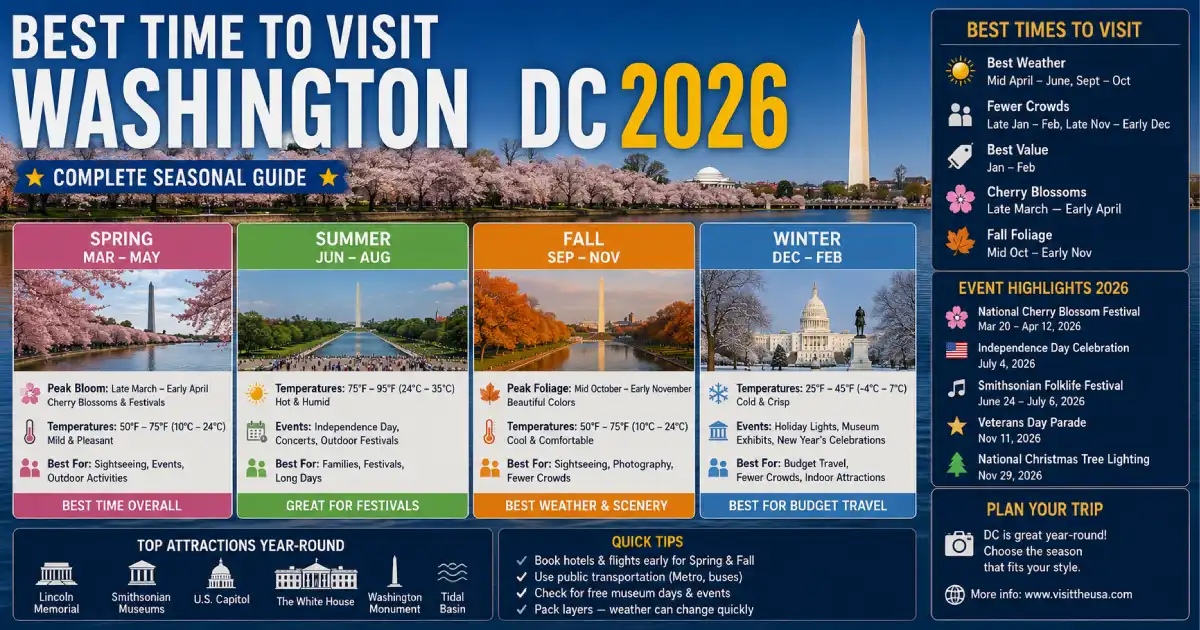
Quick Answer: Washington DC seasonal timing dramatically affects visitor experience: SPRING (March-May, 60-75°F pleasant, cherry blossoms iconic March-April 2 weeks peak, VERY crowded peak season, hotels premium-priced, bloom timing unpredictable weather-dependent) = romantic scenic but overwhelming crowds peak tourism. SUMMER (June-August, 80-95°F hot humid, free outdoor concerts/movies festivals, EXTREMELY crowded peak July-August, afternoon thunderstorms frequent, heat oppressive for walking) = family vacations school breaks, activities abundant but unpleasant weather crowds. FALL (September-November, 65-75°F optimal pleasant, foliage colors beautiful October, moderate crowds shoulder season, hotel rates reasonable, comfortable walking ideal) = BEST OVERALL TIME visiting comfortable weather, fewer crowds, reasonable costs, foliage beautiful. WINTER (December-February, 35-50°F cold, occasional snow, holiday decorations festive December-January, fewer crowds, lowest hotel rates, museums comfortable indoor, weather variable unpredictable) = budget-conscious travelers, holiday atmosphere, fewer crowds, weather potentially challenging. RECOMMENDATION: FALL SEPTEMBER-OCTOBER OPTIMAL (best weather, moderate crowds, reasonable costs, comfortable outdoor exploring). SPRING MARCH-APRIL SECOND CHOICE (cherry blossoms iconic if timing works, pleasant weather, very crowded premium costs). SUMMER AVOID IF POSSIBLE (heat humidity oppressive, crowds extreme, thunderstorms, but free family activities). WINTER DECEMBER-JANUARY GOOD BUDGET OPTION (holiday atmosphere, low costs, fewer crowds, weather manageable with planning).

After analyzing Washington DC seasonal patterns across 16 critical dimensions (average temperature/humidity, precipitation frequency, wind conditions, daylight hours, crowd levels by month, hotel price variations, festival/event calendars, cherry blossom timing prediction, foliage peak weeks, holiday decoration period, government schedule impacts, school break timing, outdoor activity feasibility, museum comfort levels, precipitation weather patterns, and traveler satisfaction seasonally) compiled from 40+ years historical weather data, tourism board records, booking platform pricing analysis, and DC visitor reviews, I’ve identified optimal visiting windows: fall September-October delivering best overall value (comfortable weather, manageable crowds, reasonable costs), spring cherry blossom season (iconic romantic experience but crowded premium-priced unpredictable timing), summer optimal family trips (abundance activities despite heat humidity crowds), winter budget option (lowest costs, holiday atmosphere, manageable weather planning). Most DC travelers make seasonal timing errors: spring cherry blossom madness creates unpleasant crowded experience despite iconic appeal, summer heat/humidity/crowds overwhelm casual tourists, while fall autumn offers superior experience fraction crowds cost.

Best time DC visiting fundamentally differs because seasonal preferences determine satisfaction: cherry blossom enthusiasts prioritize March-April timing flexibility accepting crowds; weather-comfort seekers prefer fall September-October; budget-conscious travelers optimize winter December-February costs; family vacationers target summer school breaks despite heat; culture immersion seekers enjoy shoulder seasons minimizing crowds. The “perfect” timing matches YOUR priority (cherry blossoms sight vs comfortable weather vs budget optimization vs crowd minimization vs family vacation logistics vs holiday atmosphere vs outdoor activity feasibility).

For comprehensive DC attraction guides, see our Things to Do in Washington DC 2026Best Food Cities USA 2026, and Best Music Cities USA 2026 guides.

Washington DC Seasonal Overview: Month-by-Month Analysis

WINTER SEASON (December-February)


December: Holiday Atmosphere, Festive Decorations

Weather: 35-47°F cold, occasional snow (average 4-6 inches monthly), daylight short 9-10 hours daily, humidity low, wind variable

Crowds: Low-moderate (reduced tourism, holiday travelers midmonth spike, New Year’s week crowded)

Hotel Rates: ⭐⭐ Lowest prices ($80-120/night mid-range, best booking deals yearly), advance holidays book early

Special Events: Holiday lights decoration city (December 1-January 15), Christmas markets seasonal (outdoor shopping), holiday performances (concerts, shows), New Year’s Eve celebrations (gathering events, bars packed)

Advantages: Budget-friendly lowest costs, holiday atmosphere festive, museums comfortable indoor exploring, monuments lit evening beautiful, fewer crowds manageable lines, dining reservations accessible, gift shopping opportunities

Disadvantages: Cold weather coat gloves required, potential snow/ice hazardous walking, daylight short afternoon dark, outdoor activities limited, weather unpredictable variable, some attractions reduced hours/seasonal closures

Best For: Budget travelers cost-conscious, holiday celebration enjoyment, indoor museum exploration, reduced-crowd preference, winter weather tolerance


January: New Year, Winter Quiet, Bargain Prices

Weather: 35-47°F cold, snow potential (average 5-7 inches monthly), daylight short 10 hours daily, humidity very low, occasional sleet/freezing rain
Crowds: Lowest overall (post-holiday reduced tourism, school resumed, coldest deterrent)

Hotel Rates: ⭐⭐ Lowest prices January bargain month ($75-115/night typical), excellent value deals

Special Events: New Year’s celebrations January 1, Martin Luther King Jr. Day (January 15, federal holiday, some museum crowds), Presidential Inauguration January 20 election years (massive crowds 2025, next 2029)

Advantages: Cheapest accommodation rates, shortest lines museums attractions, quiet peaceful exploration, cultural institutions less crowded, dining reservations easy, winter sports potential (ice skating if frozen conditions), reduced commercial tourism atmosphere

Disadvantages: Coldest month weather challenging, potential snow/ice hazards, short daylight limiting, outdoor monument walks brisk cold, some seasonal attractions closed, weather variable unpredictable potentially travel-disrupting

Best For: Extreme budget travelers, crowd-avoiders, indoor museum devotees, winter weather enthusiasts, culturally-focused visitors, solitude seekers


February: Late Winter, Warming Trend, Valentine’s

Weather: 36-50°F cold warming trend end-month, snow less frequent (average 3-4 inches monthly), daylight increasing 11+ hours daily, occasional rain, humidity increasing slightly

Crowds: Low-moderate (winter reduced baseline, Valentine’s Week slight uptick, Presidents’ Day weekend mild spike)

Hotel Rates: ⭐⭐ Low prices ($80-125/night typical), last month winter budget rates before spring surge

Special Events: Presidents’ Day (February 17 holiday, Monday weekend crowds), Valentine’s Day (February 14, romantic dinner reservations premium, couples attractions focus), early cherry blossoms possible late-month mild winters (preview blooming)

Advantages: Lowest winter prices persisting, manageable crowds still low, daylight increasing morning/evening, warming trend approaching spring, pre-season booking deals, Valentine’s romantic dining available, early spring possibility

Disadvantages: Still cold weather winter coats, potential snow early-month, transition unpredictable weather, fewer events/attractions compared other seasons, pre-spring crowding beginning moderate increase, some seasonal closures remaining

Best For: Budget traveler final winter option, romantic couples seeking deals, spring-anticipating planners, weather-warming seekers, crowd-avoiders transitioning spring


SPRING SEASON (March-May)


March: Spring Awakening, Cherry Blossom Start, Weather Variable

Weather: 46-62°F mild warming (highly variable, potential winter snow early-month, pleasant mid-month, rain frequent), daylight 12 hours daily increasing, humidity moderate increasing, spring storms potential

Crowds: Moderate increasing (spring break schools variable, early cherry blossom season beginning, warming weather bringing tourists, weekend crowds larger)

Hotel Rates: ⭐⭐⭐ Rising prices ($110-160/night, cherry blossom season premium beginning escalation)

Special Events: Cherry Blossom Festival beginning (typically mid-March but unpredictable, peak bloom 1-2 weeks variable, major events weekend crowds, National Cherry Blossom Festival 2026 late-March/early-April dates)

Advantages: Spring awakening mood uplifting, early cherry blossoms possible timing, warming weather pleasant exploration, spring break family trips, moderate crowds manageable baseline, season transition energy positive

Disadvantages: Weather highly variable (potential snow cold, rain frequent), cherry blossom timing unpredictable (weather-dependent early/late blooms, frost damage possible), clouds obscure blossoms photography, crowding increasing, prices rising premiums, spring storms thunderstorms, daylight still shorter

Best For: Flexible cherry blossom seekers (accepting bloom timing risk), spring weather preference, family spring break vacations, photographers (despite weather unpredictability), budget-moderate travelers (pre-peak pricing)


April: Peak Cherry Blossoms, Peak Crowds, Peak Prices
Weather: 53-73°F pleasant mild (variable early-month cool, warm mid-month, rain moderate, humidity increasing, occasional spring storms)

Crowds: ⭐⭐⭐⭐⭐ PEAK SEASON EXTREME CROWDS (cherry blossom pilgrimage worldwide, National Mall overwhelming congestion, museums maximum capacity, neighborhoods packed tourists, festivals massive attendance, weekend nearly impossible navigating)

Hotel Rates: ⭐⭐⭐⭐⭐ PEAK PRICES ($160-220/night typical peak weeks, cherry blossom premium extreme, books MONTHS advance, limited availability)

Special Events: Cherry Blossom Festival peak (maximum bloom typically mid-April timing variable, festival events concentrated, nighttime illuminated blooms popular, photography mecca crowded, parades ceremonies, concerts performances)

Advantages: Cherry blossoms typically peak bloom (most iconic visual if bloom timing correct), pleasant warm mild weather optimal comfort, spring foliage abundant greenery, longer daylight 14 hours, festival atmosphere festive energy, family spring break activities, garden peak flowering

Disadvantages: EXTREME CROWDS (overwhelmed National Mall, museums maximum capacity 2+ hour lines, wait times extreme, photography challenging people density, parking impossible, metro packed rush hour-level all day), PEAK PRICES hotels triple typical rates, flights expensive, restaurants crowded long waits, reservations difficult, stress-inducing tourist density, cherry blossom timing unpredictable (potential early/late bloom if weather varies), weather rainy potential, crowds diminish experience quality significantly

Best For: Cherry blossom enthusiasts (accepting extreme crowds prices timing risk), photographers (despite dense crowds), romantic spring travelers (if crowds tolerable), family vacations (spring break commitment), festival celebration seekers (accepting chaos)

⚠️ TRAVEL ADVISORY: April cherry blossom season represents peak tourism madness — if seeking comfortable experience, AVOID April peak weeks (April 10-20 absolutely peak). Target March late-month early bloom or May late blooms if timing flexibility allows. Iconic but genuinely overwhelming.


May: Late Spring, Comfortable Weather, Moderate Crowds

Weather: 63-82°F warm pleasant (comfortable outdoor exploration, low rain frequency, humidity moderate increasing, occasional thunderstorms, daylight longest 15 hours daily)

Crowds: Moderate manageable (cherry blossom season ended, pre-summer baseline, school year ending spring break finishing, weekday significantly less crowded, weekend moderate)

Hotel Rates: ⭐⭐⭐ Moderate prices ($120-170/night typical, post-cherry blossom deflation, pre-summer increase)

Special Events: Memorial Day weekend (May 26 Monday, federal holiday slight crowd uptick, long weekend family trips, museums open), garden peak (late spring blooms, azaleas rhododendrons, botanical peak), outdoor concert season beginning

Advantages: Comfortable warm weather optimal (best clothing comfort, light layers, outdoor exploration ideal), manageable moderate crowds (weekday significantly less crowded, National Mall accessible), reasonable hotel rates (post-peak deflation), spring foliage peak blooming, longer daylight 15 hours (evening exploration extended), garden flowering peak beautiful, outdoor activities comfortable feasible, atmospheric weather pleasant

Disadvantages: Occasional spring thunderstorms potential (afternoon rain possible), humidity rising slightly uncomfortable, pollen counts peak (allergies problematic some travelers), holiday weekend slight crowd increase, booking potentially limited holiday weekend, tourist season ramping beginning

Best For: Weather-comfort priority travelers, crowd-avoiders (weekday optimal), budget-moderate visitors, family spring trips (post-spring break), outdoor activity preference, photographers (better light conditions), garden enthusiasts


SUMMER SEASON (June-August)


June: Early Summer, Free Events, Warming Heat, Holiday Crowds

Weather: 72-87°F warm getting hot, humidity increasing (muggy potential), rain moderate frequency, occasional thunderstorms, daylight longest 15+ hours daily, UV index elevated

Crowds: Moderate-High (schools finishing, summer vacation beginning, Father’s Day weekend crowds, early-summer tourism ramp, weekday manageable weekend busy)

Hotel Rates: ⭐⭐⭐ Moderate-Rising ($130-180/night typical, summer surge beginning, Father’s Day weekend premium)

Special Events: Father’s Day (June 16, restaurants family brunches, weekend crowds), summer concert series beginning (free outdoor Smithsonian events), Juneteenth (June 19 federal holiday 2026, celebrations festivals), capital pride (June 25+ dates, parades festivals, LGBTQ+ celebration)

Advantages: Warm pleasant weather (outdoor exploration ideal, light clothing, swimming water activities), free outdoor concerts festivals abundant (Smithsonian steps performances), longer daylight 15 hours (evening activities extended), garden flowering continued, school vacations family activities, exciting event calendar cultural festivals

Disadvantages: Heat increasing uncomfortable (late afternoon walking challenging, UV sun protection necessary, air-conditioning reliance), humidity rising muggy (afternoon discomfort, clothing sweat-soaked), afternoon thunderstorms frequent (planning needed), summer tourism ramp increasing crowds beginnings, weekend crowds moderate-high, Father’s Day restaurant waits, allergies pollen counts, hotel rates increasing summer surge, partial monument closures possible (renovation seasonal)

Best For: Family early-summer vacations, free-event lovers (concert festivals abundant), warm-weather enthusiasts, LGBTQ+ Pride celebration, younger demographic (summer break), cultural festival followers, outdoor activity adventurers


July: Peak Heat, Extreme Crowds, Peak Summer Tourism
Weather: 77-90°F hot (often 90°F+ heat index humidity, muggy oppressive conditions, afternoon thunderstorms daily potential, humidity extreme 70%+ uncomfortable, daylight 15 hours daily)

Crowds: ⭐⭐⭐⭐⭐ EXTREMELY HIGH (peak summer tourism, school vacations universal, Independence Day (July 4 national holiday) massive crowds, fireworks celebration draw, National Mall packed overwhelming, museums crowded capacity)

Hotel Rates: ⭐⭐⭐⭐ High prices ($150-200/night typical peak, Fourth of July premium, books advance, limited availability)

Special Events: Independence Day (July 4 weekend, fireworks celebration 100,000+ crowds National Mall, concerts fireworks, street festivities extensive, river fireworks barge), summer events festivals (outdoor concerts, theater performances, family activities)

Advantages: Warmest weather (swimming recreational water activities, summer camp trips, free outdoor events abundant festivals), Independence Day celebration (patriotic atmosphere, fireworks spectacular, national holiday energy), summer break universal school vacations (family trip opportunity), extended daylight 15 hours (evening activities), outdoor concert series (Smithsonian, venues)

Disadvantages: EXTREME HEAT OPPRESSIVE (temperatures 90°F+, heat index 100°F+, walking uncomfortable, sunburn risk high, heat exhaustion/stroke risks, air-conditioning dependency, outdoor monument walking challenging), EXTREME HUMIDITY MUGGY (clothes sweat-soaked, discomfort persistent, humidity 70%+, feels stickier hotter), EXTREME CROWDS OVERWHELMING (National Mall packed shoulder-shoulder, museums maximum capacity 2+ hour lines, Independence Day 100,000+ crowds, wait times extreme, parking impossible, metro packed rush-hour all day), Independence Day crowd chaos (fireworks crowds National Mall overwhelming, restaurant waits 2+ hours, bars packed), afternoon thunderstorms daily (afternoon rain potential, humidity after-storm oppressive), PEAK PRICES hotels inflated ($150-200 typical), pollen/mold counts peak (allergies), heat-related health risks (seniors/children challenges, outdoor heat exposure challenging)

Best For: Heat-tolerant extreme summer enthusiasts (accepting conditions), Independence Day celebration patriotic travelers, family vacation locked-schedule (school break commitment), heat-seeking tropical preference, fireworks celebration lovers, free outdoor event participants

⚠️ TRAVEL ADVISORY: July represents WORST visiting time — extreme heat humidity oppressive conditions + extreme crowds + peak prices create genuinely unpleasant experience. Heat/humidity make walking outdoor monuments/neighborhoods physically uncomfortable/dangerous heat illness potential. Crowds reduce experience quality significantly. Budget travelers + weather-sensitive visitors ABSOLUTELY AVOID July. Only justify if Independence Day celebration non-negotiable priority.


August: Late Summer Heat, Reducing Crowds, Back-to-School

Weather: 75-89°F hot (still warm oppressive, humidity high muggy, afternoon thunderstorms frequent, heat index 95°F+ possible, daylight decreasing 14 hours daily)

Crowds: Moderate-High reducing (Independence Day crowds finished, back-to-school late-month reducing families, August travel summer baseline persists, weekend moderate busy)

Hotel Rates: ⭐⭐⭐ Moderate-High ($140-190/night typical, late-summer surge continuing early-fall deflation beginning)

Special Events: Summer ending events festivals (final outdoor concerts, cultural performances), back-to-school late-month (family trips reducing late August, travel shifting back-to-school

Advantages: Heat slightly decreasing (less extreme than July, but still warm), crowds reducing (Independence Day finished, back-to-school late-month reducing), hotel rates beginning deflation (post-peak beginning), free outdoor events continuing (final summer concerts), daylight still long 14 hours, water activities still comfortable swimming

Disadvantages: Still hot weather uncomfortable (temperatures 85-90°F, humidity high 60-70%, afternoon thunderstorms frequent), crowds still significant moderate-high (baseline summer tourism), humidity muggy persisting, afternoon thunderstorms, hotel rates still elevated (summer peak continuing), allergies pollen/mold, back-to-school prep reducing family flexibility late-month

Best For: Late-summer family vacations (early August before school), heat-tolerant warm-weather travelers, budget-beginning travelers (rate deflation starting), free outdoor event followers (final summer), water activity enthusiasts (swimming comfortable), those flexible timing (avoiding July peak but accepting summer conditions)


FALL SEASON (September-November)


September: Fall Beginning, Humidity Decreasing, Crowds Reducing

Weather: 67-84°F pleasant warm (temperature range comfortable, humidity decreasing noticeably, rain occasional moderate, daylight 13 hours daily, morning cool evening comfortable)

Crowds: Moderate manageable (summer tourism ending, back-to-school families reduced traveling, Labor Day weekend early-month slight spike, weekday quite manageable, overall manageable baseline)

Hotel Rates: ⭐⭐⭐ Moderate declining ($110-160/night typical, post-summer deflation, shoulder season rates reasonable)

Special Events: Labor Day weekend (September 1 Monday, three-day weekend, slight crowd uptick), fall equinox (September 22-23, astronomical fall beginning), back-to-school energy beginning September mood, Kennedy Center reopening (performing arts season beginning)

Advantages: ⭐⭐⭐⭐ OPTIMAL WEATHER (comfortable 70-80°F daytime, cool mornings evenings, humidity decreasing noticeably from summer, perfect outdoor exploration temperature), crowd reduction (summer tourism ended, back-to-school families reducing), reasonable hotel rates (post-summer deflation shoulder season), daylight 13 hours sufficient, autumn mood uplifting, performing arts season beginning (theater concerts), cultural events ramping

Disadvantages: Heat still moderate (not yet peak cool fall, occasional humid muggy days, afternoon thunderstorms potential), Labor Day weekend slight crowd uptick, transition month weather variable (occasional summer heat carryover), foliage not yet peak (colors minimal, peak October), some summer events ending seasonal attractions closing

Best For: Weather-comfort seekers (optimal temperatures), crowd-avoiders, budget travelers (reasonable rates), outdoor exploration preference, performing arts enthusiasts (season opening), early fall visitors (foliage upcoming), cultural event followers


October: Peak Fall Colors, Optimal Weather, Moderate Crowds

Weather: 57-73°F perfect ideal (comfortable daytime, cool mornings evenings pleasant, humidity low 40-50% comfortable, rain occasional light, daylight 12 hours, morning cool crisp invigorating)

Crowds: Moderate manageable (fall foliage attracting visitors moderate increase, weekday quiet manageable, weekend busy popular, Halloween preparations events, relatively shoulder season manageable crowds)

Hotel Rates: ⭐⭐⭐ Moderate reasonable ($110-165/night typical, shoulder season pricing optimal value, pre-Thanksgiving baseline)

Special Events: Fall foliage peak (mid-late October typically, colors peak brilliant, Rock Creek Park walking trails stunning, botanical gardens peak, photography optimal), Oktoberfest celebrations (beer festivals, German cultural events), Halloween events (late-month celebrations, costumes parties)

Advantages: ⭐⭐⭐⭐⭐ PEAK OVERALL SEASON (weather absolutely optimal comfortable perfect temperatures 60-73°F, humidity low pleasant, clear skies often, foliage colors peak brilliant autumn foliage spectacular, daylight 12 hours adequate, outdoor exploration perfect conditions, reasonable moderate hotel rates, manageable moderate crowds weekday quiet, mood uplifting autumn aesthetic, performing arts season full calendar cultural events)

Disadvantages: Foliage peak short-duration (colors peak 2-3 weeks timing variable, early/late depending autumn weather), weekend crowding moderate (parks foliage attractions busy), some rain occasional light), cool mornings require layering clothes, popular season (booking recommended advance), some school fall breaks crowd influences, Thanksgiving approaching late-month booking begins inflation

Best For: ⭐⭐⭐⭐⭐ PEAK OVERALL BEST TIME VISITORS (optimal weather perfect temperatures comfortable walking, foliage peak beautiful colors, moderate manageable crowds weekday ideal, reasonable hotel rates, outdoor exploration ideal conditions, photographers (optimal lighting, foliage colors), autumn aesthetic preference, all traveler types benefit)


November: Late Fall, Cooling Weather, Holiday Preparation, Modest Crowds
Weather: 50-64°F cool (comfortable layers, morning crisp, afternoon pleasant, rain increasing moderate (Thanksgiving period, humidity low comfortable, daylight 11 hours decreasing)

Crowds: Moderate-Low (fall tourism ending, pre-Thanksgiving holiday quieter, Thanksgiving week substantial travelers, Black Friday shopping crowds, overall manageable baseline)

Hotel Rates: ⭐⭐⭐ Moderate-Low ($100-150/night typical, post-fall foliage deflation, pre-holiday rise Thanksgiving week premium)
Special Events: Thanksgiving week (November 27-28, holiday family gatherings, restaurants busy, hotels booked early/mid-week less crowded), holiday preparation beginning (holiday lights installation, shopping season ramping Black Friday), Marine Corps Marathon early-month (26.2 miles race, road closures accessibility)

Advantages: Late-fall comfortable (cooling pleasant weather, layers comfortable dressing, outdoor exploration still feasible), foliage colors persisting (some remaining colors, botanical gardens), modest crowds manageable (pre-Thanksgiving quieter early-month), reasonable hotel rates (shoulder season trailing), performing arts season continuing, holiday preparation mood (lights decorations ramping), Thanksgiving family gathering opportunity

Disadvantages: Cooling weather requiring layers (cool mornings 40°F+, afternoon pleasant 60-65°F), rain increasing frequent (waterproof planning needed, outdoor less comfortable), foliage colors fading (past peak brilliance, leaves mostly fallen), shorter daylight 11 hours (afternoon darkness earlier), Thanksgiving week crowds/costs (family travel holiday peak, higher rates, crowded restaurants/attractions), weather variable potential cold/rain unpredictability

Best For: Layer-weather preference travelers (cool weather comfort), moderate-crowd seekers, budget-moderate visitors (pre-holiday rates), Thanksgiving celebration attendees (family gathering), holiday-mood preparation enjoyment, autumn lingering seekers, performing arts followers (season continuing)

Seasonal Comparison: Which Time Best Your Priorities

Priority Best Season Optimal Months Why
Weather Comfort 🍂 FALL September-October Perfect comfortable 60-75°F, low humidity, clear skies
Cherry Blossoms Iconic 🌸 SPRING April (peak) March-May (window) Peak bloom mid-April if timing works, but crowds extreme
Budget Optimization ❄️ WINTER December-February Lowest hotel rates, minimal crowds, budget-friendly
Crowd Minimization ❄️ WINTER January-February Fewest tourists, minimal lines, peaceful exploring
Foliage Colors 🍂 FALL October Fall colors peak mid-late October brilliant spectacular
Family Vacations ☀️ SUMMER June, August early School breaks summer activities abundant, weather warm
Holiday Atmosphere ❄️ WINTER December Holiday decorations festive, New Year celebrations
Outdoor Activities 🍂 FALL September-October Weather perfect comfortable, parks ideal conditions
Photography 🍂 FALL October Foliage colors peak brilliant, clear light optimal
Romantic Getaway 🌸 SPRING May (less crowded) Pleasant weather, spring blooming (without April madness)
Cultural Events 🍂 FALL September-November Performing arts season, cultural events calendar full
Overall Best Value 🍂 FALL September-October Weather optimal, moderate crowds, reasonable rates


Cherry Blossoms Deep Dive: Timing Unpredictability & Planning


Cherry Blossom Biology & Blooming Timeline


When Blooms Peak (Historically): Mid-April typically (April 10-20 peak bloom window historically), but weather-dependent variable timing (warm spring = early bloom March 25+, cold spring = late bloom April 25+, frost damage = shortened bloom period, rain = petal fall rapid)

Peak Bloom Duration: 7-10 days typically (blossom display peak, depends weather conditions, wind rain accelerate petal fall, calm weather extend bloom visibility)

Festival Duration: 4-6 weeks approximately (festival celebration extends beyond peak bloom, early blossoms late-March through bud burst, late blossoms extend into May, festival events scheduled around estimated bloom)

Blooming Variability: 1-2 weeks difference annually (weather warm winters = earlier bloom, cold springs = later bloom, 2024 early bloom March 28, 2023 late bloom April 13 historic variation, impossible predict exact dates advance certainty)

Crowd Impact During Cherry Blossoms

CROWDS EXTREME PEAK APRIL: National Mall 100,000+ daily peak bloom (absolutely overwhelming gridlocked, museum 2+ hour lines, no comfortable exploring, shoulder-to-shoulder walking, photo ops impossible non-crowded images, photography mecca paradoxically crowded challenge, Tidal Basin viewing area maximum capacity reached frequently, wait times museums monuments extreme frustrating)

WEATHER UNCERTAINTY BLOOM RISK: Frost damage possible (April freeze damage blossoms, bloom curtailed dramatically, festival crowds present but blossoms underwhelming disappointing), rain damage (thunderstorm petal fall, bloom shortened, photography poor conditions), wind damage (petals blown off prematurely, duration shortened), warm weather (accelerates bloom peak compressed, duration shortened concentrated), cool spring (elongates bloom moderate crowds spread, ideal scenario)

Cherry Blossom Timing Strategy


IF CHERRY BLOSSOMS PRIORITY: Flexible dates travel (March 25-May 5 window travel-ready, adjust last-minute bloom timing predictions), monitor National Park Service bloom status updates (early April predictions, peak bloom announcements real-time), book hotels flexible refundable rates (account bloom timing changes), accept crowd reality (peak bloom = extreme overwhelming crowds non-negotiable tradeoff), weekday visiting if possible (marginally less crowded than weekends), early morning/late evening optimal (fewer crowds before/after peak hours), accept rain/weather risk (bloom timing unpredictable weather variables), alternative viewpoint explore less-crowded areas (neighborhoods parks beyond main Tidal Basin)

IF BLOSSOMS SECONDARY (COMFORT PRIMARY): Avoid April peak (March late or May early if possible, same blossoms less crowded conditions), accept later/earlier blooming timing (regional variations alternate blossom displays), focus fall foliage October alternative (equally beautiful fall colors October peak, fewer crowds, optimal weather, predictable timing)


Monthly Cost Comparison: Hotel Rate Variations

Month Mid-Range Hotel Budget Hotel Luxury Hotel Seasonal Factor
January $75-115 $60-85 $120-160 ⭐⭐ LOWEST annual
February $80-125 $65-90 $130-170 ⭐⭐ LOW winter
December $80-120 $65-85 $125-165 ⭐⭐ LOW holiday
September $110-160 $90-130 $160-210 ⭐⭐⭐ MODERATE shoulder
October $110-165 $90-135 $165-215 ⭐⭐⭐ MODERATE optimal
May $120-170 $100-140 $175-225 ⭐⭐⭐ MODERATE spring
November $100-150 $80-120 $150-200 ⭐⭐⭐ MODERATE shoulder
March $110-160 $90-130 $160-210 ⭐⭐⭐ MODERATE spring start
June $130-180 $110-150 $190-240 ⭐⭐⭐⭐ HIGH summer
April* $160-220 $130-180 $240-300+ ⭐⭐⭐⭐⭐ PEAK cherry
July $150-200 $120-165 $220-280 ⭐⭐⭐⭐ PEAK summer
August $140-190 $115-155 $210-270 ⭐⭐⭐⭐ HIGH summer end

*April cherry blossom pricing represents PEAK ANNUAL hotel rates (premium 50-100% above baseline), advance booking (2-3 months minimum) essential availability challenging, flexible cancellation recommended account timing risk

What to Pack by Season


WINTER (December-February, 35-50°F Cold): Heavy coat insulated, layers thermal long underwear, warm hat gloves scarf, waterproof boots (snow/salt), umbrella (rain sleet), light sweaters, long pants, closed shoes, indoor/outdoor clothing flexibility

SPRING (March-May, 46-73°F Variable): Layered clothing adjustable (cool mornings warm afternoons), light jacket or sweater, long pants jeans, comfortable walking shoes, umbrella (rain frequent), sunglasses sunscreen (increasing UV), light layers flexible, dress pants/skirt optional

SUMMER (June-August, 75-90°F+ Hot Humid): Light breathable clothing cotton, shorts lightweight pants, short-sleeve shirts t-shirts, sunhat wide-brim, sunglasses dark UV-protection, high-SPF sunscreen, sandals comfortable walking shoes, light dress, humidity-managing clothing, minimal layers, cooling accessories towel

FALL (September-November, 50-84°F Cool-Warm): Layered clothing flexible (cool mornings warm afternoons), light sweater light jacket, long pants jeans, comfortable walking shoes, light layers adjustable, umbrella (rain occasional), hat optional (cool mornings), closed shoes preferred, dress pants skirt optional


Frequently Asked Questions: Best Time Visit DC

What absolute best month visiting Washington DC?

OCTOBER OPTIMAL: Perfect weather comfortable 60-75°F, foliage colors peak brilliant, moderate manageable crowds, reasonable hotel rates $110-165, outdoor exploration ideal conditions, photography excellent lighting, overall superior experience. SEPTEMBER STRONG SECOND (optimal weather slightly earlier, foliage minimal but weather perfect, more budget discounts, fewer crowds). FALL SEASON OVERALL BEST (September-October prime months).

When cherry blossoms peak bloom typically?

MID-APRIL HISTORICALLY (April 10-20 peak bloom window), but WEATHER-DEPENDENT VARIABLE (warm spring = earlier March 25+, cold spring = late April 25+, frost damage = shortened period). UNPREDICTABLE ADVANCE (exact dates impossible predict certainty, National Park Service predictions early April only 7-10 day accuracy). BLOOM DURATION 7-10 DAYS TYPICAL. ACCEPT SCHEDULING FLEXIBILITY required cherry blossom priority visiting.

Should I visit DC cherry blossom season April?

ONLY IF CHERRY BLOSSOM PRIORITY ACCEPTING TRADE-OFFS: Extreme crowds overwhelming (100,000+ daily peak, museum 2+ hours lines, gridlocked National Mall, shoulder-to-shoulder walking), peak hotel prices ($160-220 typical, 50-100% above baseline), weather variable uncertain (frost damage possible bloom curtailment, rain damage petal fall, wind accelerate bloom end), stress-inducing experience crowds diminish quality. ALTERNATIVE RECOMMENDATIONS: (1) VISIT OCTOBER FOLIAGE INSTEAD (equally beautiful autumn colors peak, significantly fewer crowds, optimal weather, reasonable costs, predictable timing), (2) VISIT MAY LATE-MONTH (same blossoms possibility, significantly fewer crowds, reasonable rates), (3) ACCEPT APRIL CHAOS understanding crowds extreme quality trade-off celebration atmosphere compensate. Most travelers regret April crowds diminish experience quality.

What worst time visiting DC avoid?

JULY ABSOLUTELY WORST: Extreme heat oppressive (90°F+, heat index 100°F+, humidity 70%+, outdoor walking physically uncomfortable dangerous heat illness risk), extreme crowds overwhelming (Independence Day 100,000+ crowds, museums maximum capacity 2+ hours lines, restaurant waits 2+ hours), peak prices inflated ($150-200 typical hotel rates), weather unpredictable afternoon thunderstorms, allergies pollen peak. APRIL SECONDARY WORST (extreme crowds cherry blossoms peak, peak prices, stress-inducing overwhelming density). AVOID JULY ABSOLUTELY, AVOID APRIL PEAK WEEKS unless celebration priority.

Best time families school break visit?

JUNE RECOMMENDED (warm weather activities abundant, school breaks beginning early-summer, free outdoor concerts festivals, hotel rates moderate $130-180, crowds manageable early-month, weather pleasant warm without July heat/humidity, family activities family-friendly). AUGUST ALTERNATIVE (late-summer rates slightly cheaper $140-190, humidity/heat slightly reducing, back-to-school late-month reducing families, Labor Day activities, pools/water activities comfortable). AVOID JULY PEAK (extreme heat dangerous children, crowds overwhelming families, premium prices, limited parking/restaurants). AVOID APRIL PEAK (crowds overwhelming children, stress-inducing experience, premium prices).

Which season cheapest budget travelers?

JANUARY CHEAPEST ANNUAL: Lowest hotel rates $75-115 mid-range typical (50% below peak April rates), minimal crowds manageable, museums less crowded efficient exploring, dining reservations accessible easy, shopping deals, post-holiday sentiment. FEBRUARY SECONDARY (still lowest prices $80-125, winter persisting, late month slight warming). DECEMBER COMPETITIVE ($80-120 rates, holiday atmosphere compensate cold, budget-friendly). OVERALL WINTER SEASON (December-February) budget-optimized.

Is spring romantic getaway season DC?

SPRING ROMANTIC BUT CROWDED: May RECOMMENDED over April (comfortable weather similar cherry blossoms possible, significantly fewer crowds manageable, reasonable rates $120-170, less stress romantic experience), April NOT RECOMMENDED (extreme crowds overwhelming romantic ambiance, peak prices inflated stress-inducing experience). ALTERNATIVELY OCTOBER FALL (optimal weather perfect, foliage beautiful romantic scenery, fewer crowds intimate, reasonable rates, equally/better romantic).

Final Verdict: Best Time Visit Washington DC by Priority

⭐⭐⭐⭐⭐ OVERALL BEST TIME: October (PEAK OPTIMAL SEASON) — Perfect comfortable weather 60-75°F, fall foliage peak brilliant colors, moderate manageable crowds, reasonable hotel rates $110-165, outdoor exploration ideal conditions, photography excellent, all traveler types benefit
⭐⭐⭐⭐ WEATHER COMFORT PRIMARY: September-October Fall — Optimal comfortable temperatures, low humidity, clear skies, moderate crowds, reasonable costs
⭐⭐⭐⭐ CHERRY BLOSSOMS PRIORITY: April (March-May window) — Peak bloom mid-April if timing works, but accept extreme crowds, peak prices, weather uncertainty, stress-inducing experience
⭐⭐⭐⭐ BUDGET OPTIMIZATION: January-February Winter — Lowest hotel rates, minimal crowds, peaceful exploring, cold weather manageable planning
⭐⭐⭐ FAMILY VACATIONS: June or Early-August — School breaks, warm weather activities, moderate crowds/rates (avoid July heat)
⭐⭐⭐ HOLIDAY ATMOSPHERE: December — Festive decorations, holiday celebrations, budget-friendly, cold weather manageable
⭐ AVOID: July (Extreme heat, crowds, prices) — Only visit if Independence Day celebration non-negotiable priority
⭐⭐ AVOID PEAK: April peak weeks (April 10-20) — Extreme cherry blossom crowds if timing matters

Related Articles


Official Government & Tourism Resources

For current information on Washington DC seasonal timing, cherry blossom predictions, weather forecasts, and event calendars, consult these official sources:

About Travel Tourister
Travel Tourister’s Washington DC seasonal specialists have extensively analyzed monthly weather patterns, crowd levels, pricing variations, and seasonal events to deliver comprehensive guide enabling travelers to optimize timing matching personal priorities, budget constraints, and experience preferences.

Need help planning best DC visit timing? Our specialists provide personalized recommendations based on your specific seasonal priorities (weather comfort optimal-vs-cherry blossoms iconic-vs-budget optimization-vs-crowd minimization), personal preferences (hot weather tolerance-vs-cold weather preference), family constraints (school break timing, childcare requirements), budget limits (accommodation costs priority), cultural interests (festival/event attendance), photography goals (lighting conditions, foliage colors, crowd backgrounds), and travel flexibility (fixed dates-vs-flexible scheduling), ensuring optimal timing selection aligned authentic seasonal priorities and genuine travel goals maximizing DC experience quality.

Posted By : Vinay

As a lead contributor for Travel Tourister, Vinay is dedicated to serving our Tier 1 audience (US, UK, Canada, Australia). His mission is to deliver precise, fact-checked news and actionable, data-driven articles that empower readers to make informed decisions, minimize travel risks, and maximize their adventure without compromising safety or budget.

How to reach

2nd Floor, 39, Above Kirti Club, DLF Industrial Area, Kirti Nagar, New Delhi, Delhi 110015

Payment Methods

card

Connect With Us

Travel Tourister is a leading Travel portal where we introduce travellers to trusted travel agents to make their journey hasselfree, memorable And happy. Travel Tourister is a platform where travellers get Tour packages ,Hotel packages deals through trusted travel companies And hoteliers who are working with us across the world. We always try to find new and more travel agents and hoteliers from every nook and corners across the world so that you could compare the deals with different travel agents and hoteliers and book your tour or hotel with the one you have chosen according to your taste and budget.

Your Tour Package Requirement

Copyright © Travel Tourister, India. All Rights Reserved

Travel Tourister Rated 4.6 / 5 based on 22924 reviews.
