Published on : 21 Oct 2026
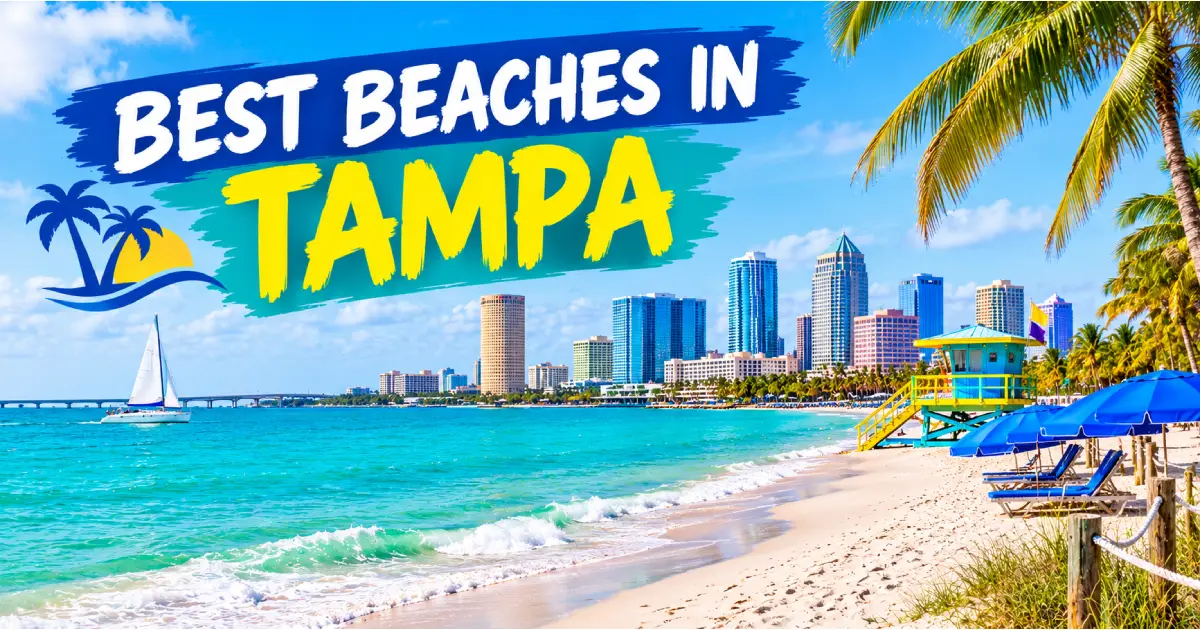
Tampa sits on the eastern shore of Tampa Bay, which means the city itself doesn’t have direct ocean beaches — but what it does have is something most coastal cities would envy: a string of Gulf Coast barrier island beaches within 30–60 minutes of downtown that rank among the finest in the entire United States. Clearwater Beach has finished at or near the top of TripAdvisor’s Best Beaches in America list multiple times in the past decade. Caladesi Island, reachable only by ferry, has been named the single best beach in the country by Dr. Beach (the late Dr. Stephen Leatherman’s authoritative annual ranking). St. Pete Beach, Fort De Soto, and Honeymoon Island round out a collection of barrier island beaches that would make any destination proud. The Gulf of Mexico water off these beaches runs warm (84–86°F in summer), calm, and shallow — ideal for swimming, paddleboarding, and watching the kind of sunsets that turn the entire sky orange and pink in a way that the Atlantic Coast simply cannot match.
What makes the Tampa Bay area beaches distinctive, even within Florida, is the combination of quality and variety. Clearwater Beach delivers the full resort experience — wide sand, beachfront hotels, Pier 60 sunset celebrations, the complete infrastructure of a world-class beach destination. Caladesi Island delivers something almost entirely different: 3.5 miles of undeveloped Gulf shoreline reachable only by ferry, with no development beyond a ranger station and a marina, where the water is so clear you can see the bottom in 10 feet of depth. St. Pete Beach offers the hybrid — developed enough to have excellent restaurants and nightlife, remote enough that the sand stays wide and the Gulf stays brilliant. Fort De Soto’s North Beach is considered by many beach veterans to be the finest swimming beach in Florida, with a combination of sand texture, water color, and shelling that is genuinely exceptional.
Getting to these beaches from Tampa requires a car or rideshare — the Pinellas County beaches are on barrier islands across Tampa Bay, connected by causeways and bridges. The drives range from 25 minutes (Clearwater Beach from downtown Tampa) to 60 minutes (Anna Maria Island at the southern end of the barrier island chain). Most beach roads and parking lots fill early on weekends from October through April; arriving by 9 AM secures a good spot. In summer, the afternoon thunderstorms that are South Florida’s signature weather pattern arrive in the Tampa area too — plan beach time for mornings and early afternoons, with a break during the storm window (roughly 2–5 PM) before returning for the sunset.
| Beach | Distance from Tampa | Entry Fee | Best For |
|---|---|---|---|
| Clearwater Beach | 30 miles / 45 min | Free (parking $5–$15) | Full resort experience, families, nightlife |
| Caladesi Island | 35 miles + ferry | $8/vehicle ferry + $5 park | Pristine nature, swimming, shelling |
| St. Pete Beach | 25 miles / 35 min | Free (parking $3–$5/hr) | Dining, sunsets, couples |
| Fort De Soto North Beach | 35 miles / 45 min | $5/vehicle | Best swimming, families, shelling |
| Honeymoon Island | 35 miles / 50 min | $8/vehicle | Nature, osprey nesting, snorkeling |
| Pass-a-Grille Beach | 30 miles / 40 min | Free (metered street parking) | Old Florida charm, locals’ favorite |
| Ben T. Davis Beach | 8 miles / 15 min | Free | Closest to Tampa, casual |
| Indian Rocks Beach | 35 miles / 50 min | Free (street parking) | Low-key, residential, sunsets |
| Madeira Beach | 30 miles / 40 min | Free (parking $2–$5/hr) | John’s Pass Village, fishing |
| Anna Maria Island | 60 miles / 75 min | Free (limited parking) | Old Florida character, uncrowded |
Distance from Tampa: 30 miles / 40–50 minutes Address: S Gulfview Blvd, Clearwater Beach, FL 33767 Parking: Pier 60 Parking Garage, 10 Pier 60 Dr ($5–$15/day); street meters along Gulfview
Clearwater Beach is the Tampa Bay area’s flagship destination beach and one of the most celebrated beaches in the United States. TripAdvisor named it the #1 Beach in America multiple times, and the designation is easy to understand on arrival: the sand is powdery white quartz, finer and brighter than most Gulf beaches; the Gulf water is shallow, warm, and a remarkable shade of emerald green; and the beach itself is wide — broad enough that even on peak-season weekends, the full-capacity crowd doesn’t make it feel cramped.
Pier 60 is the beach’s social anchor — a 1,080-foot fishing pier extending into the Gulf that hosts the Sunsets at Pier 60 festival every evening two hours before sunset until two hours after, with street performers, local artisans, and the kind of collective sunset-watching ritual that turns a daily natural event into a genuine community gathering. The festival runs every night weather permitting; arrive 30–45 minutes before sunset for the best vantage.
The beach runs along Clearwater Beach Island, a barrier island about 3 miles long and a few blocks wide. The southern end near Pier 60 and Mandalay Avenue is the most developed and energetic; the northern end near Sand Key Park (a separate Pinellas County park at the north tip) is quieter and less crowded. For families: the shallow, calm Gulf water is ideal for children — the gradual slope means 50+ feet of knee-deep water before it deepens, making it one of the safest swimming beaches in Florida. For nightlife: Mandalay Avenue has the highest concentration of beach bars and restaurants in the Tampa Bay area.
Clearwater Marine Aquarium (249 Windward Passage) is a few minutes from the beach and worth combining with a beach day — it’s a working marine animal hospital open to visitors ($29/adult), home to rescued dolphins including the original Winter (of the Dolphin Tale film) and her successors.
Best for: Families, first-time Gulf beach visitors, resort-style vacations, pier fishing, beach nightlife
Distance from Tampa: 35 miles to Honeymoon Island ferry dock / 50 minutes driving + 20-minute ferry Ferry: Honeymoon Island State Park, 1 Causeway Blvd, Dunedin, FL 34698 Ferry fee: $18/adult round-trip, $9/child (included in ferry, which departs Honeymoon Island hourly) Park entry: $8/vehicle for Honeymoon Island (includes ferry access); caladesiislandferry.com
Caladesi Island is the crown jewel of Tampa Bay area beaches. Accessible only by private boat or the ferry from Honeymoon Island, it has no road connection, no hotels, no commercial development beyond a small ranger station and marina café. What it has is 3.5 miles of undisturbed Gulf shoreline that Dr. Beach ranked as the #1 beach in America in 2008, and which consistently appears in the top tier of national beach rankings when measured by water clarity, sand quality, and natural beauty.
The ferry deposits visitors at a marina on the island’s bay side; a short walk across the island’s width brings you to the Gulf beach. What you find is a long, wide crescent of white sand with Gulf water of extraordinary clarity — on calm days, visibility runs 10–15 feet down in waist-deep water, revealing beds of sea grass and the occasional stingray or spotted eagle ray moving beneath you. The beach is never crowded by barrier island standards because ferry capacity limits visitor numbers; on summer weekends the ferry can sell out by 10 AM, so arrive at Honeymoon Island early.
Shelling is outstanding at Caladesi — the undisturbed shoreline accumulates shells that collected beaches lose to constant foot traffic. Kayaking is excellent: the island has 3 miles of paddling trails through mangrove tunnels on the back-bay side, rentals available at the marina café. The nature trail through the island’s interior pine flatwoods is worth the short walk for the gopher tortoise sightings.
Practical notes: No food vendors on the main beach; bring a cooler and water. The marina café serves basic food and drinks. Restrooms and outdoor showers at the marina. Strong afternoon thunderstorms in summer; plan to catch the afternoon ferry back before the 2–4 PM storm window.
Best for: Nature lovers, serious beach purists, photography, shelling, kayaking, families who want a true escape
Distance from Tampa: 25 miles / 35–45 minutes Address: Gulf Blvd, St Pete Beach, FL 33706 Parking: Public lots along Gulf Blvd and Corey Ave ($3–$5/hr, $15–20/day max); free street parking fills quickly
St. Pete Beach is a 7-mile stretch of Gulf Coast barrier island south of Clearwater — less resort-intensive than Clearwater Beach but with an excellent balance of natural beach quality and nearby dining and nightlife. The sand is brilliant white, the Gulf water is the characteristic warm emerald-green of the central Pinellas coast, and the beach is wide enough to absorb its weekend crowds with room to spare.
The Don CeSar Hotel (3400 Gulf Blvd) is the beach’s defining landmark — a pink stucco Renaissance Revival resort known as the “Pink Palace,” built in 1928 and listed on the National Register of Historic Places. The Don CeSar’s Gulf-facing pool terrace and Maritana Grille make it a destination even for non-guests; the hotel’s architecture against a Gulf sunset is one of the great visual experiences of the Tampa Bay area.
Corey Avenue is St. Pete Beach’s commercial street — a walkable strip of independent restaurants, boutiques, and ice cream shops that feels pleasantly unlike the chain-heavy tourist infrastructure of Clearwater Beach’s Mandalay Avenue. The Corey Avenue Sunday Market (weekly, 9 AM–2 PM) is one of the finest farmer’s and craft markets on the Gulf Coast.
Beach access points run along Gulf Boulevard; the most popular stretches are near the Don CeSar and around the 5800–6400 blocks of Gulf Blvd where the beach is widest. Sunsets at St. Pete Beach are among the finest on the Gulf Coast — the western horizon over the Gulf is unobstructed for 360+ miles, and on clear winter evenings the “green flash” (a rare atmospheric phenomenon at the moment of sunset) is occasionally visible.
Best for: Couples, weekend getaways, sunset watching, independent dining, a more local beach experience than Clearwater
Distance from Tampa: 35 miles / 45–55 minutes Address: 3500 Pinellas Bayway S, Tierra Verde, FL 33715 Entry: $5/vehicle (county park) Hours: 8 AM–sunset daily
Fort De Soto County Park occupies a chain of five interconnected islands at the mouth of Tampa Bay — 1,136 acres of natural preserve with two distinct swimming beaches, a historic Spanish-American War fort, kayak trails, campgrounds, and what many serious beach connoisseurs consider the finest swimming beach in Florida.
North Beach is the main Gulf-facing swimming beach. The sand here is genuinely exceptional — fine, shell-free white quartz with an almost powdery texture — and the Gulf water is typically calm and clear, sheltered by the island’s configuration. The beach is wide and long, with a gradual offshore slope ideal for swimming and for the small children who wade far out in the shallows. The shelling at Fort De Soto is among the best on the Pinellas coast; the beach’s position at the mouth of Tampa Bay means shells concentrate here from multiple current directions, and early-morning shelling after a westerly blow can yield lightning whelks, horse conchs, and channeled whelks.
Fishing Piers: Fort De Soto has two fishing piers (bayside and Gulf-side), both free with park entry. The northeast pier is considered one of the best in the Tampa Bay area for snook, redfish, and flounder.
Kayak Trails: 4 miles of marked kayak/canoe trails through the mangrove islands of the park’s interior bay side. Rental kayaks available from the park concession.
Campground: Fort De Soto’s campground is consistently rated among the best in Florida — 236 sites, many with waterfront positions, reservations required months in advance for winter weekends (reserveamerica.com).
Audubon: The park is a designated Florida Audubon Society site and an important stopover for migratory shorebirds. Spring migration (April–May) and fall migration (September–October) bring extraordinary concentrations of warblers, shorebirds, and raptors through the park.
Best for: Families (best supervised swimming), shelling, camping, fishing, birding, nature photography
Distance from Tampa: 35 miles / 50 minutes Address: 1 Causeway Blvd, Dunedin, FL 34698 Entry: $8/vehicle Hours: 8 AM–sunset daily
Honeymoon Island is a 385-acre state park at the northern tip of the Pinellas barrier island chain, named for the couples’ resort honeymoon cottages built here by Life magazine in 1939. The resort closed during World War II and never reopened; the island became a state park in 1982 and has been carefully managed as a natural preserve ever since.
The beach runs along the Gulf-facing west side of the island — 4 miles of Gulf shoreline with the characteristic white sand and warm water of the Pinellas coast. The beach is less intensely groomed than Clearwater Beach, with a more natural character: sea oats line the dunes, osprey nests sit atop the pine trees behind the beach, and the lack of beachfront hotel development means the horizon stays uncluttered. Osprey nesting is one of Honeymoon Island’s signature natural attractions — the island has one of the highest densities of nesting ospreys in the eastern United States, and from January through June the birds are visible building nests, incubating eggs, and feeding chicks from very close range on the trailside pines.
Pet-friendly: Honeymoon Island’s north beach section is one of the few Gulf Coast state parks that allows dogs on leash — making it enormously popular with Tampa Bay area dog owners. The dog beach at the north end has its own entry and parking area.
Ferry to Caladesi: The ferry to Caladesi Island departs from Honeymoon Island’s marina (see Caladesi entry above). Most visitors combine Honeymoon Island’s park entry ($8/vehicle) with the Caladesi ferry for a full-day experience.
Nature Trail: The 2.5-mile Osprey Trail through the island’s pine flatwoods and mangrove edge is excellent for bird observation and gopher tortoise sightings.
Best for: Nature lovers, dog owners, osprey and birding, families, combining with Caladesi Island
Distance from Tampa: 30 miles / 40–50 minutes Address: Gulf Way, Pass-a-Grille, FL 33706 Parking: Free metered street parking along Gulf Way and 8th–10th Avenues
Pass-a-Grille is the southernmost community on St. Pete Beach — a narrow strip of land between the Gulf and Boca Ciega Bay that retains more Old Florida character than almost any other developed barrier island community on the Gulf Coast. The historic fishing village grid of small cottage streets, the lack of high-rise development (the community has maintained strong height restrictions), and the still-functioning Pass-a-Grille Channel (a working waterway between the Gulf and the bay) give this beach a flavor that feels genuinely different from the resort infrastructure of Clearwater and St. Pete Beach.
The Beach runs along the Gulf Way for about 1.5 miles — less wide and less manicured than Clearwater or Fort De Soto, but beautiful in a wilder way, with the natural beach vegetation left largely intact. The south end of the beach, near the Pass-a-Grille Channel, has the best shelling and an excellent view of the channel entrance.
The Don’s Beachcomber Bar and Grill at the south end of the beach and the Gulf Way beach access between 1st and 10th Avenues are the primary gathering points. The Historic District of Pass-a-Grille (roughly 8th–10th Avenues) has 1920s–1940s Florida vernacular cottages, small art galleries, and independent restaurants that make this neighborhood the most architecturally interesting on the barrier islands.
Shell Key Preserve: Directly south of Pass-a-Grille by kayak or boat, Shell Key Preserve is an uninhabited barrier island with outstanding shelling and bird nesting. Guided kayak tours from Pass-a-Grille launch sites ($45–65) cross the channel to Shell Key; no motorized vessel access within the preserve.
Best for: Architecture and history enthusiasts, locals’ beach experience, shelling, kayaking to Shell Key, Old Florida atmosphere
Distance from Tampa: 35 miles / 50 minutes Address: Gulf Blvd, Indian Rocks Beach, FL 33785 Parking: Free street parking on residential side streets; small free lots at beach access points
Indian Rocks Beach is one of the Gulf Coast’s most pleasant low-key communities — a mostly residential barrier island town with a Gulf beach that runs for about 2.5 miles. There are no major resort hotels; the accommodation stock is primarily vacation rental condos and smaller independent motels. The beach itself is excellent — the characteristic Pinellas white quartz sand, warm Gulf water, and consistent sunset views — without the crowds and infrastructure of Clearwater Beach.
Beach access points are spaced along Gulf Boulevard with free parking. The atmosphere is decidedly local: early morning walks with dog owners, afternoon families with young children, and evening couples watching the sunset without the organized Pier 60 festival machinery of Clearwater. The Intracoastal Waterway runs along the east side of the island, with several waterfront restaurants accessible by both land and Water Taxi.
Surf’s Up Beach Bar and several independent beach bars along the boulevard give Indian Rocks a social scene without becoming a party destination. The area is excellent value for vacation rental accommodation: a beachside condo for a week in February costs significantly less than equivalent accommodations at Clearwater Beach or St. Pete Beach.
Best for: Families wanting a quieter beach, vacation rental stays, budget beach trips, locals’ pace
Distance from Tampa: 30 miles / 40–50 minutes Address: Gulf Blvd at 150th Ave, Madeira Beach, FL 33708 Parking: John’s Pass Village parking lots ($2–$5/hr)
Madeira Beach is best known for John’s Pass Village — a charming wooden boardwalk village built over a working fishing harbor on the John’s Pass inlet, which separates Madeira Beach from Treasure Island to the south. The village has a collection of independent seafood restaurants, fishing charter offices, boat rental and jet ski operations, watersports outfitters, and souvenir shops that give it the busy, salty character of a working fishing community turned tourist attraction. It’s genuinely fun for an afternoon, particularly for families.
John’s Pass Seafood Festival (typically late October, one of the largest seafood festivals on the Gulf Coast) draws massive crowds to the boardwalk for fresh Gulf seafood, live music, and craft vendors.
The Madeira Beach itself runs north from John’s Pass — a solid Gulf beach that gets less attention than Clearwater but has excellent swimming and a more relaxed atmosphere. Municipal Beach Park at 14400 Gulf Blvd has free beach access, restrooms, and shower facilities.
Hubbard’s Marina at John’s Pass is one of the premier deep-sea fishing and dolphin-watching tour operators on the Gulf Coast, with half-day, full-day, and overnight offshore trips. Dolphin-watching cruises ($25–35/person) are excellent for families.
Best for: Families, fishing charters, seafood dining at the village, John’s Pass Seafood Festival visitors
Distance from Tampa: 8 miles / 15 minutes Address: 7740 W Courtney Campbell Causeway, Tampa, FL 33607 Parking: Free (large lot)
Ben T. Davis is the closest beach to downtown Tampa — a thin strip of white sand on the Courtney Campbell Causeway that connects Tampa to Clearwater Beach. It’s not a destination beach by the standards of Caladesi or Fort De Soto, but it delivers exactly what it promises: a beach that’s 15 minutes from downtown, free, with warm Tampa Bay water and a casual local atmosphere that’s a world away from the resort infrastructure of the barrier islands.
The beach faces north over Old Tampa Bay rather than the open Gulf, which means calmer water (excellent for beginners and young children) but less of the clear Gulf green color. It’s popular with paddleboarders, kayakers, and kite flyers. The water is shallow for a long distance — ideal for children. A small concession stand, picnic tables, and restrooms are on-site.
Best for: Quick beach fix near downtown Tampa, paddleboarding, families with very young children, budget beach days
Distance from Tampa: 60 miles / 75 minutes Address: Gulf Drive, Anna Maria Island, FL 34216 Parking: Limited free street parking; arrive before 9 AM in season
Anna Maria Island is the southernmost of the major Tampa Bay area barrier islands and the most removed from the resort development model. The island — seven miles long and no more than a mile wide — has maintained strict height limits and building restrictions that keep it looking like the Old Florida beach town it has been since the 1920s. There are no traffic lights, no chain hotels, no high-rise condos. The main beach communities (Anna Maria city at the north end, Holmes Beach in the middle, Bradenton Beach at the south end) have a walkable, village character with independent restaurants, ice cream shops, and fishing piers that feels absolutely nothing like Clearwater Beach.
The Beach runs the full length of the island’s Gulf side — wide, white, and beautiful, with the Gulf water running warm and shallow. Bean Point at the northern tip is the most scenic and most popular for shells and sunrise views; Coquina Beach at the south end (Bradenton Beach) is the widest and most amenity-equipped (parking, restrooms, lifeguards, a concessionaire).
The Sandbar Restaurant (100 Spring Ave, Anna Maria) is the island’s defining dining landmark — a rambling waterfront institution since 1979 that puts 2-hour waits in season but delivers the full Old Florida Gulf seafood experience: grouper sandwiches, stone crab claws (in season), grouper cheeks, sunset cocktails over the water.
Practical notes: Parking on Anna Maria is the island’s most significant challenge; the lot at Coquina Beach fills by 9 AM on winter weekends and the island’s narrow streets have limited street parking. The Anna Maria Island Trolley ($5/day pass) runs the length of the island from Bradenton Beach to Anna Maria; park at the south end (Coquina) and ride north.
Best for: Travelers seeking Old Florida authenticity, architectural and cultural character, the Sandbar Restaurant, uncrowded shelling, families wanting a quiet beach vacation
Arrive early. Every one of these beaches — particularly Clearwater Beach, Fort De Soto, and Caladesi Island ferry departures — fills its parking by mid-morning on weekends from October through April. 8:30–9:00 AM arrival secures parking without stress.
Rent equipment at the beach. Paddleboards ($20–30/hr), kayaks ($20–35/hr), beach chairs ($10–15/chair/day), and umbrellas ($10–20/day) are available at rental concessions at Clearwater Beach, St. Pete Beach, and most developed beaches. The cost is reasonable; bringing your own from Tampa is logistically awkward.
Gulf water temperature: The Gulf of Mexico off Pinellas County runs 66–68°F in January–February (chilly but swimmable for many), 76–78°F in April–May, 84–86°F in July–September (bath-warm), 78–80°F in October–November. December through February requires a wetsuit rash guard for extended swimming for most visitors.
Red tide: The Gulf Coast occasionally experiences red tide — a natural harmful algal bloom (Karenia brevis) that can cause respiratory irritation on the beach, fish kills in the water, and swimming closures. Red tide events are tracked in real time by the Florida Fish and Wildlife Conservation Commission (myfwc.com/redtide). Check before your trip if visiting between August and February, when blooms are most common.
Stingrays: Stingrays bury themselves in shallow Gulf sand and can sting bare feet if stepped on. The “stingray shuffle” — shuffling your feet along the bottom rather than lifting and placing them — gives rays time to move away. The vast majority of Gulf Coast beach visits involve no stingray contact; this is a precaution, not a reason for alarm.
Beach flags: Florida beaches use a standardized flag system at lifeguard towers: green (low hazard), yellow (medium hazard), red (high hazard — swim with caution), double red (beach closed, no swimming), purple (dangerous marine life). Always check the flag before entering the water.
Sunscreen and reef health: The Gulf Coast reefs and sea grass beds are ecologically sensitive. Use mineral-based (zinc oxide/titanium dioxide) sunscreen rather than oxybenzone-based formulas, which damage marine ecosystems. Most beach shops on Pinellas carry reef-safe options.
Posted By : Vinay
Latest Article
2nd Floor, 39, Above Kirti Club, DLF Industrial Area, Kirti Nagar, New Delhi, Delhi 110015



Travel Tourister is a leading Travel portal where we introduce travellers to trusted travel agents to make their journey hasselfree, memorable And happy. Travel Tourister is a platform where travellers get Tour packages ,Hotel packages deals through trusted travel companies And hoteliers who are working with us across the world. We always try to find new and more travel agents and hoteliers from every nook and corners across the world so that you could compare the deals with different travel agents and hoteliers and book your tour or hotel with the one you have chosen according to your taste and budget.
Copyright © Travel Tourister, India. All Rights Reserved

 Call
 Enquiry