Published on : 27 Oct 2026
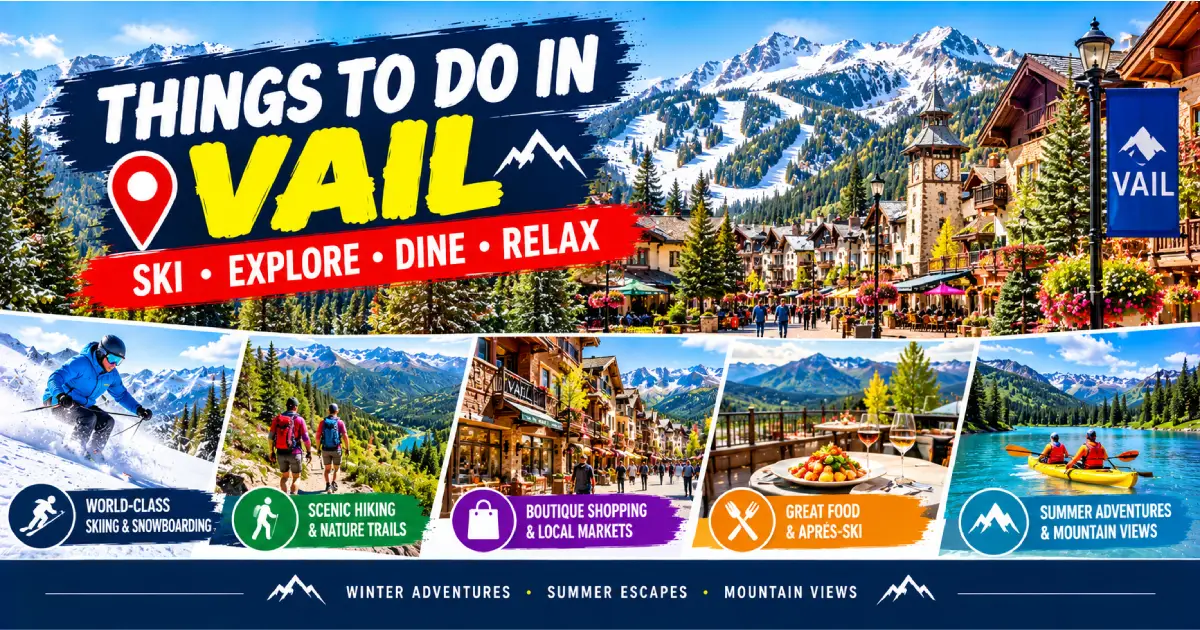
Vail is the largest ski resort in the United States and one of the most recognized mountain destinations in the world — a purpose-built ski village in the Eagle River Valley of central Colorado that has spent six decades becoming something genuinely more than a ski area. Opened in December 1962 by Pete Seibert and Earl Eaton (who discovered the mountain on a 1954 ski-touring reconnaissance), Vail grew from 178 skiable acres at opening to 5,317 acres today — an expansion that added the legendary Back Bowls (2,031 acres of above-treeline terrain on the south side of the mountain) in 1969, Blue Sky Basin (645 acres of gladed expert terrain) in 2000, and Pete’s Bowl and China Bowl as the eastern extensions of the bowl complex. The result is a mountain that can absorb 10,000 skiers on a powder day without feeling crowded — a claim almost no other resort in the country can make.
What sets Vail apart from the other great Colorado resorts is scale: the mountain is simply bigger than the competition, and the Vail Village — a pedestrian-only Austrian-themed village at the base (no cars allowed within the core) with the Gore Creek running through it — provides a genuine resort experience. The restaurant density (60+ restaurants within walking distance of the gondola), the two distinct villages (Vail Village and Lionshead), the year-round gondola, and the summer activity programming (hiking, mountain biking, the Betty Ford Alpine Gardens, the Gerald R. Ford Amphitheater) make Vail a destination in both seasons, not merely a ski hill with a parking lot.
The town of Vail (population 5,300) sits at 8,150 feet in the Eagle River Valley, 97 miles west of Denver via I-70. The mountain rises to 11,570 feet at the summit of the Game Creek Bowl ridge, with the Back Bowls extending another 500 vertical feet lower on the south side. This guide covers the 20 best things to do in Vail in 2026, from the finest ski runs on the mountain to the summer hiking trails that reveal Vail’s alpine terrain without a lift ticket.
| Activity | Season | Type | Cost |
|---|---|---|---|
| Ski the Back Bowls | November–April | Skiing | $229–$299/day |
| Hike to Booth Falls | June–October | Hiking | Free |
| Ride the Eagle Bahn Gondola | Year-round | Scenic/Access | Free (ski ticket) / $35 summer |
| Visit Betty Ford Alpine Gardens | June–September | Botanic garden | Free |
| Mountain bike Vail Mountain | June–October | Cycling | $45 bike haul fee |
| Attend a GFA concert | June–August | Music | $25–$150 |
| Fly-fish Gore Creek | May–October | Fly fishing | $350–$450/day guided |
| Explore Blue Sky Basin | November–April | Expert skiing | Included with ski ticket |
| Hike Two Elk Trail | July–September | Hiking | Free |
| Visit Vail Nature Center | June–September | Nature/Education | $5 |
| White water raft Eagle River | May–July | Whitewater | $55–$95/person |
| Skate at Dobson Ice Arena | October–April | Ice skating | $10–$15 |
| Shop Bridge Street, Vail Village | Year-round | Shopping | Free |
| Dine at Game Creek Restaurant | November–April | Fine dining | $85–$130/person |
| Snowshoe on Vail Mountain | December–March | Winter hiking | $28 rental |
| Take the kids to Epic Discovery | June–September | Family adventure | $55–$75 |
| Mountain bike Berrypicker Trail | June–October | Singletrack MTB | $45 bike haul |
| Attend Vail Jazz Festival | September | Jazz | Free–$50 |
| Hike to Deluge Lake | July–September | Backpacking | Free |
| See Gore Range at Shrine Pass | June–October | Scenic drive/hike | Free |
Season: Late November – April | Day Ticket: $229–$299 (book in advance; prices vary by date) Pass: Epic Pass (unlimited with pass) Access: Orient Express, Highline, and Game Creek Express chairs from Vail Village side
Vail’s Back Bowls are the most celebrated above-treeline ski terrain in the United States — 2,031 acres of open bowl skiing on the south side of the mountain, accessed from the summit ridge, with five named bowls (Sun Down, Sun Up, China, Siberia, and Tea Cup) providing a variety of aspects, snow conditions, and difficulty levels. The Back Bowls transformed American resort skiing when they opened in 1969; before Vail, American ski resorts were almost exclusively below-treeline trail skiing in the European-Arlberg style. The Back Bowls introduced the concept of ski-anywhere terrain at scale to the American resort.
Key areas within the Back Bowls:
Best powder strategy: After a significant snowfall, the Back Bowls hold powder longer than any front-side terrain. The standard sequence: ski front-side groomers first run (freshest corduroy), then move to the bowls once the groomers are tracked out. Siberia Bowl (north-facing) retains untracked snow the longest due to its aspect and limited access.
Location: Booth Creek Trail, East Vail (Booth Falls Road trailhead, off I-70 Exit 180) Distance: 4 miles RT | Gain: 1,100 ft | Summit: Booth Falls at 9,480 ft (lower falls); upper falls at 10,500 ft (8 miles RT) Best Season: June–October Difficulty: Moderate Cost: Free
Booth Falls is the finest waterfall hike accessible from the Vail Valley — a 4-mile round-trip trail through aspen and spruce forest in East Vail that ends at a 60-foot waterfall dropping through a narrow granite slot above a wildflower meadow. The lower falls is the standard destination (2 miles one-way, 1,100 ft gain), but the trail continues another 2 miles above the falls to an upper basin at 10,500 feet with views of the Gore Range and a small alpine lake — a full-day destination for those looking for more elevation.
Peak wildflower timing: Mid-July to early August — the meadow below the falls is one of the finest wildflower displays in the Vail Valley, with Indian paintbrush, columbine (Colorado’s state flower), and blue bells in the wet ground near the stream. The aspen forest on the lower trail provides the finest fall color in East Vail in late September.
Practical: The trailhead (Booth Falls Road, East Vail, off I-70 Exit 180) is 1.5 miles east of Vail Village — accessible by the free Vail Valley bus system (ECO Transit Route 6, stop: Booth Creek). Parking is limited (15 spaces); arrive before 9 AM on summer weekends or take the bus.
Location: Vail Mountain, accessed via the Pete’s Express and Game Creek lifts from the back side Season: December – April (typically opens in January when snowpack permits) Difficulty: Intermediate to Expert Cost: Included with ski ticket / Epic Pass
Blue Sky Basin is the finest intermediate-to-expert terrain addition to any American ski resort in the modern era — 645 acres of gladed and open terrain added to Vail in 2000, named for the characteristic Colorado bluebird sky visible from its high ridgelines, with a remote feel despite being within the resort boundary. The basin is a 15–20 minute ski from the top of the main mountain (via Orient Express to the summit, then the Game Creek Express to Pete’s Express); the distance filters out the crowds, and Blue Sky Basin typically skis 30–40% less crowded than the front side even on busy weekends.
Key terrain:
Location: Ford Park, 530 S Frontage Rd E, East Vail (adjacent to Gerald R. Ford Amphitheater) Hours: Daily, dawn to dusk (peak season June–September) Admission: Free Founded: 1985 (honoring Betty Ford, who with Gerald Ford maintained a home in Beaver Creek)
The Betty Ford Alpine Gardens are the highest public botanic garden in the United States — a 4-acre garden at 8,200 feet in Ford Park, one mile east of Vail Village along the Gore Creek, featuring 3,000+ plant species from alpine and subalpine ecosystems around the world. The garden is organized into four main areas: the Rock Alpine Garden (high-altitude plants from the Rockies, Alps, Himalayas, and Andes growing in a naturalistic rock landscape), the Mountain Perennial Garden (cultivated perennials adapted to 8,000+ foot altitudes), the Meditation Garden (enclosed formal garden with a fountain), and the Schoolhouse (children’s educational garden).
Best visit timing: Mid-July (peak wildflower season in the Rock Alpine Garden — the penstemons, primulas, and saxifrages are at their finest). The garden is free and takes 45–60 minutes for a thorough walk; combining it with a concert at the adjacent Gerald R. Ford Amphitheater makes the finest summer evening in Vail.
Gore Creek access: The Betty Ford Alpine Gardens sit on the north bank of Gore Creek — the finest fly-fishing stream in the Vail Valley (see entry 7). The streamside path through Ford Park connecting the gardens to Vail Village is the finest walking route in Vail in summer.
Location: Vail Mountain Bike Park, accessed via Eagle Bahn Gondola from Lionshead Season: Late June – early October Cost: Gondola bike haul $45/adult; bike rental $65–$95/day; vail.com/activities Difficulty: Beginner (green) to Expert (double black diamond)
Vail Mountain Bike Park is one of the three or four finest lift-served mountain bike parks in the United States — 35+ miles of designated trails from the gondola summit (11,570 ft) to the base at Lionshead (8,150 ft), with the full range of difficulty from wide green gravel paths to technical expert singletrack with drops, rock gardens, and gap jumps. The gondola haul service (Eagle Bahn from Lionshead, $45/day bike haul) provides unlimited vertical — a full day produces 8–12 runs depending on trail selection.
Key trails:
Location: Ford Park, 530 S Frontage Rd E (adjacent to Betty Ford Alpine Gardens) Season: Mid-June – late August Tickets: $25–$150; bravo!vail.com and vailsymposium.com Capacity: 1,100 covered seats + 1,800 lawn
The Gerald R. Ford Amphitheater is Vail’s finest outdoor performance venue — a partially covered open-air theater in Ford Park seating 2,900, with Gore Creek audible between sets and the Gore Range visible from the lawn seating. The amphitheater hosts three major annual festivals:
Bravo! Vail Music Festival (late June–early July, 10 days): The finest summer classical music festival in the Colorado mountains outside the Aspen Music Festival — a 10-day program of orchestra concerts featuring visiting international orchestras (in recent years: Berlin Philharmonic, New York Philharmonic, Royal Concertgebouw Orchestra), dance performances, and chamber music. Tickets $35–$150; lawn seating (blankets and picnic allowed) $25–$35.
Vail Dance Festival (late July–early August, 12 days): An internationally recognized contemporary dance festival with visiting companies from New York, London, and international companies — one of the most distinguished dance-presenting organizations in the American mountain West.
Vail Jazz Festival (Labor Day weekend, September): A 3-day jazz festival anchored at the amphitheater with additional free performances in Vail Village — the finest jazz event in Colorado outside Denver. Many free programming options in the village make this the most accessible major festival in Vail.
Location: Gore Creek, Vail Village to East Vail (6-mile accessible stretch through town) Best Season: June–October (peak: late July–August for summer hatches; September–October for fall baetis) Cost: Colorado fishing license ($35.25/year, $15.25/day); guided trip $350–$450/day for 2 anglers Guides: Minturn Anglers (minturnanglers.com), Vail Valley Anglers (vailvalleyanglers.com)
Gore Creek is one of the finest urban fly-fishing streams in the Rocky Mountain West — a Gold Medal designated trout fishery flowing directly through the center of Vail Village, with wild rainbow and brown trout visible from the pedestrian bridge at the base of Vail Village on any summer afternoon. The Gold Medal designation (awarded by Colorado Parks & Wildlife to the top 1–2% of trout streams in the state) indicates a minimum of 60 pounds of trout per acre — a density that makes Gore Creek one of the most productive catch-and-release fisheries in Colorado.
Best access points:
Location: Gondola base at Lionshead Village Season: Year-round (winter: ski access; summer: scenic/hiking access) Cost: Included with ski ticket in winter; $35/adult summer (includes hiking access) Summit elevation: 11,570 ft
The Eagle Bahn Gondola from Lionshead Village to the summit of Vail Mountain is the finest single infrastructure investment in Vail’s summer product — a 20-minute ride that places hikers, mountain bikers, and sightseers at 11,570 feet with views of the Gore Range, the Eagle River Valley, and (on clear days) the Sawatch Range peaks including Mount of the Holy Cross (14,005 ft). The gondola summit building houses the Mountain Top restaurant (lunch service, summer) and the trailhead for the Two Elk Trail, the Ridge of Tau, and the descent routes for the mountain bike park.
Summer panorama: The summit ridge at 11,570 feet provides the most accessible above-treeline panoramic view in the Vail Valley — the Gore Range immediately to the north (the most rugged and least-visited range in Colorado, protected as the Eagles Nest Wilderness), the Eagle River Valley below, and the ski terrain of the Back Bowls visible on the south side of the ridge. Interpretive signage on the summit identifies all visible peaks.
Location: Trailhead at Vail Mountain summit (Eagle Bahn Gondola top) OR Two Elk trailhead (off US-24 near Minturn, 6 miles from Vail) Distance: 10.5 miles one-way (Vail summit to Minturn) | Gain/Loss: 1,400 ft descent Best Season: July–September Difficulty: Moderate (mostly descending from summit) Cost: Gondola ticket ($35) for summit start; trail itself is free
The Two Elk Trail is the finest long hike in the Vail Mountain terrain — a 10.5-mile trail that traverses the south side of the mountain from the gondola summit, passing through the Back Bowls (open alpine terrain), Two Elk Creek drainage, and descending to the town of Minturn in the Eagle River Valley below Vail. The trail is used primarily as a one-way descent (gondola up, trail down to Minturn and bus or car return) and provides the finest sustained alpine hiking on Vail’s terrain outside the Eagles Nest Wilderness.
Two Elk Creek: The creek drainage below the Back Bowls is a designated wilderness creek with wild cutthroat trout — a 2–3 mile section of the trail follows the stream through a remote valley that sees far less foot traffic than the Booth Falls or Deluge Lake trails. The creek fishing (no license required to look, license required to fish) is an optional add-on for those with a fly rod.
Minturn: The trail ends in Minturn — a small former railroad town in the Eagle River Valley (population 1,100, 5 miles from Vail) that has developed a cluster of restaurants and breweries. Minturn Saloon (50 Main St) is the finest local dining option at trail’s end; the RFTA bus ($3) returns to Vail.
Location: Eagle River, Minturn section (Minturn to Wolcott, 20 miles west of Vail) Best Season: May–July (peak snowmelt flow); Class III–IV depending on water level Cost: $55–$75/person half-day; $95–$130/person full-day Operators: Timberline Tours (timberlineraffting.com), Lakota River Guides (laketoariveguides.com)
The Eagle River below Vail is one of the finest day-rafting rivers in Colorado — a technical Class III–IV river (at peak spring flows in May–June) through the Eagle Canyon, a narrow granite-walled gorge west of Minturn that provides 10+ miles of sustained whitewater. The finest section (the Minturn Mile, Class IV at high water) passes through a canyon inaccessible by road, creating a genuine wilderness whitewater experience 15 minutes from Vail Village.
Minturn Mile (Class IV, 1 mile, May–June peak): The most technical commercially rafted section of the Eagle — a series of Class IV rapids through a narrow canyon with no road access. Best run May 15–June 30 at peak flow; flows below 400 cfs (typical after early July) reduce the section to Class III.
Lower Eagle Canyon (Class II–III, 8 miles, family-appropriate): The lower section below Minturn — a scenic float through the Eagle Canyon suitable for beginners and families. 3–4 hours; minimum age 7.
Location: Ford Park, 601 Vail Valley Dr (east of Vail Village, adjacent to Betty Ford Alpine Gardens) Hours: Daily 9 AM–5 PM, late June–early September Admission: $5/adult, $3/child Website: vailrec.com/nature-center
The Vail Nature Center is a hands-on natural history and ecology center on the bank of Gore Creek — a small but well-designed facility with interactive exhibits on the Gore Creek watershed, the Gore Range geology, and the wildlife of the Eagle River Valley. The center’s primary value for visitors is the naturalist-guided programs: daily guided nature walks along Gore Creek (2 hours, $15/person), evening bat walks in Ford Park (August, free), and children’s Junior Ranger programs (2 hours, $20, ages 5–12).
Gore Creek ecology exhibit: The centerpiece of the Vail Nature Center is its Gore Creek invertebrate display — a live aquarium of the aquatic insects (stonefly, mayfly, caddisfly larvae) that form the base of the Gold Medal trout fishery and that fly fishermen imitate in their flies. The exhibit provides the finest introduction to trout stream ecology available in the Vail Valley.
Season: Late November – April Best Runs: Riva Ridge, Born Free, Avanti, Picabo’s
While the Back Bowls get the headlines, Vail’s front side offers some of the finest groomed intermediate skiing in the American West — wide, well-maintained runs with consistent pitch and the finest grooming operation in Colorado (Vail’s overnight grooming crew works 60+ machines from midnight to 6 AM). The morning first run on freshly groomed Riva Ridge or Born Free is one of the finest experiences in American resort skiing.
Front-side classics:
Location: 321 E Lionshead Circle, Lionshead Village Season: October – April Cost: $10–$15/adult; $8–$10/child; skate rental $7; dobsonicearena.com
Dobson Ice Arena is the finest public ice skating rink in the Colorado mountains — a covered, Olymp-sized (200 × 85 ft) rink in the center of Lionshead Village, open for public skating sessions daily in addition to hosting youth and adult hockey programs. The arena is one of the few covered rinks at 8,150 feet in the United States; the combination of the mountain air and the indoor setting provides a distinctive ice quality appreciated by figure skaters and hockey players.
Holiday skating: Dobson is at its most atmospheric during the winter holiday period (December 22–January 2) when Vail Village and Lionshead Village are lit with thousands of string lights and the Ice Bar (a pop-up outdoor bar adjacent to the rink) operates nightly. Public skating sessions over the holidays sell out; book online in advance.
Location: Game Creek Bowl, Vail Mountain (mid-mountain, accessible only by ski/gondola) Season: Late November – April (lunch daily; dinner Thursday–Saturday) Cost: Lunch $25–$50; Dinner $85–$130/person; gamecreekrestaurant.com Access: Game Creek Express Chair (10-minute ski from Vail Village); return by snowcat (dinner) or ski
Game Creek Restaurant is the finest on-mountain dining experience in Vail and one of the finest mountain restaurants in the United States — a secluded log-and-stone dining room in its own private bowl on the back side of Vail Mountain, accessible only by ski or gondola, serving elevated Colorado cuisine for lunch (served buffet and a la carte in a casual setting) and candlelit dinner (prix-fixe and a la carte, Thursday through Saturday). The dinner service is the finest combination of remoteness and culinary ambition in Colorado mountain dining: a snowcat shuttle from the base brings non-skiing guests to the restaurant after dark, and the return ride under the mountain stars is its own experience.
Lunch (the better value): The lunch service at Game Creek is a genuinely excellent mid-ski meal — house-smoked trout, Colorado lamb loin, and a Colorado craft beer selection in a setting visible only to those who have skied there. No lift-line pressure and tables available without advance reservation on weekday lunches.
Location: Eagles Nest Wilderness, East Vail (Deluge Lake trailhead, East Vail off I-70 Exit 180) Distance: 7 miles RT | Gain: 2,900 ft | Elevation: 11,600 ft (lake) Best Season: Mid-July – September Difficulty: Strenuous Cost: Free
Deluge Lake is the finest strenuous day hike accessible from Vail — a demanding 3.5-mile trail into the Eagles Nest Wilderness that climbs 2,900 feet through dense forest and krummholz (wind-stunted subalpine forest) to a remote alpine lake at 11,600 feet beneath the Vail ridgeline. The Eagles Nest Wilderness (133,000 acres) is the least-visited wilderness area adjacent to a major Colorado resort — a rugged range of peaks with no maintained trail access to the summits — and Deluge Lake provides the finest wilderness lake experience available from the Vail Valley without requiring a multi-day backpacking trip.
Gore Range scenery: The upper section of the Deluge Lake Trail traverses above treeline through the finest Gore Range terrain accessible on a day hike — the jagged quartzite peaks of the Eagles Nest (13,228 ft), the Red Buffalo Pass ridge, and the unnamed cirque walls above the lake provide a genuinely remote alpine experience 6 miles from Vail Village.
Location: Mid-Vail area, Vail Mountain (Eagle Bahn Gondola top, Lionshead) Season: Late June – early September Cost: $55–$75/adult; $40–$55/child; combination packages available; vail.com/epic-discovery Age Range: 3–16 (various activities by age)
Epic Discovery is Vail’s summer family adventure park on the mountain — a collection of zip lines, mountain coasters, climbing walls, bungee trampolines, and nature education activities concentrated in the mid-mountain terrain around the Eagle Bahn Gondola top. The centerpiece is the Golden Peak Mountain Coaster (a 3,050-foot gravity-powered coaster on rails descending 500 vertical feet through the woods at speeds up to 25 mph — the longest mountain coaster in Colorado), but the range of activities (zip line canopy tour, ropes course, guided nature hikes) makes it the finest half-day family destination at any Colorado resort in summer.
Canopy Tour (Zip Line, $79/person, 3 hours): A 7-zip-line guided tour through the aspen and spruce forest above Lionshead — the finest individual activity in the Epic Discovery program, descending 2,200 vertical feet via 7 zip lines ranging from 200 to 1,400 feet in length. Minimum weight 70 lbs, maximum 275 lbs; age 7+.
Location: Vail Village, East Meadow Drive to Gore Creek Drive (pedestrian-only core) Season: Year-round Cost: Free (browsing); shopping and dining separate
Vail Village is one of the finest pedestrian resort villages in North America — a car-free commercial district of 60+ restaurants, 100+ shops, and the gondola base, built in a Tyrolean architectural style (steep-pitched rooflines, exterior wood detailing, stone base walls) that provides a consistent visual character unlike any other American ski resort. The village was designed from its 1962 founding with the pedestrian experience as the primary consideration; no parking exists within the core, and the result is a walking environment of a quality found otherwise only in European ski resorts.
Bridge Street: The main commercial street of Vail Village — a pedestrian lane running from the gondola base to the clock tower, lined with ski-branded retail (Vail Sports, Christy Sports), galleries, jewelry stores, and the finest concentration of après-ski bars in Colorado. The 4–7 PM après window on Bridge Street (ski day ending, sun still on the south-facing slopes) is the social centerpiece of the Vail ski experience.
Must-visit establishments:
Location: Vail Golf Course, 1778 Sunburst Dr Season: December – March Cost: $18/adult trail fee; $30 ski rental; vailrec.com/nordic Trails: 17 km groomed
The Vail Nordic Center on the Vail Golf Course is the most accessible cross-country skiing in the Vail Valley — 17 kilometers of groomed classic and skate ski trails on the fairways of the golf course, with the Gore Range visible along the length of the Booth Creek valley. The golf course terrain is flat to gently rolling (ideal for beginners) and provides the finest introductory cross-country skiing in the area for visitors unfamiliar with Nordic technique.
Nordic Trail Extension (Gore Creek Trail, free): The paved Gore Creek recreational path through Vail is groomed for cross-country skiing in winter (no charge, no trail fee required) — 4 miles from Ford Park through Vail Village to the Cascade area. The combination of the village streetscape and the creek-side skiing makes it the most atmospheric ski route in Vail that doesn’t require a lift ticket.
Location: Vail Village and Gerald R. Ford Amphitheater Season: Labor Day weekend (first weekend of September), 3 days Cost: Free (most village events) to $50 (amphitheater headliner concert); vailjazz.org
The Vail Jazz Festival is the finest free jazz event in the Colorado mountains — a 3-day Labor Day weekend festival with programming at 6–8 venues in Vail Village (outdoor stages, restaurants, and bars) and a ticketed headliner concert at the Gerald R. Ford Amphitheater. The festival features nationally recognized jazz artists alongside Colorado and regional jazz talent; the programming emphasis is straight-ahead jazz and contemporary jazz rather than the fusion and pop-jazz of many resort festivals.
Free village programming: The Saturday afternoon outdoor concert at the base of the gondola in Vail Village is the finest free event of the festival — 3 hours of performance in the sun with the mountain as backdrop. Arrive early for good standing positions.
Sunday Brunch Jazz (Arrabelle Hotel, Lionshead, $35–$45/person): The finest seated Jazz Festival event — a 2-hour Sunday brunch with live trio performance in the Arrabelle’s ballroom. Reservations essential; typically sells out 2 weeks in advance.
Location: Shrine Pass Road (Forest Road 709), off I-70 Exit 190 (Vail Pass summit) Best Season: July–October (road open after snowmelt); winter (snowmobile/snowshoe access only) Distance (hike): 3 miles RT to Shrine Mountain summit (11,888 ft) | Gain: 750 ft Difficulty: Easy–Moderate Cost: Free
Shrine Pass Road is the finest free scenic drive accessible from Vail — a 12-mile unpaved Forest Service road (suitable for standard passenger cars in dry conditions) that crosses Shrine Pass (11,089 ft) from Vail Pass (I-70 summit) to Redcliff, providing the finest views of the Mount of the Holy Cross (14,005 ft) from any road-accessible point in the Vail area. The road is also the access for the Shrine Mountain Inn (a 3-cabin backcountry hut operated by the 10th Mountain Division Hut Association, $35–$42/person/night) and the Shrine Mountain trail.
Shrine Mountain Trail (3 miles RT, 750 ft gain, summit 11,888 ft): An easy-to-moderate hike from the Shrine Pass road to the Shrine Mountain summit — the finest panoramic view accessible with minimal effort in the Vail area. The summit view includes Mount of the Holy Cross, the Sawatch Range (10 peaks over 14,000 ft visible), the Gore Range, and the Eagle River Valley from Vail to Glenwood Canyon. Mid-July wildflowers on the open ridge are exceptional.
By Air: Denver International Airport (DEN) is the primary gateway — 97 miles east of Vail via I-70 (1.5–2 hours off-peak; 2.5–4 hours on Friday afternoons and Sunday evenings in ski season). Eagle County Regional Airport (EGE), 35 miles west of Vail, offers direct winter service from Atlanta (Delta), Chicago (United), Dallas (American), Houston (United), Los Angeles (United/American), and New York (United/American).
By Road: I-70 westbound from Denver to Exit 176 (Vail) — a direct interstate drive. The Eisenhower/Johnson Tunnel (11,013 ft, 47 miles from Denver) is the only significant mountain pass; the tunnel eliminates the altitude challenge and remains open year-round. I-70 westbound on Friday afternoons and westbound Sunday evenings has the worst traffic in Colorado; depart Denver by noon Friday or after 4 PM Sunday to avoid the peak.
By Bus/Shuttle: Colorado Mountain Express (coloradomountainexpress.com) operates direct shared shuttles from DEN to Vail ($74–$89/person one-way, 2.5 hours off-peak). Advance reservation required; the shuttle runs year-round on a 2–3 hour schedule.
Vail Free Bus System: Free bus service connects Vail Village, Lionshead, West Vail, and the outlying areas — the finest free resort transit system in Colorado. Routes run every 20 minutes from 6 AM to 2 AM during ski season; reduced frequency in summer. Ski gear (boots, poles) allowed on the bus; skis carried in external ski racks.
RFTA (Roaring Fork Transportation Authority): Regional bus connecting Vail to Avon, Eagle, and Glenwood Springs ($5–$8/trip) — also the route to Minturn (5 miles, $3, access for Eagle River rafting and Two Elk trail endpoint).
Vail’s base (8,150 ft) is the highest base elevation of any major American ski resort — higher than Aspen (7,908 ft) and significantly higher than Breckenridge’s parking (9,000 ft) or Denver (5,280 ft). Sea-level visitors should expect 1–2 days of adjustment; the standard advice applies: arrive the day before skiing, hydrate aggressively, avoid alcohol on the first night.
Posted By : Vinay
Latest Article
2nd Floor, 39, Above Kirti Club, DLF Industrial Area, Kirti Nagar, New Delhi, Delhi 110015



Travel Tourister is a leading Travel portal where we introduce travellers to trusted travel agents to make their journey hasselfree, memorable And happy. Travel Tourister is a platform where travellers get Tour packages ,Hotel packages deals through trusted travel companies And hoteliers who are working with us across the world. We always try to find new and more travel agents and hoteliers from every nook and corners across the world so that you could compare the deals with different travel agents and hoteliers and book your tour or hotel with the one you have chosen according to your taste and budget.
Copyright © Travel Tourister, India. All Rights Reserved

 Call
 Enquiry