Best Time to Visit California 2026: Complete Regional Weather Guide
Published on : 25 Feb 2026
Best Time to Visit California — When America’s Most Diverse State Delivers Perfect Conditions
By Travel Tourister | Updated February 2026
California doesn’t have one “best time to visit”—it has five different optimal windows depending on which region you’re exploring.
I learned this reality during September 2022 when I experienced three distinct seasons in a single week. Monday found me shivering in 58°F (14°C) San Francisco fog wearing a jacket. Wednesday, I sweated through 95°F (35°C) heat in Napa Valley vineyards. Friday, I swam in 75°F (24°C) San Diego ocean water in shorts and t-shirt. Same state. Same week. Completely different weather.
California stretches 900 miles (1,450 km) north to south—roughly the distance from London to Rome. This enormous geography combined with coastal, mountain, desert, and valley microclimates creates dramatic seasonal variations that catch unprepared travelers off guard. While Southern California promotes its “endless summer,” San Francisco famously delivers its coldest weather during those same summer months. Yosemite’s waterfalls rage with snowmelt in May but reduce to trickles by September. Wine country’s harvest transforms September-October into peak season while spring remains beautifully uncrowded.
This comprehensive 2026 guide analyzes regional weather patterns using verified data from the National Weather Service, two decades of tourism statistics, and firsthand insights from Travel Tourister’s California-based specialists who track conditions year-round. We break down optimal visiting windows for five distinct California regions, helping you avoid summer fog in San Francisco, catch peak wildflower blooms in deserts, and experience wine country during the magical harvest season.
Whether planning a Northern California road trip, Southern California beach vacation, Yosemite adventure, or comprehensive California tour, understanding the state’s diverse microclimates prevents weather disappointments and maximizes your travel investment.
California’s 163,696 square miles contain more climate zones than most countries. The state includes Mediterranean coastal regions, alpine mountains reaching 14,505 feet, scorching deserts exceeding 130°F (54°C), temperate rainforests receiving 100+ inches of annual rainfall, and agricultural valleys with 300+ days of sunshine. This extreme diversity means your California experience depends entirely on which regions you visit and when.
California’s 5 Distinct Climate Regions
Travel Tourister divides California into five climate-based regions, each requiring completely different timing strategies:
1. Northern California Coast & San Francisco Bay Area (San Francisco, Marin County, Mendocino): Mediterranean coastal climate with cool, foggy summers and mild, wet winters. Summer paradox: June-August brings coolest, foggiest weather while September-October delivers warmest, clearest conditions.
2. Wine Country (Napa Valley, Sonoma County, Paso Robles): Interior Mediterranean climate with warm, dry summers (80-95°F) and cool, wet winters. Harvest season September-October brings peak activity and beautiful vineyard colors.
3. Southern California (Los Angeles, San Diego, Orange County): True Mediterranean climate with warm, dry summers (75-85°F), mild winters (60-70°F), and year-round beach weather. “June Gloom” brings morning coastal fog May-June.
4. Sierra Nevada Mountains (Yosemite, Lake Tahoe, Mammoth): Alpine climate where summer (June-September) is the only season for high-elevation access. Yosemite waterfalls peak with snowmelt April-June. Tahoe offers year-round appeal with summer hiking and winter skiing.
5. Inland Deserts (Palm Springs, Death Valley, Joshua Tree): Desert climate with scorching summers (105-120°F) making outdoor activities dangerous June-September. Perfect spring weather (70-85°F) March-May and comfortable fall (75-90°F) October-November.
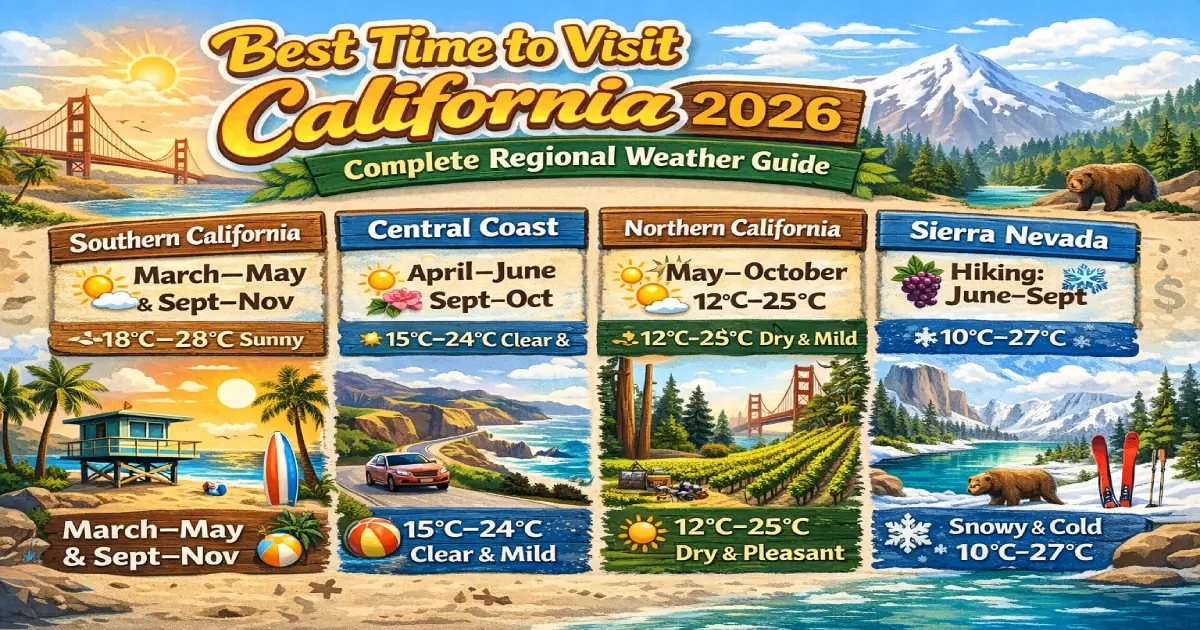
Quick Regional Reference: When to Visit Each California Region
Wildflower super blooms, comfortable 70-85°F, pre-summer heat
San Francisco & Bay Area: Fall’s Warm Surprise September-October
Best Time: September 15 – October 31
San Francisco’s weather pattern confounds visitors who expect California’s “endless summer” reputation to apply everywhere. The city’s famous summer fog makes June, July, and August the coldest, grayest months while September and October deliver the warmest, clearest conditions of the entire year. Locals call it “Indian Summer,” and it’s when San Francisco truly shines.
After tracking San Francisco weather patterns for over 15 years, Travel Tourister’s Northern California specialists consistently identify late September through October as the region’s premium window. Average temperatures reach 65-75°F (18-24°C)—significantly warmer than summer’s 55-65°F (13-18°C) range. Fog disappears for weeks at a stretch. Outdoor dining becomes comfortable. Golden Gate Bridge views that were obscured all summer emerge dramatically clear.
September-October Highlights
Warmest Bay Area weather of the year with minimal fog interference
Golden Gate Bridge and Alcatraz visible 80-90% of days (versus 40-50% in summer)
Fleet Week air show spectacular (early October annually)
Hardly Strictly Bluegrass Festival in Golden Gate Park (free, early October)
Outdoor restaurant patios and rooftop bars finally comfortable without jackets
Wine country harvest season just 1 hour north in Napa/Sonoma
Clear skies perfect for coastal Highway 1 drives to Monterey/Big Sur
Why Summer Is San Francisco’s Worst Season
Mark Twain never actually said “the coldest winter I ever spent was a summer in San Francisco,” but the quote captures reality perfectly. Summer fog rolls through the Golden Gate daily, dropping temperatures to 55-60°F (13-16°C) and obscuring city views. Tourists arrive in shorts and t-shirts, then scramble to buy sweatshirts at Fisherman’s Wharf.
The fog isn’t occasional drizzle—it’s thick, persistent marine layer that blankets the city for days. Mornings start gray, afternoons might clear briefly inland, then fog returns by evening. This pattern repeats June through August. Meanwhile, areas just 30 miles inland (Napa, Walnut Creek, San Jose) bake in 85-95°F (29-35°C) heat.
Month-by-Month San Francisco Weather Breakdown
Month
Avg Temp
Rainfall
Crowds
Best For
January
50-58°F (10-14°C)
4.5 inches
Low
Lowest hotel rates, rainy but mild
February
52-61°F (11-16°C)
4.1 inches
Low
Cheapest flights, rain decreasing
March
53-63°F (12-17°C)
2.9 inches
Moderate
Spring blooms, improving weather
April
54-64°F (12-18°C)
1.5 inches
Moderate
Cherry blossoms, comfortable touring
May
56-66°F (13-19°C)
0.7 inches
Moderate
Pre-fog season, Bay to Breakers race
June
58-69°F (14-21°C)
0.2 inches
High
Pride celebrations, but fog begins
July
59-69°F (15-21°C)
0.0 inches
Maximum
Avoid – coldest, foggiest, most crowded
August
60-71°F (16-22°C)
0.1 inches
Maximum
Outside Lands music festival, but still foggy
September
61-73°F (16-23°C)
0.3 inches
High
BEST MONTH – Warmest, clearest weather
October
59-70°F (15-21°C)
1.2 inches
Moderate
EXCELLENT – Still warm, Fleet Week
November
55-64°F (13-18°C)
3.0 inches
Low
Fog returns, rain increasing, good value
December
51-58°F (11-14°C)
4.4 inches
Moderate
Holiday decorations, but wet and cold
Regional Bay Area Variations
East Bay (Oakland, Berkeley): Warmer and sunnier than San Francisco year-round, with 70-85°F (21-29°C) summers. Fog rarely reaches over the hills. Consider staying here if you want reliable sun but still want San Francisco access.
Peninsula (Palo Alto, San Mateo): Transitional climate between foggy San Francisco and sunny South Bay. Morning fog burns off by noon most days.
North Bay (Marin, Sausalito): Similar fog patterns to San Francisco but hillside locations offer fog-free microclimates with stunning views.
Wine Country: Harvest Magic September-October
Best Time: September-October (Peak) | April-May (Spring Alternative)
California wine country—encompassing Napa Valley, Sonoma County, Paso Robles, and smaller regions—transforms during harvest season when grapes are picked, crushed, and fermented. This September-October window brings the region’s most vibrant atmosphere, beautiful vineyard colors as leaves turn, and perfect weather for winery touring.
Temperatures range 75-90°F (24-32°C) during the day with comfortable 55-65°F (13-18°C) evenings. The dry season ensures minimal rainfall (under 1 inch monthly). Wineries host harvest parties, winemaker dinners, and crush tours showcasing the winemaking process. Vineyard leaves transition from green to gold, orange, and red. The entire region buzzes with activity as the year’s work culminates in harvest.
Harvest Season Highlights
Witness grape picking, crushing, and early fermentation processes
Attend harvest parties and special winemaker dinners at premier wineries
Photograph stunning vineyard colors as leaves change (late September-October)
Sample newly crushed juice and just-fermented “baby” wines
Experience optimal tasting room weather without summer’s 95-100°F heat
Enjoy wine country restaurants’ harvest menus featuring seasonal ingredients
Spring Alternative: Wildflower Season April-May
If fall doesn’t align with your schedule, late spring offers wine country’s second-best season. April and May deliver 65-80°F (18-27°C) temperatures, vibrant mustard flowers blooming yellow between vineyard rows (March-April peak), and significantly lower crowds than harvest season. Hotel rates run 20-30% cheaper than September-October. Wineries are quieter, allowing more intimate tasting experiences.
Wine Region Variations
Napa Valley: Most famous and most crowded. September-October hotel rates spike 40-60% above spring. Book 3-6 months ahead for harvest season.
Sonoma County: More laid-back than Napa with similar excellent wineries. Slightly cooler temperatures due to coastal influence. Better value.
Paso Robles: Central Coast wine region with consistently warmer, drier weather. Excellent alternative to Napa/Sonoma with fewer crowds and lower prices.
Anderson Valley, Mendocino: Cooler climate perfect for Pinot Noir and sparkling wines. More remote but beautifully scenic.
Southern California: Year-Round Beach Weather with September-November Peak
Best Time: September-November (Optimal) | Year-Round Viable
Southern California’s Mediterranean climate delivers the closest thing to “endless summer” that California actually offers. Unlike San Francisco’s fog-plagued summers, Los Angeles, San Diego, and Orange County maintain comfortable 70-85°F (21-29°C) temperatures and abundant sunshine for 8-10 months annually. However, even here, timing optimization matters.
September through November emerges as Southern California’s sweet spot when ocean temperatures peak at 68-72°F (20-22°C)—warmest of the year. Summer crowds disperse after Labor Day, yet weather remains excellent through November. Hotel rates drop 20-35% compared to July-August peaks. Morning coastal fog (the famous “June Gloom”) that persists May-July finally clears completely. Beach towns settle into a more relaxed rhythm.
September-November Highlights
Warmest ocean temperatures (68-72°F) of entire year – best for swimming and water sports
Post-summer crowd relief at beaches, theme parks, and attractions
Clear skies with minimal June Gloom or marine layer interference
Comfortable 75-85°F air temperatures perfect for outdoor activities
Lower accommodation rates (20-35% off July-August pricing)
Santa Ana winds bring occasional hot, dry days with exceptional visibility
Understanding “June Gloom”
May and June in coastal Southern California bring morning marine layer fog that blankets beaches and coastal neighborhoods until noon or early afternoon. Locals call it “May Gray” and “June Gloom.” While it usually burns off by 1-2 PM revealing sunny afternoons, the phenomenon frustrates visitors expecting all-day sunshine. Inland areas (Disneyland, Universal Studios, downtown LA) remain sunny while coastal areas (Santa Monica, Venice Beach, La Jolla) stay gray.
The marine layer diminishes in July and disappears almost entirely by August-September. If guaranteed beach sunshine matters, visit August-November rather than May-July.
Month-by-Month Southern California Guide
Month
Weather
Ocean Temp
Best For
January-February
60-70°F, occasional rain
58-62°F
Whale watching season, lowest crowds, great hotel deals
March-April
65-75°F, minimal rain
60-64°F
Spring blooms, comfortable touring, pre-summer rates
May-June
68-78°F, June Gloom
64-68°F
Good for inland attractions (Disneyland), avoid if beach focus
July-August
75-85°F, clear skies
68-70°F
Classic beach weather but maximum crowds and prices
Los Angeles: More susceptible to June Gloom than inland areas. Beach communities (Santa Monica, Venice, Malibu) experience morning fog May-July. Downtown, Hollywood, and Valley stay consistently sunny. Summer temperatures reach 80-90°F inland, 70-78°F coastal.
San Diego: California’s most consistently pleasant weather. Less June Gloom than LA, warmer than San Francisco, less extreme heat than deserts. Truly viable year-round with September-November slight edge for warmest ocean.
Orange County: Similar to LA but slightly warmer. Huntington Beach, Newport Beach, Laguna Beach all excellent September-November when ocean peaks.
Yosemite & Sierra Nevada: Waterfall Peak May-June, Perfect Weather September
Best Time: May-June (Waterfalls) | September (Weather & Crowds)
Yosemite National Park and the Sierra Nevada present a classic California dilemma: peak waterfalls occur during snowmelt season (May-June) when crowds surge and weather remains unpredictable, while ideal weather and thin crowds arrive in September when waterfalls diminish to trickles. Your priorities determine optimal timing.
Travel Tourister’s Yosemite specialists who visit monthly year-round identify two distinct peaks:
May-June for waterfall spectacle: Yosemite Falls, Bridalveil Fall, and Nevada Falls rage with Sierra snowmelt, creating California’s most dramatic waterfall displays. However, this coincides with peak visitation—parking lots fill by 9 AM, hotels book 6-12 months ahead, and crowds pack Yosemite Valley. High-elevation trails remain snow-covered or muddy. Weather remains variable with occasional June snowstorms possible. Temperatures range 55-75°F (13-24°C) in the valley, cooler at elevation.
September for perfect conditions: Crowds diminish by 40-50% after Labor Day. Weather stabilizes with warm, dry 70-85°F (21-29°C) days and cool 45-55°F (7-13°C) nights. All high-elevation trails open and dry. Fall colors begin appearing in meadows. Waterfalls reduce to trickles or stop flowing entirely—the compromise for excellent weather and manageable crowds.
Season-by-Season Yosemite Breakdown
Winter (December-March): Tioga Pass closed. Valley accessible but cold (30-55°F). Perfect for photographers seeking snow-covered granite and minimal crowds. Badger Pass ski area operates December-March. Hotels 40-60% cheaper than summer.
Spring (April-June): Waterfall peak as snowmelt surges. Wildflowers bloom. Maximum crowds. Variable weather (40-75°F). Tioga Pass opens late May typically. Book accommodations 6-12 months ahead.
Summer (July-August): Overcrowded—avoid if possible. Waterfalls dry up. Weather hot and dry (80-95°F in valley). All facilities open. Parking nightmare—arrive before 9 AM. Consider staying outside park and driving in early.
Fall (September-November): Ideal weather and crowd balance. Waterfalls minimal. Fall colors in meadows. Tioga Pass closes mid-to-late October (weather dependent). September offers best overall experience.
Lake Tahoe Alternative Seasons
Lake Tahoe offers year-round appeal with two distinct peak seasons:
Winter (December-March): World-class skiing at Heavenly, Squaw Valley, Northstar. Consistent snow December-March. Holiday weeks (Christmas-New Year, Presidents’ Day) extremely crowded and expensive. Mid-January through February offers best value and snow.
Summer (July-September): Stunning alpine lake swimming, hiking, and water sports. Clear skies 90% of days. Comfortable 70-80°F (21-27°C) temperatures. June remains too cold for swimming (55-60°F water). Late summer August-September delivers warmest lake temperatures (68-72°F).
Desert Regions: Spring Wildflower Magic March-April
Best Time: March-April (Peak) | October-November (Fall Alternative)
California’s desert regions—Palm Springs, Joshua Tree National Park, Death Valley, Anza-Borrego—offer spectacular landscapes and perfect weather for exactly half the year. The other half brings temperatures dangerous enough to cause heat stroke and park closures. Timing isn’t optional—it’s essential for survival.
March and April emerge as the desert’s magic window when temperatures hover comfortably at 70-85°F (21-29°C), wildflower “super blooms” transform beige landscapes into carpets of color (during wet years), and outdoor activities remain safe throughout the day. Spring wildflowers peak late March through April after wet winters, creating once-in-a-lifetime displays that draw visitors worldwide.
Spring Desert Highlights
Wildflower super blooms during wet years (next expected 2026-2027 based on El Niño predictions)
Comfortable 70-85°F (21-29°C) temperatures perfect for hiking and exploring
Joshua Tree National Park at its most photogenic with blooming yuccas and cacti
Palm Springs pool season begins with warm days, cool nights
Anza-Borrego Desert State Park wildflower fields (check bloom reports before visiting)
Death Valley accessible before dangerous heat begins (reaches 120°F+ in summer)
Why Summer Is Dangerous
Desert summer temperatures aren’t just uncomfortable—they’re life-threatening. Death Valley averages 116°F (47°C) in July with record temperatures reaching 134°F (57°C). Palm Springs regularly hits 105-115°F (41-46°C). Joshua Tree exceeds 100°F (38°C) consistently. These temperatures cause heat exhaustion within 30-60 minutes of outdoor exposure without proper precautions.
National Park Service records show heat-related emergencies are the leading cause of desert park deaths. Many trails close entirely June-September. If visiting summer, outdoor activities must occur exclusively before 9 AM or after 6 PM, with massive water consumption (1 gallon per hour of activity) and electrolyte replacement.
Fall Alternative: October-November
If spring doesn’t align with your schedule, October and early November offer the desert’s second window. Temperatures cool to comfortable 75-90°F (24-32°C) range. Crowds diminish dramatically. No wildflowers but excellent hiking conditions. Palm Springs hotel rates drop 40-50% from winter peaks. Joshua Tree and Death Valley become accessible again.
Desert Region Breakdown
Desert
Best Months
Avoid
Key Features
Joshua Tree NP
March-April, October-November
June-September (100°F+)
Unique Joshua trees, rock formations, stargazing
Palm Springs
March-April (flowers), January-February (events)
June-August (110°F+)
Mid-century modern architecture, spas, golf, pools
Death Valley
March-April, November
May-September (115-120°F)
Lowest point in North America, extreme landscapes
Anza-Borrego
March-April (wildflowers)
June-September (105°F+)
California’s largest state park, best wildflowers
Coastal Highway 1: Fog-Free September-November
Best Time: September-November
The famous Pacific Coast Highway (Highway 1) from San Francisco to Los Angeles showcases California’s stunning coastline through Big Sur, Monterey, and Carmel. While technically drivable year-round, September through November delivers optimal conditions when summer fog clears and winter rains haven’t begun.
September-November brings clear coastal skies 75-85% of days—crucial for iconic viewpoints like Bixby Bridge and McWay Falls. Temperatures hover comfortably at 60-75°F (16-24°C). Whale watching season begins (December-April peak, but November starts it). Crowds thin dramatically after Labor Day. Hotel rates in Big Sur, Carmel, and Monterey drop 25-40% from summer peaks.
Summer (June-August) brings persistent coastal fog that obscures ocean views and photo opportunities. Winter (December-March) risks road closures from landslides and storms. Spring (April-May) offers good conditions but not as reliably clear as fall.
California Month-by-Month Summary
Month
Best Regions
Avoid Regions
Overall Assessment
January
Southern CA, Palm Springs
Sierra (snow), Northern Coast (rain)
Lowest prices, wet in north, pleasant in south
February
Deserts (warming), Southern CA
Sierra (snow), SF (rain/cold)
Desert wildflowers begin, gray in SF
March
Deserts (wildflowers), Southern CA
Sierra (snow)
Desert bloom begins, improving everywhere
April
Deserts, Wine Country, Southern CA
None major
Excellent statewide except high Sierra
May
Yosemite (waterfalls), Wine Country
Southern CA coast (June Gloom begins)
Waterfall peak, mustard blooms wine country
June
Tahoe, Sierra, inland areas
SF (fog), LA coast (gloom)
June Gloom coastal, beautiful inland/mountains
July
Tahoe, Sierra (if you can handle crowds)
SF (coldest/foggiest), Deserts (dangerous heat)
Peak crowds and prices everywhere accessible
August
Southern CA, Tahoe, Sierra
SF (still foggy), Deserts (extreme heat)
Overcrowded but beautiful weather most areas
September
SF, Wine Country, Southern CA, Yosemite
Deserts (still hot early month)
BEST MONTH – Excellent conditions statewide
October
Wine Country, SF, Southern CA, Deserts
None major
EXCELLENT – Harvest season, warm, clear
November
Southern CA, Deserts, Highway 1
Sierra (snow begins), Wine Country (harvest ends)
Still pleasant, crowds gone, great value
December
Southern CA, Tahoe (skiing begins)
Northern Coast (rain/cold)
Holiday decorations, skiing starts, wet north
Planning Tips for Multi-Region California Trips
Combining Regions Successfully
California’s diversity allows excellent multi-region itineraries if timing aligns:
Spring trips (March-May): Combine deserts (wildflowers) with wine country (mustard blooms) and Southern California beaches. Avoid Yosemite (crowded) and SF (cold/foggy).
Fall trips (September-October): Combine SF (warmest season), wine country (harvest), and Highway 1 coastal drive. Add Yosemite if waterfall photography isn’t priority.
Summer trips (June-August): Focus on Sierra Nevada, Lake Tahoe, and Yosemite (accept crowds). Avoid SF fog and desert heat.
How Long to Spend in Each Region
For comprehensive California exploration:
San Francisco & Bay Area: 3-4 days minimum
Wine Country: 2-3 days
Yosemite National Park: 3-4 days (stay outside park if summer)
Southern California (LA & San Diego): 5-7 days total
California’s size (900 miles north-south) and spread-out attractions make rental cars essential for most itineraries. Major cities have public transit, but reaching wine country, Yosemite, deserts, or coastal drives requires personal vehicles.
Flights between San Francisco and Los Angeles/San Diego take 1.5 hours versus 6-8 hours driving. Consider flying one direction and driving the other for Highway 1 experience without backtracking.
Event-Based California Timing
Major California events that might influence timing:
Coachella Music Festival (Palm Springs area): Two weekends in April – avoid if you’re not attending due to massive crowds and price spikes
Outside Lands Music Festival (San Francisco): Early August in Golden Gate Park – brings crowds but excellent weather rare for SF
Monterey Car Week: Mid-August – classic car enthusiasts flock to Monterey Peninsula, book far ahead
Fleet Week (San Francisco): Early October – Blue Angels air show spectacular, adds to already-optimal October timing
Comic-Con (San Diego): Late July – if you’re not attending, avoid downtown San Diego this week
Frequently Asked Questions
What is the best overall month to visit California?
September offers the best conditions across most California regions simultaneously. San Francisco experiences its warmest, clearest weather. Wine country celebrates harvest season. Southern California ocean temperatures peak. Yosemite remains accessible with excellent weather. Only deserts remain marginally too warm early month. October runs a close second.
Is California expensive to visit?
California ranks among America’s most expensive states, but costs vary dramatically by region and season. San Francisco rivals New York City prices ($200-400 daily budget per person). Southern California and wine country run moderately expensive ($150-300 daily). National parks and desert regions offer budget-friendly options ($100-200 daily) outside peak season. Shoulder seasons (April-May, October-November) provide 20-35% savings versus summer peaks.
Can I visit California year-round?
Southern California offers genuine year-round appeal with comfortable 60-80°F temperatures all year. However, Northern California, wine country, and mountain regions have distinct optimal seasons. Summer brings fog to SF while winter brings snow to Yosemite. Plan regionally rather than assuming statewide viability.
When should I avoid California?
July-August brings maximum crowds, highest prices, and San Francisco fog. November-March brings rain to Northern California and coastal regions (though SoCal remains pleasant). Desert regions June-September are dangerously hot. Yosemite valley July-August is overwhelmingly crowded.
Do I need a car in California?
Yes, for most itineraries. San Francisco and Los Angeles have public transit for city exploration, but reaching wine country, Yosemite, Highway 1, or desert regions requires personal vehicles. California is car-centric with spread-out attractions.
When are California wildfires?
Wildfire season runs July through October with peak risk September-October. However, fires vary dramatically year-to-year and by region. Check CalFire.ca.gov for current conditions before travel. Air quality impacts can extend hundreds of miles from fire locations. September’s otherwise-perfect weather occasionally suffers from smoke.
Is San Francisco cold in summer?
Yes—counter-intuitively, summer (June-August) is San Francisco’s coldest, foggiest season with 55-65°F temperatures. Locals joke about tourists arriving in summer expecting California sunshine and discovering they need jackets. Visit SF in September-October for actual warmth and clear skies.
When do Yosemite waterfalls peak?
Waterfalls peak with Sierra snowmelt typically May through mid-June. Yosemite Falls, Vernal Falls, and Nevada Falls rage at their most spectacular. By August, many waterfalls reduce to trickles or stop flowing entirely. September waterfalls are minimal, but weather and crowds improve dramatically.
What’s the best time for California wine country?
September-October for harvest/crush season when wineries are most active and vineyard colors peak. Spring (April-May) offers excellent alternative with wildflowers, comfortable weather, and significantly lower crowds and prices. Avoid July-August when temperatures exceed 95-100°F.
Can I see wildflowers in California deserts?
Desert wildflower “super blooms” occur following wet winters, typically late March through April. These spectacular displays happen intermittently—not every year. Check desert wildflower reports before planning a trip specifically for blooms. Anza-Borrego Desert State Park typically offers best displays.
Final Thoughts: Matching Your California Trip to Regional Seasons
After tracking California weather patterns for over two decades and helping thousands of visitors plan optimal timing, one principle emerges clearly: California’s diversity demands regional planning rather than treating the entire state as one destination.
The same September day that delivers perfect 75°F sunshine in San Francisco creates 105°F heat in Palm Springs. June fog blankets San Francisco while Tahoe enjoys clear skies. Winter closes Yosemite’s high country while Southern California beaches remain pleasant.
For first-time California visitors uncertain where to start, these proven seasonal combinations maximize experiences:
September-October: San Francisco + Wine Country + Highway 1 (all peak simultaneously)
March-April: Deserts (wildflowers) + Southern California beaches
May-June: Yosemite (waterfalls) + Lake Tahoe
Late April-May: Wine Country (spring blooms) + Highway 1 + Southern California
California rewards strategic timing. Wine country’s September harvest creates magic that spring can’t replicate. Yosemite’s May waterfalls roar with power September can’t match. Desert wildflowers bloom only after wet winters. San Francisco’s September warmth defies summer’s fog.
Budget significantly impacts timing. Peak seasons (July-August, harvest season September-October) see hotel rates spike 40-80% above shoulder periods. Visiting wine country in April versus September saves $100-200 nightly on accommodations while still offering excellent experiences. San Francisco in November costs 30-50% less than September with only marginally wetter weather.
Build flexibility into California plans when possible. Wildfires, drought conditions, and unusual weather patterns occasionally disrupt optimal timing. Having backup regions ready—Southern California as a desert wildflower alternative, Highway 1 as a wine country alternative—prevents weather from ruining trips.
For comprehensive California trip planning beyond timing, our guide to the best places to visit in the USA covers must-see California destinations in detail. To budget accurately, the USA trip cost breakdown for 2026 includes California-specific pricing across all seasons. And if you’re exploring beyond California, our international destinations guide helps you plan multi-country adventures.
California offers something extraordinary every month of the year—you just need to know which regions shine when. Whether chasing San Francisco’s elusive sunshine, wine country’s harvest magic, Yosemite’s thundering waterfalls, or desert wildflower carpets, proper seasonal timing transforms good California trips into unforgettable adventures.
— AboutTravel TouristerTravel Tourister’s California travel specialists provide honest, data-driven budget analysis based on extensive personal travel experience across all California regions. We understand that realistic cost planning makes the difference between stressful trips and enjoyable adventures.Need help budgeting your California trip? Contact our specialists who can analyze your specific itinerary, destinations, and travel style to provide personalized budget forecasts. We help travelers avoid financial surprises and maximize value for their investment.
Posted By : Vinay
As a lead contributor for Travel Tourister, Vinay is dedicated to serving our Tier 1 audience (US, UK, Canada, Australia). His mission is to deliver precise, fact-checked news and actionable, data-driven articles that empower readers to make informed decisions, minimize travel risks, and maximize their adventure without compromising safety or budget.
Travel Tourister is a leading Travel portal where we introduce travellers to trusted travel agents to make their journey hasselfree, memorable And happy. Travel Tourister is a platform where travellers get Tour packages ,Hotel packages deals through trusted travel companies And hoteliers who are working with us across the world. We always try to find new and more travel agents and hoteliers from every nook and corners across the world so that you could compare the deals with different travel agents and hoteliers and book your tour or hotel with the one you have chosen according to your taste and budget.




 Call
Call Enquiry