Published on : 12 Oct 2026
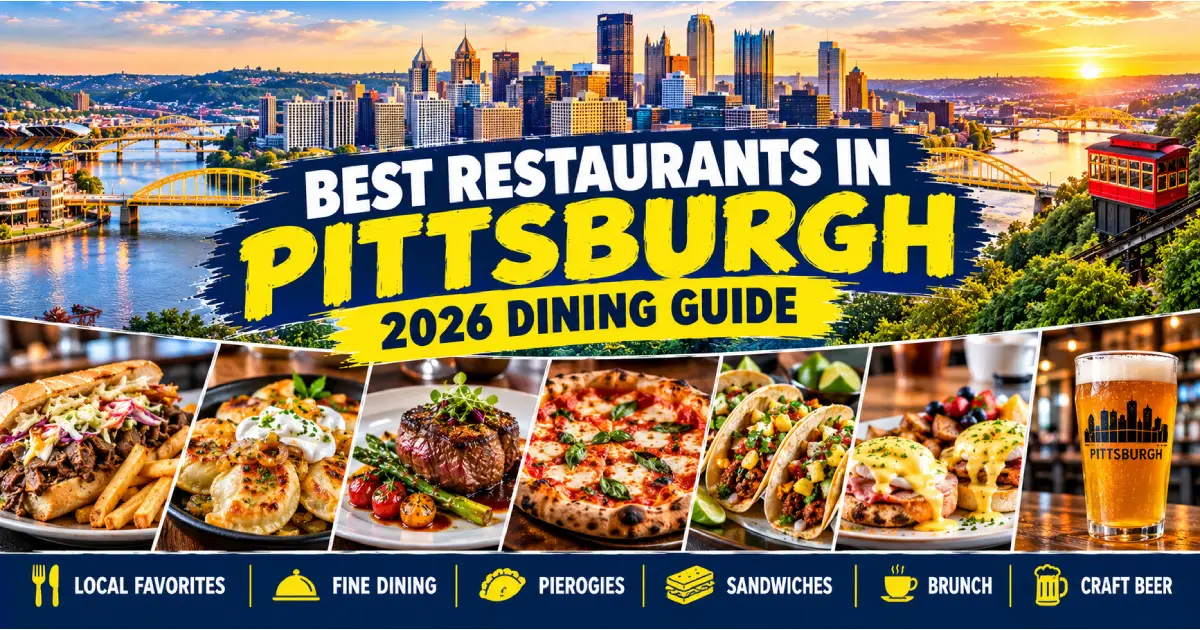
Pittsburgh’s restaurant scene is one of the best-kept secrets in American dining — a city that consistently punches above its weight, where James Beard Award nominations arrive with increasing frequency, and where the combination of a large university population, a growing tech sector, and a fiercely proud local food culture has produced an eating landscape of genuine depth and ambition. The city’s working-class heritage is still very much present at the table — in the Primanti Brothers sandwiches stuffed with french fries, in the pierogies sold from church basements and Strip District stalls, in the Iron City beer served cold at every neighborhood bar. But alongside that tradition sits a new generation of chefs cooking some of the most exciting food in the mid-Atlantic.
Neighborhoods like Lawrenceville, East Liberty, the Strip District, and the South Side have become culinary destinations in their own right. Lawrenceville’s Butler Street is now lined with nationally recognized restaurants; the Strip District’s Saturday morning market feeds a food culture that extends well beyond its six blocks; Oakland’s proximity to Carnegie Mellon and Pitt has spawned excellent coffee shops and international dining. Pittsburgh’s food scene rewards the curious traveler who looks past the famous sandwich and discovers a city genuinely proud of what it puts on the table.
Pennsylvania’s liquor laws permit restaurants to obtain full liquor licenses, and Pittsburgh’s restaurant bar programs have become increasingly sophisticated. Several of the city’s best restaurants also operate as serious cocktail destinations, and the craft brewery scene — Penn Brewing, East End Brewing, Grist House, and others — gives the city a genuine beer culture built on local production. Whether you’re here for a Michelin-caliber tasting menu or a $10 lunch counter sandwich that’s been on the menu since 1933, Pittsburgh will feed you well.
| Category | Top Pick | Neighborhood |
|---|---|---|
| Best Overall | Cure | Lawrenceville |
| Best Fine Dining | Whitfield | Downtown |
| Best Casual Italian | Piccolo Forno | Lawrenceville |
| Best Sandwich | Primanti Brothers | Strip District |
| Best Brunch | Pamela’s Diner | Strip District / Multiple |
| Best Steakhouse | Hyde Park Grille | Downtown |
| Best Tasting Menu | Morcilla | Lawrenceville |
| Best Pierogies | Church basement sales / Apteka | Various |
| Best Coffee | Espresso a Mano | Lawrenceville |
| Best Craft Beer | Grist House Brewing | Millvale |
| Best Tacos | Condado Tacos | Multiple |
| Best Vegetarian | Apteka | Bloomfield |
The restaurant that put Pittsburgh on the national dining map
Cure is the most acclaimed restaurant in Pittsburgh — a charcuterie-focused, New American kitchen on Butler Street in Lawrenceville that has earned national recognition, James Beard Award nominations, and a devoted local following in equal measure. Chef Justin Severino opened Cure in 2012 with a commitment to whole-animal butchery, house-made charcuterie, and sourcing from the finest producers in Pennsylvania and the mid-Atlantic. Over a decade later, the restaurant continues to set the standard for Pittsburgh’s culinary ambitions.
The charcuterie program is the heart of the menu: a rotating selection of house-cured meats, terrines, pâtés, and preserved items that are among the finest on the East Coast. Plates change with the season, but the quality of sourcing — heritage pork from Elysian Fields Farm, eggs from local producers, vegetables from farms with whom Severino has long relationships — is constant. The pasta dishes are superbly executed; the main courses (often featuring lamb, duck, or whole pig preparations) are deeply satisfying. The bar program and wine list are both exceptional. Book well ahead.
The legendary Pittsburgh sandwich — french fries inside, always
No Pittsburgh restaurant guide is complete without Primanti Brothers, the Strip District institution that invented the most Pittsburgh thing imaginable: a sandwich with the french fries already inside it. The origin story is entirely credible — in 1933, a cart operator named Joe Primanti started feeding steelworkers and truck drivers who needed a fast, one-handed meal. The solution was a thick Italian bread sandwich with meat, provolone, coleslaw, sliced tomato, and a pile of hot french fries all layered together.
Decades later, the original location on 18th Street is still turning out the same sandwich to a mixture of locals and pilgrims. The capicola and egg sandwich is the classic; the kielbasa is beloved by regulars; the fish sandwich on Fridays follows Pittsburgh’s Catholic tradition. The atmosphere is Pittsburgh working-class at its most authentic — sports photos on every wall, Iron City beer on tap, brusque counter service that becomes warm once you’ve been twice. Open 24 hours at the original location.
Pittsburgh’s most ambitious fine dining destination
Whitfield, located in Pittsburgh’s Ace Hotel in East Liberty, is the most refined dining experience in the city — a restaurant that takes seasonal mid-Atlantic ingredients and applies serious culinary technique in a setting that manages to be both design-forward and genuinely comfortable. The kitchen changes its menu frequently, often weekly, tracking the seasons and the availability of produce from the farms it works with directly.
Whitfield earned Pittsburgh’s first James Beard Award nomination for Best New Restaurant within two years of opening and has continued to build its reputation. The tasting menu (available with advance notice) is the ideal way to experience what the kitchen is doing; the à la carte menu is equally excellent and allows a more flexible meal. The cocktail program is among the best in Pittsburgh, and the wine list — curated toward natural and small-production wines — is thoughtful and well-priced.
James Beard-nominated Spanish small plates in Lawrenceville
Morcilla is Justin Severino’s companion restaurant to Cure — a Spanish-inspired small plates and charcuterie kitchen on Butler Street that has earned its own James Beard nominations and become one of Pittsburgh’s most celebrated dining destinations. The concept is built around the Spanish tradition of shared plates: pintxos, cured meats, conservas (tinned Spanish seafood), and more substantial plates inspired by the cuisines of Spain’s regions.
The morcilla (blood sausage, from which the restaurant takes its name) is extraordinary — earthy, spiced with paprika and cumin, served with house-made mostarda and grilled bread. The anchovies (from the best Cantabrian producers) on toast with butter are one of the finest small bites in Pittsburgh. The jamón ibérico de bellota, sourced from Spain, is served in proper thin slices by staff who know exactly how to talk about it. The sherry and wine program reflects genuine enthusiasm for Iberian wine. Come hungry, bring friends, and order widely.
The neighborhood Italian trattoria Pittsburgh deserves
Piccolo Forno on Fisk Street in Lawrenceville is the kind of Italian restaurant that becomes a neighborhood institution within its first year — a small, unpretentious trattoria serving house-made pasta, wood-fired pizza, and seasonal Italian classics with the relaxed confidence of a kitchen that doesn’t need to perform. Owner Domenic Branduzzi grew up in Tuscany and has been cooking in Pittsburgh for decades; the food here tastes genuinely Italian rather than Italian-American.
The pasta is made daily in-house: the tagliatelle with Bolognese is rich and satisfying, the cacio e pepe is properly peppery, and the seasonal pasta specials (whatever Branduzzi is excited about from the market that week) are worth ordering on their own merits. The wood-fired pizzas are Neapolitan in spirit — thin-crusted, properly charred, with excellent tomato sauce and high-quality mozzarella. The wine list leans Italian and affordable. The small room fills quickly; arrive early or book ahead.
Pittsburgh’s beloved breakfast institution — nine locations, one legend
Pamela’s Diner is Pittsburgh’s most beloved breakfast restaurant — a local chain of nine locations that has been serving the city’s signature hotcakes (thin, lacey, slightly crispy-edged crepes more than pancakes) since the original Strip District location opened in 1980. President Obama visited during his 2008 campaign and declared the crepe hotcakes the finest pancakes he’d eaten; the restaurants have been busy ever since, with weekend queues that reflect genuine quality rather than hype.
The hotcakes are the reason to come: order them plain or with blueberries, but be aware that the batter itself is so flavorful that toppings risk obscuring what makes them special. The Greek omelet and the potato pancakes are also excellent. The atmosphere at the original Strip District location is classic Pittsburgh diner — yellow Formica, mismatched chairs, friendly shouted service — and the prices remain exceptionally reasonable for the quality.
The most politically engaged restaurant in America
Conflict Kitchen is a unique Pittsburgh institution — a takeout restaurant that serves only the cuisine of countries with which the United States is currently in conflict. Since opening in 2010, it has served Afghan, Iranian, Cuban, North Korean, Venezuelan, and Palestinian food in rotating cycles, each accompanied by extensive educational materials, events, and conversations about the country whose food is being served. It is Pittsburgh’s most genuinely unusual dining experience and one of the most thought-provoking restaurants in America.
The food quality is always excellent — the owners work with diaspora community members and cultural consultants to ensure the cooking is authentic. Wraps, rice dishes, stews, and sweets from the current rotation are served from a small counter in Schenley Plaza, adjacent to the University of Pittsburgh campus. The political dimension is real and intentional; the food is the entry point for conversations that extend well beyond the meal.
Vegan Eastern European that won Pittsburgh’s heart
Apteka is the most celebrated plant-based restaurant in Pittsburgh — a vegan Eastern European kitchen in Bloomfield that has earned a devoted following among both committed vegans and omnivores who come for the pierogies, the mushroom dishes, and the cocktail program that would make any bar in the city proud. The concept sounds niche but the execution is brilliant: classic Polish, Czech, and Ukrainian preparations reimagined without animal products, with results that are deeply satisfying rather than merely acceptable substitutes.
The pierogies — filled with potato and sauerkraut, or mushroom and onion, served with vegan sour cream — are among the finest in Pittsburgh, which is saying something in a city serious about pierogies. The mushroom goulash, the beet tartare, and the cucumber salad are all excellent. The cocktail menu changes seasonally and features house-made infusions and ferments that are among the most creative in the city. The small, tile-floored room is always buzzing.
The best Argentine grill in the mid-Atlantic
Gaucho Parrilla Argentina in the Strip District is the finest South American restaurant in Pittsburgh and one of the best Argentine grills on the East Coast — a fire-driven kitchen where chef/owner Derek Stevens cooks whole animals and premium cuts over a wood-fueled Argentine parrilla (grill), producing smoke-kissed, perfectly executed meats that attract devoted regulars from across the region.
The full asado plate — a rotating selection of the day’s cuts from the grill — is the table-for-two order: it arrives in waves, each cut prepared differently, with chimichurri and salsa criolla made in-house. The provoleta (grilled provolone, served bubbling and charred in a cast iron dish) is the finest starter in the restaurant. The Malbec selection is well-curated. The space is narrow and atmospheric — wooden tables, the open grill visible through the kitchen pass, the smell of wood smoke permeating everything.
Modern Japanese with Pittsburgh hospitality
Umami in Squirrel Hill is Pittsburgh’s finest Japanese restaurant — a serious kitchen producing careful, authentic Japanese cooking from premium imported ingredients in a warm, neighborhood setting that has nothing to prove. The omakase (offered with advance reservation, $95–$120 per person) is the best sushi experience in Pittsburgh; the à la carte menu is equally impressive with excellent nigiri, sashimi, and cooked Japanese preparations.
The fish quality here is the foundation: the kitchen sources directly from the finest US distributors, and the daily cuts of tuna, salmon, yellowtail, and seasonal fish are the equal of what you’d find in much larger cities. The ramen (a single daily preparation, available at lunch) is exceptional — a tonkotsu base that simmers for 18 hours. The sake list is Pittsburgh’s most serious.
The chef-driven pizza restaurant that changed Oakland
Dinette on Penn Circle North in East Liberty is the restaurant that proved Pittsburgh was ready for genuinely inventive pizza — a small, thoughtfully designed space where chef Sonja Finn has been producing thin-crust, wood-roasted pizzas with seasonal, locally sourced toppings since 2008. The pies here are neither New York nor Neapolitan — they occupy their own territory, with a crispy-chewy crust, vibrant house-made tomato sauce, and toppings that change with the farm calendar.
The broccoli rabe and sausage pizza is the signature and deserves its fame: the bitterness of the rabe against the fennel-rich sausage and the sharp provolone is a perfect combination. The seasonal vegetable pizzas (rotating with whatever is excellent at the farmers market that week) are always worth ordering. The salads and starters are intelligently conceived and fairly priced. Dinette is the rare restaurant where the pizza is taken as seriously as any other culinary expression.
The 1923 soda fountain that time forgot
Klavon’s Ice Cream Parlor in the Strip District is not a restaurant in the conventional sense — it’s a 1923 soda fountain that has been preserved so faithfully that walking in feels like stepping directly into Pittsburgh’s past. The original marble countertop, the ornate tin ceiling, the vintage soda fountain equipment, and the black-and-white tile floor are all original; the ice cream is still made from small-batch local dairy and served in the same proportions that would have seemed generous in 1923 (which is to say, enormous by current standards).
The hot fudge sundae, the cherry phosphate (a real soda fountain drink made with phosphoric acid and cherry syrup), and the Pittsburgh-specific “Klondike” (the original Klondike bar, invented nearby) are all exceptional. Klavon’s is a Pittsburgh experience that overlaps with no other city — deeply local, completely authentic, and absolutely delicious.
Modern American in East Liberty with deep Pittsburgh roots
Spoon is one of Pittsburgh’s most consistent fine dining restaurants — a modern American kitchen in East Liberty that has been producing sophisticated, locally sourced cooking since 2008 without losing the neighborhood-scale warmth that makes it feel genuinely welcoming rather than intimidating. Chef Brian Pekarcik has built a menu that celebrates Pennsylvania’s extraordinary agricultural heritage through a contemporary lens, changing with the seasons and maintaining strong relationships with local farms.
The lamb from Pennsylvania’s Elysian Fields Farm is the signature protein — prepared differently across seasons but always featuring prominently on the menu. The house-made charcuterie, the pasta dishes, and the vegetable preparations are all executed at a high level. The bar program includes an excellent cocktail menu and a wine list assembled by someone who clearly loves American and European wines in equal measure.
The best Thai food between Philadelphia and Chicago
Nicky’s Thai Kitchen in Bloomfield has been Pittsburgh’s most beloved Thai restaurant for over a decade — a small, family-run kitchen producing authentic Central Thai cooking from recipes that have been in owner Nicky Sirimongkolkasem’s family for generations. The pad Thai here is the real article: made with rice noodles, tamarind water, and fish sauce rather than the ketchup-sweetened versions found at inferior Thai restaurants across America.
The larb (minced meat salad with toasted rice powder, lime, and fish sauce), the massaman curry (deep, nutty, slow-cooked), and the whole fish with chili and garlic sauce are all exceptional. The restaurant is tiny — eight tables — and does not take reservations; weekend queues form early. The prices are exceptionally reasonable for the quality.
The Lawrenceville bar that cooks like a proper restaurant
The Vandal on Butler Street occupies the precise space between serious bar and serious restaurant — a loud, design-forward, dimly lit room where the cocktails are excellent, the beer list is curated, and the food is far better than the casual atmosphere suggests it should be. Chef Dave Racicot’s kitchen produces wood-fired flatbreads, charcuterie, and small plates that would be at home in any restaurant twice the price.
The chicken liver toast — a thick slice of grilled sourdough topped with house-made chicken liver mousse, pickled onions, and herbs — is one of the finest single bites in Pittsburgh. The wood-fired flatbreads change with the season and are always generously topped. The cocktail menu changes monthly and reflects a kitchen-style attention to balance and seasonality. The Vandal is the ideal Lawrenceville dinner for visitors who want good food in an authentically Pittsburgh setting.
Pittsburgh’s craft beer pioneer — excellent food to match
Penn Brewery in the North Side is Pittsburgh’s oldest and most established craft brewery — founded in 1986 in a restored Victorian brewery building and serving German-style lagers and ales alongside a tavern menu of German-American comfort food that would satisfy any Bavarian. The Penn Pilsner, the Penn Gold, and the seasonal Oktoberfest (available in September–October) are all brewed on-site and available on draft alongside brewery tours.
The food matches the beer: house-made bratwurst, sauerbraten, schnitzel, and a weekly pierogi special that draws Pittsburghers from across the city. The vaulted dining room in the original brewery building is one of the most atmospheric spaces in Pittsburgh, and the outdoor beer garden in summer is a genuine Pittsburgh pleasure. Tours of the brewery run on weekends and include tastings.
The Shadyside neighborhood institution for 25 years
Harris Grill on Ellsworth Avenue in Shadyside has been a Pittsburgh institution since 1999 — a relaxed, neighborhood restaurant and bar serving classic American comfort food with a Pittsburgh twist (the house burger uses a blend of local beef and pork; the pierogies are made in-house). It’s the kind of place where locals have a regular table, where the servers know the regulars’ drinks, and where you can have an excellent meal for $25 without ceremony.
The Saturday brunch is a Pittsburgh ritual for Shadyside residents: the eggs Benedict, the French toast, and the build-your-own Bloody Mary bar are all excellent. Weekend evenings bring live music and a convivial atmosphere. The Ellsworth Avenue location is ideal for a leisurely post-shopping dinner after exploring the Shadyside boutiques.
Pittsburgh’s best craft brewery taproom with exceptional food trucks
Grist House Brewing in Millvale and its additional Collier Township location has become Pittsburgh’s most beloved craft brewery — a welcoming, community-focused taproom where the beer is genuinely excellent and the rotating food truck partnerships bring some of the city’s best independent food vendors to the bar. The Grist House Pils (crisp, dry, beautifully lagered), the Grumpface IPA, and the seasonal sour ales are all worth seeking out.
The taproom atmosphere — exposed brick, communal tables, loud music, a genuinely diverse and local crowd — captures something essential about Pittsburgh’s neighborhood character. The outdoor patio, facing the Allegheny River in Millvale, is one of the finest outdoor drinking spots in the city. Food truck nights (check the calendar) bring excellent tacos, Korean BBQ, and Pittsburgh-specific sandwiches to complement the draft lineup.
Downtown fine dining with the best view in Pittsburgh
Eleven Contemporary Kitchen on Smallman Street in the Strip District is one of Pittsburgh’s most established fine dining restaurants — a sleek, modern room with floor-to-ceiling windows overlooking the Allegheny River and a kitchen that has been producing refined contemporary American cuisine for over 15 years. Chef Derek Stevens builds his menu around exceptional sourcing: dry-aged steaks from the finest producers, heritage pork, and seasonal vegetables from Pennsylvania farms.
The pre-theater and pre-game dinner crowd from nearby PNC Park and Acrisure Stadium gives Eleven a consistent business that allows the kitchen to maintain quality and consistency. The dry-aged porterhouse for two is the signature: a monumentally satisfying piece of beef, properly aged and expertly cooked. The wine list is Pittsburgh’s most extensive, with excellent representation of both Burgundy and California.
Teppanyaki showmanship on the South Side
Nakama Japanese Steakhouse and Sushi on the South Side has been one of Pittsburgh’s most popular restaurant experiences for over 20 years — a teppanyaki steakhouse where the theatrical preparation at the grill table is as much the point as the food, and where the attached sushi bar serves some of the city’s best rolls and nigiri. It’s not the most refined dining in Pittsburgh, but it delivers consistent quality with a sense of occasion that makes it ideal for group celebrations.
The lobster and filet teppanyaki combination is the menu’s peak — expertly cooked at the table, with the showmanship (flaming onion volcano, egg tosses, synchronized flames) that justifies the teppanyaki premium. The sushi bar, often overlooked in favor of the grill tables, produces very good nigiri and specialty rolls from quality sourcing. Reservations are essential for weekend teppanyaki tables, which book out weeks ahead.
Neighborhood Strategy: Lawrenceville (Butler Street) has the highest concentration of excellent independent restaurants. For a single dining district to explore over a multi-day trip, Lawrenceville is Pittsburgh’s answer to Brooklyn’s Smith Street.
Pierogies: Pittsburgh takes pierogies seriously — beyond Apteka and Penn Brewery, local church basement sales (particularly at St. Stanislaus Kostka in the Strip District on Fridays) sell freshly made pierogies in large batches at extremely low prices. Ask locals for the current best church sale.
PNC Park Ritual: Before a Pirates home game, cross the Roberto Clemente Bridge on foot and have dinner at Gaucho Parrilla Argentina or Eleven (both in the Strip District, 15 minutes’ walk from the stadium). The combination of a Strip District dinner and a summer baseball game at PNC Park is one of Pittsburgh’s finest experiences.
Sunday Hours: Pittsburgh restaurants generally observe Sunday as a day of rest more than many major cities — several excellent spots (Cure, Morcilla) are closed Sunday. Plan accordingly and check hours before heading out.
Posted By : Vinay
Latest Article
2nd Floor, 39, Above Kirti Club, DLF Industrial Area, Kirti Nagar, New Delhi, Delhi 110015



Travel Tourister is a leading Travel portal where we introduce travellers to trusted travel agents to make their journey hasselfree, memorable And happy. Travel Tourister is a platform where travellers get Tour packages ,Hotel packages deals through trusted travel companies And hoteliers who are working with us across the world. We always try to find new and more travel agents and hoteliers from every nook and corners across the world so that you could compare the deals with different travel agents and hoteliers and book your tour or hotel with the one you have chosen according to your taste and budget.
Copyright © Travel Tourister, India. All Rights Reserved

 Call
Call Enquiry