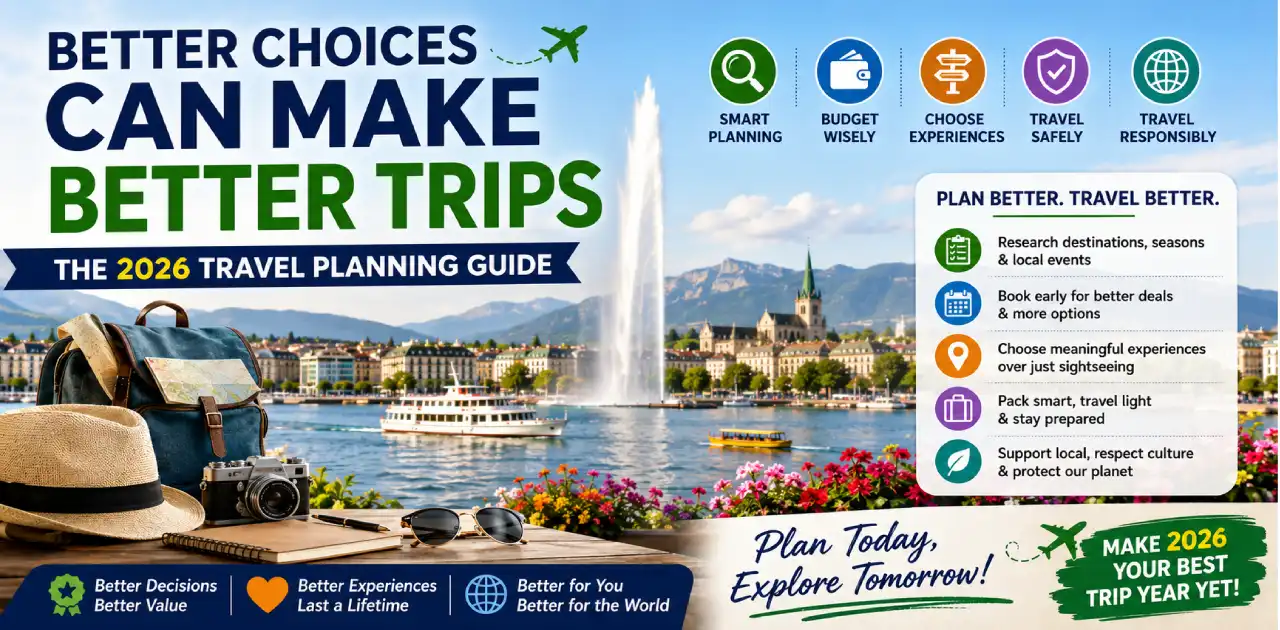
The trips people remember most are not always the ones with the longest itineraries or the most expensive hotels. They are usually the ones where each decision fit the destination — where the pace matched the place, the spending made sense, and there was enough breathing room to actually register where you were. That sounds simple. It is also where most travel goes wrong.
A packed schedule can look impressive on paper and still leave you exhausted, distracted, and oddly detached from the place you flew hours to reach. Better trips begin long before the departure gate. They begin when you stop asking how much you can squeeze into seven days and start asking what kind of experience will still feel meaningful once the suitcase is unpacked.
That shift in thinking matters in every destination, but it matters even more in places layered with history, altitude, and culture. In Peru, for example, travellers often race between famous names on a checklist while completely missing the rhythm that makes the Andes unforgettable. A well-structured Sacred Valley tour works precisely because it creates room — room to absorb the landscape, acclimatise physically, and understand the connection between farming terraces, living villages, and ancient archaeological sites. The goal is not to see less. It is to see with far more attention.
Before building a better trip, it helps to understand what makes trips go wrong. Most travel regret traces back to a small set of planning errors that repeat across destinations and budgets.
| Mistake | What It Looks Like | The Real Cost |
|---|---|---|
| Over-scheduling | 8+ activities per day; no buffer time | Exhaustion by day 3; memories blur together |
| Destination-first planning | Picking landmarks before pace | Itinerary collapses on first delay |
| Ignoring altitude / physical demands | Jumping straight into high-altitude hikes | AMS symptoms; wasted days recovering in bed |
| Spending on convenience, not depth | Last-minute transfers, rushed meals, guilt-activity bookings | High spend, low experience quality |
| Treating rest as wasted time | No recovery built into the plan | Beautiful places feel like background noise |
| Documenting instead of experiencing | Constant photography; half-attention on everything | Memories feel thin; the trip feels performative |
| Underestimating transit time | Packing too many bases into one trip | Hours lost; arrival too tired to engage |
| Not researching before arrival | Arriving without context for what you are seeing | Sites feel flat; cultural significance is missed |
One of the most effective travel decisions you can make is choosing a pace before you choose destinations. Most people plan the other way around — they pick the landmark, the town, the trail, and then stuff every available hour around it. But pace controls almost everything else: your energy, your mood, your physical condition, and ultimately what you actually remember.
A fast-paced trip can be exciting, particularly if you enjoy movement and novelty. In destinations with major elevation changes, long overland legs, and culturally dense sites, however, speed has a compounding cost. Days feel shorter, fatigue builds faster, and the difference between what you planned and what you can actually manage widens.
When you choose a slower pace deliberately, you create space for the small moments that end up defining a trip. You notice the local market stall instead of just the bus departure board. You sit for lunch without watching the clock. You absorb a delay without feeling like the entire itinerary has collapsed. In destinations like Peru, Bolivia, or Nepal — where altitude and road conditions are genuine variables — a built-in margin is not laziness. It is smart preparation.
| Travel Pace | Days Per Base | Best For | Risk | Ideal Destination Type |
|---|---|---|---|---|
| Fast (1–2 days per stop) | 1–2 | High novelty seekers; urban trips | Burnout; missed depth | Cities with short transit between them |
| Moderate (3–4 days per stop) | 3–4 | Most travellers; balanced trips | Mild fatigue by end | Mixed culture and nature destinations |
| Slow (5–7 days per stop) | 5–7 | Cultural immersion; remote areas | Missing additional sites | Remote, high-altitude, or rural destinations |
| Flexible (base-and-day-trip) | 4–7 at a single base | Families; altitude destinations | Can feel repetitive | Andean Peru, Tuscany, Northern Thailand |
Some destinations reward tight control. Others reward humility. The destinations that reward humility are usually the most spectacular — and Peru’s Andean circuit is a near-perfect example.
Respecting what the place asks of you means honouring weather windows, road times, site opening hours, and your own physical limits without treating any of them as inconveniences. It also means understanding that famous sites are not isolated attractions sitting neatly on a map. They are embedded in larger cultural, ecological, and geographical systems.
Machu Picchu illustrates this clearly. UNESCO describes the Historic Sanctuary as both an extraordinary cultural achievement and a site within a rich natural setting on the eastern slopes of the Andes, inside the upper Amazon basin. That classification matters because it tells you the experience is not just about ruins on a postcard. It is about mountain geography, cloud forest ecology, and the relationship between ancient human engineering and genuinely dramatic terrain. Understanding that context before arrival changes the way you look at the surrounding landscape — not just the main monument.
The same principle applies to the broader Andean region. The Sacred Valley tour experience is significantly richer for travellers who arrive knowing that the valley was the agricultural heartland of the Inca Empire — that the terraces were not decorative but functional, that the villages were not historic curiosities but living communities with continuity reaching back centuries. Context does not replace the visual impact. It multiplies it.
| Research Area | What to Know | How It Improves the Trip |
|---|---|---|
| Altitude & AMS | Acclimatise at 2,500–3,000m before ascending higher; symptoms, prevention | Avoids wasted sick days; plans recovery correctly |
| Cultural significance | Why a site was built, who used it, what it meant | Sites feel alive rather than decorative |
| Seasonal conditions | Wet vs dry season impact on trails and visibility | Realistic expectations; better timing decisions |
| Local customs | Dress codes, photography etiquette, market culture | Respectful engagement; richer local interactions |
| Transit realities | Road quality, journey time, altitude of each stop | Prevents over-scheduling; accurate energy planning |
| Opening hours & permits | Machu Picchu timed entries, Inca Trail permits | Avoids sold-out disappointment; forces advance planning |
A better trip does not require a bigger budget. It requires better attention to where money actually changes the experience. Travellers consistently waste money when poor planning forces convenience purchases at every stage — transfers they did not need to rush between over-scheduled stops, expensive meals grabbed in fatigue, or activity bookings driven by guilt rather than genuine interest.
Attention changes how you spend. The question stops being “how much does it cost?” and becomes “does this spending make the experience deeper or just easier?” Those are different questions with different answers.
| Trip Priority | Spend Here | Save Here |
|---|---|---|
| Cultural depth | Expert local guide for complex historical sites | Generic hotel in transit cities you barely sleep in |
| Scenic experience | Accommodation with views or direct outdoor access | Meals — local restaurants almost always outperform hotel dining |
| Physical adventure | Quality gear and safety-rated operators | Souvenir shopping — the best ones are cheaper at local markets |
| Relaxation | Fewer, better-located bases to cut transit | Activities added out of obligation rather than interest |
| Family travel | Flexible itinerary with buffer days | Premium transport on short legs easily covered by local options |
A guide is a good example of spending that earns its cost. At a site where the visual impact is high but the cultural context is not obvious — Sacsayhuamán, for instance, or the salt pans at Maras — a knowledgeable guide does not just explain the facts. They change what you notice, which changes what you remember. That return on spend is difficult to replicate with a guidebook or a phone screen.
Recovery is one of the most consistently undervalued elements of trip planning. People discuss maximising vacation days endlessly. Almost nobody plans recovery with the same intentionality. Recovery is not laziness — it is the mechanism that makes highlights actually register as highlights.
Long-haul flights, altitude adjustment, shifting meal times, and the low-level cognitive load of constant navigation all accumulate. Without deliberate pauses, even extraordinary places start to blur into a single exhausted impression. If you have ever arrived somewhere genuinely spectacular and found yourself unable to summon the energy to care, you already understand the problem.
| Recovery Strategy | How to Build It In | Why It Works |
|---|---|---|
| Altitude acclimatisation day | One full rest day at your highest base before activities | Prevents AMS; dramatically improves energy for subsequent days |
| Morning buffer | No hard departures before 9 AM on heavy activity days | Body and digestion adjust better; mood is measurably better |
| Afternoon free slot | One unscheduled 2–3 hour window per day | Spontaneity; mental reset; best local discoveries often happen here |
| One slow day mid-trip | Planned low-activity day at the trip’s midpoint | Prevents cumulative fatigue collapse in the final days |
| Sleep over sightseeing | Prioritise 7–8 hours consistently over fitting in one more attraction | Memory consolidation happens during sleep — literally how the trip is remembered |
| Unhurried meals | At least one meal per day without a time constraint | Digestion, conversation, and local observation all improve significantly |
The common fear is that rest will make a trip less memorable. The evidence consistently runs the other way. Rest gives your brain the processing time it needs to register where you actually are. The details that stay with you — the sound of stone streets in the early morning, the drop in temperature after high-altitude sunset, the way a valley looks when cloud shifts off a ridge — are almost always noticed during the slow moments, not the rushed ones.
A significant portion of modern travel has become, quietly and almost without anyone deciding it, performance. Travellers document constantly, race for the better angle, and build schedules around what will look compelling in a caption. That habit is understandable. It also systematically flattens a place into content.
Presence is harder than performance, and meaningfully better. Presence means giving one site your full attention instead of half-noticing five. It means listening when a guide explains why a landscape matters to the people who live within it. It means accepting that not every meaningful moment is photogenic — and that the moments which are not photogenic are sometimes the ones that stay with you longest.
| Travel Mode | Approach to Sites | Memory Quality | Relationship to Place |
|---|---|---|---|
| Performance | Photograph first; move quickly; cover more | Wide but shallow — many stops, few vivid details | The place is a backdrop |
| Presence | Observe first; limit stops; linger deliberately | Narrow but deep — fewer stops, vivid sensory detail | The place is an experience |
| Balanced | Photograph selectively; build in unplugged time | Strong — specific memories attached to specific moments | Genuine engagement with context |
This is not an argument against photography or organised itineraries. It is an argument against letting documentation become the primary mode of engagement. Some of the sharpest travel memories are entirely sensory — the specific weight of the air at altitude, the texture of ancient stonework under your hand, the unexpected sound of a language you do not speak filling a narrow street. None of those show up on a checklist. All of them are available to anyone willing to be present for them.
The best travel choices are often the least flashy ones. They do not make great pre-trip announcements. They make great post-trip conversations. The practical version of everything above resolves into a small set of decisions most travellers can make before they book anything.
| Decision | Better Choice | Common Mistake to Avoid |
|---|---|---|
| Number of bases | Fewer — 2 to 3 maximum per week | Hopping between 5+ locations in 7 days |
| Activities per day | 2–3 maximum with a buffer | 5–6 back-to-back without margin |
| Transit time | Honest — add 30–50% to optimistic estimates | Treating Google Maps travel times as guaranteed |
| Research | Destination context before departure | Arriving cold and hoping the site explains itself |
| Guide investment | Yes — for culturally complex sites | Skipping to save money, arriving without context |
| Free time | At least one unscheduled afternoon per 3 days | Every hour assigned before departure |
| Physical preparation | Altitude pre-acclimatisation; fitness appropriate to activities | Assuming the body will adapt without any preparation |
| Documentation | Intentional — select the moments; be present for the rest | Photographing constantly; experiencing almost nothing |
Plan for the version of yourself who will be tired, hungry, slightly overwhelmed, and delighted — not the imaginary super-traveller who never needs a break, never misses a bus, and processes every cultural experience at peak cognitive clarity. That traveller does not exist. The person who will actually take the trip is human, and the best itineraries are built for humans.
Q: How do I stop over-packing my itinerary? Start by listing every activity you want to do, then cut it by 30 percent before finalising anything. Assign realistic travel times between each location — road times in mountainous regions like the Andes or Southeast Asian highlands routinely run 50 to 100 percent longer than map estimates suggest. Then build one buffer hour into each day and at least one completely unscheduled afternoon per three-day window. What feels like cutting the trip is usually the decision that saves it.
Q: How important is pace when travelling at high altitude? Extremely important. Altitude is one of the few physical variables in travel that does not respond to willpower or tight scheduling. Acute Mountain Sickness (AMS) affects a significant percentage of travellers ascending above 2,500 metres too quickly, regardless of fitness level. A dedicated acclimatisation day at your highest sleeping elevation before undertaking physical activities is not optional — it is the difference between a functional high-altitude trip and a miserable one. Destinations like Cusco (3,400m), La Paz (3,640m), and the Tibetan Plateau require specific altitude planning.
Q: What is the right way to spend money on a trip to get the most out of it? Align spending with what actually creates depth rather than convenience. On a culturally rich itinerary — Peru, Jordan, Japan, India — the highest-return spend is usually a knowledgeable local guide for complex sites and accommodation positioned close to the experiences you are there for (cutting unnecessary transit). The lowest-return spend is usually convenience services added reactively because poor planning created time pressure. Build a better plan first; you will spend less and experience more.
Q: How do I balance seeing major landmarks with having a meaningful experience? Visit the landmark — there is usually a reason it is famous. But build context before you arrive, give it more time than you think it needs, and resist the urge to rush to the next one immediately after. One well-understood, properly attended landmark leaves a stronger impression than five half-noticed ones. If you are visiting the Sacred Valley and Machu Picchu circuit, understanding the agricultural and political history of the Inca Empire before arrival changes every site you see, not just the most famous one.
Q: Is it worth hiring a local guide for major travel destinations? For historically and culturally complex sites, yes — consistently. A good guide does not just narrate facts. They direct your attention toward details you would otherwise miss, explain the relationships between what you are seeing, and answer the specific questions a site raises in real time. The return on that investment is particularly high at sites like those across the Peruvian Andes, Egyptian antiquities, or archaeological sites in Southeast Asia, where visual impact is high but context is not self-evident from the physical remains.
Q: How much free time should I build into a trip? A rough working ratio: for every three days of structured activities, include at least one afternoon that is completely unscheduled. On longer trips of ten days or more, build one entirely free day per week — no booked tours, no confirmed departures, no agenda beyond whatever presents itself. This will feel wasteful when you plan it. It will feel essential by the time you reach it. The best travel stories almost always begin with an unexpected afternoon.
Q: How do I handle the documentation versus presence balance while travelling? Set a specific time at each site for intentional photography — ten to fifteen minutes of deliberate capture — then put the camera away for the remaining time. The discipline of limited shooting also improves photo quality, because you think more carefully about what you are actually trying to capture. Beyond photography, consider leaving a full meal per day phone-free. The sensory experience of eating without a screen — noticing what is on the plate, what is happening at the table next to yours, what the street outside sounds like — is a reliable presence reset.
Q: What should I research before visiting a culturally significant destination? At minimum: why the place was built or settled, who the people were who created or lived in it, the natural environment it sits within, and the current relationship between that historical significance and the contemporary community nearby. For Andean Peru specifically, understanding the Inca administrative system, the relationship between altitude and agriculture, and the significance of astronomical alignment in site planning makes every site — not just the most famous — dramatically more interesting to visit.
Q: How do I avoid the feeling of being too tired to enjoy a trip? Plan for realistic energy levels, not aspirational ones. That means honest transit times, a maximum of two to three significant activities per day, at least seven hours of sleep every night, one unhurried meal daily, and a full recovery day built into any trip longer than five days. At high-altitude destinations, add an acclimatisation day at the start of the trip and avoid alcohol for the first 48 hours. Most traveller fatigue is not inevitable — it is a direct result of over-scheduling that a better itinerary would have prevented.
Q: What makes the difference between a good trip and a great one? Almost always: fewer bases, slower pace, better research, and more margin. The travellers who describe trips as genuinely transformative almost never describe a packed ten-country itinerary. They describe a place they understood, a pace that let them settle in, and enough unhurried time to notice the specific details that made it different from everywhere else. A great trip is not a longer checklist. It is a deeper encounter with a shorter one.
About Travel Tourister Travel Tourister’s editorial team draws on destination reporting across six continents to deliver planning guides built around how real travellers actually experience trips — not how they look on an itinerary template.
Posted By: Vinay
As a lead contributor for Travel Tourister, Vinay is dedicated to serving our Tier 1 audience (US, UK, Canada, Australia). His mission is to deliver precise, fact-checked news and actionable, data-driven articles that empower readers to make informed decisions, minimise travel risks, and maximise their adventure without compromising safety or budget.

As an upcoming travel agent I got much support from travel tourister. We are getting very good leads from travel tourister and they mend our website which is also very commendable.... Excellent work Hope to do more business forward.... Thanks and regards CEO,Andaman Unlocked
Rating:
10/20/2018
As an upcoming travel agent I got much support from travel tourister. We are getting very good leads from travel tourister and they mend our website which is also very commendable.... Excellent work Hope to do more business forward.... Thanks and regards CEO,Andaman Unlocked
Rating:
10/20/2018
2nd Floor, 39, Above Kirti Club, DLF Industrial Area, Kirti Nagar, New Delhi, Delhi 110015



Travel Tourister is a leading Travel portal where we introduce travellers to trusted travel agents to make their journey hasselfree, memorable And happy. Travel Tourister is a platform where travellers get Tour packages ,Hotel packages deals through trusted travel companies And hoteliers who are working with us across the world. We always try to find new and more travel agents and hoteliers from every nook and corners across the world so that you could compare the deals with different travel agents and hoteliers and book your tour or hotel with the one you have chosen according to your taste and budget.
Copyright © Travel Tourister, India. All Rights Reserved



 Call
Call Enquiry