Published on : 21 Oct 2026
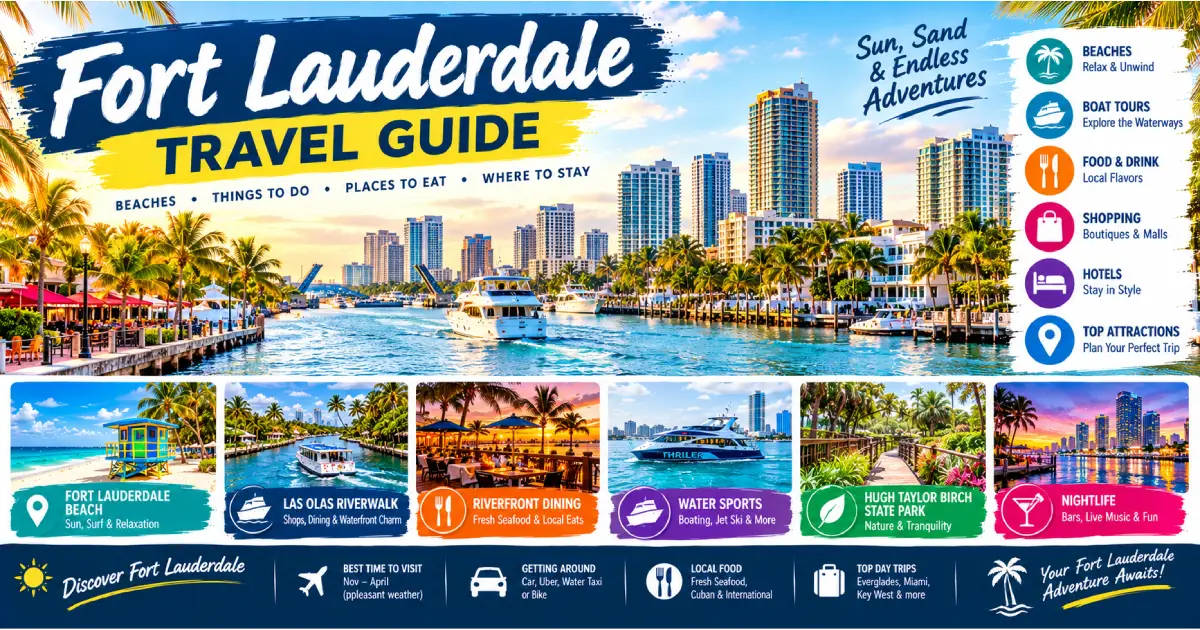
Fort Lauderdale is one of those cities that rewards travelers who look past the obvious. Most people know it as a beach destination — 24 miles of Atlantic coastline, the famous Strip along A1A, the spring break associations that have softened considerably since the city deliberately reinvented itself in the late 1980s. What they discover when they arrive is something considerably more interesting: a city threaded with 300 miles of navigable canals, a thriving arts and dining scene concentrated along Las Olas Boulevard and in the Flagler Village neighborhood, a world-class yachting culture that makes it the unofficial boating capital of the United States, and a geographic position that makes it one of the most convenient gateways to the Everglades, the Florida Keys, and the entire South Florida region. Fort Lauderdale is not a resort bubble — it is a genuine, multi-layered city that happens to have a world-class beach attached to it.
The city’s self-reinvention from Spring Break capital to cultural destination has been thorough and ongoing since the early 1990s. The Broward Center for the Performing Arts opened in 1991 and immediately established a serious cultural presence. NSU Art Museum expanded its collection into national significance. The Las Olas corridor evolved from tourist strip to one of the finest outdoor dining and gallery streets in Florida. The Flagler Village neighborhood north of downtown has emerged as a genuine creative district with galleries, craft breweries, and independent restaurants that feel nothing like a beach town. The result is a city that works equally well as a weekend beach escape, a cultural city break, a yachting destination, or a base for exploring the broader South Florida and Everglades region.
This guide covers everything you need to navigate Fort Lauderdale in 2026 — how to get here, how to get around, where to stay in each neighborhood, how to budget your trip, and how to structure your days whether you have 48 hours or a full week. Fort Lauderdale rewards preparation less than most cities; it is fundamentally easy to navigate and genuinely pleasant to wander. But knowing which neighborhoods suit your style, which Water Taxi stop gets you where you want to go, and how to approach the Everglades day trip will make the difference between a good trip and an exceptional one.
| Factor | Details |
|---|---|
| Airport | Fort Lauderdale-Hollywood International (FLL) — 4 miles from beach |
| Nearest Major Airport | Miami International (MIA) — 35 miles south |
| Time Zone | Eastern Time (UTC−5 / UTC−4 DST) |
| Population | ~200,000 city; ~1.95 million Broward County |
| Best Neighborhoods | Las Olas/Downtown, Fort Lauderdale Beach, Victoria Park, Flagler Village |
| Getting Around | Water Taxi + rideshare; car useful for day trips |
| Currency | USD |
| Sales Tax | 7% (Broward County) |
| Tipping | 18–22% restaurants; $1–2/drink at bars; $2–5/night hotels |
| Emergency | 911 |
| Non-Emergency Police | (954) 764-4357 |
Fort Lauderdale-Hollywood International Airport (FLL) is one of the best-positioned airports in the country for a beach destination — the terminal is 4 miles from Fort Lauderdale Beach and roughly 25 miles from Miami Beach. FLL serves over 35 airlines with non-stop routes to more than 100 domestic and international destinations. Southwest Airlines has a major hub here, making FLL particularly competitive for fares from most US cities. The airport has two main terminals (Terminals 1–4 in one complex, Terminal 4 domestic) connected by a free shuttle.
From FLL to Fort Lauderdale Beach:
Miami International Airport (MIA) — 35 miles south, 40–50 minutes by car — is a viable alternative, particularly for international flights and connections that FLL doesn’t serve. MIA has a vastly larger international terminal network than FLL. Rideshare from MIA to Fort Lauderdale Beach: $45–65, 45–60 minutes.
Palm Beach International Airport (PBI) — 45 miles north — serves smaller northern Broward and Palm Beach County visitors and may offer better fares for some routes.
Fort Lauderdale sits at the intersection of I-95 (the primary North-South interstate on the East Coast) and I-595/I-75, making it accessible by car from virtually any direction.
| From | Distance | Drive Time |
|---|---|---|
| Miami | 30 miles | 35–50 min (I-95 N) |
| West Palm Beach | 45 miles | 45–60 min (I-95 S) |
| Orlando | 230 miles | 3 hr 15 min (FL Turnpike S) |
| Tampa | 250 miles | 3 hr 30 min (I-75 SE) |
| Jacksonville | 340 miles | 4 hr 45 min (I-95 S) |
| Atlanta | 660 miles | 9 hr (I-75 S) |
| New York City | 1,280 miles | 18–19 hr (I-95 S) |
| Washington DC | 1,060 miles | 15 hr (I-95 S) |
Parking: Fort Lauderdale Beach parking is a perennial challenge. The city operates metered lots along A1A and several garages; $2–4/hour in peak season, $10–15/day maximum at garages. The most reliable parking garage for the beach area is at 100 S Fort Lauderdale Beach Blvd (open 24 hours). Las Olas Boulevard has metered street parking and several nearby garages; many restaurants on Las Olas validate. If staying on or near the beach, most hotels charge $25–45/night for parking — factor this into your budget.
Amtrak serves Fort Lauderdale at the FLL/Dania Beach station (100 S Bryan Rd, Dania Beach — a few miles south of downtown). Routes include:
Key journey times from the Fort Lauderdale stop:
Amtrak fares vary enormously by booking time; purchase 4–6 weeks in advance for best prices. The Dania Beach station is not in a walkable location — have a rideshare plan for the final leg to your hotel.
Brightline — Florida’s private intercity rail service — connects Fort Lauderdale to Miami, Aventura, Boca Raton, West Palm Beach, Aventura, and now Orlando. The Fort Lauderdale Brightline station is downtown at 101 NW 2nd Ave, adjacent to the Broward County Convention Center area.
| Brightline Route | Duration | Fare (approx.) |
|---|---|---|
| Fort Lauderdale → Miami | ~30 min | $10–18 Smart / $19–28 Premium |
| Fort Lauderdale → West Palm Beach | ~40 min | $10–18 Smart / $19–28 Premium |
| Fort Lauderdale → Orlando | ~3 hr | $79–99 Smart / $149–199 Premium |
| Fort Lauderdale → Boca Raton | ~20 min | $8–15 Smart |
Brightline is one of the most practical tools for South Florida exploration — it eliminates the I-95 Miami commute entirely and makes a Miami day trip (or overnight) completely effortless. Book at gobrightline.com.
Greyhound and FlixBus serve Fort Lauderdale from Miami, Orlando, Tampa, and other Florida cities. The main bus terminal is at 515 NE 3rd St downtown. Inexpensive but slow; reasonable for the Fort Lauderdale–Miami corridor if Brightline isn’t available.
Port Everglades (2 miles south of Fort Lauderdale Beach) is one of the busiest cruise ports in the world — consistently in the top 3 globally by passenger volume. If arriving or departing by cruise ship, the port is directly connected to FLL by a short rideshare or taxi, and to the beach area by the same. Port-to-beach rideshare: $12–18.
The Water Taxi is Fort Lauderdale’s signature transportation experience and genuinely useful for getting between the beach area, Las Olas, downtown, and the Intracoastal neighborhoods. Day passes are $32/adult ($22 child), all-day unlimited boarding with 20+ stops along the Intracoastal and New River. Hours: daily 10 AM–midnight (extended summer weekends). Key stops include Bahia Mar Marina, Las Olas at SE 6th Ave, Shooters Waterfront Restaurant, Riverside Hotel, and the Broward Center. Book at watertaxi.com or board at any marked stop; the pass pays for itself with 2–3 rides.
The Water Taxi is simultaneously transportation and sightseeing — the views of the canal neighborhoods (Seven Isles, Las Olas Isles), the megayachts at the marinas, and the Intracoastal itself are excellent from the water. On a first visit, the Water Taxi should be part of the experience rather than just a way to get from A to B.
Uber and Lyft both operate throughout Broward County. Fort Lauderdale is compact enough that most intra-city trips run $8–25; the beach-to-downtown run is $10–15. Surge pricing applies during events (the Boat Show, New Year’s Eve, spring break weekends) and on weekend late nights in the Las Olas and beach entertainment district.
| Route | Approx. Fare |
|---|---|
| FLL Airport → Fort Lauderdale Beach | $14–22 |
| FLL Airport → Downtown | $12–18 |
| Fort Lauderdale Beach → Las Olas Boulevard | $8–12 |
| Las Olas → Flagler Village | $7–10 |
| Fort Lauderdale → Hollywood Beach | $15–22 |
| Fort Lauderdale → Lauderdale-by-the-Sea | $12–18 |
| Fort Lauderdale → Pompano Beach | $18–28 |
| Fort Lauderdale → Miami Beach | $45–65 |
| Fort Lauderdale → Port Everglades | $12–18 |
A rental car is not necessary for the core Fort Lauderdale experience (beach, Las Olas, Water Taxi, downtown) but becomes valuable for day trips: the Everglades are 45 minutes west via US-27 or I-75, the Florida Keys are 3 hours south via US-1, and Palm Beach is 45 minutes north on I-95. All major agencies are at FLL; book in advance for the best rates ($35–80/day depending on season and vehicle class).
Driving note: Fort Lauderdale traffic is South Florida traffic — I-95 through Broward County is heavily congested during morning (7–9:30 AM) and evening (4–7 PM) rush hours on weekdays. Avoid I-95 during these windows if possible; US-1 (Federal Highway) is a reasonable parallel route for local travel.
The Sun Trolley is Fort Lauderdale’s free and low-cost public trolley system with several routes:
The Las Olas Link trolley is a legitimate and comfortable way to move along the Las Olas corridor, particularly for those staying at beach hotels who want to explore the downtown end of Las Olas.
Fort Lauderdale has a BCycle bike-share network with docked stations throughout downtown, Las Olas, and the beach area. $5–10 for short rides; useful for flat coastal cycling. Electric scooters (Lime, Bird) operate in the city; subject to local regulations on the beachfront promenade (check current rules on the app before riding on the promenade). The Fort Lauderdale beach promenade itself is excellent for cycling — flat, well-maintained, and scenic.
Traditional taxis operate from the airport (metered) and can be found at major hotels. Less convenient than rideshare for most purposes but useful at the airport if you prefer a set rate.
The Atlantic beachfront along A1A from SE 17th Street north to Sunrise Boulevard is the city’s signature neighborhood — wide white sand beach, the pedestrian promenade, beachfront hotels and restaurants, and the concentrated energy of one of Florida’s finest urban beaches. The promenade between SE 17th St and Sunrise Blvd is particularly good: wide, well-maintained, shaded at the edges by sea grapes and coconut palms, with the Atlantic to the east and a dense lineup of cafés, bars, and restaurants to the west. Stay here if the beach is your primary reason for visiting; it puts you steps from the water but requires a rideshare or Water Taxi to reach Las Olas, downtown, and the Intracoastal.
The 2-mile boulevard connecting downtown to the beach is Fort Lauderdale’s spine — the intersection of culture, dining, shopping, and nightlife that the rest of the city orbits. The western end (downtown side) has galleries, law firms, and the civic institutions that anchor the city. The central section between SE 6th and SE 11th Avenues is the restaurant and boutique heart — Casa D’Angelo, Rocco’s Tacos, Louie Bossi’s, Big City Tavern, and dozens of others. The eastern end bridges over the Intracoastal to the beach strip. Staying on or near Las Olas gives you the best access to the city’s dining and nightlife while remaining Water Taxi distance from the beach.
A quiet, beautiful residential neighborhood just north of Las Olas, Victoria Park is Fort Lauderdale’s most desirable urban address — early-20th-century homes on tree-lined streets, proximity to the Intracoastal, and a neighborhood feel that the beach and downtown corridors lack. The Greek Islands Taverna and Valentino Cucina Italiana are neighborhood anchors. Casa D’Angelo (on N Federal Hwy at the neighborhood’s edge) is the finest Italian restaurant in Broward County. Victoria Park is a residential neighborhood without a hotel concentration; nearby Las Olas Boulevard hotels are the closest accommodations.
Fort Lauderdale’s creative district occupies the blocks north of Broward Boulevard and east of I-95 — a neighborhood of converted warehouses, independent restaurants, craft breweries (Invasive Species, Barrel of Monks), and art galleries that feels genuinely different from the beach resort economy. The monthly ArtWalk (first Saturday, 6–10 PM) draws thousands of visitors for open galleries, food trucks, and live music. During the week, Flagler Village is a working neighborhood; on weekends and ArtWalk nights it transforms into the city’s most energetic cultural gathering point. Hotel options are limited here; downtown hotels or Las Olas properties are close enough.
Fort Lauderdale’s downtown sits along the New River between the Broward Center and the Stranahan House — a walkable district of performing arts venues, museums, hotels, and waterfront restaurants. The Riverwalk is the New River promenade connecting these institutions; it’s pleasant at sunset and serves as the backdrop for the annual Winterfest Boat Parade. The downtown hotel market offers good value compared to beach properties; a downtown hotel with Water Taxi access puts you within easy reach of both the beach and Las Olas.
South of downtown along the New River’s south fork, Rio Vista is one of Fort Lauderdale’s most beautiful residential neighborhoods — 1920s–1940s Mediterranean Revival and Colonial homes on deep-canal lots, with private docks and manicured waterfront properties. Not a tourist neighborhood in any commercial sense, but the streets are public and worth walking or cycling through for the architecture and the canal atmosphere.
A small, self-contained beach community 5 miles north of Fort Lauderdale’s main beach strip, Lauderdale-by-the-Sea has the character of the old pre-development Florida beach town that Fort Lauderdale itself has largely shed. Anglin’s Pier, the Town Square Reef (shore-snorkeling), Blue Moon Fish Co., and the boat-only Cap’s Place (since 1928) are the area’s anchors. Quieter than Fort Lauderdale Beach, better for families and older travelers, and excellent for the reef diving and snorkeling that the area is known for.
Hollywood (20 minutes south of Fort Lauderdale on I-95 or US-1) has a 2.5-mile beachfront Broadwalk, the ArtsPark at Young Circle, and the Seminole Hard Rock Hotel and Casino — making it a genuine destination rather than just a suburb. Hollywood Beach has a slightly retro, low-key character compared to Fort Lauderdale; the Broadwalk is outstanding for walking, cycling, and the density of casual beachfront restaurants. The Seminole Hard Rock’s guitar-shaped hotel tower is one of South Florida’s most visible landmarks and hosts major concerts at Hard Rock Live.
W Fort Lauderdale — 401 N Fort Lauderdale Beach Blvd. The definitive luxury beach hotel, oceanfront with Steak 954 on-site (the jellyfish tank restaurant), the WET pool deck, and AWAY Spa. Best location on the Strip. $350–600/night.
Pelican Grand Beach Resort — 2000 N Ocean Blvd. AAA Four Diamond, all-oceanfront rooms with private balconies, direct beach access, the Ocean 2000 restaurant. Genuinely all-oceanfront — a rarity. $280–520/night.
Conrad Fort Lauderdale Beach — 551 N Fort Lauderdale Beach Blvd. All-suite, modern luxury, full kitchens, oceanfront and Intracoastal views, rooftop pool. Excellent for extended stays. $320–550/night.
The Riverside Hotel — 620 E Las Olas Blvd. Fort Lauderdale’s grande dame, on Las Olas since 1936, Water Taxi accessible, Las Olas location means walkable to the best restaurants. $220–420/night.
B Ocean Resort — 1140 Seabreeze Blvd. Directly on the beach, solid mid-range, pool on the ocean deck, central Strip location. $150–280/night.
Marriott Harbor Beach Resort — 3030 Holiday Dr. South of the Strip on a semi-private beach inlet, 650 feet of private beachfront, 3030 Ocean restaurant on-site. $200–380/night.
Hilton Fort Lauderdale Beach Resort — 505 N Fort Lauderdale Beach Blvd. Large full-service resort hotel, central beach location, multiple pools, good value for a name-brand property. $170–320/night.
Hyatt Centric Las Olas — 100 E Las Olas Blvd. Modern boutique hotel at the western end of Las Olas, downtown location, rooftop bar, walkable to everything on the boulevard. $160–280/night.
Hampton Inn Fort Lauderdale Downtown — 250 SW 18th Ave. Reliable chain, downtown location, free breakfast, easy Brightline/Water Taxi access. $85–135/night.
Holiday Inn Express Fort Lauderdale Airport/Cruise — Near Port Everglades, useful for cruise pre/post nights. $90–150/night.
Pillars Hotel — 111 N Birch Rd. Small boutique property on the Intracoastal, 23 rooms, water-taxi accessible, genuinely charming. $160–260/night (occasionally below $130 in low season).
| Budget Level | Daily Cost | What’s Included |
|---|---|---|
| Budget | $95–140/day | Budget hotel or hostel; breakfast at Lester’s Diner; lunch from a food truck or taco stand; one mid-range dinner; free or low-cost activities (beach, Water Taxi day pass, Flagler Village walk); beer at a craft brewery |
| Mid-Range | $170–280/day | Mid-range hotel; breakfast at hotel or café; lunch at a casual Las Olas spot; dinner at a proper restaurant ($40–60/person with drinks); Water Taxi; one paid attraction (MODS, Bonnet House, or sunset cruise) |
| Luxury | $400–700+/day | Oceanfront resort; full-service restaurant meals; Water Taxi + rideshare; spa; sunset cocktails at Steak 954 or Casablanca; private boat charter or reef diving excursion |
Stone crab ordering strategy: Stone crab claws (in season Oct 15–May 1) are sold by size; medium claws ($28–42 for a half-dozen) are significantly cheaper than large or jumbo, and many locals prefer medium for flavor. 15th Street Fisheries and Tarpon Bend Raw Bar offer the best value for stone crab dining.
Happy hour on Las Olas: Virtually every Las Olas restaurant runs a 4–6 PM happy hour with $6–9 cocktails and half-price raw bar. This is the highest-value window for upscale dining in Fort Lauderdale.
Free attractions: Fort Lauderdale Beach and promenade (free), Flagler Village ArtWalk (free, first Saturday monthly), Riverwalk (free), Winterfest Boat Parade (free street viewing), Treaty Oak Park (if day-tripping to Jacksonville), and the NSU Art Museum (free second Sunday of each month).
Brightline over rideshare to Miami: A round-trip Brightline to Miami Beach ($20–36) is almost always cheaper than a round-trip rideshare ($90–130) and far more relaxing than driving I-95.
Day 1 — Beach, Water Taxi, Las Olas
Day 2 — Everglades + Evening Culture
Day 1 — Beach and Boat As above Day 1, plus: afternoon snorkeling at Town Square Reef (Lauderdale-by-the-Sea, $20–40 for gear rental) or reef boat trip.
Day 2 — Everglades and Local Culture As above Day 2, plus: Stranahan House tour ($22, Fort Lauderdale’s oldest structure) and Flagler Village evening exploration.
Day 3 — Miami or Keys Day Trip
Day 1: Arrive, settle in, beach afternoon, Water Taxi evening, dinner on Las Olas Day 2: Everglades airboat tour; NSU Art Museum; Broward Center performance Day 3: Brightline to Miami — South Beach, Wynwood, Design District, return for Las Olas dinner Day 4: Hugh Taylor Birch State Park kayaking; Bonnet House Museum; Flagler Village ArtWalk (if first Saturday) or brewery trail (Invasive Species → Barrel of Monks → Funky Buddha) Day 5: Lauderdale-by-the-Sea + snorkeling; Hollywood Beach Broadwalk; final dinner at 15th Street Fisheries (stone crab, Oct–May) or Steak 954
Miami Beach — 30 miles south, 40–50 minutes by car or 30 minutes by Brightline. Art Deco Historic District, Wynwood Walls, Ocean Drive, South Beach. The Brightline makes this the most effortless day trip in South Florida.
Everglades National Park — 90 miles south via US-1 and FL-9336. The Anhinga Trail at Royal Palm is the finest 30-minute wildlife walk in North America — guaranteed herons, anhingas, alligators within arm’s reach of the boardwalk. Full day recommended; enter at the Ernest F. Coe Visitor Center. $35/vehicle, valid 7 days. nps.gov/ever.
Everglades Airboat (Closer Option) — 45 minutes west via I-75 or US-27. Sawgrass Recreation Area and Everglades Holiday Park offer 30–45 minute airboat tours into the River of Grass. Not the same experience as the National Park, but accessible for a half-day trip. $35–65/person.
Florida Keys — Key Largo — 70 miles south via US-1. John Pennekamp Coral Reef State Park ($8/person + $4/vehicle) contains the only living coral reef in the continental United States. Glass-bottom boat tours ($30), snorkel tours ($30), scuba. A full day; possible as a long day trip from Fort Lauderdale.
Florida Keys — Key West — 200 miles south via US-1/Overseas Highway. Possible as a very long day (4-hour drive each way) or strongly recommended as an overnight. The Key West Express ferry from Fort Myers is not convenient from Fort Lauderdale. Drive US-1 and stop at Bahia Honda State Park (best swimming beach in the Keys) and Islamorada (Robbie’s Marina, tarpon feeding).
Palm Beach — 45 miles north via I-95. Worth Avenues galleries and boutiques, The Breakers Hotel (even just for a drink at HMF bar), the Norton Museum of Art ($20, excellent), the Flagler Museum ($25, Gilded Age railcar magnate mansion). Half-day or full day.
Boca Raton — 25 miles north. Mizner Park (outdoor shopping/dining/performance), the Boca Resort and Club (historic Addison Mizner architecture), Gumbo Limbo Nature Center (sea turtle rehabilitation, free). An easy half-day.
Orlando Theme Parks — 230 miles north via Florida Turnpike. Doable as a very long day; much better as a 2-night side trip. Walt Disney World, Universal, SeaWorld are all within 15 minutes of each other in Orlando.
Fort Lauderdale Beach area, Las Olas, and most of downtown have dense cell coverage across all major US carriers. Free Wi-Fi is available at most cafés, restaurants, and hotel lobbies. The Sun Trolley stops and Water Taxi boarding areas have signage but not ticketing kiosks — purchase Water Taxi passes at watertaxi.com or on the vessel.
Broward Health Medical Center — 1600 S Andrews Ave, Fort Lauderdale. Major trauma center, 24-hour emergency department. (954) 355-4400. Holy Cross Health — 4725 N Federal Hwy. Major regional hospital. (954) 771-8000. Urgent Care options: CareSpot and Baptist Health urgent care centers operate multiple locations throughout Broward County; most accept walk-ins 8 AM–8 PM.
Fort Lauderdale is generally safe in the tourist zones — the beach strip, Las Olas, downtown, Flagler Village, and Victoria Park. Standard urban precautions apply: don’t leave valuables in a visible car, keep phones pocketed in crowded areas, and use well-lit routes in the evening. The western portions of the city away from the tourist corridors warrant more awareness at night.
Rip currents: Fort Lauderdale’s Atlantic beach has rip current risk, particularly in summer and following storms. Always swim near a lifeguard tower and observe the flag system: green (low hazard), yellow (medium hazard), red (high hazard — strong surf or currents), double red (closed). When caught in a rip current: swim parallel to shore, not against the current.
The ocean is warm but has wildlife: The Atlantic off Fort Lauderdale has reef sharks (non-aggressive; rarely a concern for swimmers), Portuguese man-o’-war (not a true jellyfish, can wash ashore especially in spring; the tentacles sting even when dried — don’t touch). Jellyfish season peaks in late summer. Wear reef-safe sunscreen if snorkeling.
Stone crab etiquette: Stone crab claw season (October 15–May 1) brings one of Florida’s most distinctive dining rituals. Only the claws are harvested; the crab is returned to the ocean to regenerate. Served cold or warm with mustard sauce. Order by size: medium, large, jumbo, colossal. The claw is already cooked; eat within 48 hours of purchase.
Sun and heat: Fort Lauderdale’s subtropical latitude means intense UV year-round. Apply SPF 50+ daily, even in winter; the reflected UV off the ocean amplifies exposure. Heat illness is a real risk in summer — hydrate constantly, take midday shade breaks, and recognize the signs (nausea, confusion, stopping sweating in the heat).
Hurricane preparedness: June 1–November 30 is hurricane season. Broward County has a comprehensive evacuation plan (broward.org/hurricane). If a hurricane watch or warning is issued during your stay: follow instructions from local authorities, evacuate Zone A areas immediately if ordered, and check the Broward County Emergency Management website (readybroward.com).
Tipping culture: South Florida service industry workers depend on tips. Restaurant standard: 20–22% at sit-down restaurants, 15–18% minimum for adequate service. Hotel housekeeping: $3–5/night. Valet: $3–5. Tour guides: 15–20% of tour cost.
Sales tax: Broward County sales tax is 7% on retail purchases and restaurant bills. Not included in most posted prices; expect to add 7% to quoted costs.
Posted By : Vinay
Latest Article
2nd Floor, 39, Above Kirti Club, DLF Industrial Area, Kirti Nagar, New Delhi, Delhi 110015



Travel Tourister is a leading Travel portal where we introduce travellers to trusted travel agents to make their journey hasselfree, memorable And happy. Travel Tourister is a platform where travellers get Tour packages ,Hotel packages deals through trusted travel companies And hoteliers who are working with us across the world. We always try to find new and more travel agents and hoteliers from every nook and corners across the world so that you could compare the deals with different travel agents and hoteliers and book your tour or hotel with the one you have chosen according to your taste and budget.
Copyright © Travel Tourister, India. All Rights Reserved

 Call
 Enquiry