Published on : 21 Oct 2026
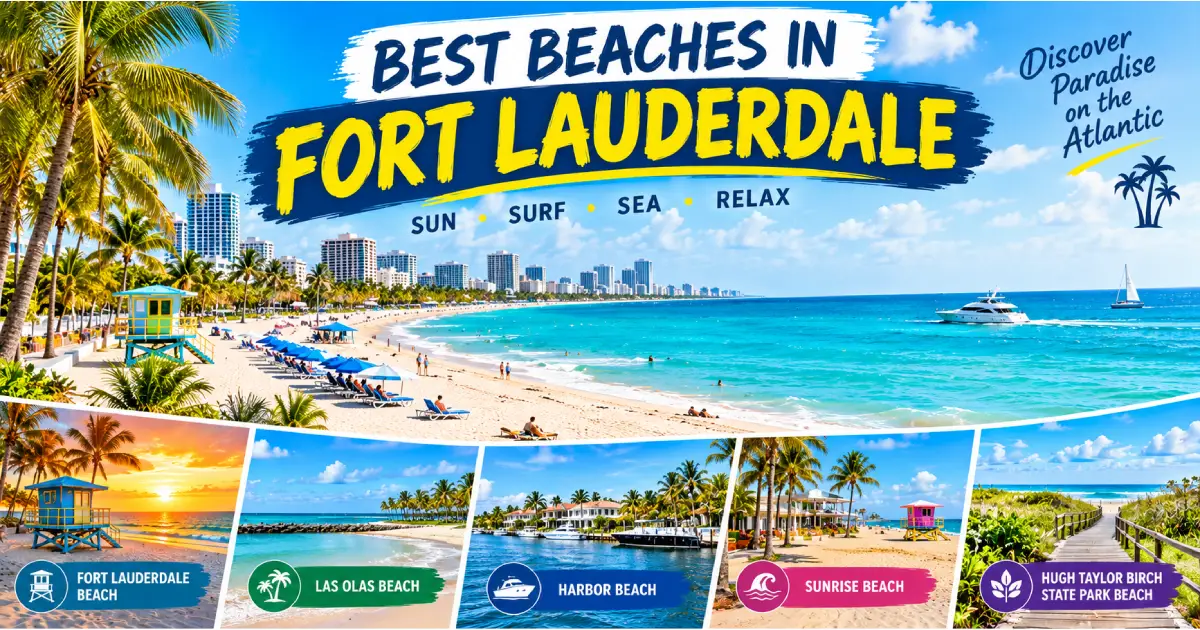
Fort Lauderdale’s relationship with its beaches is more layered than most coastal cities care to admit. The city spent decades defined by a Spring Break reputation it ultimately decided it didn’t want — and the deliberate reinvention that followed produced something more interesting than either the wild beach party era or the sanitized resort destination it became afterward. What Fort Lauderdale has in 2026 is a 24-mile stretch of Atlantic coastline with genuine variety: the wide, well-maintained promenade of the main Strip, the low-key fishing pier community of Lauderdale-by-the-Sea five miles north, the retro boardwalk energy of Hollywood Beach twenty minutes south, the quiet residential stretch of Deerfield Beach to the north, and the shelling and nature beaches of John U. Lloyd State Park at the southern end of Broward County. The Atlantic Ocean off Broward County is warmer and clearer than most people expect — running 82–84°F in summer and a swimmable 72–74°F even in January — and the offshore reef system within two miles of shore makes Fort Lauderdale one of the finest beach-and-snorkel destinations on the East Coast.
What distinguishes Fort Lauderdale’s beach experience from the Gulf Coast cities to the west is the character of the Atlantic itself. The Atlantic at Fort Lauderdale is not the Gulf of Mexico — it has more energy, a deeper color (blue-green rather than emerald-green), and a modest wave action that the Gulf Coast’s calm, protected bays simply don’t produce. The surf is gentle enough for comfortable swimming but active enough to actually feel like an ocean. The offshore reef — the Broward County reef tract, which begins as close as 150 yards from shore at some points — makes snorkeling and diving accessible without a boat at several beach access points, particularly at Lauderdale-by-the-Sea and Pompano Beach. And the Atlantic’s thermal characteristics mean that Fort Lauderdale’s water is warmer in winter than comparable-latitude Atlantic cities on the northern coast, thanks to the proximity of the Gulf Stream — the great ocean current that passes within a few miles of shore, keeping winter water temperatures moderate and making the beaches genuinely usable year-round.
The Fort Lauderdale beach corridor has been thoughtfully managed over the past three decades. The main Strip along A1A was reconstructed in the 1990s with the distinctive wide paved promenade that separates the beach from the beachfront roadway, creating a pedestrian zone that accommodates cyclists, joggers, rollerbladers, and walkers in a format that has been copied by other Florida cities. The result is a beach that works well for multiple user types simultaneously without the crowding and conflict that plagued it in the Spring Break era. The beaches extend south into Hollywood and north into Pompano Beach and Deerfield Beach, each with its own character, making the Fort Lauderdale beach corridor one of the most varied and interesting stretches of Atlantic coastline in South Florida.
| Beach | Distance from Downtown FTL | Entry | Best For |
|---|---|---|---|
| Fort Lauderdale Beach (The Strip) | 2 miles / 10 min | Free (parking $2–4/hr) | Full resort experience, promenade, families |
| Lauderdale-by-the-Sea | 5 miles north / 15 min | Free (limited street parking) | Snorkeling, old Florida charm, pier fishing |
| Hollywood Beach & Boardwalk | 8 miles south / 20 min | Free (parking $5–15/day) | Boardwalk culture, families, cycling |
| Deerfield Beach | 15 miles north / 25 min | Free (parking $1–2/hr) | Quieter Atlantic, pier fishing, locals |
| John U. Lloyd Beach State Park | 6 miles south / 15 min | $6/vehicle | Nature, shelling, kayaking, manatees |
| Pompano Beach | 8 miles north / 20 min | Free (parking $1–2/hr) | Diving, pier fishing, Hillsboro Lighthouse |
| Fort Lauderdale North Beach | 3 miles north / 12 min | Free (street parking) | Quieter than Strip, locals, sunrises |
| Hallandale Beach | 12 miles south / 25 min | Free (metered street parking) | Low-key, mixed crowd, casino proximity |
Distance from Downtown: 2 miles east / 10 minutes Address: S Fort Lauderdale Beach Blvd (A1A), Fort Lauderdale, FL 33316 Parking: Parking garage at 100 S Fort Lauderdale Beach Blvd ($2–4/hr, open 24 hrs); meters along A1A
Fort Lauderdale Beach — the Strip — is the city’s signature: a continuous stretch of white Atlantic sand running from the Port Everglades inlet at the south end to Sunrise Boulevard at the north, backed by the wide paved promenade (the Beachfront Promenade) that defines the Fort Lauderdale beach experience. The promenade is twelve feet wide and runs for roughly two miles — a dedicated pedestrian and cycling zone separated from the beachfront road by a strip of sea grape and palm plantings that soften the urban edge and create genuine shade pockets for the heat of the day.
The Sand: Fort Lauderdale Beach’s sand is finer and whiter than many East Coast Atlantic beaches but not quite the powder of the Gulf Coast — it’s a mix of coquina shell fragments and quartz that gives it a slightly golden tint at midday and turns butter-colored at golden hour. The beach is broad — 200+ feet from promenade to waterline at low tide — and raked clean by the city’s beach maintenance crews each morning.
The Water: The Atlantic at Fort Lauderdale runs clear in calm conditions, with a blue-green color that deepens to vivid blue offshore. The nearshore water is typically 2–4 feet deep for 50–75 feet from shore, making the entry zone comfortable for children and non-swimmers. The modest wave action (1–3 feet on average, higher after storms) creates genuine surf without being hazardous. The Gulf Stream passes 2–3 miles offshore, keeping the water notably warmer than comparable Atlantic latitudes — 72–74°F in January, 82–84°F in August.
The Promenade: The strip’s signature feature, and one of the finest pedestrian promenades of any US beach city. The path runs from SE 17th St north to Sunrise Blvd — roughly 2.5 miles — with a separate cycling lane, beach access ramps at regular intervals, outdoor showers, lifeguard towers (staffed year-round), and a lineup of bars, restaurants, and hotels on the landward side. Notable: Casablanca Cafe (1920s oceanfront cottage, direct Atlantic views, 3049 Alhambra St), the YOLO restaurant complex, and numerous casual beachfront options.
Beach Access Points: Open beach access at multiple points along the promenade. The most popular stretch is between SE 5th Street and Sunrise Boulevard — the widest section with the best combination of facilities and atmosphere. The area around the International Swimming Hall of Fame (1 Hall of Fame Dr) is particularly good for families, with flat water and lifeguard coverage.
Sunrise: Fort Lauderdale Beach faces directly east, making it one of the finest sunrise beaches on the East Coast. The sun rises directly over the Atlantic from this beach — no islands, no barriers, just a flat Atlantic horizon that turns pink and orange before the sun clears the water’s edge. Winter sunrise walks on the promenade, when the beach is largely empty and the early light turns the sea golden, are among the trip’s quietly memorable experiences.
Best for: First-time visitors, resort-style beach experience, cycling, running, morning sunrise walks, families, water sports rentals
Distance from Downtown Fort Lauderdale: 5 miles north / 15 minutes Address: El Mar Dr, Lauderdale-by-the-Sea, FL 33308 Parking: Limited free street parking on El Mar Dr and residential streets; arrive by 9 AM weekends
Lauderdale-by-the-Sea is what Fort Lauderdale’s main beach might have been if the city had resisted large-scale hotel development — a compact, walkable Atlantic beach community built on a grid of small streets, with the main commercial activity concentrated on a single village square (Commercial Boulevard at the ocean), and a beach access ethos that keeps the sand open and the atmosphere low-key. The town has roughly 6,000 residents and a strict building height limit that keeps the skyline modest; the result is a beach neighborhood with genuine residential character that the Strip corridor largely lacks.
Anglin’s Pier: The defining feature of Lauderdale-by-the-Sea’s beach is Anglin’s Fishing Pier — a classic Florida fishing pier extending 875 feet into the Atlantic, open 24 hours. The pier was built in 1941, rebuilt after Hurricane Andrew, and is one of the few remaining old-school fishing piers on Broward County’s coast. Fishing from the pier ($5/person, rods available for rent) yields Spanish mackerel, pompano, snook, and occasional tarpon from the pier’s deeper end. Even non-anglers find the pier extraordinary: walking to the end and looking back at the Fort Lauderdale skyline to the south and the Broward coast to the north is one of the finest vantage points available.
Town Square Reef — Shore Snorkeling: Lauderdale-by-the-Sea is the best location for accessible reef snorkeling in Broward County. The Town Square Reef (also called Anglin’s Reef) lies roughly 50–100 yards offshore in 10–15 feet of water — an aggregation of natural limestone reef formations that support a dense marine community. Snorkeling gear rental is available from shops at the Village Square ($15–25/set); beginners can swim directly from the beach to the reef with moderate swimming ability. The reef supports parrotfish, angelfish, sergeant majors, occasional sea turtles, moray eels, and lobster (no taking outside of lobster season). Underwater visibility runs 20–40 feet on calm days.
Cap’s Place: One of the most distinctive dining experiences in South Florida, accessible only by boat from Lighthouse Point Marina (just north of LBTS). Cap’s Place has been operating since 1928 — a Prohibition-era speakeasy and gambling establishment on a private island that became a landmark restaurant, hosting Winston Churchill, FDR, and countless celebrities over the decades. The ferry runs on demand; the restaurant serves classic Florida seafood (hearts of palm salad, baked Florida lobster, stone crab in season). Reservations: (954) 941-0418.
Blue Moon Fish Co.: The finest restaurant in Lauderdale-by-the-Sea, on the Intracoastal Waterway at the west end of Commercial Boulevard — Intracoastal views, Sunday champagne brunch ($55), consistently excellent Florida coastal cuisine. A short walk or bike ride from the beach.
Best for: Snorkeling directly from shore, pier fishing, Old Florida beach character, families, quiet beach experience without the Strip’s crowds
Distance from Downtown Fort Lauderdale: 8 miles south / 20 minutes Address: N Broadwalk, Hollywood, FL 33019 Parking: Multiple city lots along the Broadwalk ($5–15/day depending on season); meters on adjacent streets
Hollywood Beach is a separate municipality from Fort Lauderdale — it has its own personality, its own beach infrastructure, and its own culture that sits somewhere between the laid-back retro character of a 1950s Florida beach town and the fully developed resort destination it has been steadily becoming. The beach itself is excellent — 2.5 miles of wide Atlantic sand backed by the Hollywood Beach Broadwalk, a 2.5-mile oceanfront promenade that is among the finest in South Florida.
The Broadwalk: Hollywood’s defining feature is the Broadwalk — a wide brick-paved path running the full length of the beach, with the Atlantic sand and ocean on one side and a continuous lineup of casual restaurants, ice cream shops, beach rental stands, and bars on the other. The Broadwalk has been here in some form since the 1920s; the current iteration is wide, well-maintained, and genuinely pleasant for cycling, rollerblading, and extended walking. Bike rentals ($10–20/hr) are available from multiple vendors on the Broadwalk. The atmosphere is distinctly more casual and diverse than Fort Lauderdale’s Strip — Hollywood Beach attracts a multi-generational local crowd alongside visitors, with everything from elderly walkers to families with small children to young adults on beach cruiser bikes.
ArtsPark at Young Circle: Hollywood’s central park, three blocks west of the beach on Hollywood Boulevard, has a large outdoor amphitheater (free community events), a children’s play area, an interactive water feature, and a food truck park that operates on weekend evenings. A genuinely good community space within easy reach of the beach.
Dining on the Broadwalk: The Broadwalk’s restaurant lineup is casual and plentiful — pizza, burgers, seafood shacks, and ice cream shops with outdoor seating facing the ocean. For a step up: Le Tub Saloon (1100 N Ocean Dr, Hollywood, since 1959) is a Hollywood institution — a cluttered, colorful bar and restaurant built into a former gas station, famously named by GQ Magazine as the best burger in the United States in 2006. Cash only, no reservations, often a wait; worth every minute.
Seminole Hard Rock Hotel and Casino: A mile inland from the beach, the Seminole Tribe’s guitar-shaped Hard Rock Hotel tower (opened 2019) is one of South Florida’s most visible landmarks — 36 stories, 638 rooms, the guitar body shape lit by 10,000 programmable LED panels visible from the beach. Hard Rock Live (7,000 capacity) hosts national touring concerts; Council Oak Steaks is one of the finest steakhouses in Broward County. The casino floor is open 24 hours.
Best for: Families, cycling and rollerblading the Broadwalk, casual beach dining, Le Tub burgers, the Seminole Hard Rock experience
Distance from Downtown Fort Lauderdale: 6 miles south / 15 minutes Address: 6503 N Ocean Dr, Dania Beach, FL 33004 Entry: $6/vehicle ($4 single occupant) Hours: 8 AM–sunset daily
John U. Lloyd is the most underrated beach in Broward County — a 244-acre state park on a narrow barrier island between the Atlantic Ocean and the Port Everglades inlet, sandwiched between the cruise port infrastructure to the north and the Hollywood beach strip to the south. The park is named for a Fort Lauderdale attorney and conservationist who helped establish it in the 1970s; the result is a preserved natural beach just minutes from downtown Fort Lauderdale that feels entirely removed from the urban environment.
The Beach: The Atlantic-facing beach at Lloyd runs for approximately 2.5 miles — a natural, largely undeveloped shoreline with sea oats, dune vegetation, and the distinctive shell-rich sand that forms at the mouth of the Port Everglades inlet. The sand here has more shell content than the main Strip — fragments of lightning whelk, angel wing, and coquina clam that make the beach excellent for casual shelling. The water is Atlantic-clear, somewhat more energetic than the calmer sections of the main Strip due to the inlet current, and deepens quickly — better for stronger swimmers than young children.
Manatees: John U. Lloyd is one of the most reliable locations in Broward County for West Indian manatee sightings. The warm-water discharge from the Port Everglades power plant (visible from the park’s north end) attracts manatees, particularly in winter (November through March) when they congregate around warm-water outflows. Walk north along the intracoastal path and scan the clear water along the inlet; early mornings are best.
Kayaking and Canoeing: The park has a designated kayak/canoe launch on the intracoastal side with flat-water paddling through the mangrove-lined inlet. Rentals available from the park concession ($15–25/hr). The paddle north along the intracoastal toward Port Everglades offers extraordinary views of cruise ships and cargo vessels passing at close range — an unexpected industrial sublime.
Scuba Diving: The reef formations off John U. Lloyd are accessible by scuba from the beach, though currents around the inlet mouth require experience. The park’s proximity to the Osborn Reef (one of Broward County’s premier reef dive sites) makes it a staging point for guided dive operations launching from the park.
Best for: Nature and conservation, manatee watching, shelling, kayaking, quieter beach experience near downtown FTL
Distance from Downtown Fort Lauderdale: 8 miles north / 20 minutes Address: Atlantic Blvd at the Ocean, Pompano Beach, FL 33062 Parking: Municipal lots along Atlantic Blvd and Pompano Beach Blvd ($1–2/hr); Fisherman’s Wharf lot ($5/day)
Pompano Beach is Fort Lauderdale’s northern neighbor on the Atlantic coast — a working beach city with a strong fishing identity, an excellent pier, a developing restaurant and arts scene along its oceanfront, and one of Broward County’s most active diving communities. The beach itself is a broad Atlantic strand with the same white sand and blue-green water as the Fort Lauderdale Strip, generally less crowded than the main beach to the south.
Pompano Beach Pier: The 1,080-foot Pompano Beach Fishing Pier is one of the finest in South Florida — a well-maintained concrete structure extending into the Atlantic with bait and tackle shop, lighting for night fishing, and a genuine fishing culture. The pier yields pompano (the fish the city is named for), Spanish mackerel, bluefish, and seasonal tarpon. The view from the pier end looking south along the Broward County coast, with the Fort Lauderdale skyline visible on the horizon, is excellent.
Scuba Diving: Pompano Beach is the center of Broward County’s diving industry. The Pompano Ledge (60–65 feet), Pompano Drop-Off (75 feet), and Tenneco Reef (offshore artificial reef) are premier dive sites within 2 miles of shore. Multiple dive operators run 2-tank morning dives from Pompano Beach Blvd ($65–90/person). The Cathy Ann shipwreck (accessible from the Pompano pier area by shore entry) is the most convenient wreck dive in Broward County.
Hillsboro Lighthouse (Lighthouse Point): One mile north of Pompano Beach, the Hillsboro Inlet Lighthouse (1907) is visible from the Pompano Beach beachfront and accessible from Lighthouse Point. The lighthouse is open for guided tours on select Saturdays (lighthouse.cc); the grounds offer some of the best views along the Broward coast.
Pompano Beach Amphitheater: A 3,000-seat oceanfront venue just off the beachfront at Pompano Beach Blvd — free and low-cost community events, outdoor concerts, and the Pompano Beach Seafood Festival (typically mid-April, free admission, one of Broward’s finest food events) are all staged here.
Best for: Scuba diving, pier fishing, a less-crowded Atlantic beach, Hillsboro Lighthouse, local dining scene
Distance from Downtown Fort Lauderdale: 15 miles north / 25 minutes Address: SE 21st Ave at the Ocean, Deerfield Beach, FL 33441 Parking: City lots along the oceanfront ($1–2/hr); free street parking on residential side streets
Deerfield Beach is the northernmost of Broward County’s developed beach communities — the point where the Broward coast gives way to Palm Beach County at the Hillsboro River inlet. The beach is a wide Atlantic strand with a distinctly more local, less tourist-oriented character than the Fort Lauderdale and Hollywood beach corridors. Deerfield Beach pier, beachfront park, and the low-rise motel strip along Ocean Drive give it a 1970s Florida beach town feeling that has become increasingly rare on the crowded South Florida coast.
Deerfield Beach Pier: A 976-foot wood-planked fishing pier with a dedicated fishing community — one of the most atmospherically authentic of Broward’s piers, still dominated by local anglers rather than tourist foot traffic. The pier extends northeast into the Atlantic, and the view of the Broward coast looking south from the pier end — Fort Lauderdale’s skyline visible 15 miles away — is outstanding.
International Fishing Pier Pavilion: The beachfront pavilion adjacent to the pier has a restaurant, live music on weekends, and an outdoor deck that makes it a pleasant gathering point without requiring you to walk the pier.
The Beach: Deerfield Beach’s Atlantic strand is wide, clean, and well-maintained by the city — slightly narrower than Fort Lauderdale’s Strip but with excellent sand quality and generally lower crowds than the southern Broward beaches. Lifeguard coverage is provided on the main public beach section from March through September.
Best for: Budget-conscious travelers, pier fishing, quiet beach days, cyclists on the A1A trail from Fort Lauderdale
Distance from Downtown Fort Lauderdale: 3 miles north / 12 minutes Address: A1A between Sunrise Blvd and Oakland Park Blvd, Fort Lauderdale, FL 33304 Parking: Free and metered street parking along A1A; less competitive than the Strip
The beach north of Sunrise Boulevard — commonly called North Beach within Fort Lauderdale — is a continuation of the same Atlantic shoreline as the main Strip but with markedly lower visitor density and a decidedly more local character. The promenade doesn’t extend this far north (the paved path ends at Sunrise Blvd), giving North Beach a less managed, more natural feel. The same excellent Atlantic sand and water; fewer facilities and more elbowroom.
Birch Ocean Front Park (3109 Sunrise Blvd) is the primary access point for North Beach — a small municipal park with free parking, beach access, volleyball nets, and picnic facilities. The beach north of Birch Park becomes progressively quieter; the section between Oakland Park and Commercial Boulevards is particularly low-key.
Hugh Taylor Birch State Park (3109 E Sunrise Blvd, $6/vehicle) sits immediately behind the North Beach strip — 180 acres of coastal hammock and freshwater tidal lagoon between the beach and the Intracoastal, with a 2-mile paved loop trail, kayak rentals ($10/hr from the park concession), gopher tortoise habitat, and a rare opportunity to see undeveloped coastal landscape within the city limits. The park connects to the beach via an underpass beneath A1A — a short walk from the Intracoastal path to the ocean.
Best for: Locals’ beach experience, families avoiding the Strip crowds, Hugh Taylor Birch State Park combination, early morning runs
Distance from Downtown Fort Lauderdale: 12 miles south / 25 minutes Address: S Ocean Dr, Hallandale Beach, FL 33009 Parking: Metered street parking on S Ocean Dr ($1.50–2/hr); municipal lots along A1A
Hallandale Beach sits at the Broward-Miami-Dade County line — the southernmost Broward beach community before crossing into Aventura and the northern Miami-Dade suburbs. The beach is wide and Atlantic-clear, significantly less developed than Hollywood and Fort Lauderdale, and patronized by a notably diverse mix of local residents and visitors from the adjacent communities. The beach has lifeguard coverage, restrooms, outdoor showers, and a small beachfront park.
Gulfstream Park Racing and Casino is Hallandale’s landmark — a thoroughbred racing track, casino, and entertainment complex just west of US-1. The racing season runs November through April; same-day admission to the grandstand is free (dining and betting inside carry their own costs). If you’ve never seen thoroughbred racing, Gulfstream is one of the finest tracks in Florida and the spring meet draws top-tier horses and trainers.
Best for: Budget Atlantic beach, diverse local crowd, Gulfstream Park racing, proximity to both Fort Lauderdale and Miami
Fort Lauderdale’s offshore reef system is one of the most accessible in the United States. The Broward County reef tract begins as close as 150 yards from shore at Lauderdale-by-the-Sea and extends to the Gulf Stream 2–3 miles offshore, with multiple reef formations at depths from 10 to 100+ feet. For beach-entry snorkeling, Lauderdale-by-the-Sea (Town Square Reef, 50–100 yards offshore in 10–15 feet) is the best option — accessible to any moderate swimmer with rental gear from the beach shops. For scuba, Pompano Beach offers the widest range of operators and the most accessible dive sites in the county.
Key Broward reef dive sites:
Snorkeling tour operators run guided reef trips from Fort Lauderdale Beach ($35–65/person including gear, 2–3 hours). Coral Seas Dive Center, South Florida Diving Headquarters, and Lauderdale Diver all operate regular departure schedules from the beach and from Bahia Mar Marina.
Parking strategy: The main Fort Lauderdale Beach Strip’s parking garage (100 S Fort Lauderdale Beach Blvd) is the most reliable choice for the Strip; arrive by 9 AM on winter weekends. Lauderdale-by-the-Sea street parking fills completely by 10 AM on peak-season weekends. Hollywood Beach’s lots along the Broadwalk fill by 10:30–11 AM in season. For any of these beaches, earlier is always better.
Water Taxi access: Fort Lauderdale Beach is served by the Water Taxi ($32/day pass) with stops at Bahia Mar Marina (SE 5th St and A1A), providing easy access between the beach and Las Olas, downtown restaurants, and the Intracoastal neighborhoods. An excellent combination: morning beach time, midday Water Taxi ride to Las Olas for lunch, afternoon back at the beach.
Sun and UV: At 26 degrees north latitude, Fort Lauderdale’s UV index is classified as “very high” or “extreme” from April through October. Apply SPF 50+ on beach days in all seasons; the Atlantic’s reflective surface amplifies exposure. The hours between 10 AM and 2 PM carry the highest UV intensity.
Rip currents: The Atlantic at Fort Lauderdale produces rip currents, particularly during the passage of offshore storms and during onshore wind events. Always check the beach flag system at lifeguard towers before swimming: green (low hazard), yellow (medium), red (high — swim with caution), double red (beach closed). Rip current survival: do not swim against the current; swim parallel to shore until free of the rip, then angle back to the beach.
Jellyfish and Portuguese man-o’-war: Fort Lauderdale’s Atlantic beach experiences periodic jellyfish and Portuguese man-o’-war strandings, particularly in spring (March–May) when onshore winds push them toward the coast. Man-o’-war tentacles sting even when dried on the sand — do not touch. Lifeguards post warning flags (purple flag: dangerous marine life) when strandings are significant.
Beach gear rentals: Available at multiple vendors along the Strip: beach chairs $10–15/day, umbrellas $10–20/day, paddleboards $25–40/hr, kayaks $20–30/hr, bike rentals $15–25/hr along the promenade.
Alcohol on the beach: Broward County beaches permit alcohol consumption in sealed plastic or cans (glass is prohibited on all county beaches). Fort Lauderdale Beach itself is a public beach; a few small beachfront bars and hotels have permitted outdoor service zones on the sand.
Posted By : Vinay
Latest Article
2nd Floor, 39, Above Kirti Club, DLF Industrial Area, Kirti Nagar, New Delhi, Delhi 110015



Travel Tourister is a leading Travel portal where we introduce travellers to trusted travel agents to make their journey hasselfree, memorable And happy. Travel Tourister is a platform where travellers get Tour packages ,Hotel packages deals through trusted travel companies And hoteliers who are working with us across the world. We always try to find new and more travel agents and hoteliers from every nook and corners across the world so that you could compare the deals with different travel agents and hoteliers and book your tour or hotel with the one you have chosen according to your taste and budget.
Copyright © Travel Tourister, India. All Rights Reserved

 Call
 Enquiry