Published on : 11 Jun 2026
By Travel Tourister | Updated June 2026
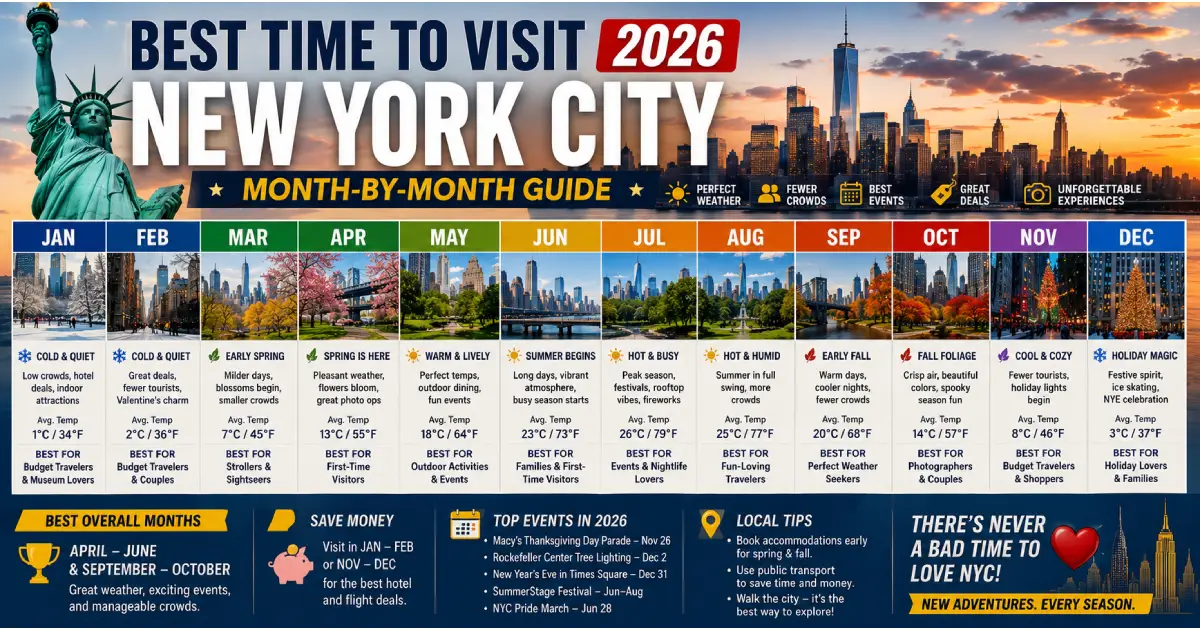
New York City operates on every season at full intensity — summer humidity that makes subway platforms feel like saunas, winter cold that turns Central Park into a genuine snow-covered landscape, spring cherry blossoms transforming Brooklyn Botanic Garden and Central Park simultaneously, and fall foliage that rivals New England within city limits. The best time to visit New York City depends entirely on what experience you’re seeking — spring (April–May) and fall (September–October) deliver the most comfortable walking weather and the city’s most photogenic seasons, summer (June–August) brings the longest days, free outdoor events, and Broadway’s busiest tourist season alongside oppressive humidity, and winter (November–February) offers the lowest hotel prices, holiday spectacle (Rockefeller Center tree, Fifth Avenue windows, Bryant Park Winter Village), and genuinely cold temperatures that make outdoor sightseeing challenging without proper preparation.
Unlike beach destinations or ski resorts where “best time” has an obvious answer, New York City functions as a year-round destination where every month offers a different version of the city — Broadway runs continuously regardless of season, museums operate identically in January and July, and the subway system means weather affects outdoor activities far more than overall trip feasibility. What changes dramatically across seasons is hotel pricing (winter rates can be 40–50% below summer peak), crowd levels (December holiday season and summer weekends create the most crowded conditions at major attractions), and which outdoor experiences are accessible (Central Park rowboating only April–November, ice skating only winter, Shakespeare in the Park only summer).
This guide breaks down New York City’s climate, crowd patterns, and pricing month-by-month, identifies the optimal windows for specific traveler priorities (budget travelers, first-time visitors, photography enthusiasts, holiday-season seekers), and provides practical packing and planning advice for visitors booking 2026 trips to any of the five boroughs.
For complete guides, see our Best Places to Visit in New York City 2026, Things to Do in New York City 2026, and New York City Trip Cost 2026 guides.
| Month | Avg High/Low (°F) | Crowd Level | Hotel Prices | Best For |
|---|---|---|---|---|
| January | 39°F / 26°F | Low | $ (lowest) | Budget travel, museums, post-holiday calm |
| February | 42°F / 28°F | Low | $ (low) | Budget travel, Valentine’s events, indoor culture |
| March | 51°F / 35°F | Low–Medium | $$ | Early spring, fewer crowds, shoulder pricing |
| April | 61°F / 44°F | Medium | $$ | Cherry blossoms, mild weather, spring events |
| May | 71°F / 54°F | Medium–High | $$$ | Best overall weather, outdoor activities begin |
| June | 80°F / 64°F | High | $$$ | Long days, Pride Month, outdoor dining |
| July | 85°F / 70°F | High | $$$ | Summer events, rooftop bars, fireworks |
| August | 83°F / 69°F | High (but slightly less than July) | $$$ | Outdoor festivals, late-summer energy |
| September | 76°F / 61°F | Medium–High | $$$ | Best overall month, fashion week, mild weather |
| October | 65°F / 50°F | High | $$$ | Fall foliage, Halloween, comfortable walking |
| November | 54°F / 41°F | Medium–High | $$ | Thanksgiving Parade, early holiday lights |
| December | 44°F / 32°F | Very High | $$$$ | Holiday markets, tree lighting, NYE |
Avg Temp: 51°F / 35°F | Rainfall: Moderate | Crowds: Low–Medium
March in New York City is genuinely transitional — early March can still feel like winter (occasional snow, temperatures in the 30s–40s) while late March brings the first genuinely warm days (50s–60s) and the earliest signs of spring in Central Park (crocuses, early daffodils). The unpredictability is March’s defining characteristic: pack layers ranging from a winter coat to a light jacket, as a single week can include both.
March advantages: hotel prices remain in shoulder-season territory (significantly below summer rates), major attractions (Met, MoMA, Empire State Building) operate without summer crowd levels, and St. Patrick’s Day (March 17) brings one of NYC’s largest parades — over 150,000 marchers down Fifth Avenue, a genuinely massive spectacle if you don’t mind crowds and green-themed chaos in Midtown.
What to do: Indoor museums (Met, MoMA, AMNH) work well given unpredictable outdoor conditions. Broadway shows benefit from less competitive ticket availability than summer. The Macy’s Flower Show (late March–early April, free, Herald Square) transforms the department store into an indoor garden display.
Insider tip: Late March (after March 20) typically brings the first cherry blossoms at Brooklyn Botanic Garden’s earlier-blooming varieties — if visiting specifically for blossoms, check BBG’s bloom tracker before booking, as timing varies year to year by 1–2 weeks based on temperature patterns.
Avg Temp: 61°F / 44°F | Rainfall: Moderate (April showers are real) | Crowds: Medium
April delivers New York City’s most photogenic spring transformation — cherry blossoms peak at Brooklyn Botanic Garden’s Cherry Esplanade (typically mid-to-late April, the BBG’s Sakura Matsuri cherry blossom festival celebrates peak bloom with Japanese cultural programming, $18 admission), Central Park’s various cherry tree groves (particularly near the reservoir and the Conservatory Garden) bloom on similar timing, and the city’s street trees (particularly along residential blocks in the West Village and Brooklyn Heights) create a citywide pink-and-white canopy effect for roughly two weeks.
Temperatures become genuinely comfortable for walking (50s–60s most days), though April showers are a real phenomenon — pack a compact umbrella and waterproof layer. Easter weekend (date varies) brings the Fifth Avenue Easter Parade (informal bonnet-and-costume promenade, free, no formal route, just gathering along Fifth Avenue 49th–57th Streets) and increased Midtown crowds.
What to do: Brooklyn Botanic Garden during Sakura Matsuri (book timed tickets in advance for the festival weekend), Central Park cherry blossom photography (Conservatory Garden and reservoir paths), and outdoor dining as restaurants open sidewalk seating for the season.
Insider tip: Cherry blossom timing is weather-dependent and shifts year to year — Brooklyn Botanic Garden publishes a bloom status tracker on their website starting late March. Weekday visits to BBG during bloom peak avoid the weekend crowds that can make photography genuinely difficult during the festival.
Avg Temp: 71°F / 54°F | Rainfall: Moderate | Crowds: Medium–High
May represents New York City at its best — consistently warm but not yet humid, long daylight hours (sunset after 8 PM by month’s end), Central Park in full spring foliage, outdoor dining fully operational across the city, and the beginning of the city’s outdoor event calendar (Governors Island reopens for the season, Smorgasburg food markets begin Saturdays in Williamsburg and Sundays in Prospect Park, and Fleet Week — late May, Memorial Day weekend — brings Navy ships docked along the Hudson with public tours).
Memorial Day weekend (last weekend of May) marks the unofficial start of summer in New York — outdoor activities ramp up significantly, rooftop bars open seasonal terraces, and the Hamptons exodus begins for New Yorkers with weekend homes (meaning the city itself can feel slightly less crowded on summer Fridays as locals leave, even as tourist numbers increase).
What to do: Central Park (Conservatory Garden in peak bloom, Shakespeare Garden), rooftop bars (many reopen for the season in May), Smorgasburg food markets (Saturdays Williamsburg waterfront, exceptional food market experience), and Governors Island (reopens early May, free ferry on certain days).
Insider tip: May is widely considered NYC’s single best month for first-time visitors — warm enough for full outdoor exploration, not yet humid, and before peak summer crowds and pricing fully kick in. Book accommodations 2–3 months ahead as May increasingly rivals summer for demand among savvy travelers who’ve identified it as the optimal month.
Avg Temp: 80°F / 64°F | Rainfall: Moderate | Crowds: High
June brings genuinely long days (sunset around 8:30 PM at the solstice) and the start of summer humidity — temperatures in the 80s become common, and humidity makes “feels like” temperatures noticeably higher than the actual reading. June is NYC Pride Month, with the Pride March (last Sunday of June) drawing massive crowds to Fifth Avenue and Greenwich Village — one of the world’s largest Pride celebrations, genuinely festive but creating significant subway and street crowding in affected areas.
Free outdoor programming ramps up significantly: SummerStage concerts begin in Central Park and various borough parks, Bryant Park’s free outdoor film festival (Mondays) and other programming starts, and rooftop bars across the city operate at full capacity. School trips and family travel increase as the academic year ends, contributing to higher crowds at major attractions (Statue of Liberty, Empire State Building, museums) compared to spring.
What to do: SummerStage free concerts (Central Park and other locations), Pride events (last weekend of June, expect crowds), rooftop bars (Westlight in Williamsburg, 230 Fifth in Midtown), and early-morning sightseeing to avoid both heat and crowds at outdoor attractions.
Insider tip: June’s long daylight hours mean early morning (6–9 AM) sightseeing avoids both the worst heat and the largest crowds — Brooklyn Bridge, Central Park, and the High Line are dramatically more pleasant before 9 AM in June than during midday hours when temperatures and tourist density both peak.
Avg Temp: 85°F / 70°F | Rainfall: Moderate (occasional thunderstorms) | Crowds: High
July is New York City’s hottest month — temperatures regularly reach the upper 80s to low 90s with humidity that makes the city feel substantially hotter, occasional heat advisories during multi-day heat waves, and afternoon thunderstorms that can be sudden and intense (impressive lightning displays visible from the Empire State Building’s 86th floor, for those who happen to be there during a storm). July 4th brings Macy’s Fireworks (location varies year to year between the Hudson and East Rivers, massive crowds, best viewed from designated viewing areas or, for a less crowded alternative, from Brooklyn or Queens waterfront parks with less officially-designated but still excellent sightlines).
Air-conditioned indoor activities (museums, shopping, Broadway) become genuinely appealing escape options during peak heat hours (12 PM–4 PM), while early mornings and evenings (after 6 PM, when temperatures drop and outdoor dining becomes comfortable) represent the best windows for outdoor activity.
What to do: Indoor museums during midday heat (Met, MoMA, AMNH all fully air-conditioned), evening outdoor dining (sidewalk cafes become comfortable after 6 PM), free kayaking on the Hudson River (genuinely pleasant in July heat), and rooftop bars for sunset views with breeze relief from street-level heat.
Insider tip: The subway platforms in July can be genuinely brutal — temperatures on platforms (especially express stations with less airflow) can exceed street-level temperatures significantly. Staying hydrated and planning subway-heavy itineraries for early morning or evening (avoiding midday platform waits) makes a meaningful difference to comfort.
Avg Temp: 83°F / 69°F | Rainfall: Moderate | Crowds: High (but marginally less than July)
August maintains July’s heat and humidity while bringing a subtle shift in city rhythm — many New Yorkers take August vacations (the “August in the Hamptons” tradition means some neighborhoods feel slightly emptier on weekdays), while tourist numbers remain high as families take advantage of the last weeks before school resumes. The US Open (tennis, late August–early September, Flushing Meadows, Queens) begins during this period, drawing significant crowds to Queens and creating one of NYC’s most internationally-attended sporting events.
Late August brings the first subtle hints of the seasonal shift — occasional cooler evenings, slightly shorter days, and a sense of anticipation for September’s more comfortable weather. Restaurant Week (a twice-yearly NYC institution, also occurring in winter) sometimes falls in late summer, offering prix-fixe menus at reduced prices across hundreds of restaurants.
What to do: US Open (if attending, book well ahead — even outer-court tickets for early rounds provide genuine access to professional tennis), late-summer rooftop bars, Smorgasburg (continuing through summer), and air-conditioned cultural institutions during peak heat hours.
Insider tip: Late August weekday mornings in neighborhoods with high local-resident populations (West Village, Upper West Side) can feel noticeably quieter than July as residents travel — this can translate to better restaurant availability without reservations and slightly less crowded sidewalks for photography in residential areas.
Avg Temp: 76°F / 61°F | Rainfall: Moderate | Crowds: Medium–High
September frequently rivals or exceeds May as New York City’s best overall month — temperatures moderate from summer’s peak (mid-70s to low 80s, occasional lingering humid days but generally more comfortable), the energy of “back to school” creates a palpable shift in city rhythm as residents return from summer travels, and September hosts New York Fashion Week (early-to-mid September, increases visibility of high-fashion culture throughout SoHo and the Meatpacking District, though most shows themselves are industry-only).
Labor Day weekend (first weekend of September) marks the unofficial end of summer — beaches (Rockaway, Coney Island) see their last major crowds, and the city’s rhythm shifts toward fall programming. The US Open continues into early September, and the West Indian Day Parade (Labor Day, Brooklyn) brings one of NYC’s largest cultural celebrations — Caribbean carnival culture with massive crowds along Eastern Parkway in Crown Heights.
What to do: Outdoor dining (still comfortable, less crowded than peak summer), Central Park (lingering summer greenery beginning to show early fall color by month’s end), Smorgasburg (final weeks of the outdoor season at some locations), and museum visits as crowds moderate from summer peaks.
Insider tip: September weekdays (particularly Tuesday–Thursday) represent one of the best combinations of weather and reduced crowds available in the entire NYC calendar — comfortable temperatures, manageable lines at major attractions compared to summer weekends, and restaurants generally easier to book than peak summer.
Avg Temp: 65°F / 50°F | Rainfall: Moderate | Crowds: High
October delivers New York City’s fall foliage display — Central Park’s trees (particularly around the reservoir, the Ramble, and the area near Sheep Meadow) turn vibrant yellows, oranges, and reds typically peaking mid-to-late October, while Prospect Park in Brooklyn offers comparable foliage with significantly fewer visitors. Temperatures become genuinely crisp (50s–60s during the day, 40s at night by month’s end), ideal for extended walking tours, and Halloween (October 31) brings the Village Halloween Parade (Greenwich Village, free to watch, one of the largest Halloween celebrations in the US, elaborate costumes and puppetry, evening event drawing massive crowds along 6th Avenue).
October is also peak season for NYC’s outdoor dining “shoulder season” — restaurants extend outdoor seating with heat lamps as temperatures drop, creating a transitional period where outdoor dining remains pleasant with appropriate layers.
What to do: Central Park fall foliage walks (Ramble and reservoir areas particularly photogenic), Village Halloween Parade (arrive early for viewing positions if attending), apple-picking day trips (Hudson Valley orchards accessible via Metro-North for a half-day excursion), and continued outdoor dining with the addition of warm layers.
Insider tip: Fall foliage timing in Central Park typically peaks 1-2 weeks later than expected based on “New England foliage” timing that’s often referenced in travel media — late October to early November frequently represents peak color in Manhattan specifically, due to the urban heat island effect delaying the seasonal transition compared to surrounding regions.
Avg Temp: 54°F / 41°F | Rainfall: Moderate | Crowds: Medium–High (extreme around Thanksgiving)
November bridges fall and the holiday season — early November maintains comfortable fall temperatures with occasional cold snaps, while the month’s signature event (Macy’s Thanksgiving Day Parade, fourth Thursday of November) transforms the Upper West Side and Midtown into one of the most crowded single-day events in the city’s calendar, with over 3 million spectators lining the parade route from 77th Street down to Macy’s Herald Square. The parade’s famous balloons are inflated the night before (Wednesday evening) along Central Park West (77th–81st Streets) — a popular alternative viewing experience that’s significantly less crowded than the parade itself.
Late November brings the first holiday decorations — Fifth Avenue store windows (Saks, Bergdorf Goodman, Macy’s) begin elaborate holiday displays typically unveiled the week of Thanksgiving, and the Rockefeller Center Christmas Tree lighting (typically the Wednesday after Thanksgiving) marks the unofficial start of NYC’s holiday season, drawing enormous crowds to Midtown.
What to do: Macy’s Thanksgiving Day Parade (either the parade itself on Thanksgiving morning or the more relaxed balloon inflation viewing the evening before), early holiday window displays on Fifth Avenue (less crowded in early-to-mid November before peak holiday crowds), and Bryant Park Winter Village (typically opens late October/early November, ice skating and holiday market begin).
Insider tip: Thanksgiving week itself sees a curious crowd pattern — the days immediately before and after Thanksgiving (the holiday itself plus “Black Friday” weekend) bring extreme crowds to Midtown, but the actual Thanksgiving Day afternoon (after the parade ends around noon) sees many normally-crowded attractions (museums often closed, many restaurants closed for the holiday) become unexpectedly quiet — a unique window for those staying in the city over the holiday.
Avg Temp: 44°F / 32°F | Rainfall: Moderate (occasional snow) | Crowds: Very High
December transforms New York City into its most internationally recognizable seasonal version — the Rockefeller Center Christmas Tree (typically 70-100 feet, 50,000 LED lights, surrounded by the ice skating rink) becomes the city’s most photographed location, Fifth Avenue holiday window displays draw constant crowds along the Saks Fifth Avenue, Bergdorf Goodman, and other flagship stores, and Bryant Park Winter Village (ice skating, 170+ holiday market vendors) creates Midtown’s most atmospheric outdoor gathering space. Despite genuinely cold temperatures (often in the 30s–40s, with occasional snow), December represents New York City’s highest crowd levels and highest hotel prices of the entire year — driven by both domestic holiday travelers and international visitors specifically seeking the “NYC at Christmas” experience that has become a bucket-list item globally.
New Year’s Eve (December 31) brings Times Square’s ball drop — over 1 million attendees standing in designated pens (often for 8+ hours with no bathroom access, security restrictions on bags and items) to watch the midnight ball drop broadcast to over 1 billion global viewers. This represents one of the most logistically demanding NYC experiences and is generally recommended only for those specifically motivated by the bucket-list nature of the event — alternatives (rooftop bar NYE parties, restaurant dinners with skyline views) provide far more comfortable celebration options.
What to do: Rockefeller Center tree and ice skating (visit early morning, before 9 AM, to avoid the worst crowds — by midday the area becomes extremely congested), Fifth Avenue window displays (early morning or late evening for manageable crowds), Bryant Park Winter Village, and the Holiday Train Show at New York Botanical Garden (Bronx, model trains running through botanical recreations of NYC landmarks made from plant materials).
Insider tip: December hotel prices peak around Christmas week itself (December 20–31) — booking for the first two weeks of December provides much of the holiday atmosphere (trees lit, windows displayed, Winter Village operating) at prices closer to November’s shoulder-season rates, with noticeably fewer crowds than the final week before Christmas.
Avg Temp: 39°F / 26°F | Rainfall: Moderate (snow possible) | Crowds: Low
January represents New York City’s lowest hotel prices and lowest crowd levels of the entire year — the post-holiday “hangover” period when both domestic and international tourism drops significantly, hotel rates can fall 40-50% below December peak pricing, and major attractions (Met, MoMA, Empire State Building, Top of the Rock) operate without meaningful queues even on weekends. The tradeoff is genuine winter cold — temperatures regularly in the 20s–30s, occasional snowstorms that can affect outdoor sightseeing, and shorter daylight hours (sunset around 4:45 PM in early January) that compress outdoor activity windows.
January is Restaurant Week season (the winter edition of NYC’s twice-yearly prix-fixe dining promotion, typically running for about three weeks in late January, offering 3-course lunches around $30 and dinners around $45 at restaurants that normally charge significantly more) — one of the best opportunities to experience higher-end NYC restaurants at accessible prices.
What to do: Museums (genuinely empty compared to any other season — the Met, MoMA, Guggenheim, and AMNH can be explored without crowds), Restaurant Week dining (book popular restaurants as soon as the schedule releases, as even discounted reservations at top restaurants fill quickly), Broadway (January often sees discounted tickets as the post-holiday period brings softer demand), and ice skating (Bryant Park, Central Park’s Wollman Rink, and Rockefeller Center all operate through winter with smaller crowds than December).
Insider tip: January’s combination of low prices and low crowds makes it the single best month for budget-conscious visitors prioritizing museums, theater, and indoor culture over outdoor sightseeing — pack genuinely warm layers (the cold is real, particularly with wind chill on open areas like the Brooklyn Bridge or Top of the Rock) and plan itineraries around indoor activities during the coldest hours, saving brief outdoor excursions for whatever sunny windows occur.
Avg Temp: 42°F / 28°F | Rainfall: Moderate (snow likely) | Crowds: Low
February maintains January’s low-crowd, low-price advantages while bringing Valentine’s Day-related programming (special menus at restaurants, romantic-themed events) and, in some years, the coldest average temperatures of the winter (though January and February are climatologically similar, with February sometimes recording the year’s coldest individual days). Presidents’ Day weekend (third Monday of February) brings a modest uptick in domestic tourism as a long weekend, but overall February remains a low-season month with continued hotel value and minimal crowds at major attractions.
Lunar New Year (date varies, typically late January or February) brings significant celebrations to Manhattan’s Chinatown and Flushing’s Chinese community in Queens — parades, lion dances, and food celebrations that offer a genuinely festive cultural experience distinct from NYC’s more commonly referenced holiday programming.
What to do: Continued museum visits at off-peak pricing and crowd levels, Lunar New Year celebrations in Chinatown/Flushing if timing aligns, Valentine’s Day dining (book well ahead for popular restaurants on the specific date, though the surrounding week often offers similar romantic-dining options with more availability), and indoor markets (Chelsea Market, Essex Market) as warm alternatives to outdoor exploration.
Insider tip: February’s combination of continued low pricing with the approach of spring (late February occasionally brings unseasonably warm “preview” days in the 50s, though unpredictable) makes it a strategic choice for visitors willing to gamble on weather in exchange for the year’s best combination of low prices and minimal crowds — check extended forecasts close to travel dates, as late-February warm spells, when they occur, allow more outdoor activity than the month’s average temperatures suggest.
Best months: May, September, early October
First-time visitors benefit most from comfortable walking weather (essential given how much NYC sightseeing involves walking between subway stations and attractions) combined with manageable crowds. May and September offer the best balance — warm enough for full outdoor exploration of Central Park, the High Line, and Brooklyn neighborhoods, while avoiding both summer’s peak heat/humidity and winter’s cold that limits outdoor time. Early October extends this window with the bonus of fall foliage beginning.
Best months: January, February, early March
Winter (excluding the December holiday peak) offers New York City’s lowest hotel prices, often 40-50% below summer/holiday rates, combined with restaurant week pricing (January) and minimal crowds at major paid attractions. The tradeoff is genuine cold requiring proper winter clothing and more time spent in indoor venues (museums, Broadway, restaurants) rather than extensive outdoor exploration.
Best timing: First two weeks of December
The Rockefeller Center tree, Fifth Avenue windows, and Bryant Park Winter Village are typically all operational by early December, while crowds and pricing remain below the Christmas week peak (December 20-31). This window provides the full “NYC at Christmas” visual experience with somewhat more manageable logistics than the final pre-Christmas weeks.
Best months: April (cherry blossoms), October (fall foliage), early morning year-round
Cherry blossom season (Brooklyn Botanic Garden and Central Park, typically mid-to-late April) and fall foliage (Central Park and Prospect Park, typically mid-to-late October) provide NYC’s most visually distinctive seasonal photography opportunities. Within any season, early morning (before 8 AM) consistently provides the best light and lowest crowds for iconic locations (Brooklyn Bridge, DUMBO, Central Park).
Best months: May through September
Free Hudson River kayaking, Central Park rowboating, Governors Island, Smorgasburg outdoor food markets, SummerStage concerts, and outdoor dining are all fully operational during the warmer months (roughly May through September/early October), with the tradeoff of higher temperatures (especially July/August) and higher crowds at popular outdoor spaces.
Posted By : Vinay
Latest Article
2nd Floor, 39, Above Kirti Club, DLF Industrial Area, Kirti Nagar, New Delhi, Delhi 110015



Travel Tourister is a leading Travel portal where we introduce travellers to trusted travel agents to make their journey hasselfree, memorable And happy. Travel Tourister is a platform where travellers get Tour packages ,Hotel packages deals through trusted travel companies And hoteliers who are working with us across the world. We always try to find new and more travel agents and hoteliers from every nook and corners across the world so that you could compare the deals with different travel agents and hoteliers and book your tour or hotel with the one you have chosen according to your taste and budget.
Copyright © Travel Tourister, India. All Rights Reserved

 Call
Call Enquiry