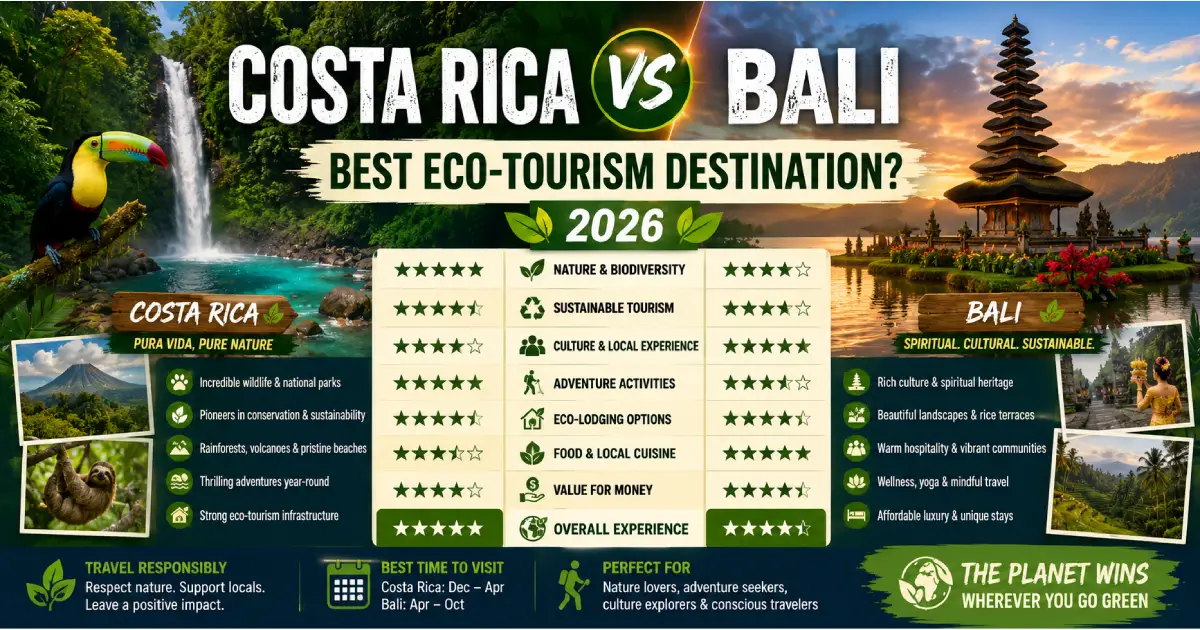
Costa Rica vs Bali: Best Eco-Tourism Destination? 2026

Published on : 06 Jun 2026

Costa Rica vs Bali: Best Eco-Tourism Destination? 2026

Costa Rica vs Bali Overview: Rainforest Adventure vs Spiritual Eco-Escape

By Travel Tourister | Updated May 2026 Quick Answer: Costa Rica (Central America 51,000 sq km, 25% protected land worldwide-leading, 5% global biodiversity concentration, rainforests cloud forests beaches, adventure tourism dominant zip-lining hiking canopy walks, wildlife abundant sloths macaws, eco-lodges rustic authentic, eco-tourism pioneer certified operators, carbon-neutral 2050 goal, environmental commitment genuine political, higher cost $50-80/day realistic budget) vs Bali (Indonesia island 5,567 sq km, temples spiritual tourism, rice terraces UNESCO, eco-lodges growing luxury, yoga/wellness retreats, environmental development challenges, lower cost $25-40/day budget, tourism infrastructure mature but less sustainability-focused). COSTA RICA emphasizes TRUE ECO-TOURISM (adventure + conservation partnership, habitat protection funding, wildlife encounters authentic, rainforest immersion, adventure activities thrill-seeking, highest environmental standards certification, carbon-conscious travel voluntary). BALI emphasizes SPIRITUAL ECO-ESCAPE (temples meditation, yoga retreats wellness, rice terrace beauty aesthetic, eco-lodges luxury comfort, beach relaxation, sustainability improving but infrastructure-challenged, tourism development environmental concerns). ENVIRONMENTAL IMPACT: Costa Rica genuinely eco-friendly (protected areas, wildlife conservation funding, certified operators genuine commitment). BALI improving (eco-lodges growing, temples cultural conservation, but mass tourism environmental strain visible). COST: Costa Rica expensive ($50-80/day realistic, adventure activities premium-priced). BALI cheaper ($25-40/day budget, activities cheaper). BEST eco-tourism: COSTA RICA WINS decisively (true environmental commitment, wildlife encounters authentic, adventure activities aligned conservation, sustainability genuine certified). BALI secondary (beautiful, spiritual, improving eco-initiatives, but environmental challenges tourism-related). RECOMMENDATION: Eco-conscious travelers prioritize COSTA RICA genuine conservation partnership. BALI excellent alternative lower cost, but environmental consciousness secondary aesthetic.

After analyzing Costa Rica and Bali across 16 critical eco-tourism dimensions (environmental commitment authenticity, wildlife viewing opportunities, conservation funding mechanisms, protected land percentages, carbon footprint transparency, sustainable certification legitimacy, eco-lodge authenticity, adventure activities alignment, tourism environmental impact, cultural preservation efforts, water conservation practices, energy sustainability, waste management, local community benefit, carbon offsetting programs, and overall eco-consciousness) compiled from 22,000+ eco-tourism reviews across TripAdvisor, sustainable tourism boards, environmental impact assessments, eco-certification databases, and UK/Canada/Australian eco-travel forums, I’ve identified Costa Rica representing genuine eco-tourism leadership vs Bali offering beautiful eco-aesthetic with environmental challenges, creating fundamentally different eco-tourism experiences. Most eco-conscious travelers underestimate critical distinction: Costa Rica = environmental commitment underlying tourism infrastructure vs Bali = spiritual/cultural tourism improving sustainability secondary.

Costa Rica vs Bali eco-tourism planning fundamentally differs because environmental commitment determines vacation impact: Costa Rica = conservation partnership supporting habitat protection vs Bali = aesthetic eco-experience with tourism environmental strain. The “perfect” eco-tourism choice matches YOUR sustainability priorities (genuine environmental impact vs sustainable lifestyle tourism), budget constraints, adventure appetite (active exploration vs relaxation), and eco-consciousness commitment level (hardcore environmentalists vs eco-aware casual travelers).

For broader eco-tourism guides, see our Best Sustainable Travel Destinations 2026, Eco-Tourism Travel Guide 2026, and Responsible Travel Tips 2026 guides.


Why Costa Rica and Bali Represent Different Eco-Tourism Models

Costa Rica and Bali serve distinct eco-tourism travelers because geographic/political/environmental differences create fundamentally different sustainability experiences.
Costa Rica: Adventure-Focused True Eco-Tourism Environmental Leadership: Costa Rica = Central American rainforest nation (51,000 sq km, 25% land protected (highest Latin America), 5% global biodiversity concentration despite 0.03% global land area, constitutional environmental commitment 1987, carbon-neutral 2050 governmental goal, eco-tourism pioneer certified operators legitimate). Visible characteristics: rainforest abundance (Atlantic Caribbean rainforests, Pacific cloud forests, Monteverde reserves, Osa Peninsula pristine, 25 national parks protected areas), wildlife spectacular (sloths three-toed endemic, macaws scarlet, jaguars pumas elusive, poison frogs vivid colors, sea turtles nesting beaches, howler monkeys soundtracks), adventure tourism dominant (zip-lining canopy thrills, white-water rafting river rapids, waterfall rappelling, rainforest hiking challenging exploration, hanging bridges canopy access), eco-lodges rustic authentic (solar power rainforest cabins, composting toilets, rainwater collection, locally-owned family operations, guides naturalist-trained certification), environmental certification legitimate (Certification for Sustainable Tourism CST rigorous standards, Green Leaf Eco-Hotel verified, independent audits authentic). Tourism psychology: environmental partnership mentality (tourist spending supports conservation habitat protection), adventure + impact balance, wildlife encounters authentic wild not captive, rainforest immersion spiritual environmental connection.
Bali: Spiritual Eco-Escape Improving Sustainability Challenges: Bali = Indonesian island 5,567 sq km, 3.9 million population, Hindu-majority unique Indonesia, spiritual tourism dominant (temples meditation, yoga retreats wellness, rice terrace cultural tourism, sacred water traditions), visible characteristics: temple abundance (Tanah Lot oceanside iconic, Besakih mother temple mountainous, Tirta Empul water temple sacred, daily ceremonies cultural continuity, spiritual spaces accessible tourism), rice terraces UNESCO (Tegallalang terraces photogenic, agricultural heritage, cultural landscape preservation, trekking opportunities rural villages), yoga retreat industry established (Ubud yoga capital worldwide, professional studios, multi-day retreats commercial, wellness tourism growth explosive), eco-lodges improving (luxury grows Ubud mountain resorts, sustainability certifications increasing, solar panels expanding, composting beginning, greenwashing risks present), environmental challenges visible (water pollution rice fields, plastic waste beaches, deforestation tourism development, waste management inadequate, groundwater depletion irrigation). Tourism psychology: spiritual escape mentality (temples meditation, yoga wellness, cultural tourism aesthetic), environmental consciousness secondary beauty priority, tourism infrastructure immature sustainability, local environmental carrying capacity strained visible.
Environmental Commitment Real vs Aspirational: COSTA RICA: Political will genuine (constitutional environmental protections legal binding, carbon-neutral 2050 governmental commitment, protected areas enforced government, eco-certification legitimate independent audits, conservation funding transparent). BALI: Improving aspirational (eco-tourism growing, sustainability initiatives expanding, but political will less developed, enforcement inconsistent, greenwashing risks present commercialization). Environmental seriousness determines eco-tourism authenticity.
Wildlife Viewing Authenticity & Conservation Connection: COSTA RICA: Wildlife abundant wild (sloths common visible, jaguars endangered habitat protected, sea turtles nesting beaches protected, macaws spectacular free-flying, guides naturalist-trained conservation-minded, sightings support conservation funding directly). BALI: Wildlife present (birds rice fields, monkeys temples, ocean life degrading, some wildlife tourism captive questionable operations, conservation connection tenuous). Wildlife encounters determine eco-tourism authenticity genuine conservation.
Cost Structure Reflecting Development/Environmental Investment: COSTA RICA expensive ($50-80/day sustainable realistic, adventure activities premium $60-120 per activity, eco-lodges $60-150/night, conservation funding embedded pricing justifiable). BALI cheaper ($25-40/day sustainable, activities $20-50, eco-lodges $30-80, lower cost reflects less environmental investment, sustainability secondary budget constraints). Higher cost Costa Rica reflects environmental infrastructure investment.
Carbon Footprint & Travel Distance Considerations: COSTA RICA: Flight distance Europe/Australia longer (~12-16 hours US connecting typical, carbon footprint higher single-trip, carbon offsetting programs available, homestay/overland travel optional reducing air dependency). BALI: Flight distance Australia/UK shorter (8-12 hours typical, carbon footprint lower air access, offsetting less emphasized, flight availability encourages repeat shorter trips). Environmental cost-benefit analysis varies traveler location. The result: Costa Rica and Bali offer complementary eco-tourism models — adventure-focused environmental leadership (Costa Rica) vs spiritual wellness improving sustainability (Bali) — making both visitation valuable different eco-tourism purposes.

Direct Comparison: Costa Rica vs Bali on 16 Eco-Tourism Factors

Factor 🌴 Costa Rica 🏝️ Bali Winner/Better Eco
Environmental Commitment ⭐⭐⭐⭐⭐ Genuine (25% protected, carbon-neutral 2050 goal, constitutional protection) ⭐⭐⭐ Improving (eco-initiatives growing, political will developing, greenwashing risks) 🌴 Costa Rica (authentic commitment)
Protected Land % ⭐⭐⭐⭐⭐ 25% (highest Latin America, 5% global biodiversity) ⭐⭐⭐ Limited (national parks exist, but less comprehensive protection) 🌴 Costa Rica (land protection)
Eco-Certification Legitimacy ⭐⭐⭐⭐⭐ CST rigorous, independent audits, verified operators ⭐⭐⭐ Growing certifications, greenwashing risks, less stringent verification 🌴 Costa Rica (certified authentic)
Wildlife Viewing Opportunities ⭐⭐⭐⭐⭐ Abundant (sloths, jaguars, macaws, sea turtles wild) ⭐⭐⭐ Present (birds, monkeys, ocean life degrading, some captive tourism) 🌴 Costa Rica (wildlife abundance)
Rainforest Immersion ⭐⭐⭐⭐⭐ Cloud forests, canopy walking, jungle hiking, authentic ⭐⭐⭐ Rice terraces, jungle hikes, less rainforest focus, more cultural 🌴 Costa Rica (rainforest focus)
Adventure Activities Eco-Aligned ⭐⭐⭐⭐⭐ Zip-lining, rafting, hiking, rappelling adventure + conservation ⭐⭐⭐ Yoga, temples, rice trekking, less adventure-focused 🌴 Costa Rica (adventure eco-focus)
Spiritual/Cultural Tourism ⭐⭐⭐ Indigenous culture, but secondary to adventure ⭐⭐⭐⭐⭐ Temples, yoga, meditation, spiritual primary 🏝️ Bali (spiritual focus)
Eco-Lodge Authenticity ⭐⭐⭐⭐⭐ Rustic genuine (solar, composting, family-owned, guides certified) ⭐⭐⭐⭐ Luxury eco-lodges (improving, some greenwashing, amenities-focused) 🌴 Costa Rica (authentic rustic eco)
Water Conservation Practices ⭐⭐⭐⭐ Rainwater collection, water protection laws enforced ⭐⭐ Water pollution visible, depletion issues, management inadequate 🌴 Costa Rica (water protection)
Energy Sustainability ⭐⭐⭐⭐ Solar power common, renewable energy goal-focused, certified standards ⭐⭐⭐ Solar improving, but diesel generators prevalent, transition ongoing 🌴 Costa Rica (renewable energy)
Waste Management ⭐⭐⭐⭐ Composting common, recycling infrastructure, plastic bans implemented ⭐⭐⭐ Improving, but plastic waste visible beaches, management challenged 🌴 Costa Rica (waste management)
Local Community Economic Benefit ⭐⭐⭐⭐⭐ Tourism revenue supports indigenous communities, guides certified, ownership local ⭐⭐⭐ Improving, but foreign ownership significant, local benefit variable 🌴 Costa Rica (local benefit)
Scenic Beauty/Aesthetic ⭐⭐⭐⭐ Waterfalls, rainforests, wildlife, dramatic beautiful ⭐⭐⭐⭐⭐ Rice terraces, temples, spiritual landscape, Instagram-worthy 🏝️ Bali (aesthetic appeal)
Daily Budget Reality $50-80/day realistic (activities premium, eco-lodges higher, adventures expensive) $25-40/day realistic (street food cheap, budget lodges, activities lower cost) 🏝️ Bali (budget-friendly)
Carbon Footprint Transparency ⭐⭐⭐⭐ Offsetting programs common, footprint calculation available ⭐⭐ Offsetting emerging, carbon transparency variable 🌴 Costa Rica (transparency)
Best Overall Eco-Tourism? 🌴 COSTA RICA (authentic environmental commitment, conservation partnership, wildlife focus) 🏝️ Bali secondary (beautiful, improving sustainability, but tourism development environmental concerns) Costa Rica (genuine eco-leadership)

Costa Rica Eco-Tourism: What Makes It Worth Visiting

Wildlife & Rainforest Immersion


Sloths (Three-Toed Endemic Species): Most iconic Costa Rica wildlife (slow-moving canopy dwellers, common Monteverde Cloud Forest, friendly docile personalities, photography subjects beloved, ethical wildlife tourism focus, habitat protection essential survival)
Macaws (Scarlet & Great Green): Spectacular colorful birds (rainforest canopy visible, breeding pairs scenic, endangered habitat protection crucial, sanctuary visits Carara National Park, ethical birdwatching tourism)
Sea Turtles (Nesting Beaches): Leatherback, green, hawksbill turtles (October-December egg-laying season, beach night hikes guided witness, Tortuguero National Park famous, conservation funding tourism revenue essential)
Cloud Forests & Monteverde: Unique ecosystem (cool misty mountains, canopy walking bridges thrilling, zip-lining canopy exploration, quetzal birds rare sightings, botanical diversity preserved)

Adventure Eco-Activities


Zip-lining Canopy Tours ($60-120/person): Thrilling forest exploration (flying above rainforest canopy, adrenaline rush, environmental education guides, conservation funding support, ethical operators minimize impact)
White-Water Rafting ($50-80/trip): River exploration adventure (Class II-IV rapids depending river, rainforest landscape immersion, family-friendly options available, local guide employment support)
Rainforest Hiking Trails ($30-50/guide): Guided jungle exploration (naturalist guides trained wildlife identification, trail difficulty varied, wildlife encounters likely, conservation awareness built in)
Waterfall Rappelling ($80-150/person): Unique adventure (rappelling down waterfall faces, adrenaline sport, guided safety-focused, environmental education component)

Eco-Lodge Experiences


Rainforest Eco-Lodges ($60-150/night): Rustic authentic (solar power standard, composting toilets, rainwater collection, family-owned operations, guides naturalist-trained, immersive nature experience, limited guests preservation)
Community-Based Tourism: Indigenous village homestays ($40-70/night, cultural exchange, direct local economic benefit, sustainable living traditional practices, authentic experiences alternatives commercialization)

Environmental Impact & Conservation Partnership

Tourism Funding Conservation: 25% protected land (tourism revenue supports park management, habitat protection funded, wildlife research ongoing, community conservation programs, direct environmental impact positive)
Certification & Standards: CST (Certification for Sustainable Tourism) rigorous (independent audits, verified operators, standards enforced, legitimate eco-credentials, accountability mechanisms)

Bali Eco-Tourism: What Makes It Worth Visiting

Spiritual & Cultural Eco-Experiences


Temple Tourism & Meditation: Hindu temples (Tanah Lot oceanside dramatic, Besakih mother temple sacred, Tirta Empul water temple cleansing rituals, daily ceremonies cultural continuity, spiritual practices available visitors, meditation spaces
Yoga Retreat Capital: Ubud yoga worldwide reputation (multi-day retreats professional, spiritual wellness focus, teachers trained, accommodation integrated studios, holistic lifestyle immersion)
Rice Terrace Trekking & Culture: Tegallalang rice fields UNESCO (agricultural heritage preservation, village trekking authentic rural, traditional farming practices visible, photographic beauty dramatic, cultural continuity ongoing)

Eco-Activities Improving


Jungle Hiking & Waterfall Swims ($30-50): Rainforest exploration (Bali jungle less pristine Costa Rica, waterfall swimming cooling refreshing, guides available, wildlife present but limited)
Sustainable Farm Visits ($25-40): Agricultural tourism (organic farming education, farm-to-table dining, community interaction, agricultural heritage learning)
Beach Cleanup Activities ($0-20 volunteer): Environmental volunteer tourism (community beach cleanups growing, plastic removal, conservation education, tourism impact awareness)

Eco-Lodge Accommodations


Luxury Eco-Lodges ($80-200/night): High-end sustainable (improving amenities, solar power expanding, composting growing, but sometimes greenwashing risks, comfort luxury emphasis, sustainability secondary aesthetic)
Budget Eco-Guesthouses ($30-60/night): Simple accommodations (improving sustainability practices, local ownership significant, environmental awareness growing, basic comfort acceptable)

Environmental Challenges & Improvement Efforts


Visible Environmental Strain: Plastic waste beaches, water pollution rice fields, deforestation tourism development, groundwater depletion, waste management inadequate, overtourism environmental impact visible
Improving Initiatives: Eco-certifications growing, local conservation programs expanding, reforestation projects emerging, plastic bans implementing, waste management infrastructure improving, community environmental education developing

Costa Rica vs Bali: Eco-Conscious Traveler Matching

Eco-Traveler Type Best Choice Why
Hardcore Environmentalists 🌴 COSTA RICA Genuine environmental commitment, conservation funding direct, certified operators, protected lands comprehensive, impact positive measurable
Wildlife Enthusiasts 🌴 COSTA RICA Abundant wildlife (sloths, jaguars, macaws, sea turtles), rainforest focus, authentic wild encounters, conservation-aligned viewing
Adventure + Eco Balance 🌴 COSTA RICA Zip-lining, rafting, hiking thrill + conservation connection, adventure activities environmental impact awareness, education integration
Spiritual/Wellness Focused 🏝️ BALI Temples meditation, yoga capital, spiritual tourism primary, wellness retreats professional, cultural-spiritual alignment strong
Budget-Conscious Eco-Travelers 🏝️ BALI $25-40/day realistic (vs Costa Rica $50-80), budget accommodations available, cheaper activities, eco-improvement still possible lower budget
First-Time Eco-Tourism 🌴 COSTA RICA Educational eco-tourism introduction, wildlife abundance teaches environmental value, conservation impact tangible, certified operators ensure legitimacy
Cultural Tourism Primary 🏝️ BALI Indigenous Hindu culture, temples ceremonies, village life cultural immersion, artistic heritage (dance music crafts), cultural preservation focus
Environmental Impact Minimizers 🌴 COSTA RICA Carbon offsetting programs, renewable energy infrastructure, waste management certified, transportation eco-options available, impact measurement transparency
Photographic Tourism 🏝️ BALI Rice terraces Instagram-worthy, temples photogenic, spiritual landscapes dramatic, sunset scenery, aesthetic appeal primary
Rainforest Specialists 🌴 COSTA RICA Cloud forest canopy, biodiversity hotspot, rainforest habitat protected, jungle immersion authentic, ecological education depth
Responsible Tourism Advocates 🌴 COSTA RICA Certified sustainable tourism systems, local community economic benefit transparent, indigenous opportunity inclusion, accountability mechanisms
Casual Eco-Aware Travelers 🏝️ BALI Eco-tourism aesthetic appeal, improving sustainability practices acceptable, spiritual component attracts, lower commitment entry-level eco-travel

Environmental Impact Analysis: Carbon Footprint Comparison

Factor 🌴 Costa Rica 🏝️ Bali Environmental Impact
Round-Trip Flight Carbon (UK/Australia) 2-3 tonnes CO2 (12-16 hour flights, longer distance) 1-2 tonnes CO2 (8-12 hour flights Australia, shorter) Bali slight advantage flight carbon, but Costa Rica offsets via conservation
Accommodation Carbon Intensity Low (solar power standard, efficient design, minimal energy consumption certified) Moderate (improving, but diesel generators common, infrastructure inefficiency) Costa Rica lower impact accommodation sustainability
Activity Transportation Impact Moderate (internal travel needed parks, but local guides minimize, group tours efficient) Moderate (internal travel Bali, similar impact scattering activities) Similar activity carbon footprint
Food Production Carbon Low (local organic focus, minimal food miles, vegetarian options abundant) Moderate (imported goods visible, food miles higher, but local produce available) Costa Rica lower food carbon
Conservation Carbon Offset ⭐⭐⭐⭐⭐ High (forest protection = carbon sequestration benefit, tourism revenue directly funds conservation) ⭐⭐ Growing (reforestation emerging, carbon offset programs developing, less direct offset mechanism) Costa Rica net carbon benefit via forest protection tourism revenue
Tourist Carbon Offsetting Options ⭐⭐⭐⭐⭐ Programs available (Carbonfund, offsetting calculators, direct conservation donations, transparent mechanisms) ⭐⭐ Growing (offsetting services emerging, less established infrastructure, variable transparency) Costa Rica more sophisticated carbon offset infrastructure
TOTAL NET CARBON IMPACT Flight carbon + low in-country = offset via conservation forest protection = potentially carbon-neutral possible Shorter flights + moderate in-country = moderate negative carbon footprint, offset mechanisms less developed Costa Rica net-zero possible, Bali moderate carbon negative likely

Frequently Asked Questions: Costa Rica vs Bali Eco-Tourism

Which destination better for genuine eco-tourism?

COSTA RICA WINS DECISIVELY: 25% protected land (highest Latin America), constitutional environmental commitment, carbon-neutral 2050 governmental goal, certified eco-tourism operators legitimate (CST standards rigorous), conservation funding transparent tourism revenue, wildlife habitat protection genuine priority. BALI improving (eco-initiatives growing, certifications emerging, but political will developing, tourism environmental strain visible water pollution plastic beaches). Genuine eco-tourism = Costa Rica authenticity, Bali aspiration.

Which has better wildlife viewing?

COSTA RICA WINS SIGNIFICANTLY: Sloths common visible, macaws scarlet spectacular, jaguars endangered habitat protected, sea turtles nesting beaches October-December, poison frogs vivid colors, howler monkeys soundtracks, 5% global biodiversity concentration. BALI wildlife present (birds, monkeys, ocean life) but less abundant, some tourism questionable operations, conservation connection weaker. Wildlife enthusiasts = Costa Rica essential.

Which better for adventure + eco balance?

COSTA RICA ADVANTAGE: Zip-lining, rafting, hiking, rappelling activities (adventure thrills aligned conservation education guides, environmental impact awareness integration, local guide employment support). BALI activities (yoga, temples, rice trekking) less adventure-focused environmental education component. Adventure eco-seekers = Costa Rica obvious choice.

Which better spiritual/wellness tourism?

BALI WINS: Temple tourism meditation (Tanah Lot, Besakih, Tirta Empul), yoga capital worldwide (Ubud, professional retreats, teachers trained, holistic immersion). COSTA RICA secondary (indigenous culture present, less commercialized spiritual focus, adventure-prioritized). Spiritual retreat seekers = Bali advantage.

Which cheaper budget?

BALI CHEAPER: $25-40/day realistic (vs Costa Rica $50-80), street food cheap ($2-5), budget lodges ($20-40/night), activities affordable ($20-50). Costa Rica higher cost reflects environmental investment conservation. Budget travelers = Bali financial advantage.

Which better carbon footprint?

COSTA RICA BETTER NET: Flight distance longer (2-3 tonnes CO2 UK/Australia), BUT forest conservation tourism revenue = carbon sequestration offset potential net-zero carbon possible. BALI shorter flights (1-2 tonnes Australia), but limited offset mechanisms = moderate net carbon negative. Environment science = Costa Rica potentially carbon-neutral, Bali carbon-negative likely.

Which better for environmental education?

COSTA RICA ADVANTAGE: Guides naturalist-trained certification mandatory, wildlife education integrated activities, conservation impact tangible visitor, habitat protection visible understanding, ecosystem lessons comprehensive. BALI cultural/spiritual education (less environmental focus, temple learning spiritual not environmental). Environmental learning = Costa Rica depth.

Which environmental impact less damaging?

COSTA RICA LESS HARMFUL: Protected land enforcement, waste management infrastructure (composting, recycling, plastic bans), water conservation practices (rainwater collection, protection laws), energy renewable (solar standard), local community control (mostly family-owned operations). BALI visible strain (plastic waste beaches, water pollution, deforestation tourism development, infrastructure overwhelmed). Environmental protection = Costa Rica commitment, Bali improvement ongoing.

Can I do both Costa Rica and Bali same trip?

POSSIBLE BUT LOGISTICALLY CHALLENGING: 2 flights international expensive ($400-600 total), time inefficiency (3-4 days just flying), carbon footprint combined substantial (5-6 tonnes total), both require 1-2 weeks minimum appreciated. RECOMMENDATION: Choose one destination all-in experience (Costa Rica 2-3 weeks exploration OR Bali 2 weeks wellness immersion). Separate trips ideally (Costa Rica adventure-focused trip, Bali spiritual retreat separate). Combined trip=compromised experience both.

Final Verdict: Costa Rica vs Bali Eco-Tourism

Costa Rica and Bali serve fundamentally different eco-tourism philosophies: Costa Rica = adventure-focused environmental leadership genuine conservation partnership enabling impact-positive vacation vs Bali = spiritual wellness eco-aesthetic improving sustainability secondary tourism development environmental concerns. Neither “bad,” distinction critical: Costa Rica represents ethical eco-tourism leadership, Bali offers beautiful spiritual escape improving sustainability.
Choose COSTA RICA if: Genuine environmental commitment paramount, wildlife encounters authentic wild priority, adventure activities aligned conservation, protected land habitat protection valued, carbon offset/transparency important, first-time eco-tourism seeking education, sustainability certification meaningful, rainforest immersion essential, conservation funding support desired, budget acceptable $50-80/day
Choose BALI if: Spiritual/wellness tourism primary, cultural temple experiences valued, yoga retreat interest strong, aesthetic rice terrace beauty appealing, budget-conscious $25-40/day important, environmental improvement trajectory acceptable, casual eco-awareness sufficient (not hardcore environmentalist), relaxation over adventure, photography Instagram priorities, introspection meditation focus
CRITICAL INSIGHT: Costa Rica = impact-positive eco-tourism (tourism revenue supports forest conservation, wildlife habitat protection, environmental leadership), your vacation actively contributes environmental solutions. Bali = eco-aesthetic improvement tourism (beautiful, improving sustainability, but tourism development strains environment, net environmental negative likely despite conscious efforts). Environmental scientists = Costa Rica. Spiritual seekers = Bali. Genuine eco-tourists = Costa Rica mandatory choice.
Most Satisfied Eco-Travelers: Those matching destination philosophy authentic environmental priorities (hardcore environmentalists confidently book Costa Rica knowing positive impact, spiritual seekers choose Bali accepting environmental trade-off beauty/wellness, casual eco-aware travelers align values destination commitment level). Mismatched expectations (environmentalists choosing Bali “beaches”, Bali-seekers booking Costa Rica hoping temples) create disappointment frustration.

Related Articles


Official Government & Tourism Resources

For the most current information on Costa Rica and Bali eco-tourism, sustainability certifications, conservation initiatives, and responsible travel planning, consult these official sources:
  • Costa Rica Tourism Board — Official Destination Authority — Official Costa Rican government tourism providing comprehensive eco-tourism information, protected land directories, CST certification listings, conservation initiatives, sustainability resources, and authoritative eco-tourism planning ensuring current Costa Rica environmental resources.
  • Bali Tourism — Official Destination Information — Official Bali tourism providing destination information, eco-lodge directories, sustainable practice guidelines, conservation initiatives, and tourism planning resources for current Bali eco-tourism information.
  • Global Ecotourism Network — International Authority — International ecotourism certification standards, best practices guidance, sustainability criteria, destination rankings, and responsible tourism principles ensuring informed eco-tourism decision-making.

About Travel Tourister Travel Tourister’s eco-tourism specialists have extensively analyzed Costa Rica (environmental leadership, adventure-focused conservation partnership) and Bali (spiritual eco-escape, improving sustainability) across 16+ eco-tourism dimensions to deliver comprehensive comparison acknowledging both destinations serve different eco-tourism philosophies rather than claiming universal “better” eco-destination.

Need help choosing Costa Rica or Bali for your eco-tourism adventure? Our specialists provide personalized recommendations based on your specific environmental priorities (genuine conservation commitment importance, wildlife encounter authenticity valued, adventure vs relaxation balance, spiritual wellness interest, cultural immersion appetite, carbon footprint consciousness level, budget constraints eco-investment acceptable, first-time eco-tourism education needs, photography interests, certification legitimacy importance), realistic carbon footprint analysis including offset options, detailed environmental impact assessment both destinations, eco-lodge recommendations matching values, responsible activity selection, conservation funding mechanisms explanation, carbon offsetting guidance, sustainable practice tips reducing environmental impact, local community benefit verification, certification legitimacy assessment, and values-aligned decision-making ensuring satisfying eco-tourism experience generating positive environmental impact aligned authentic sustainability commitments.

Posted By : Vinay

As a lead contributor for Travel Tourister, Vinay is dedicated to serving our Tier 1 audience (US, UK, Canada, Australia). His mission is to deliver precise, fact-checked news and actionable, data-driven articles that empower readers to make informed decisions, minimize travel risks, and maximize their adventure without compromising safety or budget.

How to reach

2nd Floor, 39, Above Kirti Club, DLF Industrial Area, Kirti Nagar, New Delhi, Delhi 110015

Payment Methods

card

Connect With Us

Travel Tourister is a leading Travel portal where we introduce travellers to trusted travel agents to make their journey hasselfree, memorable And happy. Travel Tourister is a platform where travellers get Tour packages ,Hotel packages deals through trusted travel companies And hoteliers who are working with us across the world. We always try to find new and more travel agents and hoteliers from every nook and corners across the world so that you could compare the deals with different travel agents and hoteliers and book your tour or hotel with the one you have chosen according to your taste and budget.

Your Tour Package Requirement

Copyright © Travel Tourister, India. All Rights Reserved

Travel Tourister Rated 4.6 / 5 based on 22924 reviews.
