Published on : 10 Jan 2026
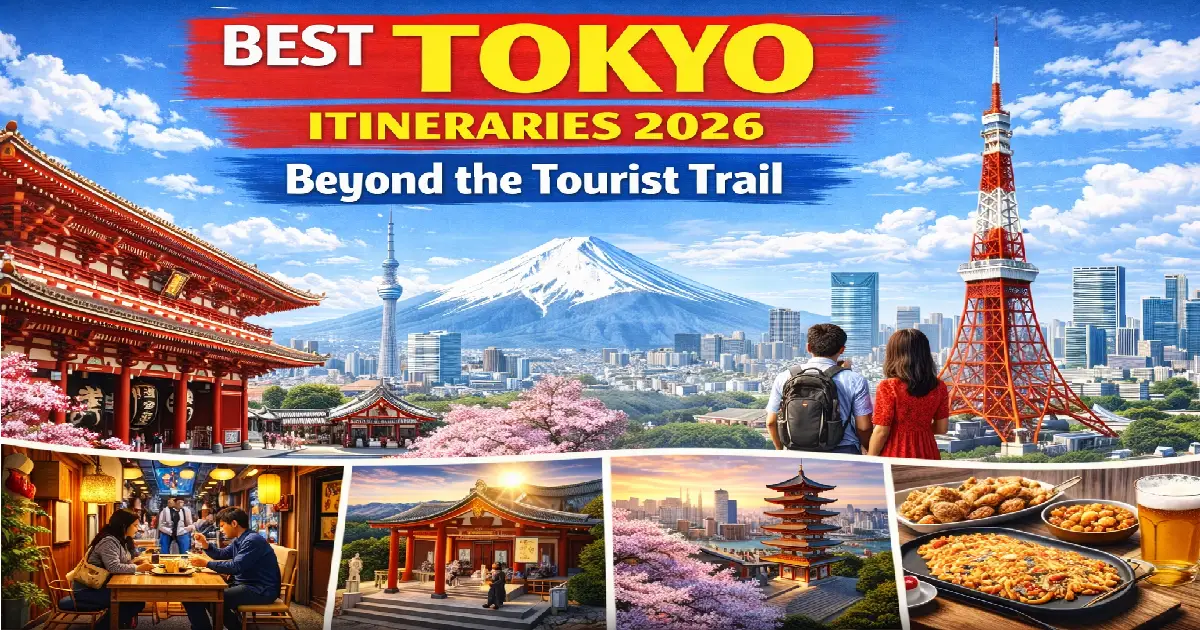
By Travel Tourister | Expert Tokyo Planning Guide
Every online Tokyo itinerary sends you to the same five places: Shibuya Crossing, Senso-ji Temple, Tokyo Skytree, Harajuku’s Takeshita Street, and maybe Tsukiji if you’re up for 5 AM sushi.
I’ve watched thousands of travelers follow these cookie-cutter routes, and here’s what inevitably happens: They spend half their Tokyo time queuing behind tour groups, photographing the same angles everyone else captures, and leaving convinced they’ve “done” Tokyo—when they’ve barely scratched its surface.
After living in Tokyo for three years and guiding international visitors through custom itineraries, I can tell you with absolute certainty: the best Tokyo experiences happen in neighborhoods most guidebooks ignore. The magic lives in Kiyosumi-Shirakawa’s third-wave coffee culture, Yanaka’s preserved Edo-period streets, Nakameguro’s riverside sophistication, and dozens of other districts where actual Tokyoites live their lives.
This isn’t another Best Tokyo itinerary telling you which train to catch at which minute. This is a strategic framework for experiencing Tokyo beyond the tourist trail—complete with neighborhood-based planning, realistic time allocations, and the flexibility to pursue your actual interests rather than checking off someone else’s checklist.
Whether you have 3 days or 7, whether you’re obsessed with food, architecture, street fashion, or simply want to understand how 14 million people create one of the world’s most fascinating cities, these itineraries will transform your Tokyo experience.
Standard itineraries treat Tokyo like a video game: collect all the landmarks, take the photos, move on. This approach fundamentally misunderstands what makes Tokyo extraordinary.
Tokyo isn’t a destination you “complete.” It’s a layered metropolis where each neighborhood functions like a distinct city. Shibuya and Yanaka sit 6 kilometers apart but might as well exist in different time periods. Shimokitazawa’s bohemian vintage culture shares nothing with Ginza’s luxury precision.
Rushing through ten sights daily means experiencing none deeply. You’ll photograph Senso-ji’s lantern alongside 500 other tourists, but you’ll miss the quiet subsidiary shrines in neighboring blocks where locals actually worship.
Tokyo sprawls across 2,194 square kilometers. That’s larger than Greater London. Yet most itineraries casually suggest visiting Asakusa, then Shibuya, then Ueno, then Shinjuku—all in one day.
Yes, trains connect these areas efficiently. No, that doesn’t make this pleasant. You’ll spend 30-40% of your day underground navigating complex station transfers. The Shinjuku Station alone has 200+ exits.
The solution? Neighborhood clustering. Spend full days in geographic zones rather than bouncing across the metropolis.
Every guidebook recommends visiting Senso-ji Temple. Few mention it receives 30 million annual visitors, creating overwhelming crowds from 9 AM to 6 PM daily.
Arrive at 7 AM? You’ll have the place largely to yourself with perfect morning light for photography. Similarly, teamLab installations are hellish at 2 PM on weekends but manageable at 10 AM on Tuesday mornings.
Strategic timing transforms experiences more than any other single factor.
Not everyone needs to visit Tokyo Skytree. If you’re not particularly interested in observation decks, you won’t suddenly love them because some list declared them essential.
Personalization matters. Food obsessives should spend days exploring Tsukiji, Toyosu, and neighborhood ramen shops rather than perfunctory temple visits. Architecture enthusiasts should prioritize Omotesando’s boutiques and Daikanyama’s T-Site. Anime fans belong in Nakano Broadway and Akihabara, not enduring traditional gardens out of obligation.
Build your Tokyo itinerary around your genuine interests, not someone else’s priorities.
The JR Yamanote Line forms Tokyo’s psychological center—a 34.5-kilometer railway loop connecting major districts. Understanding this loop unlocks Tokyo’s geography.
Major stations include:
Most first-time visitors stay near Yamanote Line stations for transportation convenience. This makes sense—you’re rarely more than 10-15 minutes from any major area.
Tokyo’s hidden treasures exist outside this circuit:
West of Yamanote:
East of Yamanote:
South of Yamanote:
These neighborhoods offer drastically lower tourist density while providing authentic Tokyo experiences.
Instead of: Asakusa → Shibuya → Ueno → Shinjuku (4+ hours in transit)
Do this: Asakusa → Tokyo Skytree → Ryogoku → Yanaka (connected eastern Tokyo, minimal transit)
Cluster attractions within the same geographic zone. This approach:
Early morning wins (6-9 AM):
Midday flexibility (10 AM-3 PM):
Late afternoon/evening (4-9 PM):
Night exploration (8 PM-midnight):
Tokyo exhausts even experienced travelers. The density, crowds, heat (summer), and sensory overload accumulate quickly.
Schedule deliberate rest periods:
Don’t pack 12 hours of constant activity. You’ll burn out by day three.
Get a Suica or Pasmo IC card immediately. Load ¥5,000-¥10,000 depending on stay length. Tap in, tap out—no ticket calculations required.
Download navigation apps:
Learn station basics:
Weather changes plans. Your interests evolve mid-trip. Unexpected discoveries demand exploration time.
Build itineraries with 70% planned structure and 30% flexible time. If you discover an incredible vintage shop in Shimokitazawa, you can extend your time there without guilt about missing scheduled items.
The best Tokyo stories come from unplanned moments, not perfect adherence to minute-by-minute schedules.
Three days allows only surface scratching, but strategic planning maximizes impact. This itinerary balances iconic experiences with hidden discoveries, prioritizes early-morning timing for major sites, and clusters neighborhoods efficiently.
7:00 AM – Senso-ji Temple (Asakusa)
Begin before crowds arrive. The temple opens at 6 AM, granting precious quiet time in Tokyo’s oldest sacred space. Morning light illuminates the massive red lantern beautifully.
Walk through Nakamise Shopping Street (most shops closed this early, but you avoid the chaos and can photograph freely).
Time: 90 minutes
8:45 AM – Breakfast at Asakusa Local Spot
Skip tourist restaurants. Head to Sometaro for authentic okonomiyaki breakfast, or grab fresh pastries from Pelican Bakery (opens 8 AM, often sells out by 10 AM).
Time: 45 minutes
9:45 AM – Yanaka Neighborhood Exploration
Take the train to Nippori Station (15 minutes). Walk through Yanaka Ginza shopping street, explore Yanaka Cemetery’s peaceful paths, visit small temples and craft shops.
This preserved Edo-period neighborhood survived WWII bombings, maintaining wooden architecture and traditional atmosphere rare in modern Tokyo.
Time: 2.5 hours
12:30 PM – Lunch in Yanaka
Kayaba Coffee (1938 café) or Hantei (kushiage specialty in renovated traditional house).
Time: 1 hour
1:45 PM – Tokyo Skytree
Quick train to Tokyo Skytree (20 minutes). Ascend for panoramic city views. The 450-meter observatory provides orientation context helpful for your remaining days.
Pre-book tickets online to skip ground-level queues.
Time: 2 hours
4:00 PM – Kiyosumi-Shirakawa Coffee Culture
Return toward Asakusa direction but stop at Kiyosumi-Shirakawa (15 minutes). Explore Tokyo’s specialty coffee hub:
Stroll riverside paths, browse artisan shops.
Time: 2 hours
6:30 PM – Dinner in Ryogoku
Train to Ryogoku (10 minutes). Experience chanko-nabe (sumo wrestler hot pot) at Chanko Tomoegata or Kappo Yoshiba (actual former sumo wrestler owners).
Walk past Ryogoku Kokugikan (sumo stadium) and Edo-Tokyo Museum exterior.
Time: 2 hours
8:45 PM – Return to Accommodation
Daily Stats: Major attractions: 3 | Neighborhoods explored: 4 | Transit time: ~90 minutes | Walking: ~12,000 steps
8:00 AM – Meiji Shrine
Arrive at opening time (sunrise) for serene forest atmosphere before crowds. The 70-hectare evergreen forest surrounds one of Japan’s most important shrines.
Observe purification rituals, sake barrels, possibly witness a traditional wedding ceremony.
Time: 90 minutes
9:45 AM – Harajuku Street Fashion
Adjacent to Meiji Shrine. Walk Takeshita Street early before extreme crowds (it becomes unbearable after 11 AM).
Browse quirky shops, sample rainbow cotton candy, observe emerging street styles.
Time: 1 hour
11:00 AM – Omotesando Architecture Walk
Stroll Omotesando’s tree-lined boulevard admiring architectural masterpieces:
Window shop luxury boutiques, people-watch at sidewalk cafes.
Time: 90 minutes
12:45 PM – Lunch in Omotesando
Afuri Ramen (yuzu-infused ramen) or Kawaii Monster Cafe (if embracing full Harajuku culture).
Time: 1 hour
2:00 PM – Shibuya Crossing & Shopping
Experience Tokyo’s busiest intersection. Time it for crossing with the masses (3-5 PM sees peak pedestrian volume).
Explore:
Time: 2.5 hours
4:45 PM – Shimokitazawa Vintage Exploration
Train to Shimokitazawa (8 minutes). Tokyo’s bohemian neighborhood offers vintage clothing treasures, independent record shops, live music venues.
Best vintage shops:
Explore maze-like narrow streets, discover hidden cafes.
Time: 2 hours
7:00 PM – Dinner and Drinks in Shimokitazawa
Casual izakaya experience or trendy cafe dining. Bar Ishinohana for craft cocktails, Shirube for yakitori.
Time: 2 hours
9:15 PM – Shinjuku Night Experience
Train to Shinjuku (10 minutes). Walk through neon chaos of Kabukicho district, photograph Godzilla statue, potentially visit Golden Gai for intimate bar experience (if not too exhausted).
Time: 1.5 hours
10:45 PM – Return to Accommodation
Daily Stats: Major attractions: 3 | Neighborhoods explored: 5 | Transit time: ~70 minutes | Walking: ~15,000 steps
9:00 AM – Tsukiji Outer Market
While the famous tuna auction moved to Toyosu, Tsukiji’s outer market remains vibrant with 400+ shops and restaurants.
Sample fresh seafood, tamagoyaki, grilled scallops, matcha desserts. Purchase Japanese knives, ceramics, kitchenware.
Time: 2.5 hours
11:45 AM – Imperial Palace East Gardens
Walk or short train to Imperial Palace (15 minutes). Explore the East Gardens (free admission)—only accessible palace grounds area.
View massive stone walls, Ninomaru Garden, seasonal flowers, distant palace buildings.
Time: 1.5 hours
1:30 PM – Ginza Lunch & Shopping
Traditional department store lunch or:
Window shop luxury boutiques, visit Ginza Six (comprehensive complex), explore back alleys for hidden gems.
Time: 2 hours
3:45 PM – Choose Your Own Adventure
Based on personal interests, select one option:
Option A: Art & Culture
Option B: Anime & Pop Culture
Option C: Traditional Crafts
Option D: Nature & Relaxation
Time: 3 hours
7:00 PM – Final Dinner
Splurge on memorable meal or keep it casual:
Time: 2 hours
9:15 PM – Last Evening in Tokyo
Final neighborhood walk, souvenir shopping, or quiet reflection in accommodation.
Daily Stats: Major attractions: 2-3 | Personalized time: 3 hours | Transit time: ~60 minutes | Walking: ~13,000 steps
The 5-day itinerary builds on the 3-day framework, adding depth and day trip opportunities.
Days one and two mirror the 3-day itinerary (East Tokyo and West Tokyo) with slight modifications allowing slower pacing.
9:00 AM – Ueno Park & Museums
Massive park complex housing multiple museums:
Choose 1-2 museums based on interests rather than rushing through all.
Time: 3 hours
12:15 PM – Ameya Yokocho Market Lunch
Adjacent to Ueno Station. Chaotic market street offering street food, discounts, groceries, international foods.
Sample various vendors for eclectic lunch.
Time: 1 hour
1:30 PM – Kagurazaka Neighborhood
Former geisha district maintaining traditional atmosphere with modern French influences.
Stone-paved slopes hide restaurants, French patisseries, Japanese confectioners. Explore Akagi Shrine (modern Kengo Kuma design merged with tradition).
Time: 2 hours
4:00 PM – Afternoon in Kichijoji
Consistently rated Tokyo’s most livable neighborhood. Explore Inokashira Park (boat rentals, small zoo, tree-shaded paths).
Harmonica Yokocho alleyway offers tiny bars and eateries in atmospheric maze.
Time: 2.5 hours
7:00 PM – Dinner in Kichijoji or Return to Central Tokyo
Satou (famous menchi-katsu), Iseya (yakitori institution since 1928), or countless ramen shops.
Time: 2 hours
9:30 PM – Return to Accommodation
Option A: Mount Fuji & Kawaguchiko Lake (Full Day)
2-hour journey each way. View Japan’s iconic mountain from various angles, visit Chureito Pagoda for classic postcard view, explore lakeside town.
Best visibility: early morning. Check weather forecasts—cloudy days mean no mountain views.
Full day commitment | Return by evening
Option B: Nikko UNESCO Heritage Sites (Full Day)
2-hour journey north. Elaborate shrines and temples in mountain setting:
Natural beauty plus cultural significance.
Full day commitment | Return by evening
Option C: Hakone Art Museums & Hot Springs (Full Day)
90-minute journey. Use Hakone Free Pass for comprehensive access:
Potential Mount Fuji views from lake.
Full day commitment | Option to stay overnight
Option D: Kamakura Historical Temples & Beach (Half Day)
60-minute journey south. Coastal town with famous sites:
Return to Tokyo by early evening for dinner.
Half day option allows Tokyo evening activities
9:30 AM – Nakameguro Riverside Walk
Sophisticated neighborhood along Meguro River (famous for cherry blossoms March-April).
Boutique shopping, specialty coffee shops, artisan bakeries.
Time: 2 hours
11:45 AM – Daikanyama Cultural Exploration
Adjacent to Nakameguro (walking distance). Visit T-Site complex housing Tsutaya Books—stunning bookstore/café/retail space.
Browse design-focused shops, enjoy architectural photography.
Time: 1.5 hours
1:30 PM – Lunch in Ebisu
Gourmet neighborhood near former Yebisu brewery site.
Ebisu Yokocho (alley izakayas) or Ebisu Garden Place restaurants.
Time: 1 hour
2:45 PM – Afternoon Shopping or Cultural Activity
Final souvenir hunting, last museum visit, or relaxation before departure.
Omotesando for luxury souvenirs, Nakano for pop culture collectibles, or onsen experience for relaxation.
Time: 3 hours
6:00 PM – Farewell Dinner
Celebrate your Tokyo journey with memorable final meal. Return to favorite neighborhood or try one final cuisine type.
Time: 2 hours
8:30 PM – Evening Reflection
Last walk through favorite neighborhood, final convenience store visit, pack for departure.
Seven days allows genuine depth, multiple day trips, and exploration of niche interests.
9:00 AM – Koenji Underground Culture
Vintage paradise and music scene hub. Dozens of vintage shops, record stores, live music venues.
Browse Look Arcade and surrounding streets for retro treasures.
Time: 2.5 hours
11:45 AM – Nakano Broadway Otaku Paradise
15 minutes from Koenji. Multi-floor complex housing vintage toys, anime collectibles, manga shops.
Mandarake chain dominates with specialized floors (toys, figures, doujinshi, cosplay).
Time: 2 hours
2:00 PM – Lunch in Nakano
Surrounding area offers excellent ramen shops. Nakamoto and Aoba receive local acclaim.
Time: 45 minutes
3:00 PM – Sangenjaya Nostalgic Exploration
Laid-back residential neighborhood. Sankaku Chitai yokocho preserves retro Showa-era atmosphere.
Small bars, cozy izakayas, traditional coffee shops.
Seek out the mysterious giant gorilla looming over a Family Mart—local landmark no one remembers the origin of.
Time: 2 hours
5:15 PM – Meguro Parasite Museum (If Time/Interest Permits)
World’s only museum dedicated to parasites. Free admission. Bizarre and fascinating.
Time: 45 minutes
6:15 PM – Dinner in Meguro or Return Central
Tonki (legendary tonkatsu since 1939) or explore Meguro’s various restaurant options.
Time: 2 hours
8:30 PM – Optional Evening Activity
Tokyo Metropolitan Government Building observation deck (free, open until 11 PM), karaoke session, or rest.
Choose based on Day 4’s selection:
If you did Mount Fuji Day 4: Consider Kamakura/Enoshima combination or Yokohama port city
If you did Nikko Day 4: Consider Hakone overnight stay with ryokan experience
If you prefer staying in Tokyo: Deep dive into specific interest area
Dedicate this day entirely to your strongest Tokyo interest:
Food Obsessives:
Architecture Enthusiasts:
Traditional Culture:
Modern Pop Culture:
Structure based on departure time:
Morning Flight: Light breakfast, final convenience store visit, airport transit
Afternoon Flight: Morning in favorite neighborhood, leisurely final meal, mid-day airport departure
Evening Flight: Full final day of last-minute activities, souvenir shopping, farewell dinner
Suggested Final Day Activities:
5:00 AM – Toyosu Fish Market Tuna Auction
Reserve in advance. Observe massive tuna trading operations. Follow with sushi breakfast at market restaurants.
8:30 AM – Tsukiji Outer Market Grazing
Sample tamagoyaki, fresh oysters, fruit, wagyu beef croquettes across multiple vendors.
11:00 AM – Kappabashi Kitchen Town
Restaurant supply district. Browse plastic food samples, knives, ceramics, cooking equipment.
12:30 PM – Ramen Lunch
Choose your style: Ichiran (tonkotsu isolation booths), Afuri (yuzu-infused), Tsuta (first Michelin-starred ramen).
2:30 PM – Department Store Depachika
Basement food floors at Mitsukoshi, Isetan, or Takashimaya. Sample wagashi, observe food presentation artistry.
4:30 PM – Craft Beer Tasting
Yona Yona Beer Works or Baird Taproom for Japanese craft beer culture.
6:30 PM – Yakitori Under Train Tracks
Omoide Yokocho (Shinjuku) for atmospheric alley dining or Yurakucho train track izakayas.
9:00 PM – Late Night Ramen
24-hour shops like Ichiran or Fuunji accommodate post-drinking ramen tradition.
8:30 AM – Tokyo International Forum
Rafael Viñoly’s glass and steel masterpiece. Free public access.
10:00 AM – Omotesando Architecture Walk
Tadao Ando, Toyo Ito, SANAA, Herzog & de Meuron buildings concentrated in one street.
12:00 PM – Lunch at Spiral Building
Fumihiko Maki design (1985). Café with architectural bookshop.
1:30 PM – 21_21 Design Sight
Tadao Ando-designed museum in Roppongi. Rotating design exhibitions.
3:30 PM – National Art Center Tokyo
Kisho Kurokawa’s wave-form glass façade. Free entry to building/café.
5:00 PM – Tokyo Skytree
Tadao Ando base design. Ascend for engineering appreciation.
7:00 PM – Dinner with View
Restaurant with Tokyo panorama for final architectural overview.
8:00 AM – Meiji Shrine Traditional Wedding Observation
Best chances for witnessing ceremonies.
10:00 AM – Tea Ceremony Experience
Book advance lesson/demonstration (90 minutes).
12:00 PM – Kaiseki Lunch
Multi-course traditional Japanese meal reflecting seasonal ingredients.
2:00 PM – Kimono Rental & Walk
Rent kimono, photograph in traditional neighborhoods (Asakusa, Yanaka).
5:00 PM – Traditional Craft Workshop
Choose: calligraphy, pottery, indigo dyeing, origami, or Japanese knife making.
7:00 PM – Sumo-themed Dinner
Chanko-nabe hot pot in Ryogoku district.
9:00 PM – Traditional Bathhouse (Sento)
Communal bathing experience. Proper etiquette essential.
Best Areas for First-Timers:
Shinjuku – Central location, extensive rail connections, nightlife access
Shibuya – Youth culture center, shopping paradise, excellent connectivity
Asakusa – Traditional atmosphere, affordable accommodation, tourist infrastructure
Ueno – Museum access, park proximity, good transportation
Akasaka/Roppongi – International atmosphere, nightlife, business district
Budget Traveler (¥8,000-¥12,000/$55-$80 daily):
Mid-Range Traveler (¥20,000-¥35,000/$135-$235 daily):
Luxury Traveler (¥50,000+/$340+ daily):
IC Card Strategy: Buy Suica/Pasmo at any station (¥500 deposit + initial charge). Load ¥3,000-¥5,000 for multi-day trips.
Day Passes Worth It?
Station Navigation:
Best Overall: Late March-April (Cherry Blossom)
Best Value: January-February (Winter)
Best Weather: October-November (Autumn)
Worst Time: June-July (Rainy Season)
Summer Reality: July-August
| Duration | Coverage Depth | Day Trips | Exhaustion Level | Ideal For |
|---|---|---|---|---|
| 3 Days | Surface highlights + 2-3 hidden neighborhoods | None | High (rushed pace) | First-timers, limited vacation time |
| 5 Days | Major areas + deeper exploration | 1 day trip | Medium | Most international visitors, balanced experience |
| 7 Days | Comprehensive neighborhoods + niche interests | 2 day trips | Low (comfortable pace) | Tokyo enthusiasts, repeat visitors, special interests |
| 10+ Days | Deep immersion + extended day trips | 3-4 day trips or overnights | Very Low | Long-term travelers, Japan multi-city tours |
Q: Is 3 days enough for Tokyo? A: Three days provides a solid introduction hitting major highlights and 2-3 neighborhoods beyond typical tourist zones. You’ll leave wanting more, but it’s sufficient for first-time visitors with limited schedules. Five days is ideal for meaningful exploration.
Q: Should I book a guided tour or explore independently? A: Tokyo’s excellent English signage, helpful locals, and comprehensive public transportation make independent travel very feasible. However, food tours, architecture walks, or cultural workshops benefit from expert guides. Mix approaches—independent exploration with 1-2 guided specialty experiences.
Q: How much walking should I expect daily? A: Expect 15,000-20,000 steps (10-13 km) on active sightseeing days. Tokyo is a walking city—even with extensive train use, you’ll walk between stations, through neighborhoods, and across attractions. Comfortable, broken-in shoes are absolutely essential.
Q: Can I see Tokyo and Kyoto in one week? A: Yes, but rushed. Allocate 3-4 days Tokyo, 2-3 days Kyoto, with travel day between (2.5 hours shinkansen). Better to do 4 days each city if possible. Don’t try adding Osaka/Hiroshima/Mount Fuji to a 7-day trip—you’ll exhaust yourself.
Q: Is Tokyo safe for solo travelers? A: Extremely safe. Japan maintains one of the world’s lowest crime rates. Solo women regularly navigate Tokyo at night without incident. Standard precautions apply universally, but Tokyo presents minimal safety concerns compared to most major cities.
Q: How much Japanese do I need to know? A: Zero required for basic tourism. Learn “arigato” (thank you), “sumimasen” (excuse me), and “kudasai” (please) for politeness. Translation apps handle everything else. Many younger Tokyo residents speak functional English.
Q: Are Tokyo itineraries better by neighborhood or by theme? A: Neighborhood-based clustering reduces transit time by 60-70% compared to theme-based hopping. However, dedicated theme days (food tour, architecture, traditional culture) work well when interests strongly align. Mix both approaches.
Q: What’s the biggest mistake first-time Tokyo visitors make? A: Trying to see too much. Rushed itineraries with 8-10 daily attractions mean experiencing nothing deeply. Better to thoroughly explore 3-4 areas than superficially visit ten. Quality over quantity always wins in Tokyo.
Q: Can I visit Tokyo with young children? A: Yes, Tokyo accommodates families well. Attractions like teamLab, Ueno Zoo, Pokemon Centers, and various parks appeal to children. However, extensive walking and train navigation can exhaust young kids. Plan shorter days with afternoon rest periods.
Q: How late do Tokyo attractions stay open? A: Temples/shrines: Sunrise to sunset (typically 9 AM-5 PM) Museums: Usually 10 AM-5 PM, closed Mondays Shopping areas: 10 AM-8 PM (some later) Restaurants: Vary widely, many close surprisingly early (9-10 PM) Convenience stores/some chains: 24 hours
Q: Do I need cash or are cards accepted? A: Cash remains king in Tokyo despite modernization. Many restaurants, small shops, and local businesses accept cash only. Carry ¥20,000-¥30,000 for multi-day periods. Credit cards work at hotels, department stores, and major chains.
Q: What’s one neighborhood locals love that tourists miss? A: Kiyosumi-Shirakawa. This eastern Tokyo neighborhood blends traditional architecture with third-wave coffee culture, contemporary art galleries, and riverside walks. Zero tour groups, genuine local atmosphere, yet easily accessible from central Tokyo.
Q: Should I stay in one accommodation or move between neighborhoods? A: For stays under 7 days, one central location makes sense—moving accommodations consumes valuable time. For 7+ days, consider splitting between two areas (e.g., 4 nights Shibuya, 3 nights Asakusa) for distinct neighborhood experiences without daily hotel changes.
Tokyo doesn’t reveal itself through checklists. The city rewards curiosity, spontaneity, and willingness to get lost in neighborhoods where English signage disappears and tour groups never venture.
I’ve seen travelers spend entire Tokyo trips photographing the same famous spots everyone posts on Instagram, then leave convinced they’ve “done” the city. They’ve done a Tokyo that exists primarily for tourists—which is fine if that’s what they want.
But the Tokyo that captivated me for three years exists elsewhere. It lives in:
These experiences don’t appear in 48-hour itineraries listing seventeen must-see attractions. They emerge through deliberate pacing, neighborhood immersion, and strategic planning that values depth over breadth.
Use these Best Tokyo itineraries as frameworks, not prescriptions. Adapt timing to your interests. If you discover an incredible coffee shop in Kiyosumi-Shirakawa, extend your time there. If teamLab fails to captivate you despite its Instagram fame, leave early without guilt.
Tokyo accommodates every traveler type—from those who want the classic hits to adventurers seeking underground music venues to food obsessives willing to queue two hours for perfect ramen. Success comes from honest self-assessment about your genuine interests, not forcing yourself through experiences that don’t resonate.
The metropolitan sprawl that initially overwhelms becomes navigable through neighborhood familiarity. After a few days, you’ll instinctively know that Nakameguro offers sophisticated riverside strolling, Shimokitazawa delivers vintage treasures and bohemian cafes, and Yanaka provides traditional atmosphere without Asakusa’s tourist density.
Three days scratches the surface. Five days provides solid foundation. Seven days enables genuine exploration. But even three weeks barely touches what Tokyo offers. Accept this going in—you’re sampling, not completing.
Most importantly: Build rest into your schedule. Tokyo’s sensory intensity, summer heat, winter chill, endless walking, and constant stimulus exhaust even experienced travelers. Afternoon café breaks aren’t luxuries; they’re necessities that prevent the burnout turning Tokyo magic into Tokyo exhaustion.
Your Best Tokyo itinerary isn’t the one covering maximum ground—it’s the one balancing iconic experiences with hidden discoveries, famous attractions with local neighborhoods, planned structure with spontaneous flexibility.
The city sprawls before you in all its contradictory glory: traditional and futuristic, chaotic and orderly, overwhelming and intimate. Navigate it thoughtfully, explore it curiously, and let it surprise you in ways no itinerary can predict.
Tokyo won’t disappoint you. But you might disappoint Tokyo if you only experience its tourist-facing facade. Venture beyond. The rewards await those willing to explore.
About Travel Tourister
Travel Tourister’s Tokyo experts have lived in and explored the city for years, creating customized itineraries that go beyond standard tourist routes. We specialize in connecting travelers with authentic neighborhood experiences, hidden local favorites, and strategic planning that maximizes limited vacation time.
Ready to plan your Tokyo adventure? Contact our Tokyo specialists who can create personalized itineraries matching your interests, timeline, and travel style. We handle accommodation booking, restaurant reservations, specialty tours, and provide insider knowledge you won’t find in guidebooks.
Posted By : Vinay
Latest Article
2nd Floor, 39, Above Kirti Club, DLF Industrial Area, Kirti Nagar, New Delhi, Delhi 110015



Travel Tourister is a leading Travel portal where we introduce travellers to trusted travel agents to make their journey hasselfree, memorable And happy. Travel Tourister is a platform where travellers get Tour packages ,Hotel packages deals through trusted travel companies And hoteliers who are working with us across the world. We always try to find new and more travel agents and hoteliers from every nook and corners across the world so that you could compare the deals with different travel agents and hoteliers and book your tour or hotel with the one you have chosen according to your taste and budget.
Copyright © Travel Tourister, India. All Rights Reserved

 Call
Call Enquiry