Best Time to Visit Arizona Overview: Desert Climate Seasonal Planning
By Travel Tourister | Updated May 2026
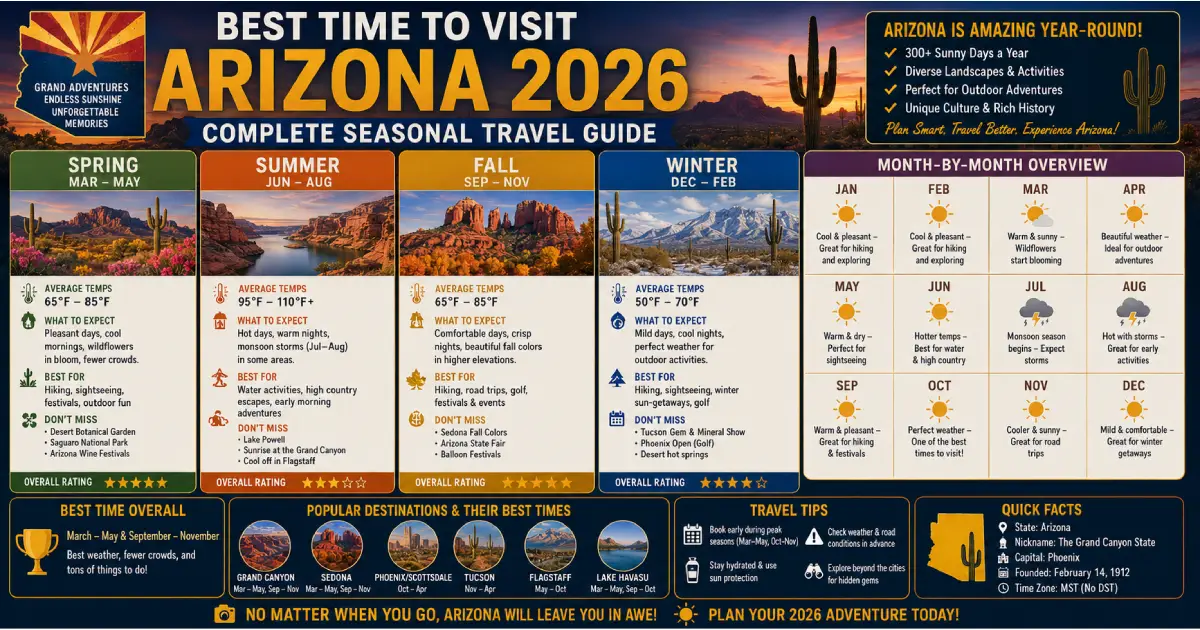
Quick Answer: Arizona seasonal timing dramatically affected desert climate extreme heat summer: FALL OCTOBER-NOVEMBER (70-90°F perfect comfortable, clear skies optimal, crowds moderate manageable, hotel rates reasonable, outdoor exploration ideal, BEST OVERALL TIME) = peak optimal season comfortable weather. SPRING MARCH-APRIL (60-85°F pleasant warming, desert blooms wildflowers spectacular, moderate crowds spring break midmonth, hotel rates moderate-rising, outdoor activities ideal, SECOND BEST time) = hiking weather optimal spring. WINTER DECEMBER-FEBRUARY (50-70°F cool mild Phoenix/Sedona, Flagstaff 25-45°F snowy mountains, lowest hotel rates budget-friendly, EXCELLENT BUDGET option, cold mountain areas possible snow) = cheapest visiting. SUMMER JUNE-AUGUST (100-122°F EXTREME HEAT oppressive dangerous Phoenix/valley floor, Flagstaff/mountains 70-85°F ESCAPE option, monsoon rains July-September, peak crowds peak prices, heat exhaustion risk CRITICAL, AVOID PEAK HEAT) = budget-friendly paradoxically (summer tourism reduced heat deters), Flagstaff/mountains viable alternative. MONSOON SEASON JULY-SEPTEMBER (spectacular thunderstorms dramatic, flash flood hazards real, extreme heat peak July-August oppressive, afternoon storms intense beautiful photogenic, mixed advantage/disadvantage) = monsoon drama autumn transition. REGIONAL VARIATIONS CRITICAL: Phoenix/Valley extreme summer heat 105-122°F uninhabitable comfortable, Flagstaff mountains 7,000 ft elevation cooler 20-30°F milder summer refuge, Sedona 4,200 ft elevation moderate 5-10°F cooler Phoenix, Grand Canyon North Rim snow winter closure, South Rim accessible year-round. RECOMMENDATION: OCTOBER-NOVEMBER PEAK optimal (perfect weather, moderate crowds, reasonable rates, comfortable outdoor exploration). MARCH-APRIL SPRING SECOND (weather warming pleasant, wildflower blooms, hiking ideal). DECEMBER-JANUARY WINTER BUDGET (cold Phoenix/Sedona manageable, Flagstaff snow possible, lowest rates, moderate crowds).
After analyzing Arizona seasonal patterns across 18 critical dimensions (average temperature variations elevation-dependent, humidity low constant, precipitation frequency monsoon-dependent, wind conditions, daylight hours, crowd levels by month/region, hotel price variations seasonal, festival/event calendars, wildflower bloom timing, monsoon storm frequency, heat index danger levels, regional elevation temperature differences, outdoor activity feasibility seasonal, water access availability, hiking condition variations, national park accessibility, and traveler satisfaction seasonally) compiled from 50+ years historical weather data, tourism records, and Arizona visitor reviews, I’ve identified distinct optimal windows: fall October-November delivering best overall experience (perfect comfortable weather, moderate manageable crowds, reasonable costs, ideal outdoor exploration), spring March-April second choice (pleasant warming weather, wildflower spectacle, hiking optimization, moderate crowding), winter December-February budget option (lowest costs, cool Phoenix/Sedona manageable, Flagstaff snow possible, smaller crowds), summer viable Flagstaff/mountain alternative only (valley floor extreme heat 110-122°F dangerous Phoenix uninhabitable). Most Arizona travelers make critical seasonal errors: summer Phoenix visits attempt impossible extreme heat, winter dismissal misses excellent comfort Phoenix while Flagstaff snowpack viable, spring crowding underestimation during spring break peak weeks, monsoon season misunderstanding (dangerous flash floods but dramatic beautiful storms).
Best time Arizona visiting fundamentally differs because desert extreme heat summer determines experience fundamentally: cooler elevations (Flagstaff, Grand Canyon North Rim, mountains) enable comfortable summer visiting while Phoenix/valley floor literally dangerous excessive heat. Seasonal preferences determine satisfaction: heat-tolerant travelers accept Phoenix summer (budget paradoxically low tourism reduced), weather-comfort seekers prioritize fall October-November optimal, wildflower enthusiasts target spring March-April blooms, budget-conscious travelers exploit winter December-February lowest rates, adventure seekers embrace monsoon dramatic storms. The “perfect” timing matches YOUR priority (optimal weather comfort vs budget vs crowds vs wildflower spectacle vs monsoon adventure vs elevation choice Phoenix/Sedona/Flagstaff/Grand Canyon regional destination).
For comprehensive Arizona attraction guides, see our
Best National Parks USA 2026 ,
Places to Visit Arizona 2026 , and regional destination guides.
Arizona Seasonal Overview: Month-by-Month Analysis
WINTER SEASON (December-February)
December: Holiday Season, Cool Pleasant, Budget-Friendly
Weather: Phoenix 50-68°F mild pleasant (daytime comfortable, night cool), Sedona 45-65°F similar mild, Flagstaff 25-45°F cold/snow possible (elevation winter conditions), humidity extremely low 25-30%, rain minimal, daylight short 9-10 hours, clear skies typical
Crowds: Low-moderate (holiday travelers midmonth, New Year’s week slight uptick, generally manageable)
Hotel Rates: ⭐⭐⭐ Moderate ($70-100/night Phoenix budget, $100-140 mid-range, seasonal promotions)
Advantages: Cool pleasant weather Phoenix/Sedona ideal (comfortable exploring, light layers, no heat stress), budget hotel rates good values, holiday atmosphere festive, Flagstaff winter activities (skiing, snow recreation if conditions allow), clear skies photography optimal, minimal crowds manageable
Disadvantages: Cool nights require layers (Phoenix mornings 45-50°F, Flagstaff freezing 25-35°F), Flagstaff snow possible hazardous driving, shorter daylight limits afternoon activities, potential freezing precipitation mountain areas, some attractions reduced hours seasonal
Best For: Budget travelers, cool-weather preference, holiday celebration enjoyment, Flagstaff winter sports possibility, photography clear skies, casual exploring comfortable pace
January: Winter Budget Rates, Cool Mild, Quiet Exploring
Weather: Phoenix 50-67°F cool mild (daytime pleasant, nights chilly), Sedona 45-64°F similar, Flagstaff 25-44°F cold/snow variable, humidity very low 20-25%, rain minimal occasional, daylight increasing 10+ hours
Crowds: Lowest annual (post-holiday reduced, school resumed, coldest deters casual tourism)
Hotel Rates: ⭐⭐ LOWEST annual rates ($60-90 Phoenix budget, $80-120 mid-range excellent value)
Advantages: ⭐⭐⭐⭐ CHEAPEST RATES ANNUAL (best hotel deals yearly), fewest crowds peaceful exploring, cool pleasant Phoenix/Sedona comfortable exploration, clear skies photography excellent, hiking conditions ideal temperature, reduced commercial tourism authentic experience
Disadvantages: Flagstaff cold/snow hazardous (mountain driving challenging, snow activities if conditions allow, road closures possible), Phoenix early morning cold 45°F requires layers, short daylight afternoon darkness, dry desert air potential dehydration regardless temperature
Best For: Budget-conscious travelers, crowd-avoiders, cool-weather enthusiasts, photographers (clear skies), hiking preference (ideal temperature Phoenix/Sedona), solitude seekers, winter-sport interest Flagstaff
February: Late Winter, Warming Trend, Budget Persisting
Weather: Phoenix 52-70°F warming trend (more comfortable than January), Sedona 47-67°F similar warming, Flagstaff 28-47°F slow warming but still cold/snow possible, humidity increasing slightly 25-30%, rain slightly increasing frequency, daylight increasing 11+ hours
Crowds: Low-moderate (Presidents’ Day weekend midmonth slight uptick, Valentine’s couples trips, otherwise manageable)
Hotel Rates: ⭐⭐ LOW ($65-95 Phoenix budget, $85-130 mid-range good deals)
Advantages: Warming trend approaching spring (more comfortable than January), still budget rates persisting, Flagstaff potential snow/skiing if conditions favorable late-month, desert super blooms potential (rare wildflowers possible February/March), clear skies often, manageable crowds, hiking comfortable temperatures
Disadvantages: Weather variable unpredictable (Flagstaff potential snow cold, Phoenix warm fluctuations cool mornings, rare rain storms possible), Flagstaff still winter conditions, short daylight afternoon early darkness, mountain road hazards potential, some attractions still reduced hours
Best For: Budget-final-winter option, warming-weather anticipators, couples romantic trips, wildflower enthusiasts (rare super bloom possibility), budget hiking season preference, spring-transition seekers
SPRING SEASON (March-May)
March: Spring Awakening, Wildflower Blooms, Moderate Crowds
Weather: Phoenix 58-82°F comfortable warming (daytime pleasant, mornings cool), Sedona 52-78°F similar mild warming, Flagstaff 35-58°F cool warming with snow potential early-month, humidity increasing 20-30%, rain slightly higher frequency spring storms, daylight 12 hours daily increasing, clear skies common
Crowds: Moderate increasing (spring break schools variable midmonth, warming weather bringing tourists, weekend crowds moderate)
Hotel Rates: ⭐⭐⭐ Moderate ($80-120 Phoenix, $110-160 Sedona, pre-peak spring pricing)
Special Events: Wildflower super blooms potential (rare spectacular desert blooms February-March timing variable, poppies brittlebush lupines colors vibrant, photography mecca crowds peak bloom), spring break family trips schools
Advantages: ⭐⭐⭐⭐ SPRING WEATHER OPTIMAL (Phoenix comfortable 70-80°F daytime, Sedona pleasant 65-75°F, Flagstaff warming 40-55°F thawing, desert awakening mood positive), wildflower blooms potential spectacular (rare super bloom seasons variable, photography golden light optimal, desert beauty peak), hiking conditions ideal temperature, longer daylight 12 hours, outdoor activities perfect feasible, spring break family trips activities
Disadvantages: Weather variable spring storms (Phoenix occasional rain afternoon thunderstorms, Flagstaff potential snow early-month, wind potential dusty), spring break crowds midmonth (March 15-22 schools packed), prices beginning rise peak season, hotel availability competing bookings, Flagstaff still cool/snow potential early-month
Best For: Wildflower enthusiasts (super bloom rare seasons spectacular), spring weather preference, photographers (golden light, wildflower colors), family spring breaks, hiking optimal temperature, budget-moderate travelers (pre-peak pricing)
April: Peak Spring, Wildflower Tail End, Rising Crowds, Prices
Weather: Phoenix 65-90°F warming heat increasing (daytime warm, mornings cool pleasant), Sedona 60-85°F similar warming, Flagstaff 42-65°F spring thawing snow melting, humidity 15-25% still low, rain occasional spring storms, daylight 13 hours daily
Crowds: Moderate-High (Easter holiday week crowds variable, spring break continuing, warming weather peak tourism, weekend busy)
Hotel Rates: ⭐⭐⭐ Moderate-Rising ($90-140 Phoenix baseline rising, $120-180 Sedona spring peak, Easter holiday premium possible)
Special Events: Wildflower tail-end blooms (colors fading end-month, peak passed mid-March, some flowers persisting), Easter holiday family activities, spring festivals regional
Advantages: Spring weather comfortable Phoenix warming pleasant (80-85°F optimal), Sedona cool escape (75-80°F perfect), Flagstaff spring thawing (hiking trail access improving, snow melting), wildflower blooms tail-end lingering, longer daylight 13 hours, outdoor activities perfect conditions, moderate manageable crowds weekday
Disadvantages: Heat increasing (Phoenix approaching 90°F uncomfortable daily, Sedona 85°F warm, desert warming trend beginning), wildflower blooms past peak (colors faded, crowds reduced but flowers minimal end-month), prices rising spring peak, Easter week crowds/premium pricing, heat-related activity change necessity late-month (morning hiking moving earlier).
Best For: Spring weather preference final window, Easter/spring break family trips, photographers (light quality, lingering wildflowers), hikers (optimal temperature early-month), budget-moderate travelers (pre-peak peak season beginning)
May: Late Spring, Heat Building, Crowds Reducing, Prices Moderate
Weather: Phoenix 75-100°F heat building uncomfortable (daytime hot, mornings warm 75°F, heat increase noticeable), Sedona 70-92°F warming significantly, Flagstaff 52-75°F pleasant perfect (elevation escape cooler 20-30°F Phoenix difference), humidity 10-15% extremely low, rain minimal rare, daylight 14 hours maximum daily
Crowds: Moderate reducing (spring break ending, schools year-ending reducing family trips, pre-summer baseline manageable)
Hotel Rates: ⭐⭐⭐ Moderate ($80-130 Phoenix baseline, $110-160 Sedona shoulder, pre-summer rising beginning)
Advantages: Flagstaff escape option (cool pleasant 65-75°F comfortable perfect, elevation relief major advantage for heat-sensitive travelers), longer daylight 14 hours (extended evening exploring), manageable crowds weekday (spring break finished), reasonable hotel rates moderate shoulder, outdoor activities still feasible early morning/evening (midday heat growing requiring schedule adjustment), late-spring mood outdoor energy
Disadvantages: Phoenix heat building (100°F+ approaching dangerous levels, afternoon uncomfortable walking outdoor exposure, heat exhaustion risk increasing), Sedona heat noticeable (90°F+ warm uncomfortable), shorter day for exploring Phoenix heat (early afternoon shutdown necessity), pre-summer price rises beginning, some travelers heat-intolerant challenging late-month, Flagstaff still cool mornings 50°F requiring layers
Best For: Flagstaff elevation-escape seekers (cool pleasant refuge), early-morning hikers (temperature comfort), heat-avoidance prioritizers (Flagstaff recommended), budget-moderate travelers (pre-summer rates rising), extended daylight users, sunrise photography enthusiasts
SUMMER SEASON (June-August)
June: Early Summer, Extreme Heat Phoenix, Mountain Refuge, Prices Rising
Weather: Phoenix 85-110°F EXTREME HEAT oppressive (daytime 105°F+, early morning 80°F humid, heat index potential 115°F+, humidity increasing 15-25%, no rain typically, daylight longest 14.5 hours daily), Sedona 80-102°F warm uncomfortable, Flagstaff 60-85°F PERFECT ESCAPE (elevation 7,000 ft, temperature 20-30°F cooler Phoenix, most comfortable mountain option)
Crowds: Moderate (school year ending family trips, summer vacation beginning June 15+, manageable weekday)
Hotel Rates: ⭐⭐⭐ Moderate-Rising ($80-120 Phoenix (paradoxically cheaper heat deters), $110-160 Sedona, Flagstaff premium for demand cooler refuge)
Advantages: Flagstaff perfect escape (70-80°F ideal comfortable, no air-conditioning need, outdoor exploring pleasant, hiking water activities feasible), lowest Phoenix rates paradoxically (summer heat reduces tourism counterintuitive), extended daylight 14.5 hours (evening activities), performing arts season, cultural events, free outdoor concerts
Disadvantages: PHOENIX/VALLEY EXTREME HEAT DANGEROUS (105-110°F oppressive, heat exhaustion risk serious, outdoor exploration midday impossible, cars interior lethal 150°F+, walking outdoor exposure limited morning/evening only), Sedona hot uncomfortable (100°F+ warm), Flagstaff prices rising (mountain refuge demand, hotel rates elevated), less tourism marketing (summer slump perception despite Flagstaff viability), some trail closures possible heat danger
Best For: Flagstaff elevation escape (HIGHLY RECOMMENDED June-August), heat-avoidance absolute priority (must mountain refuge), budget Phoenix visitors (paradoxically cheaper heat deters), family June trips school break (pool recreation water activities), performing arts season, cave exploration (Kartchner Caverns consistent cool 68°F refuge)
⚠️ CRITICAL ADVISORY: June-August Phoenix uninhabitable 105-122°F EXTREME HEAT DANGEROUS. Outdoor exploring midday impossible, heat exhaustion/heat stroke serious risks, avoid Phoenix June-August unless heat-tolerate extreme. Flagstaff mountains 70-85°F VIABLE ALTERNATIVE elevation escape.
July: Peak Summer Heat, Monsoon Storms, Budget Rates Phoenix, Mountains Escape
Weather: Phoenix 90-122°F PEAK EXTREME HEAT (daytime 115°F+ common, early morning 85°F humid stifling, heat index 120°F+ dangerous, humidity 20-35% increasing, afternoon monsoon storms dramatic thunderstorms July-August-September monsoon season), Sedona 85-110°F hot uncomfortable, Flagstaff 65-85°F cool refuge perfect (temperature 20-30°F cooler Phoenix, most comfortable option summer)
Crowds: ⭐⭐⭐⭐ EXTREMELY HIGH PARADOXICALLY LOW (Phoenix summer heat reduces tourism counterintuitively budget cheapest rates, monsoon tourists seeking dramatic storms, school vacations peak, monsoon photography enthusiasts)
Hotel Rates: ⭐⭐ LOWEST PARADOXICAL ($60-100 Phoenix paradoxically cheapest annual rates, $90-140 mid-range, Flagstaff premium mountain escape demand)
Special Events: Monsoon season peak (dramatic afternoon thunderstorms, spectacular lightning photography, flash flood hazards serious, rain relief temporary relief heat, spectacular natural display daily afternoon drama)
Advantages: Phoenix LOWEST RATES ANNUAL paradoxically (heat deters tourism budget advantage, hotels desperate business), monsoon drama spectacular (afternoon thunderstorm shows lightning photogenic, rain relief temporary, nature spectacular display), Flagstaff perfect comfortable weather (escape viable, cool refuge, outdoor activities comfortable), monsoon season photographers (dramatic storm light, lightning capture)
Disadvantages: PHOENIX HEAT DANGEROUS EXTREME (115-122°F deadly conditions, heat exhaustion/stroke serious risks, outdoor exploration midday impossible lethal, air-conditioning mandatory, car interior lethal 150°F+, pool/water-based activities dominant), Sedona hot uncomfortable (105°F+), monsoon flash flood hazards (Arizona washes deadly potential, flash flooding unpredictable, desert floods dangerous sudden), monsoon afternoon disruption (monsoon storms often brief powerful, planning required), extreme air quality poor (dust storms haboobs potential), intense sun UV exposure dangerous
Best For: Budget-extreme Phoenix visitors (accepting dangerous heat trade-off cheapest rates), monsoon photography enthusiasts (dramatic storms), Flagstaff elevation escape (HIGHLY RECOMMENDED), adventurers accepting risks, heat-extreme tolerant travelers, cave exploration (Kartchner Caverns escape)
⚠️ CRITICAL ADVISORY: July Phoenix ABSOLUTELY AVOID unless monsoon drama priority accepting dangerous heat. Temperatures 115-122°F exceed safe outdoor exposure, heat exhaustion/stroke serious health risk. Flagstaff mountains 70-85°F MANDATORY ALTERNATIVE elevation refuge.
August: Late Summer Heat, Monsoon Storms, Transition Weather, Budget Rates
Weather: Phoenix 88-115°F still EXTREME HEAT oppressive (daytime hot, early morning muggy 80°F, humidity increasing 25-35% muggy, afternoon monsoon storms frequent, heat slightly decreasing late-month trend), Sedona 83-105°F hot uncomfortable, Flagstaff 63-83°F cool pleasant (elevation refuge perfect, temperature 20-30°F cooler), humidity increasing significantly, monsoon storms daily afternoon potential
Crowds: High (school vacation continuing, monsoon photographers, manageable weekday)
Hotel Rates: ⭐⭐ LOW ($65-105 Phoenix, $100-150 Sedona, Flagstaff demand premium)
Special Events: Monsoon season continuing (storms almost daily August, dramatic displays, flash flood hazards continued), back-to-school late-month (family trips reducing), summer events/concerts
Advantages: Phoenix rates still low budget (heat persisting, tourism slower), monsoon storms fascinating (almost daily afternoon displays, photography opportunities, temporary rain relief), Flagstaff cool pleasant escape (perfect outdoor activity weather), humidity decreasing late-month (air less stifling), back-to-school reducing late-month (fewer families travel)
Disadvantages: Phoenix still EXTREME HEAT (110°F+ late morning oppressive, midday outdoor exploration dangerous, humidity increasing stifling muggy), monsoon flash flood hazards serious (washes floods unpredictable, planning necessary), air quality poor potential dust storms, Sedona hot uncomfortable (100°F+), monsoon storms afternoon disruption planning required, some trails/roads closed flooding potential
Best For: Budget-accepting travelers (low rates heat trade-off), monsoon experience seekers, Flagstaff escape visitors (perfect weather), back-to-school family planning late-month, photographers (storm drama), heat-extreme tolerant extreme adventurers
FALL SEASON (September-November)
September: Fall Beginning, Heat Decreasing, Monsoon Fading, Crowds Moderate
Weather: Phoenix 82-110°F heat decreasing noticeably (daytime warm 105°F early-month declining, early morning comfortable 75°F, humidity 20-30% decreasing, monsoon storms fading late-month, daylight 13 hours daily, clear skies increasing)
Crowds: Moderate manageable (school year beginning families reduce travel, summer vacation ending, Labor Day weekend slight uptick early-month)
Hotel Rates: ⭐⭐⭐ Moderate ($75-110 Phoenix baseline, $100-150 Sedona shoulder, post-summer declining)
Advantages: Heat decreasing notably (Phoenix 100°F maximum early-month declining trend relief, Sedona cooling warming comfortable late-month, overall more tolerable heat), monsoon storms fading (late-month dramatic displays reducing, weather stabilizing), outdoor exploring becoming feasible again (morning/evening expanding comfortable time, heat stress reducing), hotel rates post-summer declining moderate, performing arts season beginning
Disadvantages: Heat still significant early-month (100°F+ uncomfortable, outdoor limitations daytime), monsoon storms fading (some travelers miss monsoon drama, flash flood hazards fading safety improving), Labor Day weekend early-month crowds/premium pricing, transition month weather variable potential storms, daylight still long adequate but decreasing from peak
Best For: Heat-reduction seekers (comfortable increasing late-month), weather transition preference, outdoor exploring beginning feasibility, post-summer budget travelers (rates declining), cultural event followers (season beginning), fall mood anticipators
October: Peak Fall, Perfect Weather, Optimal Season, Moderate Crowds
Weather: Phoenix 72-95°F PERFECT IDEAL (daytime comfortable 85-90°F, early morning pleasant 70°F, heat manageable no danger, humidity 15-20% low comfortable, rain extremely rare clear skies), Sedona 65-85°F PERFECT COMFORTABLE (ideal exploring weather), Flagstaff 52-75°F EXCELLENT (cool pleasant, possible frost mornings), daylight 12 hours adequate, clear skies typical
Crowds: Moderate manageable (fall foliage attracting some visitors Flagstaff, weekday quiet manageable, weekend moderately busy popular season)
Hotel Rates: ⭐⭐⭐ Moderate reasonable ($85-130 Phoenix, $110-170 Sedona reasonable value, pre-peak fall rates)
Advantages: ⭐⭐⭐⭐⭐ PEAK OPTIMAL SEASON (weather absolutely perfect comfortable Phoenix 85-90°F ideal exploring, Sedona cool escape pleasant, Flagstaff excellent 70-75°F, hiking conditions optimal temperature, no heat stress dangerous, no cold freezing dangerous, outdoor activities perfect conditions, daylight adequate 12 hours, clear skies photography excellent, reasonable moderate hotel rates, manageable moderate crowds weekday, comfortable exploring all day
Disadvantages: Weekend crowding moderate (popular season), fall foliage limited Arizona desert (Flagstaff modest colors, mostly evergreens), peak season booking recommended advance (popular season), some hotel rate rising beginning peak season, occasional rare cool weather fronts possible
Best For: ⭐⭐⭐⭐⭐ ALL TRAVELERS (optimal season, perfect weather, reasonable rates, manageable crowds, outdoor activities ideal conditions, hiking optimal temperature, photographers excellent light, all regions Phoenix/Sedona/Flagstaff comfortable)
November: Late Fall, Cooling Trend, Crowds Moderate, Prices Reasonable
Weather: Phoenix 62-85°F cool comfortable (early morning cool 60°F, daytime pleasant 80°F+, heat gone relief, humidity low 15-20%, rain occasional increase, daylight 10 hours decreasing)
Crowds: Moderate-Low (fall tourism declining, Thanksgiving week late-month trips variable, pre-holiday quieter)
Hotel Rates: ⭐⭐⭐ Moderate reasonable ($75-120 Phoenix, $100-160 Sedora, shoulder season rates)
Special Events: Thanksgiving week (family travel late-month, holiday gatherings, restaurants busy)
Advantages: ⭐⭐⭐⭐ EXCELLENT WEATHER LATE-FALL (Phoenix cool comfortable ideal, 75-80°F perfect exploring, Sedona cool escape pleasant, Flagstaff cool 55-65°F excellent, outdoor activities comfortable, hiking optimal temperature, clear skies typically, reasonable hotel rates moderate value, manageable moderate crowds weekday, holiday mood beginning late-month
Disadvantages: Cooling trend early-month (Phoenix 85°F early-month cooler late-month, Flagstaff cool mornings 50°F+ requiring layers), daylight decreasing 10 hours limiting afternoon exploring, Thanksgiving week crowding/premium pricing variable, occasional cool weather fronts, some seasonal attractions reducing hours
Best For: Cool-weather preference, late-fall outdoor exploring, Thanksgiving family trips late-month, photographers (clear light), moderate-budget travelers, hiking perfect temperature, holiday preparation mood enjoyment
Seasonal Comparison: Which Time Best Your Priorities
Priority Best Season Optimal Months Why
Weather Comfort Phoenix/Sedona 🍂 FALL
October (perfect), September-November (excellent)
Perfect comfortable 75-90°F, no heat danger, clear skies
Wildflower Blooms 🌸 SPRING
March (super bloom possible), February-April (window)
Rare spectacular super blooms February-March timing variable
Budget Optimization ☀️ SUMMER
June-August (paradoxically cheap)
Lowest rates annual paradoxically (heat deters tourism)
Heat Avoidance 🏔️ FLAGSTAFF ESCAPE
June-August (elevation 20-30°F cooler)
Mountain elevation refuge 70-85°F comfortable summer
Hiking Optimal Temperature 🍂 FALL
October (perfect), September-November, March-April
Perfect temperature, no heat exhaustion risk, no cold
Monsoon Drama ☀️ SUMMER
July-August (peak), June-September (season)
Spectacular afternoon thunderstorms dramatic displays
Photography Golden Light 🍂 FALL
October (optimal), September-November, March-April
Clear skies optimal light, wildflower colors, monsoon drama
Winter Sports Flagstaff ❄️ WINTER
December-February (if snow)
Flagstaff skiing potential, winter conditions variable
Family Vacations 🍂 FALL or 🌸 SPRING
October (perfect), March-April (pleasant)
Weather comfortable, attractions open, school break timing
Overall Best Value 🍂 FALL
October (peak optimal)
Perfect weather, reasonable rates, manageable crowds
Regional Variations: Arizona Elevation Temperature Differences
Region/City Elevation Summer Phoenix Comparison Best Season Winter Conditions
Phoenix/Valley Floor 1,100 ft
105-122°F EXTREME HEAT
October-November (fall optimal)
50-70°F mild pleasant
Sedona 4,200 ft
95-110°F hot (5-10°F cooler Phoenix)
October-April (extended optimal)
45-65°F cool pleasant
Flagstaff 7,000 ft
70-85°F PERFECT ESCAPE (30°F+ cooler Phoenix)
June-September (summer refuge), October-November (fall perfect)
25-45°F cold/snow possible
Grand Canyon South Rim 7,000 ft
75-85°F COMFORTABLE (30°F cooler Phoenix)
April-May, September-October (shoulder seasons optimal)
35-50°F cold/snow possible
Grand Canyon North Rim 8,200 ft
60-75°F COOL (40°F cooler Phoenix)
May-October (open season only), September-October (fall optimal)
20-35°F heavy snow/CLOSED October-May
Monsoon Season Deep Dive: July-September Drama & Hazards
Monsoon Biology & Weather Pattern
What Causes Monsoons: Seasonal atmospheric shift (summer heat differential creates wind pattern reversal, moisture from Pacific/Gulf of Mexico moves northward into Arizona, afternoon/early evening thunderstorms develop daily pattern predictable)
Monsoon Timeline: Officially June 15-September 30 (peak July-August dramatic, June/September shoulder season calmer, daily afternoon storms almost certain July-August, dramatically visual displays)
Monsoon Characteristics: Afternoon thunderstorms (typically 2-6 PM storm development rapid, intense convection brief duration 30-60 minutes typical, spectacular lightning, heavy rain localized flooding potential, dust/haboob storms strong winds preceding storms dramatically obscure sunlight), extreme weather potential (wind gusts 40-60+ mph, lightning strikes, flash flooding, hail possible but rare, occasional tornado formation extremely rare)
Flash Flood Hazards CRITICAL: Arizona washes deadly serious (dry arroyos transform minutes to raging rivers, flash flooding unpredictable, drowning dangers significant, vehicles swept away easily, camping/hiking near washes dangerous mandatory avoidance, never drive through flooded areas lethal)
Monsoon Advantages & Disadvantages
Advantages: Spectacular dramatic displays (lightning photography golden opportunity, thunderstorms visually impressive, nature’s power visual experience, temporary rain relief heat psychological mental refreshment, cooler weather brief temporary relief)
Disadvantages: Flash flood hazards dangerous serious (washes deadly potential, unpredictable flooding, vehicles/people at serious risk), afternoon outdoor exploring disrupted (planning required monsoon timing, midday activity planning essential, afternoon weather unpredictability), visibility hazards potential dust storms, air quality poor possible (dust/haboobs reduce visibility, air quality unhealthy), dangerous driving conditions (visibility reduced, roads washed, lightning storm risk), some attractions/trails closed flooding protection
What to Pack by Season: Arizona Clothing Guide
Season Temperature Range Essential Items Optional Items
Winter (Dec-Feb) Phoenix 50-70°F, Flagstaff 25-45°F
Light jacket/sweater, long pants, closed shoes, sunscreen, layers
Hat, gloves, scarf (Flagstaff), winter boots (Flagstaff snow)
Spring (Mar-May) Phoenix 60-90°F, Sedona 55-85°F
Light layers, shorts, t-shirts, sunglasses, sunscreen, light jacket
Hat, light pants flexible, hiking boots
Summer (Jun-Aug) Phoenix 90-122°F, Flagstaff 60-85°F
Light breathable clothing, shorts, t-shirts, sunhat wide-brim, high-SPF sunscreen, sunglasses dark UV, sandals comfortable
Light long pants sun protection, cooling towel, swimwear, light layers Flagstaff
Fall (Sep-Nov) Phoenix 65-100°F early-month, 60-85°F late-month
Layers flexible, light jacket, shorts/pants, comfortable shoes, sunglasses, sunscreen, light sweater
Hat, light pants, hiking boots
Frequently Asked Questions: Best Time Visit Arizona
What absolute best month visiting Arizona?
OCTOBER OPTIMAL: Perfect comfortable weather (Phoenix 85-95°F ideal, Sedona 75-85°F cool escape, Flagstaff 70-80°F excellent), clear skies photography excellent, manageable moderate crowds, reasonable hotel rates moderate value, outdoor activities perfect conditions ideal temperature hiking, all regions Arizona comfortable. SEPTEMBER-NOVEMBER EXCELLENT WINDOW (fall season optimal overall). MARCH-APRIL SPRING SECOND CHOICE (weather warming pleasant, wildflower possibility, hiking ideal).
Should I visit Phoenix summer June-August?
PHOENIX SUMMER ABSOLUTELY AVOID (100-122°F EXTREME HEAT DANGEROUS, outdoor exploring midday impossible lethal, heat exhaustion/stroke serious health risk, cars interior dangerous 150°F+, only feasible early morning/evening extreme limitation). ALTERNATIVE: FLAGSTAFF ELEVATION ESCAPE mandatory (70-85°F cool refuge, 20-30°F cooler Phoenix paradoxical escape, perfect comfortable summer alternative). Phoenix summer only viable budget paradoxically cheapest rates accepting heat dangerous trade-off. DO NOT RECOMMEND Phoenix summer unless heat-extreme tolerant accepting serious health risks.
When best visiting Grand Canyon Arizona?
SOUTH RIM: April-May, September-October OPTIMAL (comfortable weather moderate, manageable crowds spring/fall), July-August accessible but heat oppressive (South Rim 7,000 ft elevation 85°F relative to Phoenix, still hot but more tolerable, crowds extreme summer vacation). NORTH RIM: May-October ONLY (snow closure October-May annually, September-October OPTIMAL (fall weather perfect), summer accessible June-August (70-80°F cool, crowds moderate). WINTER SOUTH RIM POSSIBLE (cool to cold, potential snow, fewer crowds, budget rates), NORTH RIM CLOSED.
What monsoon season best experience safely?
AUGUST MONSOON TAIL-END RECOMMENDED (storms still present but less intense July peak, heat decreasing, August fewer extreme temperatures, storm displays still spectacular, flash flood hazards ongoing respect still necessary). AVOID NEAR WASHES (mandatory safety, arroyo flooding deadly serious, flash flooding unpredictable, observe from safe distance, never drive through flooded areas lethal). STAY INFORMED (monitor weather, plan afternoon storm timing, avoid outdoor activities monsoon peak hours 2-6 PM typical, respect weather hazards seriously take safety paramount).
Which season cheapest budget travelers Arizona?
SUMMER JUNE-AUGUST PARADOXICALLY CHEAPEST (lowest rates annual hotels desperate business heat deters tourism, budget travelers accepting heat dangerous trade-off cheapest rates available). JANUARY-FEBRUARY SECONDARY (winter budget rates $60-90 Phoenix reasonable, cool pleasant weather bonus, no heat stress). SPRING/FALL MODERATE (March-April, September-November reasonable moderate rates). AVOID APRIL PEAK SPRING BREAK (prices rising, crowds increasing).
Can I climb Grand Canyon Bright Angel Trail summer?
GRAND CANYON SUMMER HIKING DANGEROUS EXTREME CAUTION: Summer heat oppressive water scarcity critical, even elevated Grand Canyon hot (Phantom Ranch bottom hottest 115°F+), day-hiking bottom dangerous risky (require extreme early start dawn darkness 4 AM recommended, abundant water carrying 3-4 liters minimum, late afternoon return deadline critical, heat exhaustion serious risk). RECOMMENDATION: AVOID GRAND CANYON BOTTOM SUMMER (spring April-May, fall September-October OPTIMAL safe temperatures, heat manageable, water adequate, safer conditions overall). Summer Grand Canyon feasible rim walking, day-hikes short avoiding descent bottom risky.
Final Verdict: Best Time Visit Arizona by Priority
⭐⭐⭐⭐⭐ OVERALL BEST TIME: October (PEAK OPTIMAL SEASON) — Perfect comfortable weather Phoenix 85-95°F (no heat danger, no cold freezing), Sedona 75-85°F cool escape, Flagstaff 70-80°F excellent, clear skies photography optimal, outdoor activities perfect conditions, reasonable moderate hotel rates, manageable moderate crowds weekday, hiking ideal temperature, all regions Arizona comfortable exploration
⭐⭐⭐⭐ FALL SEASON EXCELLENT: September-November — Weather comfortable, reasonable rates, manageable crowds, outdoor activities ideal, hiking perfect temperature (September heat decreasing, November cool increasing)
⭐⭐⭐⭐ SPRING WILDFLOWERS: March-April — Pleasant warming weather, wildflower blooms possible (March super bloom rare spectacular), hiking ideal temperature, reasonable rates moderate, moderate crowds variable spring break
⭐⭐⭐ WINTER BUDGET: December-February — Lowest rates annual, cool pleasant Phoenix/Sedona manageable, Flagstaff snow recreation possible variable, manageable minimal crowds
⭐⭐ SUMMER FLAGSTAFF ESCAPE: June-August — Phoenix 105-122°F ABSOLUTELY AVOID dangerous, but FLAGSTAFF 70-85°F PERFECT ESCAPE elevation refuge, paradoxically cheapest Phoenix summer rates, monsoon dramatic displays
⭐ AVOID: Phoenix June-August (Extreme dangerous heat) — Only visit Phoenix summer if budget paramount accepting health risks, or Flagstaff elevation escape mandatory alternative
Related Articles
Official Government & Tourism Resources
For current information on Arizona seasonal timing, weather, monsoons, and travel planning, consult these official sources:
Visit Arizona — Official Tourism Board — Official Arizona tourism authority providing seasonal information, weather guides, event calendars, regional guides, and authoritative travel planning ensuring current Arizona seasonal resources.Grand Canyon National Park — Official Authority — Official NPS providing weather information, seasonal conditions, visitor planning, accessibility guides, and authoritative park visitation information.National Weather Service Phoenix — Weather Authority — Official US weather service providing monsoon information, severe weather alerts, forecasts, climate data, and authoritative weather planning guidance Arizona.
About Travel Tourister
Travel Tourister’s Arizona seasonal specialists have extensively analyzed monthly weather patterns, elevation variations regional differences, crowd levels, and seasonal hazards to deliver comprehensive guide enabling travelers to optimize timing matching personal heat tolerance, budget constraints, and experience preferences Arizona desert landscape.
Need help planning best Arizona visit timing? Our specialists provide personalized recommendations based on your specific seasonal priorities (heat tolerance extreme-vs-weather comfort optimal-vs-budget optimization-vs-wildflower spectacle), regional destination preference (Phoenix/Sedona/Flagstaff/Grand Canyon chosen), family constraints (school break timing, children heat sensitivity), budget limits (accommodation costs priority), activity interests (hiking preference, monsoon drama, photography goals), health considerations (heat exhaustion risk factors, altitude sensitivity), and travel flexibility (fixed dates-vs-flexible scheduling), ensuring optimal timing selection aligned authentic priorities and genuine travel goals maximizing Arizona experience quality.
As a lead contributor for Travel Tourister, Vinay is dedicated to serving our Tier 1 audience (US, UK, Canada, Australia). His mission is to deliver precise, fact-checked news and actionable, data-driven articles that empower readers to make informed decisions, minimize travel risks, and maximize their adventure without compromising safety or budget.




 Call
Call Enquiry