Best Time to Visit Hawaii 2026: Complete Island-by-Island Weather Guide
Published on : 27 Feb 2026
Best Time to Visit Hawaii — When Each Island Delivers Perfect Weather and Best Value
By Travel Tourister | Updated February 2026
Hawaii doesn’t have one “best time to visit”—it has different optimal windows depending on which island you choose, what activities you prioritize, and whether you value weather perfection or budget savings.
I’ve visited Hawaii 12 times across all major islands, tracking weather patterns, crowd levels, and costs meticulously since 2018. The reality contradicts popular wisdom: while Hawaii enjoys year-round warmth, the differences between seasons, islands, and even sides of the same island create dramatically different experiences. A December trip to Kauai’s North Shore brought daily rain that limited activities, while that same month delivered perfect sunny days on Maui’s leeward coast. An April visit to the Big Island’s Kona side offered flawless weather at 30% lower hotel costs than my February trip to the exact same location.
This comprehensive 2026 guide breaks down optimal visiting windows using verified data from the National Weather Service Honolulu, historical tourism patterns, and eight years of personal travel experience across all major Hawaiian islands. We’ll analyze each island’s unique weather patterns, explain why Oahu’s North Shore experiences completely different conditions than Waikiki (just 30 miles apart), decode Hawaii’s two-season climate reality, and reveal how timing affects both experience quality and vacation costs.
Whether you’re prioritizing whale watching in Maui, surfing Oahu’s North Shore, exploring Big Island’s volcanoes, or hiking Kauai’s Na Pali Coast, understanding Hawaii’s seasonal patterns transforms good trips into perfectly timed adventures.
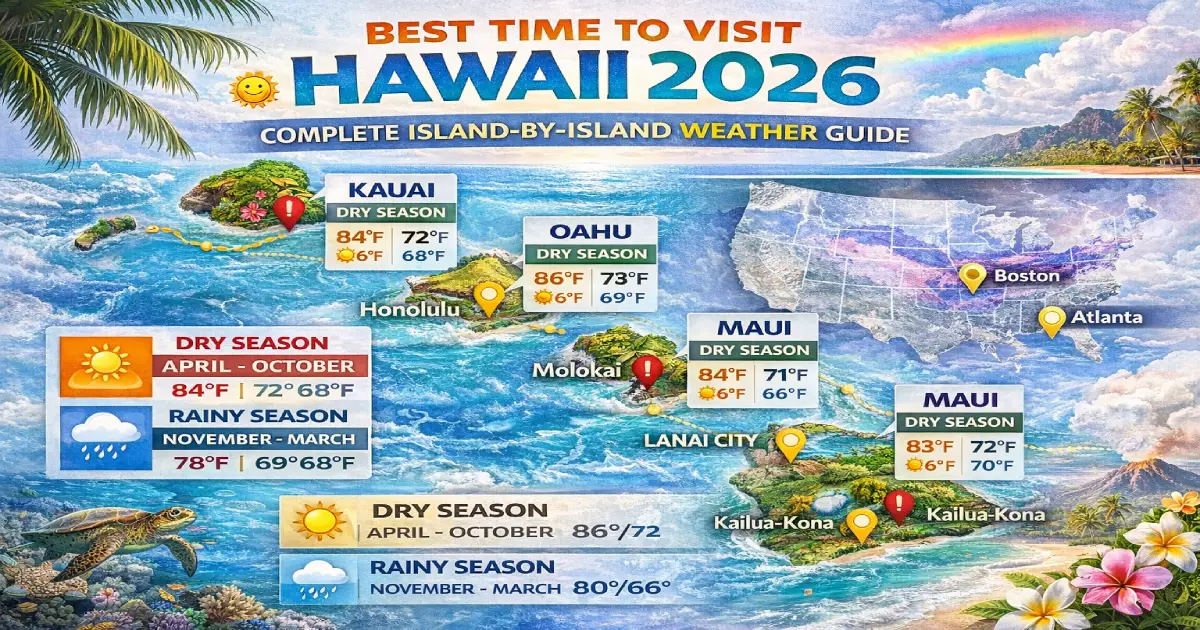
Hawaii doesn’t experience traditional four seasons. Instead, the islands have two distinct periods that create meaningful differences in weather, crowds, and costs:
Dry Season (April-October):
Less rainfall overall (but still varies dramatically by location)
Warmer temperatures: 80-88°F (27-31°C)
Higher humidity levels
Calmer ocean conditions on south/west shores
Summer vacation crowds (June-August peak)
Wet Season (November-March):
More frequent rain, especially windward (northeastern) coasts
Slightly cooler: 75-82°F (24-28°C)
Lower humidity
Bigger waves on north shores (prime surfing season)
Whale watching season (December-April)
Peak tourism season (December-February)
Microclimates: The Hawaii Secret
Each Hawaiian island features dramatic microclimates created by trade winds and volcanic mountains. Understanding this concept is essential for timing your visit:
Windward (Northeast) Coasts:
Receive prevailing trade winds
Significantly wetter year-round
Lush, green, tropical rainforest landscapes
Example: Hilo (Big Island) averages 130+ inches rain annually
Leeward (Southwest) Coasts:
Protected from trade winds by mountains
Drier, sunnier conditions
Resort-friendly weather
Example: Kona (Big Island) averages just 15 inches rain annually
This means: While Kauai’s North Shore receives torrential December rains, the island’s South Shore (Poipu) enjoys mostly sunny weather that same month. Smart travelers choose accommodations based on seasonal microclimate patterns, not just “best time to visit Hawaii” generalities.
Best Time to Visit Hawaii: Quick Reference by Priority
Priority
Best Months
Why These Months
Best Weather Overall
April-May, September-October
Shoulder seasons deliver excellent weather with fewer crowds and reasonable prices
Best Value (Lower Costs)
April-May, September-November
Hotels 25-40% cheaper than winter, weather still excellent
Whale Watching
January-March (peak: February)
Humpback whales migrate to Hawaiian waters December-April, most active mid-season
Calmest ocean conditions, clearest visibility, warmest water temps
Hiking (Na Pali, Volcanoes)
May-October (dry season)
Less muddy trails, lower rainfall risk, better visibility
Family Vacation (School Break)
June-August, December-January
School schedules dictate timing, expect peak crowds and prices
Oahu: Year-Round Destination with Seasonal Nuances
Best Time to Visit Oahu: April-May & September-October
Oahu, Hawaii’s most visited island, delivers consistent year-round conditions that make “bad” timing nearly impossible. However, shoulder seasons (April-May and September-October) offer the optimal combination of excellent weather, manageable crowds, and reasonable prices.
Why These Months Work for Oahu
April-May Advantages:
Temperatures: 75-83°F (24-28°C), comfortable and pleasant
Ocean conditions: Transitioning to summer calm, excellent for snorkeling
Summer: Flat, calm, perfect for families (May-September)
Wetter than South Shore year-round
Best for: Winter surfing spectating, summer beach relaxation
Windward Coast (Kailua, Kaneohe):
Receives most rain due to trade wind exposure
Lush, green landscapes
Beautiful but expect passing showers
Best for: Scenic drives, short beach visits
Maui: The Valley Isle’s Perfect Timing
Best Time to Visit Maui: April-May & September-Mid-December
Maui offers Hawaii’s most diverse experiences—from Haleakala’s 10,000-foot summit to Wailea’s luxury beaches to Hana’s rainforest waterfalls. Timing significantly impacts which experiences shine.
Ocean: Choppier on north-facing beaches, calm on south/west shores
Crowds: Highest all year, especially Christmas-New Year
Prices: Peak season (+50-100% above shoulder)
Best for: Whale watching (non-negotiable if this is your priority)
Road to Hana: Can be muddy, slippery, more challenging
Spring (March-May):
Weather: 74-83°F (23-28°C), increasingly dry
Whale watching: March excellent, diminishing April-May
Ocean: Transitioning to summer calm
Crowds: Spring break (March) then moderate
Prices: Good value April-May
Best for: All-around excellent balance of weather, activities, value
Summer (June-August):
Weather: 77-88°F (25-31°C), warmest and driest
Ocean: Calm, ideal for all water activities
Snorkeling: Peak conditions at Molokini, Honolua Bay
Crowds: High (families dominate)
Prices: Elevated (+30-50% above shoulder)
Best for: Families, beach-focused trips, water sports
Haleakala: Sunrise permits required (book 60 days ahead)
Fall (September-November):
Weather: 76-87°F (24-31°C), still summer-like
Ocean: Warmest water temperatures all year
Crowds: Lowest (best time for avoiding people)
Prices: Best value all year (30-40% below winter)
Best for: Budget travelers, couples, honeymoons, peaceful beach time
Note: November starts transitioning to winter patterns
Maui Regional Timing
West Maui (Kaanapali, Lahaina, Kapalua):
Driest region year-round
Reliable sunny weather even December-February
Prime whale watching from shore
Best any time, but April-May and September-November offer best value
South Maui (Wailea, Kihei, Makena):
Very dry, desert-like landscape
Consistent sunshine 300+ days/year
Excellent beaches year-round
Best for: Guaranteed beach weather any season
Upcountry (Kula, Makawao, Haleakala):
Cooler temperatures (10-15°F less than coast)
Haleakala summit can be 30-40°F at sunrise
Best visibility: April-October
Sunrise viewing: Year-round spectacular, but book permits early
Hana/East Maui:
Wettest region (150+ inches rain annually)
Lush rainforest, stunning waterfalls
Road to Hana best April-October (drier, safer driving)
Expect rain any time of year
Big Island (Hawaii): Two Islands in One
Best Time to Visit Big Island: Year-Round with Regional Strategy
The Big Island’s massive size (4,028 square miles—larger than all other Hawaiian islands combined) and diverse microclimates mean timing matters less than choosing the right coast for your dates. However, April-May and September-October still offer optimal overall conditions.
Understanding Big Island’s Dramatic Climate Split
Kona Coast (West/Leeward Side):
Averages just 15 inches rain annually
Sunny, dry, resort-friendly weather 90% of year
Perfect for beach vacations any season
Temperatures: 75-85°F (24-29°C) year-round
Best time: Truly year-round, but April-May and September-October offer lower prices
Hilo (East/Windward Side):
Averages 130+ inches rain annually (rainiest US city)
Lush, tropical, frequent showers
Beautiful waterfalls and rainforest landscapes
Temperatures: 70-80°F (21-27°C) year-round
Best time: July-September (relatively drier, but still expect rain)
Big Island Seasonal Breakdown
Winter (December-February):
Kona Coast: Excellent weather, minimal rain, whale watching offshore
Hilo: Very rainy, challenging for outdoor activities
Volcano: Cool temperatures (50-60°F at summit), often clear
Crowds: Peak season, especially Kona resorts
Prices: Highest (+50-80% above shoulder)
Manta ray diving: Year-round but winter offers best visibility
Spring (March-May):
Kona Coast: Perfect weather, calm seas
Hilo: Still rainy but improving
Volcano: Excellent visibility, pleasant temperatures
Crowds: Moderate, manageable
Prices: Good value (20-30% below winter)
Best for: All-around island exploration
Summer (June-August):
Kona Coast: Hot, dry, perfect beach weather
Hilo: Relatively drier (still expect some rain)
Volcano: Warm, clear, ideal for hiking
Crowds: High (families)
Prices: Elevated (+30-50%)
Snorkeling: Peak conditions at Kealakekua Bay, Two-Step
Fall (September-November):
Kona Coast: Warmest water temps, excellent weather
Hilo: Driest it gets (relatively speaking)
Volcano: Great hiking conditions
Crowds: Lowest all year
Prices: Best value (30-40% below winter)
Ironman World Championship: October in Kona (book early if attending)
Big Island Activity Timing
Volcano National Park:
Year-round accessible
Best visibility: April-October
Cooler at elevation year-round (bring layers)
Active lava viewing varies (check NPS updates)
Snorkeling/Diving:
Best conditions: May-September (calmest seas)
Manta ray night dives: Year-round on Kona Coast
Visibility: Best summer months
Mauna Kea Summit (13,796 ft):
Year-round access weather permitting
Best stargazing: Dry season (April-October)
Freezing temperatures possible any time
4WD required above visitor center
Kauai: The Garden Isle’s Wet Reality
Best Time to Visit Kauai: April-June & September-October
Kauai, Hawaii’s wettest and greenest island, requires strategic timing more than any other island. The famous Na Pali Coast, Waimea Canyon (“Grand Canyon of the Pacific”), and countless waterfalls owe their beauty to abundant rainfall—but that same rain can limit activities.
Why These Months Work for Kauai
April-June (Optimal Window):
Driest months relative to Kauai standards
Temperatures: 73-82°F (23-28°C)
Na Pali Coast boat tours: Operating reliably
Hiking: Kalalau Trail accessible, less muddy
Waterfalls: Still flowing from winter rains but trails manageable
Prices: 20-30% below winter peak
Ocean: Calm on south shore, good snorkeling
September-October (Secondary Window):
Still relatively dry
Temperatures: 76-85°F (24-29°C), warmest water
Crowds: Minimal
Prices: Lowest all year (30-40% below winter)
Na Pali: Generally accessible
Note: Hurricane season (June-November) brings occasional weather disruptions
Kauai Seasonal Breakdown
Winter (December-February): Wettest Period
Weather: 70-79°F (21-26°C), frequent rain
Rainfall: Heavy, especially North Shore (Mount Waialeale = wettest spot on Earth)
Na Pali Coast: Often inaccessible due to rough seas
Hiking: Muddy, slippery, challenging conditions
Crowds: Peak season despite weather challenges
Prices: Highest (+50-100%)
Best for: Waterfall viewing (at peak flow), whale watching
Recommendation: Unless you love rain, avoid Kauai in winter
Spring (March-May):
Weather: 72-82°F (22-28°C), drying out
Rainfall: Decreasing significantly by May
Na Pali: Becoming accessible April onwards
Hiking: Improving conditions, still some mud
Crowds: Moderate
Prices: Good value
Best for: All-around Kauai experience
Summer (June-August):
Weather: 75-85°F (24-29°C), drier but still some rain
Na Pali: Boat tours operating reliably
Hiking: Best trail conditions all year
Snorkeling: Calm south shore beaches
Crowds: High (families)
Prices: Elevated (+30-50%)
Best for: Outdoor adventures, families
Fall (September-November):
Weather: 74-85°F (23-29°C), still relatively dry
Hurricane season: Peak September-October (rare but possible)
Na Pali: Generally accessible
Crowds: Lowest
Prices: Best value
Best for: Budget travelers, avoiding crowds
Note: November starts transitioning to wet season
Kauai Regional Timing
North Shore (Princeville, Hanalei, Na Pali Coast):
Wettest region in winter (December-March)
Best time: May-October
Na Pali boat tours: Typically May-September from north side
Kalalau Trail: Summer offers best (but still challenging) conditions
South Shore (Poipu, Koloa):
Driest region year-round
Reliable sunshine even in winter
Best beaches when North Shore is rough
Best time: Year-round, truly consistent
East Shore (Kapaa, Wailua):
Moderate rainfall year-round
Convenient central location
Best time: April-October
Waimea Canyon/Kokee:
Higher elevation = cooler and wetter
Best visibility: April-September
Morning visits offer clearest views
Lanai & Molokai: Off-the-Beaten-Path Timing
Lanai (The Pineapple Island)
Best Time: April-October
Small, dry island with limited tourism infrastructure
Two Four Seasons resorts dominate accommodation
Weather similar to Maui’s leeward coast
Temperatures: 70-85°F (21-29°C) year-round
Best for: Luxury resort escapes, seclusion
Note: Very expensive, limited budget options
Molokai (The Friendly Isle)
Best Time: April-October
Least developed major Hawaiian island
Authentic Hawaiian culture, minimal tourism
Weather varies dramatically across island
East (wet): Similar to windward coasts elsewhere
West (dry): Moderate rainfall
Best for: Cultural immersion, avoiding tourist crowds
Note: Very limited accommodations, advance planning essential
Hawaii Weather by Month: Complete Guide
Month
Temp Range
Rainfall
Crowds
Prices
Best For
Rating
January
72-80°F (22-27°C)
Moderate-High
Very High
$$$$
Whale watching, winter escape
★★★★☆
February
72-80°F (22-27°C)
Moderate-High
Very High
$$$$
Peak whale watching
★★★★☆
March
73-81°F (23-27°C)
Moderate
High
$$$
Late whale watching, spring break
★★★★☆
April
74-83°F (23-28°C)
Low-Moderate
Moderate
$$
Excellent all-around, great value
★★★★★
May
75-84°F (24-29°C)
Low
Moderate
$$
Perfect weather, good value
★★★★★
June
77-86°F (25-30°C)
Low
High
$$$
Beach season begins, families
★★★★☆
July
78-88°F (26-31°C)
Low
Very High
$$$
Peak summer, hottest temps
★★★☆☆
August
78-88°F (26-31°C)
Low
Very High
$$$
Warmest water, crowded
★★★☆☆
September
77-87°F (25-31°C)
Low
Low
$
Best value, warm water, no crowds
★★★★★
October
76-86°F (24-30°C)
Low-Moderate
Low
$
Excellent value, still warm
★★★★★
November
74-83°F (23-28°C)
Moderate
Low-Moderate
$$
Good value (except Thanksgiving)
★★★★☆
December
72-81°F (22-27°C)
Moderate-High
Very High
$$$$
Holidays, whale season begins
★★★☆☆
Cost Considerations: How Timing Affects Your Budget
Peak Season Pricing (December-February)
Hotel Rate Increases:
Maui resorts: +50-100% above shoulder season
Oahu hotels: +40-80%
Big Island (Kona): +50-90%
Kauai: +50-100%
Example Cost Impact (Maui 7 nights):
Shoulder season (September): $1,400 (mid-range hotel, $200/night)
Peak season (January): $2,450-2,800 (same hotel, $350-400/night)
Difference: $1,050-1,400 extra for identical accommodation
Other Peak Season Costs:
Flights: +30-60% from mainland US
Rental cars: +25-40%
Activities: Similar pricing, but more advance booking required
Restaurants: Same prices, but harder to get reservations
Shoulder Season Value (April-May, September-November)
Cost Savings:
Hotels: 25-40% below peak
Flights: 20-35% cheaper
Rental cars: 15-25% less
Overall trip: Save $800-1,500 per person weekly versus peak
Weather Trade-offs:
April-May: Slightly more rain than summer, but minimal impact
November: Transitioning to wet season, but South/West shores still reliable
Summer Pricing (June-August)
Family Season Premiums:
Hotels: +30-50% above shoulder
Flights: +25-40%
Rental cars: +20-35%
More expensive than shoulder, cheaper than winter peak
Value Assessment:
Weather excellent (driest, warmest water)
Crowds significant (families dominate)
If traveling with school-age children, worth the premium
Couples/solo travelers better off April-May or September-October
Frequently Asked Questions
What is the best month to visit Hawaii overall?
April and May offer the best overall combination of excellent weather, manageable crowds, and reasonable prices across all islands. September and October deliver similarly excellent conditions with even lower costs—these shoulder season months provide 25-40% savings versus December-February while maintaining near-perfect weather. For whale watching specifically, February offers peak humpback activity. For absolute lowest prices, November (pre-Thanksgiving) delivers best value.
What is the cheapest time to visit Hawaii?
September through mid-November (excluding Thanksgiving week) offers the lowest prices—hotels run 30-40% below winter peak, flights cost 20-35% less, and rental cars drop 15-25%. Weather remains excellent throughout this period, especially September-October when ocean temperatures peak. January-February represents most expensive period with hotels sometimes doubling shoulder season rates. April-May provides excellent value-to-weather ratio as secondary budget-friendly window.
Should I avoid Hawaii during rainy season?
Not necessarily—Hawaii’s “rainy season” (November-March) varies dramatically by island and location. Leeward (western/southwestern) coasts remain relatively dry even in winter: Kona (Big Island), West Maui, and South Oahu receive minimal rain year-round. However, windward coasts and Kauai become genuinely wet and challenging. Strategy: Choose leeward accommodations during winter months, or visit April-October for reliably drier conditions across all regions.
When is whale watching season in Hawaii?
Humpback whales migrate to Hawaiian waters December through April, with peak activity January-March. February represents absolute peak when whale density and surface activity reach maximum levels. Maui offers best viewing—channels between Maui, Lanai, and Molokai concentrate whales. Shore viewing works from many beaches, but boat tours provide closest encounters. Late April still offers occasional sightings, but reliability drops significantly. Whale watching alone justifies winter timing despite higher costs and crowds.
Which Hawaiian island has the best weather?
No single island has “best” weather, but Big Island’s Kona Coast and Maui’s South/West shores offer most consistent sunshine year-round. Kona averages just 15 inches annual rainfall with 300+ sunny days. Conversely, Kauai’s North Shore and Big Island’s Hilo represent wettest regions. Oahu’s Waikiki maintains reliable sunshine due to mountain rain shadow. Best strategy: Choose leeward (western) coasts on any island for most dependable weather.
How far in advance should I book Hawaii hotels?
Peak season (December-February, especially Christmas/New Year’s): Book 9-12 months ahead for best selection and rates. Summer (June-August): Book 4-6 months ahead. Shoulder season (April-May, September-October): Book 2-4 months ahead. Last-minute deals occasionally appear during shoulder seasons but gambling on availability rarely pays off. Maui books fastest, followed by Kauai. Oahu and Big Island offer most last-minute flexibility due to larger inventory.
Is November a good time to visit Hawaii?
Yes, especially early-mid November before Thanksgiving. Weather remains warm (74-83°F), crowds stay minimal, and prices hit annual lows (30-40% below winter). Ocean stays warm from summer heat. November represents transition to wet season—expect slightly more rain than September-October but significantly less than December-February. Leeward coasts maintain reliable sunshine. Thanksgiving week (November 26-30, 2026) brings crowds and price spikes; avoid this specific week if seeking value.
Can you swim in Hawaii in winter?
Absolutely—ocean temperatures remain 75-79°F (24-26°C) in winter, comfortable for swimming year-round. However, winter brings larger waves and stronger currents, especially on north-facing beaches. North Shore Oahu, North Shore Kauai, and North Shore Maui experience dangerous surf November-March (lifeguard warnings common). South and west-facing beaches stay calm and swimmable all winter. Waikiki, South Maui (Wailea/Kihei), and Kona Coast offer reliable winter swimming conditions.
What should I avoid when visiting Hawaii?
Avoid peak season (December-February) unless whale watching is priority—prices increase 50-100% for marginal weather improvements. Avoid Kauai November-March unless staying South Shore (Poipu)—North Shore becomes inaccessibly wet. Avoid spring break weeks (typically mid-March). Avoid booking last-minute peak season travel. Avoid expecting mainland-style “resort weather” everywhere—microclimates create wet/dry extremes even on single islands. Avoid staying windward (eastern) coasts during winter if reliable sunshine is priority.
Which island is best for first-time Hawaii visitors?
Maui offers the best first-timer experience: diverse activities (beaches, Haleakala, Road to Hana, whale watching), reliable leeward coast weather, excellent resorts, and less overwhelming than Oahu. Oahu provides most activities and infrastructure but feels less “Hawaiian” due to Honolulu urbanization. Big Island appeals to adventure seekers but requires significant driving. Kauai suits nature lovers but weather can disappoint. For classic Hawaiian experience with weather reliability, Maui wins. Visit April-May or September-October for optimal value and conditions.
Final Thoughts: Timing Your Perfect Hawaii Trip
After analyzing Hawaii weather patterns across dozens of visits and tracking seasonal variations for eight years, three fundamental principles emerge for optimal timing:
1. Shoulder seasons deliver the best overall value. April-May and September-October provide near-perfect weather conditions at 25-40% lower costs than winter peak. Ocean temperatures remain warm, rainfall stays minimal, and crowds thin significantly. Unless whale watching drives your timing (December-April) or school schedules dictate summer travel (June-August), shoulder seasons offer unbeatable weather-to-cost ratios.
2. Microclimates matter more than overall island timing. Leeward (western/southwestern) coasts maintain reliable sunshine year-round, even during “rainy season.” Conversely, windward coasts experience significantly more rain regardless of month. Smart travelers choose Kona over Hilo, West Maui over Hana, South Oahu over windward coast, and South Kauai over North Shore during winter months. This strategic accommodation placement matters more than traveling in “perfect” months.
3. Define your priority before choosing dates. Whale watching? Winter (January-March) remains non-negotiable despite crowds and costs. North Shore surfing? November-February essential. Budget travel? September-October delivers lowest prices. Beach perfection? May-September offers calmest ocean conditions. Avoiding crowds? April-May and September-November minimize tourist congestion. No single month optimizes everything—identify your primary goal, then optimize timing accordingly.
Hawaii’s year-round warmth (75-88°F) means truly “bad” timing rarely exists—even December’s elevated rain brings just passing showers between sunshine. However, strategic timing transforms good Hawaii vacations into exceptional experiences while saving substantial money.
For most travelers, April-May represents the sweet spot: whale stragglers still visible, ocean transitioning to summer calm, weather excellent, prices reasonable, and crowds manageable. September-October offers similar conditions with warmest water temperatures and absolute lowest prices—ideal for couples, honeymooners, and budget-conscious travelers.
Winter (December-February) justifies its premium pricing only if whale watching is essential or you’re escaping mainland winter weather. Even then, expect crowds, fully-booked restaurants, and 50-100% higher hotel rates. Summer (June-August) works for families constrained by school schedules but offers no weather advantage over shoulder seasons while costing significantly more.
Whatever timing you choose, Hawaii rewards strategic planning: leeward coast accommodations during wet season, advance reservations during peak periods, and realistic expectations about microclimates preventing any guarantee of perfect weather. The islands offer paradise year-round—you just need to match your dates, location, and priorities for your optimal Hawaiian experience.
For official Hawaii travel information and current conditions, consult Hawaii Tourism Authority, National Weather Service Honolulu, and Hawaii National Parks (National Park Service) for up-to-date information.
—
—
About Travel TouristerTravel Tourister’s Hawaii specialists provide honest, data-driven seasonal analysis based on extensive personal travel experience across all major Hawaiian islands. We understand that optimal timing combines weather patterns, crowd levels, and budget considerations for your perfect island escape.Need help timing your Hawaii trip? Contact our island specialists who can analyze your priorities, preferred activities, and budget to recommend optimal dates and islands. We help travelers avoid weather disappointments and maximize value for their Hawaiian adventure.
Posted By : Vinay
As a lead contributor for Travel Tourister, Vinay is dedicated to serving our Tier 1 audience (US, UK, Canada, Australia). His mission is to deliver precise, fact-checked news and actionable, data-driven articles that empower readers to make informed decisions, minimize travel risks, and maximize their adventure without compromising safety or budget.
Travel Tourister is a leading Travel portal where we introduce travellers to trusted travel agents to make their journey hasselfree, memorable And happy. Travel Tourister is a platform where travellers get Tour packages ,Hotel packages deals through trusted travel companies And hoteliers who are working with us across the world. We always try to find new and more travel agents and hoteliers from every nook and corners across the world so that you could compare the deals with different travel agents and hoteliers and book your tour or hotel with the one you have chosen according to your taste and budget.





 Call
Call Enquiry