10 Mistakes Tourists Make in Australia (And How I Learned to Avoid Them)
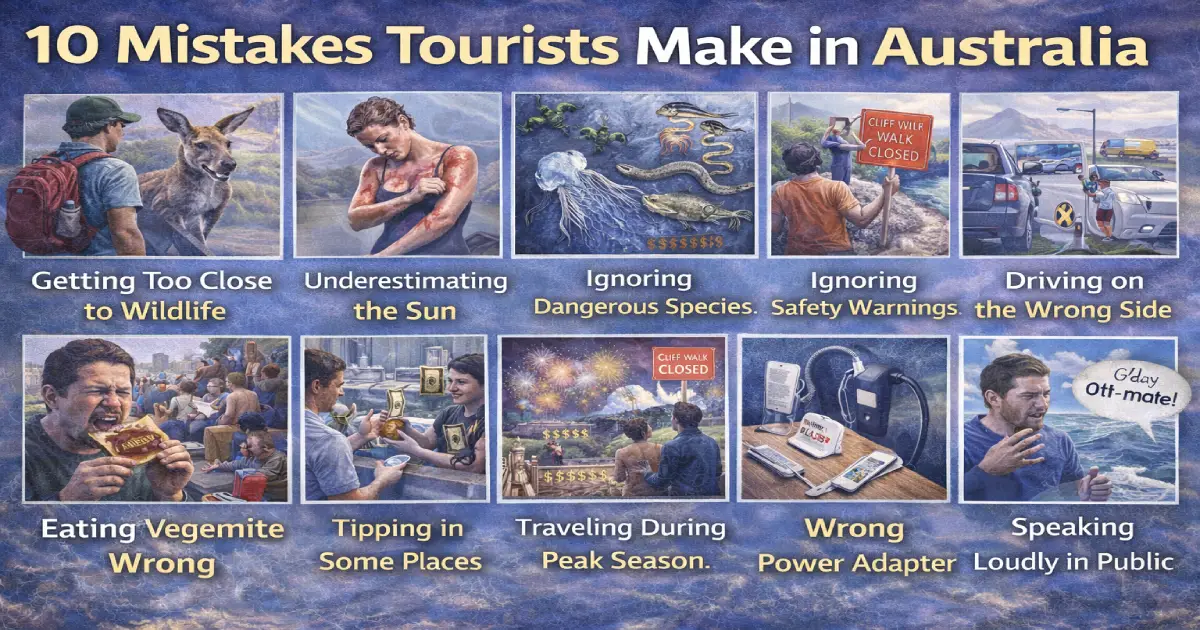
After years of helping international travelers plan their Australian adventures and countless conversations with visitors from around the globe, I’ve witnessed the same mistakes being made repeatedly. Some of these errors waste precious vacation time, others drain travel budgets unnecessarily, and a few can even put travelers in dangerous situations unique to Australia. Having observed and helped correct these mistakes across thousands of travelers, I’m sharing this essential wisdom to help you navigate Australia like a seasoned traveler from day one.
Australia is an extraordinary destination with unique challenges that catch even experienced travelers off guard. Let me walk you through the most common tourist mistakes in Australia and, more importantly, exactly how to avoid them.
1. Underestimating Australia’s Massive Size and Distances
This is the number one mistake first-time visitors make. Australia is enormous – roughly the same size as the continental United States or Europe. Many tourists arrive expecting to visit Sydney, Melbourne, the Great Barrier Reef, Uluru, and Perth in one week. This is physically impossible and financially impractical.
The Reality Check: Flying from Sydney to Perth takes 5 hours – longer than flying from London to Istanbul. Driving from Sydney to Cairns takes over 20 hours of non-stop driving. Even coastal drives take days, not hours. The distance between major cities is vast, with hours of emptiness in between.
The Solution: Focus on one or two regions maximum. The East Coast (Sydney, Melbourne, Brisbane, Gold Coast) offers cities, beaches, and easy access to the Great Barrier Reef. Tasmania provides wilderness and unique wildlife. The Northern Territory (Darwin, Uluru) showcases outback experiences and indigenous culture. Western Australia (Perth, Margaret River) delivers stunning coastlines and wine regions. Choose based on your interests and allow time to truly experience each area.
2. Not Taking Sun Protection and Heat Seriously
Australia has the highest rate of skin cancer in the world. The UV index regularly reaches “extreme” levels, even on cloudy days. Many tourists severely underestimate the intensity of the Australian sun and suffer serious sunburns, heat exhaustion, or worse.
Common Mistakes:
Assuming cloudy weather means no sun protection needed
Using low SPF sunscreen (SPF 15-30) instead of SPF 50+
Not reapplying sunscreen every 2 hours
Hiking or walking during peak UV hours (10am-3pm)
Not carrying enough water in remote areas
The Solution: Always wear SPF 50+ broad-spectrum sunscreen, reapply every 2 hours. Wear a wide-brimmed hat, sunglasses with UV protection, and protective clothing. Seek shade during peak UV hours. Carry at least 3 liters of water per person when hiking. Remember: “Slip, Slop, Slap, Seek, Slide” – slip on a shirt, slop on sunscreen, slap on a hat, seek shade, slide on sunglasses.
3. Underestimating Australia’s Dangerous Wildlife
While Australia’s reputation for deadly creatures is somewhat exaggerated, real dangers exist that tourists often ignore or don’t understand. Jellyfish, crocodiles, snakes, spiders, and sharks cause injuries and occasional fatalities every year.
Critical Wildlife Safety Points:
Box jellyfish: In tropical waters (Queensland, Northern Territory) from November to May – swim only in stinger nets or wear stinger suits
Saltwater crocodiles: In northern Australia – never swim in rivers, estuaries, or beaches with crocodile warning signs
Snakes: Australia has 20+ venomous snake species – wear closed-toe shoes when bushwalking, never put hands where you can’t see
Spiders: Funnel-web and redback spiders are dangerous – shake out shoes before wearing, check dark spaces
Sharks: Swim at patrolled beaches between the flags, avoid swimming at dawn/dusk
The Solution: Take warning signs seriously – they’re there for a reason. Research the specific dangers of your destination region. Always swim at patrolled beaches between the red and yellow flags. In tropical areas during stinger season, never swim without protection. If bitten or stung, seek immediate medical attention and try to identify the creature.
4. Not Understanding Australian Tipping Culture
Unlike the USA where tipping is mandatory, Australia has a different culture that confuses many international visitors. Restaurant staff receive proper wages, so tipping isn’t expected, but practices are changing in tourist areas.
The Australian Tipping Reality:
Restaurants: Tipping is optional, but 10% is appreciated for excellent service
Cafes: No tipping expected for counter service
Taxis/Uber: Rounding up is common but not required
Hotels: Tipping not expected for housekeeping or bellhops
Tour guides: Optional but appreciated if service was exceptional
Common Scam: Some tourist restaurants in Sydney and Melbourne now add “suggested” tip options (15-25%) on payment terminals, mimicking American practices. This is not standard Australian practice.
The Solution: Don’t feel pressured to tip large amounts. If service was genuinely exceptional, 10% is generous in Australia. For standard service, tipping is completely optional. Never tip for counter service at cafes.
5. Booking Last-Minute Domestic Flights Without Comparison
Australian domestic flights are expensive, especially during peak season (December-February). Flying between major cities can cost $300-800 AUD one-way if booked late. Many tourists book through the first airline they find without comparing options.
The Solution: Book domestic flights 6-12 weeks in advance for best prices. Compare all carriers:
Qantas: Full-service carrier, more expensive but includes baggage
Virgin Australia: Mid-range pricing with better service than budget airlines
Jetstar: Budget airline (Qantas subsidiary) – cheap base fares but charges for everything
Rex: Regional carrier with competitive prices on specific routes
Money-Saving Tips: Fly on Tuesday/Wednesday/Saturday for cheaper fares. Red-eye flights are often 30-50% cheaper. Consider positioning flights to smaller airports. Set up fare alerts on Google Flights. Budget airlines charge $30-60 AUD per checked bag, so pack light or factor this into total cost.
6. Not Budgeting for Australia’s High Cost of Living
Australia is one of the world’s most expensive countries. Tourists often budget based on Southeast Asia or European prices and run out of money quickly. Restaurant meals, alcohol, transportation, and accommodation all cost significantly more than most visitors expect.
Reality Check on Australian Prices:
Restaurant meal: $25-40 AUD per person at casual restaurants
Beer at a pub: $10-15 AUD
Coffee: $5-7 AUD
Taxi/Uber airport transfer: $60-100 AUD in major cities
Budget hostel: $35-50 AUD per night
Mid-range hotel: $150-250 AUD per night
Supermarket meal prep: $10-15 AUD per meal
The Solution: Budget $100-150 AUD per day minimum for budget travel, $200-300 AUD for mid-range, $400+ AUD for comfortable travel. Shop at Coles or Woolworths supermarkets for groceries. Look for lunch specials at restaurants (usually cheaper than dinner). BYO (Bring Your Own) wine restaurants save money on alcohol. Consider apartment rentals with kitchens for longer stays. Use public transportation instead of taxis.
7. Renting a Car Without Understanding Australian Driving Conditions
Many tourists rent cars without understanding unique Australian driving challenges. Long distances, wildlife hazards, remote areas without services, and different road rules catch unprepared drivers off guard.
Common Car Rental Mistakes:
Not getting adequate insurance for remote area driving
Underestimating fuel costs and distances between petrol stations
Not understanding that kangaroos cause serious accidents at dawn/dusk
Driving at night in rural areas (extremely dangerous)
Not carrying emergency water and supplies
Attempting unsealed (dirt) roads without 4WD experience
The Solution: Get comprehensive insurance that covers remote area driving and wildlife collisions. Never drive at dawn, dusk, or night in rural areas – this is when kangaroos are most active and cause fatal accidents. Always fill up fuel when possible – distances between stations can exceed 200km in remote areas. Carry emergency water (minimum 5 liters per person), food, and a first aid kit. Download offline maps. If attempting outback driving, inform someone of your route and expected arrival time.
Remember: Australians drive on the LEFT side of the road. Speed limits are strictly enforced with cameras. Seatbelts are mandatory for all passengers.
8. Swimming at Unpatrolled Beaches or Ignoring Rip Current Warnings
Australia has stunning beaches, but also has some of the world’s most dangerous swimming conditions. Rip currents (strong currents pulling swimmers away from shore) cause numerous drownings every year, predominantly among international tourists who ignore or don’t understand warnings.
Beach Safety Rules:
Always swim between the red and yellow flags – these mark the safest areas patrolled by lifeguards
Never swim at unpatrolled beaches, especially if you’re not a strong swimmer
If caught in a rip current, don’t swim against it – swim parallel to the beach until out of the current
In tropical areas (November-May), check for stinger season and only swim in protected areas
Don’t dive into water – hidden rocks and shallow depths cause spinal injuries
The Solution: Only swim at beaches with lifeguard patrol. Swim between the red and yellow flags. If you see someone in trouble, never attempt rescue yourself – call for lifeguards. Read and understand beach warning signs. Check surf conditions and jellyfish risk before entering water. Consider taking a surf safety lesson if planning extended beach time.
9. Overpaying for Tourist Trap Activities and Transportation
Tourist areas in Sydney, Melbourne, Cairns, and the Gold Coast feature overpriced activities, tours, and transportation marketed aggressively to visitors. Many tourists book through hotel concierges or street vendors at inflated prices.
Common Tourist Traps:
Sydney Harbour cruise dinner packages charging $150-300 AUD per person
Great Barrier Reef day trips booked through hotels at 50% markup
Airport taxis when public transport exists for a fraction of the cost
Tourist-focused restaurants near landmarks (Circular Quay, Federation Square)
Overpriced Uluru/Ayers Rock tour packages
The Solution: Book tours directly through operator websites, not hotel concierges. Compare prices on GetYourGuide, Viator, and directly with operators. Use public transportation:
Sydney Airport: Train to city ($20 AUD) vs taxi ($60-80 AUD)
Melbourne Airport: SkyBus ($20 AUD) vs taxi ($60-80 AUD)
Brisbane Airport: Train to city ($20 AUD) vs taxi ($50-70 AUD)
Walk 2-3 blocks away from major tourist landmarks to find restaurants with better food at half the price. Use comparison sites for activities but verify reviews on TripAdvisor and Google before booking.
10. Not Understanding Australian Cultural Norms and Slang
Australian culture has unique characteristics that can confuse international visitors. Understanding local customs, communication styles, and social norms helps avoid awkward situations and connects you better with locals.
Key Cultural Points:
Casual culture: Australians are very informal – first names are used immediately, even with bosses
Self-deprecating humor: Aussies joke and give each other a hard time affectionately (“taking the piss”)
Tall poppy syndrome: Bragging or acting superior is poorly received
Queue culture: Always line up orderly – cutting in line is extremely rude
Pub culture: “Shout” system means buying rounds for your group
Indigenous respect: Always show respect for Aboriginal culture and sacred sites
Common Slang to Know:
“Arvo” = afternoon
“Brekkie” = breakfast
“Servo” = service/gas station
“No worries” = you’re welcome / it’s okay
“Reckon” = think/believe
“Fair dinkum” = genuine/true
The Solution: Embrace Australian informality and humor. Don’t take offense if locals joke with you – it often means they like you. Be humble and friendly. Always respect indigenous culture and ask permission before photographing Aboriginal people or sacred sites. When visiting Uluru, respect the traditional owners’ wishes (climbing is no longer permitted).
Mistake Prevention Quick Reference Guide
Mistake Category
Red Flags
Prevention Strategy
Sun Safety
Underestimating UV, low SPF sunscreen, no hat
SPF 50+, reapply every 2 hours, hat and sunglasses mandatory
Wildlife
Ignoring warning signs, swimming in crocodile areas
Take all warnings seriously, swim only at patrolled beaches
Beach Safety
Swimming at unpatrolled beaches, ignoring flags
Only swim between red and yellow flags with lifeguards present
Driving
Night driving, no wildlife insurance, inadequate planning
Never drive dawn/dusk/night rurally, full insurance, carry water
Budgeting
Expecting cheap prices, running out of money
Budget $150+ AUD daily, shop at supermarkets, BYO restaurants
Book flights 6-12 weeks ahead, use public transport from airports
Distances
Trying to see too much, unrealistic itineraries
Focus on 1-2 regions, understand massive travel times
Additional Red Flags to Watch For
Stinger Season Dangers: From November to May in tropical Queensland and Northern Territory, box jellyfish and irukandji jellyfish are present. Their stings can be fatal. Never swim outside stinger nets during this period. Vinegar stations are located at many beaches for emergency first aid.
Bushfire Season: During summer (December-February), bushfires are common and extremely dangerous. Check fire danger ratings daily. If a “catastrophic” fire danger is declared, do not travel to affected areas. Have an evacuation plan and follow all warnings from authorities.
Drop Bear Myth: Don’t fall for the “drop bear” joke – it’s a traditional way Australians tease international visitors. Drop bears don’t exist. However, real koalas can scratch if provoked, and they do carry diseases, so never touch wild koalas.
ATM Skimming: Use ATMs inside banks rather than standalone machines in tourist areas. Check for card skimming devices. Australia is generally safe, but tourist areas attract opportunistic crime.
My Personal Observations
After years of helping international travelers navigate Australia, I’ve seen how these mistakes compound. A tourist who underestimates distances, ignores sun protection, swims at dangerous beaches, and doesn’t budget adequately can transform an Australian dream into a nightmare experience.
The key difference between tourists who love Australia and those who leave disappointed often comes down to realistic expectations, safety awareness, and proper planning. Australia rewards travelers who respect its unique dangers, understand its distances, and budget appropriately.
Final Advice: Respect Australia’s Unique Challenges
Australia offers extraordinary experiences – from the Great Barrier Reef to Uluru, from Sydney’s iconic harbor to Tasmania’s wilderness. But unlike many destinations, Australia has unique dangers and challenges that require serious preparation and respect.
Most Australians are incredibly friendly and helpful. Don’t hesitate to ask locals for advice – they genuinely want visitors to enjoy their country safely. Respect warning signs, take sun protection seriously, and plan realistic itineraries based on actual distances.
Remember, the goal isn’t to be paranoid about dangers – it’s to be informed and prepared. Thousands of tourists visit Australia safely every year by following basic precautions. The difference between a good Australia trip and an amazing one comes down to understanding these common pitfalls before you encounter them.
For comprehensive travel planning across multiple destinations, check out our guide on common mistakes tourists make in Vietnam for similar insider tips. Looking for professionally organized tours? Explore our curated Australia tour packages that handle transportation, accommodations, and guided experiences. For more international travel destinations and expert planning resources, visit our comprehensive travel guides.
Australia is a magnificent country with experiences found nowhere else on Earth. By avoiding these common mistakes, respecting its unique dangers, and planning smart, you’ll create memories that last a lifetime while staying safe, comfortable, and within budget. For official travel information and visa requirements, visit the official Australian Government website.
Posted By : Vinay
As a lead contributor for Travel Tourister, Vinay is dedicated to serving our Tier 1 audience (US, UK, Canada, Australia). His mission is to deliver precise, fact-checked news and actionable, data-driven articles that empower readers to make informed decisions, minimize travel risks, and maximize their adventure without compromising safety or budget.
Travel Tourister is a leading Travel portal where we introduce travellers to trusted travel agents to make their journey hasselfree, memorable And happy. Travel Tourister is a platform where travellers get Tour packages ,Hotel packages deals through trusted travel companies And hoteliers who are working with us across the world. We always try to find new and more travel agents and hoteliers from every nook and corners across the world so that you could compare the deals with different travel agents and hoteliers and book your tour or hotel with the one you have chosen according to your taste and budget.




 Call
Call Enquiry