Published on : 13 Jan 2026
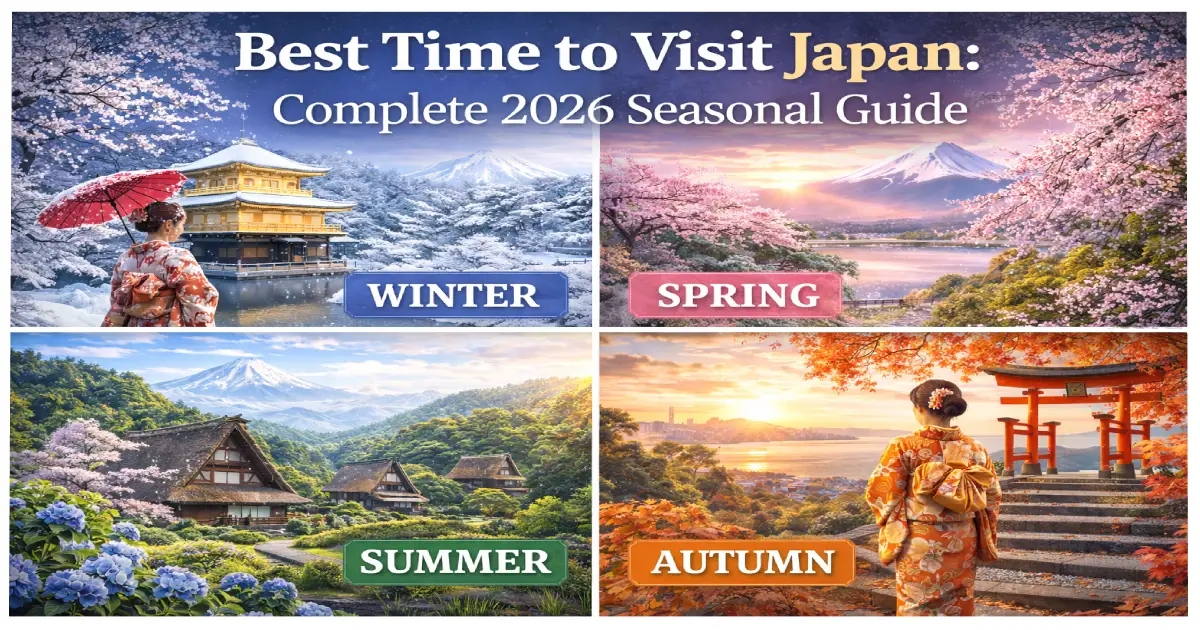
By Travel Tourister | Updated January 2026
“When should I visit Japan?” ranks as the most common question I receive from first-time travelers. The answer frustrates people: it depends entirely on what you want.
Cherry blossoms? You have a 2-3 week window in spring. Skiing? Winter only. Budget travel? January-February or June. Autumn foliage? Late October through November. Each season delivers completely different experiences, weather patterns, crowd levels, and pricing structures.
After guiding travelers through Japan for over a decade and personally experiencing every season multiple times, I can tell you this: there’s no universal “best time to visit Japan.” But there IS a best time for YOUR specific interests, tolerance for crowds, budget constraints, and weather preferences.
This complete guide breaks down every month, season, and major holiday period affecting your 2026 Japan trip. We’ll cover cherry blossom forecasts, typhoon seasons, Golden Week chaos, winter illuminations, and the shoulder season sweet spots most travelers miss. Whether you’re planning your first visit or your fifth, this analysis ensures you choose the optimal timing for your Japan adventure.
Temperature Range: 10-20°C (50-68°F) Rainfall: Moderate, increasing toward May Crowds: Maximum (especially late March – mid-April) Prices: Premium during cherry blossom peak
Spring dominates Japan tourism conversations for one reason: cherry blossoms. These delicate pink flowers transform the country for approximately two weeks, creating scenes that launched a million Instagram posts.
But here’s what guidebooks underplay—cherry blossom season means dealing with the year’s largest crowds, highest accommodation prices (often 150-200% premium), and booking challenges requiring 6-9 months advance planning.
What makes spring special:
Spring challenges:
Best for: Photographers, first-time visitors willing to brave crowds for iconic experiences, anyone with flexible spring vacation timing.
Learn more about planning your spring visit in our Japan Travel Guide 2026: Complete Planning Resource.
Temperature Range: 25-35°C (77-95°F) Rainfall: Heavy in June-July (rainy season), typhoons possible Crowds: High in July-August (school vacations), low in June Prices: Premium in July-August, discounted in June
Summer splits into three distinct periods with dramatically different characteristics:
Early June (Rainy Season Start): The tsuyu (rainy season) begins, bringing daily precipitation, overcast skies, and humidity. This is objectively Japan’s least popular tourist season—which makes it perfect for budget travelers and those avoiding crowds.
Mid-June through Mid-July (Peak Rainy Season): Expect rain most days, though rarely all-day downpours. More like intermittent showers punctuating cloudy periods. Umbrella and waterproof jacket become essential daily companions.
Late July through August (Festival Season): Rain diminishes, heat intensifies (30-35°C with oppressive humidity), and massive festivals draw crowds. School vacations mean families flood popular destinations.
What makes summer special:
Summer challenges:
Best for: Festival enthusiasts, mountain hikers, families with school-age children, budget travelers willing to brave June rains.
Discover Japan’s mountain treasures in Mount Fuji Climbing Guide: Everything You Need to Know.
Temperature Range: 10-23°C (50-73°F) Rainfall: Low, mostly dry and clear Crowds: Moderate to high (November peak for foliage) Prices: Moderate, premium during peak foliage weeks
Many Japan veterans, myself included, consider autumn the country’s finest season. The weather cooperates brilliantly—comfortable temperatures, low rainfall, clear skies, and stunning natural displays.
What makes autumn special:
Autumn’s progression:
Autumn challenges:
Best for: Hikers, photographers, those seeking ideal weather, travelers wanting beautiful scenery with fewer crowds than spring.
Explore Kyoto’s autumn beauty strategically with our Best Tokyo Itineraries: Beyond the Tourist Trail (principles apply to Kyoto too).
Temperature Range: -5 to 10°C (23-50°F) depending on region Rainfall: Low, mostly dry and sunny (except heavy snow in northern regions) Crowds: Lowest (except ski resorts and New Year period) Prices: Cheapest season outside ski destinations
Winter remains Japan’s most underrated season for general tourism. Yes, it’s cold. But it’s also remarkably pleasant—sunny days, clear skies, thin crowds, and the year’s lowest prices outside New Year week.
What makes winter special:
Regional winter variations:
Winter challenges:
Best for: Budget travelers, skiers/snowboarders, onsen enthusiasts, photographers seeking winter illuminations, anyone avoiding crowds.
Plan your winter escape to Okinawa with Okinawa Travel Guide 2026: Complete Planning Before Shuri Castle Reopens.
Temperature: 0-10°C (32-50°F) Crowds: Very low after New Year week Budget Impact: Cheapest month
Highlights:
Avoid if: You dislike cold weather or short days
Best time to visit Japan considerations: January offers the year’s most affordable travel with minimal crowds once the New Year holiday ends (after January 4). However, many shops and restaurants close January 1-3.
Temperature: 0-12°C (32-54°F) Crowds: Low except ski resorts Budget Impact: Second cheapest month
Highlights:
Avoid if: You need warm weather or beach activities
February represents winter’s peak—coldest temperatures but also sunniest days and clearest skies. Ideal for photographers seeking crisp, clear conditions.
Temperature: 5-15°C (41-59°F) Crowds: Building rapidly toward month-end Budget Impact: Rising prices as cherry blossom approaches
Highlights:
Avoid if: You want to skip cherry blossom crowds
Strategic timing: Visit before March 20 for lower prices and fewer crowds while still catching early cherry blossoms in southern regions. After March 20, prices spike as Tokyo/Kyoto cherry blossom approaches.
Temperature: 10-20°C (50-68°F) Crowds: Maximum (year’s busiest period) Budget Impact: Most expensive month
Highlights:
Avoid if: You dislike crowds or need budget travel
April is Japan’s tourism peak. Accommodations in Kyoto can book out 8-9 months in advance. Expect queues at popular temples and packed trains. However, the cherry blossom experience truly is spectacular if you can handle the crowds.
Check current bloom forecasts and plan strategically—our Japan Travel Guide 2026 covers seasonal planning in depth.
Temperature: 15-25°C (59-77°F) Crowds: High during Golden Week, low after Budget Impact: Expensive during Golden Week, moderate after
Highlights:
Avoid if: Traveling during Golden Week (see section below)
Best time to visit Japan secret: Mid-to-late May (after May 7) offers excellent conditions—warm weather, green landscapes, and dramatically fewer tourists than April. One of my favorite times for Japan travel.
Temperature: 18-27°C (64-81°F) Crowds: Lowest summer period Budget Impact: Cheapest summer month
Highlights:
Avoid if: Rain depresses you or you need guaranteed sunshine
June is the best time to visit Japan for budget-conscious travelers who don’t mind umbrellas. The rain rarely ruins entire days—more like intermittent showers. Plus, temples look atmospheric in mist and rain.
Temperature: 22-32°C (72-90°F) Crowds: High (school vacations begin) Budget Impact: Expensive
Highlights:
Avoid if: You dislike heat, humidity, or crowds
July transitions from rainy season to summer festival season. Once rains cease, temperatures soar and crowds arrive. However, the festival atmosphere is genuinely exciting if you embrace the heat.
Plan your Fuji climb with our dedicated Mount Fuji Climbing Guide.
Temperature: 25-35°C (77-95°F) Crowds: Maximum (school vacations, Obon holiday) Budget Impact: Most expensive summer month
Highlights:
Avoid if: You struggle with extreme heat or need budget travel
August represents summer’s peak—intensely hot, very crowded, and expensive. However, if traveling with school-age children or wanting the full festival experience, August delivers that in spades.
Typhoon consideration: August and September see highest typhoon activity. Monitor forecasts and build flexibility into itineraries.
Temperature: 20-30°C (68-86°F) Crowds: Moderate (drops after school returns) Budget Impact: Moderate
Highlights:
Avoid if: Typhoons concern you
September splits in personality—early September still feels like summer, while late September ushers in autumn. After Silver Week ends (September 23), crowds thin dramatically.
Temperature: 15-23°C (59-73°F) Crowds: Moderate, building toward November Budget Impact: Moderate
Highlights:
Avoid if: You specifically want peak autumn foliage (wait for November)
October delivers on autumn’s promise—comfortable weather, beautiful early foliage, and manageable crowds. Many consider it the best time to visit Japan for overall experience quality.
Temperature: 8-18°C (46-64°F) Crowds: High at famous foliage spots Budget Impact: Premium during peak foliage weeks
Highlights:
Avoid if: You want to escape crowds
November rivals April for tourist numbers, especially at famous Kyoto temples during peak color (mid-to-late November). However, autumn foliage lasts longer than cherry blossoms and spreads more evenly across the country.
Strategic autumn planning with our Best Tokyo Itineraries helps you find less crowded viewing spots.
Temperature: 3-12°C (37-54°F) Crowds: Low except New Year week approaches Budget Impact: Cheap until Christmas, expensive last week
Highlights:
Avoid if: Traveling December 29-31 (pre-New Year chaos)
December offers excellent value for most of the month. Avoid the final week when domestic travel surges and many businesses prepare to close for New Year.
Understanding Japanese holidays is critical for planning the best time to visit Japan. These periods bring domestic travel surges, accommodation scarcity, higher prices, and potential business closures.
Dates: December 29, 2025 – January 4, 2026 Impact: Severe
Japan’s most important holiday. Many businesses, restaurants, and shops close entirely January 1-3. Accommodations become expensive and scarce. Shrines overflow with visitors for hatsumode (first shrine visit).
Strategy: Either visit during New Year to experience the cultural celebration (book 6+ months ahead) or avoid entirely by visiting after January 5.
Dates: April 29 – May 6, 2026 (9 consecutive days in 2026) Impact: Severe
A series of consecutive national holidays creating Japan’s longest vacation period. Domestic tourism peaks, transportation sells out, and prices spike 150-200%.
Specific holidays:
Strategy: Avoid Golden Week unless you book everything 3-4 months ahead and accept premium pricing. Alternatively, visit immediately after (May 7+) when crowds evaporate overnight.
Dates: August 11-16, 2026 Impact: Severe
Buddhist festival honoring ancestors. Many Japanese return to hometowns, creating massive domestic travel. Transportation becomes congested, and urban centers (Tokyo, Osaka) actually become less crowded as residents leave.
Specific holiday:
Strategy: Obon can work for international travelers if you’re staying in major cities (which empty out) or if you’ve booked rural accommodations months ahead. Transportation requires advance reservations.
Dates: September 19-23, 2026 (5 days) Impact: Moderate
Created when Respect for the Aged Day (September 21) and Autumn Equinox (September 23) create an extended weekend.
Specific holidays:
Strategy: Less severe than Golden Week but still brings domestic travel increases. Book ahead or avoid these specific dates.
Japan’s “Happy Monday” system moves several holidays to Mondays, creating three-day weekends. These bring moderate domestic travel increases but remain manageable for international visitors.
Cherry blossom timing varies annually based on winter and early spring temperatures. Forecasts begin in January with regular updates through March.
Southern Japan (Kyushu, Shikoku):
Central Japan (Tokyo, Kyoto, Osaka):
Northern Japan (Tohoku, Hokkaido):
Kaika (開花): First bloom date when official sample trees show 5-6 flowers Mankai (満開): Full bloom when 80%+ of buds have opened Hanafubuki (花吹雪): “Flower blizzard” when petals fall
Peak viewing occurs during mankai, which typically lasts 3-7 days depending on weather. Strong winds or rain can shorten this window dramatically.
Early strategy (Pre-peak): Visit 5-7 days before predicted peak bloom. Trees show 30-50% flowers—still beautiful with significantly fewer crowds and lower prices.
Peak strategy: Book 6-9 months ahead for accommodations in Kyoto/Tokyo. Accept crowds as part of the experience. Visit famous spots at dawn (6-7 AM) before tour groups arrive.
Late strategy (After peak): Cherry blossoms remain beautiful for 7-10 days after peak, especially later varieties. Crowds thin as casual visitors leave. Fallen petals create “pink carpets” that are equally photogenic.
Alternative locations: Consider less-famous viewing spots or different regions entirely. Hokkaido’s cherry blossoms bloom in May with dramatically fewer tourists.
Autumn leaves (koyo) are more predictable than cherry blossoms and last longer—typically 3-4 weeks from first color to peak.
Hokkaido:
Tohoku (Northern Honshu):
Tokyo/Nikko Area:
Kyoto/Osaka:
Southern Japan:
Kyoto:
Nikko:
Japanese Alps:
Hokkaido:
Autumn foliage attracts fewer tourists than cherry blossoms but still creates crowds at famous Kyoto temples during peak weeks. The advantage? Autumn colors last 3-4 weeks versus cherry blossoms’ 1-2 weeks, providing more flexibility.
Japan stretches 3,000 kilometers north-to-south, creating dramatic climate variations:
Hokkaido (Northern Island):
Tokyo/Kansai (Central Honshu):
Okinawa (Southern Islands):
The rainy season affects all of Japan except Hokkaido, typically lasting:
Contrary to popular belief, tsuyu doesn’t mean constant rain. Expect:
Activities still enjoyable during rainy season:
Typhoons occur June through October, peaking in August-September. Japan experiences 4-6 typhoon direct hits annually, primarily affecting:
Typhoon impact:
Typhoon strategy:
Expect accommodation prices to increase 150-200% during these periods in popular cities.
These periods can offer 40-60% savings on accommodations compared to peak seasons.
Book strategically around peaks: Visit before or after peak seasons. Late April (post-cherry blossom), mid-May (post-Golden Week), early June (pre-summer vacation), and early September (post-summer vacation) offer good weather with significantly lower prices.
Consider regional timing differences: Hokkaido peaks later than Tokyo for both cherry blossoms (May) and autumn leaves (October). Okinawa offers winter beach weather when mainland freezes. Regional timing differences allow lower prices while still experiencing seasonal highlights.
Leverage shoulder seasons: The weeks immediately before and after peak seasons deliver 80% of the experience at 50-60% of the cost.
Planning your budget effectively? Check our Japan Railway Pass Calculator: Is JR Pass Worth It in 2026? to optimize transportation costs.
Optimal: Late March – early April Alternative: Early May in Hokkaido (fewer crowds) Budget option: Visit one week before peak bloom
Optimal: Late October – mid-November Alternative: Early October in Hokkaido/mountains Budget option: Early December for southern regions
Optimal: January – February (best snow conditions) Alternative: December or March (cheaper, decent conditions) Expert tip: Hokkaido offers Japan’s best powder snow
Optimal: Late April – May, September – October Alternative: June in Hokkaido (avoids rainy season) Mountain access: July-September for high alpine areas
Optimal: January-February, June Alternative: Early December, early September Avoid: Cherry blossom season, Golden Week, Obon, autumn foliage peak
Optimal: July-August (summer festival season) Key festivals: Gion Matsuri (July), countless fireworks festivals Alternative: Spring festivals during cherry blossom season
Optimal: January-February (except New Year week), June Alternative: Early September, early December Regional strategy: Visit famous sites during off-peak months
Optimal: Late July – August (school vacation alignment) Alternative: Golden Week if booked far ahead Avoid: January-February (too cold for young children)
Optimal: Late March – April (cherry blossoms), October-November (autumn) Alternative: May (post-Golden Week), early September Reason: These periods showcase Japan’s seasonal beauty while offering comprehensive accessibility
Discover hidden Osaka gems with our Best Tokyo Itineraries (neighborhood strategies apply to Osaka too).
Plan your Okinawa adventure with our Okinawa Travel Guide 2026.
What drives your Japan trip?
High tolerance (willing to deal with crowds for iconic experiences): Visit during cherry blossom or autumn foliage peaks. Accept that popular spots will be congested but the experiences are genuinely spectacular.
Low tolerance (prioritize peaceful exploration): Target January-February, June, or early September. You’ll miss peak seasonal events but gain authentic experiences without tourist masses.
Moderate tolerance (balance crowds and experiences): Visit shoulder seasons—early May, late May, early June, September, early December. These periods offer good weather and partial seasonal experiences with manageable crowds.
Flexible budget: Visit whenever suits your interests. Peak seasons deliver premium experiences worth the premium prices if you can afford them.
Tight budget: Strongly favor January-February or June. The savings on accommodations alone (40-60% discount) can fund additional experiences or extend your trip duration.
Moderate budget: Target shoulder seasons where you get reasonable prices without extreme compromises on weather or experiences.
Limited vacation flexibility: Work within your constraints. If you can only visit during summer, embrace it—festivals, mountain access, and regional variations (Hokkaido’s comfortable summer) offer excellent experiences despite heat.
High flexibility: Optimize timing for your primary interests using this guide’s seasonal breakdowns.
Adjust timing based on primary destinations:
After analyzing thousands of traveler experiences and personally experiencing every season multiple times, here are my definitive recommendations:
October 15 – November 15
This window delivers:
January 10 – February 20
This period offers:
March 25 – April 10 OR October 20 – November 10
These windows showcase Japan’s iconic seasonal beauty (cherry blossoms or autumn leaves) while providing comprehensive accessibility to attractions, comfortable weather, and the “classic Japan” experience most first-timers envision.
Late April – May (Avoiding Golden Week)
Specifically: May 7-31 delivers:
January 10 – February 28 OR June 1-25
These months see dramatically lower tourist numbers. January-February offers cold but sunny weather; June brings rain but lush scenery. Both provide authentic experiences without tourist masses.
| Season | Weather | Crowds | Prices | Highlights | Challenges |
|---|---|---|---|---|---|
| Spring (Mar-May) | Comfortable 10-20°C | Very High | Premium | Cherry blossoms, wisteria | Extreme crowds, booking difficulty |
| Summer (Jun-Aug) | Hot 25-35°C, humid | High (Jul-Aug) | High (Jul-Aug) | Festivals, mountain access | Heat, humidity, typhoons, rainy season |
| Autumn (Sep-Nov) | Comfortable 10-23°C | High (Nov) | Moderate-High | Autumn foliage, harvest | Crowds during peak foliage |
| Winter (Dec-Feb) | Cold 0-10°C | Low | Cheapest | Illuminations, skiing, onsen | Cold weather, short days |
Q: What is the absolute best time to visit Japan? A: October-November for most travelers—excellent weather, beautiful autumn foliage, manageable crowds, and moderate pricing. However, “best” depends entirely on your specific interests and constraints.
Q: Should I avoid Japan during rainy season? A: No! June offers the year’s lowest prices and thinnest crowds. Rain is intermittent, not constant. Many travelers find rainy season perfectly manageable with an umbrella and flexible attitude.
Q: When should I book accommodations for cherry blossom season? A: Book 6-9 months in advance (September-October of the previous year) for Kyoto and Tokyo during peak cherry blossom weeks. Popular properties sell out early.
Q: Can I see both cherry blossoms and autumn leaves in one trip? A: No, they’re 6 months apart. However, you can see cherry blossoms in Okinawa (January-February) or Hokkaido (May) separately from mainland timing.
Q: Is Japan worth visiting in winter? A: Absolutely! Winter offers the year’s cheapest prices, thinnest crowds, clear weather, and unique experiences (illuminations, snow festivals, skiing). It’s cold but underrated.
Q: How do I avoid Golden Week crowds? A: Either visit before April 28 or after May 7. The May 7-31 period specifically offers excellent conditions with dramatically fewer tourists than Golden Week.
Q: What’s the weather like during cherry blossom season? A: Variable—typically 10-20°C with mix of sunny and rainy days. Pack layers and rain gear. Weather can change rapidly.
Q: Is summer too hot to visit Japan? A: Tokyo, Kyoto, and Osaka summers are genuinely challenging (30-35°C with oppressive humidity). However, Hokkaido offers comfortable 20-25°C summer weather, and indoor attractions remain accessible nationwide.
Q: When do typhoons hit Japan? A: June-October, peaking in August-September. Okinawa and southwestern regions most affected. Typhoons are predictable 3-5 days ahead, allowing itinerary adjustments.
Q: Can I visit Japan year-round? A: Yes! Every season offers unique experiences. Winter brings skiing and illuminations; spring delivers cherry blossoms; summer offers festivals; autumn provides foliage. Choose based on your preferences.
Q: What’s the least crowded time to visit Kyoto? A: January-February and June. You’ll explore temples peacefully without the crowds that overwhelm during cherry blossom and autumn foliage peaks.
Q: When is Mount Fuji most visible? A: Winter (December-February) offers clearest views due to dry air and minimal cloud cover. Summer actually has lower visibility despite being climbing season.
The best time to visit Japan isn’t universal—it’s personal. Cherry blossom crowds that thrill some travelers frustrate others. Winter cold that deters many actually attracts budget-conscious explorers seeking authentic experiences.
I’ve guided travelers who visited in June (rainy season) and loved it—lower prices, thin crowds, lush landscapes, and genuine local interactions without tourist interference. I’ve also guided travelers who visited during peak cherry blossom season and found the crowds unbearable despite the beautiful flowers.
Your perfect timing balances these factors:
Use this guide to identify your optimal window. Then book confidently knowing you’ve chosen strategically rather than following generic advice.
Japan rewards visitors every month of the year. The question isn’t whether your chosen time will be “good”—it will be. The question is whether it aligns with YOUR specific priorities and constraints.
Choose wisely. Book early if visiting peak seasons. Pack appropriately for your selected timing. And embrace whatever seasonal character Japan presents during your visit.
The country’s extraordinary diversity ensures memorable experiences regardless of when you arrive. Make your decision, commit to it, and prepare for the Japan adventure awaiting you.
About Travel Tourister
Travel Tourister’s Japan seasonal experts provide unbiased analysis based on years of on-ground experience across all four seasons. We help travelers choose optimal timing for their specific interests, not generic “best time” advice. Our team understands how seasonal variations dramatically impact experiences, prices, and crowd levels.
Ready to plan your perfectly timed Japan trip? Contact our Japan specialists who can help you navigate seasonal trade-offs, optimize timing for your interests, and ensure your chosen dates align with your budget and travel style. We provide personalized seasonal analysis, not cookie-cutter recommendations.
Posted By : Vinay
Latest Article
2nd Floor, 39, Above Kirti Club, DLF Industrial Area, Kirti Nagar, New Delhi, Delhi 110015



Travel Tourister is a leading Travel portal where we introduce travellers to trusted travel agents to make their journey hasselfree, memorable And happy. Travel Tourister is a platform where travellers get Tour packages ,Hotel packages deals through trusted travel companies And hoteliers who are working with us across the world. We always try to find new and more travel agents and hoteliers from every nook and corners across the world so that you could compare the deals with different travel agents and hoteliers and book your tour or hotel with the one you have chosen according to your taste and budget.
Copyright © Travel Tourister, India. All Rights Reserved

 Call
Call Enquiry