Best Time to Visit Turks and Caicos 2026: Complete Seasonal Guide
Published on : 27 May 2026
Best Time to Visit Turks and Caicos — The Honest Month-by-Month Guide for 2026
By Travel Tourister | Updated May 2026
The Turks and Caicos Islands enjoy one of the most consistently pleasant climates in the Western Hemisphere — a subtropical Atlantic island chain sitting at 21°N latitude, far enough south for year-round warmth and far enough north to escape the most oppressive equatorial humidity that characterizes the southern Caribbean. But “pleasant year-round” does not mean “identical year-round” — the difference between a December visit (dry season, vivid turquoise water, calm seas, Grace Bay at its most pristine, humpback whale season beginning) and a September visit (peak hurricane season, highest rainfall probability, roughest Atlantic seas, lowest resort pricing) is the most consequential single Turks and Caicos planning decision available, and getting it right determines whether the world’s most consistently #1-rated beach delivers on its reputation or disappears behind a grey sky and a 6-foot Atlantic swell.
This guide breaks down every month of the TCI calendar honestly — weather, water conditions, crowds, pricing, wildlife, and the specific activities that are best or exclusively accessible at each time of year — so that every visitor arrives at Grace Bay in the conditions that match their specific priorities in 2026.
For complete TCI planning, see our 50 Things to Do in Turks and Caicos and Turks and Caicos vs Maldives guides.
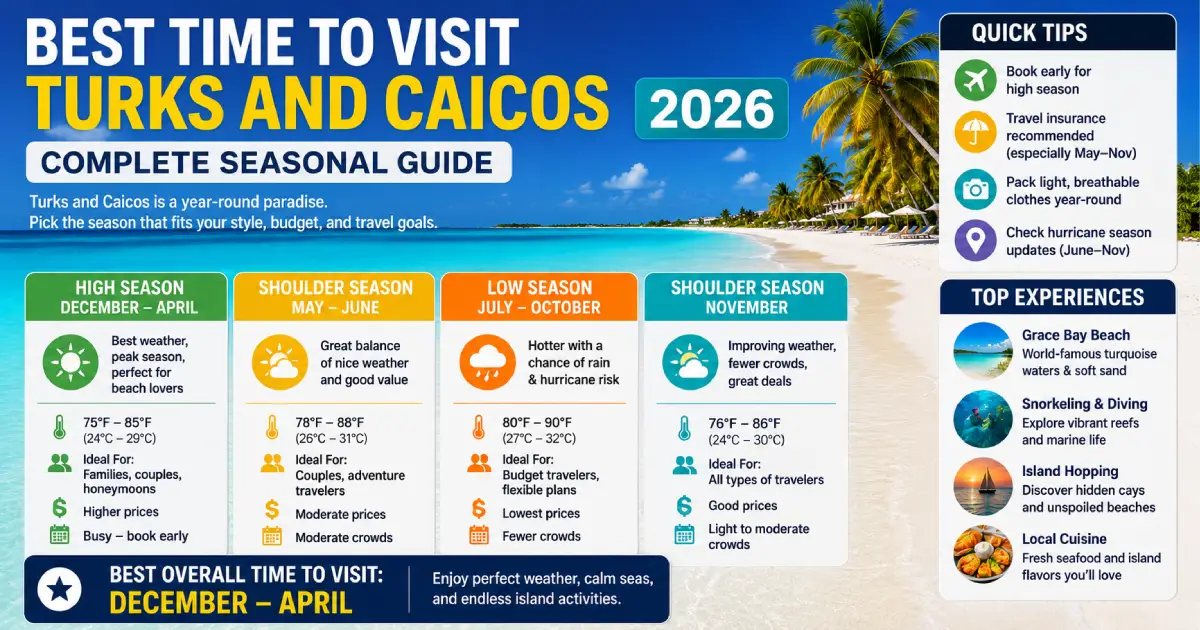
Turks and Caicos: At a Glance by Season
Season
Months
Weather
Crowds
Prices
Best For
Peak Dry Season
December–April
⭐⭐⭐⭐⭐ Perfect
🔴 High–Very High
💰💰💰💰 Highest
Best weather; whales Jan–Mar; most vivid water
Shoulder Spring
May–June
⭐⭐⭐⭐ Excellent
🟡 Low–Moderate
💰💰 20–35% off peak
Best value; warm water; turtle nesting begins
Hot Season
July–August
⭐⭐⭐ Good
🟡 Moderate
💰💰 Moderate
Family travel; warmest water; some storms possible
Hurricane Season Peak
Sept–October
⭐⭐ Variable
🟢 Very Low
💰 Lowest of year
Lowest prices; travel insurance essential
Shoulder Fall
November
⭐⭐⭐⭐ Very Good
🟡 Low
💰💰 20–30% off peak
Good value; improving weather; trade winds returning
Month-by-Month Guide: Best Time to Visit Turks and Caicos
December — ⭐⭐⭐⭐⭐ Best Month for Weather; Most Expensive
Weather: Average high 82°F (28°C); average low 72°F (22°C); rainfall minimal (the driest month of the year); seas calm; Grace Bay water temperature 76–78°F; trade winds 12–18 knots from the northeast (the most consistent kiteboarding and sailing conditions of the year). December is the most specifically perfect weather month accessible in the TCI — the northeast trade wind cools the afternoons to the most comfortable temperatures of the year, the sky is the most consistently blue, and the Grace Bay water is the most vivid turquoise of any month in the annual cycle because the combination of low humidity and angle of light in December produces the most saturated color visible in the shallows.
Crowds and Prices: December is the most expensive and the most crowded month in the Turks and Caicos calendar — Christmas and New Year’s produce the highest single-week room rates of any TCI annual period (Christmas week rates at Grace Bay Club and The Palms can reach 2–3x the April equivalent), and the resort corridor fills with the most specifically affluent and the most holiday-motivated visitors of any month. Book Christmas–New Year’s week 6–9 months ahead; rooms sell out completely at top resorts for December 23–January 2.
Wildlife: Humpback whale migration begins in December in the Silver Banks sanctuary 80 miles north of Grand Turk — the earliest live-aboard whale encounter departures of the season begin in mid-December for the first whale arrivals.
Best For: The most perfect weather and the most vivid water, at the highest cost. Ideal for the visitor for whom price is not the primary constraint and Christmas/New Year’s is the specific calendar window.
Average Hotel Rate: $450–$900/night midrange; $1,200–$3,500/night luxury; Christmas week 50–100% above these rates
January — ⭐⭐⭐⭐⭐ Best Month for Whale Season; Peak Crowds
Weather: Average high 80°F (27°C); average low 68°F (20°C); the coolest month of the TCI year (the most comfortable beach temperatures for extended sun exposure); rainfall minimal; seas the calmest of any month (the most consistent northeast trades producing the flattest Grace Bay swimming conditions); water temperature 74–76°F (cooler than summer but perfectly swimmable).
Humpback Whale Season (January 15 – March 31): The most specifically extraordinary and the most specifically irreplaceable TCI experience accessible in any calendar month — the Silver Banks Humpback Whale Sanctuary’s in-water encounter season begins January 15 (the only location on earth where in-water humpback whale encounters are legally permitted). January produces the most humpback whale arrivals of any month, making it the most reliably whale-populated window of the entire Silver Banks season. Live-aboard departures from Grand Turk sell out 6–12 months in advance for the January–February peak. Book January whale encounters before June of the prior year.
Crowds and Prices: January (post-Christmas week) is the most balanced peak-season month — still expensive (Presidents’ Week in late February is the most crowded single week), but with the most consistently clear Grace Bay beach days of any peak season month. The third week of January is typically the least crowded of the December–April peak season window.
Best For: The most complete TCI experience — perfect weather + humpback whale season + the most vivid Grace Bay water of the year.
Average Hotel Rate: $380–$780/night midrange; $900–$2,800/night luxury
February — ⭐⭐⭐⭐⭐ Peak Whale Season; Most Crowded Week (Presidents’ Week)
Weather: Average high 81°F (27°C); average low 69°F (21°C); consistently dry and clear; Grace Bay seas at their calmest of the year; the most flat-water kiteboarding conditions accessible in any TCI month.
Presidents’ Week (Third Week of February): The single most crowded and the most expensive week in the TCI annual calendar — US school holidays drive the highest family travel volume of any non-Christmas week, producing the most fully booked resort availability and the highest single-week room rates outside Christmas. Book 4–6 months ahead for Presidents’ Week; the most popular Grace Bay resorts sell out completely by August for this window.
Wildlife: Silver Banks whale season at peak abundance — February is the most specifically whale-populated and the most reliably encounter-productive month of the entire January–March Silver Banks season.
Best For: Perfect weather; the best whale season; peak crowds and pricing (except Presidents’ Week, which is the single most expensive TCI travel window).
Average Hotel Rate: $380–$750/night; Presidents’ Week $550–$1,200/night midrange
March — ⭐⭐⭐⭐⭐ Best Month Overall; Spring Break Crowds Mid-Month
Weather: Average high 83°F (28°C); average low 71°F (22°C); the warmest month of the dry season; seas calm; water temperature rising to 78–79°F (the most comfortable ocean swimming temperature of the dry season). March is the most consistently acclaimed and the most specifically “Grace Bay at its absolute finest” month by returning TCI visitors — the combination of warm air, warm water, the most vivid turquoise in the annual cycle, and the last weeks of the whale season makes March the single most complete Turks and Caicos month accessible in any year.
Spring Break Crowds: The third and fourth weeks of March bring the heaviest US college spring break volume to the TCI — Grace Bay crowds peak during these two weeks. The first two weeks of March and the week immediately after Easter are the most specifically crowd-free March weeks accessible in the peak season window.
Whale Season: Silver Banks humpback whale season runs through March 31 — the final whale encounter live-aboard departures of the season depart in the last week of March. Book early for the most productive final-season encounter windows.
Best For: The most complete and the most balanced TCI month — perfect weather, warm water, last whale season weeks, and the most consistent Grace Bay conditions of the year. The recommended single best month for the first-time TCI visitor.
Average Hotel Rate: $350–$720/night midrange; spring break weeks 20–30% above baseline
April — ⭐⭐⭐⭐⭐ Best Value Peak-Season Month
Weather: Average high 85°F (29°C); average low 73°F (23°C); dry season continues; water temperature 80°F; seas calm; the most consistent and the most comfortable post-spring-break Grace Bay conditions accessible in the April calendar. April is the most specifically value-complete peak-season month in the TCI — the weather is excellent (warmer than January–March, equally dry and clear), the whale season has concluded, the spring break crowds have departed, and the resort pricing is the most consistently below its December–March peak for comparable quality. April produces the most favorable value-per-dollar ratio of any dry-season month.
Easter Week: If Easter falls in April (2026 Easter: April 5), Easter week produces a moderate crowd and pricing increase at Grace Bay resorts — still significantly below Christmas and Presidents’ Week in absolute terms. The week immediately after Easter is the most crowd-free April week and the most value-complete single week in the entire dry season.
Best For: The most value-complete and the most crowd-efficient dry season month; the most specifically recommended “best time to visit TCI for first-timers on a budget” window; warm water without hurricane season risk.
Average Hotel Rate: $280–$580/night midrange (20–30% below December–March peak)
May — ⭐⭐⭐⭐ Best Value Month; Sea Turtle Season Begins
Weather: Average high 87°F (31°C); average low 75°F (24°C); transitional month — drier than summer but with increasing afternoon cloud buildup; water temperature 82°F (the warmest and the most specifically pool-like swimming conditions of any TCI month); seas generally calm with occasional afternoon chop from building summer trade winds.
Sea Turtle Nesting Season Begins: Loggerhead and green sea turtles begin nesting on TCI beaches in May — the most accessible turtle nesting viewing season begins with the first nesting females arriving on Providenciales beaches in late May. The most productive turtle nesting beach viewings occur on guided nighttime tours ($75/person through the Turks and Caicos Reef Fund).
Crowds and Prices: May is the most specifically quiet and the most affordably priced of any good-weather TCI month — the resort corridor is the least busy since early December, the most parking spaces are available at Bight Park, and the most Grace Bay beach chairs are available without advance reservation. Hotel rates drop 25–35% from the March peak.
Best For: The best value without compromising weather quality; turtle nesting season begins; the most specifically recommended month for the budget-conscious couple who wants the best TCI experience at the most honest price.
Average Hotel Rate: $220–$450/night midrange (25–35% below peak)
June — ⭐⭐⭐⭐ Excellent Value; Hurricane Season Begins (Low Risk)
Weather: Average high 89°F (32°C); average low 77°F (25°C); water temperature 83°F; the official Atlantic hurricane season begins June 1 — but June historically produces the fewest TCI hurricane threats of any hurricane season month. The actual June weather at the TCI is the most specifically warm, the most afternoon-shower-possible, and the most trade-wind-dependent of any summer month — mornings are typically clear and gorgeous; afternoon thunderstorms (brief, warm, passing within 30–45 minutes) are possible but not daily.
Hurricane Risk in June: Low. The historical average of named Atlantic storms affecting the TCI in June is the lowest of any hurricane season month — the atmospheric conditions that produce the most destructive Caribbean hurricanes (warm sea surface temperatures, low wind shear) are not fully established until August–October. June is the most specifically “hurricane season exists but the actual risk is manageable” month — purchase travel insurance (non-negotiable for any June–November TCI booking), monitor the National Hurricane Center (nhc.noaa.gov), and maintain a flexible rebooking posture.
Sea Turtle Nesting: Peak early turtle nesting activity — the most turtle encounters on Provo beaches of any early-summer month.
Best For: Excellent value (25–40% below peak); warm water; low but extant hurricane risk; the most specifically recommended “summer value” TCI month.
Average Hotel Rate: $200–$420/night midrange
July — ⭐⭐⭐ Good Weather; Warmest Water; Family Travel Peak
Weather: Average high 90°F (32°C); average low 79°F (26°C); water temperature 84°F (the warmest and the most bath-like of any TCI month — the specific water temperature that produces the most “swimming in a warm pool” Grace Bay experience accessible in the annual cycle); afternoon thunderstorms more frequent (typically brief, warm, 20–40 minutes); humidity at its highest of the year; hurricane risk begins to build.
Family Travel Peak: US school summer holidays produce the most family-oriented travel to the TCI in July — Grace Bay’s family resorts (Beaches Turks and Caicos, the Palms, and the Alexandra Resort) are at their highest family occupancy, the most children are visible on Grace Bay’s beach, and the resort pool and watersport operations are at their most energetically staffed.
Hurricane Risk: Moderate and building — July averages 2–3 named Atlantic storms per month historically, with the TCI occasionally in the threat zone. Hurricane activity typically remains in the central Atlantic and Gulf in July; the eastern Caribbean (TCI’s location) is less commonly affected in July than in September–October. Travel insurance essential.
Best For: Families with school-age children; the warmest water of the year; moderate hurricane risk requires travel insurance.
Average Hotel Rate: $230–$480/night midrange
August — ⭐⭐⭐ Hot; Hurricane Risk Increasing; Sea Turtle Peak
Weather: Average high 91°F (33°C); average low 79°F (26°C); water temperature 84–85°F; the hottest month of the TCI year; the most daily afternoon thunderstorm probability; humidity at its peak; Grace Bay seas can be affected by tropical disturbances building in the Atlantic. The specific August beach experience: mornings are typically excellent (clear, calm, the most turquoise water of any summer month); afternoons are hot and potentially unsettled; the most productive Grace Bay beach time is 7–11 AM before the heat peaks and the afternoon clouds build.
Sea Turtle Nesting Peak: August is the most productive sea turtle nesting month in the TCI — the most loggerhead and green turtle females are nesting on Provo beaches, and the earliest season hatchlings begin emerging. The Turks and Caicos Reef Fund’s guided turtle nesting tours are the most consistently productive night activity of any TCI summer month.
Hurricane Risk: High and building — August is the beginning of the most historically active Atlantic hurricane period. Monitor the National Hurricane Center daily during any August TCI visit; maintain travel-flexible booking with the most cancellation-friendly resort rates available; purchase comprehensive travel insurance covering hurricane-related trip cancellation and interruption.
Best For: Turtle nesting; the most affordable summer pricing at mid-hurricane-season; not recommended for the visitor who cannot accept meaningful hurricane risk.
Average Hotel Rate: $210–$440/night midrange
September — ⭐⭐ Most Hurricane Risk; Lowest Prices; Avoid if Possible
Weather: Average high 90°F (32°C); average low 79°F (26°C); the most historically hurricane-active month for the TCI — September is when the Atlantic’s most destructive storms historically form in the eastern Atlantic and track west toward the Caribbean, with the TCI in the primary threat zone for Category 3–5 storm tracks. The Grace Bay water remains warm (84°F) and beautiful between storm periods, but the probability of a storm-interrupted visit is the highest of any TCI month.
The Honest September Assessment: September is the month when the “it’s still beautiful between storms” TCI travel planning logic most specifically deserves scrutiny. The Turks and Caicos has been directly affected by significant hurricanes in September (Hurricane Ike in 2008 caused major damage; Hurricane Irma in 2017 was catastrophic for the TCI). The average historical probability of a named storm directly affecting the TCI in September is the highest of any month. For the visitor who is not willing to spend a week monitoring the nhc.noaa.gov storm track updates, September is the most specifically not-recommended TCI travel month.
Prices: September is the cheapest month of the TCI year — hotel rates are the most deeply discounted (30–50% below peak), airfares are the most competitive, and most resorts offer the most flexible cancellation policies to attract bookings. The value is real. The hurricane risk is real. Both are honest.
Best For: The most budget-constrained visitor who is willing to accept genuine hurricane risk, purchase comprehensive travel insurance, and maintain a fully flexible/cancellable booking. Not recommended for honeymooners or visitors with non-refundable bookings.
Average Hotel Rate: $160–$340/night midrange (30–50% below peak)
October — ⭐⭐ Still Hurricane Season; Improving but Risky
Weather: Average high 88°F (31°C); average low 77°F (25°C); hurricane season continues — October is historically the second-most active Atlantic hurricane month after September for the Caribbean. However, the specific second half of October (particularly October 15–31) historically sees a meaningful reduction in the most organized and the most dangerous Atlantic storm activity as the upper-level wind shear that disrupts hurricane formation begins to rebuild across the Atlantic. Late October is the most specifically “beginning of the recovery from hurricane season” period in the TCI calendar.
The Late October Window: October 20–November 5 is the most specifically undervalued TCI travel window — hotel prices remain at shoulder-season levels (20–35% below peak), the most dramatic hurricane risk has statistically passed, and the first dry season weather patterns begin to appear. The visitor who can travel in the last 10 days of October and the first week of November finds the TCI at the most specifically excellent value accessible in any non-summer month.
Prices: Hotel rates begin recovering from their September low in the second half of October but remain 25–40% below peak.
Best For: Late October specifically (20th onward); budget-conscious visitors who can accept residual hurricane risk; travel insurance still essential.
Average Hotel Rate: $175–$380/night midrange; rates rise toward month’s end
November — ⭐⭐⭐⭐ Best Value Month; Excellent Weather Returns
Weather: Average high 85°F (29°C); average low 74°F (23°C); the official end of Atlantic hurricane season is November 30 — but the meaningful hurricane risk at the TCI effectively ends in early to mid-November in most years. The northeast trade winds, which produce the most consistent kiteboarding conditions and the most specifically vivid Grace Bay water color, return to full strength in November and produce the most dramatically improved sea and sky conditions of any transition-month calendar. Grace Bay in late November looks remarkably similar to Grace Bay in January — clear sky, vivid turquoise, calm water — at 20–30% below the January hotel rate.
The November Value: November is the most specifically underappreciated TCI travel month — the most value-complete combination of good weather, low crowds, and affordable pricing accessible in the TCI annual calendar. Thanksgiving week (late November) produces a moderate US family travel surge and a corresponding 15–20% hotel rate increase for the holiday week specifically, but the weeks before and after Thanksgiving are among the most specifically quiet and the most value-friendly of any TCI month outside the September hurricane peak.
Kiteboarding: Long Bay Beach trade winds return to full reliable strength in November — the most specifically productive kiteboarding conditions of the shoulder season begin in November and reach their peak in December–January.
Best For: The best value-to-weather ratio of any TCI month; excellent beaches and conditions at 20–35% below peak pricing; the most specifically recommended month for the value-conscious visitor who wants dry-season quality without peak-season pricing.
Average Hotel Rate: $220–$460/night midrange; Thanksgiving week 15–20% above
Special Events and Seasonal Highlights
Event / Activity
Best Months
Details
Humpback Whale In-Water Encounter
January 15 – March 31
Silver Banks sanctuary; live-aboard from Grand Turk; only legal in-water whale encounter in world; $2,200–$2,800/person; book 6–12 months ahead
Best Grace Bay Water Color
December–April
Most vivid turquoise produced by northeast trade wind clarity and low humidity; the water color is measurably more saturated than summer months
Sea Turtle Nesting Season
May–October
Loggerhead and green turtles nesting on Provo beaches; guided tours $75/person (TCI Reef Fund); peak nesting August
Best Kiteboarding Conditions
November–July
Northeast trade winds 15–25 knots; Long Bay Beach flat water; peak conditions December–April; Kite Provo lessons from $180
Flamingo Viewing (North Caicos)
October–March
Most flamingos present at Flamingo Pond; populations of 200–1,000+; free overlook; $15 ferry each way from Provo
Conch Festival
November (annual)
Most specifically TCI cultural event; conch cooking competition; local music; the most authentic local culture accessible at any single TCI annual event
Bioluminescent Kayak (Vieques, nearby)
Year-round (new moon nights)
Mosquito Bay Vieques Puerto Rico (4.5-hour flight); plan any month around the new moon for maximum intensity; $65/person
Best Diving Visibility
January–April
100+ foot visibility at The Wall (Grand Turk) and West Caicos; the clearest water and the most productive diving conditions of the year
20–35% below peak pricing; excellent weather; low crowds; the most specifically recommended value windows
Turks and Caicos Weather by Month: Temperature and Rainfall
Month
High °F
Low °F
Water °F
Rain Days
Rating
January
80°F
68°F
75°F
5
⭐⭐⭐⭐⭐
February
81°F
69°F
75°F
4
⭐⭐⭐⭐⭐
March
83°F
71°F
78°F
4
⭐⭐⭐⭐⭐
April
85°F
73°F
80°F
5
⭐⭐⭐⭐⭐
May
87°F
75°F
82°F
7
⭐⭐⭐⭐
June
89°F
77°F
83°F
9
⭐⭐⭐⭐
July
90°F
79°F
84°F
10
⭐⭐⭐
August
91°F
79°F
85°F
12
⭐⭐⭐
September
90°F
79°F
84°F
14
⭐⭐
October
88°F
77°F
84°F
13
⭐⭐
November
85°F
74°F
81°F
8
⭐⭐⭐⭐
December
82°F
72°F
77°F
5
⭐⭐⭐⭐⭐
Best Time to Visit Turks and Caicos: By Traveler Type
Traveler Type
Best Month(s)
Avoid
Why
Honeymooners
March, April, November
September–October
Best weather + value; avoid hurricane risk for non-refundable honeymoon bookings
Whale Enthusiasts
January 15 – March 15
April–December
Silver Banks season Jan 15–Mar 31; book live-aboard 6–12 months ahead
Budget Travelers
April, May, November
December, February, March
20–35% below peak; excellent weather; low crowds
Families with Children
July, April
September–October
July for school holidays + warmest water; April for best weather without crowds
Divers & Snorkelers
January–April
August–October
100+ ft visibility at The Wall; calmest seas; best reef conditions
Kiteboarders
December–April
August–October
Northeast trades 15–25 knots; most consistent Long Bay conditions of year
Turtle Watchers
July–August
December–April
Peak turtle nesting season; most guided tour availability
First-Time TCI Visitors
March or April
September–October
Best overall conditions; March = best weather + last whale season; April = best value dry season
Hurricane Season: What You Need to Know
The Atlantic hurricane season (June 1 – November 30) affects the Turks and Caicos Islands — and the honest assessment of this risk for TCI trip planning requires neither alarmism nor dismissal:
The TCI’s specific vulnerability: The Turks and Caicos Islands sit in the central Caribbean’s most historically hurricane-tracked corridor — the island chain has been directly affected by significant hurricanes multiple times in the past two decades. The 2017 Hurricane Irma was the most catastrophic TCI weather event in recorded history, causing major damage to multiple Grace Bay resorts that required months to years for full reconstruction.
The season’s uneven risk distribution: June and early July are the most historically quiet hurricane season months in the TCI. September 1–October 15 is the most historically active and the most specifically TCI-threatening window. The risk is not evenly distributed across the 6-month season.
Travel insurance is non-negotiable: Purchase comprehensive travel insurance — including trip cancellation and interruption, medical evacuation, and hurricane-related delay coverage — within 14 days of the first TCI booking deposit for any June–November visit. The most specifically consequential insurance decision for any Caribbean travel during hurricane season.
Booking flexibility: Book refundable or flexible-cancellation room rates for any June–November TCI visit; the nominal premium for refundable rates (typically $30–$80/night above the non-refundable rate) is the most specifically worthwhile single booking upgrade available in hurricane season Caribbean travel.
Monitor the National Hurricane Center: nhc.noaa.gov provides the most authoritative and the most frequently updated Atlantic tropical weather advisories — check the 5-day forecast daily beginning 7–10 days before departure for any June–November TCI visit.
Frequently Asked Questions: Best Time to Visit Turks and Caicos
What is the best month to visit Turks and Caicos?
March is the single best month to visit the Turks and Caicos for the first-time or returning visitor who wants the most complete TCI experience: the most perfect weather of the year (warm, dry, clear, calm seas), the final weeks of the Silver Banks humpback whale season (book the live-aboard 6–12 months ahead), Grace Bay at its most vivid turquoise, and the most consistent and the most comfortable beach conditions of any month in the annual cycle. April is the best value month in the dry season — weather nearly identical to March, hotel rates 20–30% lower, and the whale season completed. November is the most underrated month — excellent weather returning from hurricane season, prices 25–35% below peak, and the most specifically quiet Grace Bay of any good-weather month in the year.
When should you NOT visit Turks and Caicos?
September and October are the most specifically not-recommended TCI travel months for visitors who cannot accept genuine hurricane risk, cannot maintain booking flexibility, or are planning a honeymoon or special occasion trip with non-refundable components. The peak Atlantic hurricane season (September 1 – October 15) historically produces the most named storms that track through the TCI’s latitude, and the island has experienced multiple catastrophic direct hurricane impacts in this window. The water is warm and beautiful between storm periods in September and October — the weather itself, when it cooperates, is genuinely pleasant — but the probability of an interrupted or cancelled trip is the highest of any TCI month, and the financial and emotional cost of a hurricane-cancelled honeymoon is the most specifically devastating outcome available in Caribbean travel planning.
Is April a good time to visit Turks and Caicos?
April is an excellent time to visit the Turks and Caicos — the weather is warm and dry (85°F average high, minimal rainfall), the Grace Bay water is at 80°F (the most comfortable swimming temperature of the dry season), the seas are calm, the spring break and whale season crowds have departed, and the hotel rates are 20–30% below their December–March peak. April is the most specifically recommended month for the budget-conscious visitor who wants dry-season weather quality at a genuinely reduced price. Easter week (2026: April 5) produces a moderate crowd and pricing increase; the week after Easter is the most value-complete single week in April.
How long should you stay in Turks and Caicos?
Five to seven nights is the ideal TCI trip length for the visitor who wants to experience Grace Bay thoroughly, take at least one outer island day trip (Grand Turk or North Caicos), complete two or three dive or snorkel excursions, and have the specific luxury beach time (morning walk at sunrise, afternoon in the water, sunset on the deck) that justifies the journey. Three to four nights is the minimum productive TCI visit and works well as a long weekend from the US East Coast (3.5-hour direct flight from NYC). The Silver Banks humpback whale live-aboard requires a specific 7-night commitment separate from the standard Grace Bay resort stay and should be planned as a dedicated January–March trip rather than an addition to a shorter Grace Bay visit.
Final Verdict: When to Visit Turks and Caicos
The Turks and Caicos is the most consistently weather-rewarding and the most specifically beach-beautiful Caribbean destination accessible within a 3.5-hour flight of the US East Coast — and the best time to visit is the most specifically productive planning decision available for maximizing the Grace Bay experience at the most honest price.
Best overall: March (weather perfection + whale season + vivid water) or April (excellent weather + best value in dry season)
Best value with great weather: November (excellent conditions; 25–35% below peak)
Best for whales: January 15–March 15 (Silver Banks season; book 6–12 months ahead)
Best for budget maximum: May or early June (25–40% below peak; pre-hurricane risk; excellent conditions)
Avoid: September–October for any non-flexible, non-refundable, or honeymoon booking
For current conditions, storm tracking, and official TCI visitor information, consult the Turks and Caicos Islands Tourism Board and the National Hurricane Center during hurricane season months.
—
Turks and Caicos Islands Tourism Board — Official Government Tourism — Official TCI government tourism authority covering current weather conditions, resort availability by season, Silver Banks whale watching operator licensing, sea turtle nesting season guidelines, and all current Turks and Caicos visitor resources and entry requirements.
National Hurricane Center — Official US Government (NOAA) — Official US government Atlantic hurricane tracking and forecasting resource — the most authoritative and the most frequently updated source for Atlantic tropical weather advisories, storm track forecasts, and the most current hurricane season activity assessments for any June–November TCI trip planning decision.
Department of Environment and Coastal Resources (DECR) — Official TCI Government — Official Turks and Caicos Islands government environmental authority covering sea turtle nesting season beach access regulations, reef-safe sunscreen requirements, snorkeling and diving guidelines for the Princess Alexandra National Park, and all official marine protected area information for TCI visitors year-round.
About Travel TouristerTravel Tourister’s Caribbean specialists have visited the Turks and Caicos across multiple seasons — from the February whale season and the most vivid December Grace Bay water to the April value shoulder and the November quiet — to provide the most honest and most complete seasonal planning guide available for visitors choosing the best time to visit the world’s most consistently #1-rated beach destination.
—
Posted By : Vinay
As a lead contributor for Travel Tourister, Vinay is dedicated to serving our Tier 1 audience (US, UK, Canada, Australia). His mission is to deliver precise, fact-checked news and actionable, data-driven articles that empower readers to make informed decisions, minimize travel risks, and maximize their adventure without compromising safety or budget.
Travel Tourister is a leading Travel portal where we introduce travellers to trusted travel agents to make their journey hasselfree, memorable And happy. Travel Tourister is a platform where travellers get Tour packages ,Hotel packages deals through trusted travel companies And hoteliers who are working with us across the world. We always try to find new and more travel agents and hoteliers from every nook and corners across the world so that you could compare the deals with different travel agents and hoteliers and book your tour or hotel with the one you have chosen according to your taste and budget.




 Call
Call Enquiry