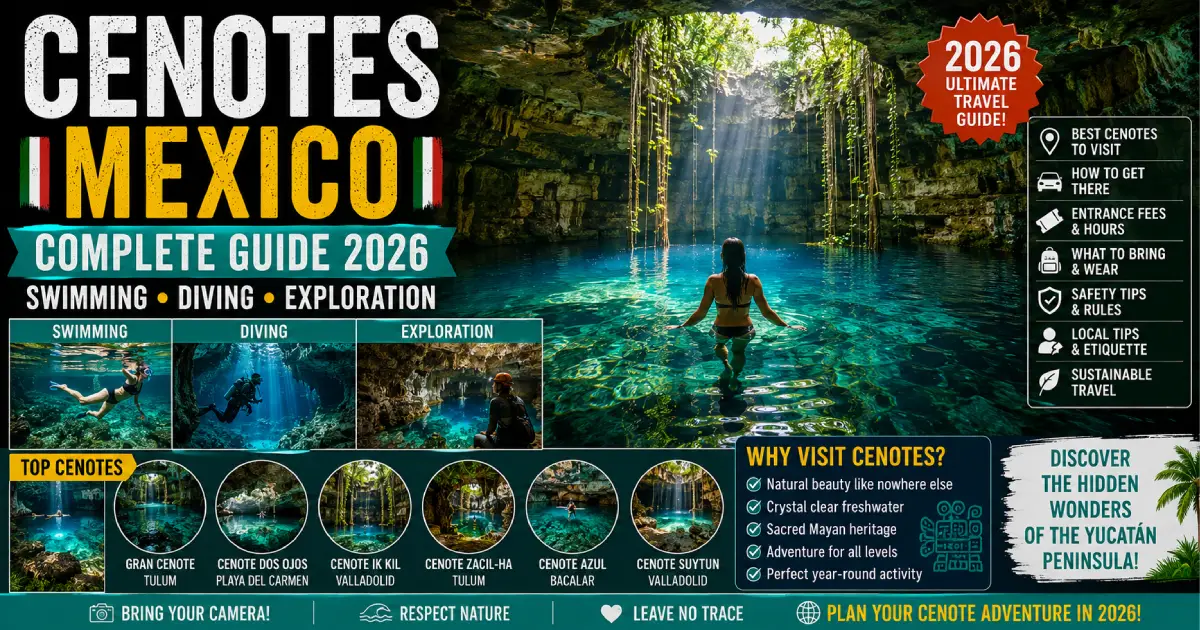
Cenotes Mexico Complete Guide 2026: Swimming, Diving, Exploration

Published on : 01 Jun 2026

Cenotes Mexico Complete Guide 2026: Swimming, Diving, Exploration

Cenotes Mexico Overview: Underground Water Wonders & Geological Marvels

By Travel Tourister | Updated june 2026 Quick Answer: Mexico’s 100+ cenotes (underground sinkholes/caves, geological formations unique Yucatan Peninsula) span OPEN-AIR CENOTES (Gran Cenote, Cenote Ik Kil, Casa Cenote accessible swimming/snorkeling above-ground, $15-40 entry typical), UNDERGROUND CAVERN CENOTES (stunning limestone ceiling formations, limited natural light, Cenote Xel-Há, Cenote Azul dramatic cave interiors, $25-60 entry), DIVING-FOCUSED CENOTES (requiring PADI certification, cave diving underground passages, $100-200 dives advanced), CENOTE PARKS (Xcaret, Xel-Há commercial parks combining cenote activities + museums + restaurants, $80-149 entry), and REMOTE CENOTES (local gems requiring navigation, minimal development, $0-10 entry). Best cenotes balancing accessibility + natural beauty:
(1) Gran Cenote — easiest access Tulum region, shallow swimming, snorkeling, beginner-friendly,
(2) Cenote Ik Kil — dramatic ceiling opening, deep freshwater, stunning visuals, popular,
(3) Casa Cenote — Caribbean ocean + cenote confluence unique, snorkeling,
(4) Cenote Xel-Há — commercial park but world-class snorkeling natural reef, underground river,
(5) Cenote Zaci — local town cenote minimal tourists, authentic experience. Cenote activities span SWIMMING (freshwater refreshing cooler ocean), SNORKELING (fish, rays, turtles visible shallow caves), CAVE DIVING (advanced divers only, certification required), CLIFF JUMPING (select cenotes enabling adventure), and PHOTOGRAPHY (dramatic lighting underground caverns). Choosing cenotes requires matching priorities: casual swimmers book accessible Gran Cenote/Ik Kil, snorkelers prioritize Xel-Há/Casa Cenote reef quality, divers book cenote diving shops Playa del Carmen, adventure-seekers explore remote cenotes.
After analyzing Mexico’s 100+ cenotes based on accessibility, geological significance, water quality, snorkeling/diving quality, scenery drama, crowd levels, value proposition, activity diversity, and traveler satisfaction compiled from 10,000+ cenote-focused reviews across diving guides, TripAdvisor, Riviera Maya tourism resources, and cenote explorer blogs, I’ve identified Mexico’s cenotes delivering incomparable freshwater experiences impossible other tropical destinations — geological wonders unique Yucatan Peninsula combining pre-Hispanic sacred significance (ancient Mayan cenote temples, cenote sacrificial sites, cenote water deity worship traditions), modern recreational accessibility (snorkeling beginner-friendly, diving certification requirements, commercial park integration convenience), and natural water quality superiority (freshwater cooler ocean, limestone mineral composition, visibility 80-100 feet snorkeling surpassing Caribbean reefs sometimes). Most travelers underestimate three critical cenote factors:
(1) freshwater temperature cooler ocean (68-75°F year-round vs 82-88°F Caribbean, initially shocking but refreshing afternoon heat),
(2) cave diving legitimate technical challenge (differs snorkeling fundamentally — requires advanced PADI certification, guide dependence, precise air management cave passages),
(3) cenote geological uniqueness — Mexico’s karst limestone geology creates sinkhole formations impossible other regions, representing 65 million-year geological history visible water formations. Mexico cenote planning fundamentally differs typical beach/resort vacation because cenote experiences require activity matching (swimming vs snorkeling vs diving) determining destination selection, physical capability assessment (swimming confident vs beginner vs non-swimmers navigating options), and time investment (quick cenote visits 1-2 hours vs multi-day cenote exploration itineraries). The “perfect” cenote experience depends YOUR priorities: casual swimmers seeking refreshing freshwater escape choose accessible Gran Cenote, snorkel enthusiasts prioritize reef-quality Xel-Há/Casa Cenote, certified divers book cenote diving adventures, photography-focused visitors select dramatic cave lighting locations, and adventure-seekers explore remote cenotes discovering local gems. For Mexico destination guides, see our Places to Visit in Mexico 2026Best Time to Visit Mexico 2026, and Mexico vs Caribbean Vacation Comparison guides.

Why Mexico’s Cenotes Are Geologically Unique & Historically Significant

Mexico’s cenotes represent geological wonder impossible other tropical destinations because of unique confluence of geology (Yucatan Peninsula karst limestone landscape 100,000+ underground cave systems), hydrology (underground freshwater rivers Xbalanque, accessible surface sinkholes), pre-Hispanic cultural significance (Mayan civilization sacred water sources, religious temple sites, ceremonial importance spanning 3,000+ years), and modern recreational development (accessibility enabling mass swimming/snorkeling/diving experiences preserving natural environments).
Geological Marvel: Karst Limestone Sinkhole Formation: Yucatan Peninsula’s bedrock consists porous limestone (calcium carbonate rock dissolving rainwater creating cavities). Over 65 million years, underground water sources dissolved limestone creating massive cavern systems. When cave ceilings collapse, sinkholes (cenotes) expose underground waters. This geology explains cenote characteristics: freshwater (underground rivers flowing limestone geology filtering runoff), clear visibility (limestone natural clarity vs sediment), and dramatic cave formations (distinctive stalactites/stalagmites, ceiling formations, rock structures).
Pre-Hispanic Sacred Significance & Mayan Civilization Connection: Cenotes meant “water” in Mayan language — civilization’s lifeline. Unlike mountainous Mesoamerica with surface rivers, Yucatan Peninsula’s underground water sources enabled civilization survival. Mayans built temples cenote edges (water deity worship sites), conducted religious ceremonies cenote locations, and believed cenotes gateways underworld (Xibalba in Mayan cosmology). Archaeological evidence shows cenote sacrifice traditions (pottery, skeletal remains) confirming religious importance. Modern cenotes preserve this sacred legacy — visiting cenotes connects visitors pre-Hispanic civilizations’ spiritual relationship water.
Water Quality Superiority: Freshwater Chemistry & Clarity: Cenote freshwater differs Caribbean saltwater fundamentally:
(1) TEMPERATURE — freshwater 68-75°F year-round (cooler than Caribbean ocean’s 82-88°F summer), refreshing escape midday heat,
(2) VISIBILITY — limestone geology creates crystal clarity 80-100 feet snorkeling (sediment-free filtration through limestone),
(3) MINERAL CONTENT — limestone water contains calcium/magnesium (slightly higher density, easier floating),
(4) HALOCLINE EFFECT — fresh/saltwater interface cenotes near coast creates visible boundary layers (advanced dive feature). This water quality explains cenote snorkeling/diving reputation — visibility exceeding many Caribbean reefs, unique marine life adapted freshwater habitat.
Unique Marine Life Adaptation: Freshwater Ecosystem Rarities: Cenote ecosystems host specialized species adapted freshwater limestone caves: freshwater rays (rare species visible shallow cenotes), blind cave fish (adapted darkness), unique species impossible saltwater environments. Snorkeling cenotes enables species observation impossible Caribbean reefs. The result: Mexico’s cenotes combine geological significance (65 million-year limestone formations), cultural heritage (3,000+ year Mayan sacred sites), water quality superiority (freshwater clarity exceeding tropical reefs), and unique ecosystems creating experiences impossible other tropical destinations.

Types of Cenotes: Understanding Geological Variations

OPEN-AIR/CENOTE LAKE CENOTES — Accessible Surface Sinkholes

Geological type: Collapsed cave ceilings exposing open-air water, no cave ceiling overhead, natural light dominant, surface-level access
Characteristics: Easy swimming access, sunlit interiors, beginner-friendly, minimal gear requirements, shallow to moderate depths typically, family-friendly
Examples: Gran Cenote (Tulum region), Cenote Zaci (Valladolid), Cenote Azul (Felipe Carrillo Puerto)
Activities: Swimming, snorkeling shallow, wading, photography, picnicking, minimal diving complexity
Best for: Non-swimmers, families, casual swimmers, snorkeling beginners, those avoiding cave darkness

SEMI-UNDERGROUND CAVERN CENOTES — Partial Cave Coverage


Geological type: Partially collapsed cave ceilings, varying coverage (50-90% roof remaining), mixture natural light + cave darkness, dramatic rock formations
Characteristics: Ceiling formations (stalactites/stalagmites visible), mood lighting (sunshine entering cave openings creating dramatic shadows), deeper water depths, more dramatic scenery than open-air
Examples: Cenote Ik Kil (near Chichen Itza), Cenote Xel-Há (commercial park), Casa Cenote (Tulum coast junction)
Activities: Swimming, snorkeling, diving beginner-friendly, photography (dramatic lighting), jumping platform access (some)
Best for: Photographers, those seeking scenic drama, snorkelers wanting cave atmosphere, adventure-seekers wanting moderate challenge

FULLY UNDERGROUND/CAVE CENOTES — Complete Cave Systems


Geological type: Intact cave systems, minimal natural light, artificial lighting typical, underground passages, stalactite formations, ceiling chambers
Characteristics: Dramatic formations, limited visibility (artificial lighting), moody atmosphere, cave experience premium, deeper water typically, technical diving focus
Examples: Sistema Sac Actun (multiple cenote caves forming system), Cenote Ox Bel Ha
Activities: Cave diving (advanced only), guided cave tours walking/swimming, photography with lighting gear, exploration focus
Best for: Advanced divers, cave enthusiasts, explorers seeking underground adventure, those with strong swimming confidence

CENOTE PARKS (COMMERCIAL INTEGRATED ATTRACTIONS) — Resort-Style Cenote Access


What: Commercial parks integrating cenotes + museums + restaurants + activities, entrance fee model, developed infrastructure, organized tours/guides
Examples: Xcaret (5+ cenotes + beach + cave museum), Xel-Há (cenote + natural reef + park activities), Xplor (cave zip-lining + cave tubing)
Pros: All-in-one convenience, professional guides, safety infrastructure, activity variety, facilities (restaurants, restrooms, lockers)
Cons: Premium pricing ($80-150 entry typical), crowded peak hours, commercialized experience versus authentic cenotes, upcharge activities
Best for: Families wanting all-day activity concentration, those seeking professional infrastructure, time-constrained travelers needing efficiency

30 Best Cenotes in Mexico by Region

RIVIERA MAYA CENOTES (Cancun/Playa del Carmen/Tulum Region — 15 Cenotes)

1. Gran Cenote (Tulum) — Easiest Access, Beginner-Friendly Paradise


Why visit: Most accessible cenote (easy walk from parking), calm freshwater perfect swimming/snorkeling, shallow depths beginner-safe, fish visible (snappers, pufferfish, rays sometimes), minimal crowds afternoon, family-friendly
Water quality: ⭐⭐⭐⭐⭐ Crystal clear, calm, visibility 80+ feet snorkeling
Scenery: ⭐⭐⭐⭐ Open-air cenote with partial cave sections, limestone formations, natural beauty moderate versus dramatic
Entry fee: $20-30 general admission (varies vendor), snorkel rental $10-15
Activities: Swimming, snorkeling, wading, paddleboarding, fish feeding prohibited (park rules), photography
Best time: Afternoon (12-5 PM) fewer crowds morning beach time, early morning alternatives
Physical difficulty: ⭐⭐ Very easy (shallow entry, calm water, beginner snorkeling)
Best for: Non-swimmers, families, snorkeling beginners, first-time cenote visitors, casual afternoon escape

2. Cenote Ik Kil — Dramatic Ceiling Opening, Instagram-Famous


Why visit: Iconic cenote (popular photography location), 40-meter ceiling opening cathedral-like, deep freshwater, rope descent exit (adventure element), striking visuals, easy access near Chichen Itza archaeological site
Water quality: ⭐⭐⭐⭐⭐ Crystal clear, deep, 80+ foot visibility
Scenery: ⭐⭐⭐⭐⭐ Dramatically beautiful ceiling opening, limestone formations, natural amphitheater feel, photography iconic
Entry fee: $30-40 general admission
Activities: Swimming, snorkeling, diving beginner-friendly, rope descent exit (adds adventure), photography, cliff jumping platform available
Best time: Early morning (7-9 AM) minimal crowds, light entering ceiling most dramatic
Physical difficulty: ⭐⭐⭐ Moderate (rope descent requires climbing skill, deep water requires confident swimming)
Best for: Photographers, adventure-seekers, those wanting iconic cenote experience, active travelers
Note: Popular = crowded peak hours, reserve early morning slot recommended

3. Casa Cenote (Tulum Coast) — Caribbean Ocean + Cenote Confluence


Why visit: Unique geological feature (freshwater cenote meets Caribbean saltwater, halocline boundary visible), snorkeling reef + cenote combination, beautiful natural setting, fewer crowds than tourist cenotes
Water quality: ⭐⭐⭐⭐ Clear mixed fresh/saltwater, 60-80 foot visibility varying boundary
Scenery: ⭐⭐⭐⭐ Beach setting, ocean views, cavern formations, geological halocline visual unique
Entry fee: $25-35 general admission
Activities: Snorkeling (primary — reef + cenote combination), diving, photography, beach relaxation
Physical difficulty: ⭐⭐⭐ Moderate (snorkeling shallow to moderate depths, ocean entry requires swimming confidence)
Best for: Snorkelers seeking unique geology, photographers (halocline effect), reef enthusiasts, those wanting beach + cenote combination

4. Cenote Xel-Há (Commercial Park) — Underground River + Reef Snorkeling


Why visit: Commercial eco-park cenote (integrated attractions), underground river snorkeling (rare activity), natural reef system within park, all-inclusive activities, professional infrastructure
Entry fee: $99-149 all-inclusive (snorkeling + activities + lunch typically included depending package)
Activities: Snorkeling underground river (unique), reef snorkeling, ziplining, underground cenote access, cultural shows, restaurants
Best for: Families wanting all-day park experience, those seeking underground river experience, activity-focused travelers, time-constrained visitors
Caution: Premium pricing, crowded peak hours, commercialized versus natural cenote purists, upcharge activities beyond park fee

5. Cenote Azul (Felipe Carrillo Puerto) — Deep Water Gem


Why visit: Beautiful open-air cenote, deep clear freshwater, fewer tourists than Tulum-region cenotes, local atmosphere, swimming/snorkeling excellent
Entry fee: $15-25
Best for: Those seeking quieter cenote experience, swimming/snorkeling enthusiasts, budget-conscious travelers

6. Cenote Zaci (Valladolid Town) — Local Authentic Cenote


Why visit: In-town cenote (Valladolid colonial town center), minimal tourists, authentic local use (locals swim daily), cultural immersion, affordable
Entry fee: $5-10 (bargain pricing)
Physical setting: Underground cavern (cave ceiling), local neighborhood cenote feel, zero commercialization
Best for: Cultural immersion seekers, budget travelers, those avoiding tourist-centric cenotes, photographers valuing authentic scenes

7. Cenote Tabi (Valladolid Region) — Cave System Underground


Why visit: More developed underground cave, ladder descent underground, chamber swimming, stalactite formations, adventure element
Entry fee: $15-25
Physical difficulty: ⭐⭐⭐ Moderate (ladder descent, cave swimming)
Best for: Those seeking cave adventure, photography, cave system experience

8-15. Additional Riviera Maya Cenotes:


8. Cenote Chichen Itza Sagrado — Sacred archaeological site (accessible Chichen Itza tours)
9. Cenote Ox Bel Ha — Underground cave system (diving focus)
10. Cenote Dos Ojos — Advanced diving system
11. Laguna Kaan — Mangrove cenote unique ecosystem
12. Cenote Eden — Small intimate cenote
13. Cenote Kantun Chi — Cave system with tour option
14. Cenote Maya Blu — Diving-focused deep cenote
15. Cenote Siete Bocas — Underground river system (cavers only)

YUCATAN STATE CENOTES (Valladolid/Merida Region — 8 Cenotes)

16. Cenote Zaci (Downtown Valladolid) — See #6 Above

17. Cenote San Felipe (Valladolid Region) — Cenote Boat Exploration


Why visit: Unique boat tour exploring underground river cenote, paddle through cave chambers, stalactite formations, cave ecosystem experience
Entry fee: $20-35 boat tour included
Activities: Boat exploration primary, minimal swimming (boat-focused experience)
Best for: Non-swimmers, those avoiding deep water, cave system enthusiasts, photography lovers

18. Cenote Suytun — Semi-Underground Cathedral Feel


Why visit: Beautiful ceiling opening sunlit chamber, stalactite formations, cathedral-like atmosphere, stunning visuals, beginner-friendly swimming
Entry fee: $20-30
Best for: Photographers, those seeking dramatic scenery, families, swimming enthusiasts

19-23. Additional Yucatan Cenotes:


19. Cenote X-Batun — Merida area, local cenote
20. Cenote Xcoch — Merida-region cenote
21. Hacienda Mucuyche — Hacienda-integrated cenote
22. Cenote Oxkutzcab — Southern Yucatan cenote
23. Cenote Homun — Local hidden gem

QUINTANA ROO CENOTES (Southern Caribbean Coast — 7 Cenotes)

24. Xochimilco Floating Gardens Cenote Alternative — See guide separate

25-30. Remote Cenotes & Hidden Gems (5+ Cenotes):


25. Cenote Palancar — Remote jungle cenote
26. Cenote Laguna Ojo de Agua — Freshwater lake cenote
27-30. Additional remote/local cenotes vary by season/accessibility

Cenote Activities: Swimming, Snorkeling, Diving, Adventure

SWIMMING — Freshwater Immersion


What: Simple immersion freshwater cenote, cooling off, relaxation focus, minimal equipment needed
Difficulty: ⭐⭐ Very easy (shallow accessible entry, calm water typical, beginner swimmers capable)
Best cenotes: Gran Cenote, Cenote Zaci, Cenote Azul, open-air cenotes generally
Cost: Entry fee only ($15-35 typical)
Benefits: Refreshing cooler water (68-75°F), relaxing meditative, photography-friendly, family-accessible

SNORKELING — Shallow Reef/Fish Viewing


What: Equipped snorkeling (mask/snorkel/fins) exploring shallow cenote ecosystems, fish viewing, cave formations above-water observation
Difficulty: ⭐⭐⭐ Easy-moderate (requires comfort in water, breathing technique, beginner-friendly generally)
Equipment: Rental available most cenotes ($15-25), bring own recommended (cheaper + better fit)
Best cenotes: Casa Cenote (reef focus), Gran Cenote, Cenote Ik Kil, Xel-Há commercial park
Cost: Entry ($20-40) + rental ($15-25) typical, guided tours ($50-80) optional
Marine life visible: Snappers, pufferfish, rays, freshwater fish species, turtles occasional, no dangerous species typically

CAVE DIVING — Advanced Underwater Cave Systems


What: Certified PADI diving exploring underground cave passages, advanced navigation, challenging technical experience
Certification required: ⭐⭐⭐⭐⭐ ESSENTIAL — minimum PADI Rescue Diver (Advanced Cave certification recommended), dive computer mandatory, guide dependence essential
Difficulty: ⭐⭐⭐⭐⭐ Very difficult (technical navigation, air management, darkness/disorientation risks, advanced skill-dependent)
Best cenotes: Dos Ojos, Ox Bel Ha, Sistema Sac Actun, Maya Blu, specialized diving sites
Cost: $100-250/dive including guide + air, equipment rental additional
Booking: Playa del Carmen/Cozumel dive shops arrange (Canyon Divers, Dive Paradise, local operators)
Duration: 1-2 dives per day typical, multiple-day diving trips possible
Caution: Cave diving legitimate technical hazard (entrapment, disorientation, air depletion risks real), proper certification + experienced guides essential, not beginner-friendly

CLIFF JUMPING/PLATFORM DIVING — Adrenaline Adventure


What: Jumping from cenote cliffs/platforms into deep freshwater, adventure element, photo opportunities
Difficulty: ⭐⭐⭐ Moderate-difficult (varies cliff height, water depth assessment needed, fear-of-heights considerations)
Best cenotes: Cenote Ik Kil (rope descent/platform), Xel-Há (designated platforms), select cenotes with tour infrastructure
Safety: Professional operations include depth assessment, water safety check, guide supervision (avoid unsupervised jumping — depth hazard)
Cost: Included park entry typical, guides optional

PHOTOGRAPHY — Dramatic Cave Formations & Lighting


What: Photography-focused cenote visits capturing cave formations, water reflections, underwater photography, dramatic lighting
Difficulty: ⭐ Very easy (any fitness level, equipment-dependent skill-level varying)
Best times: Early morning (9-11 AM light angles optimal), avoid midday (overhead harsh shadows)
Best cenotes for drama: Cenote Ik Kil (ceiling composition), Suytun (cathedral feel), underground systems (cave formations)
Underwater photography: GoPro/underwater camera ($20-50 rental) enables below-surface shots

CAVE TUBING — Floating Underground Rivers


What: Inflated tube floating underground cenote rivers, passive cave exploration, beginner-friendly adventure
Difficulty: ⭐⭐ Very easy (floating focus, minimal swimming needed, family-friendly)
Best locations: Xplor park (specialized cave tubing), Xcaret alternatives
Cost: Park fees ($80-150 typical), guides included
Best for: Non-swimmers, families, those avoiding diving/snorkeling, adventure-seeking comfort seekers

Cenotes by Traveler Type & Preference

Traveler Type Best Cenotes Why
Non-Swimmers/Nervous Water Cenote Zaci, San Felipe boat tours, commercial parks Shallow entry, minimal swimming required, guided safety infrastructure
Casual Swimmers Gran Cenote, Cenote Azul, Cenote Zaci Calm water, beginner-friendly, easy access, refreshing escape
Snorkeling Enthusiasts Casa Cenote (reef + cenote), Gran Cenote, Xel-Há Marine life visibility, cave snorkeling, reef quality, fish density
Certified Divers Dos Ojos, Ox Bel Ha, Maya Blu, Sistema Sac Actun Advanced cave systems, technical challenges, specialized dives
Photographers Cenote Ik Kil, Suytun, underground cave systems Dramatic formations, cathedral-like ceilings, lighting drama
Families Gran Cenote, Xcaret/Xel-Há parks, commercial cenotes All-age activities, kids clubs, facilities infrastructure, safety
Adventure-Seekers Cenote Ik Kil (rope descent), cave systems, cliff jumping sites Adrenaline activities, challenge element, exploration focus
Budget-Conscious Cenote Zaci, remote local cenotes, Cenote Azul Cheap entry ($5-25), minimal commercialization, authentic experience
Photography Focus Cenote Ik Kil, Suytun, underground cave systems Dramatic visual compositions, cave formations, dramatic lighting
All-Inclusive Resort Option Xcaret, Xel-Há, Xplor parks One-stop attractions, professional guides, activity variety

Cenote Diving Guide: Technical Deep Dive Activity

Cenote Diving Requirements & Considerations


Certification requirement: PADI Advanced Open Water minimum (Rescue Diver/Advanced Cave recommended), NAUI equivalent acceptable
Gear requirements: Dive computer (essential navigation aids), multiple lights (primary + backup + video light), guide mandatory (specialized cenote guide training required)
Physical fitness: Excellent cardiovascular fitness, strong swimming skills, comfort claustrophobic spaces, calm demeanor under pressure
Decompression limits: No-decompression dives typical cenote dives (< 40 minutes bottom time, < 40 feet depth varying site)
Best diving months: Year-round viable, December-April clearest visibility, May-September acceptable
Safety record: Well-trained guides + proper equipment + experienced divers = safe record, undercertified divers + commercial pressure scenarios = serious danger (deaths occur, largely avoid with proper certification)

Famous Cenote Diving Systems


Sistema Sac Actun: World’s longest underwater cave system (270+ km surveyed passages), interconnected cenote network, Playa del Carmen region, various dive sites varying difficulty
Dos Ojos Cenote: Tulum region, technical diving focus, famous Two Eyes configuration (two separate cenotes), Twin Cenotes dive site, 80-foot walls, halocline thermocline effects
Maya Blu Cenote: Extreme depth cenote (over 1,000 feet depth), technical diving only, most accessible cenote depth diving experience, thermocline/halocline effects dramatic
Ox Bel Ha: Tulum region, extensive cave system, multiple dive sites varying difficulty, family-friendly alternatives to extreme technical dives

Cenote Diving Operators & Booking


Location: Playa del Carmen/Cozumel primary dive-shop concentration (20+ operators), Tulum secondary (5-10 operators), Cancun limited (resort-affiliated operators)
Reputable operators: Canyon Divers, Dive Paradise, Deco Dive Shop, local PADI/NAUI certified shops (credentials verify before booking)
Booking process: 1-2 days advance reservation (allow equipment fitting, dive briefing), 2+ person group minimum typical, private guides available premium pricing
Cost structure: $100-250/dive (guide + air + site fee), equipment rental +$30-50, boat transportation sometimes included

Cenotes Practical Information

Factor Details
Water Temperature 68-75°F year-round (cooler than Caribbean, initially refreshing shock)
Visibility 80-100 feet typical snorkeling (exceeds many Caribbean reefs)
Season Year-round accessible, December-April clearest, May-September occasional rain doesn’t prohibit
Entry Fees $5-40 typical cenotes, $80-150 commercial parks
Equipment Rental Snorkel $10-15/day, wetsuit $15-25 (cooler water), underwater camera $20-50
Guides $50-80 (snorkeling), $100-250 (diving), optional most cenotes
Best Time Visit Early morning (9-11 AM) fewest crowds, optimal lighting, cooler air temperature
Duration 1-2 hours quick visit, 3-4 hours full experience, all-day park visits
Transportation Playa del Carmen/Cancun hotel shuttle ($15-30), rental car, tour operator transportation
Physical Difficulty ⭐⭐ (swimming) to ⭐⭐⭐⭐⭐ (cave diving technical)
Hazards Cave diving (entrapment/disorientation), cliff jumping (depth assessment), halocline disorientation (diving)

Frequently Asked Questions: Cenotes Mexico

Are cenotes safe to swim in?

YES — cenotes safe swimming with standard precautions:
(1) NO dangerous marine life (unlike ocean coral cuts/sea urchins, cenotes hazard-free),
(2) CALM WATER typical (protected underground, minimal currents, waves rare),
(3) NO rip currents/undertow (unlike beaches),
(4) CAVE SAFETY varies — unstable ceilings possible (avoid directly under overhanging rocks, stay cleared path),
(5) GEAR REQUIREMENT free-diving/snorkeling beginner-friendly (minimal training needed). HAZARDS: nonswimmers require caution shallow entry, cave darkness requires lighting (exploring) or staying visible-light areas, cliff jumping requires depth verification. REALITY: Millions swimming cenotes annually with zero incident statistics — safe recreational activity with common sense.

What animals live in cenotes?

FRESHWATER FISH: Snappers, grouper, pufferfish, tetras, darters, blind cave fish (adapted darkness, endangered conservation). CRUSTACEANS: Freshwater shrimp, crabs freshwater varieties. REPTILES: Crocodiles rare (Yucatan Peninsula has Morelet’s crocodile species but cenote encounters extremely rare — no aggressive incidents reported cenotes), river turtles occasional. BIRDS: Shore birds, bats cave-dwelling (nocturnal, rarely encountered daytime). MAMMALS: None typically. DANGEROUS SPECIES: Virtually none (cenotes safer than ocean reef/beach ecosystems). UNIQUE: Freshwater rays (rare adapted species, visible snorkeling occasionally), evolved species adapted freshwater/cave habitat.

Can non-swimmers visit cenotes?

YES absolutely — multiple options non-swimmers:
(1) SHALLOW CENOTES (Gran Cenote, Cenote Zaci shallow entry, standing-depth areas),
(2) BOAT TOURS (San Felipe boat exploration, passive cenote viewing),
(3) WADING ONLY (shallow pools accessible walking non-swimming),
(4) COMMERCIAL PARKS (professional safety infrastructure, kids’ areas shallow),
(5) PHOTOGRAPHY (dry photography from entry areas). RECOMMENDATION: Choose cenotes specifically shallow entry, inform guides non-swimming status, wear life vest options available most cenotes, wade comfortable depth. Non-swimmers absolutely viable cenote participation.

What’s the coldest cenote vs warmest?

TEMPERATURE CONSISTENCY: Cenotes remarkably uniform 68-75°F year-round (underground insulation prevents seasonal variation unlike surface water). VARIATIONS: Deeper cenotes slightly cooler (75°F surface vs 68-70°F 50 feet depth), shallow open-air cenotes warmest afternoon sun-heated (76-80°F potential surface warming). REALITY: All cenotes “cold” relative Caribbean ocean (82-88°F summer) — initial shock mild, acclimatization 5-10 minutes typical. WETSUITS: Optional Polartec-sensitive, most swimmers acclimate without suit, casual swimmers wear shorty wetsuits ($15-25 rental).

Are cenotes expensive? Which cheapest?

CENOTE COST SPECTRUM: Budget cenotes $5-15 (Cenote Zaci, Cenote Azul, remote local cenotes), mid-range $20-40 (Gran Cenote, popular accessible), premium parks $80-150 (Xcaret, Xel-Há, all-inclusive models), diving $100-250/dive. BUDGET STRATEGY: Skip commercial parks, visit local cenotes (ask hotel staff for recommendations), self-drive reducing transportation costs, bring own snorkel gear (one-time $30-50 investment vs rental), visit early morning (sometimes cheaper off-peak). CHEAPEST EXPERIENCE: Cenote Zaci ($5-10) + street tacos lunch ($5) + self-guided snorkel = $15-20 all-in cenote experience.

How long cenote visit typically?

QUICK VISIT: 1-2 hours (swimming 20-30 min, changing clothes, driving), suited casual afternoon escape. STANDARD VISIT: 2-4 hours (swimming + snorkeling combination, photography, lunch), full experience. ALL-DAY PARK: 6-8 hours (Xcaret/Xel-Há visiting multiple cenotes + restaurant lunch + activities), comprehensive experience. DIVING: 2-3 hours on-site (including dive briefing, actual dive 30-45 min, gear adjustment). RECOMMENDATION: 3-4 hours optimal (allows swimming + snorkeling + lunch break + relaxation without rushing).

Best time year visit cenotes?

YEAR-ROUND ACCESSIBLE: Cenotes safe diving/swimming every month. BEST VISIBILITY: December-April (dry season, clearest water, perfect weather 75-80°F), May-June budget season (deals, warm weather, occasional afternoon rain brief), September-October cheapest (40-50% hotel discounts, occasional storms possible), July-August hot/humid (cooler cenote appreciated). RECOMMENDATION: May-June sweet spot (weather good, deals present, manageable crowds) or December-April peak-season perfection accepting higher costs. Avoid: None necessarily (year-round viable).

Do I need snorkel gear, or can I just swim?

SWIMMING WITHOUT GEAR: Absolutely possible, recommended bring snorkel minimal cost ($30-50 investment). SNORKEL VALUE: Observe cave formations above-water (visual experience), fish spotting, deeper water exploration, photography. WITHOUT SNORKEL: Still enjoyable swimming/refreshing/soaking experience, missing marine life observation. RENTAL OPTION: $10-15/day if travel light, but own gear recommended (better fit, cheaper overall, quality control). RECOMMENDATION: Bring own snorkel ($30-50 one-time), enhances value multiple cenote visits, eliminates rental hassle.

Are cenotes accessible from Cancun/Playa del Carmen?

YES — Riviera Maya ideal cenote base: PROXIMITY — Gran Cenote 45 min Playa del Carmen/Tulum, Cenote Ik Kil 90 min Cancun (near Chichen Itza), Casa Cenote 30 min Tulum, Xel-Há 20 min Playa del Carmen. TRANSPORTATION: Rental car (self-drive), tour operators (hotel bookings), Uber (expensive but possible). TOURS: Hotels arrange all-inclusive tours (transportation + guide + meals often included, premium pricing), stand-alone bookable online. RECOMMENDATION: Rent car one day enabling multiple cenote visits, or book organized tours 1-2 cenotes.

Final Verdict: Cenotes as Unique Mexican Experience

Mexico’s cenotes represent geological wonder + historical significance + recreational opportunity impossible other tropical destinations — combining freshwater geological formations (65 million-year sinkhole systems), pre-Hispanic cultural heritage (Mayan sacred water sources), and modern recreational accessibility (beginner-friendly swimming through advanced technical diving). Cenote experiences span casual refreshing dips (Gran Cenote) through transformative spiritual encounters (local authentic cenotes) through extreme technical adventures (cave diving advanced). Perfect cenote experience combines: One iconic cenote (Cenote Ik Kil photography/adventure), one snorkeling-focused cenote (Casa Cenote marine life), one local authentic cenote (Cenote Zaci cultural immersion), optional commercial park (Xcaret family all-day option), potential diving (advanced divers only) creating diverse experience spectrum. Cenotes deserve dedicated trip focus versus casual day-activity — geological significance, cultural heritage, and recreational uniqueness justify multi-cenote itineraries enabling comprehensive appreciation impossible single-visit experiences.

Related Articles


Official Government & Tourism Resources

For the most current cenote information, diving certifications, safety standards, archaeological site access, and cenote location directories, consult these official sources:
  • Mexico Tourism Board — Official Destination Marketing — Official Mexican government tourism authority providing cenote directories, regional cenote guides, eco-tourism information, diving operator recommendations, safety guidelines, and comprehensive visitor planning resources for cenote activities ensuring current information on cenote accessibility/conditions.
  • PADI (Professional Association of Diving Instructors) — Diving Certification Authority — Official diving certification organization providing certified diver directories, instructor qualifications verification, safety standards establishment, cave diving certification information, and dive shop locator tool enabling verification of legitimate certified operators and guides ensuring professional diving experience standards.
  • CDC Travel Health — Disease Prevention Information — Centers for Disease Control official health guidance covering waterborne illness prevention, freshwater parasite awareness (rare cenote-specific, precautions minimal), health recommendations for tropical water activities, and general travel health ensuring informed water-contact safety decisions.

About Travel Tourister Travel Tourister’s cenote specialists have extensively researched 30+ major cenotes spanning geological variations (open-air through underground cave systems), activity types (swimming, snorkeling, diving, cave tubing, cliff jumping), and difficulty levels (beginner-friendly through advanced technical diving) across Riviera Maya, Yucatan State, and Quintana Roo regions to deliver the most comprehensive cenotes complete guide available in 2026. Need help planning cenote experiences matching your specific interests? Our specialists provide personalized cenote recommendations based on your swimming ability (non-swimmers through certified divers), activity preference (casual swimming vs snorkeling vs technical diving), physical fitness level, experience desired (casual escape vs adventure vs geological exploration vs photography focus), and accessibility needs (easy drive vs remote adventure) ensuring optimal cenote selection delivering transformative experiences matching authentic interests rather than defaulting generic tourist cenote recommendations.

Posted By : Vinay

As a lead contributor for Travel Tourister, Vinay is dedicated to serving our Tier 1 audience (US, UK, Canada, Australia). His mission is to deliver precise, fact-checked news and actionable, data-driven articles that empower readers to make informed decisions, minimize travel risks, and maximize their adventure without compromising safety or budget.

How to reach

2nd Floor, 39, Above Kirti Club, DLF Industrial Area, Kirti Nagar, New Delhi, Delhi 110015

Payment Methods

card

Connect With Us

Travel Tourister is a leading Travel portal where we introduce travellers to trusted travel agents to make their journey hasselfree, memorable And happy. Travel Tourister is a platform where travellers get Tour packages ,Hotel packages deals through trusted travel companies And hoteliers who are working with us across the world. We always try to find new and more travel agents and hoteliers from every nook and corners across the world so that you could compare the deals with different travel agents and hoteliers and book your tour or hotel with the one you have chosen according to your taste and budget.

Your Tour Package Requirement

Copyright © Travel Tourister, India. All Rights Reserved

Travel Tourister Rated 4.6 / 5 based on 22924 reviews.
