Published on : 01 Oct 2026
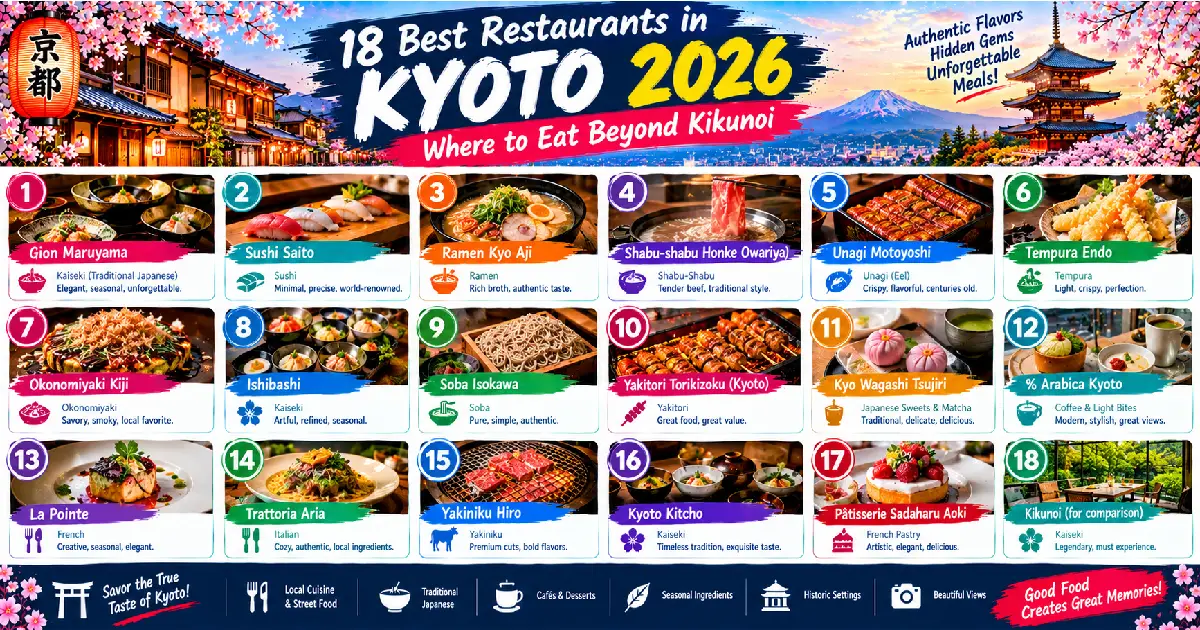
Our 25 Best Restaurants in Japan guide already covers Kyoto’s most internationally celebrated kaiseki houses — Kikunoi Honten and Gion Karyo among them — so this guide goes deeper into what makes Kyoto’s food culture genuinely distinct from the rest of the country: yudofu (simmered tofu, a specialty born from the city’s Buddhist temple cuisine tradition), shojin ryori (formal Buddhist vegetarian cooking, still served within working temple complexes), Kyoto’s own centuries-old soba houses (the oldest restaurant in the city has been serving noodles since 1465), and a kissaten (old-school coffeehouse) culture that predates Japan’s modern cafe boom by decades.
Kyoto’s food identity is shaped by its history as both Japan’s former imperial capital and a major center of Buddhist temple life — a combination that produced both the country’s most refined aristocratic cuisine and some of its most restrained, ingredient-focused vegetarian cooking, often within walking distance of each other.
| # | Restaurant | Area | Specialty | Cost (per person) |
|---|---|---|---|---|
| 1 | Hyotei | Nanzen-ji | Kaiseki (750 years old) | ¥10,000–¥40,000 |
| 2 | Giro Giro Hitoshina | Pontocho | Creative modern kaiseki | ¥5,000–¥8,000 |
| 3 | Gion Sasaki | Gion | Kappo counter dining | ¥15,000–¥25,000 |
| 4 | Shigetsu | Arashiyama (Tenryu-ji) | Shojin ryori (temple vegetarian) | ¥3,800–¥6,500 |
| 5 | Izusen | Daitoku-ji | Shojin ryori | ¥4,000–¥7,000 |
| 6 | Okutan | Nanzen-ji | Yudofu (400 years old) | ¥3,500–¥6,000 |
| 7 | Junsei | Nanzen-ji | Yudofu | ¥4,500–¥8,000 |
| 8 | Honke Owariya | Central Kyoto | Soba (since 1465) | ¥1,200–¥2,500 |
| 9 | Misoka-an Kawamichiya | Central Kyoto | Soba (centuries old) | ¥1,500–¥3,000 |
| 10 | Inoda Coffee | Central Kyoto | Kissaten (since 1940) | ¥1,000–¥2,000 |
| 11 | Smart Coffee | Central Kyoto | Kissaten (since 1932) | ¥800–¥1,500 |
| 12 | Tsujiri | Gion | Matcha specialist | ¥1,000–¥2,000 |
| 13 | Saryo Suisen | Central Kyoto | Modern matcha desserts | ¥1,200–¥2,200 |
| 14 | Nishijin Obanzai Restaurants | Nishijin | Kyoto home-style cooking | ¥3,000–¥5,000 |
| 15 | Kyo-Unagi Specialists | Central Kyoto | Grilled eel | ¥4,000–¥7,000 |
| 16 | Pontocho Yakitori Alley | Pontocho | Riverside yakitori/kappo | ¥3,000–¥5,000 |
| 17 | Gekkeikan Okura Kitchen | Fushimi | Sake-paired dining | ¥4,000–¥7,000 |
| 18 | Arashiyama Yoshida-ya | Arashiyama | Tofu kaiseki with garden view | ¥8,000–¥15,000 |
Cost: ¥10,000–¥40,000 | Location: Nanzen-ji area | Established: Over 750 years ago | Book: Weeks to months ahead
One of the oldest restaurants in Japan, Hyotei began as a teahouse serving pilgrims visiting Nanzen-ji and has operated continuously ever since — its specific morning specialty, a simple grilled ayu (sweetfish) and egg breakfast served in the restaurant’s garden teahouse, offers a genuinely accessible entry point into Hyotei’s history at a fraction of its full kaiseki dinner pricing.
Cost: ¥5,000–¥8,000 | Location: Pontocho | Style: Creative, relatively affordable multi-course kaiseki | Book: Recommended, several days ahead
Giro Giro Hitoshina reinterprets kaiseki’s traditional course structure with a noticeably more playful, modern presentation — a strong choice for visitors who want the genuine multi-course kaiseki experience without the ¥20,000+ pricing of Kyoto’s most historic houses, served in a converted riverside building along Pontocho.
Cost: ¥15,000–¥25,000 | Location: Gion | Style: Kappo counter dining | Book: Weeks ahead
Kappo — a more intimate, counter-based format than formal kaiseki, where the chef prepares and often serves each course directly in front of diners — offers a specifically conversational, interactive version of high-end Kyoto dining, and Gion Sasaki’s small-counter format makes it one of the district’s most sought-after kappo reservations.
Cost: ¥3,800–¥6,500 | Location: Arashiyama, within Tenryu-ji Temple grounds | Book: Recommended, especially during peak season
Served within Tenryu-ji’s own temple grounds, Shigetsu offers shojin ryori — the formal vegetarian cuisine developed by Buddhist monks, built entirely around vegetables, tofu, and seasonal foraged ingredients prepared with a specific philosophy of minimizing waste and maximizing each ingredient’s natural flavor — eaten overlooking the temple’s own UNESCO-listed garden.
Cost: ¥4,000–¥7,000 | Location: Daitoku-ji Temple complex | Book: Recommended
Izusen serves its shojin ryori courses in traditional round lacquered bowls (nested, in a style specifically associated with Zen temple dining), within the historic Daitoku-ji complex — a genuinely meditative dining experience that pairs naturally with a visit to the complex’s quieter sub-temple gardens.
Cost: ¥3,500–¥6,000 | Location: Nanzen-ji | Established: Approximately 400 years ago | Book: Not usually required, but recommended on weekends
Kyoto’s soft, mineral-rich water has made the city Japan’s historic center of tofu craftsmanship, and yudofu — tofu gently simmered tableside in a kombu broth, eaten with a simple dipping sauce — reaches its most traditional expression at Okutan, operating near Nanzen-ji’s temple grounds for roughly four centuries.
Cost: ¥4,500–¥8,000 | Location: Nanzen-ji | Book: Recommended
Junsei’s yudofu set menus, served within a traditional garden setting near Nanzen-ji’s aqueduct, extend beyond simple simmered tofu into a fuller multi-course format — a good choice for visitors wanting yudofu as a complete meal rather than Okutan’s more singularly focused approach.
Cost: ¥1,200–¥2,500 | Location: Central Kyoto | Established: 1465 | Book: Not required, but expect a wait at peak times
Widely credited as the oldest restaurant in Kyoto still operating under continuous family ownership, Honke Owariya began as a confectioner before shifting to soba, and its signature hourai soba (noodles served in five tiered lacquer boxes, each with different toppings) offers both a historically significant meal and one of Kyoto’s most distinctive soba presentations.
Cost: ¥1,500–¥3,000 | Location: Central Kyoto | Established: Centuries old | Book: Not required
Another of Kyoto’s genuinely historic soba houses, Misoka-an Kawamichiya’s traditional wooden dining rooms and hand-made noodles offer a quieter, less internationally known alternative to Honke Owariya with a comparably long operating history.
Cost: ¥1,000–¥2,000 | Location: Central Kyoto (flagship location) | Established: 1940 | Book: No
Inoda Coffee predates Japan’s modern cafe culture by decades, and its flagship location’s old-world interior, siphon-brewed coffee, and signature “Kyoto-style” breakfast set (coffee pre-mixed with sugar and cream, a house tradition dating to the restaurant’s early years) make it a genuine Kyoto institution rather than a tourist-oriented retro cafe.
Cost: ¥800–¥1,500 | Location: Central Kyoto | Established: 1932 | Book: No
One of Kyoto’s oldest continuously operating cafes, Smart Coffee’s specific claim to local fame is its French toast and pancakes — a genuinely old-fashioned, unchanged menu and interior that’s become a specifically beloved breakfast stop among Kyoto residents rather than a primarily tourist destination.
Cost: ¥1,000–¥2,000 | Location: Gion (flagship) | Book: Expect a wait at the flagship location
A specialist matcha tea and sweets shop operating since 1860, Tsujiri’s Gion flagship serves matcha parfaits, soft serve, and traditional sweets made with ceremonial-grade matcha — a strong, centrally located alternative for visitors who can’t make the full trip to Uji, Japan’s historic matcha-producing region.
Cost: ¥1,200–¥2,200 | Location: Central Kyoto | Book: Recommended on weekends
A more contemporary matcha dessert specialist, Saryo Suisen’s modern presentations (matcha tiramisu, elaborate seasonal parfaits) offer a genuinely different, less traditionally formal take on Kyoto’s matcha culture than Tsujiri’s more classic approach.
Cost: ¥3,000–¥5,000 | Location: Nishijin district | Book: Recommended
Obanzai — Kyoto’s own tradition of home-style cooking, built around small, simply prepared seasonal vegetable and fish dishes historically cooked by Kyoto households rather than professional kitchens — is best experienced in the Nishijin textile district’s small family-run restaurants, offering a genuinely different register from kaiseki’s formality: comforting, unpretentious, and specifically Kyoto in character.
Cost: ¥4,000–¥7,000 | Location: Several long-standing shops in central Kyoto | Book: Recommended
Kyoto’s own grilled eel tradition, prepared with a slightly different glaze and grilling technique than Tokyo’s unagi style, is worth seeking out specifically at one of the city’s historic unagi specialists for a direct comparison with the Tokyo version covered in our Japan-wide restaurant guide.
Cost: ¥3,000–¥5,000 | Location: Pontocho | Book: Varies by restaurant
Pontocho’s narrow dining alley extends well beyond its high-end kaiseki reputation into genuinely excellent, more affordable yakitori and casual izakaya dining, with riverside kawadoko seating available at several restaurants during the warmer months.
Cost: ¥4,000–¥7,000 | Location: Fushimi | Book: Recommended
Pairing a meal with a Fushimi sake brewery visit makes for a natural afternoon combination — Gekkeikan’s on-site dining offers sake-paired small dishes using the brewery’s own naturally pure groundwater-based product, a genuinely different experience from a standalone restaurant meal elsewhere in the city.
Cost: ¥8,000–¥15,000 | Location: Arashiyama | Book: Recommended, especially during peak season
A tofu kaiseki restaurant set within a traditional garden in Arashiyama, Yoshida-ya combines the yudofu tradition with a fuller multi-course format and a garden view that makes it a strong lunch option for visitors spending the morning in Arashiyama’s bamboo grove and temples.
About Travel Tourister Travel Tourister’s destination specialists have gone well beyond Kyoto’s best-known kaiseki houses — simmering yudofu near Nanzen-ji’s aqueduct, sharing shojin ryori within Tenryu-ji’s own temple walls, and settling into century-old soba houses and kissaten — to put together a genuinely differentiated guide to the best restaurants in Kyoto for 2026 visitors.
Posted By : Vinay
Latest Article
2nd Floor, 39, Above Kirti Club, DLF Industrial Area, Kirti Nagar, New Delhi, Delhi 110015



Travel Tourister is a leading Travel portal where we introduce travellers to trusted travel agents to make their journey hasselfree, memorable And happy. Travel Tourister is a platform where travellers get Tour packages ,Hotel packages deals through trusted travel companies And hoteliers who are working with us across the world. We always try to find new and more travel agents and hoteliers from every nook and corners across the world so that you could compare the deals with different travel agents and hoteliers and book your tour or hotel with the one you have chosen according to your taste and budget.
Copyright © Travel Tourister, India. All Rights Reserved

 Call
Call Enquiry