Published on : 17 Sep 2026
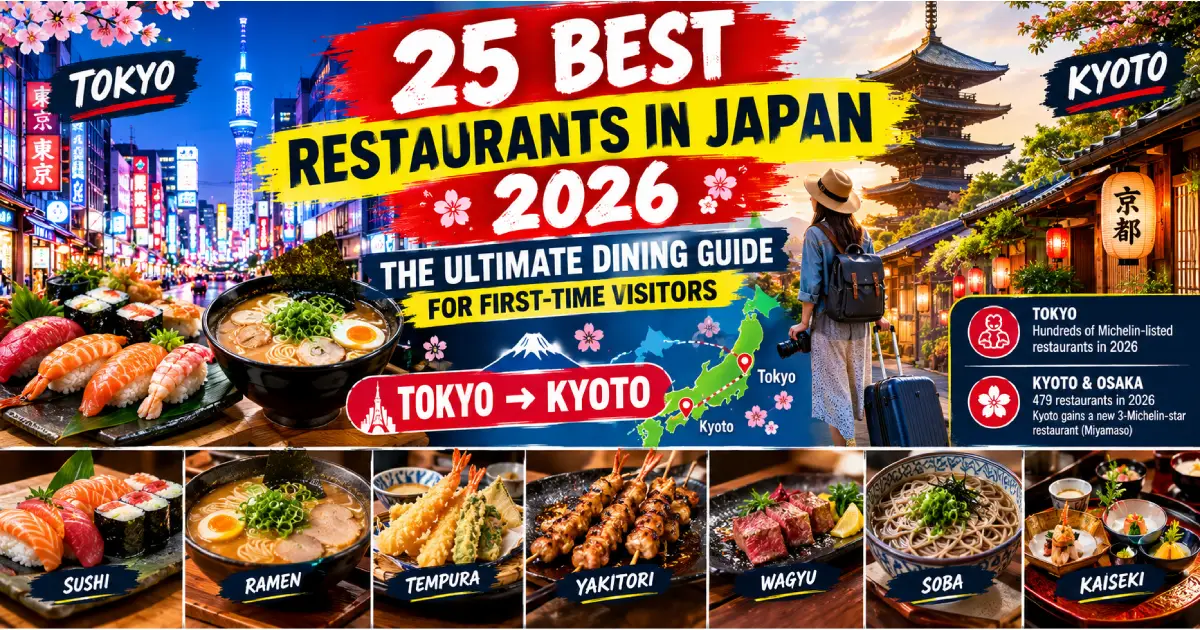
Japan holds more Michelin stars than any other country on earth — Tokyo alone carries more three-star restaurants than Paris — and yet the specific genius of Japanese food culture is that the ten-dollar bowl of ramen eaten standing at a counter in a Shinjuku alley can be a more complete culinary experience than the three-hundred-dollar omakase served two blocks away, because the entire national food culture, from the anonymous soba stall to the twelve-seat sushi counter with a two-month waiting list, operates on the same underlying discipline: a single dish, or a small handful of dishes, executed with a specificity of technique and sourcing that a Western tier-1 visitor rarely encounters at any price point back home. The best restaurants in Japan for 2026 span the internationally famous (Sukiyabashi Jiro, the sushi counter that inspired an entire documentary and a generation of American sushi chefs) through the specifically local (the standing soba counters inside Tokyo train stations, the yakitori alleys under the railway arches at Yurakucho, the Osaka takoyaki stands that locals argue about with the same intensity Americans reserve for barbecue) to the genuinely transformative (kaiseki in Kyoto, the multi-course seasonal tasting tradition that predates the Western fine-dining tasting menu by roughly three centuries).
What makes dining in Japan specifically different from dining in any tier-1 traveler’s home country is the combination of extreme specialization (a restaurant in Japan very often serves exactly one thing — ramen, or unagi, or tempura, or a single cut of wagyu — rather than the multi-cuisine menu format that Western restaurants default to) with a reservation and etiquette culture that catches first-time American, British, Canadian, and Australian visitors off guard in specific and avoidable ways: the highest-end sushi and kaiseki restaurants operate on an introduction-only or hotel-concierge-only booking system that no amount of persistence on the restaurant’s own website will unlock, cash is still the default payment method at a large share of the country’s best small restaurants despite Japan’s high-tech reputation, and tipping — reflexive in the US in particular — is not just unnecessary in Japan but can be genuinely confusing or mildly offensive to the staff. This guide covers the 25 best restaurants and food experiences in Japan for 2026, organized by category and city, with the specific booking, budget, and etiquette information a first-time tier-1 visitor actually needs.
| # | Restaurant | City | Category | Cost (per person) | Book Ahead? |
|---|---|---|---|---|---|
| 1 | Sukiyabashi Jiro | Tokyo (Ginza) | Sushi (3 Michelin) | ¥40,000–¥50,000 | Yes (months, via hotel concierge) |
| 2 | Sushi Saito | Tokyo | Sushi (3 Michelin) | ¥40,000+ | Yes (introduction only) |
| 3 | Sushi Dai | Tokyo (Toyosu) | Sushi (market) | ¥5,000–¥8,000 | No (queue) |
| 4 | Ichiran Ramen | Nationwide | Ramen (tonkotsu) | ¥1,000–¥1,500 | No |
| 5 | Fuunji | Tokyo (Shinjuku) | Ramen (tsukemen) | ¥1,000–¥1,300 | No (queue) |
| 6 | Rokurinsha | Tokyo Station | Ramen (tsukemen) | ¥1,200–¥1,500 | No (queue) |
| 7 | Narisawa | Tokyo | Modern kaiseki (2 Michelin) | ¥45,000+ | Yes (weeks–months) |
| 8 | Den | Tokyo | Innovative kaiseki (1 Michelin) | ¥25,000–¥35,000 | Yes (1–2 months) |
| 9 | Kikunoi Honten | Kyoto | Traditional kaiseki (3 Michelin) | ¥30,000–¥45,000 | Yes (weeks) |
| 10 | Gion Karyo | Kyoto | Kaiseki | ¥15,000–¥25,000 | Yes |
| 11 | Torishiki | Tokyo (Ebisu) | Yakitori (1 Michelin) | ¥15,000–¥20,000 | Yes (weeks) |
| 12 | Yurakucho Yakitori Alley | Tokyo | Yakitori (casual) | ¥3,000–¥5,000 | No |
| 13 | Han no Daidokoro (or similar wagyu grill) | Tokyo/Osaka | Wagyu yakiniku | ¥10,000–¥20,000 | Recommended |
| 14 | Kani Doraku | Osaka (Dotonbori) | Crab kaiseki | ¥6,000–¥12,000 | No (large venue) |
| 15 | Dotonbori Takoyaki Stalls | Osaka | Street food | ¥500–¥800 | No |
| 16 | Osaka Kuromon Ichiba Market | Osaka | Food market | ¥1,000–¥3,000 | No |
| 17 | Okonomimura | Hiroshima | Okonomiyaki | ¥1,200–¥2,000 | No |
| 18 | Ginza Kojyu | Tokyo | Kaiseki (3 Michelin) | ¥35,000+ | Yes (months) |
| 19 | Tempura Kondo | Tokyo (Ginza) | Tempura (2 Michelin) | ¥20,000–¥30,000 | Yes (weeks) |
| 20 | Unagi Nodaiwa | Tokyo | Eel (unagi) | ¥6,000–¥10,000 | Recommended |
| 21 | Depachika Food Halls | Nationwide | Grab-and-go gourmet | ¥1,000–¥5,000 | No |
| 22 | Genki Sushi / conveyor belt chains | Nationwide | Sushi (budget) | ¥1,500–¥3,000 | No |
| 23 | Menbaka Fire Ramen | Kyoto | Ramen (theatrical) | ¥1,200–¥1,600 | No (queue) |
| 24 | Nishiki Market Food Stalls | Kyoto | Street food / market | ¥1,000–¥3,000 | No |
| 25 | Standing Soba Counters | Tokyo train stations | Soba (fast) | ¥400–¥700 | No |
Cost: ¥40,000–¥50,000 (omakase only) | Location: Ginza, Tokyo (basement, Tsukamoto Sogyo Building) | Seats: 10 | Duration: 30–45 minutes | Book: Months ahead, via a Japanese-speaking hotel concierge only
Sukiyabashi Jiro — the ten-seat basement sushi counter made internationally famous by the 2011 documentary Jiro Dreams of Sushi, and the restaurant that shaped an entire generation of American and European sushi chefs’ understanding of what an omakase counter could be — remains the single most requested Japan restaurant reservation among tier-1 visitors, and also the most specifically misunderstood: the restaurant does not accept walk-ins, does not accept direct phone reservations from most overseas guests, and functions almost entirely through hotel concierge introductions at Tokyo’s luxury properties (the Aman, the Peninsula, the Mandarin Oriental) months in advance. The meal itself — twenty pieces of nigiri served in a specific, fixed sequence over roughly thirty minutes, no menu, no substitutions — is the most codified single expression of Edomae sushi (the Tokyo-style sushi tradition using aged, cured, and marinated fish rather than the raw-only style more familiar to Western sushi-bar visitors) available anywhere in the world.
Booking reality for tier-1 visitors: Book your hotel first, specifically choosing a property with a strong concierge reputation, and request the introduction 6–8 weeks before travel. English is limited at the counter itself; the pace is fast and formal, and lingering is not part of the culture here.
Cost: ¥40,000+ | Location: Roppongi, Tokyo | Seats: 8 | Book: Introduction only — considered the hardest reservation in Tokyo
Sushi Saito — widely regarded by Tokyo’s own food critics as technically superior even to Jiro, and correspondingly harder to book — operates entirely on an existing-customer or verified-introduction basis, to the point where even a well-connected concierge cannot always secure a first-time seat. Chef Takashi Saito’s rice temperature and vinegar balance, and his specific restraint (fewer pieces, less talk, more silence) than the more theatrical counters, is the reason serious Tokyo diners cite Saito over Jiro when asked privately. Realistic tier-1 visitor advice: treat a Saito seat as a bonus, not a plan — build your Tokyo sushi budget around Jiro or a top mid-tier counter instead, and let Saito happen only if a five-star hotel concierge or a Tokyo-based contact can make it happen.
Cost: ¥5,000–¥8,000 | Location: Toyosu Market, Tokyo | Hours: From roughly 5:30 AM | Book: No — queue only, arrive before dawn
Sushi Dai — the market-counter sushi restaurant that relocated from the old Tsukiji outer market to Toyosu in 2018, and that still produces the longest single restaurant queue in Tokyo despite the move — is the correct answer for any tier-1 visitor who wants Jiro-caliber fish quality without the ¥40,000 price tag or the months-long booking lead time: the same-day, market-fresh sourcing (the restaurant sits inside the wholesale fish market itself, sourcing directly from the auction floor each morning) at roughly one-sixth of Jiro’s price, for a queue that typically runs 90 minutes to 3 hours depending on the day. The queue strategy: arrive by 5:00–5:30 AM on a weekday for the shortest realistic wait; weekends can run past 8 AM before the line even starts moving.
Cost: ¥1,000–¥1,500 | Locations: Nationwide (dozens of Tokyo branches) | Format: Individual booth seating | Book: No
Ichiran — the tonkotsu (pork-bone broth) ramen chain that pioneered the individual-booth dining format (each diner seated in a private wooden stall, ordering via a paper checklist for broth richness, noodle firmness, and spice level, with the server appearing only through a small curtained gap) — is the single most reliable first ramen experience for a tier-1 visitor precisely because the ordering system removes the language barrier entirely: no Japanese is required to customize a bowl exactly to preference, an unusual accommodation in a country where menu navigation is otherwise the single biggest first-day friction point for English-only travelers.
Cost: ¥1,000–¥1,300 | Location: Shinjuku, Tokyo | Style: Tsukemen (dipping ramen) | Book: No — queue, order from a vending machine at the door
Fuunji’s tsukemen — thick noodles served separately from a concentrated, fish-and-pork double broth for dipping — is the specific dish serious Tokyo ramen enthusiasts point to when a visitor asks what to eat beyond the standard tonkotsu bowl. The vending-machine ordering system at the door (select and pay before sitting down, a format used at a large share of Japan’s casual noodle shops) is worth understanding before arrival — it feels unfamiliar for exactly one meal and then becomes second nature for the rest of the trip.
Cost: ¥1,200–¥1,500 | Location: Tokyo Station, Ramen Street | Book: No — queue
Rokurinsha, inside Tokyo Station’s underground “Ramen Street” (a corridor of eight of the city’s most celebrated ramen shops concentrated into a single hallway, built specifically for the traveler who has one meal window between trains), serves a thick tsukemen broth dense enough that Tokyo diners routinely request it diluted with a kettle of dashi at the end of the meal — a specific, expected practice, not an off-menu request.
Cost: ¥45,000+ | Location: Minami-Aoyama, Tokyo | Style: Modern Japanese-French (2 Michelin) | Book: Weeks to months ahead, online reservation system
Narisawa — chef Yoshihiro Narisawa’s forest-themed tasting menu, built around foraged and hyper-local ingredients and a signature bread course baked tableside in a ceramic pot heated by a live flame — is the restaurant most frequently cited by tier-1 visitors as their single best Japan meal specifically because it bridges Western tasting-menu expectations (a clear, English-supported course-by-course narrative) with techniques and ingredients no Western kitchen would produce.
Cost: ¥25,000–¥35,000 | Location: Jimbocho, Tokyo | Style: Playful kaiseki (1 Michelin) | Book: 1–2 months ahead via the restaurant’s own online system
Den’s “Dentucky Fried Chicken” course — a deliberately playful, visually humorous dish served mid-way through an otherwise serious kaiseki progression — captures why Den is consistently ranked among the World’s 50 Best: chef Zaiyu Hasegawa treats kaiseki’s formal structure as a framework for wit rather than solemnity, which makes it the most approachable high-end tasting menu in Tokyo for a first-time Western fine-dining guest slightly intimidated by kaiseki’s reputation for austerity.
Cost: ¥30,000–¥45,000 | Location: Higashiyama, Kyoto | Style: Traditional kaiseki (3 Michelin) | Book: Weeks ahead, English-language booking available
Kikunoi — under chef Yoshihiro Murata, one of the most internationally recognized ambassadors of traditional Kyoto cuisine — represents kaiseki in its most historically rigorous form: seasonal, hyper-local Kyoto vegetables and Kyoto-specific preparations (yudofu, the simmered tofu dish Kyoto’s temple cuisine made famous) served across ten-plus courses in a traditional tatami room, the specific Kyoto version of kaiseki that predates and differs meaningfully from Tokyo’s more modern interpretations.
Cost: ¥15,000–¥25,000 | Location: Gion district, Kyoto | Style: Kaiseki | Book: Recommended, several days ahead
Gion Karyo sits inside Kyoto’s most historic geisha district, and offers a genuinely accessible entry point into kaiseki at roughly half the price of Kikunoi or the top Tokyo counters — the correct choice for a tier-1 visitor who wants one authentic multi-course kaiseki dinner during a Kyoto stay without committing to the top-tier price bracket.
Cost: ¥15,000–¥20,000 | Location: Ebisu, Tokyo | Style: Yakitori (1 Michelin) | Book: Weeks ahead
Torishiki — the rare yakitori (grilled chicken skewer) restaurant to hold a Michelin star — treats a single bird with the same course-by-course seriousness a kaiseki chef brings to a full seasonal menu: each skewer (thigh, skin, liver, heart, and cuts most Western diners have never eaten as a discrete dish) served individually, seasoned only with salt or a light tare glaze, timed to a precision that makes the difference between a Michelin-starred skewer and a street-stall skewer immediately obvious even to a first-time visitor.
Cost: ¥3,000–¥5,000 | Location: Under the railway arches, Yurakucho, Tokyo | Book: No — walk in
The Yurakucho yakitori alleys — the narrow, smoke-filled lanes of tiny standing and stool-seat bars built directly into the brick arches supporting the JR train tracks above — are the most specifically atmospheric budget dining experience in Tokyo: salarymen unwinding after work, skewers grilled a few feet from your seat, and a specific soundtrack (the trains rumbling overhead every few minutes) that no indoor restaurant can replicate.
Cost: ¥10,000–¥20,000 | Locations: Tokyo (Roppongi, Ginza) and Osaka | Book: Recommended a few days ahead
Yakiniku — Japanese-style grilled beef, cooked tableside on a small charcoal or gas grill built into the table — is where most tier-1 visitors have their first encounter with genuine A5 wagyu, and the specific grading system (A5 being the highest marbling and yield grade) is worth understanding before ordering: a small A5 portion, seared for seconds per side, delivers more flavor per bite than a full Western steak, and ordering accordingly (small portions, several cuts) rather than a single large steak-sized order is both more authentic and more economical.
Cost: ¥6,000–¥12,000 | Location: Dotonbori, Osaka | Landmark: The giant mechanical crab sign above the entrance | Book: Not required — large venue
Kani Doraku, instantly recognizable by the enormous moving mechanical crab mounted above its Dotonbori storefront, is Osaka’s most photographed restaurant exterior and a genuinely solid crab kaiseki experience behind the tourist-facing sign — the multi-course crab menus (steamed, grilled, in hotpot, and raw) provide a practical, no-reservation-required introduction to Japanese crab cuisine for visitors who don’t have a Hokkaido crab-country stop on their itinerary.
Cost: ¥500–¥800 per portion | Location: Dotonbori canal-side street, Osaka | Book: No
Takoyaki — octopus-filled batter balls, griddled in a specific hemispherical iron pan, topped with takoyaki sauce, mayonnaise, bonito flakes, and dried seaweed — is Osaka’s signature street food, and the Dotonbori strip’s competing stalls (each claiming the definitive recipe, each with a specific loyal local following) turn a simple ¥500 snack into the same kind of good-natured local rivalry Americans associate with regional barbecue or pizza debates.
Cost: ¥1,000–¥3,000 (grazing) | Location: Nipponbashi, Osaka | Hours: Most stalls 9 AM–6 PM | Book: No
Kuromon Ichiba — Osaka’s 190-year-old wholesale-turned-tourist food market — is the correct single stop for a visitor who wants to sample grilled scallops, fugu (pufferfish), wagyu skewers, uni, and fresh oysters in one walkable strip, standing at the stall counters rather than sitting down, the specific grazing format that lets a tier-1 visitor try six or seven different specialties for the price of one sit-down meal.
Cost: ¥1,200–¥2,000 | Location: Hiroshima city center | Format: A multi-floor building of individual okonomiyaki stalls | Book: No
Okonomimura — literally “okonomiyaki village,” a building containing roughly two dozen independent okonomiyaki stalls stacked across several floors — is the destination for Hiroshima-style okonomiyaki specifically, a layered savory pancake built around a bed of fried noodles (distinct from the Osaka style, which mixes rather than layers its ingredients), grilled directly in front of the diner on a built-in teppan counter.
Cost: ¥35,000+ | Location: Ginza, Tokyo | Style: Kaiseki (3 Michelin) | Book: Months ahead
Ginza Kojyu’s three-Michelin-star kaiseki, led by chef Toru Okuda, is frequently cited alongside Kikunoi as one of the two definitive kaiseki experiences available to an overseas visitor, with a specifically Tokyo (rather than Kyoto) inflection — slightly bolder seasoning, a broader use of seafood given Tokyo’s proximity to the bay and the major fish markets.
Cost: ¥20,000–¥30,000 | Location: Ginza, Tokyo | Style: Tempura (2 Michelin) | Book: Weeks ahead
Tempura Kondo elevates a dish most Western visitors associate with casual dining into a Michelin-starred counter experience — each piece fried individually to order and served the moment it’s ready, the specific vegetable tempura here (particularly the sweet potato and the pumpkin) frequently cited as more memorable than the seafood pieces most first-time visitors expect to be the highlight.
Cost: ¥6,000–¥10,000 | Location: Higashi-Azabu, Tokyo | Style: Grilled eel (unagi) | Book: Recommended
Nodaiwa, operating since the Edo period, specializes in unagi (freshwater eel), grilled over binchotan charcoal and glazed in a soy-based tare — a dish considered a specific summer stamina food in Japanese food culture, and one of the few traditional Japanese specialties built around a genuinely rich, savory-sweet flavor profile that tends to translate immediately and favorably to Western palates unfamiliar with the dish.
Cost: ¥1,000–¥5,000 | Locations: Basement floors of major department stores nationwide (Isetan Shinjuku, Daimaru, Takashimaya) | Book: No
The depachika — the elaborate basement food halls beneath Japan’s major department stores — is the most underrated tier-1-visitor food experience in the entire country: bento boxes assembled by the same chefs supplying nearby fine-dining restaurants, wagashi (traditional sweets), and prepared dishes of restaurant quality sold by weight or portion, all available without a reservation, a queue, or a language barrier, making it the best single option for a quality meal on a night when nothing else was booked in time.
Cost: ¥1,500–¥3,000 | Locations: Nationwide (Genki Sushi, Sushiro, Kura Sushi) | Book: No — some offer app-based queue tickets
Kaiten-zushi (conveyor belt sushi) has been reinvented by the major chains into a genuinely high-quality, technology-forward format — tablet ordering direct to the kitchen, bullet-train-style delivery tracks at some Sushiro locations, and consistent quality at a fraction of counter-sushi prices — making it the correct default for a group meal or a budget-conscious sushi night rather than a compromise.
Cost: ¥1,200–¥1,600 | Location: Kyoto | Format: Ramen finished with a tableside fire display | Book: No — queue
Menbaka’s signature move — a chef igniting a flaming pan of green onions and oil directly over the finished bowl at your table — has made it one of Kyoto’s most photographed ramen shops among tier-1 visitors specifically; the ramen itself (a solid, miso-leaning tonkotsu) is good rather than exceptional, but the theatrical finish and the resulting photo are the genuine draw.
Cost: ¥1,000–¥3,000 (grazing) | Location: Central Kyoto | Book: No
Nishiki Market — Kyoto’s five-century-old “kitchen of Kyoto” — provides the same walkable grazing format as Osaka’s Kuromon Ichiba, specifically oriented around Kyoto specialties: yuba (tofu skin), tsukemono (Kyoto-style pickles), matcha sweets, and skewered baby octopus stuffed with a whole quail egg, a specific Nishiki-only novelty most visitors photograph before eating.
Cost: ¥400–¥700 | Locations: Inside most major Tokyo and regional train stations | Book: No
The standing soba counters built into Tokyo’s train station concourses — order from a vending machine, eat standing at a narrow counter in under ten minutes, a meal genuinely built around the pace of a commuter’s transfer window — are the fastest, cheapest, and most specifically Tokyo-commuter-authentic meal available to a visitor moving between cities by train, and a useful fallback on any day when the itinerary leaves no time for a sit-down lunch.
A handful of specific rules save a first-time American, British, Canadian, or Australian visitor real embarrassment and real money:
About Travel Tourister Travel Tourister’s destination specialists have eaten across Japan’s full price spectrum — from Tsukiji-to-Toyosu dawn sushi queues and Ginza kaiseki tasting rooms through Shinjuku tsukemen counters, Dotonbori takoyaki stalls, and Hiroshima okonomiyaki villages, to standing soba bars squeezed between train transfers — to deliver the most complete and practically honest guide to the best restaurants in Japan for 2026 visitors.
Posted By : Vinay
Latest Article
2nd Floor, 39, Above Kirti Club, DLF Industrial Area, Kirti Nagar, New Delhi, Delhi 110015



Travel Tourister is a leading Travel portal where we introduce travellers to trusted travel agents to make their journey hasselfree, memorable And happy. Travel Tourister is a platform where travellers get Tour packages ,Hotel packages deals through trusted travel companies And hoteliers who are working with us across the world. We always try to find new and more travel agents and hoteliers from every nook and corners across the world so that you could compare the deals with different travel agents and hoteliers and book your tour or hotel with the one you have chosen according to your taste and budget.
Copyright © Travel Tourister, India. All Rights Reserved

 Call
Call Enquiry